Mental health cluster APhysical healthSession two 29/04/11
Physical health and mental health
Why is it an important consideration?Two pronged approach1) those with mental illness appear to be more susceptible to poor physical health2) physical activity can improve mental healthThe following information has been obtained from Mental Health and Physical Activity Information Pack- “Partnering to enhance recover”. Accessible on Moodle
The evidenceStrongest evidence linked increase physical activity with reduction in depressive symptomsCooper Institute “relative increases in maximal cardiorespiratory fitness and habitual physical activity are cross-sectionally associated with lower depressive symptomalogy and great emotional well-being”
The evidence2002 meta-analysis published in British Medical Journal concluded : when compared with no treatment, exercise reduced symptoms of depression and in studies relating exercise to cognitive therapy, the effect of exercise was similar.
Why is it important?“psychiatric patients have high rates of physical illness, much of which goes undetected. Such investigations have led to calls for health professionals to be more aware of these findings and for better medical screening and treatment of psychiatric patients” World Federation for Mental Health (2004).
Why is physical health so poor?Mental illnessUnhealthy lifestyle behavioursMedicationsSegregations of primary health and mental health care sitesLack of counsellingLow socio economic status
Why?Social factors e.g. poverty and inadequate housingLifestyle factors e.g. substance use, sedentary lifestyleBarriers accessing screening programs and health careDifficulties in communication or lack of attendance at medical appointments possibly resulting in delayed or missed diagnosisStigmatising attitudes of carers, health professionals and the broader community
Socio economic statusPeople with mental illness are more likely to be low income earners, reliant on a pension or live in povertyIncreased costs in accessing health care due to increased needsGenerally limited to GP’s who bulk bill
Access to servicesTravel issues or maintaining scheduled appointmentsParticularly problematic in rural or remote areasCommunication barriers
Availability of servicesUnaware of how to access care and what options are availableGP’s may not have sufficient training in responding to mental illness or be aware of appropriate services for referralMany allied health professionals are not covered by Medicare
Lifestyle factorsTransienceHigh risk behaviours
Service silosRefusal of some specialist services to treat complex co-morbid patientsLack of continuity Gaps in professionals knowledge re physical health and vice versa
Overcoming these barriersActively discussing physical health issues alongside mental healthAdopting a patient, flexible and creative approach to assessmentAssessment of the physical health problem across a number of interviews, some spent just on the process of engagementReinforcing and writing down details of tests or treatmentsTaking a more active role in ensuring follow-upCreating effective partnerships between the consumer, family, carers, PG and mentalhealth clinicians
GP responsibility
NSW Government’s responseDeveloped guidelines for general practitioners for health checks for individuals presenting with particular mental health issuesIdentifies physical health risk factors prominent in patients with specific mental illness
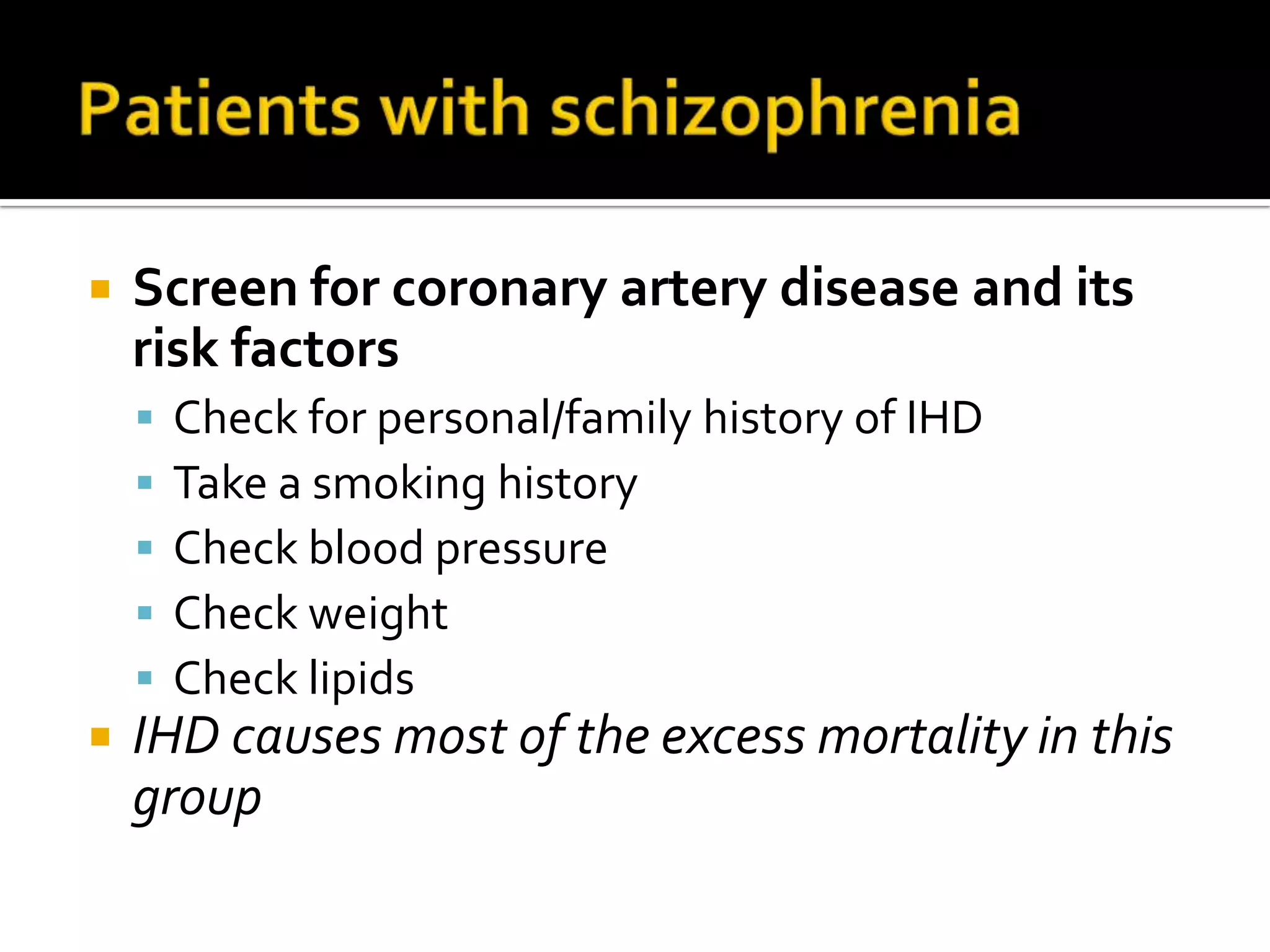
Patients with schizophrenia Screen for coronary artery disease and its risk factorsCheck for personal/family history of IHDTake a smoking historyCheck blood pressureCheck weightCheck lipidsIHD causes most of the excess mortality in this group
Screen for diabetes Do BSLEvery 6-12 months if on atypical antipsychoticsScreen for side effects of medicationWeight gainMetabolic effects - glucose and lipidsHyperprolactinemiaExtrapyamidal side effects (EPSE)TardiveDyskinesia (TD)Yearly ECG for consumers > 55 years on antipsychoticsQTc prolongation with some antipsychotics
Screen for substance use Take an alcohol and drug historyAdvise/refer if patterns of use are unsafeScreen for substance use complicationsAlcohol related disorders eg liver disease, peptic ulcer diseaseHepatitis B/C, HIV/AIDS, infective endocarditisScreen for cancer Women: mammogram, PAP smearFaecal occult blood - Rectal/colon cancerSkin cancer
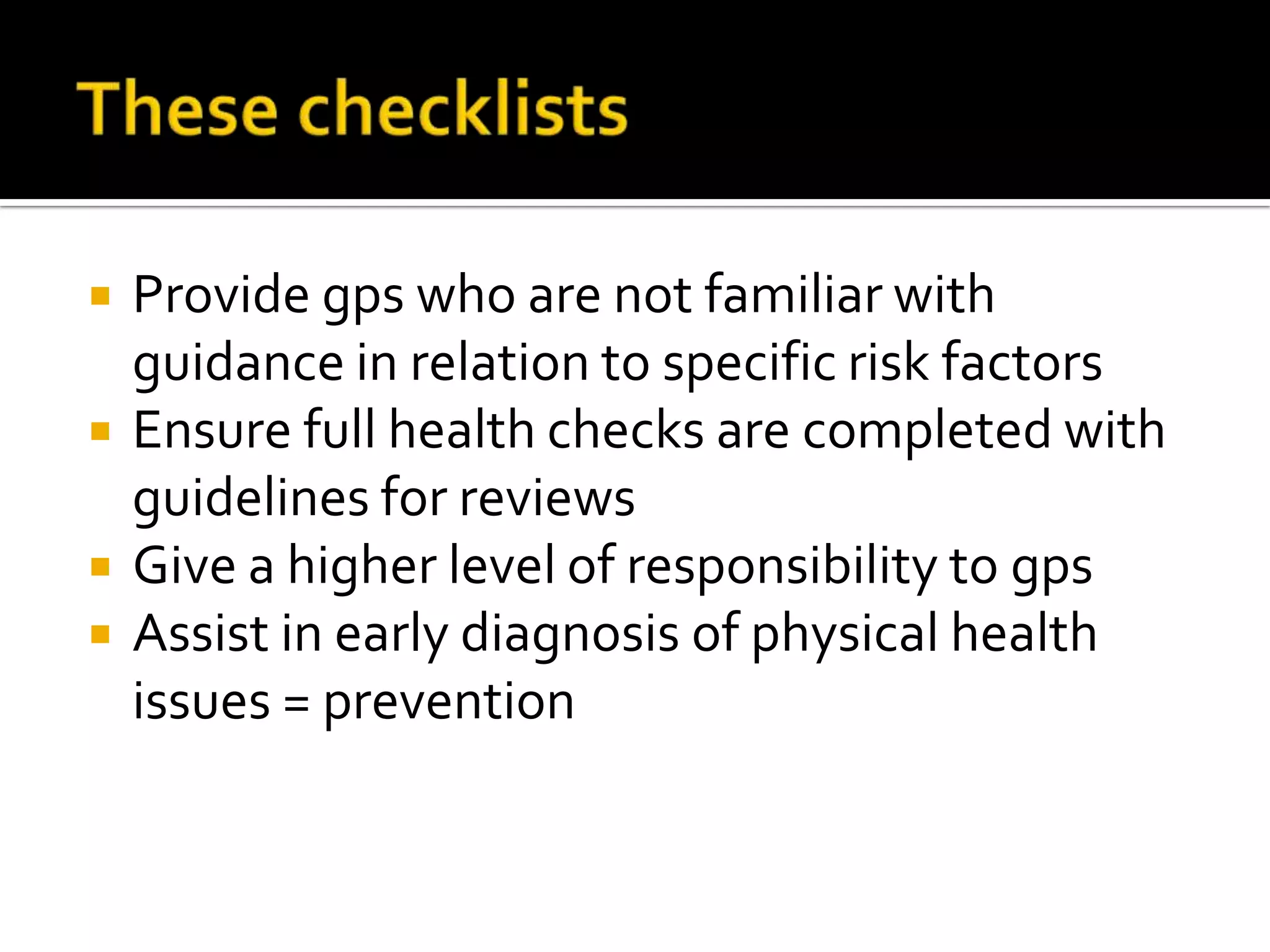
These checklistsProvide gps who are not familiar with guidance in relation to specific risk factorsEnsure full health checks are completed with guidelines for reviewsGive a higher level of responsibility to gpsAssist in early diagnosis of physical health issues = prevention
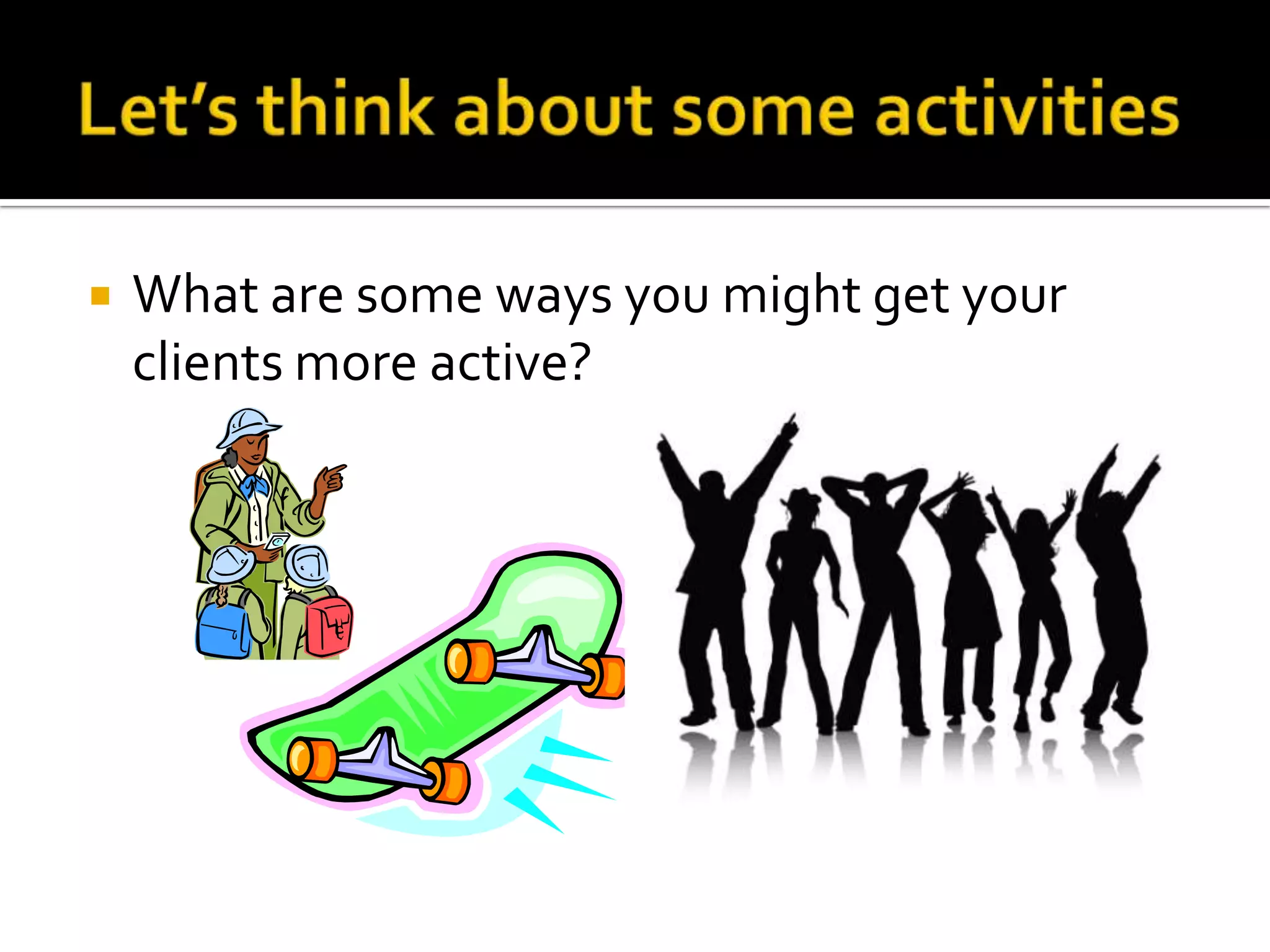
Let’s think about some activitiesWhat are some ways you might get your clients more active?
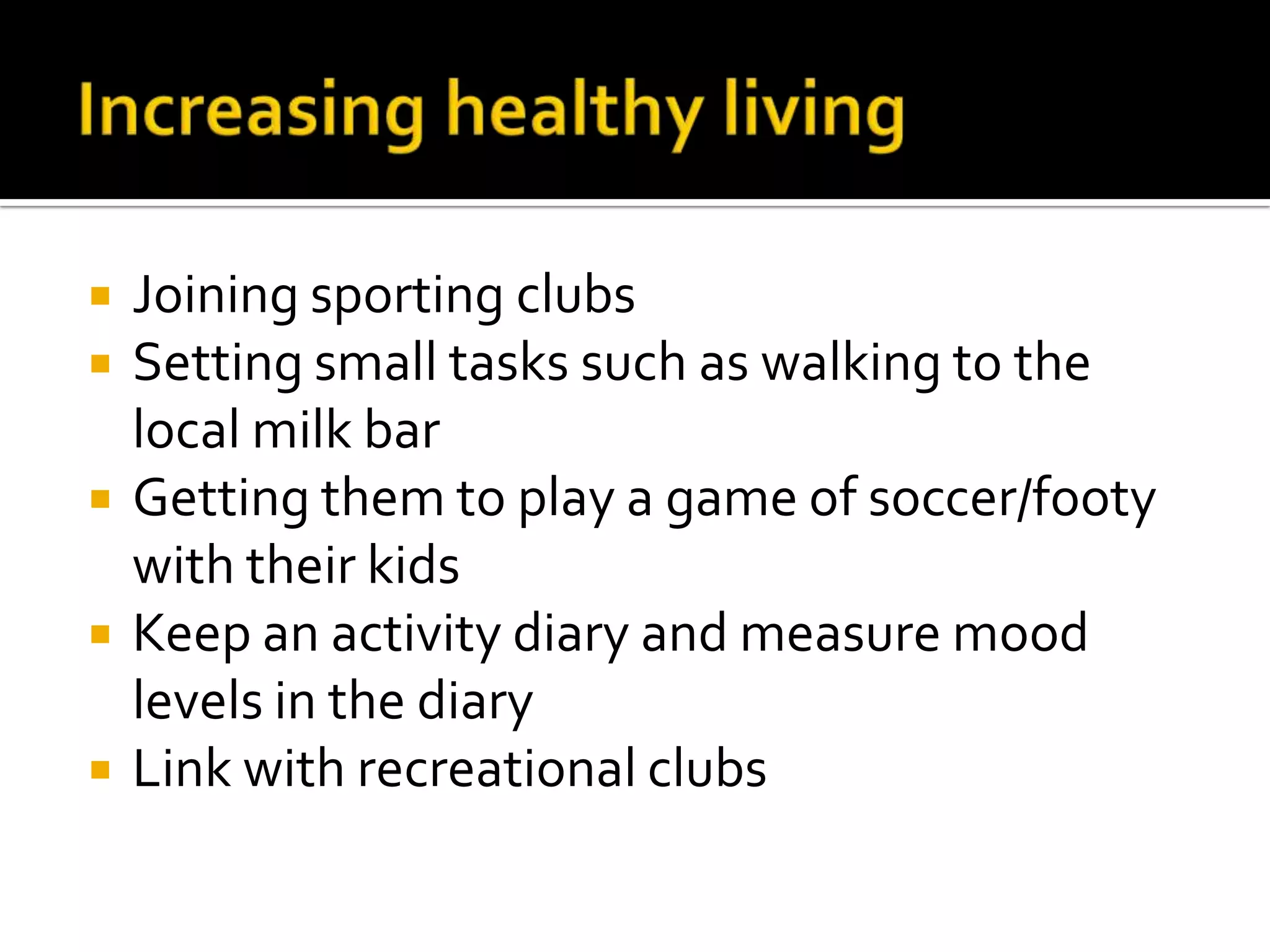
Increasing healthy livingJoining sporting clubsSetting small tasks such as walking to the local milk barGetting them to play a game of soccer/footy with their kidsKeep an activity diary and measure mood levels in the diary Link with recreational clubs
What would you do?Mustafa is a 28 year old male who is attending your service due to his cannabis use. He has been diagnosed with Major Depressive Disorder. He lives with his partner and their children (4 & 6 years of age). He is overweight and suffers from asthma. He is currently unemployed.How would you aim to improve Mustafa’s physical health?

Mental health cluster a session two 280411

  • 1.
    Mental health clusterAPhysical healthSession two 29/04/11
  • 2.
    Physical health andmental health
  • 3.
    Why is itan important consideration?Two pronged approach1) those with mental illness appear to be more susceptible to poor physical health2) physical activity can improve mental healthThe following information has been obtained from Mental Health and Physical Activity Information Pack- “Partnering to enhance recover”. Accessible on Moodle
  • 4.
    The evidenceStrongest evidencelinked increase physical activity with reduction in depressive symptomsCooper Institute “relative increases in maximal cardiorespiratory fitness and habitual physical activity are cross-sectionally associated with lower depressive symptomalogy and great emotional well-being”
  • 5.
    The evidence2002 meta-analysispublished in British Medical Journal concluded : when compared with no treatment, exercise reduced symptoms of depression and in studies relating exercise to cognitive therapy, the effect of exercise was similar.
  • 6.
    Why is itimportant?“psychiatric patients have high rates of physical illness, much of which goes undetected. Such investigations have led to calls for health professionals to be more aware of these findings and for better medical screening and treatment of psychiatric patients” World Federation for Mental Health (2004).
  • 7.
    Why is physicalhealth so poor?Mental illnessUnhealthy lifestyle behavioursMedicationsSegregations of primary health and mental health care sitesLack of counsellingLow socio economic status
  • 8.
    Why?Social factors e.g.poverty and inadequate housingLifestyle factors e.g. substance use, sedentary lifestyleBarriers accessing screening programs and health careDifficulties in communication or lack of attendance at medical appointments possibly resulting in delayed or missed diagnosisStigmatising attitudes of carers, health professionals and the broader community
  • 9.
    Socio economic statusPeoplewith mental illness are more likely to be low income earners, reliant on a pension or live in povertyIncreased costs in accessing health care due to increased needsGenerally limited to GP’s who bulk bill
  • 10.
    Access to servicesTravelissues or maintaining scheduled appointmentsParticularly problematic in rural or remote areasCommunication barriers
  • 11.
    Availability of servicesUnawareof how to access care and what options are availableGP’s may not have sufficient training in responding to mental illness or be aware of appropriate services for referralMany allied health professionals are not covered by Medicare
  • 12.
  • 13.
    Service silosRefusal ofsome specialist services to treat complex co-morbid patientsLack of continuity Gaps in professionals knowledge re physical health and vice versa
  • 14.
    Overcoming these barriersActivelydiscussing physical health issues alongside mental healthAdopting a patient, flexible and creative approach to assessmentAssessment of the physical health problem across a number of interviews, some spent just on the process of engagementReinforcing and writing down details of tests or treatmentsTaking a more active role in ensuring follow-upCreating effective partnerships between the consumer, family, carers, PG and mentalhealth clinicians
  • 15.
  • 16.
    NSW Government’s responseDevelopedguidelines for general practitioners for health checks for individuals presenting with particular mental health issuesIdentifies physical health risk factors prominent in patients with specific mental illness
  • 17.
    Patients with schizophreniaScreen for coronary artery disease and its risk factorsCheck for personal/family history of IHDTake a smoking historyCheck blood pressureCheck weightCheck lipidsIHD causes most of the excess mortality in this group
  • 18.
    Screen for diabetesDo BSLEvery 6-12 months if on atypical antipsychoticsScreen for side effects of medicationWeight gainMetabolic effects - glucose and lipidsHyperprolactinemiaExtrapyamidal side effects (EPSE)TardiveDyskinesia (TD)Yearly ECG for consumers > 55 years on antipsychoticsQTc prolongation with some antipsychotics
  • 19.
    Screen for substanceuse Take an alcohol and drug historyAdvise/refer if patterns of use are unsafeScreen for substance use complicationsAlcohol related disorders eg liver disease, peptic ulcer diseaseHepatitis B/C, HIV/AIDS, infective endocarditisScreen for cancer Women: mammogram, PAP smearFaecal occult blood - Rectal/colon cancerSkin cancer
  • 20.
    These checklistsProvide gpswho are not familiar with guidance in relation to specific risk factorsEnsure full health checks are completed with guidelines for reviewsGive a higher level of responsibility to gpsAssist in early diagnosis of physical health issues = prevention
  • 21.
    Let’s think aboutsome activitiesWhat are some ways you might get your clients more active?
  • 22.
    Increasing healthy livingJoiningsporting clubsSetting small tasks such as walking to the local milk barGetting them to play a game of soccer/footy with their kidsKeep an activity diary and measure mood levels in the diary Link with recreational clubs
  • 23.
    What would youdo?Mustafa is a 28 year old male who is attending your service due to his cannabis use. He has been diagnosed with Major Depressive Disorder. He lives with his partner and their children (4 & 6 years of age). He is overweight and suffers from asthma. He is currently unemployed.How would you aim to improve Mustafa’s physical health?