MANAGING PMS THROUGH
AYURVEDA
DR. SUBASHRI THANIGAIVEL BAMS., MSC&P, MBA(HM)
Menopause is“NOT”a disease either but a
“NATURAL”process in a Women’s Life
Reclaim your Energy
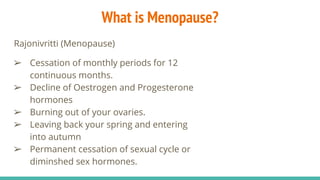
What is Menopause?
Rajonivritti (Menopause)
➢ Cessation of monthly periods for 12
continuous months.
➢ Decline of Oestrogen and Progesterone
hormones
➢ Burning out of your ovaries.
➢ Leaving back your spring and entering
into autumn
➢ Permanent cessation of sexual cycle or
diminshed sex hormones.
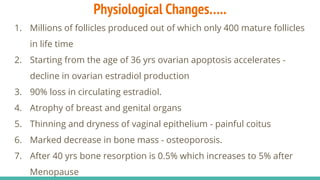
Physiological Changes…..
1. Millions of follicles produced out of which only 400 mature follicles
in life time
2. Starting from the age of 36 yrs ovarian apoptosis accelerates -
decline in ovarian estradiol production
3. 90% loss in circulating estradiol.
4. Atrophy of breast and genital organs
5. Thinning and dryness of vaginal epithelium - painful coitus
6. Marked decrease in bone mass - osteoporosis.
7. After 40 yrs bone resorption is 0.5% which increases to 5% after
Menopause
Why do I react like this?
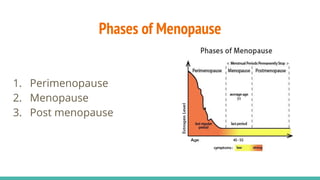
Phases of Menopause
1. Perimenopause
2. Menopause
3. Post menopause
Ayurvedic Perspective
Ayurveda entails a holistic physiological system based on the balance with its
cardinal doctrine of human physiology being constituted by Vata, Pitta and
Kapha and the natural components of earth, water, fire, air and ether.
Ayurvedic customised lifestyle modification strategy is an essential
component in a women’s approach in ameliorating the symptoms of
Menopause.
Dosa based nutrition, exercise, stress management, herbal supplements and
weight management.
Symptoms & Doshas
Vataja lakshanas: Nervousness, mood swings, palpitations, bloating,
constipation, significant joint pains, hot flashes.
Diet & Lifestyle
1. Increase - warm and easily digestible food, regular meal and spices like
fennel, cumin etc.
2. Decrease - cold food, too much of spicy, avoid hot and soft drinks,
caffeine and other sorts of stimulants.
3. Lifestyle - early to bed, regular sleeping timings, meditation, yoga and
exercises helps in improving the wellness of both body and mind.
4. Herbs - Aloe vera, Shatavari, Arjuna, Ashwagandha etc
Pittaja Rajonivritti
Symptoms: Prone to hot temper, irritability, feeling hot, night sweating, skin
problems, urinary tract infections
Diet & Lifestyle
1. Increase intake of cooling foods, water, sweet juicy fruits - grapes, pears,
plumps, melons, mangoes etc, cucumber and organic foods.
2. Avoid hot spicy foods, hot drinks and alcohol, avoid eating late at night.
3. Exercise and Yoga helps a lot, meditation is advised to reduce anger.
Exposure to sunlight to be reduced and exercise to be done moderately
4. Herbs like Aloe vera, shatavari, sandalwood, bala, shatapushpa,
Ashwagandha etc.
Symptoms of kapha rajonivritti
Lakshanas: Weight gain, fluid retention, oedema, slow digestion, lack of
concentration, sleepiness, dyslipidemia
Diet & Lifestyle
1. Increase - light, dry, warm and easily digestible food, regular meal and
spices like pepper, turmeric, ginger, whole grown vegetables.
2. Decrease - cold food, meat, cheese, sugary food items
3. Lifestyle - regular sleeping timings, meditation, yoga and exercises
helps in improving the wellness of both body and mind.
4. Herbs - Shatavari, Arjuna, guggulu Ashwagandha etc
Conventional Approach
‘Climacteric syndrome’ is the result of gradual failure of the ovaries to produce
estrogen and progesterone as a consequence of which the pituitary gland
become more active and produces greater quantity of FSH and LH which
produces many vasomotor and psychological changes.
HRT (hormone replacement therapy) is the only conventional treatment which
has its own limitations that causes vagainal dryness, breast cancer,
endometrial cancer, gallbladder diseases.
Menopause induced
Health conditions
1. Depression
2. Osteoporosis
3. Diabetes
4. Obesity
5. Hypertension
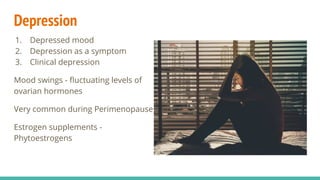
Depression
1. Depressed mood
2. Depression as a symptom
3. Clinical depression
Mood swings - fluctuating levels of
ovarian hormones
Very common during Perimenopause
Estrogen supplements -
Phytoestrogens
How to Deal?....
1. Break large tasks, set priorities, do what you can as you can
2. Activities - participate in mild exercise, movies, games, religious activities,
social activities.
3. Give it a time - don’t expect your mood to settle down immediately, let it
set gradually. “FEELING BETTER TAKES TIME”
4. Postpone important decisions - don’t urge or force yourself to take
decisions when you are depressed
5. Discuss with your near ones for more better objectives views of your
situation.
Depression and Osteoporosis -Risk factor
Specific immune and Endocrine mechanism with poor lifestyle habits and use
of antidepressants are also potential contributors of lowering your bone mass
- Osteoporosis
Schweiger et al., reported 15% deficit in spine bone mass measured by CT in
patients with major depression. Depressive disorders are major cause of
disability in US.
Antidepressants (SSRI) - proven to cause low bone mass especially in elderly
women
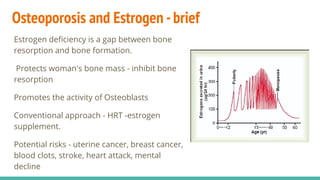
Osteoporosis and Estrogen -brief
Estrogen deficiency is a gap between bone
resorption and bone formation.
Protects woman's bone mass - inhibit bone
resorption
Promotes the activity of Osteoblasts
Conventional approach - HRT -estrogen
supplement.
Potential risks - uterine cancer, breast cancer,
blood clots, stroke, heart attack, mental
decline
Phytoestrogens are your“SUPER HEROS”
“Phytoestrogens chemical structure resembles the estrogen”
Phytoestrogens are in polyphenols groups:
Lignans - fibre packed plant food, seeds, grains, berries, flaxseeds, nuts, fruits
Isoflavones - soyabeans, nuts, fruits, legumes.
Resveratrol - fruits, berries, peanuts, red wine
Quercetin - antioxidant flavonoids found in fruits, vegges, grains.
Menopause -“A stimulating transition to the
beginning of an euphoric period of Wisdom
and grace”
- Dr Subashri Thanigaivel
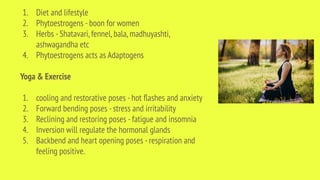
1. Diet and lifestyle
2. Phytoestrogens -boon for women
3. Herbs -Shatavari,fennel,bala,madhuyashti,
ashwagandha etc
4. Phytoestrogens acts as Adaptogens
Yoga & Exercise
1. cooling and restorative poses -hot flashes and anxiety
2. Forward bending poses -stress and irritability
3. Reclining and restoring poses -fatigue and insomnia
4. Inversion will regulate the hormonal glands
5. Backbend and heart opening poses -respiration and
feeling positive.
THANK YOU ALL!!

Menopause a conceptual study

  • 1.
    MANAGING PMS THROUGH AYURVEDA DR.SUBASHRI THANIGAIVEL BAMS., MSC&P, MBA(HM)
  • 2.
    Menopause is“NOT”a diseaseeither but a “NATURAL”process in a Women’s Life Reclaim your Energy
  • 3.
    What is Menopause? Rajonivritti(Menopause) ➢ Cessation of monthly periods for 12 continuous months. ➢ Decline of Oestrogen and Progesterone hormones ➢ Burning out of your ovaries. ➢ Leaving back your spring and entering into autumn ➢ Permanent cessation of sexual cycle or diminshed sex hormones.
  • 4.
    Physiological Changes….. 1. Millionsof follicles produced out of which only 400 mature follicles in life time 2. Starting from the age of 36 yrs ovarian apoptosis accelerates - decline in ovarian estradiol production 3. 90% loss in circulating estradiol. 4. Atrophy of breast and genital organs 5. Thinning and dryness of vaginal epithelium - painful coitus 6. Marked decrease in bone mass - osteoporosis. 7. After 40 yrs bone resorption is 0.5% which increases to 5% after Menopause
  • 5.
    Why do Ireact like this?
  • 6.
    Phases of Menopause 1.Perimenopause 2. Menopause 3. Post menopause
  • 7.
    Ayurvedic Perspective Ayurveda entailsa holistic physiological system based on the balance with its cardinal doctrine of human physiology being constituted by Vata, Pitta and Kapha and the natural components of earth, water, fire, air and ether. Ayurvedic customised lifestyle modification strategy is an essential component in a women’s approach in ameliorating the symptoms of Menopause. Dosa based nutrition, exercise, stress management, herbal supplements and weight management.
  • 8.
    Symptoms & Doshas Vatajalakshanas: Nervousness, mood swings, palpitations, bloating, constipation, significant joint pains, hot flashes. Diet & Lifestyle 1. Increase - warm and easily digestible food, regular meal and spices like fennel, cumin etc. 2. Decrease - cold food, too much of spicy, avoid hot and soft drinks, caffeine and other sorts of stimulants. 3. Lifestyle - early to bed, regular sleeping timings, meditation, yoga and exercises helps in improving the wellness of both body and mind. 4. Herbs - Aloe vera, Shatavari, Arjuna, Ashwagandha etc
  • 9.
    Pittaja Rajonivritti Symptoms: Proneto hot temper, irritability, feeling hot, night sweating, skin problems, urinary tract infections Diet & Lifestyle 1. Increase intake of cooling foods, water, sweet juicy fruits - grapes, pears, plumps, melons, mangoes etc, cucumber and organic foods. 2. Avoid hot spicy foods, hot drinks and alcohol, avoid eating late at night. 3. Exercise and Yoga helps a lot, meditation is advised to reduce anger. Exposure to sunlight to be reduced and exercise to be done moderately 4. Herbs like Aloe vera, shatavari, sandalwood, bala, shatapushpa, Ashwagandha etc.
  • 10.
    Symptoms of kapharajonivritti Lakshanas: Weight gain, fluid retention, oedema, slow digestion, lack of concentration, sleepiness, dyslipidemia Diet & Lifestyle 1. Increase - light, dry, warm and easily digestible food, regular meal and spices like pepper, turmeric, ginger, whole grown vegetables. 2. Decrease - cold food, meat, cheese, sugary food items 3. Lifestyle - regular sleeping timings, meditation, yoga and exercises helps in improving the wellness of both body and mind. 4. Herbs - Shatavari, Arjuna, guggulu Ashwagandha etc
  • 11.
    Conventional Approach ‘Climacteric syndrome’is the result of gradual failure of the ovaries to produce estrogen and progesterone as a consequence of which the pituitary gland become more active and produces greater quantity of FSH and LH which produces many vasomotor and psychological changes. HRT (hormone replacement therapy) is the only conventional treatment which has its own limitations that causes vagainal dryness, breast cancer, endometrial cancer, gallbladder diseases.
  • 12.
    Menopause induced Health conditions 1.Depression 2. Osteoporosis 3. Diabetes 4. Obesity 5. Hypertension
  • 13.
    Depression 1. Depressed mood 2.Depression as a symptom 3. Clinical depression Mood swings - fluctuating levels of ovarian hormones Very common during Perimenopause Estrogen supplements - Phytoestrogens
  • 14.
    How to Deal?.... 1.Break large tasks, set priorities, do what you can as you can 2. Activities - participate in mild exercise, movies, games, religious activities, social activities. 3. Give it a time - don’t expect your mood to settle down immediately, let it set gradually. “FEELING BETTER TAKES TIME” 4. Postpone important decisions - don’t urge or force yourself to take decisions when you are depressed 5. Discuss with your near ones for more better objectives views of your situation.
  • 15.
    Depression and Osteoporosis-Risk factor Specific immune and Endocrine mechanism with poor lifestyle habits and use of antidepressants are also potential contributors of lowering your bone mass - Osteoporosis Schweiger et al., reported 15% deficit in spine bone mass measured by CT in patients with major depression. Depressive disorders are major cause of disability in US. Antidepressants (SSRI) - proven to cause low bone mass especially in elderly women
  • 16.
    Osteoporosis and Estrogen-brief Estrogen deficiency is a gap between bone resorption and bone formation. Protects woman's bone mass - inhibit bone resorption Promotes the activity of Osteoblasts Conventional approach - HRT -estrogen supplement. Potential risks - uterine cancer, breast cancer, blood clots, stroke, heart attack, mental decline
  • 17.
    Phytoestrogens are your“SUPERHEROS” “Phytoestrogens chemical structure resembles the estrogen” Phytoestrogens are in polyphenols groups: Lignans - fibre packed plant food, seeds, grains, berries, flaxseeds, nuts, fruits Isoflavones - soyabeans, nuts, fruits, legumes. Resveratrol - fruits, berries, peanuts, red wine Quercetin - antioxidant flavonoids found in fruits, vegges, grains.
  • 18.
    Menopause -“A stimulatingtransition to the beginning of an euphoric period of Wisdom and grace” - Dr Subashri Thanigaivel
  • 19.
    1. Diet andlifestyle 2. Phytoestrogens -boon for women 3. Herbs -Shatavari,fennel,bala,madhuyashti, ashwagandha etc 4. Phytoestrogens acts as Adaptogens Yoga & Exercise 1. cooling and restorative poses -hot flashes and anxiety 2. Forward bending poses -stress and irritability 3. Reclining and restoring poses -fatigue and insomnia 4. Inversion will regulate the hormonal glands 5. Backbend and heart opening poses -respiration and feeling positive.
  • 20.