Meningitis
‫وتقديم‬ ‫اعداد‬
:
‫جامعي‬ ‫ممرض‬
:
‫ابراهيم‬ ‫إسماعيل‬ ‫يوسف‬
‫ممرض‬
‫فني‬
:
‫عبدهللا‬ ‫رمضان‬ ‫ضرغام‬
‫برنامج‬
‫الباطنية‬ ‫ردهات‬ ‫ميسرين‬ ‫اعداد‬
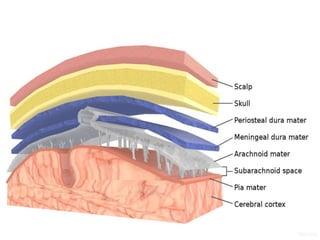
Meningitis is an inflammation of the
meninges, the protective membranes that
surround the brain and spinal cord.
.
‫األغ‬ ‫وهي‬ ، ‫السحايا‬ ‫يصيب‬ ‫التهاب‬ ‫هو‬ ‫السحايا‬ ‫التهاب‬
‫شية‬
‫الشوكي‬ ‫والنخاع‬ ‫بالدماغ‬ ‫تحيط‬ ‫التي‬ ‫الواقية‬
.
.
Epidemiology
Incidence is between 3-5 per 100,000
More than 2,000 deaths annually in the U.S.
Relative frequency of bacterial species varies with age
The peak incidence is in the winter and early spring
‫المرض‬ ‫وبائية‬
‫بين‬ ‫اإلصابة‬ ‫نسبة‬ ‫تتراوح‬
3
-
5
‫لكل‬
100،000
‫من‬ ‫أكثر‬
2000
‫المتحدة‬ ‫الواليات‬ ‫في‬ ‫ا‬ً‫ي‬‫سنو‬ ‫وفاة‬ ‫حالة‬
.
‫العمر‬ ‫تقدم‬ ‫مع‬ ‫البكتيرية‬ ‫لألنواع‬ ‫النسبي‬ ‫التكرار‬ ‫يختلف‬
‫الربيع‬ ‫وأوائل‬ ‫الشتاء‬ ‫في‬ ‫الحدوث‬ ‫ذروة‬
Meningitis is classified as aseptic or septic.
1- aseptic meningitis, the cause is viral or secondary to lymphoma, leukemia, or
brain abscess.
2- Septic meningitis refers to meningitis caused by bacteria, most commonly
Neisseria meningitidis, although
Haemophilus influenzae and Streptococcus pneumoniae are also causative agents
‫على‬ ‫السحايا‬ ‫التهاب‬ ‫يصنف‬
‫أنه‬
Aseptic
(
‫معقم‬
)
‫أو‬
septic
(
‫إنتاني‬
.)
1
-
‫السحايا‬ ‫التهاب‬
‫المعقم‬
Aseptic
،
‫خ‬ ‫أو‬ ‫اللوكيميا‬ ‫أو‬ ‫الليمفاوي‬ ‫للورم‬ ‫ثانوي‬ ‫أو‬ ‫فيروسي‬ ‫سببه‬ ‫يكون‬
‫راج‬
‫المخ‬
.
2
-
‫السحايا‬ ‫التهاب‬
‫اإلنتاني‬
septic
‫يشير‬
‫م‬ ‫الرغم‬ ‫وعلى‬ ، ‫البكتيريا‬ ‫تسببه‬ ‫الذي‬ ‫السحايا‬ ‫التهاب‬ ‫إلى‬
‫فإن‬ ‫ذلك‬ ‫ن‬
‫النيسرية‬
‫السحائية‬
Neisseria meningitidis
‫األكثر‬
ً‫ا‬‫شيوع‬
‫المستدمية‬
‫النزلية‬
‫العوامل‬ ‫من‬ ‫ا‬ً‫ض‬‫أي‬ ‫هي‬ ‫الرئوية‬ ‫والعقدية‬
‫المسببة‬
Factors that increase the risk for developing bacterial meningitis
include:
- tobacco use and viral upper respiratory infection
- Otitis media and mastoiditis
-Persons with immune system deficiencies.
‫ما‬ ‫الجرثومي‬ ‫السحايا‬ ‫بالتهاب‬ ‫اإلصابة‬ ‫خطر‬ ‫من‬ ‫تزيد‬ ‫التي‬ ‫العوامل‬ ‫تتضمن‬
‫يلي‬
:
-
‫الفيروسية‬ ‫العلوي‬ ‫التنفسي‬ ‫الجهاز‬ ‫والتهابات‬ ‫التبغ‬ ‫تعاطي‬
-
‫والتهاب‬ ‫الوسطى‬ ‫األذن‬ ‫التهاب‬
‫الخشاء‬
-
‫المناعة‬ ‫جهاز‬ ‫في‬ ‫قصور‬ ‫من‬ ‫يعانون‬ ‫الذين‬ ‫األشخاص‬
.
Pathophysiology
Meningeal infections originate in one of two ways:
1- through the bloodstream as a consequence of other infections,
2- by direct extension, such as might occur after a traumatic injury to the
facial bones, or secondary to invasive procedures
‫المرضية‬ ‫الفيزيولوجيا‬
‫طريقتين‬ ‫بإحدى‬ ‫السحائية‬ ‫العدوى‬ ‫تنشأ‬
:
1
-
‫أخرى‬ ‫التهابات‬ ‫نتيجة‬ ‫الدم‬ ‫مجرى‬ ‫خالل‬ ‫من‬
،
2
-
‫ثانوي‬ ‫أو‬ ، ‫الوجه‬ ‫عظام‬ ‫إصابة‬ ‫بعد‬ ‫يحدث‬ ‫قد‬ ‫الذي‬ ‫مثل‬ ، ‫المباشر‬ ‫االمتداد‬ ‫طريق‬ ‫عن‬
‫لإلجراءات‬
‫المجتاحة‬
(
‫القسطره‬
‫القلبيه‬
)
Clinical Manifestations
• Headache and fever are frequently the initial symptoms.
•Nuchal rigidity (stiff neck) is an early sign. Any attempts
at flexion of the head are difficult because of spasms in the
muscles of the neck. Forceful flexion causes severe pain.
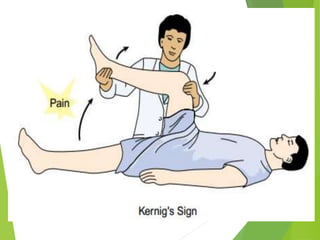
•Positive Kernig’s sign: When the patient is lying with the
thigh flexed on the abdomen, the leg cannot be completely
extended
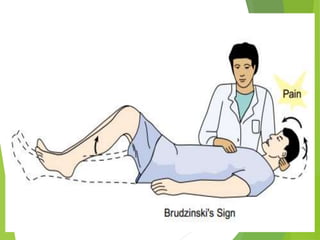
•Positive Brudzinski’s sign: When the patient’s neck is
flexed, flexion of the knees and hips is produced; when
passive flexion of the lower extremity of one side is made,
a similar movement is seen in the opposite extremity .
•Photophobia: extreme sensitivity to light
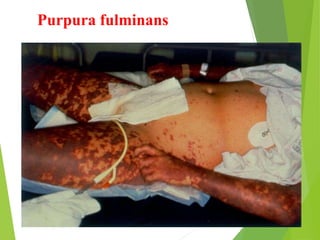
• A rash can be a striking feature of N.meningitidis
infection,
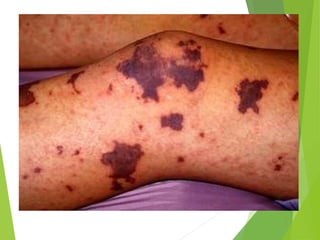
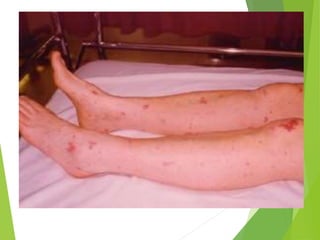
• Skin lesions develop, ranging from a petechial rash with
purpuric lesions to large areas of ecchymosis.
• Disorientation and memory impairment are common
• lethargy, unresponsiveness, and coma
• Seizures and increased intracranial pressure (ICP)
Purpura fulminans
Assessment and Diagnostic Findings
To identify the causative organism is conducted.
- Bacterial culture and Gram staining of CSF and blood are
key diagnostic tests .
- The presence of polysaccharide antigen in CSF further
supports the diagnosis of bacterial meningitis
Complications include visual impairment, deafness,
seizures, paralysis, hydrocephalus, and septic shock
Medical Management
1- administration of an antibiotic
- Penicillin antibiotics (eg, ampicillin, piperacillin)
- cephalosporins (eg, ceftriaxone sodium, cefotaxime
sodium)
- Vancomycin hydrochloride alone or in combination
with rifampin
2- Dexamethasone if given 15 to 20 minutes before the
first dose of antibiotic and every 6 hours for the next
4 day
3- Antiseizures, which may occur in the early course of
the disease, are controlled with phenytoin(Dilantin)
Vaccinations
- Asplenic pts should have had a pneumoccocal
vaccine prior to their splenectomy
- Vaccines available for H. influenza
- Prophylaxis for N. meningitidis contacts
Rifampin
Important components of nursing care include:
•Monitoring body weight, serum electrolytes, and urine
volume•
Protecting the patient from injury secondary to seizure
activity or altered level of consciousness
•Preventing complications associated with immobility, such
as pressure ulcers and pneumonia
•Instituting droplet precautions until 24 hours after the
initiation of antibiotic therapy (oral and nasal discharge is
considered infectious)
- American College Health Association,
Baltimore, MD (2007)
www.acha.org/meningitis
- Centers for Disease Control and
Prevention (2007).
www.cdc.gov/ncidod/dbmd/diseaseinfo/m
eningococcal_g.htm.
Sources:

Meningitis & nursing (2).pptx

  • 1.
    Meningitis ‫وتقديم‬ ‫اعداد‬ : ‫جامعي‬ ‫ممرض‬ : ‫ابراهيم‬‫إسماعيل‬ ‫يوسف‬ ‫ممرض‬ ‫فني‬ : ‫عبدهللا‬ ‫رمضان‬ ‫ضرغام‬ ‫برنامج‬ ‫الباطنية‬ ‫ردهات‬ ‫ميسرين‬ ‫اعداد‬
  • 2.
    Meningitis is aninflammation of the meninges, the protective membranes that surround the brain and spinal cord. . ‫األغ‬ ‫وهي‬ ، ‫السحايا‬ ‫يصيب‬ ‫التهاب‬ ‫هو‬ ‫السحايا‬ ‫التهاب‬ ‫شية‬ ‫الشوكي‬ ‫والنخاع‬ ‫بالدماغ‬ ‫تحيط‬ ‫التي‬ ‫الواقية‬ .
  • 3.
  • 4.
    Epidemiology Incidence is between3-5 per 100,000 More than 2,000 deaths annually in the U.S. Relative frequency of bacterial species varies with age The peak incidence is in the winter and early spring ‫المرض‬ ‫وبائية‬ ‫بين‬ ‫اإلصابة‬ ‫نسبة‬ ‫تتراوح‬ 3 - 5 ‫لكل‬ 100،000 ‫من‬ ‫أكثر‬ 2000 ‫المتحدة‬ ‫الواليات‬ ‫في‬ ‫ا‬ً‫ي‬‫سنو‬ ‫وفاة‬ ‫حالة‬ . ‫العمر‬ ‫تقدم‬ ‫مع‬ ‫البكتيرية‬ ‫لألنواع‬ ‫النسبي‬ ‫التكرار‬ ‫يختلف‬ ‫الربيع‬ ‫وأوائل‬ ‫الشتاء‬ ‫في‬ ‫الحدوث‬ ‫ذروة‬
  • 5.
    Meningitis is classifiedas aseptic or septic. 1- aseptic meningitis, the cause is viral or secondary to lymphoma, leukemia, or brain abscess. 2- Septic meningitis refers to meningitis caused by bacteria, most commonly Neisseria meningitidis, although Haemophilus influenzae and Streptococcus pneumoniae are also causative agents ‫على‬ ‫السحايا‬ ‫التهاب‬ ‫يصنف‬ ‫أنه‬ Aseptic ( ‫معقم‬ ) ‫أو‬ septic ( ‫إنتاني‬ .) 1 - ‫السحايا‬ ‫التهاب‬ ‫المعقم‬ Aseptic ، ‫خ‬ ‫أو‬ ‫اللوكيميا‬ ‫أو‬ ‫الليمفاوي‬ ‫للورم‬ ‫ثانوي‬ ‫أو‬ ‫فيروسي‬ ‫سببه‬ ‫يكون‬ ‫راج‬ ‫المخ‬ . 2 - ‫السحايا‬ ‫التهاب‬ ‫اإلنتاني‬ septic ‫يشير‬ ‫م‬ ‫الرغم‬ ‫وعلى‬ ، ‫البكتيريا‬ ‫تسببه‬ ‫الذي‬ ‫السحايا‬ ‫التهاب‬ ‫إلى‬ ‫فإن‬ ‫ذلك‬ ‫ن‬ ‫النيسرية‬ ‫السحائية‬ Neisseria meningitidis ‫األكثر‬ ً‫ا‬‫شيوع‬ ‫المستدمية‬ ‫النزلية‬ ‫العوامل‬ ‫من‬ ‫ا‬ً‫ض‬‫أي‬ ‫هي‬ ‫الرئوية‬ ‫والعقدية‬ ‫المسببة‬
  • 6.
    Factors that increasethe risk for developing bacterial meningitis include: - tobacco use and viral upper respiratory infection - Otitis media and mastoiditis -Persons with immune system deficiencies. ‫ما‬ ‫الجرثومي‬ ‫السحايا‬ ‫بالتهاب‬ ‫اإلصابة‬ ‫خطر‬ ‫من‬ ‫تزيد‬ ‫التي‬ ‫العوامل‬ ‫تتضمن‬ ‫يلي‬ : - ‫الفيروسية‬ ‫العلوي‬ ‫التنفسي‬ ‫الجهاز‬ ‫والتهابات‬ ‫التبغ‬ ‫تعاطي‬ - ‫والتهاب‬ ‫الوسطى‬ ‫األذن‬ ‫التهاب‬ ‫الخشاء‬ - ‫المناعة‬ ‫جهاز‬ ‫في‬ ‫قصور‬ ‫من‬ ‫يعانون‬ ‫الذين‬ ‫األشخاص‬ .
  • 7.
    Pathophysiology Meningeal infections originatein one of two ways: 1- through the bloodstream as a consequence of other infections, 2- by direct extension, such as might occur after a traumatic injury to the facial bones, or secondary to invasive procedures ‫المرضية‬ ‫الفيزيولوجيا‬ ‫طريقتين‬ ‫بإحدى‬ ‫السحائية‬ ‫العدوى‬ ‫تنشأ‬ : 1 - ‫أخرى‬ ‫التهابات‬ ‫نتيجة‬ ‫الدم‬ ‫مجرى‬ ‫خالل‬ ‫من‬ ، 2 - ‫ثانوي‬ ‫أو‬ ، ‫الوجه‬ ‫عظام‬ ‫إصابة‬ ‫بعد‬ ‫يحدث‬ ‫قد‬ ‫الذي‬ ‫مثل‬ ، ‫المباشر‬ ‫االمتداد‬ ‫طريق‬ ‫عن‬ ‫لإلجراءات‬ ‫المجتاحة‬ ( ‫القسطره‬ ‫القلبيه‬ )
  • 8.
    Clinical Manifestations • Headacheand fever are frequently the initial symptoms. •Nuchal rigidity (stiff neck) is an early sign. Any attempts at flexion of the head are difficult because of spasms in the muscles of the neck. Forceful flexion causes severe pain. •Positive Kernig’s sign: When the patient is lying with the thigh flexed on the abdomen, the leg cannot be completely extended •Positive Brudzinski’s sign: When the patient’s neck is flexed, flexion of the knees and hips is produced; when passive flexion of the lower extremity of one side is made, a similar movement is seen in the opposite extremity .
  • 11.
    •Photophobia: extreme sensitivityto light • A rash can be a striking feature of N.meningitidis infection, • Skin lesions develop, ranging from a petechial rash with purpuric lesions to large areas of ecchymosis. • Disorientation and memory impairment are common • lethargy, unresponsiveness, and coma • Seizures and increased intracranial pressure (ICP)
  • 12.
  • 15.
    Assessment and DiagnosticFindings To identify the causative organism is conducted. - Bacterial culture and Gram staining of CSF and blood are key diagnostic tests . - The presence of polysaccharide antigen in CSF further supports the diagnosis of bacterial meningitis Complications include visual impairment, deafness, seizures, paralysis, hydrocephalus, and septic shock
  • 16.
    Medical Management 1- administrationof an antibiotic - Penicillin antibiotics (eg, ampicillin, piperacillin) - cephalosporins (eg, ceftriaxone sodium, cefotaxime sodium) - Vancomycin hydrochloride alone or in combination with rifampin 2- Dexamethasone if given 15 to 20 minutes before the first dose of antibiotic and every 6 hours for the next 4 day 3- Antiseizures, which may occur in the early course of the disease, are controlled with phenytoin(Dilantin)
  • 17.
    Vaccinations - Asplenic ptsshould have had a pneumoccocal vaccine prior to their splenectomy - Vaccines available for H. influenza - Prophylaxis for N. meningitidis contacts Rifampin
  • 18.
    Important components ofnursing care include: •Monitoring body weight, serum electrolytes, and urine volume• Protecting the patient from injury secondary to seizure activity or altered level of consciousness •Preventing complications associated with immobility, such as pressure ulcers and pneumonia •Instituting droplet precautions until 24 hours after the initiation of antibiotic therapy (oral and nasal discharge is considered infectious)
  • 19.
    - American CollegeHealth Association, Baltimore, MD (2007) www.acha.org/meningitis - Centers for Disease Control and Prevention (2007). www.cdc.gov/ncidod/dbmd/diseaseinfo/m eningococcal_g.htm. Sources: