1 
MEDICAL ANTHROPOLOGY: 
How Illness is Traditionally Perceived 
and Cured Around the World 
Explanations of Illness 
In the Western World, people usually do not make a distinction between illness and 
disease. These two terms seem to mean essentially the same thing and are often used 
interchangeably. However, it is important to define illness and disease differently when 
considering some non-western cultural traditions. Disease is an objectively measurable 
pathological condition of the body. Tooth decay, measles, or a broken bone are 
examples. In contrast, illness is a feeling of not being normal and healthy. Illness may, 
in fact, be due to a disease. However, it may also be due to a feeling of psychological 
or spiritual imbalance. By definition, perceptions of illness are highly culture related 
while disease usually is not. It is important for health professionals who treat people 
from other cultures to understand what their patients believe can cause them to be ill 
and what kind of curing methods they consider effective as well as acceptable. 
Understanding a culture's perception of illness is also useful in discovering major 
aspects of their world view. 
What Causes Illness? 
How illness is explained often varies radically from culture to culture. Likewise, the 
methods considered acceptable for curing illness in one culture may be rejected by 
another. These differences can be broadly generalized in terms of two explanatory 
traditions--naturalistic and personalistic. 
Naturalistic Explanation 
The Western World now mostly relies on a naturalistic explanation of illness. This 
medical tradition had its beginnings in ancient Greece, especially with the ideas of 
Hippocrates in the 4th and 5th centuries B.C. However, it did not begin to take its 
modern form until the 16th century A.D. 
The naturalistic explanation assumes that illness is only due to impersonal, 
mechanistic causes in nature that can be potentially understood and cured by the 
application of the scientific method of discovery. Typical causes of illness accepted in 
naturalistic medical systems include: 
1. organic breakdown or deterioration (e.g., tooth decay, heart failure, senility) 
2. obstruction (e.g., kidney stones, arterial blockage due to plaque build-up) 
3. injury (e.g., broken bones, bullet wounds)
2 
4. imbalance (e.g., too much or too little of specific hormones and salts in the blood) 
5. malnutrition (e.g., too much or too little food, not enough proteins, vitamins, or 
minerals) 
6. parasites (e.g., bacteria, viruses, amoebas, worms) 
A medical system that explains illness as being due to impersonal, mechanistic causes 
in nature that can be potentially understood and cured by the application of the scientific 
method of discovery. Typical causes accepted in naturalistic medical systems include 
organic breakdown or deterioration, obstruction, injury, imbalance, malnutrition, and 
parasites. Students learning to be doctors or nurses in medical schools throughout the 
modern world are taught this kind of naturalistic explanation. However, there are other 
kinds of naturalistic medical systems also in use today. In Latin America, many people 
still also rely on humoral pathology to explain and cure their illnesses. This is especially 
true in rural areas. 
Students learning to be doctors or nurses in medical schools throughout the modern 
world are taught this kind of naturalistic explanation. However, there are actually 
several different naturalistic medical systems in use today. In Latin America, many 
people still also rely on humoral pathology to explain and cure their illnesses. This is 
especially true in rural areas among less educated people. To learn more about this 
alternative medical system, click the button below. 
Naturalistic medical systems similar to European humoral pathology were developed 
independently in India (Ayurvedic system ) and China (acupuncture and herbal 
medicine ). 
Personalistic Explanation 
Much of the non-western world traditionally accepted a personalistic explanation for 
illness. Today, it is mostly found among people in small-scale societies and some 
subcultures of larger nations. For them, illness is seen as being due to acts or wishes 
of other people or supernatural beings and forces. There is no room for accidents. 
Adherents of personalistic medical systems believe that the causes and cures of illness 
are not to be found only in the natural world. Curers usually must use supernatural 
means to understand what is wrong with their patients and to return them to health. 
Typical causes of illness in personalistic medical systems include: 
1. intrusion of foreign objects into the body by supernatural means 
2. spirit possession, loss, or damage 
3. bewitching
3 
small-scale society: 
a society of a few dozen to several thousand people who live by foraging wild foods, 
herding domesticated animals, or non-intensive horticulture on the village level. Such 
societies lack cities as well as complex economies and governments. Kinship 
relationships are usually highly important in comparison to the common pattern of large-scale 
societies. 
The intrusion of foreign objects was a common explanation among many Native 
American cultures for internal body pains such as headaches and stomachaches. The 
presumed foreign objects could be rocks, bones, insects, arrowheads, small snakes, or 
even supernatural objects. It was believed that they were intentionally put into an 
individual's body by witchcraft or some other supernatural means. The fact that there 
was no wound in the skin for the entry of the objects was consistent with the belief that 
supernatural actions were involved. The cure for this class of illness was the removal of 
the object by a shaman (a person who is not part of an organized religion and is in 
direct contact with the spirit world, usually through a trance state. A shaman has spirit 
helpers at his or her command to carry out curing, divining, and bewitching. 
Shamanistic power is acquired individually, usually in physical and/or mental solitude 
and isolation from other humans. Spirits or some other supernatural entities are 
revealed to the shaman and he or she learns how to control them. Training by older 
shamans usually occurs to help the apprentice shaman understand and use his or her 
powers.) 
This usually involved a lengthy non-surgical procedure that was both medical and 
religious. Typically, the shaman would appeal to supernatural spirits for assistance, 
manipulate the patient's body, blow tobacco smoke over the site of the pain, and suck 
on the skin over the pain with a tube or by mouth to remove the object. However, there 
would be no incision made in the skin. 
It is easy for people who only accept a naturalistic explanation for illness to reject the 
concept of the intrusion of foreign objects into the body by supernatural means. 
However, it is of value to keep in mind that this explanation is similar to the "germ 
theory" that is readily accepted by most people in the western world today. Both 
explanations require the belief in something that cannot be seen by most people. In 
both cases, there is an act of faith. During the late 19th and early 20th centuries, it was 
difficult for microbiologists and physicians such as Louis Pasteur, Joseph Lister, and 
Robert Koch to convince the medical profession that bacteria and other microorganisms 
can cause infection and disease. It took even longer for the general public in Europe 
and North America to be convinced that there are harmful microscopic "germs."
4 
Susto 
(literally "fright or sudden fear" in Spanish) 
a kind of personalistic illness found among some Latinos in the United States and parts 
of Latin America. The presumed cause is the loss of one's soul due to incidents that 
have a destabilizing effect on an individual (e.g., being thrown from a horse, having a 
nighttime encounter with a ghost, or being in a social situation that causes fear or 
anger). Typical symptoms of susto are restlessness during sleep as well as being 
listless and weak when awake, lack an appetite, and little interest in one's own personal 
appearance. Susto is also known as perdida de la sombra (literally "loss of the shadow" 
in Spanish). 
In personalistic medical systems, spirit possession, loss, or damage are seen as the 
result of actions by supernatural beings or people. They may also be due to certain 
kinds of unpleasant or shocking social situations. An example of this kind of illness is 
found among some Hispanics in the United States and Latin America. It is called susto 
, which literally means fright or sudden fear in Spanish. The fear is of losing one's soul. 
Susto is also referred to as perdida de la sombra (literally, loss of the shadow). This 
latter name is likely a reference to the fact that people who do not have souls do not 
have shadows or reflections in mirrors, like Hollywood movie vampires. Susto results 
from incidents that have a destabilizing effect on an individual, causing the soul (espiritu 
) to leave the body. Typical incidents that can cause susto include: 
1. the sudden, unexpected barking of a dog 
2. being thrown from a horse 
3. tripping over an unnoticed object 
4. sharing a hospital ward with a patient who has died during the night 
5. having a nighttime encounter with a ghost who keeps your spirit from 
finding its way back into your body before you wake 
6. being socially impinged upon by society (e.g., being forced to do 
something that you do not want to do) 
7. being in a social situation that causes you to have fear or anger 
Common symptoms of susto are restlessness during sleep as well as being listless and 
weak when awake. In addition, individuals who have susto are likely to lack an appetite 
and to not be interested in their personal appearance. These symptoms are 
characteristic of what western trained medical professionals would likely attribute to 
excessive emotional stress or even clinical depression. Traditionally, susto is cured 
with a ritual carried out by a curandero (i.e., a folk curer). Among the Maya Indians of 
Southern Mexico and Guatemala, this ceremony typically involves a lengthy series of 
ritual actions in the presence of the patient's friends and relatives. It usually begins with 
prayers to the Catholic saint of the village. Next, a chicken egg and special herbs are
passed over the patient's body to absorb some of the illness. Later, the egg may be left 
where the soul loss occurred, along with gifts to propitiate the supernatural being who 
has the patient's soul. The patient is then partly stripped and "shocked" by liquor being 
sprayed from the curandero's mouth. The patient may then be massaged and finally 
"sweated" on a bed placed over or near a hot stove. Alternatively, the patient may be 
covered with many blankets to induce profuse sweating. 
In traditional Hispanic communities of the Southwestern United States, susto is likely to 
be treated in a similar manner by a curandero. The curing ceremony is called a barrida 
or "sweeping", which is a reference to a bundle of fresh herbs being swept over the 
patient's body. However, the cure for mild cases of susto is likely to be medicine taken 
orally. Teas made from an infusion of marijuana, orange blossoms, and brazil wood are 
commonly used for this purpose. 
5 
Evil Eye 
Another common type of soul loss in Latin America and around the Mediterranean 
Basin is the "evil eye" or mal de ojo in Spanish. This illness results from the perception 
that some people are "stronger" than others and that their strength can harm "weak" 
people. In traditional Mexican and Central American culture, women, babies, and 
young children are thought of as being weak, while men as well as rich and politically 
powerful people of either gender are strong. When a strong person stares at a weak 
individual, the eyes of the strong person can drain the power and/or soul from the weak 
one. Proof that this may have occurred to someone is that he or she cries inconsolably 
without a cause, has fitful sleep, diarrhea, vomiting, and/or a fever. It is thought that 
powerful people can cause this draining of the soul intentionally or unintentionally. As a 
result, parents must guard their children and women must be careful when interacting 
with government officials, rich city people, foreign tourists, and machos in general. The 
traditional cure for mal de ojo in rural Mexico often involves a curandero sweeping a raw 
chicken egg over the body of a victim to absorb the power of the person with the evil 
eye. The egg is later broken into a glass and examined. The shape of the yolk is 
thought to indicate whether the aggressor was a man or a woman. It is widely believed 
in Mexico that at the time that the evil eye drains the soul from a victim, the perpetrator 
can easily return it by passing his or her hand over the forehead of the victim. 
In the traditional Hispanic culture of the Southwestern United States and some parts of 
Mexico, the cure for mal de ojo may be slightly different. An egg is passed over the 
patient and then broken into a bowl of water. This is then covered with a straw or palm 
cross and placed under the patient's head while he or she sleeps. The shape of the egg 
in the bowl is examined in the morning by a curandero to determine whether or not the 
cure has been successful.
6 
Aire 
In personalistic medical systems, bewitching is often thought to be a cause of changed 
behavior or illness. Bewitching involves the use of magical acts and supernatural 
powers either by humans or supernatural beings. This may involve sympathetic magic, 
contagious magic, or simply the casting of a spell. An example of bewitching occurs 
among the indigenous Nahua Indians of Central Mexico. They believe that a particular 
kind of supernatural being can cause an illness called aire (literally "air" in Spanish). 
These beings are "rain dwarfs." They are about 1½ feet tall and are thought to be made 
almost entirely of water. As a result they are essentially invisible. They cause aire by 
breathing on people. The typical symptoms of this illness may include paralysis, a 
twisted mouth, palsy, pimples, and aching joints. The first two symptoms are consistent 
with a stroke. Aire is cured traditionally by a curandero cleansing the victim by rubbing 
the body with herbs and an unbroken chicken egg. 
In traditional Hispanic communities of the Southwestern United States, aire is usually 
not thought to be caused by bewitching. Rather, it attributed to a rapid change from a 
hot to a very cold environment. Ear aches in children are believed to be a 
consequence. Similarly, paralysis of one side of the face or muscle spasms in adults 
are thought to be caused by aire. To treat an ear ache, warm smoke is blown into it. 
Muscle spasms are treated by "cupping". This involves heating the air in a cup with a 
flame 
Humoral Pathology 
The origins of humoral pathology go back to the ideas of the ancient Greek physician 
Hippocrates (ca. 460-377 B.C.). It was the basis of both ancient Greek and Roman 
medicine. During the Dark Ages (ca. 500-1000 A.D.), this medical system was largely 
lost in Europe but was preserved in the Arab world. The Moslem Moors of North Africa 
eventually reintroduced it to Spain beginning in the 8th century A.D. It was taken to the 
New World by the Spanish and Portuguese from the 16th century on. Today it remains 
a major folk tradition of medicine among Latin Americans. In Europe and North 
America, humoral pathology explanations of illness and methods of curing continued to 
be part of the mainstream medical system well into the 19th century. It remains popular 
among some alternative medicine advocates. 
Humoral pathology is based on the idea that our bodies have four important fluids or 
humors--blood, phlegm, black bile, and yellow bile. Because of this belief, humoral 
pathology is also called the "Hippocratic doctrine of four humors." Each humor is 
thought to have its own "complexion." Blood is hot and wet. Phlegm is cold and wet. 
Black bile is cold and dry. Yellow bile is hot and dry. These complexions have nothing 
to do with actual temperature and humidity. For instance, coldness is thought to come 
from water, but boiling water is cold and ice is hot. In addition to bodily fluids, four 
internal organs are considered highly important in humoral pathology. The liver, brain, 
lungs, spleen, and gall bladder each have the same complexion as their presumably
7 
associated humor (shown in the table below). Different kinds of illnesses, medicines, 
foods, and most natural objects also have specific complexions. 
BODILY SUBSTANCE 
NORMAL 
"COMPLEXION" 
Humor 
(fluid) 
Associated 
Internal 
organ 
Hot 
Cold Wet Dry 
blood 
liver X -- X -- 
phlegm 
brain and 
lungs 
-- X X -- 
black 
bile 
spleen -- X -- X 
yellow 
bile 
gall bladder X -- -- X 
Curing an illness involves discovering the complexion imbalance and rectifying it. A hot 
injury or illness must be treated with a cold remedy and vice versa. For instance, a 
sprained ankle is a cold injury and must be treated with something hot, such as a piece 
of raw weasel meat tied over it. Most people are thought to have and excess of heat 
and moisture. This potentially dangerous imbalance can be lessened by blood letting 
either with leaches or by suctioning intentionally made cuts. Specific foods and herbs 
also are used to restore balance. For example, poisonous mushrooms are cold and 
must be treated by eating a hot substance, such as toasted garlic. 
The humoral pathology system is further complicated by the fact that the complexion of 
something can change radically throughout the day. In some areas of Central America, 
for instance, there is a saying: "An orange in the morning is medicine, in the middle of 
the day it makes you sick, in the evening it kills you." The explanation of this 
paradoxical statement is that oranges are thought to be "cold" and the morning is a cold 
time. As a consequence, eating them at that time does not cause a shock to the 
system. At midday, the body is normally hot and in the evening it is the hottest. 
Therefore, eating cold foods, such as oranges, at night must be avoided to prevent a 
potentially fatal shock. 
A strong indication that the humoral pathology medical system is still alive and 
considered useful to many people in Latin America is the fact that newly introduced 
foods, medicines, and other things have complexions identified with them. For 
example, motion pictures are generally considered to be cold and alka-Seltzer is slightly 
cold. No doubt the use of cell phones and the Internet are being assigned complexions 
as well.
8 
Curing Practices 
It is common for people around the world to assume that their medical system can 
actually cure people while other systems cannot. This universal ethnocentric view leads 
some doctors and nurses trained in modern scientific medical practices to reject off-hand 
the knowledge and methodology of folk curers, especially if they involve a 
personalistic explanation for illness. However, all medical systems have both 
successes and failures in curing sick people. 
Curing with any medical system may work because of three different factors. First, a 
cure may be successful because the medical procedures actually helps the patient 
recover from illness. For example, an antibiotic may eliminate a bacterial infection in 
the urinary tract and filling a cavity in a tooth may stop continued decay. In the past, 
folk medicines and curing practices were assumed by many western doctors to have no 
curative powers and to be based purely on superstition. However, 
ethnopharmacologists have discovered that some herbal medicines used in traditional 
Indigenous folk curing around the world actually have properties that are beneficial in 
treating cancers and other diseases. In addition, some non-western medical 
techniques, such as acupuncture, can relieve pain. 
The second reason that a cure may be successful is because patients often get well 
regardless of the steps taken by the doctor or folk curer. It has been estimated that as 
much as 90% of illness afflicting Americans is in fact self-correcting. This is particularly 
true of common viral infections such as colds or the flu. Medications for these minor 
ailments often are intended to only reduce unpleasant symptoms such as headaches 
and coughs. 
The third reason that a cure may work is because of the placebo effect. That is, 
patients may be cured because they believe in the efficacy of the treatment even though 
it really does nothing to help them. For example, a doctor could give you a harmless 
sugar pill and tell you that it is a powerful medicine. This placebo may actually make 
you feel better and even help you recover from a disease. How could this be? It has 
been suggested that when a patient strongly believes that a cure will succeed, there is a 
psychological effect that can reduce the amount of the stress hormone cortisol and 
subsequently increase the effectiveness of the immune system. The result, is that the 
patient may recover from the disease. The kind of placebo that works is highly culture 
related. Not many people in the Western World would accept a magical charm as an 
effective cure for a cold, but we do accept a doctor's visit and medications that simply 
reduce the symptoms but do not actually cure the disease. 
Placebos are especially effective when both the patient and the doctor believe that they 
really can cure an ailment. This has been well documented by the research of Dr. Alan 
Roberts, head of the Division of Medical Psychology at Scripps Clinic in La Jolla, 
California. During the early 1990's, he examined the records of 6,931 patients who 
underwent one of five different medical treatments that were thought at the time to be
9 
effective but were later abandoned because they were proven to be ineffective. These 
treatments included glomectomy (a surgical procedure for asthma), gastric freezing for 
peptic ulcers, and three procedures for treating the herpes simplex virus. Despite the 
fact that these treatments had no actual beneficial effects, 40% of the patients had 
excellent results and 30% had good results. Only 30% reported that the treatments did 
not improve their condition. Similar results were observed by a team of psychologists 
led by Andrew Leuchter at U.C.L.A. They carried out research in which placebos were 
used to treat patients with clinical depression. Not only did the depressed patients feel 
better after using a placebo, but scans of their brains showed that there was increased 
activity in the areas associated with mood and memory. This confirmed that the belief 
in the efficacy of a treatment can actually cause organic changes in the body. 
Steps in Curing 
Regardless of whether you take steps to cure yourself or seek the help of a folk curer or 
a modern medical doctor, the process involves the same two steps--diagnosis and 
treatment. In every medical system, curing begins by discovering the symptoms and 
making a judgment about the nature of the illness. Following this preliminary step, a 
specific treatment is determined and carried out. 
One of the biggest differences between the methods used by a curandero or other 
traditional folk curer and those used by modern medical doctors is the amount of time 
that is spent in diagnosis and treatment. Native American folk curers traditionally spent 
many hours with each patient, showing great concern. In contrast, a typical routine visit 
to a modern doctor's office involves a long, often frustrating, wait and a very short 
interview by the doctor. In the case of minor illnesses, the doctor usually makes a 
diagnosis in a few brief minutes and quickly moves on to giving treatment advice and 
writing a prescription for medication. The entire interaction with the doctor often takes 
less than five minutes and then the doctor must rush off to another patient because he 
or she has a very large patient load. The speed and matter of fact character of this 
medical encounter leaves many patients feeling unsatisfied with the experience and 
doubtful about the doctor's concern for them personally. 
Another major difference between traditional folk curers and modern medical doctors is 
in the fact that the former are likely to treat their patient in an environment that is 
familiar, comfortable, and non-threatening to the patient. Typically, it is the patient's 
home with family and friends present to provide emotional support. In contrast, modern 
medical doctors most often treat their patients in an environment that is alien and 
sometimes intimidating to their patients--e.g., the doctor's office or a hospital. Patients 
are usually separated from their family and friends during diagnosis and treatment 
unless they are young children. It is not surprising that doctors report that patient blood 
pressure measurements in their offices are often higher than normal. This "white lab-coat 
phenomenon" is very likely a result of increased patient anxiety brought about by 
the intimidating environment and situation.
10 
Epidemiology 
The modern western medical tradition uses the scientific method to understand patterns 
of disease. Epidemiology is the name given to this kind of research. Epidemiologists 
are interested in learning about the causes of diseases and how to cure or control 
them. They also track the frequency and geographic distribution of diseases over time. 
In addition, they study the causal relationships between diseases. For instance, 
epidemiologists from the U.S. Centers for Disease Control and Prevention in Atlanta, 
Georgia work in countries throughout the world to understand how HIV infection 
spreads from community to community and why some untreated individuals do not go 
on to develop AIDS. 
Epidemiologists find it useful to make a distinction between epidemic and endemic 
diseases. Epidemic diseases are ones that are often highly contagious but are not 
always present in a community. They appear, rise rapidly in the number of cases, and 
then decline or even disappear. Measles, influenza, and the plague are examples of 
epidemic diseases. They usually appear seasonally as a result of changing human 
interaction patterns and changes in the environment. In temperate regions, for 
instance, people are more likely to be indoors in close physical proximity to others 
during the winter. This provides an ideal environment for the transmission of flu and 
cold viruses from person to person via airborne aerosols produced during sneezing and 
coughing. 
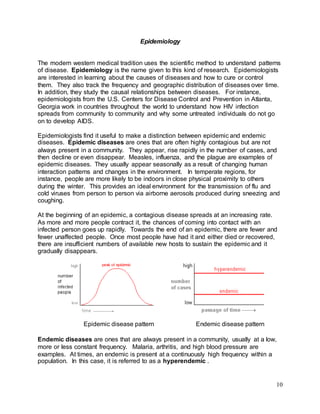
At the beginning of an epidemic, a contagious disease spreads at an increasing rate. 
As more and more people contract it, the chances of coming into contact with an 
infected person goes up rapidly. Towards the end of an epidemic, there are fewer and 
fewer unaffected people. Once most people have had it and either died or recovered, 
there are insufficient numbers of available new hosts to sustain the epidemic and it 
gradually disappears. 
Epidemic disease pattern Endemic disease pattern 
Endemic diseases are ones that are always present in a community, usually at a low, 
more or less constant frequency. Malaria, arthritis, and high blood pressure are 
examples. At times, an endemic is present at a continuously high frequency within a 
population. In this case, it is referred to as a hyperendemic .
Many endemic diseases and most epidemic ones are population density dependent. 
The higher the human density in an area, the more rapidly they spread. As a result, 
they are far more likely to infect people in cities than in rural areas with dispersed 
settlement patterns. If the circumstances are optimal for the spread of contagion and if 
few people have an immunity to a disease, there can be a pandemic . This is an 
epidemic that becomes unusually widespread and even global in its reach. Such a 
situation occurred in 1918 when a new strain of the influenza virus (the "Spanish flu") 
infected 1/5 of all people in the world and killed 20-40 million of them. 
Pandemics have been relatively common since the beginnings of the ancient 
civilizations 5,000 years ago. Periodically they have caused misery and death on a 
massive scale. For instance, plague swept through Western Asia and Europe during 
the 14th century A.D. killing up to 3/4 of the population of infected regions. At least 25 
million Europeans died in this pandemic in less than 20 years. Within a century of the 
arrival of the first European conquerors in the heart of the Aztec Empire of Mexico in 
1519, as much as 90% of the indigenous population had died from common European 
contagious diseases for which the Indians had little or no immunity. The native 
civilizations of the Americas were defeated as much by viruses as they were by swords 
and guns. 
11 
Disease Vectors 
The spread of contagious diseases is not always as simple as someone coughing on 
another person. There may be intermediate hosts and/or disease transmitting 
organisms. The latter are referred to as disease vectors. Mosquitoes, fleas, lice, ticks, 
flies, and even some snails are common vectors for some diseases. For instance, 
malaria can be caused by any one of four different plasmodia (a category of single 
celled organism). These plasmodia are parasites that need hemoglobin in red blood 
cells. They are transmitted from host to host unintentionally via blood sucking 
mosquitoes. Plague is caused by the bacterium Yersinia pestis. Its normal host is wild 
rodents and other small mammals. However, it can be spread to people by fleas that 
suck blood from those animals and transmit it to humans when they extract their blood. 
Once an epidemic of the plague begins, fleas can easily spread the disease from one 
human host to another. Flies are known to carry bacteria on their legs from feces to 
food. This is one of the ways in which bacterial dysentery is spread. 
Close to half of the people in the world today have chronic diseases that are vector-borne. 
Third world nations in tropical and subtropical regions are the most effected. 
Vector-borne diseases cause high levels of physical disability and low life expectancies 
in those countries.
12 
MAJOR VECTOR-BORNE DISEASES 
Tropical and subtropical 
regions of the world 
North America 
African trypanosomiasis Lyme disease 
Dengue fever Malaria 
Dracunculiasis Rocky Mountain spotted fever 
Leishmaniasis Viral encephalitis 
Lymphatic filariases 
Malaria 
Onchocerciasis (river blindness) 
Schistosomiasis (bilharziasis) 
Diseases of Development 
Until well into the 20th century, the most common debilitating diseases in industrialized 
nations were caused by worms and microorganisms (tape worms, round worms, 
viruses, bacteria, protozoa, fungi, etc.). These parasites, along with malnutrition, still 
cause most of the major health problems in the poorer nations. They result in high child 
mortality rates and often cause long term health problems. Malaria is one of the prime 
causes of illness in third world countries of the tropical and subtropical regions. It 
infects one out of ten people on earth today. The World Health Organization estimates 
that there are close to 100,000,000 new cases of malaria annually around the world. It 
results in 1-1.5 million deaths every year. Most of them are pregnant women and 
children. About 3,000 children die of malaria every day. Most of the malarial deaths are 
in the poor nations, especially in Africa. Diarrhea is also a major killer of babies and 
young children in those nations. It results in the death of nearly 1400 of them every 
day. In 2003, the Division of Policy and Planning of the United Nations Chi ldren's Fund 
estimated that more than 63% of the 10.8 million children under five years old who 
succumb to relatively common preventable illnesses such as diarrhea and pneumonia 
each year could be saved by doing what we already know how to do. It would be 
possible to prevent more than 6 million children a year from dying by improving nutrition, 
sanitation, and basic medical care. 
During the last half of the 20th century, it became apparent that good intentioned 
attempts by the rich nations to improve the life of people in the third world often have 
unexpected consequences. They can cause diseases of development. These are 
due mostly to environmental changes, increased population densities, and pollution. In 
West Africa and Egypt, for instance, there has been a dramatic increase in the 
frequency of schistosomiasis and/or onchocerciasis resulting from river damming 
projects designed to produce electricity and enhance irrigation systems. The dams slow 
the flow of rivers, thereby creating favorable environments for the organisms that 
transmit the parasites that in turn cause these diseases.
In most third world nations, there has been a mass migration of poor people to the cities 
during the last half century. The burgeoning populations of these urban centers often 
become far too large for the capabilities of their sewage processing systems. As a 
result, feces born diseases such as cholera and dysentery have become serious public 
health problems. The common practice of burning garbage on the streets of third world 
cities and in unofficial dumps also results in the accumulation of dioxins and other 
dangerous cancer causing substances on the ground and in water supplies. 
Increased air pollution in large cities around the world has resulted in higher lung cancer 
and asthma rates. Allergies and other autoimmune diseases are also on the rise. 
These conditions have been linked to environmental factors such as air pollution and 
man-made chemicals. 
13 
Modern medicine has at times been responsible for causing health problems. For 
instance, during the mid to late 1950's a drug named thalidomide was given to many 
pregnant women in Europe and North America in order to reduce the unpleasant 
symptoms of morning sickness. Only later was it discovered that thalidomide causes 
severe anomalies in babies. Many were born without arms or legs. Others had 
extremely small appendages that were essentially non-functional. 
Serious nutrition related problems in the third world are responsible for high child 
mortality rates. In Pakistan, 15% of the children die before their fifth birthday. The rate 
is 18% in Cambodia and 22% in Afghanistan. Persistent undernourishment among 
children also can cause permanent mental and physical developmental problems such 
as stunted growth, rickets disease, and low levels of mental retardation. Severe vitamin 
A deficiency can cause blindness and birth defects such as cleft palate. Low protein 
intake can cause kwashiorkor. The poverty that most often is the ultimate source of 
these devastating health problems in poor nations is usually a result of natural and man-made 
ecological disasters as well as social and economic inequalities. 
kwashiorkor 
a severe disease of infants and young children caused by consistently inadequate 
consumption of protein and specific vitamins and minerals (Vitamins A and E as well as 
zinc and selenium). Children with kwashiorkor usually have distended bellies due to 
edema (i.e., fluid retention) as well as very slender arms and legs due to low muscle 
mass and fat. Their skin often flakes off leaving pink patches and their hair can become 
less curly and lose its dark coloration or even fall out. Kwashiorkor usually is 
accompanied by fatigue, apathy, and a significant reduction in the immune system 
which leaves the child open to infection by other diseases. Kwashiorkor may cause 
death if untreated. Survivors often are stunted in their growth. Kwashiorkor is most 
common among the poor in third world nations in which the diet primarily consists of 
cereals. Children with kwashiorkor usually have been weaned by their mothers too 
early.
14 
The rich nations are not immune to nutrition related disease 
Culture Specific Diseases 
There are some diseases that have very limited distributions around the world due to 
the fact that they are caused by unique combinations of environmental circumstances 
and cultural practices. These are generally referred to as culture specific diseases or 
culture bound syndromes. Some cause relatively minor health problems while others 
are very serious and can even be fatal. An example of a relatively harmless culture 
specific medical condition was "rave rash" in England during the late 1990's. This 
afflicted young women who went to "raves", or large-scale pop music dance parties that 
went on all night long. Aggressive dance motions without wearing a bra sometimes led 
to a painful rash on their nipples--hence "rave rash." Another more recent culture 
bound syndrome is "toasted skin syndrome". This is a result of excessive use of laptop 
computers resting on the lap. The heat from these devices over time can cause a 
mottled discoloration of the skin on the legs. 
Kuru is a fatal culture specific disease of the brain and nervous system that was 
found among the South Foré people of the eastern New Guinea Highlands. Until 
recently, it was thought that kuru is caused by a virus with a prolonged incubation 
period. Evidence now points to prions as being the cause. The symptoms include 
palsy, contracted face muscles, and the loss of motor control resulting in the inability to 
walk and eventually even eat. Kuru victims become progressively emaciated. The 
South Foré called this disease "trembling sickness" and "laughing sickness." The latter 
description was due to the fact that the face muscles of victims were constricted in a 
way that looked like a smile. Death almost always occurs within 6-12 months of the 
onset of symptoms. 
Kuru was first recorded among the South Foré at the beginning of the 20th century and 
it progressively became more common up through the 1950's. At its peak, it mostly 
afflicted women in their 20's and 30's. This caused major social problems. Normally, 
men had several wives and children were taken care by women. Now, however, there 
were too few marriageable women, and men were left with the child care duties. Men 
were resentful and confused by their situation. Since the South Foré had a personalistic 
explanation for illness, they logically assumed that Kuru was the work of witches who 
used contagious magic. As a result, people became very careful at cleaning up their 
house sites to make sure that witches could not obtain any of their hair, fingernail 
clippings, feces, or personal belongings. Witch hunts were organized and former 
witches were forced to confess and then join anti-witch cults. None of these steps 
slowed the rate of increase in the number of Kuru victims. 
In the early 1950's, a team of Australian doctors began working to discover what caused 
kuru in hopes of finding a cure. Anthropologists traced cases of the disease in family
lines to see if it was hereditary. Other field workers collected water, soil, plant, and 
animal specimens to test for environmental toxins. All of these attempts failed to 
discover the cause. In the late 1950's, an American pediatrician named Carleton 
Gajdusek came to Papua New Guinea to try to solve the problem. Through the 
microscopic examination of tissue from people who died of kuru, he discovered that the 
disease organism was carried in the blood and was concentrated in brain tissue. The 
means of transmission was cannibalism. The South Foré ate their dead relatives as 
part of their funerary practices. Women butchered the corpses and were the main 
cannibals. They also gave this meat to their children. Men generally thought that it was 
unmanly. They had pigs to eat, while the diet of women and children was normally 
animal protein poor. 
In the early 1960's, cannibalism was outlawed in Papua New Guinea. Since then, the 
kuru rate has dropped off significantly but has not yet disappeared because of the very 
long incubation period for this disease. Between 1996 and 2004, 11 people were 
diagnosed with kuru. Apparently, all of them were born before 1950 and had contracted 
kuru before the end of cannibalism. This meant that the incubation period was 34-41 
years in these cases. 
15 
Culture Specific Mental Disorders 
Apparently, mental illness is present in all societies. However, the frequencies of 
different types of mental illness vary as do the social connotations. What is defined as a 
mild form of mental illness in one culture may be defined as normal behavior in 
another. For instance, people in western societies who regularly carry on animated 
conversations with dead relatives or other supernatural beings are generally considered 
mentally ill. The same behavior is likely to be considered healthy and even enviable in 
a culture that has an indigenous world-view. Such a person would be thought fortunate 
for having direct communication with the supernatural world. Traditionally among many 
Native American societies, dreams and the visionary world were, in a sense, more real 
and certainly more important than the ordinary world of humans. 
Among the Saora tribe of Orissa State in India, young men and women sometimes 
exhibit abnormal behavior patterns that western trained mental health specialists 
would likely define as a mental disorder. They cry and laugh at inappropriate times, 
have memory loss, pass out, and claim to experience the sensation of being repeatedly 
bitten by ants when no ants are present. These individuals are usually teenagers or 
young adults who are not attracted to the ordinary life of a subsistence farmer. They 
are under considerable psychological stress from social pressure placed on them by 
their relatives and friends. The Saora explain the odd behavior of these people as 
being due to the actions of supernatural beings who want to marry them. The resolution 
to this situation is to carry out a marriage ceremony in which the disturbed person is 
married to the spirit. Once this marriage has occurred, the abnormal symptoms 
apparently end and the young person becomes a shaman responsible for curing 
people. In the eyes of the society, he or she changes status from a peculiar teenager to
16 
a respected adult who has valuable skills as a result of supernatural contacts. This 
Saora example suggests that some minor mental illnesses could be better viewed as 
ways of dealing with impossible social situations. In other words, they are coping 
mechanisms. 
What a culture defines as abnormal behavior is a consequence of what it defines as a 
modal personality. People who exhibit abnormal behavior in western societies are 
usually labeled as being eccentric, mentally ill, or even dangerous and criminal. Which 
label is assigned may depend on the subculture, gender, and socioeconomic level of 
the individual exhibiting abnormal behavior. In North America, the public acts of poor 
mentally ill males are sometimes seen as being criminal. This is especially true if they 
are ethnic minorities or living on the streets. In contrast, similar abnormal behavior by 
rich males is likely to be viewed as being only eccentric. In the former Soviet Union, 
important people who publicly opposed government policy were sometimes considered 
mentally ill and were placed in mental institutions where they were kept sedated "for 
their own good." 
The standards that define normal behavior for any culture are determined by that culture 
itself. Normalcy is a nearly meaningless concept cross-culturally. For instance, in the 
Yanomamö Indian culture of South America, highly aggressive, violent men are 
considered normal and such individuals are often respected community leaders. In 
contrast, the same behavior among the Pueblo Indians of the Southwestern United 
States was considered abnormal and dangerous for society. People who exhibited 
these traits were avoided and even ostracized. 
Many psychological anthropologists believe that the most meaningful criterion for 
defining mental illness is the degree of social conformity by an individual. People who 
are so severely psychologically disturbed and disoriented that they cannot normally 
participate in their society are universally defined as being mentally ill. For instance, 
individuals who have difficulty relating to other people because of their intense 
hallucinations, paranoia, and psychotic defenses will very likely be defined as mentally 
ill and potentially a danger to others in all cultures. 
While mental illness is found in most, if not all, societies, there are unique culture 
influenced forms that these illnesses can take. They are culture bound syndromes. An 
example is Windigo psychosis . This condition was reported among the Northern 
Algonkian language group of Indians (Chippewa , Ojibwa , and Cree ) living around the 
Great Lakes of Canada and the United States. Windigo psychosis usually developed in 
the winter when families were isolated by heavy snow for months in their cabins and 
had inadequate food supplies. The initial symptoms of this form of mental illness were 
usually poor appetite, nausea, and vomiting. Subsequently, the individual would 
develop a characteristic delusion of being transformed into a Windigo monster. These 
supernatural beings eat human flesh. People who have Windigo psychosis increasingly 
see others around them as being edible. At the same time, they have an exaggerated 
fear of becoming cannibals. A modern medical diagnosis of this condition might label it 
paranoia because of the irrational perceptions of being persecuted. In this case, it is the
Windigo monsters who are the persecutors--they are trying to turn people into Windigo 
monsters like themselves. In contemporary North American culture, the perceived 
persecutors of paranoids are more likely to be other people or, perhaps, extra terrestrial 
visitors. Victims of Windigo psychosis experienced extreme anxiety and sometimes 
attempted suicide to prevent themselves from becoming Windigo monsters. 
Another example of a culture bound mental syndrome is koro in China and areas of 
Southeast Asia where Chinese culture has diffused (especially Vietnam, Malaysia, and 
Singapore). Koro is an irrational perception that one's prominent sexual body parts are 
withdrawing into the body and subsequently being lost. In the case of men, the concern 
is that their penis and testes are shrinking. For women, the focus is on the perceived 
shrinking of the vulva and breasts. In both cases it is a fear of the loss of masculinity or 
femininity followed by premature death. Koro is traditionally believed to be caused by 
"unhealthy sex" (e.g., masturbation or sex with prostitutes). It also thought to be caused 
by "tainted" foods. An example of the latter occurred in Singapore in 1967. A 
newspaper reported that koro had resulted from eating pork that had come from a pig 
that was given a vaccination against swine fever. This sparked an epidemic of 
hundreds of cases of koro. More recently, another epidemic occurred in coastal 
Vietnam when some mothers were shocked to see that the penis and testes of their 
children had shrunk after swimming. This created a widespread panic among mothers 
in a number of coastal communities. In some cases, the mothers tried to pull out the 
penis and testes with their hands and even hooks in order to make them larger. This 
resulted in the penis being torn off some of the boys. 
17

MEDICAL ANTHROPOLOGY: How Illness is Traditionally Perceived and Cured Around the World

  • 1.
    1 MEDICAL ANTHROPOLOGY: How Illness is Traditionally Perceived and Cured Around the World Explanations of Illness In the Western World, people usually do not make a distinction between illness and disease. These two terms seem to mean essentially the same thing and are often used interchangeably. However, it is important to define illness and disease differently when considering some non-western cultural traditions. Disease is an objectively measurable pathological condition of the body. Tooth decay, measles, or a broken bone are examples. In contrast, illness is a feeling of not being normal and healthy. Illness may, in fact, be due to a disease. However, it may also be due to a feeling of psychological or spiritual imbalance. By definition, perceptions of illness are highly culture related while disease usually is not. It is important for health professionals who treat people from other cultures to understand what their patients believe can cause them to be ill and what kind of curing methods they consider effective as well as acceptable. Understanding a culture's perception of illness is also useful in discovering major aspects of their world view. What Causes Illness? How illness is explained often varies radically from culture to culture. Likewise, the methods considered acceptable for curing illness in one culture may be rejected by another. These differences can be broadly generalized in terms of two explanatory traditions--naturalistic and personalistic. Naturalistic Explanation The Western World now mostly relies on a naturalistic explanation of illness. This medical tradition had its beginnings in ancient Greece, especially with the ideas of Hippocrates in the 4th and 5th centuries B.C. However, it did not begin to take its modern form until the 16th century A.D. The naturalistic explanation assumes that illness is only due to impersonal, mechanistic causes in nature that can be potentially understood and cured by the application of the scientific method of discovery. Typical causes of illness accepted in naturalistic medical systems include: 1. organic breakdown or deterioration (e.g., tooth decay, heart failure, senility) 2. obstruction (e.g., kidney stones, arterial blockage due to plaque build-up) 3. injury (e.g., broken bones, bullet wounds)
  • 2.
    2 4. imbalance(e.g., too much or too little of specific hormones and salts in the blood) 5. malnutrition (e.g., too much or too little food, not enough proteins, vitamins, or minerals) 6. parasites (e.g., bacteria, viruses, amoebas, worms) A medical system that explains illness as being due to impersonal, mechanistic causes in nature that can be potentially understood and cured by the application of the scientific method of discovery. Typical causes accepted in naturalistic medical systems include organic breakdown or deterioration, obstruction, injury, imbalance, malnutrition, and parasites. Students learning to be doctors or nurses in medical schools throughout the modern world are taught this kind of naturalistic explanation. However, there are other kinds of naturalistic medical systems also in use today. In Latin America, many people still also rely on humoral pathology to explain and cure their illnesses. This is especially true in rural areas. Students learning to be doctors or nurses in medical schools throughout the modern world are taught this kind of naturalistic explanation. However, there are actually several different naturalistic medical systems in use today. In Latin America, many people still also rely on humoral pathology to explain and cure their illnesses. This is especially true in rural areas among less educated people. To learn more about this alternative medical system, click the button below. Naturalistic medical systems similar to European humoral pathology were developed independently in India (Ayurvedic system ) and China (acupuncture and herbal medicine ). Personalistic Explanation Much of the non-western world traditionally accepted a personalistic explanation for illness. Today, it is mostly found among people in small-scale societies and some subcultures of larger nations. For them, illness is seen as being due to acts or wishes of other people or supernatural beings and forces. There is no room for accidents. Adherents of personalistic medical systems believe that the causes and cures of illness are not to be found only in the natural world. Curers usually must use supernatural means to understand what is wrong with their patients and to return them to health. Typical causes of illness in personalistic medical systems include: 1. intrusion of foreign objects into the body by supernatural means 2. spirit possession, loss, or damage 3. bewitching
  • 3.
    3 small-scale society: a society of a few dozen to several thousand people who live by foraging wild foods, herding domesticated animals, or non-intensive horticulture on the village level. Such societies lack cities as well as complex economies and governments. Kinship relationships are usually highly important in comparison to the common pattern of large-scale societies. The intrusion of foreign objects was a common explanation among many Native American cultures for internal body pains such as headaches and stomachaches. The presumed foreign objects could be rocks, bones, insects, arrowheads, small snakes, or even supernatural objects. It was believed that they were intentionally put into an individual's body by witchcraft or some other supernatural means. The fact that there was no wound in the skin for the entry of the objects was consistent with the belief that supernatural actions were involved. The cure for this class of illness was the removal of the object by a shaman (a person who is not part of an organized religion and is in direct contact with the spirit world, usually through a trance state. A shaman has spirit helpers at his or her command to carry out curing, divining, and bewitching. Shamanistic power is acquired individually, usually in physical and/or mental solitude and isolation from other humans. Spirits or some other supernatural entities are revealed to the shaman and he or she learns how to control them. Training by older shamans usually occurs to help the apprentice shaman understand and use his or her powers.) This usually involved a lengthy non-surgical procedure that was both medical and religious. Typically, the shaman would appeal to supernatural spirits for assistance, manipulate the patient's body, blow tobacco smoke over the site of the pain, and suck on the skin over the pain with a tube or by mouth to remove the object. However, there would be no incision made in the skin. It is easy for people who only accept a naturalistic explanation for illness to reject the concept of the intrusion of foreign objects into the body by supernatural means. However, it is of value to keep in mind that this explanation is similar to the "germ theory" that is readily accepted by most people in the western world today. Both explanations require the belief in something that cannot be seen by most people. In both cases, there is an act of faith. During the late 19th and early 20th centuries, it was difficult for microbiologists and physicians such as Louis Pasteur, Joseph Lister, and Robert Koch to convince the medical profession that bacteria and other microorganisms can cause infection and disease. It took even longer for the general public in Europe and North America to be convinced that there are harmful microscopic "germs."
  • 4.
    4 Susto (literally"fright or sudden fear" in Spanish) a kind of personalistic illness found among some Latinos in the United States and parts of Latin America. The presumed cause is the loss of one's soul due to incidents that have a destabilizing effect on an individual (e.g., being thrown from a horse, having a nighttime encounter with a ghost, or being in a social situation that causes fear or anger). Typical symptoms of susto are restlessness during sleep as well as being listless and weak when awake, lack an appetite, and little interest in one's own personal appearance. Susto is also known as perdida de la sombra (literally "loss of the shadow" in Spanish). In personalistic medical systems, spirit possession, loss, or damage are seen as the result of actions by supernatural beings or people. They may also be due to certain kinds of unpleasant or shocking social situations. An example of this kind of illness is found among some Hispanics in the United States and Latin America. It is called susto , which literally means fright or sudden fear in Spanish. The fear is of losing one's soul. Susto is also referred to as perdida de la sombra (literally, loss of the shadow). This latter name is likely a reference to the fact that people who do not have souls do not have shadows or reflections in mirrors, like Hollywood movie vampires. Susto results from incidents that have a destabilizing effect on an individual, causing the soul (espiritu ) to leave the body. Typical incidents that can cause susto include: 1. the sudden, unexpected barking of a dog 2. being thrown from a horse 3. tripping over an unnoticed object 4. sharing a hospital ward with a patient who has died during the night 5. having a nighttime encounter with a ghost who keeps your spirit from finding its way back into your body before you wake 6. being socially impinged upon by society (e.g., being forced to do something that you do not want to do) 7. being in a social situation that causes you to have fear or anger Common symptoms of susto are restlessness during sleep as well as being listless and weak when awake. In addition, individuals who have susto are likely to lack an appetite and to not be interested in their personal appearance. These symptoms are characteristic of what western trained medical professionals would likely attribute to excessive emotional stress or even clinical depression. Traditionally, susto is cured with a ritual carried out by a curandero (i.e., a folk curer). Among the Maya Indians of Southern Mexico and Guatemala, this ceremony typically involves a lengthy series of ritual actions in the presence of the patient's friends and relatives. It usually begins with prayers to the Catholic saint of the village. Next, a chicken egg and special herbs are
  • 5.
    passed over thepatient's body to absorb some of the illness. Later, the egg may be left where the soul loss occurred, along with gifts to propitiate the supernatural being who has the patient's soul. The patient is then partly stripped and "shocked" by liquor being sprayed from the curandero's mouth. The patient may then be massaged and finally "sweated" on a bed placed over or near a hot stove. Alternatively, the patient may be covered with many blankets to induce profuse sweating. In traditional Hispanic communities of the Southwestern United States, susto is likely to be treated in a similar manner by a curandero. The curing ceremony is called a barrida or "sweeping", which is a reference to a bundle of fresh herbs being swept over the patient's body. However, the cure for mild cases of susto is likely to be medicine taken orally. Teas made from an infusion of marijuana, orange blossoms, and brazil wood are commonly used for this purpose. 5 Evil Eye Another common type of soul loss in Latin America and around the Mediterranean Basin is the "evil eye" or mal de ojo in Spanish. This illness results from the perception that some people are "stronger" than others and that their strength can harm "weak" people. In traditional Mexican and Central American culture, women, babies, and young children are thought of as being weak, while men as well as rich and politically powerful people of either gender are strong. When a strong person stares at a weak individual, the eyes of the strong person can drain the power and/or soul from the weak one. Proof that this may have occurred to someone is that he or she cries inconsolably without a cause, has fitful sleep, diarrhea, vomiting, and/or a fever. It is thought that powerful people can cause this draining of the soul intentionally or unintentionally. As a result, parents must guard their children and women must be careful when interacting with government officials, rich city people, foreign tourists, and machos in general. The traditional cure for mal de ojo in rural Mexico often involves a curandero sweeping a raw chicken egg over the body of a victim to absorb the power of the person with the evil eye. The egg is later broken into a glass and examined. The shape of the yolk is thought to indicate whether the aggressor was a man or a woman. It is widely believed in Mexico that at the time that the evil eye drains the soul from a victim, the perpetrator can easily return it by passing his or her hand over the forehead of the victim. In the traditional Hispanic culture of the Southwestern United States and some parts of Mexico, the cure for mal de ojo may be slightly different. An egg is passed over the patient and then broken into a bowl of water. This is then covered with a straw or palm cross and placed under the patient's head while he or she sleeps. The shape of the egg in the bowl is examined in the morning by a curandero to determine whether or not the cure has been successful.
  • 6.
    6 Aire Inpersonalistic medical systems, bewitching is often thought to be a cause of changed behavior or illness. Bewitching involves the use of magical acts and supernatural powers either by humans or supernatural beings. This may involve sympathetic magic, contagious magic, or simply the casting of a spell. An example of bewitching occurs among the indigenous Nahua Indians of Central Mexico. They believe that a particular kind of supernatural being can cause an illness called aire (literally "air" in Spanish). These beings are "rain dwarfs." They are about 1½ feet tall and are thought to be made almost entirely of water. As a result they are essentially invisible. They cause aire by breathing on people. The typical symptoms of this illness may include paralysis, a twisted mouth, palsy, pimples, and aching joints. The first two symptoms are consistent with a stroke. Aire is cured traditionally by a curandero cleansing the victim by rubbing the body with herbs and an unbroken chicken egg. In traditional Hispanic communities of the Southwestern United States, aire is usually not thought to be caused by bewitching. Rather, it attributed to a rapid change from a hot to a very cold environment. Ear aches in children are believed to be a consequence. Similarly, paralysis of one side of the face or muscle spasms in adults are thought to be caused by aire. To treat an ear ache, warm smoke is blown into it. Muscle spasms are treated by "cupping". This involves heating the air in a cup with a flame Humoral Pathology The origins of humoral pathology go back to the ideas of the ancient Greek physician Hippocrates (ca. 460-377 B.C.). It was the basis of both ancient Greek and Roman medicine. During the Dark Ages (ca. 500-1000 A.D.), this medical system was largely lost in Europe but was preserved in the Arab world. The Moslem Moors of North Africa eventually reintroduced it to Spain beginning in the 8th century A.D. It was taken to the New World by the Spanish and Portuguese from the 16th century on. Today it remains a major folk tradition of medicine among Latin Americans. In Europe and North America, humoral pathology explanations of illness and methods of curing continued to be part of the mainstream medical system well into the 19th century. It remains popular among some alternative medicine advocates. Humoral pathology is based on the idea that our bodies have four important fluids or humors--blood, phlegm, black bile, and yellow bile. Because of this belief, humoral pathology is also called the "Hippocratic doctrine of four humors." Each humor is thought to have its own "complexion." Blood is hot and wet. Phlegm is cold and wet. Black bile is cold and dry. Yellow bile is hot and dry. These complexions have nothing to do with actual temperature and humidity. For instance, coldness is thought to come from water, but boiling water is cold and ice is hot. In addition to bodily fluids, four internal organs are considered highly important in humoral pathology. The liver, brain, lungs, spleen, and gall bladder each have the same complexion as their presumably
  • 7.
    7 associated humor(shown in the table below). Different kinds of illnesses, medicines, foods, and most natural objects also have specific complexions. BODILY SUBSTANCE NORMAL "COMPLEXION" Humor (fluid) Associated Internal organ Hot Cold Wet Dry blood liver X -- X -- phlegm brain and lungs -- X X -- black bile spleen -- X -- X yellow bile gall bladder X -- -- X Curing an illness involves discovering the complexion imbalance and rectifying it. A hot injury or illness must be treated with a cold remedy and vice versa. For instance, a sprained ankle is a cold injury and must be treated with something hot, such as a piece of raw weasel meat tied over it. Most people are thought to have and excess of heat and moisture. This potentially dangerous imbalance can be lessened by blood letting either with leaches or by suctioning intentionally made cuts. Specific foods and herbs also are used to restore balance. For example, poisonous mushrooms are cold and must be treated by eating a hot substance, such as toasted garlic. The humoral pathology system is further complicated by the fact that the complexion of something can change radically throughout the day. In some areas of Central America, for instance, there is a saying: "An orange in the morning is medicine, in the middle of the day it makes you sick, in the evening it kills you." The explanation of this paradoxical statement is that oranges are thought to be "cold" and the morning is a cold time. As a consequence, eating them at that time does not cause a shock to the system. At midday, the body is normally hot and in the evening it is the hottest. Therefore, eating cold foods, such as oranges, at night must be avoided to prevent a potentially fatal shock. A strong indication that the humoral pathology medical system is still alive and considered useful to many people in Latin America is the fact that newly introduced foods, medicines, and other things have complexions identified with them. For example, motion pictures are generally considered to be cold and alka-Seltzer is slightly cold. No doubt the use of cell phones and the Internet are being assigned complexions as well.
  • 8.
    8 Curing Practices It is common for people around the world to assume that their medical system can actually cure people while other systems cannot. This universal ethnocentric view leads some doctors and nurses trained in modern scientific medical practices to reject off-hand the knowledge and methodology of folk curers, especially if they involve a personalistic explanation for illness. However, all medical systems have both successes and failures in curing sick people. Curing with any medical system may work because of three different factors. First, a cure may be successful because the medical procedures actually helps the patient recover from illness. For example, an antibiotic may eliminate a bacterial infection in the urinary tract and filling a cavity in a tooth may stop continued decay. In the past, folk medicines and curing practices were assumed by many western doctors to have no curative powers and to be based purely on superstition. However, ethnopharmacologists have discovered that some herbal medicines used in traditional Indigenous folk curing around the world actually have properties that are beneficial in treating cancers and other diseases. In addition, some non-western medical techniques, such as acupuncture, can relieve pain. The second reason that a cure may be successful is because patients often get well regardless of the steps taken by the doctor or folk curer. It has been estimated that as much as 90% of illness afflicting Americans is in fact self-correcting. This is particularly true of common viral infections such as colds or the flu. Medications for these minor ailments often are intended to only reduce unpleasant symptoms such as headaches and coughs. The third reason that a cure may work is because of the placebo effect. That is, patients may be cured because they believe in the efficacy of the treatment even though it really does nothing to help them. For example, a doctor could give you a harmless sugar pill and tell you that it is a powerful medicine. This placebo may actually make you feel better and even help you recover from a disease. How could this be? It has been suggested that when a patient strongly believes that a cure will succeed, there is a psychological effect that can reduce the amount of the stress hormone cortisol and subsequently increase the effectiveness of the immune system. The result, is that the patient may recover from the disease. The kind of placebo that works is highly culture related. Not many people in the Western World would accept a magical charm as an effective cure for a cold, but we do accept a doctor's visit and medications that simply reduce the symptoms but do not actually cure the disease. Placebos are especially effective when both the patient and the doctor believe that they really can cure an ailment. This has been well documented by the research of Dr. Alan Roberts, head of the Division of Medical Psychology at Scripps Clinic in La Jolla, California. During the early 1990's, he examined the records of 6,931 patients who underwent one of five different medical treatments that were thought at the time to be
  • 9.
    9 effective butwere later abandoned because they were proven to be ineffective. These treatments included glomectomy (a surgical procedure for asthma), gastric freezing for peptic ulcers, and three procedures for treating the herpes simplex virus. Despite the fact that these treatments had no actual beneficial effects, 40% of the patients had excellent results and 30% had good results. Only 30% reported that the treatments did not improve their condition. Similar results were observed by a team of psychologists led by Andrew Leuchter at U.C.L.A. They carried out research in which placebos were used to treat patients with clinical depression. Not only did the depressed patients feel better after using a placebo, but scans of their brains showed that there was increased activity in the areas associated with mood and memory. This confirmed that the belief in the efficacy of a treatment can actually cause organic changes in the body. Steps in Curing Regardless of whether you take steps to cure yourself or seek the help of a folk curer or a modern medical doctor, the process involves the same two steps--diagnosis and treatment. In every medical system, curing begins by discovering the symptoms and making a judgment about the nature of the illness. Following this preliminary step, a specific treatment is determined and carried out. One of the biggest differences between the methods used by a curandero or other traditional folk curer and those used by modern medical doctors is the amount of time that is spent in diagnosis and treatment. Native American folk curers traditionally spent many hours with each patient, showing great concern. In contrast, a typical routine visit to a modern doctor's office involves a long, often frustrating, wait and a very short interview by the doctor. In the case of minor illnesses, the doctor usually makes a diagnosis in a few brief minutes and quickly moves on to giving treatment advice and writing a prescription for medication. The entire interaction with the doctor often takes less than five minutes and then the doctor must rush off to another patient because he or she has a very large patient load. The speed and matter of fact character of this medical encounter leaves many patients feeling unsatisfied with the experience and doubtful about the doctor's concern for them personally. Another major difference between traditional folk curers and modern medical doctors is in the fact that the former are likely to treat their patient in an environment that is familiar, comfortable, and non-threatening to the patient. Typically, it is the patient's home with family and friends present to provide emotional support. In contrast, modern medical doctors most often treat their patients in an environment that is alien and sometimes intimidating to their patients--e.g., the doctor's office or a hospital. Patients are usually separated from their family and friends during diagnosis and treatment unless they are young children. It is not surprising that doctors report that patient blood pressure measurements in their offices are often higher than normal. This "white lab-coat phenomenon" is very likely a result of increased patient anxiety brought about by the intimidating environment and situation.
  • 10.
    10 Epidemiology Themodern western medical tradition uses the scientific method to understand patterns of disease. Epidemiology is the name given to this kind of research. Epidemiologists are interested in learning about the causes of diseases and how to cure or control them. They also track the frequency and geographic distribution of diseases over time. In addition, they study the causal relationships between diseases. For instance, epidemiologists from the U.S. Centers for Disease Control and Prevention in Atlanta, Georgia work in countries throughout the world to understand how HIV infection spreads from community to community and why some untreated individuals do not go on to develop AIDS. Epidemiologists find it useful to make a distinction between epidemic and endemic diseases. Epidemic diseases are ones that are often highly contagious but are not always present in a community. They appear, rise rapidly in the number of cases, and then decline or even disappear. Measles, influenza, and the plague are examples of epidemic diseases. They usually appear seasonally as a result of changing human interaction patterns and changes in the environment. In temperate regions, for instance, people are more likely to be indoors in close physical proximity to others during the winter. This provides an ideal environment for the transmission of flu and cold viruses from person to person via airborne aerosols produced during sneezing and coughing. At the beginning of an epidemic, a contagious disease spreads at an increasing rate. As more and more people contract it, the chances of coming into contact with an infected person goes up rapidly. Towards the end of an epidemic, there are fewer and fewer unaffected people. Once most people have had it and either died or recovered, there are insufficient numbers of available new hosts to sustain the epidemic and it gradually disappears. Epidemic disease pattern Endemic disease pattern Endemic diseases are ones that are always present in a community, usually at a low, more or less constant frequency. Malaria, arthritis, and high blood pressure are examples. At times, an endemic is present at a continuously high frequency within a population. In this case, it is referred to as a hyperendemic .
  • 11.
    Many endemic diseasesand most epidemic ones are population density dependent. The higher the human density in an area, the more rapidly they spread. As a result, they are far more likely to infect people in cities than in rural areas with dispersed settlement patterns. If the circumstances are optimal for the spread of contagion and if few people have an immunity to a disease, there can be a pandemic . This is an epidemic that becomes unusually widespread and even global in its reach. Such a situation occurred in 1918 when a new strain of the influenza virus (the "Spanish flu") infected 1/5 of all people in the world and killed 20-40 million of them. Pandemics have been relatively common since the beginnings of the ancient civilizations 5,000 years ago. Periodically they have caused misery and death on a massive scale. For instance, plague swept through Western Asia and Europe during the 14th century A.D. killing up to 3/4 of the population of infected regions. At least 25 million Europeans died in this pandemic in less than 20 years. Within a century of the arrival of the first European conquerors in the heart of the Aztec Empire of Mexico in 1519, as much as 90% of the indigenous population had died from common European contagious diseases for which the Indians had little or no immunity. The native civilizations of the Americas were defeated as much by viruses as they were by swords and guns. 11 Disease Vectors The spread of contagious diseases is not always as simple as someone coughing on another person. There may be intermediate hosts and/or disease transmitting organisms. The latter are referred to as disease vectors. Mosquitoes, fleas, lice, ticks, flies, and even some snails are common vectors for some diseases. For instance, malaria can be caused by any one of four different plasmodia (a category of single celled organism). These plasmodia are parasites that need hemoglobin in red blood cells. They are transmitted from host to host unintentionally via blood sucking mosquitoes. Plague is caused by the bacterium Yersinia pestis. Its normal host is wild rodents and other small mammals. However, it can be spread to people by fleas that suck blood from those animals and transmit it to humans when they extract their blood. Once an epidemic of the plague begins, fleas can easily spread the disease from one human host to another. Flies are known to carry bacteria on their legs from feces to food. This is one of the ways in which bacterial dysentery is spread. Close to half of the people in the world today have chronic diseases that are vector-borne. Third world nations in tropical and subtropical regions are the most effected. Vector-borne diseases cause high levels of physical disability and low life expectancies in those countries.
  • 12.
    12 MAJOR VECTOR-BORNEDISEASES Tropical and subtropical regions of the world North America African trypanosomiasis Lyme disease Dengue fever Malaria Dracunculiasis Rocky Mountain spotted fever Leishmaniasis Viral encephalitis Lymphatic filariases Malaria Onchocerciasis (river blindness) Schistosomiasis (bilharziasis) Diseases of Development Until well into the 20th century, the most common debilitating diseases in industrialized nations were caused by worms and microorganisms (tape worms, round worms, viruses, bacteria, protozoa, fungi, etc.). These parasites, along with malnutrition, still cause most of the major health problems in the poorer nations. They result in high child mortality rates and often cause long term health problems. Malaria is one of the prime causes of illness in third world countries of the tropical and subtropical regions. It infects one out of ten people on earth today. The World Health Organization estimates that there are close to 100,000,000 new cases of malaria annually around the world. It results in 1-1.5 million deaths every year. Most of them are pregnant women and children. About 3,000 children die of malaria every day. Most of the malarial deaths are in the poor nations, especially in Africa. Diarrhea is also a major killer of babies and young children in those nations. It results in the death of nearly 1400 of them every day. In 2003, the Division of Policy and Planning of the United Nations Chi ldren's Fund estimated that more than 63% of the 10.8 million children under five years old who succumb to relatively common preventable illnesses such as diarrhea and pneumonia each year could be saved by doing what we already know how to do. It would be possible to prevent more than 6 million children a year from dying by improving nutrition, sanitation, and basic medical care. During the last half of the 20th century, it became apparent that good intentioned attempts by the rich nations to improve the life of people in the third world often have unexpected consequences. They can cause diseases of development. These are due mostly to environmental changes, increased population densities, and pollution. In West Africa and Egypt, for instance, there has been a dramatic increase in the frequency of schistosomiasis and/or onchocerciasis resulting from river damming projects designed to produce electricity and enhance irrigation systems. The dams slow the flow of rivers, thereby creating favorable environments for the organisms that transmit the parasites that in turn cause these diseases.
  • 13.
    In most thirdworld nations, there has been a mass migration of poor people to the cities during the last half century. The burgeoning populations of these urban centers often become far too large for the capabilities of their sewage processing systems. As a result, feces born diseases such as cholera and dysentery have become serious public health problems. The common practice of burning garbage on the streets of third world cities and in unofficial dumps also results in the accumulation of dioxins and other dangerous cancer causing substances on the ground and in water supplies. Increased air pollution in large cities around the world has resulted in higher lung cancer and asthma rates. Allergies and other autoimmune diseases are also on the rise. These conditions have been linked to environmental factors such as air pollution and man-made chemicals. 13 Modern medicine has at times been responsible for causing health problems. For instance, during the mid to late 1950's a drug named thalidomide was given to many pregnant women in Europe and North America in order to reduce the unpleasant symptoms of morning sickness. Only later was it discovered that thalidomide causes severe anomalies in babies. Many were born without arms or legs. Others had extremely small appendages that were essentially non-functional. Serious nutrition related problems in the third world are responsible for high child mortality rates. In Pakistan, 15% of the children die before their fifth birthday. The rate is 18% in Cambodia and 22% in Afghanistan. Persistent undernourishment among children also can cause permanent mental and physical developmental problems such as stunted growth, rickets disease, and low levels of mental retardation. Severe vitamin A deficiency can cause blindness and birth defects such as cleft palate. Low protein intake can cause kwashiorkor. The poverty that most often is the ultimate source of these devastating health problems in poor nations is usually a result of natural and man-made ecological disasters as well as social and economic inequalities. kwashiorkor a severe disease of infants and young children caused by consistently inadequate consumption of protein and specific vitamins and minerals (Vitamins A and E as well as zinc and selenium). Children with kwashiorkor usually have distended bellies due to edema (i.e., fluid retention) as well as very slender arms and legs due to low muscle mass and fat. Their skin often flakes off leaving pink patches and their hair can become less curly and lose its dark coloration or even fall out. Kwashiorkor usually is accompanied by fatigue, apathy, and a significant reduction in the immune system which leaves the child open to infection by other diseases. Kwashiorkor may cause death if untreated. Survivors often are stunted in their growth. Kwashiorkor is most common among the poor in third world nations in which the diet primarily consists of cereals. Children with kwashiorkor usually have been weaned by their mothers too early.
  • 14.
    14 The richnations are not immune to nutrition related disease Culture Specific Diseases There are some diseases that have very limited distributions around the world due to the fact that they are caused by unique combinations of environmental circumstances and cultural practices. These are generally referred to as culture specific diseases or culture bound syndromes. Some cause relatively minor health problems while others are very serious and can even be fatal. An example of a relatively harmless culture specific medical condition was "rave rash" in England during the late 1990's. This afflicted young women who went to "raves", or large-scale pop music dance parties that went on all night long. Aggressive dance motions without wearing a bra sometimes led to a painful rash on their nipples--hence "rave rash." Another more recent culture bound syndrome is "toasted skin syndrome". This is a result of excessive use of laptop computers resting on the lap. The heat from these devices over time can cause a mottled discoloration of the skin on the legs. Kuru is a fatal culture specific disease of the brain and nervous system that was found among the South Foré people of the eastern New Guinea Highlands. Until recently, it was thought that kuru is caused by a virus with a prolonged incubation period. Evidence now points to prions as being the cause. The symptoms include palsy, contracted face muscles, and the loss of motor control resulting in the inability to walk and eventually even eat. Kuru victims become progressively emaciated. The South Foré called this disease "trembling sickness" and "laughing sickness." The latter description was due to the fact that the face muscles of victims were constricted in a way that looked like a smile. Death almost always occurs within 6-12 months of the onset of symptoms. Kuru was first recorded among the South Foré at the beginning of the 20th century and it progressively became more common up through the 1950's. At its peak, it mostly afflicted women in their 20's and 30's. This caused major social problems. Normally, men had several wives and children were taken care by women. Now, however, there were too few marriageable women, and men were left with the child care duties. Men were resentful and confused by their situation. Since the South Foré had a personalistic explanation for illness, they logically assumed that Kuru was the work of witches who used contagious magic. As a result, people became very careful at cleaning up their house sites to make sure that witches could not obtain any of their hair, fingernail clippings, feces, or personal belongings. Witch hunts were organized and former witches were forced to confess and then join anti-witch cults. None of these steps slowed the rate of increase in the number of Kuru victims. In the early 1950's, a team of Australian doctors began working to discover what caused kuru in hopes of finding a cure. Anthropologists traced cases of the disease in family
  • 15.
    lines to seeif it was hereditary. Other field workers collected water, soil, plant, and animal specimens to test for environmental toxins. All of these attempts failed to discover the cause. In the late 1950's, an American pediatrician named Carleton Gajdusek came to Papua New Guinea to try to solve the problem. Through the microscopic examination of tissue from people who died of kuru, he discovered that the disease organism was carried in the blood and was concentrated in brain tissue. The means of transmission was cannibalism. The South Foré ate their dead relatives as part of their funerary practices. Women butchered the corpses and were the main cannibals. They also gave this meat to their children. Men generally thought that it was unmanly. They had pigs to eat, while the diet of women and children was normally animal protein poor. In the early 1960's, cannibalism was outlawed in Papua New Guinea. Since then, the kuru rate has dropped off significantly but has not yet disappeared because of the very long incubation period for this disease. Between 1996 and 2004, 11 people were diagnosed with kuru. Apparently, all of them were born before 1950 and had contracted kuru before the end of cannibalism. This meant that the incubation period was 34-41 years in these cases. 15 Culture Specific Mental Disorders Apparently, mental illness is present in all societies. However, the frequencies of different types of mental illness vary as do the social connotations. What is defined as a mild form of mental illness in one culture may be defined as normal behavior in another. For instance, people in western societies who regularly carry on animated conversations with dead relatives or other supernatural beings are generally considered mentally ill. The same behavior is likely to be considered healthy and even enviable in a culture that has an indigenous world-view. Such a person would be thought fortunate for having direct communication with the supernatural world. Traditionally among many Native American societies, dreams and the visionary world were, in a sense, more real and certainly more important than the ordinary world of humans. Among the Saora tribe of Orissa State in India, young men and women sometimes exhibit abnormal behavior patterns that western trained mental health specialists would likely define as a mental disorder. They cry and laugh at inappropriate times, have memory loss, pass out, and claim to experience the sensation of being repeatedly bitten by ants when no ants are present. These individuals are usually teenagers or young adults who are not attracted to the ordinary life of a subsistence farmer. They are under considerable psychological stress from social pressure placed on them by their relatives and friends. The Saora explain the odd behavior of these people as being due to the actions of supernatural beings who want to marry them. The resolution to this situation is to carry out a marriage ceremony in which the disturbed person is married to the spirit. Once this marriage has occurred, the abnormal symptoms apparently end and the young person becomes a shaman responsible for curing people. In the eyes of the society, he or she changes status from a peculiar teenager to
  • 16.
    16 a respectedadult who has valuable skills as a result of supernatural contacts. This Saora example suggests that some minor mental illnesses could be better viewed as ways of dealing with impossible social situations. In other words, they are coping mechanisms. What a culture defines as abnormal behavior is a consequence of what it defines as a modal personality. People who exhibit abnormal behavior in western societies are usually labeled as being eccentric, mentally ill, or even dangerous and criminal. Which label is assigned may depend on the subculture, gender, and socioeconomic level of the individual exhibiting abnormal behavior. In North America, the public acts of poor mentally ill males are sometimes seen as being criminal. This is especially true if they are ethnic minorities or living on the streets. In contrast, similar abnormal behavior by rich males is likely to be viewed as being only eccentric. In the former Soviet Union, important people who publicly opposed government policy were sometimes considered mentally ill and were placed in mental institutions where they were kept sedated "for their own good." The standards that define normal behavior for any culture are determined by that culture itself. Normalcy is a nearly meaningless concept cross-culturally. For instance, in the Yanomamö Indian culture of South America, highly aggressive, violent men are considered normal and such individuals are often respected community leaders. In contrast, the same behavior among the Pueblo Indians of the Southwestern United States was considered abnormal and dangerous for society. People who exhibited these traits were avoided and even ostracized. Many psychological anthropologists believe that the most meaningful criterion for defining mental illness is the degree of social conformity by an individual. People who are so severely psychologically disturbed and disoriented that they cannot normally participate in their society are universally defined as being mentally ill. For instance, individuals who have difficulty relating to other people because of their intense hallucinations, paranoia, and psychotic defenses will very likely be defined as mentally ill and potentially a danger to others in all cultures. While mental illness is found in most, if not all, societies, there are unique culture influenced forms that these illnesses can take. They are culture bound syndromes. An example is Windigo psychosis . This condition was reported among the Northern Algonkian language group of Indians (Chippewa , Ojibwa , and Cree ) living around the Great Lakes of Canada and the United States. Windigo psychosis usually developed in the winter when families were isolated by heavy snow for months in their cabins and had inadequate food supplies. The initial symptoms of this form of mental illness were usually poor appetite, nausea, and vomiting. Subsequently, the individual would develop a characteristic delusion of being transformed into a Windigo monster. These supernatural beings eat human flesh. People who have Windigo psychosis increasingly see others around them as being edible. At the same time, they have an exaggerated fear of becoming cannibals. A modern medical diagnosis of this condition might label it paranoia because of the irrational perceptions of being persecuted. In this case, it is the
  • 17.
    Windigo monsters whoare the persecutors--they are trying to turn people into Windigo monsters like themselves. In contemporary North American culture, the perceived persecutors of paranoids are more likely to be other people or, perhaps, extra terrestrial visitors. Victims of Windigo psychosis experienced extreme anxiety and sometimes attempted suicide to prevent themselves from becoming Windigo monsters. Another example of a culture bound mental syndrome is koro in China and areas of Southeast Asia where Chinese culture has diffused (especially Vietnam, Malaysia, and Singapore). Koro is an irrational perception that one's prominent sexual body parts are withdrawing into the body and subsequently being lost. In the case of men, the concern is that their penis and testes are shrinking. For women, the focus is on the perceived shrinking of the vulva and breasts. In both cases it is a fear of the loss of masculinity or femininity followed by premature death. Koro is traditionally believed to be caused by "unhealthy sex" (e.g., masturbation or sex with prostitutes). It also thought to be caused by "tainted" foods. An example of the latter occurred in Singapore in 1967. A newspaper reported that koro had resulted from eating pork that had come from a pig that was given a vaccination against swine fever. This sparked an epidemic of hundreds of cases of koro. More recently, another epidemic occurred in coastal Vietnam when some mothers were shocked to see that the penis and testes of their children had shrunk after swimming. This created a widespread panic among mothers in a number of coastal communities. In some cases, the mothers tried to pull out the penis and testes with their hands and even hooks in order to make them larger. This resulted in the penis being torn off some of the boys. 17