 Name :- Bambha Kajal A.
 Sem : -2
 Roll :- 17
 Year :- 2017-2019
 Paper no :- The Cultural Studies
 Enrollment no: -2060108420180002
 Email id :- kajalbambha16@gmail.com
 Submitted :- Department of English
 Maharaja Krishnakumarsinhji
 Bhavnagar University
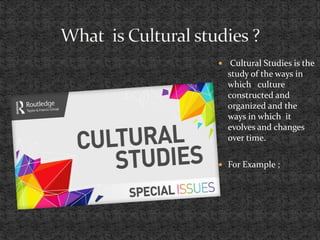
 Cultural Studies is the
study of the ways in
which culture
constructed and
organized and the
ways in which it
evolves and changes
over time.
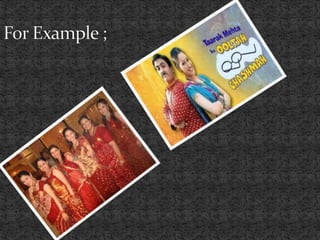
 For Example ;
 An analysis of the forms of representation .
 An Examination of the financial sources sponsor of the
representation.
 An examination of the role played by other objects
/people propaganda ideology.
 An Analysis of he political ideologies embedded in
these representation.(Ideologies and values of the
family, Indianness ,development)
 A Media culture is an academic field deals with the
content form ,history and political implications of various
media and technologies.
 Media culture refers to the current western capitalist
society that emerged and developed from the
20thcentury,under the influence of mass media.
 Cultural studies of popular media culture to bring to the
surface the ideologies and political ideas hidden in mass
media entertainment in the belief that media culture
transmits ideologies that reinforce oppressive structure of
class , gender , sexuality and race through popular
representation.
Media
Print
Social
Network
Sites
Websites
Forums
MagazinesNewspapers
Internet
Radio
Television
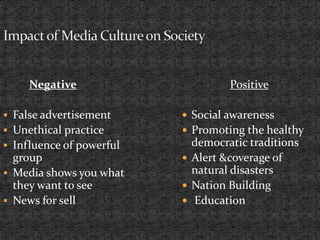
Negative
 False advertisement
 Unethical practice
 Influence of powerful
group
 Media shows you what
they want to see
 News for sell
Positive
 Social awareness
 Promoting the healthy
democratic traditions
 Alert &coverage of
natural disasters
 Nation Building
 Education
 Cultural studies focuses on media culture because it
assumes that media are very significant contributors to
ideologies and political Culture.
 Media culture mostly supports the hegemony of
specific power groups.
 Media culture makes oppressive conditions of class
and gender and often the economic angle to culture
ideologies of the family or the law.
Media Cuture and Cultural Studies

Media Cuture and Cultural Studies

  • 1.
     Name :-Bambha Kajal A.  Sem : -2  Roll :- 17  Year :- 2017-2019  Paper no :- The Cultural Studies  Enrollment no: -2060108420180002  Email id :- kajalbambha16@gmail.com  Submitted :- Department of English  Maharaja Krishnakumarsinhji  Bhavnagar University
  • 2.
     Cultural Studiesis the study of the ways in which culture constructed and organized and the ways in which it evolves and changes over time.  For Example ;
  • 4.
     An analysisof the forms of representation .  An Examination of the financial sources sponsor of the representation.  An examination of the role played by other objects /people propaganda ideology.  An Analysis of he political ideologies embedded in these representation.(Ideologies and values of the family, Indianness ,development)
  • 6.
     A Mediaculture is an academic field deals with the content form ,history and political implications of various media and technologies.  Media culture refers to the current western capitalist society that emerged and developed from the 20thcentury,under the influence of mass media.  Cultural studies of popular media culture to bring to the surface the ideologies and political ideas hidden in mass media entertainment in the belief that media culture transmits ideologies that reinforce oppressive structure of class , gender , sexuality and race through popular representation.
  • 7.
  • 8.
    Negative  False advertisement Unethical practice  Influence of powerful group  Media shows you what they want to see  News for sell Positive  Social awareness  Promoting the healthy democratic traditions  Alert &coverage of natural disasters  Nation Building  Education
  • 9.
     Cultural studiesfocuses on media culture because it assumes that media are very significant contributors to ideologies and political Culture.  Media culture mostly supports the hegemony of specific power groups.  Media culture makes oppressive conditions of class and gender and often the economic angle to culture ideologies of the family or the law.