Media and democracy
Content
 Introduction
 What is democracy?
 What is media?
 Media and Democracy
According to Thomas Jefferson
 Forth Pillar of Democracy
 Role of Media in Democracy
 As an informer.
 Create public opinion.
 Conclusion
Introduction:
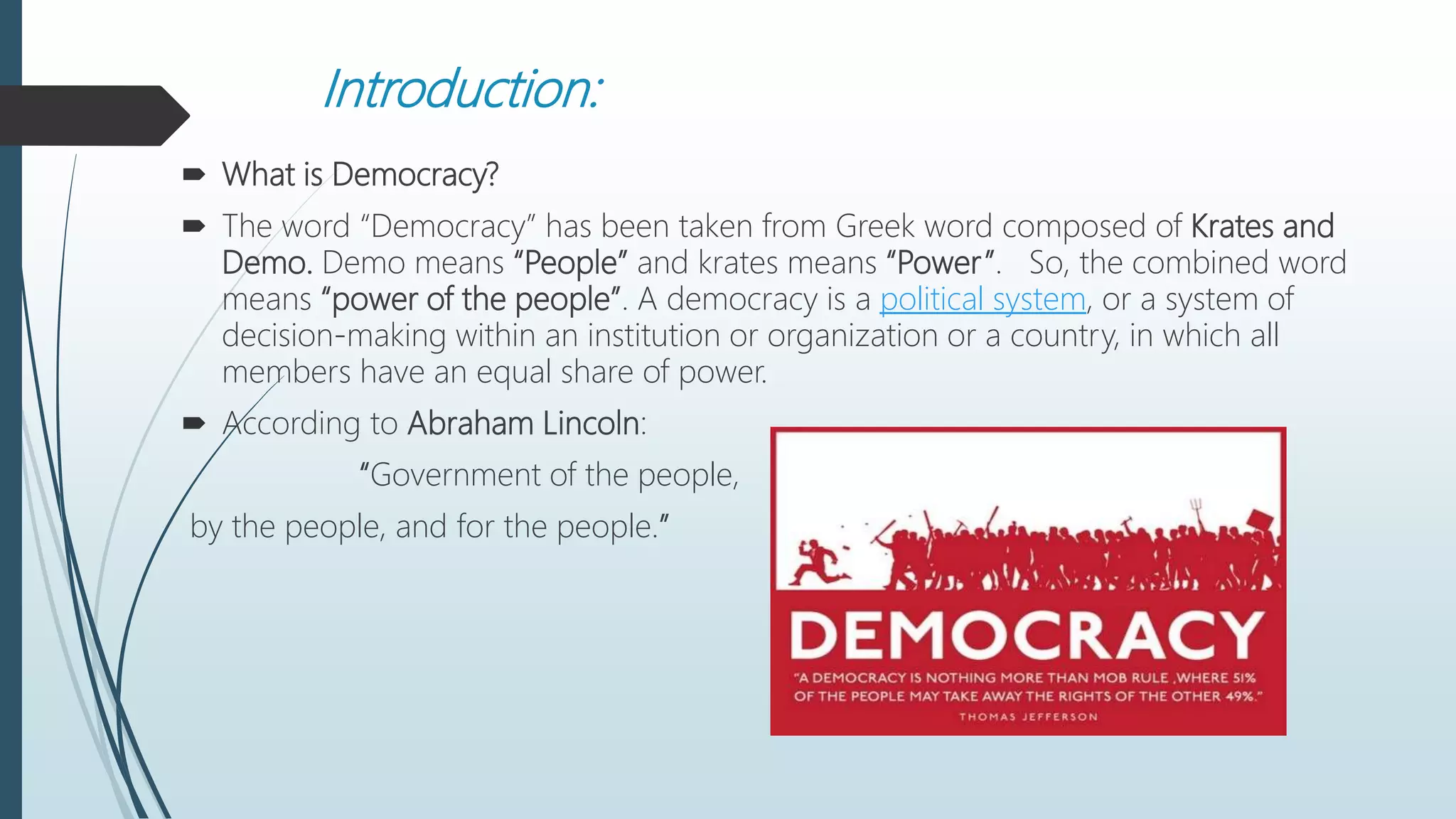
 What is Democracy?
 The word “Democracy” has been taken from Greek word composed of Krates and
Demo. Demo means “People” and krates means “Power”. So, the combined word
means “power of the people”. A democracy is a political system, or a system of
decision-making within an institution or organization or a country, in which all
members have an equal share of power.
 According to Abraham Lincoln:
“Government of the people,
by the people, and for the people.”
History:
 The Origin of Democracy contrasts three ancient civilizations - Roman, Greek,
and Persian. Cleisthenes of ancient Athens is considered the father of democracy.
In modern usage, is a system of government in which the citizens exercise power
directly or elect representatives from among themselves to form a governing
body, such as a parliament.
Types:
 Direct Democracy.
 Indirect Democracy.
 Direct Democracy:
“In this kind of democracy, the public take part in legislation.” In
ancient Greek, this was the system of government. All the people assembled
at a place and settled political matters.
 Indirect Democracy:
“In this kind of democracy, people send their representatives in the
legislative assembly who run government and are answerable to public for
their wrongs.
What is media?
The word ‘media’ is derived from the word medium, “signifying mode or carrier”. In
general, “media” refers to various means of communication.
The three basic functions of mass media are:
i) To inform
ii) To educate
iii) To entertain.
Types of media:
 Print media
 Electronic media
 New media
Media and Democracy:
 Media democracy focuses on using information technologies to both empower
individual citizens and promote democratic ideals through the spread of information.
 According to Thomas Jefferson:
“If he had to choose between government without newspaper or newspaper
without government he would pick the latter”
Relation between Media And
Democracy:
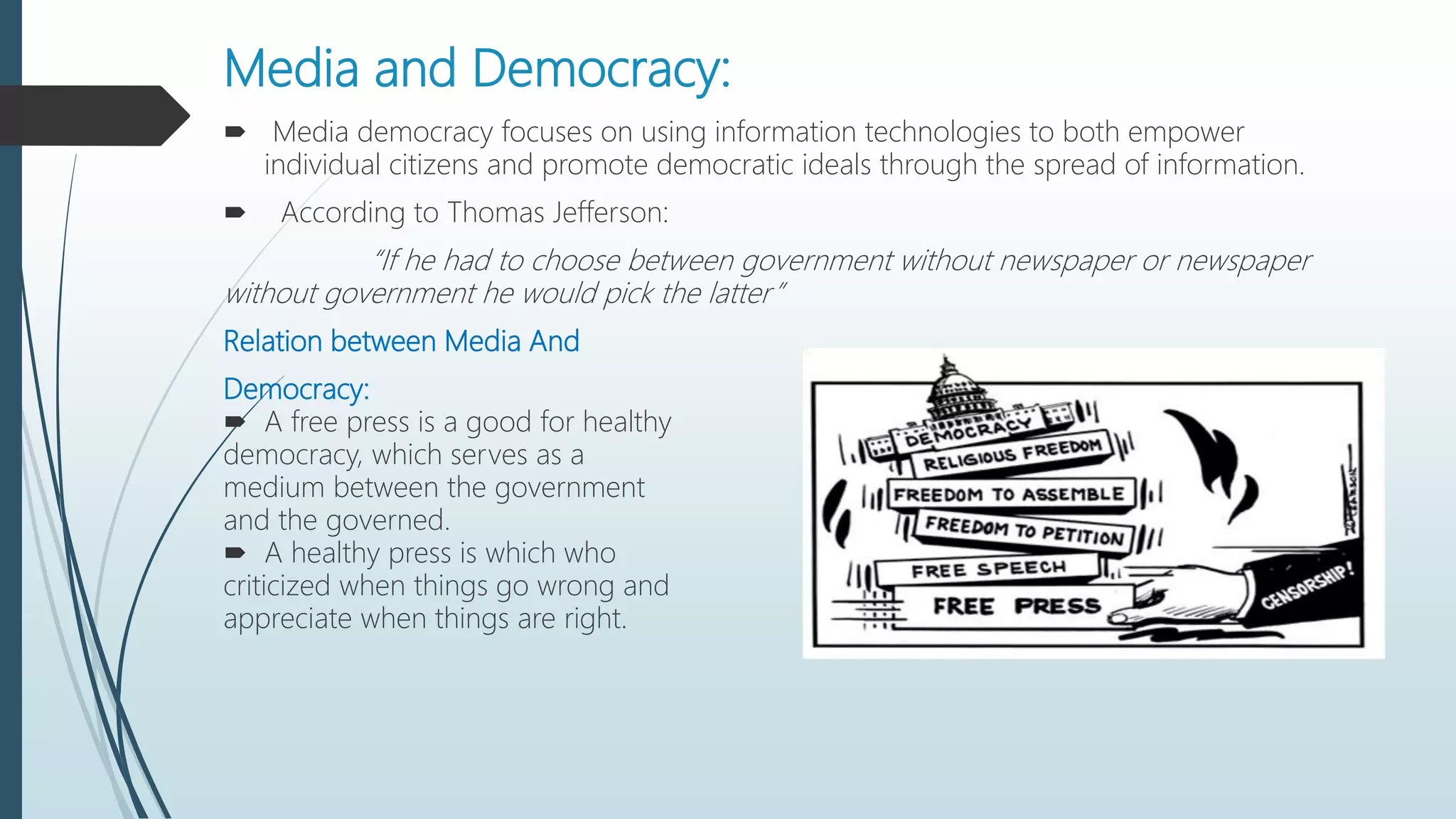
 A free press is a good for healthy
democracy, which serves as a
medium between the government
and the governed.
 A healthy press is which who
criticized when things go wrong and
appreciate when things are right.
 Freedom of press has been compromised by ideologies who rather than showing picture,
spin narratives to form opinion for or against those in powers.
 Example:
In Pakistan, since the day after independence media faced many problems, lots of
editors, publishers, were banned and punished. Every political person in their era, made
decisions for press according to their own will. For example, Ayyub khan government is known
as “black law” because he never gave freedom to media, he punished many editors,
publishers. This situation remains same until Zia-ul-haqq era, after his caretaker, Junejo made
new policies for media. After his era, all political leaders remain same just like in past, and till
now media did not change.
 Forth pillar of the democracy:
“The media's the most powerful entity on earth. They have the power to make the innocent
guilty and to make the guilty innocent, and that's power. Because they control the minds of the
masses”
- Malcolm X
today, media is considered the fourth pillar of the state all over the world; first and foremost,
British Member of Parliament Lord Macaulay had given this status to the media. In any
republican government system, there must be three administrative bodies,
1. Parliament
2. Administrative department
3. Judiciary body.
In the absence of any of these three bodies, the government cannot run systematically, but
now it is felt that one body more is necessary to be with them, that is media. This body is
considered more important these days, it plays an important role as an informative bridge
between governing bodies and general public,
in absence of media general public cannot know about what kind of bills and acts are passed in
the parliament, and what are their positive and negative effects in the society.
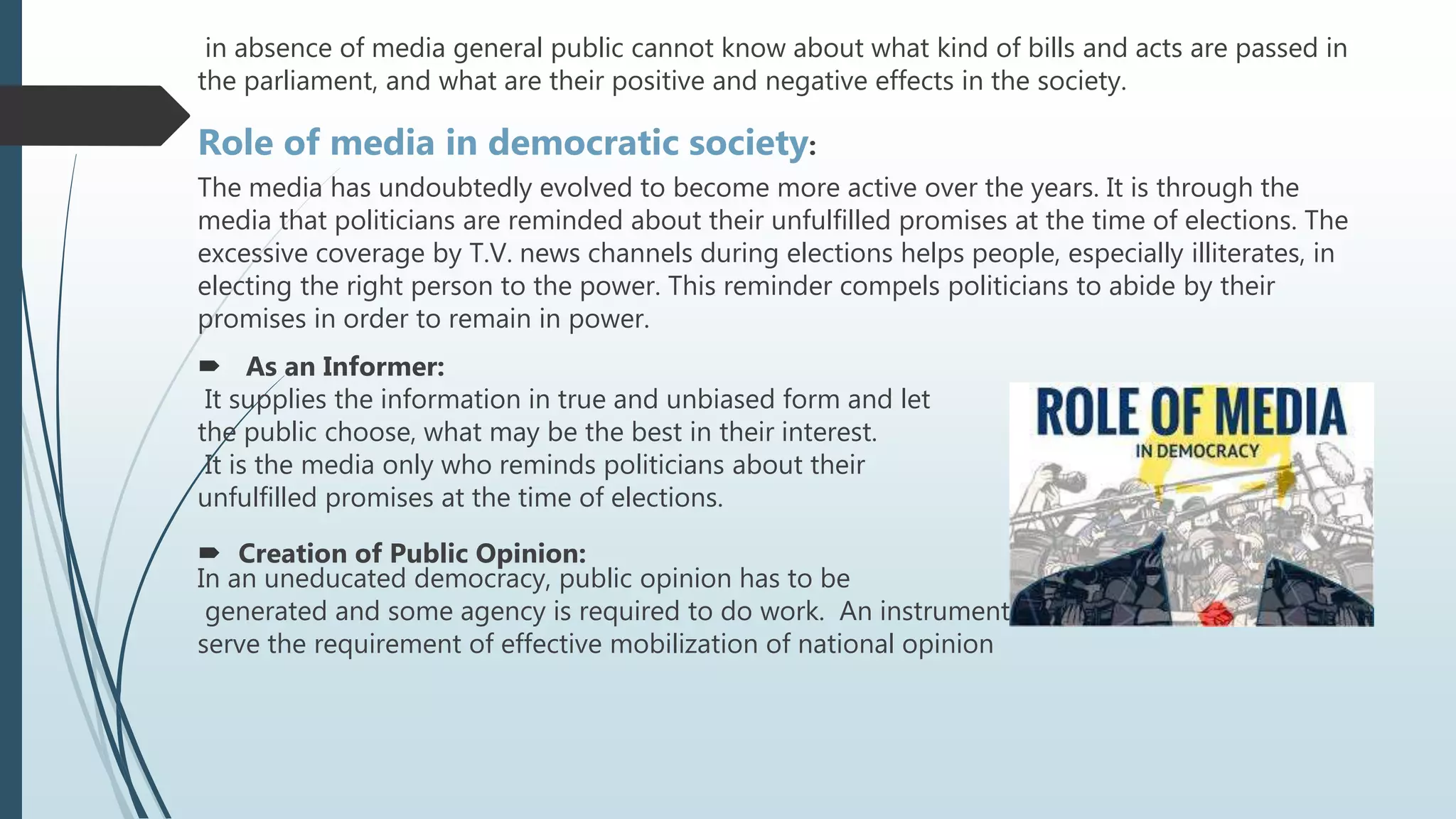
Role of media in democratic society:
The media has undoubtedly evolved to become more active over the years. It is through the
media that politicians are reminded about their unfulfilled promises at the time of elections. The
excessive coverage by T.V. news channels during elections helps people, especially illiterates, in
electing the right person to the power. This reminder compels politicians to abide by their
promises in order to remain in power.
 As an Informer:
It supplies the information in true and unbiased form and let
the public choose, what may be the best in their interest.
It is the media only who reminds politicians about their
unfulfilled promises at the time of elections.
 Creation of Public Opinion:
In an uneducated democracy, public opinion has to be
generated and some agency is required to do work. An instrument of mass communication can
serve the requirement of effective mobilization of national opinion
This is the only way a democracy can survive. Television and radio have made a significant
achievement in educating rural illiterate masses in making them aware of all the events in their
language. The media also exposes loopholes in the democratic system, which ultimately helps
government in filling the vacuums of loopholes and making a system more accountable,
responsive and citizen-friendly. A democracy without media is like a vehicle without wheels.
 Conclusion:
No one is perfect in this world. We cannot think of a democracy without active and
neutral media. Media is like a watchdog in a democracy that keeps government active. From
being just an informer, it has become an integral part of our daily lives. With the passage of
time it has become a more matured and a more responsible entity which informs the people
about all the things which is going on in the society.

Media and democracy

  • 1.
  • 2.
    Content  Introduction  Whatis democracy?  What is media?  Media and Democracy According to Thomas Jefferson  Forth Pillar of Democracy  Role of Media in Democracy  As an informer.  Create public opinion.  Conclusion
  • 3.
    Introduction:  What isDemocracy?  The word “Democracy” has been taken from Greek word composed of Krates and Demo. Demo means “People” and krates means “Power”. So, the combined word means “power of the people”. A democracy is a political system, or a system of decision-making within an institution or organization or a country, in which all members have an equal share of power.  According to Abraham Lincoln: “Government of the people, by the people, and for the people.”
  • 4.
    History:  The Originof Democracy contrasts three ancient civilizations - Roman, Greek, and Persian. Cleisthenes of ancient Athens is considered the father of democracy. In modern usage, is a system of government in which the citizens exercise power directly or elect representatives from among themselves to form a governing body, such as a parliament.
  • 5.
    Types:  Direct Democracy. Indirect Democracy.  Direct Democracy: “In this kind of democracy, the public take part in legislation.” In ancient Greek, this was the system of government. All the people assembled at a place and settled political matters.  Indirect Democracy: “In this kind of democracy, people send their representatives in the legislative assembly who run government and are answerable to public for their wrongs.
  • 6.
    What is media? Theword ‘media’ is derived from the word medium, “signifying mode or carrier”. In general, “media” refers to various means of communication. The three basic functions of mass media are: i) To inform ii) To educate iii) To entertain. Types of media:  Print media  Electronic media  New media
  • 7.
    Media and Democracy: Media democracy focuses on using information technologies to both empower individual citizens and promote democratic ideals through the spread of information.  According to Thomas Jefferson: “If he had to choose between government without newspaper or newspaper without government he would pick the latter” Relation between Media And Democracy:  A free press is a good for healthy democracy, which serves as a medium between the government and the governed.  A healthy press is which who criticized when things go wrong and appreciate when things are right.
  • 8.
     Freedom ofpress has been compromised by ideologies who rather than showing picture, spin narratives to form opinion for or against those in powers.  Example: In Pakistan, since the day after independence media faced many problems, lots of editors, publishers, were banned and punished. Every political person in their era, made decisions for press according to their own will. For example, Ayyub khan government is known as “black law” because he never gave freedom to media, he punished many editors, publishers. This situation remains same until Zia-ul-haqq era, after his caretaker, Junejo made new policies for media. After his era, all political leaders remain same just like in past, and till now media did not change.  Forth pillar of the democracy: “The media's the most powerful entity on earth. They have the power to make the innocent guilty and to make the guilty innocent, and that's power. Because they control the minds of the masses” - Malcolm X
  • 9.
    today, media isconsidered the fourth pillar of the state all over the world; first and foremost, British Member of Parliament Lord Macaulay had given this status to the media. In any republican government system, there must be three administrative bodies, 1. Parliament 2. Administrative department 3. Judiciary body. In the absence of any of these three bodies, the government cannot run systematically, but now it is felt that one body more is necessary to be with them, that is media. This body is considered more important these days, it plays an important role as an informative bridge between governing bodies and general public,
  • 10.
    in absence ofmedia general public cannot know about what kind of bills and acts are passed in the parliament, and what are their positive and negative effects in the society. Role of media in democratic society: The media has undoubtedly evolved to become more active over the years. It is through the media that politicians are reminded about their unfulfilled promises at the time of elections. The excessive coverage by T.V. news channels during elections helps people, especially illiterates, in electing the right person to the power. This reminder compels politicians to abide by their promises in order to remain in power.  As an Informer: It supplies the information in true and unbiased form and let the public choose, what may be the best in their interest. It is the media only who reminds politicians about their unfulfilled promises at the time of elections.  Creation of Public Opinion: In an uneducated democracy, public opinion has to be generated and some agency is required to do work. An instrument of mass communication can serve the requirement of effective mobilization of national opinion
  • 11.
    This is theonly way a democracy can survive. Television and radio have made a significant achievement in educating rural illiterate masses in making them aware of all the events in their language. The media also exposes loopholes in the democratic system, which ultimately helps government in filling the vacuums of loopholes and making a system more accountable, responsive and citizen-friendly. A democracy without media is like a vehicle without wheels.  Conclusion: No one is perfect in this world. We cannot think of a democracy without active and neutral media. Media is like a watchdog in a democracy that keeps government active. From being just an informer, it has become an integral part of our daily lives. With the passage of time it has become a more matured and a more responsible entity which informs the people about all the things which is going on in the society.