Medication Administration
Review
For Certified Caregivers
By Rosaena Diaz LPN
Medication
Adminstration
Review
Objective: To provide
medication to each
individual resident in
compliance with Policies
and Procedures, Arizona
State Regulations, and for
the resident's health and
wellness.
Course Goals
• To safely assist in the self-administration of medication.
• To decrease the occurance of medication errors.
• To observe the 7 resident rights.
• To recognize the importance of medication adverse effects.
Skills
• Identify common errors in the self administration of medication.
• Identify a physicians order.
• Identify most common adverse affects.
Common Errors
in medication administration
• Wrong Medication
• Wrong Time
• Wrong Reason
Physician's orders
• It is the caregiver's responsibility to provide medications as ordered
by a physician.
• A physician's order must include the resident's name, the date of the
order, the name of the medication, the dosage to
be administered, the route of administration and the frequency of the
medication to be given.
Physician's orders
• Always follow the doctor's orders when administering medication.
• Check the medication bottle with the Medication Administration
Record to ensure medication is provided based on the most current
doctor's orders
• When the medication bottle is different, you must obtain a copy of
the doctor's orders from the prescribing doctor or the pharmacy
where the medication came from.
• Follow any instructions that the physician has written and document
it in the Medication Administration Record along with the
medication.
Wrong Medication
When providing medication to several residents the caregiver should ensure
that the right medication is provided to the right resident.
The most basic and best practice in providing medication is as follows;
1. Prepare one resident's medication at a time.
2. When a medication organizer is used, ensure the medication organizer
is labeled with the resident's name.
3. Give the medication to the resident when you are sure of the resident's
identity.
4. Sign the medication Administration Record after the medication is given
or not given.
5. Then continue to the next resident.
Wrong Medication con't
• In observing these steps you will decrease the potential of giving the
wrong medication to the wrong resident.
• Always observe your facility policies and procedures when providing
medications.
• Do not borrow medications from one resident to give to another as
the dosages may vary. This may also be considered financially
unethical.
Wrong Time
• Medications can be given one hour before scheduled or one hour
after they are scheduled to be given.
• But some medications should not be given more than 30 minutes
from the scheduled time.
• Carbidopa/Levodopa, a medication used to treat Parkinson's disease
should be given at regular intervals without interruptions.
• This will help decrease the "wearing off" period and will help to keep
the resident functioning at their highest level.
Wrong Time
• Levothyroxine, a medication used to treat hypothryoidism.
• Should be scheduled to be given on an empty stomach for
better absorption.
• This medication should be scheduled at least an hour before breakfast or at
bedtime after meals and evening medications have be given.
• Providing this medication at a time that is best for your resident will ensure
the resident absorbs the medication at their optimum potential and
receives the therapeutic effects.
Wrong Time
• Other medications are scheduled at certain times because of the side
effects that may occur.
• Tazodone, a medication used for Depression is often used for sleep
because of its side effects of drowsiness and sedation.
• Because of the side effects this medication should be given when the
resident is ready to go to bed to decrease the potential for falls.
Wrong Reason
• Medications are used for various diagnosis.
• When a Physician orders a new medication to your resident, it is good
practice to ask what the diagnosis is for this medication. This will
ensure that the resident is getting the right medication for their
diagnosis.
• The caregiver can then monitor the effectiveness of this medication
for the specific diagnosis in which it is intended.
Wrong Reason con't
• Dilantin is used for a diagnosis of seizure disorder, (as it works to slow
down nerve impulses to the brain that cause seizures), but it may also
be used for neuropathy pain (as it helps to calm the burning,
stabbing, or shooting pain caused by damaged nerves).
• Whether it is used for the common diagnosis or for another
reason, the caregiver should be aware of the reason for this
medication to your specific resident.
• In either case the resident should be monitored for high or
low blood therapeutic levels of this medication.
Resident Rights
• All residents have the right to live in an environment that
is safe, nurturing and free from neglect.
• This is also true when it comes to providing medications.
• Adhering to the resident's rights will ensure that medication is
provided safely and for the reason specific to the resident.
Resident Rights
1. The right Resident
2. The right Medication
3. The right Dosage
4. The right Route
5. The right Time
6. The right to know
7. The right to refuse
Adverse affects
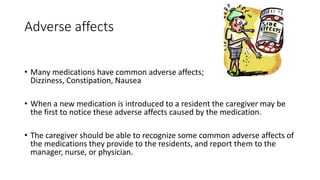
• Many medications have common adverse affects;
Dizziness, Constipation, Nausea
• When a new medication is introduced to a resident the caregiver may be
the first to notice these adverse affects caused by the medication.
• The caregiver should be able to recognize some common adverse affects of
the medications they provide to the residents, and report them to the
manager, nurse, or physician.
Adverse affects
• Some adverse affects for Levothyroxine may include, Chest pain, Shortness
of breath, Confusion, and Change in sleep patterns.
• Some adverse affects for Trazadone may include, Numbness, burning or
tingling sensations.
• Some adverse affects for Dilantin may include, twitching, blurred vision
or hyperglycemia.
• Knowing the specific adverse affects to each
medication can help the caregiver monitor the residents response to
treatment.
In Conclusion
• Take some time to know the medication you are providing, Be aware
of any adverse effects, And follow the physician's orders.
• This will ensure that your residents receive the best assistance in the
self administration of medication.
Rosaena Diaz LPN,
Experienced in geriatric care for 29 years
• Trazadone; Consumer reports August 2015
• Levothyroxine; American Thyroid Association
• Carbidopa/Levodopa; WedMD 2005-2017
• Dilantin; Nursing Drug Handbook 2016

Med training

  • 1.
    Medication Administration Review For CertifiedCaregivers By Rosaena Diaz LPN
  • 2.
    Medication Adminstration Review Objective: To provide medicationto each individual resident in compliance with Policies and Procedures, Arizona State Regulations, and for the resident's health and wellness.
  • 3.
    Course Goals • Tosafely assist in the self-administration of medication. • To decrease the occurance of medication errors. • To observe the 7 resident rights. • To recognize the importance of medication adverse effects.
  • 4.
    Skills • Identify commonerrors in the self administration of medication. • Identify a physicians order. • Identify most common adverse affects.
  • 5.
    Common Errors in medicationadministration • Wrong Medication • Wrong Time • Wrong Reason
  • 6.
    Physician's orders • Itis the caregiver's responsibility to provide medications as ordered by a physician. • A physician's order must include the resident's name, the date of the order, the name of the medication, the dosage to be administered, the route of administration and the frequency of the medication to be given.
  • 7.
    Physician's orders • Alwaysfollow the doctor's orders when administering medication. • Check the medication bottle with the Medication Administration Record to ensure medication is provided based on the most current doctor's orders • When the medication bottle is different, you must obtain a copy of the doctor's orders from the prescribing doctor or the pharmacy where the medication came from. • Follow any instructions that the physician has written and document it in the Medication Administration Record along with the medication.
  • 8.
    Wrong Medication When providingmedication to several residents the caregiver should ensure that the right medication is provided to the right resident. The most basic and best practice in providing medication is as follows; 1. Prepare one resident's medication at a time. 2. When a medication organizer is used, ensure the medication organizer is labeled with the resident's name. 3. Give the medication to the resident when you are sure of the resident's identity. 4. Sign the medication Administration Record after the medication is given or not given. 5. Then continue to the next resident.
  • 9.
    Wrong Medication con't •In observing these steps you will decrease the potential of giving the wrong medication to the wrong resident. • Always observe your facility policies and procedures when providing medications. • Do not borrow medications from one resident to give to another as the dosages may vary. This may also be considered financially unethical.
  • 10.
    Wrong Time • Medicationscan be given one hour before scheduled or one hour after they are scheduled to be given. • But some medications should not be given more than 30 minutes from the scheduled time. • Carbidopa/Levodopa, a medication used to treat Parkinson's disease should be given at regular intervals without interruptions. • This will help decrease the "wearing off" period and will help to keep the resident functioning at their highest level.
  • 11.
    Wrong Time • Levothyroxine,a medication used to treat hypothryoidism. • Should be scheduled to be given on an empty stomach for better absorption. • This medication should be scheduled at least an hour before breakfast or at bedtime after meals and evening medications have be given. • Providing this medication at a time that is best for your resident will ensure the resident absorbs the medication at their optimum potential and receives the therapeutic effects.
  • 12.
    Wrong Time • Othermedications are scheduled at certain times because of the side effects that may occur. • Tazodone, a medication used for Depression is often used for sleep because of its side effects of drowsiness and sedation. • Because of the side effects this medication should be given when the resident is ready to go to bed to decrease the potential for falls.
  • 13.
    Wrong Reason • Medicationsare used for various diagnosis. • When a Physician orders a new medication to your resident, it is good practice to ask what the diagnosis is for this medication. This will ensure that the resident is getting the right medication for their diagnosis. • The caregiver can then monitor the effectiveness of this medication for the specific diagnosis in which it is intended.
  • 14.
    Wrong Reason con't •Dilantin is used for a diagnosis of seizure disorder, (as it works to slow down nerve impulses to the brain that cause seizures), but it may also be used for neuropathy pain (as it helps to calm the burning, stabbing, or shooting pain caused by damaged nerves). • Whether it is used for the common diagnosis or for another reason, the caregiver should be aware of the reason for this medication to your specific resident. • In either case the resident should be monitored for high or low blood therapeutic levels of this medication.
  • 15.
    Resident Rights • Allresidents have the right to live in an environment that is safe, nurturing and free from neglect. • This is also true when it comes to providing medications. • Adhering to the resident's rights will ensure that medication is provided safely and for the reason specific to the resident.
  • 16.
    Resident Rights 1. Theright Resident 2. The right Medication 3. The right Dosage 4. The right Route 5. The right Time 6. The right to know 7. The right to refuse
  • 17.
    Adverse affects • Manymedications have common adverse affects; Dizziness, Constipation, Nausea • When a new medication is introduced to a resident the caregiver may be the first to notice these adverse affects caused by the medication. • The caregiver should be able to recognize some common adverse affects of the medications they provide to the residents, and report them to the manager, nurse, or physician.
  • 18.
    Adverse affects • Someadverse affects for Levothyroxine may include, Chest pain, Shortness of breath, Confusion, and Change in sleep patterns. • Some adverse affects for Trazadone may include, Numbness, burning or tingling sensations. • Some adverse affects for Dilantin may include, twitching, blurred vision or hyperglycemia. • Knowing the specific adverse affects to each medication can help the caregiver monitor the residents response to treatment.
  • 19.
    In Conclusion • Takesome time to know the medication you are providing, Be aware of any adverse effects, And follow the physician's orders. • This will ensure that your residents receive the best assistance in the self administration of medication.
  • 20.
    Rosaena Diaz LPN, Experiencedin geriatric care for 29 years • Trazadone; Consumer reports August 2015 • Levothyroxine; American Thyroid Association • Carbidopa/Levodopa; WedMD 2005-2017 • Dilantin; Nursing Drug Handbook 2016