Mechanization
in Agriculture
By: Asmat Babar
www.asmatbabar.blogspot.com
Mechanization


Every machine is constructed for the
purpose
of
performing
certain
mechanical operations, each of which
supposes the existence of two other
things besides the machine in
question, namely, a moving power,
and an object subject to the
operation, which may be termed the
work to be done. Machines, in fact,
are interposed between the power and
the work, for the purpose of adapting
the one to the other.
History
AGRICULTURAL MECHANIZATION
Agricultural Mechanization is machinery used
in the operation of an agricultural area or farm.
 Many advancements in farming techniques and
tools have been manifested since agriculture's
beginnings thousands of years ago. The
greatest strides have occurred in the last three
hundred years.
 A substantial contribution to agriculture has
been the escalation from manual and stockanimal labor to steam-and then gas-powered
implements.

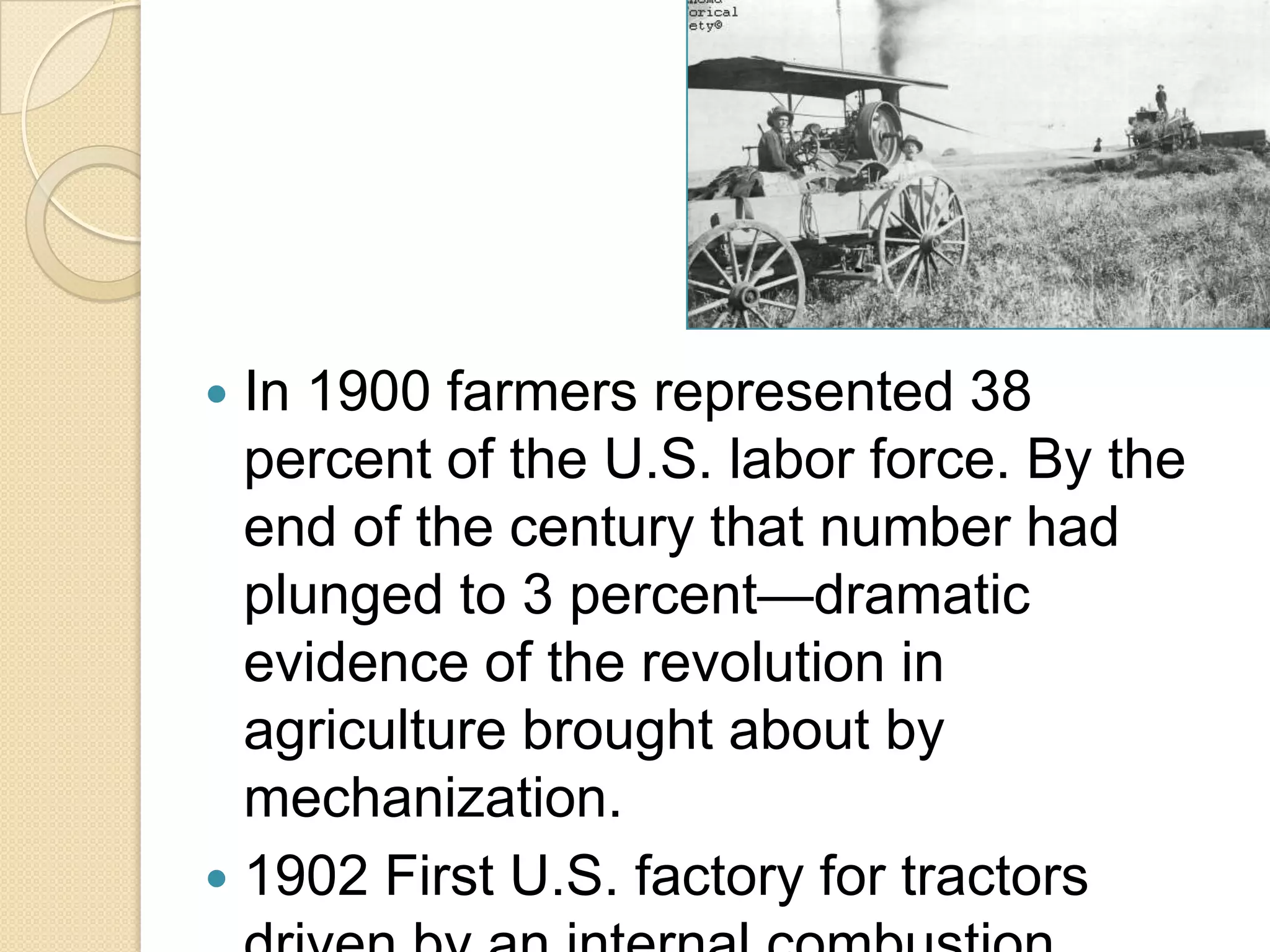
In 1900 farmers represented 38
percent of the U.S. labor force. By the
end of the century that number had
plunged to 3 percent—dramatic
evidence of the revolution in
agriculture brought about by
mechanization.
 1902 First U.S. factory for tractors

Advantages of Mechanization









Substitute for labour
Labour is too expensive to do everything
(in developed countries)
Compensate for labour peaks (i.e.
harvest)
Labour skills and strengths often
inadequate for large scale production
and materials handling
Amenity reasons (often repetitive dirty
tasks)
Attract or retain farm staff
Increase productivity of farm staff.
Disadvantages of
Mechanization
Redundancy - machinery for labour
substitution
 Cost - finance, fuel etc.
 Often needs highly skilled operator,
increased wages
 Often doesn't live up to expectations
 Health and safety
 Environmental costs

Agriculture Mechanization
Agriculture machinery can be divided
into following groups
 A) Farm machinery
 B) Irrigation Engineering
 C) Drain Engineering

Tractor
A tractor is an engineering
vehicle specifically designed to deliver
a high tractive effort (or torque) at slow
speeds, for the purposes of hauling
a traileror machinery used
in agriculture or construction.
 The word tractor was taken from Latin,
being the agent noun of trahere "to
pull".

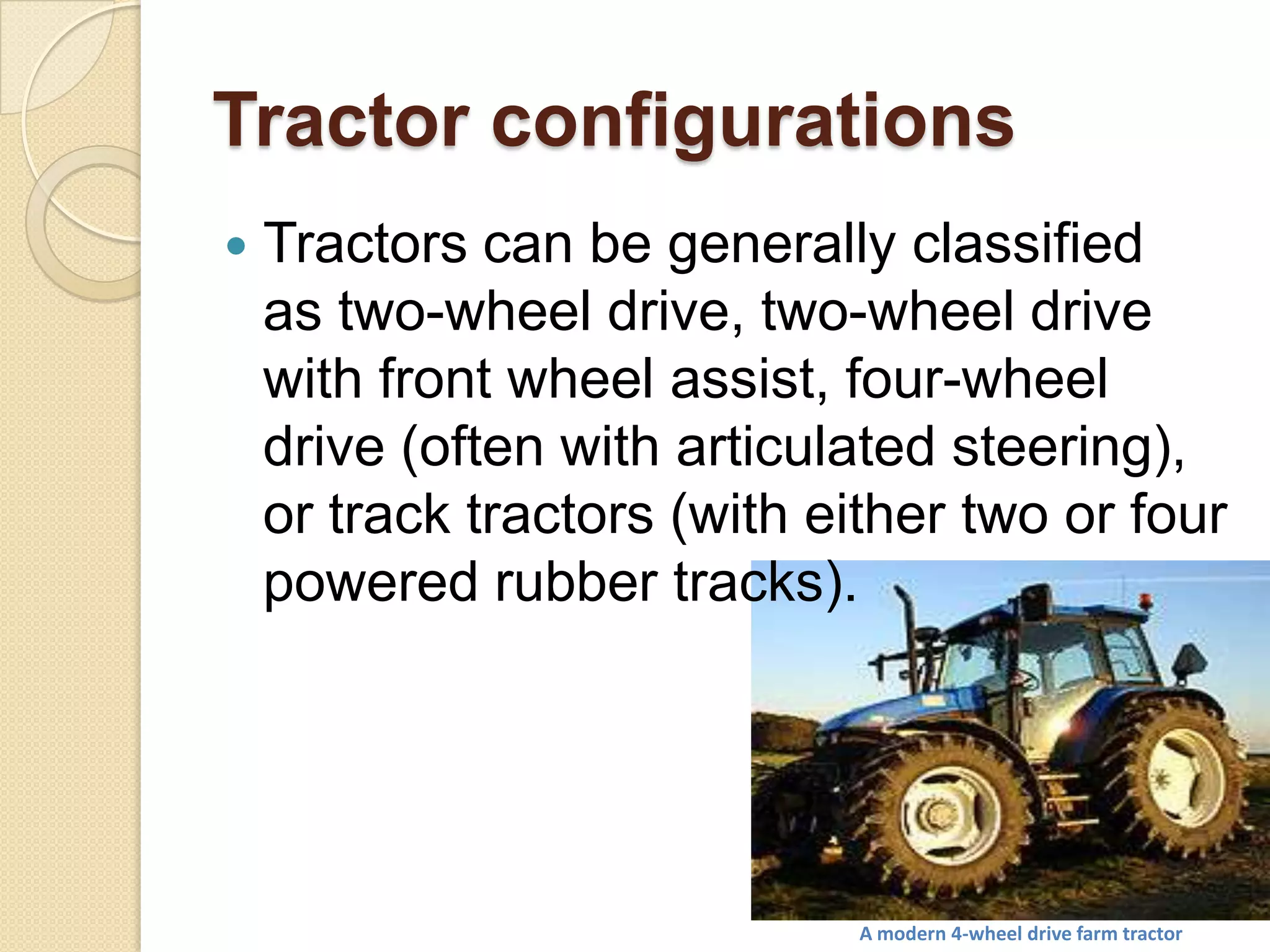
Tractor configurations


Tractors can be generally classified
as two-wheel drive, two-wheel drive
with front wheel assist, four-wheel
drive (often with articulated steering),
or track tractors (with either two or four
powered rubber tracks).

A modern 4-wheel drive farm tractor
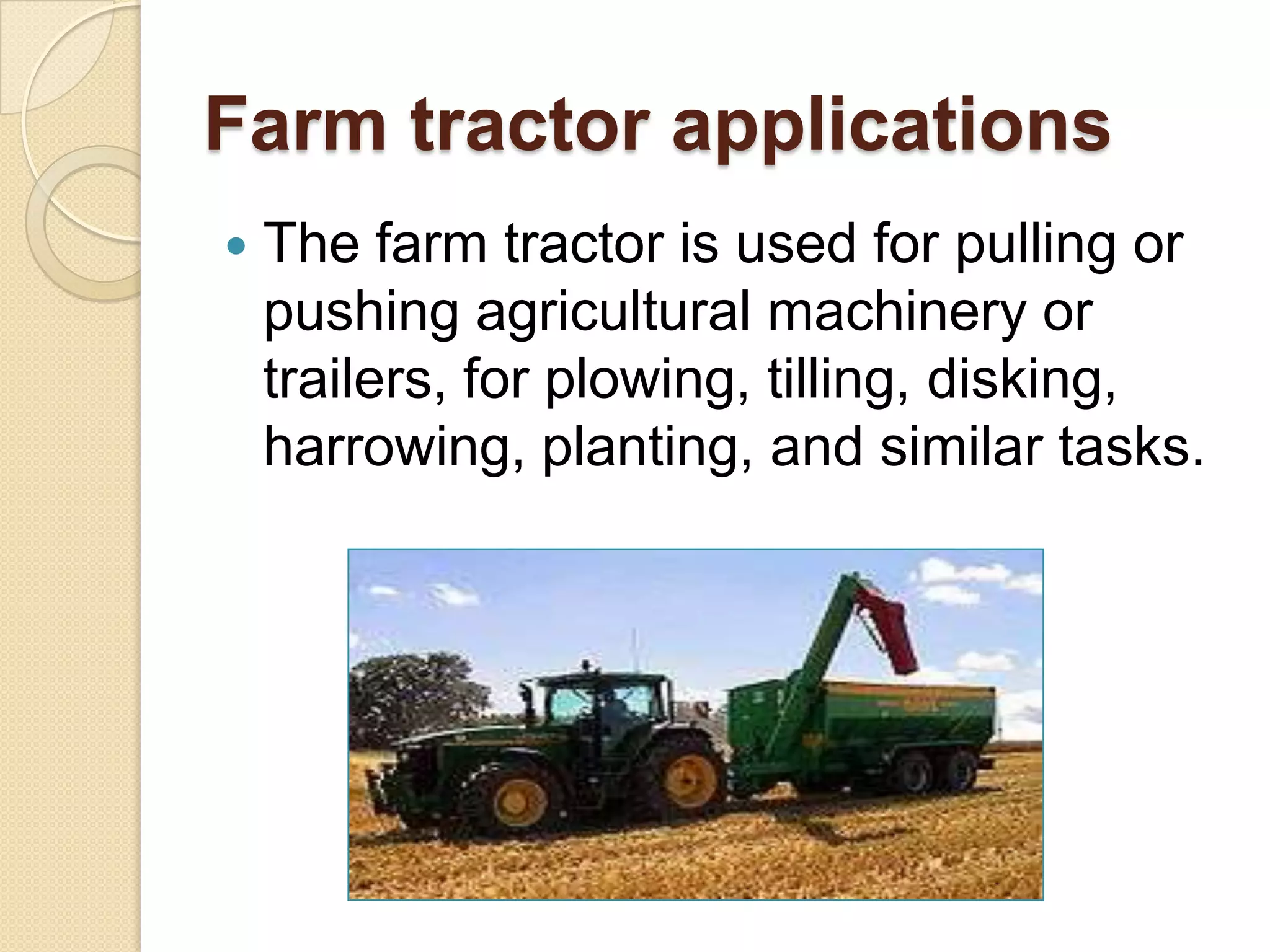
Farm tractor applications


The farm tractor is used for pulling or
pushing agricultural machinery or
trailers, for plowing, tilling, disking,
harrowing, planting, and similar tasks.
Tillage implement
Tillage is the agricultural preparation
of soil by mechanical agitation of
various types, such as digging,
stirring, and overturning.
 Classification of tillage implements
Primary Tillage implements
Secondary Tillage Implements

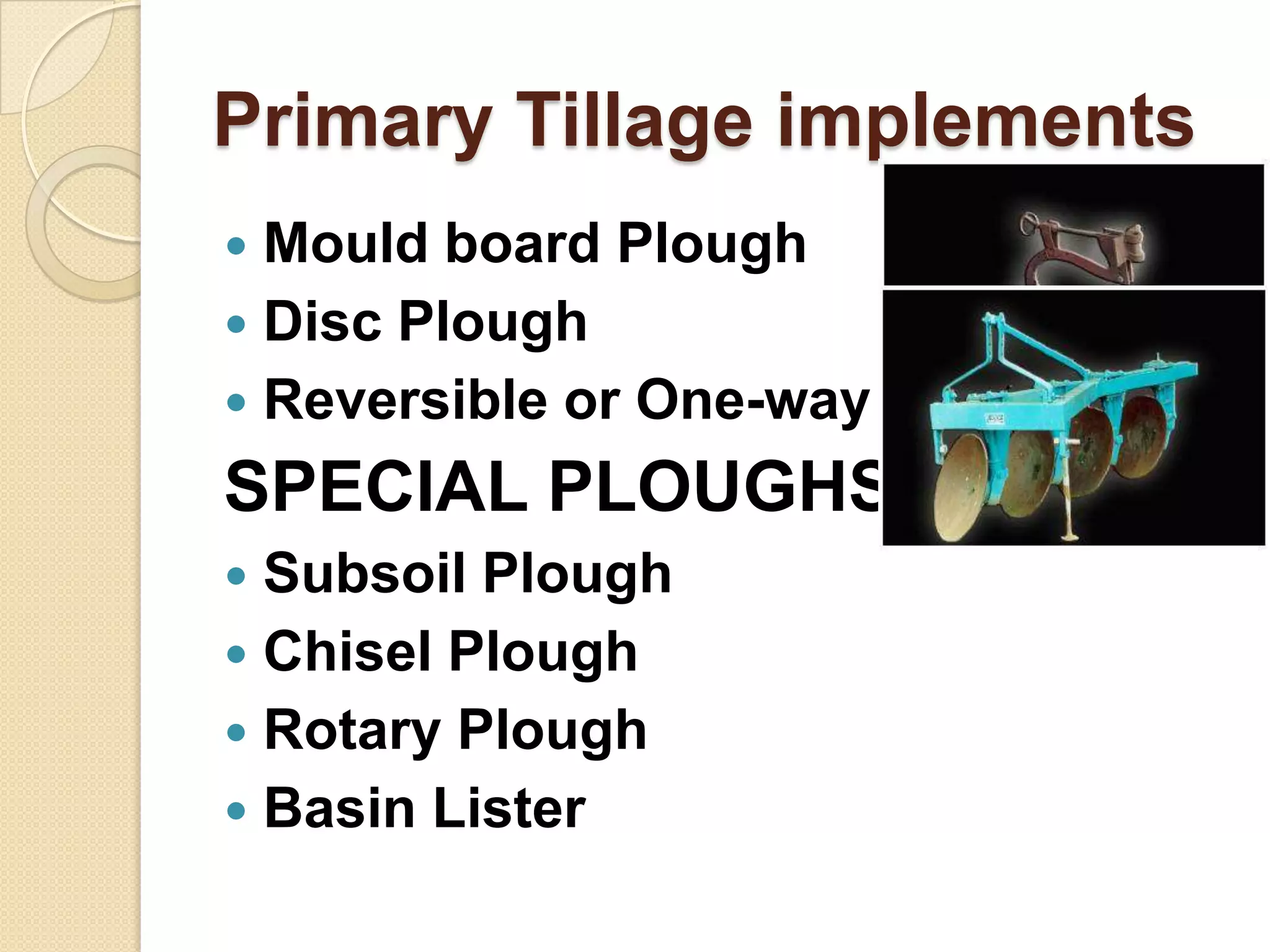
Primary Tillage implements
Mould board Plough
 Disc Plough
 Reversible or One-way Plough


SPECIAL PLOUGHS
Subsoil Plough
 Chisel Plough
 Rotary Plough
 Basin Lister

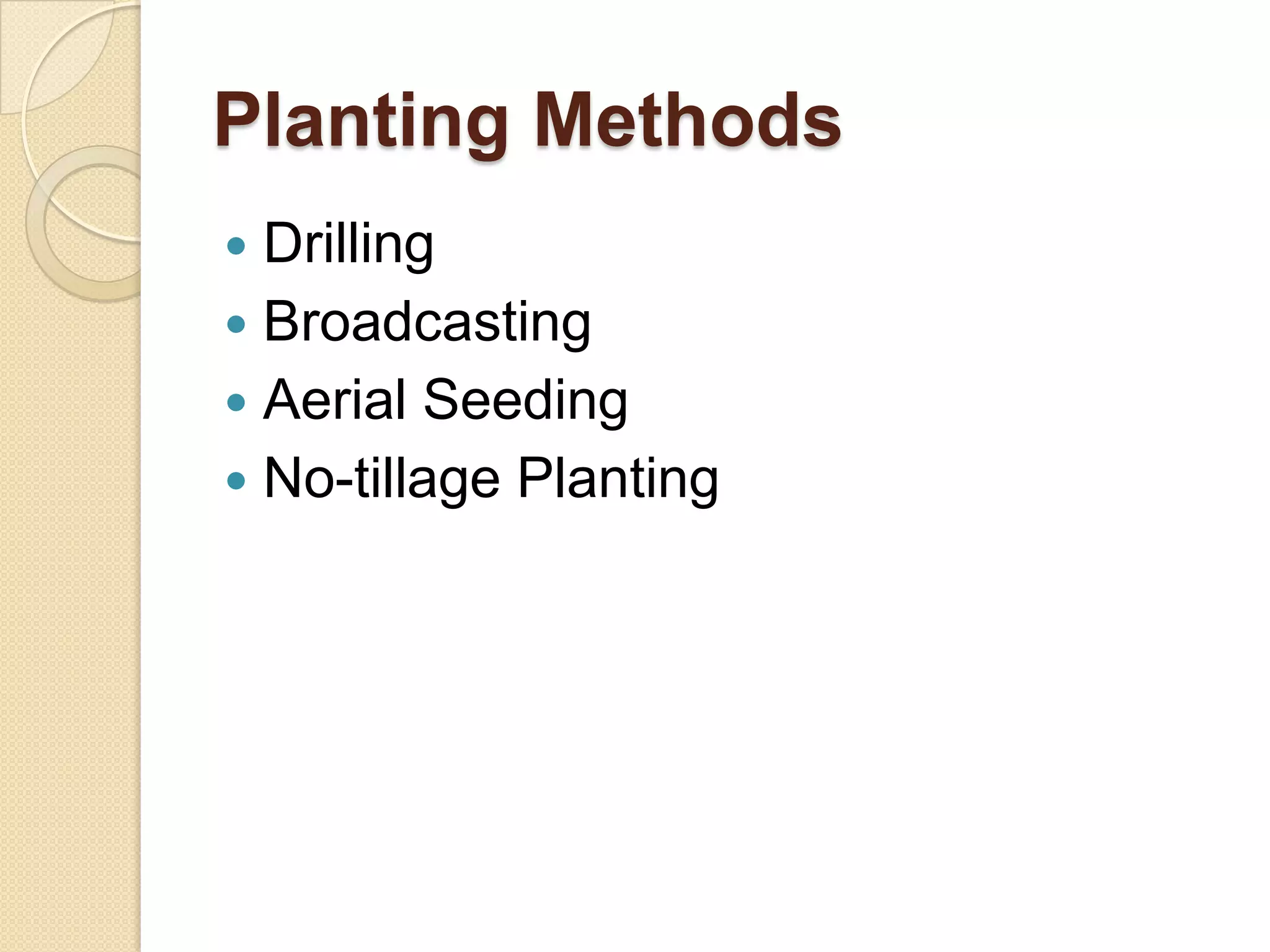
Secondary Tillage Implements
Tractor Drawn Cultivator
 Sweep Cultivator
 Harrows
 Disc Harrow
 Blade Harrow
 Indigenous Blade Harrows
 Plank and Roller

Planting Methods
Drilling
 Broadcasting
 Aerial Seeding
 No-tillage Planting

Spraying Equipment








Hand-operated hydraulic sprayers
(knapsack sprayers)
Power-operated hydraulic sprayers
(tractor-mounted sprayers)
Air carrier sprayers (mist blowers)
Electrodyne sprayers (electrostatic
sprayers)
Birky sprayers (Birky knapsack sprayers)
Controlled-droplet application sprayers
Dusters
Harvesting machine



Combine Harvesting
The combine harvester, or simply
combine, is a machine that harvests
grain crops. The name derives from its
combining three separate operations
comprising harvesting—
reaping, threshing, and winnowing—into
a single process. Among the crops
harvested with a combine
are wheat, oats, rye, barley,corn (maize)
, soybeans and flax (linseed).
Irrigation system
Irrigation is the artificial application of
water to the land or soil. It is used to
assist in the growing of agricultural
crops,
maintenance
oflandscapes,
and revegetation of disturbed soils in dry
areas and during periods of inadequate
rainfall. Additionally, irrigation also has a
few other uses in crop production, which
include protecting plants against frost,
suppressing weed growing in grain fields
and
helping
in
preventing
soil
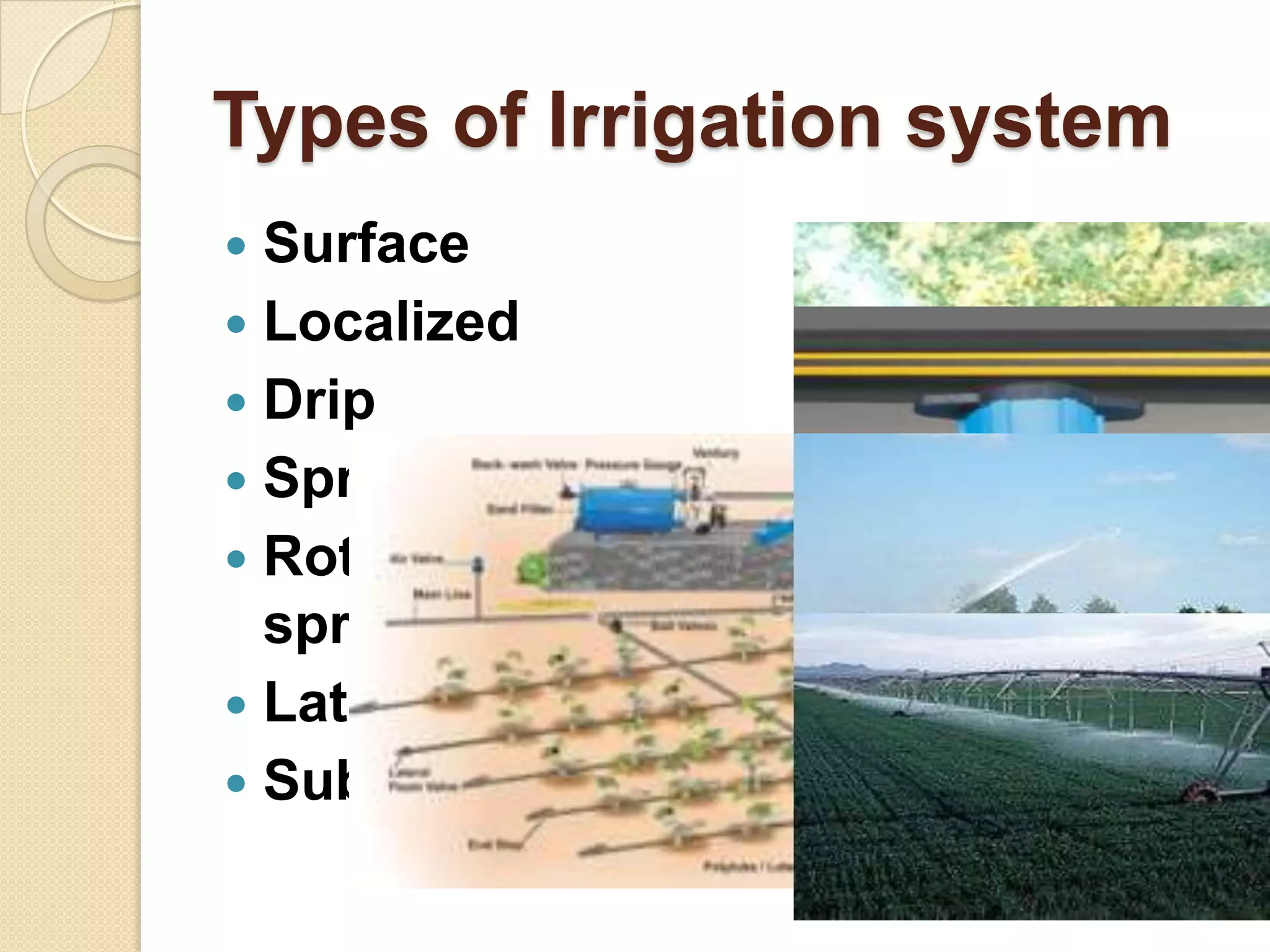
Types of Irrigation system
Surface
 Localized
 Drip
 Sprinkler
 Rotator style pivot applicator
sprinkler
 Lateral move (side roll, wheel line)
 Sub-irrigation

(C) Drainage system


An agricultural drainage system is a
system by which the water level on or
in the soil is controlled to enhance
agricultural crop production.
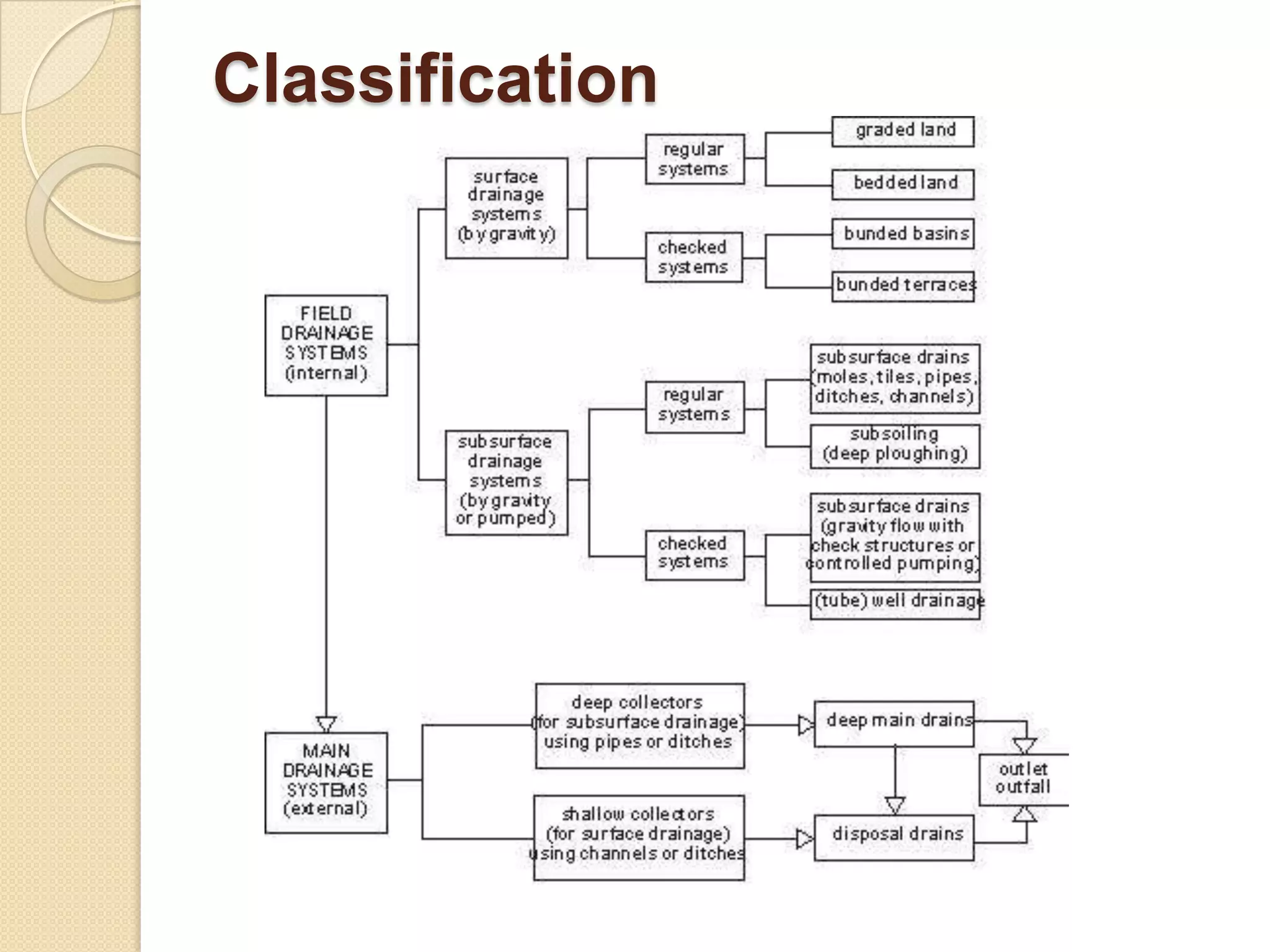
Classification
Surface drainage systems
 Subsurface drainage systems
 Main drainage systems
 Main drainage outlet

END

Mechanization in agriculture

  • 1.
    Mechanization in Agriculture By: AsmatBabar www.asmatbabar.blogspot.com
  • 2.
    Mechanization  Every machine isconstructed for the purpose of performing certain mechanical operations, each of which supposes the existence of two other things besides the machine in question, namely, a moving power, and an object subject to the operation, which may be termed the work to be done. Machines, in fact, are interposed between the power and the work, for the purpose of adapting the one to the other.
  • 3.
    History AGRICULTURAL MECHANIZATION Agricultural Mechanizationis machinery used in the operation of an agricultural area or farm.  Many advancements in farming techniques and tools have been manifested since agriculture's beginnings thousands of years ago. The greatest strides have occurred in the last three hundred years.  A substantial contribution to agriculture has been the escalation from manual and stockanimal labor to steam-and then gas-powered implements. 
  • 4.
    In 1900 farmersrepresented 38 percent of the U.S. labor force. By the end of the century that number had plunged to 3 percent—dramatic evidence of the revolution in agriculture brought about by mechanization.  1902 First U.S. factory for tractors 
  • 5.
    Advantages of Mechanization        Substitutefor labour Labour is too expensive to do everything (in developed countries) Compensate for labour peaks (i.e. harvest) Labour skills and strengths often inadequate for large scale production and materials handling Amenity reasons (often repetitive dirty tasks) Attract or retain farm staff Increase productivity of farm staff.
  • 6.
    Disadvantages of Mechanization Redundancy -machinery for labour substitution  Cost - finance, fuel etc.  Often needs highly skilled operator, increased wages  Often doesn't live up to expectations  Health and safety  Environmental costs 
  • 7.
    Agriculture Mechanization Agriculture machinerycan be divided into following groups  A) Farm machinery  B) Irrigation Engineering  C) Drain Engineering 
  • 8.
    Tractor A tractor isan engineering vehicle specifically designed to deliver a high tractive effort (or torque) at slow speeds, for the purposes of hauling a traileror machinery used in agriculture or construction.  The word tractor was taken from Latin, being the agent noun of trahere "to pull". 
  • 9.
    Tractor configurations  Tractors canbe generally classified as two-wheel drive, two-wheel drive with front wheel assist, four-wheel drive (often with articulated steering), or track tractors (with either two or four powered rubber tracks). A modern 4-wheel drive farm tractor
  • 10.
    Farm tractor applications  Thefarm tractor is used for pulling or pushing agricultural machinery or trailers, for plowing, tilling, disking, harrowing, planting, and similar tasks.
  • 11.
    Tillage implement Tillage isthe agricultural preparation of soil by mechanical agitation of various types, such as digging, stirring, and overturning.  Classification of tillage implements Primary Tillage implements Secondary Tillage Implements 
  • 12.
    Primary Tillage implements Mouldboard Plough  Disc Plough  Reversible or One-way Plough  SPECIAL PLOUGHS Subsoil Plough  Chisel Plough  Rotary Plough  Basin Lister 
  • 13.
    Secondary Tillage Implements TractorDrawn Cultivator  Sweep Cultivator  Harrows  Disc Harrow  Blade Harrow  Indigenous Blade Harrows  Plank and Roller 
  • 14.
    Planting Methods Drilling  Broadcasting Aerial Seeding  No-tillage Planting 
  • 15.
    Spraying Equipment        Hand-operated hydraulicsprayers (knapsack sprayers) Power-operated hydraulic sprayers (tractor-mounted sprayers) Air carrier sprayers (mist blowers) Electrodyne sprayers (electrostatic sprayers) Birky sprayers (Birky knapsack sprayers) Controlled-droplet application sprayers Dusters
  • 16.
    Harvesting machine   Combine Harvesting Thecombine harvester, or simply combine, is a machine that harvests grain crops. The name derives from its combining three separate operations comprising harvesting— reaping, threshing, and winnowing—into a single process. Among the crops harvested with a combine are wheat, oats, rye, barley,corn (maize) , soybeans and flax (linseed).
  • 17.
    Irrigation system Irrigation isthe artificial application of water to the land or soil. It is used to assist in the growing of agricultural crops, maintenance oflandscapes, and revegetation of disturbed soils in dry areas and during periods of inadequate rainfall. Additionally, irrigation also has a few other uses in crop production, which include protecting plants against frost, suppressing weed growing in grain fields and helping in preventing soil
  • 18.
    Types of Irrigationsystem Surface  Localized  Drip  Sprinkler  Rotator style pivot applicator sprinkler  Lateral move (side roll, wheel line)  Sub-irrigation 
  • 19.
    (C) Drainage system  Anagricultural drainage system is a system by which the water level on or in the soil is controlled to enhance agricultural crop production.
  • 20.
  • 21.
    Surface drainage systems Subsurface drainage systems  Main drainage systems  Main drainage outlet 
  • 22.