WELCOME TO THE PRESENTATION
BY
GROUP:- SIGMA
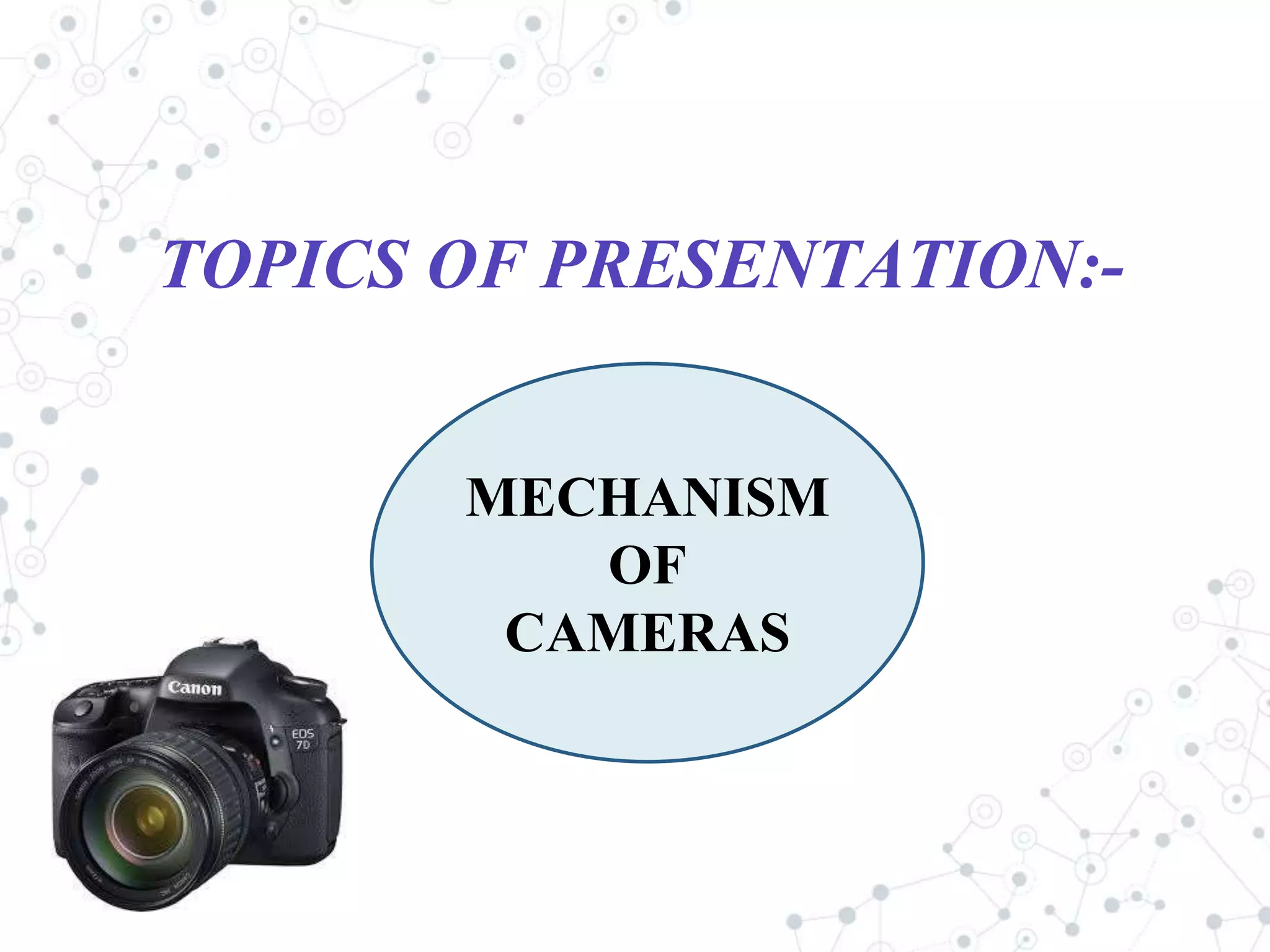
TOPICS OF PRESENTATION:-
MECHANISM
OF
CAMERAS
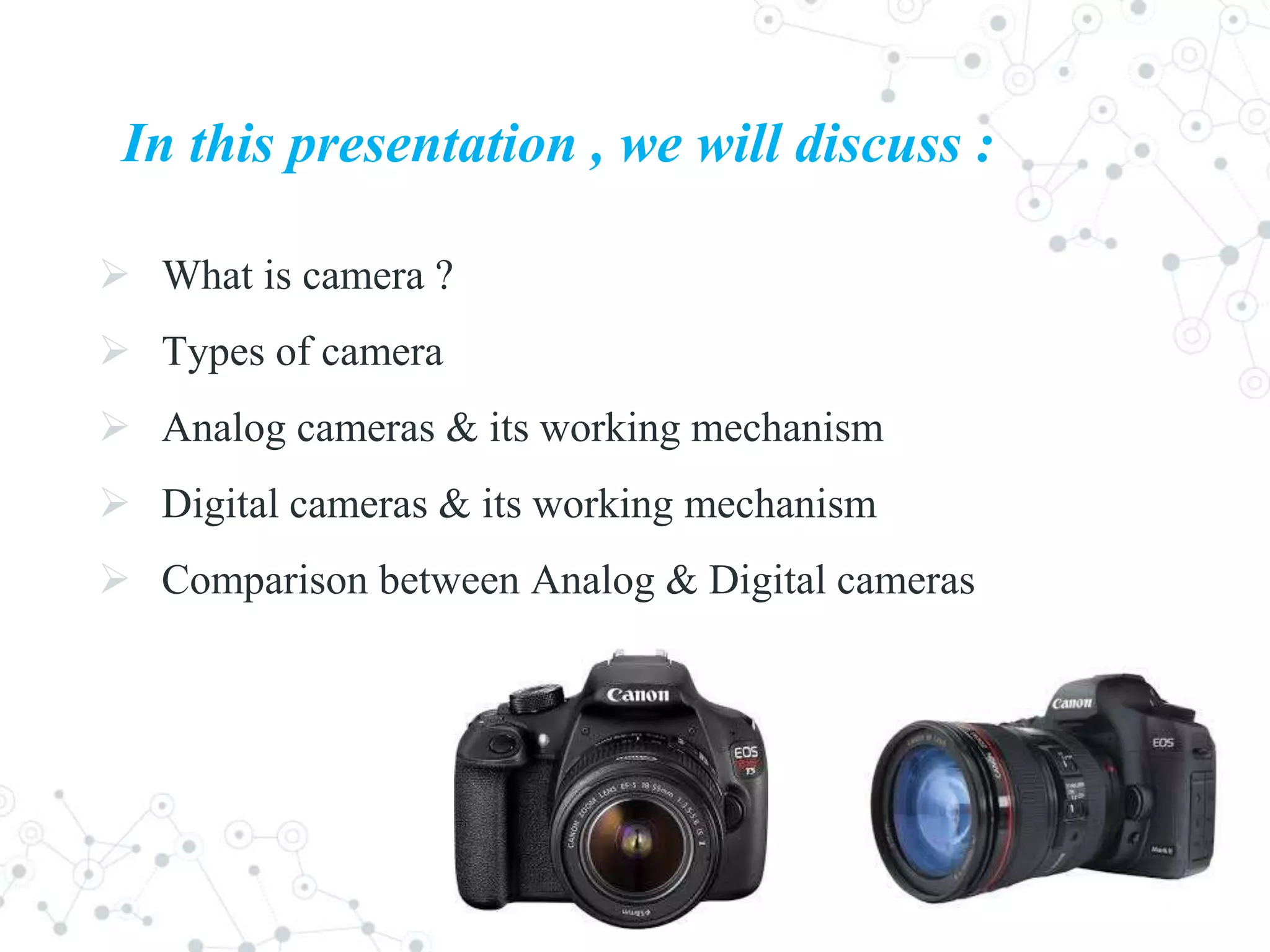
In this presentation , we will discuss :
 What is camera ?
 Types of camera
 Analog cameras & its working mechanism
 Digital cameras & its working mechanism
 Comparison between Analog & Digital cameras
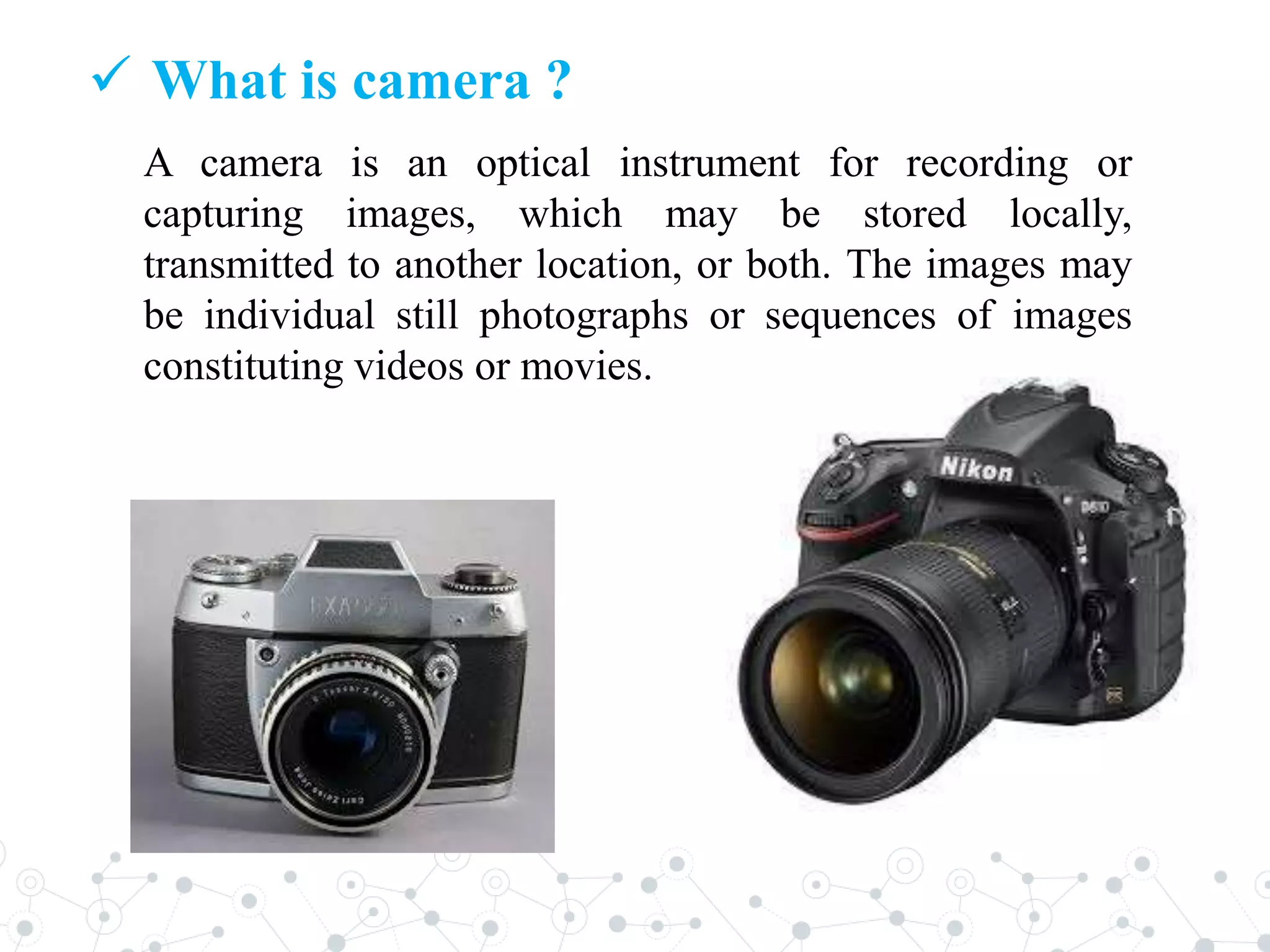
 What is camera ?
A camera is an optical instrument for recording or
capturing images, which may be stored locally,
transmitted to another location, or both. The images may
be individual still photographs or sequences of images
constituting videos or movies.
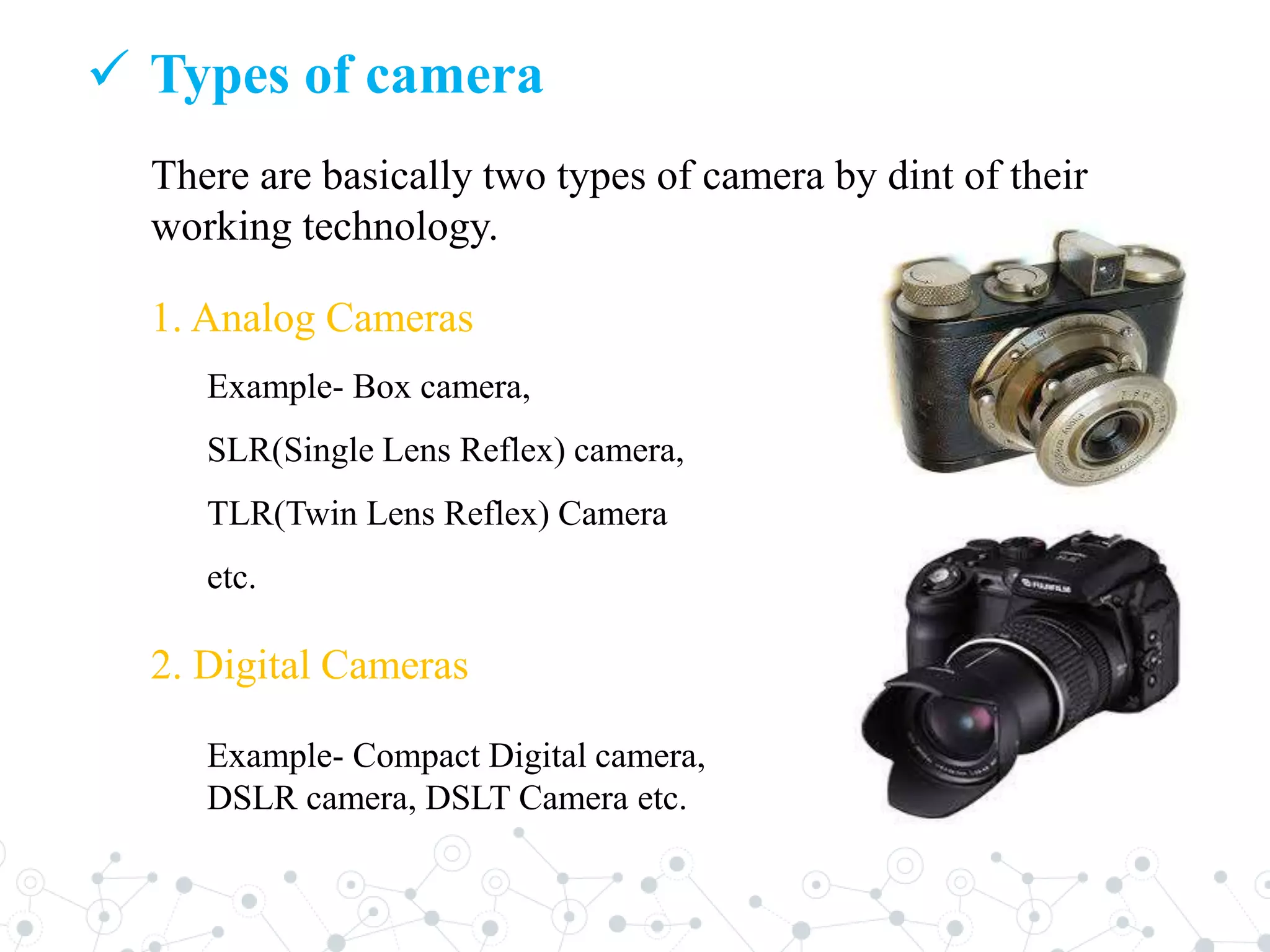
 Types of camera
There are basically two types of camera by dint of their
working technology.
1. Analog Cameras
2. Digital Cameras
Example- Box camera,
SLR(Single Lens Reflex) camera,
TLR(Twin Lens Reflex) Camera
etc.
Example- Compact Digital camera,
DSLR camera, DSLT Camera etc.
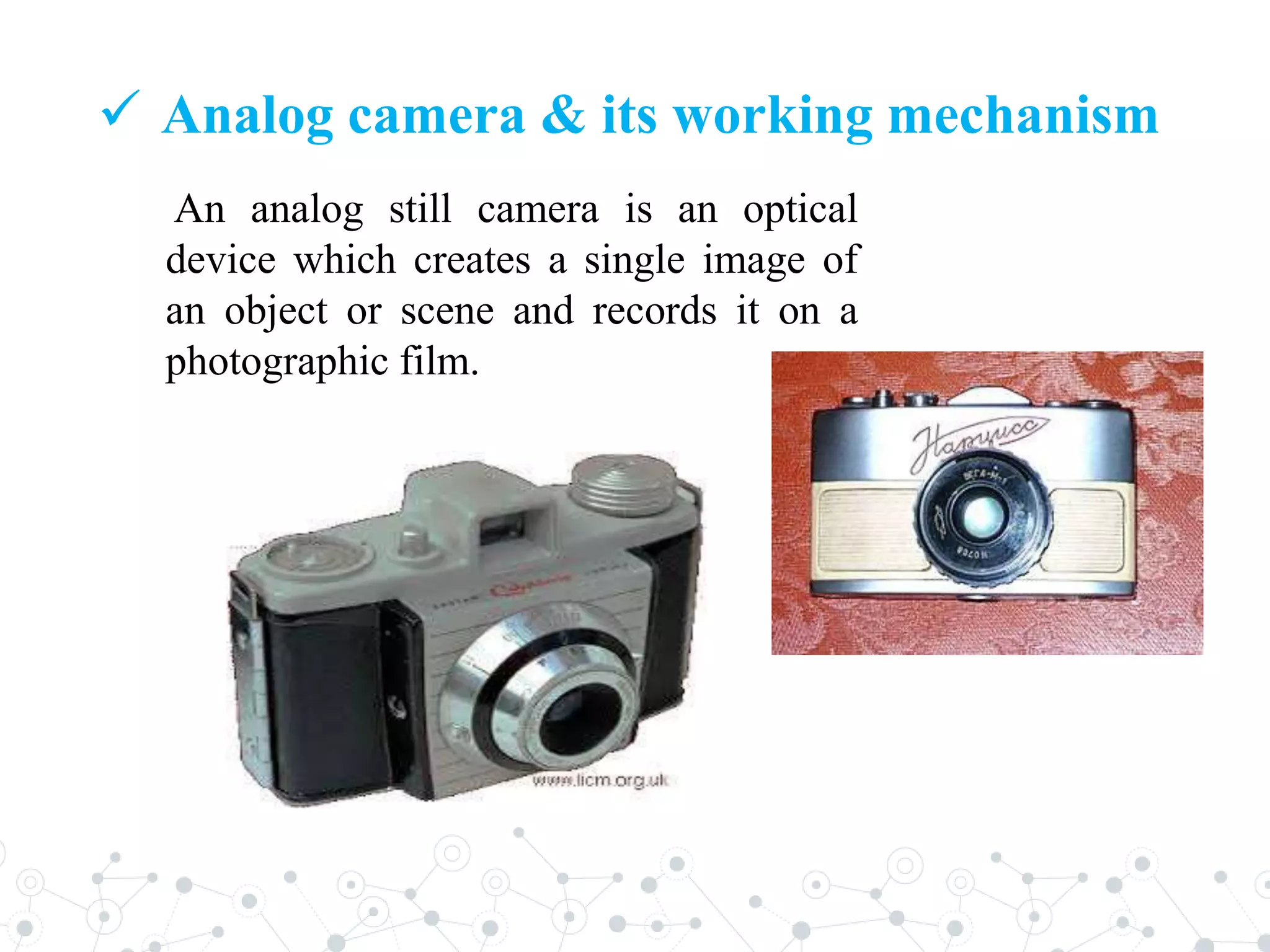
 Analog camera & its working mechanism
An analog still camera is an optical
device which creates a single image of
an object or scene and records it on a
photographic film.
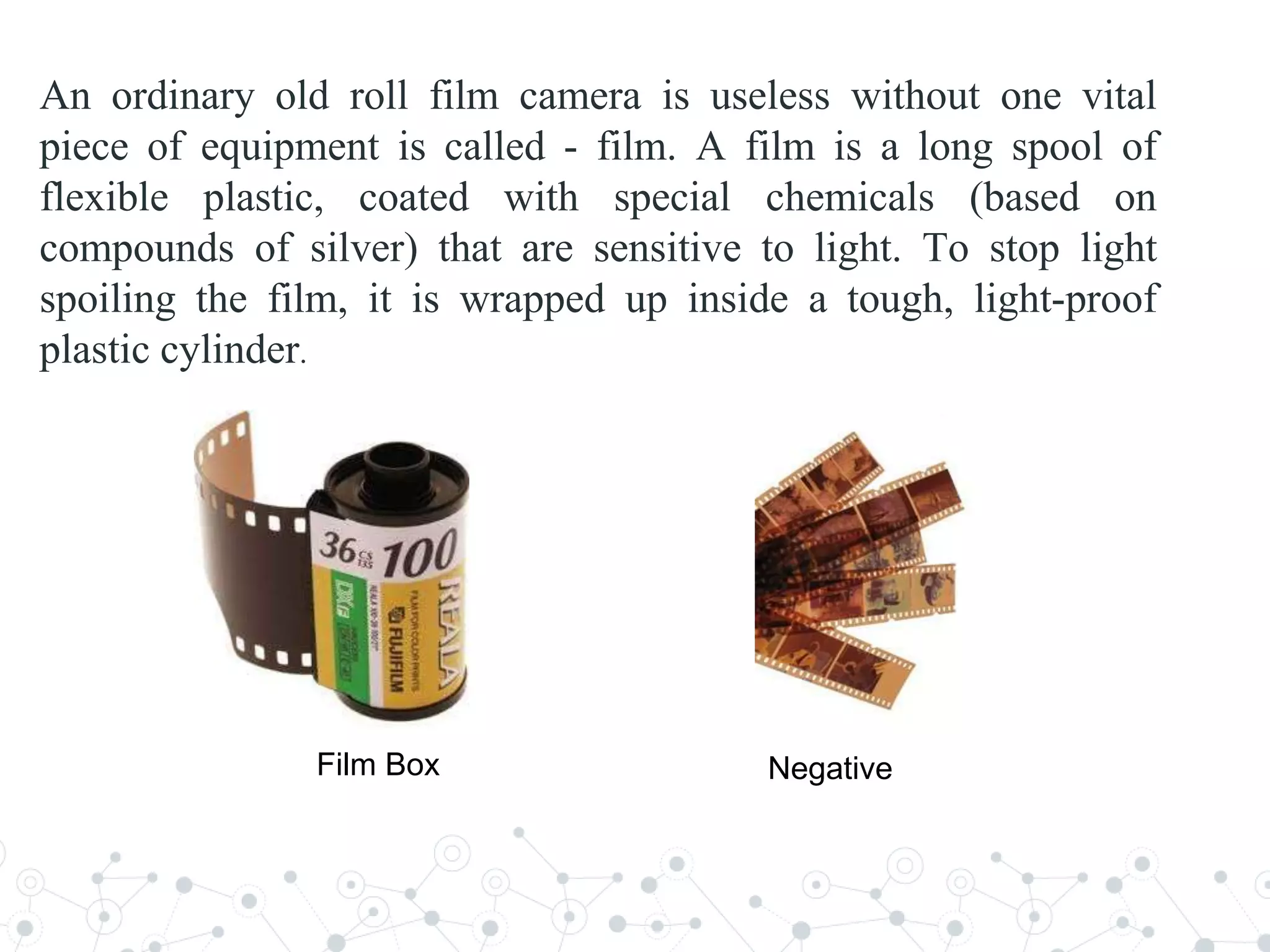
An ordinary old roll film camera is useless without one vital
piece of equipment is called - film. A film is a long spool of
flexible plastic, coated with special chemicals (based on
compounds of silver) that are sensitive to light. To stop light
spoiling the film, it is wrapped up inside a tough, light-proof
plastic cylinder.
Film Box Negative
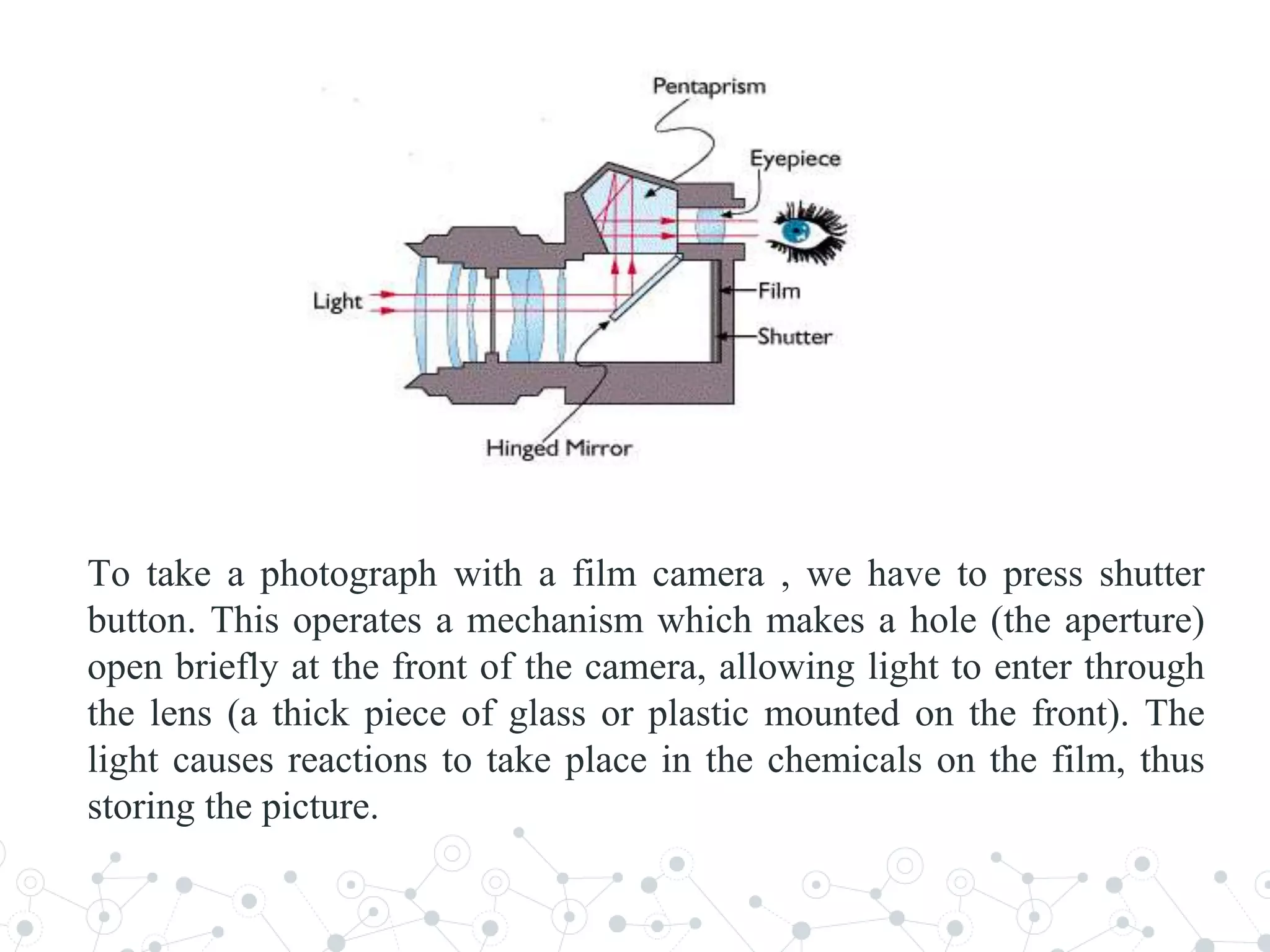
To take a photograph with a film camera , we have to press shutter
button. This operates a mechanism which makes a hole (the aperture)
open briefly at the front of the camera, allowing light to enter through
the lens (a thick piece of glass or plastic mounted on the front). The
light causes reactions to take place in the chemicals on the film, thus
storing the picture.
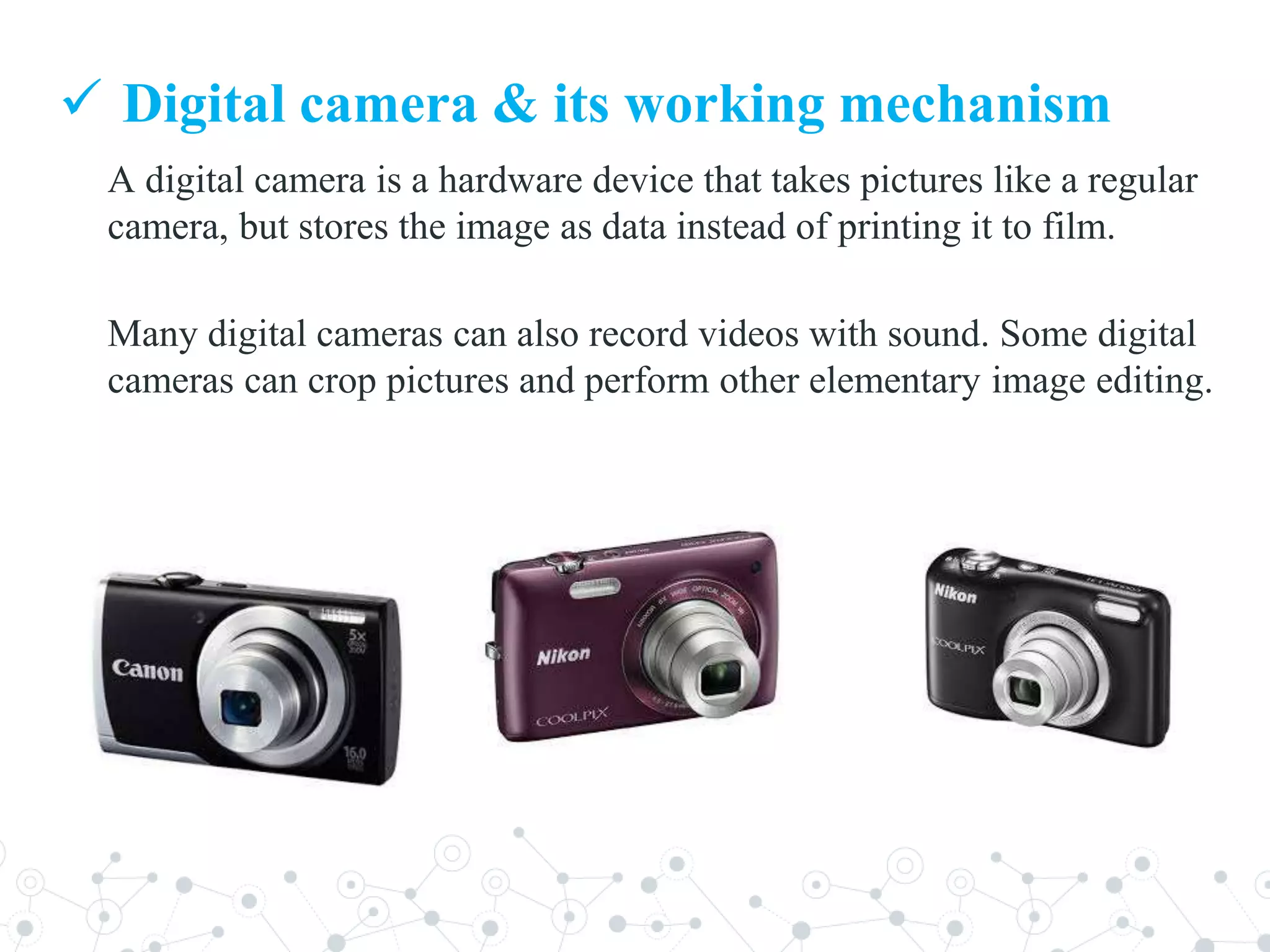
A digital camera is a hardware device that takes pictures like a regular
camera, but stores the image as data instead of printing it to film.
Many digital cameras can also record videos with sound. Some digital
cameras can crop pictures and perform other elementary image editing.
 Digital camera & its working mechanism
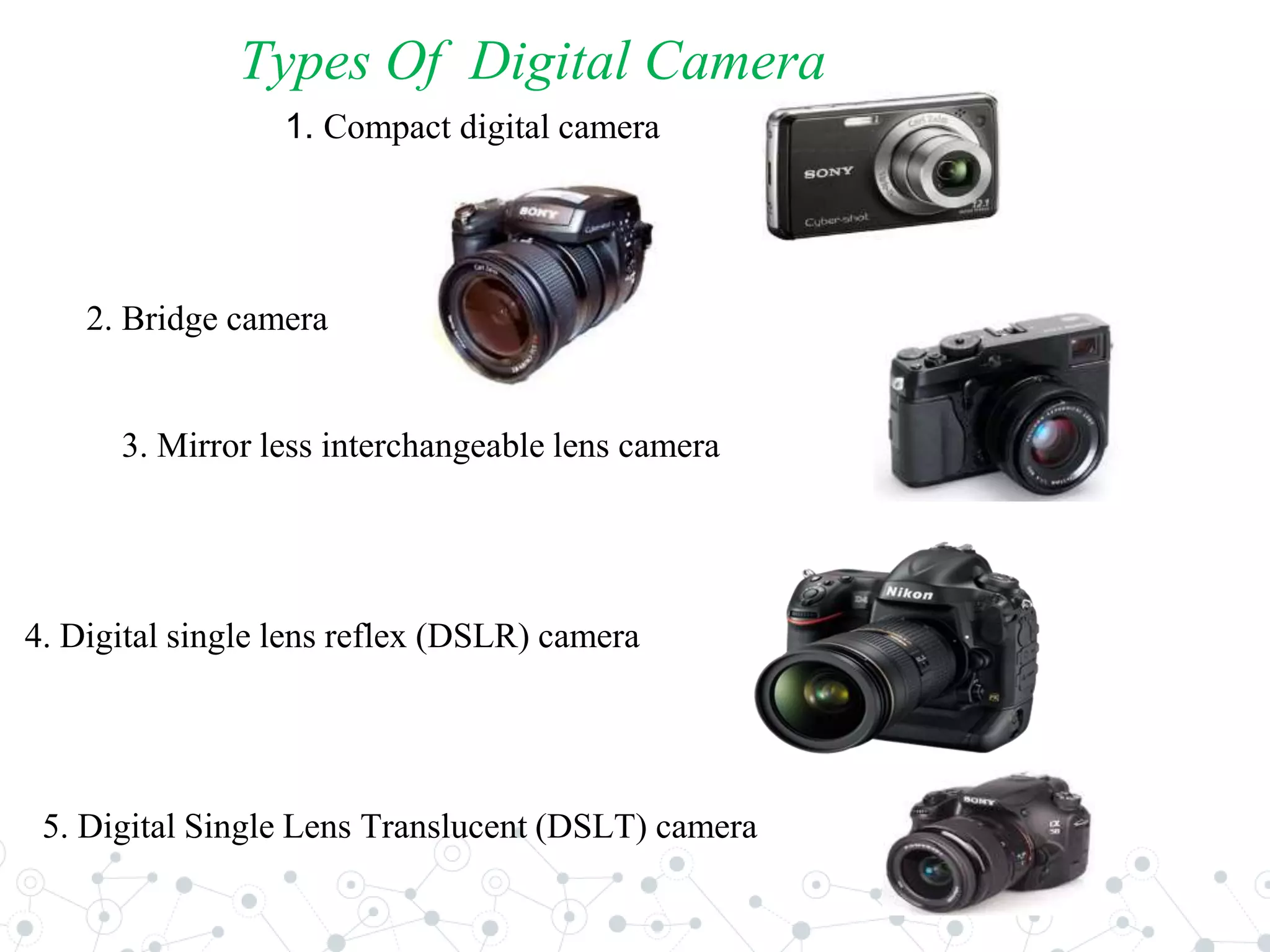
Types Of Digital Camera
1. Compact digital camera
2. Bridge camera
3. Mirror less interchangeable lens camera
4. Digital single lens reflex (DSLR) camera
5. Digital Single Lens Translucent (DSLT) camera
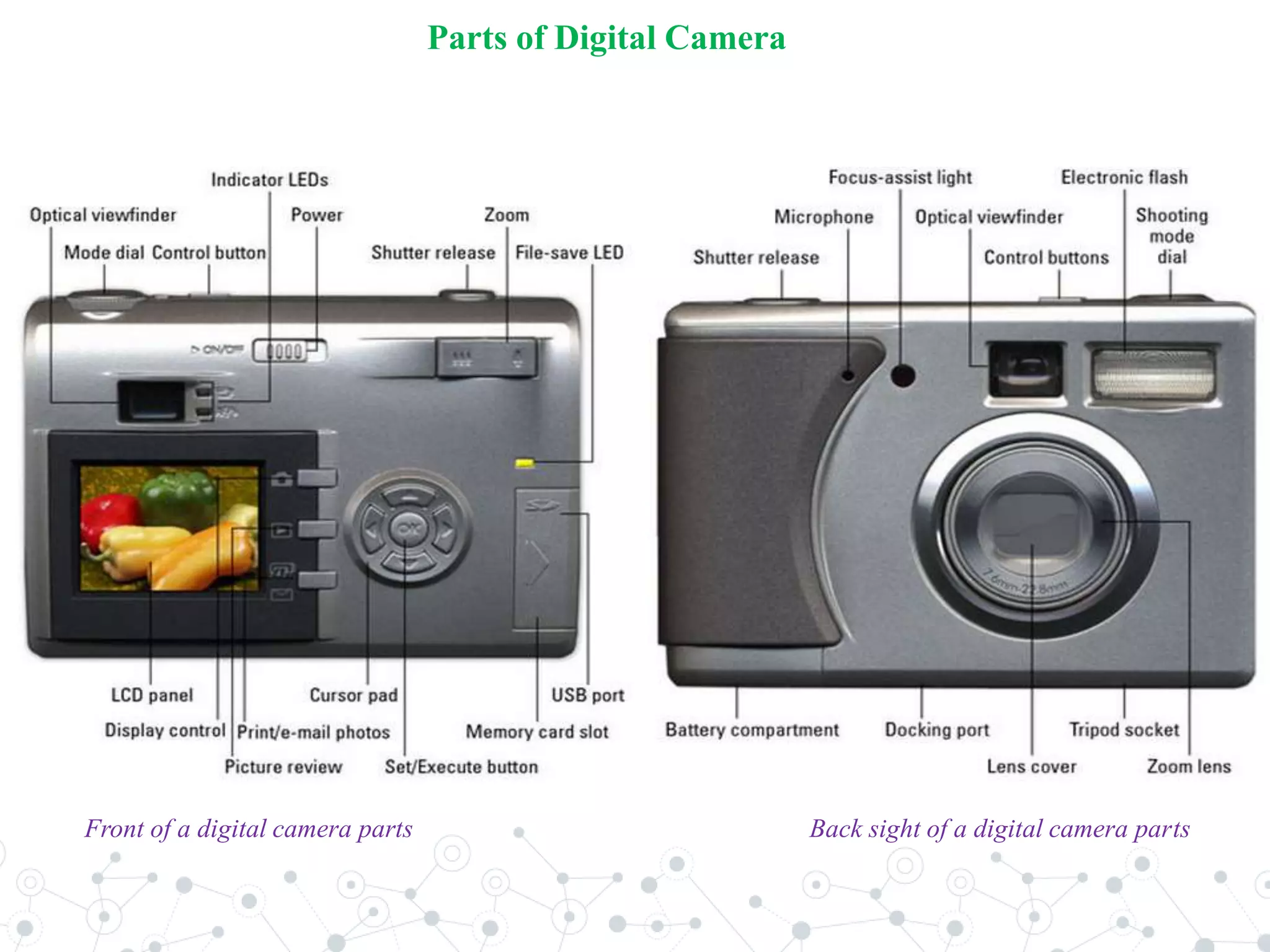
Parts of Digital Camera
Front of a digital camera parts Back sight of a digital camera parts
The main parts of a digital camera
 Shutter button: Press this button all the way to take a picture.
 Microphone: Capture audio for movie clips and voice annotations, or even
activate a sound-triggered self-timer.
 Electronic flash: Provides addition light to your scene.
 Optical viewfinder: To frame and compose your picture.
 Zoom lens and control: Magnifies or reduces the size of the image.
 Battery compartment: Contains the cells that power the camera.
 Power switch: Turn the camera on or off.
 LCD (liquid crystal display) panel: The camera’s display.
 Memory card slot: Accepts digital memory cards
 Aperture: The aperture controls the amount of light admitted into the lens.
 Display control/Menu button: Controls the amount of information shown in the
LCD and menus.
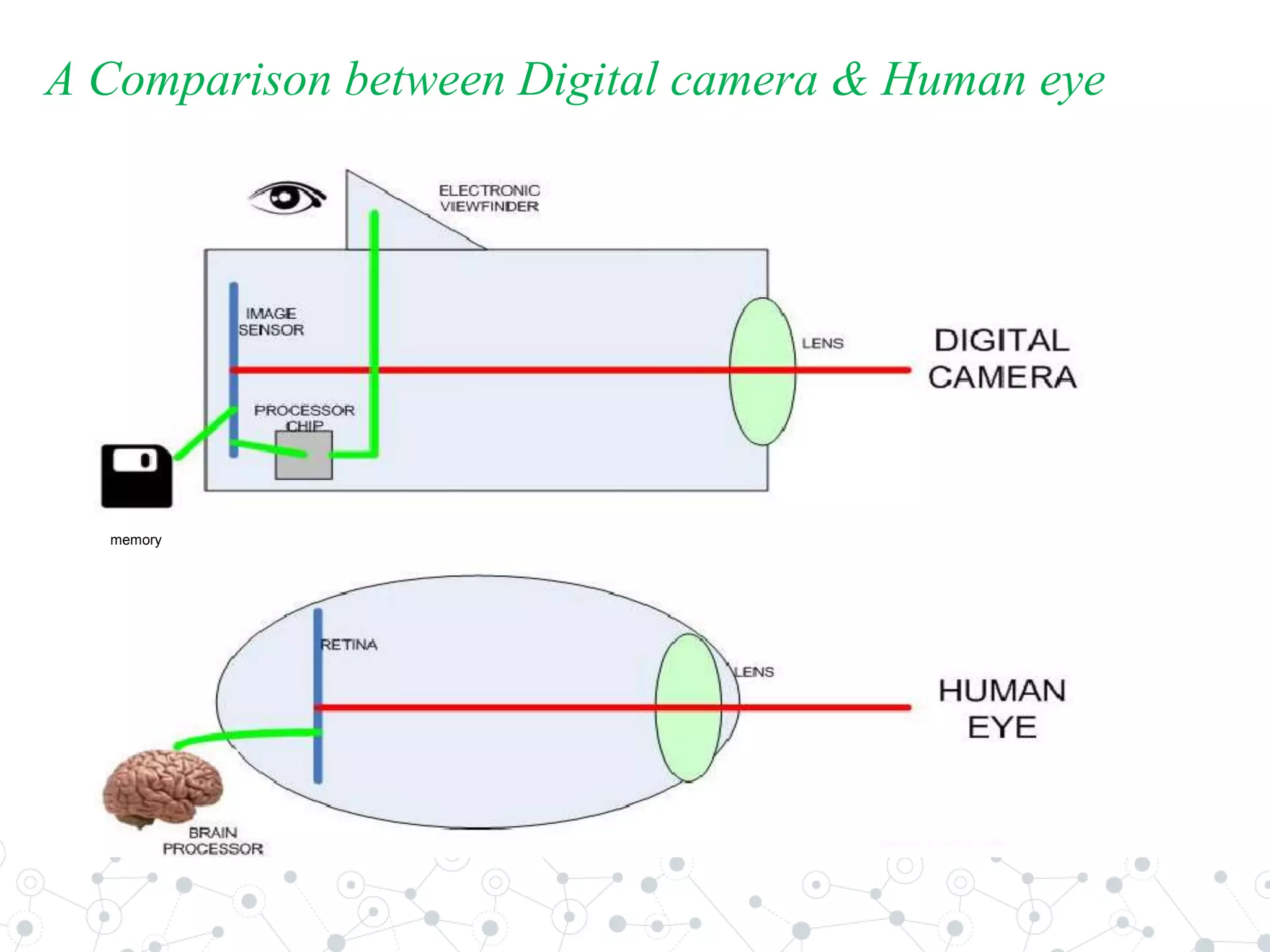
A Comparison between Digital camera & Human eye
memory
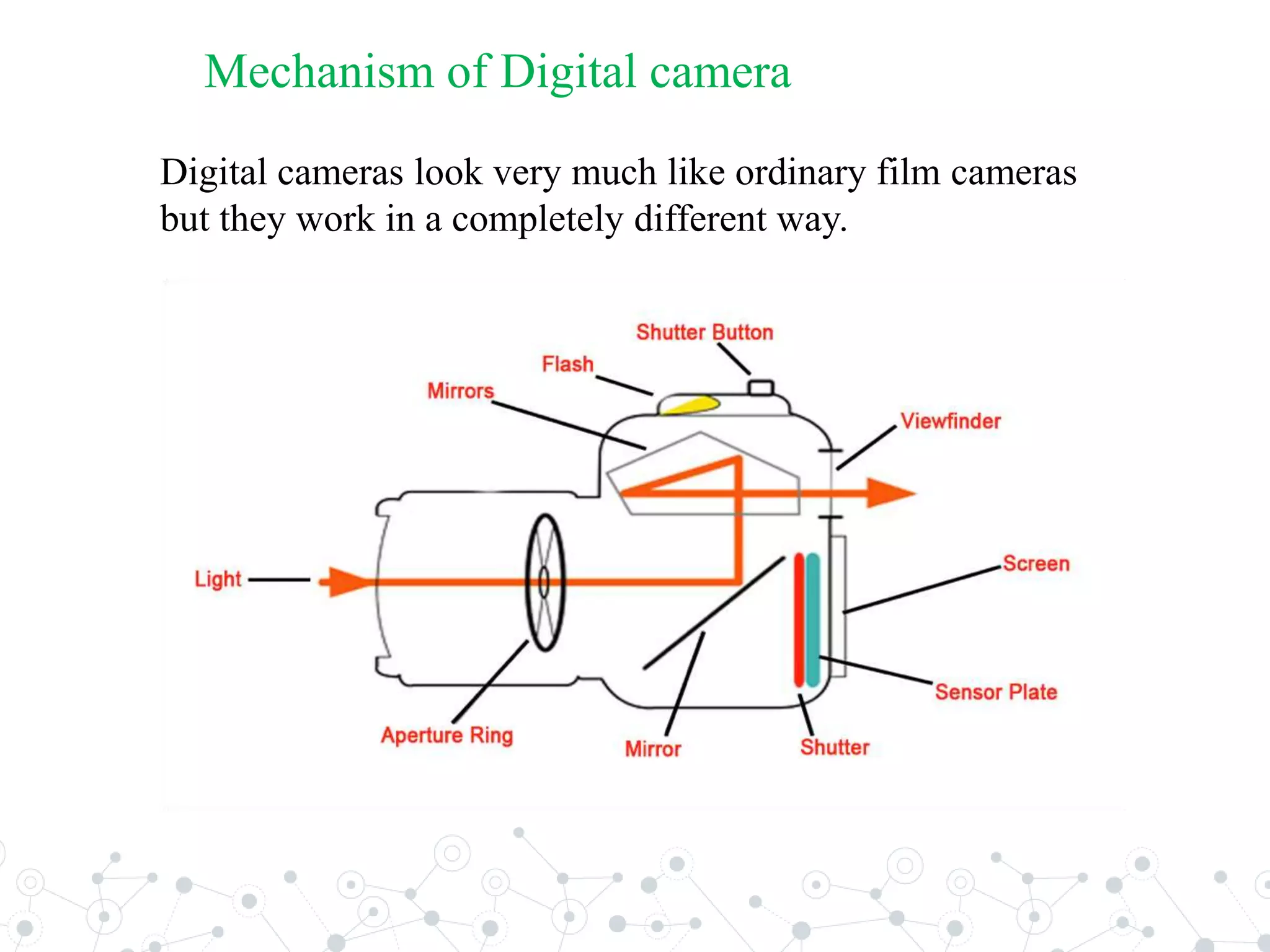
Mechanism of Digital camera
Digital cameras look very much like ordinary film cameras
but they work in a completely different way.
When you press the button to take a photograph with a digital camera, an
aperture opens at the front of the camera and light streams in through the
lens. So far, it's just the same as a film camera. From this point on,
however, everything is different. There is no film in a digital camera.
Instead, there is a piece of electronic equipment that captures the
incoming light rays and turns them into electrical signals. This light
detector is one of two types, either a charge coupled device (CCD) sensor
or a CMOS image sensor.
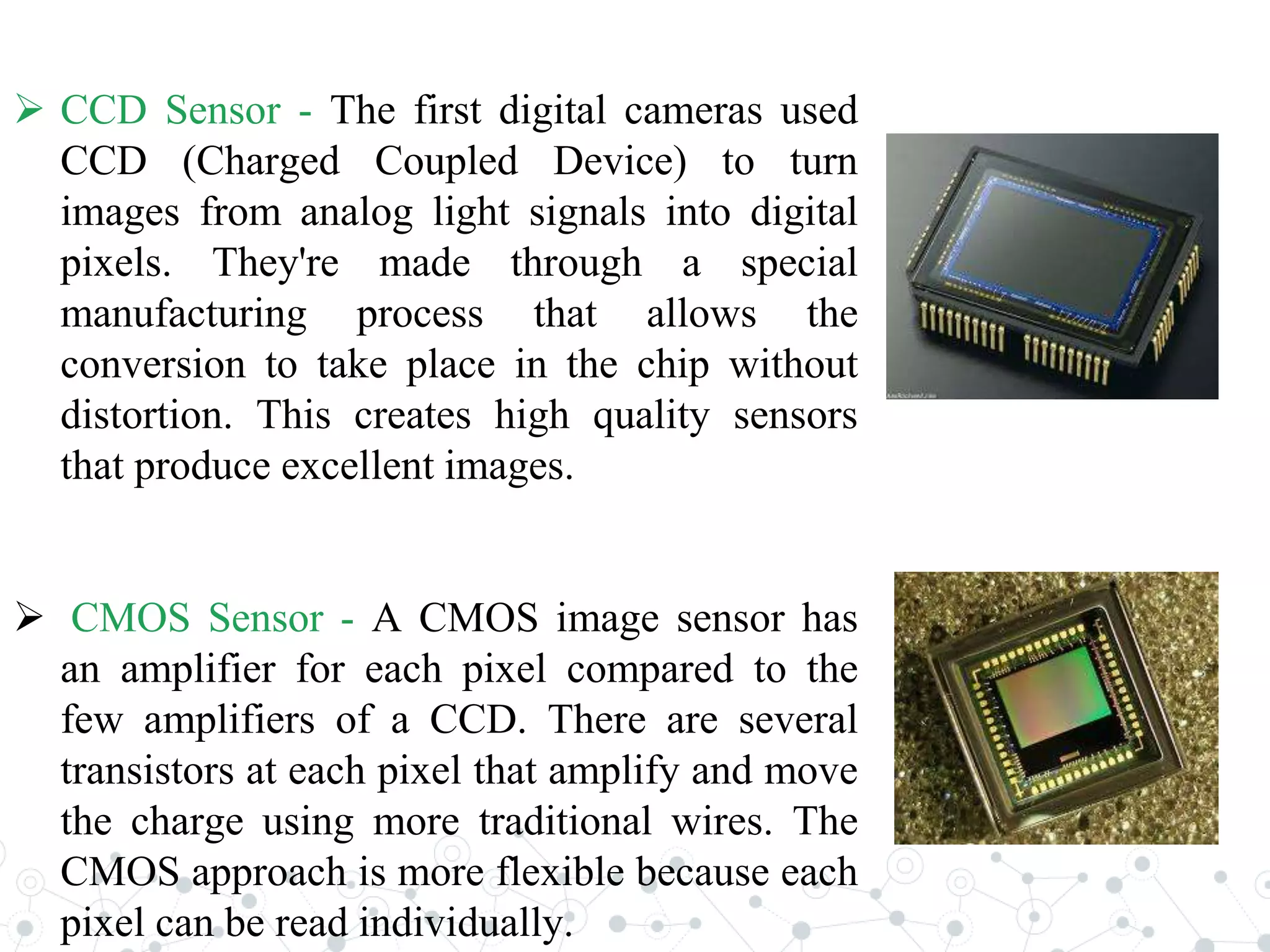
 CCD Sensor - The first digital cameras used
CCD (Charged Coupled Device) to turn
images from analog light signals into digital
pixels. They're made through a special
manufacturing process that allows the
conversion to take place in the chip without
distortion. This creates high quality sensors
that produce excellent images.
 CMOS Sensor - A CMOS image sensor has
an amplifier for each pixel compared to the
few amplifiers of a CCD. There are several
transistors at each pixel that amplify and move
the charge using more traditional wires. The
CMOS approach is more flexible because each
pixel can be read individually.
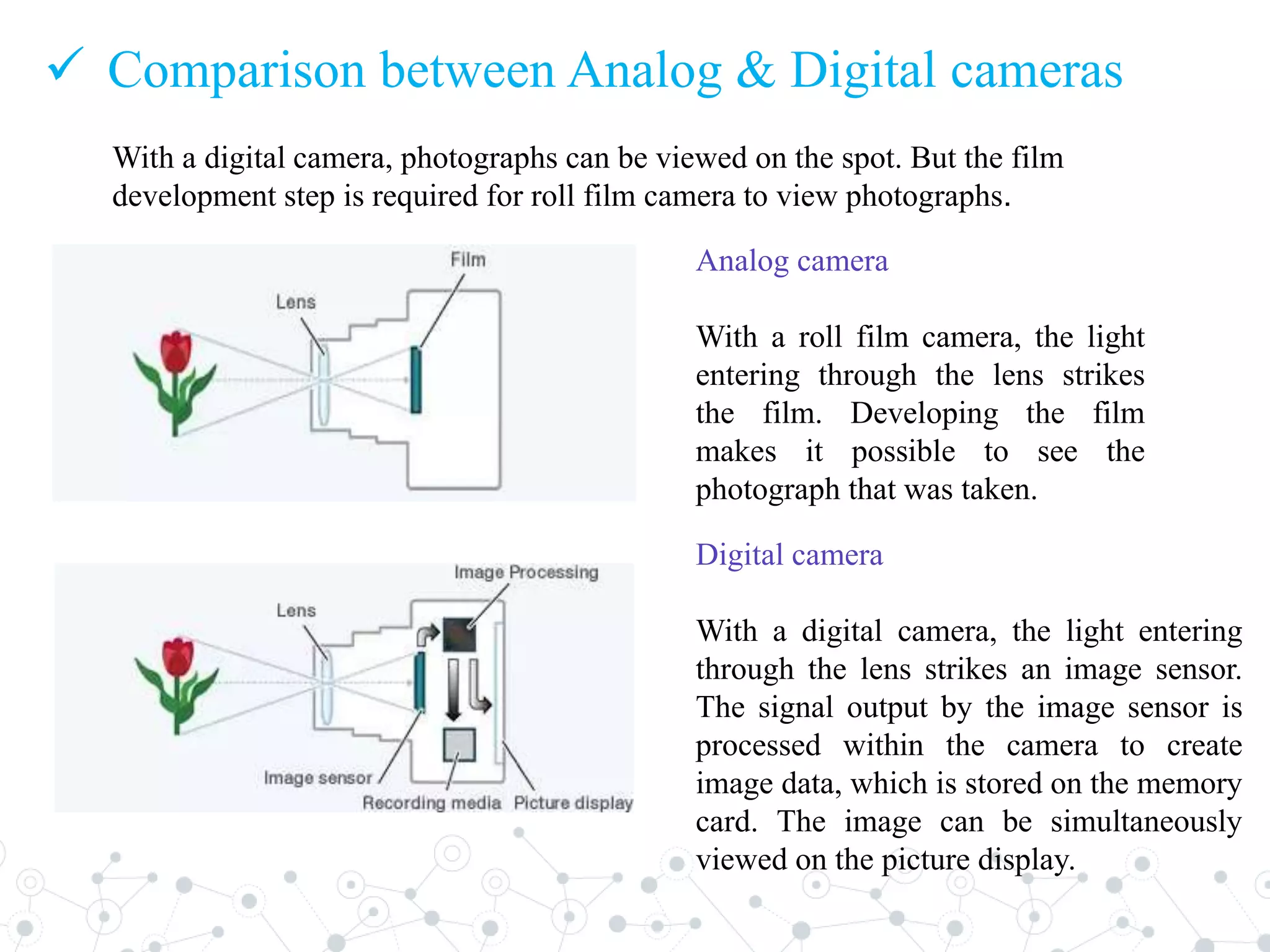
 Comparison between Analog & Digital cameras
With a digital camera, photographs can be viewed on the spot. But the film
development step is required for roll film camera to view photographs.
Analog camera
With a roll film camera, the light
entering through the lens strikes
the film. Developing the film
makes it possible to see the
photograph that was taken.
Digital camera
With a digital camera, the light entering
through the lens strikes an image sensor.
The signal output by the image sensor is
processed within the camera to create
image data, which is stored on the memory
card. The image can be simultaneously
viewed on the picture display.
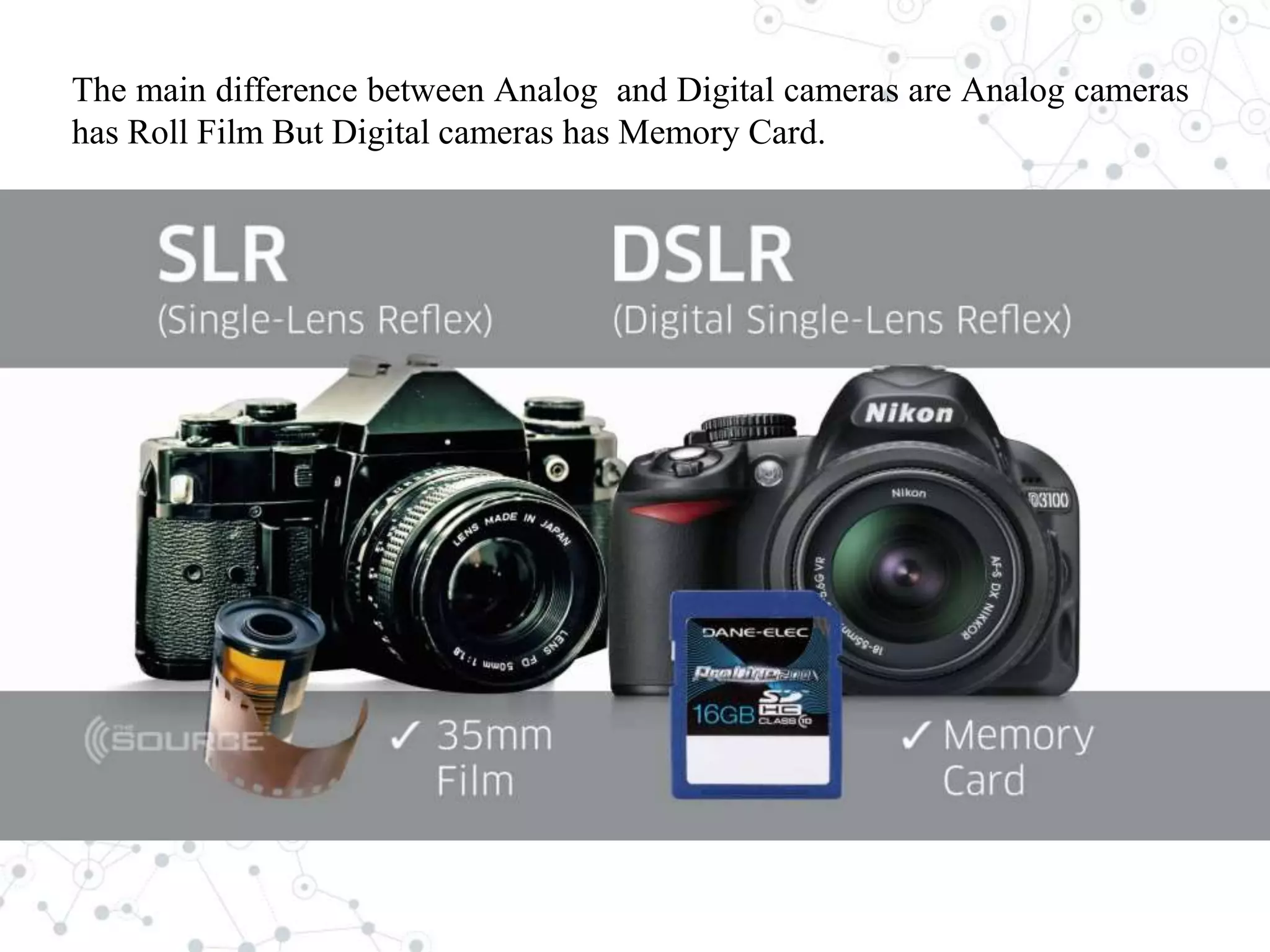
The main difference between Analog and Digital cameras are Analog cameras
has Roll Film But Digital cameras has Memory Card.
Thanks To All

Mechanism of camera

  • 1.
    WELCOME TO THEPRESENTATION BY GROUP:- SIGMA
  • 2.
  • 3.
    In this presentation, we will discuss :  What is camera ?  Types of camera  Analog cameras & its working mechanism  Digital cameras & its working mechanism  Comparison between Analog & Digital cameras
  • 4.
     What iscamera ? A camera is an optical instrument for recording or capturing images, which may be stored locally, transmitted to another location, or both. The images may be individual still photographs or sequences of images constituting videos or movies.
  • 5.
     Types ofcamera There are basically two types of camera by dint of their working technology. 1. Analog Cameras 2. Digital Cameras Example- Box camera, SLR(Single Lens Reflex) camera, TLR(Twin Lens Reflex) Camera etc. Example- Compact Digital camera, DSLR camera, DSLT Camera etc.
  • 6.
     Analog camera& its working mechanism An analog still camera is an optical device which creates a single image of an object or scene and records it on a photographic film.
  • 7.
    An ordinary oldroll film camera is useless without one vital piece of equipment is called - film. A film is a long spool of flexible plastic, coated with special chemicals (based on compounds of silver) that are sensitive to light. To stop light spoiling the film, it is wrapped up inside a tough, light-proof plastic cylinder. Film Box Negative
  • 8.
    To take aphotograph with a film camera , we have to press shutter button. This operates a mechanism which makes a hole (the aperture) open briefly at the front of the camera, allowing light to enter through the lens (a thick piece of glass or plastic mounted on the front). The light causes reactions to take place in the chemicals on the film, thus storing the picture.
  • 9.
    A digital camerais a hardware device that takes pictures like a regular camera, but stores the image as data instead of printing it to film. Many digital cameras can also record videos with sound. Some digital cameras can crop pictures and perform other elementary image editing.  Digital camera & its working mechanism
  • 10.
    Types Of DigitalCamera 1. Compact digital camera 2. Bridge camera 3. Mirror less interchangeable lens camera 4. Digital single lens reflex (DSLR) camera 5. Digital Single Lens Translucent (DSLT) camera
  • 11.
    Parts of DigitalCamera Front of a digital camera parts Back sight of a digital camera parts
  • 12.
    The main partsof a digital camera  Shutter button: Press this button all the way to take a picture.  Microphone: Capture audio for movie clips and voice annotations, or even activate a sound-triggered self-timer.  Electronic flash: Provides addition light to your scene.  Optical viewfinder: To frame and compose your picture.  Zoom lens and control: Magnifies or reduces the size of the image.  Battery compartment: Contains the cells that power the camera.  Power switch: Turn the camera on or off.  LCD (liquid crystal display) panel: The camera’s display.  Memory card slot: Accepts digital memory cards  Aperture: The aperture controls the amount of light admitted into the lens.  Display control/Menu button: Controls the amount of information shown in the LCD and menus.
  • 13.
    A Comparison betweenDigital camera & Human eye memory
  • 14.
    Mechanism of Digitalcamera Digital cameras look very much like ordinary film cameras but they work in a completely different way.
  • 15.
    When you pressthe button to take a photograph with a digital camera, an aperture opens at the front of the camera and light streams in through the lens. So far, it's just the same as a film camera. From this point on, however, everything is different. There is no film in a digital camera. Instead, there is a piece of electronic equipment that captures the incoming light rays and turns them into electrical signals. This light detector is one of two types, either a charge coupled device (CCD) sensor or a CMOS image sensor.
  • 16.
     CCD Sensor- The first digital cameras used CCD (Charged Coupled Device) to turn images from analog light signals into digital pixels. They're made through a special manufacturing process that allows the conversion to take place in the chip without distortion. This creates high quality sensors that produce excellent images.  CMOS Sensor - A CMOS image sensor has an amplifier for each pixel compared to the few amplifiers of a CCD. There are several transistors at each pixel that amplify and move the charge using more traditional wires. The CMOS approach is more flexible because each pixel can be read individually.
  • 17.
     Comparison betweenAnalog & Digital cameras With a digital camera, photographs can be viewed on the spot. But the film development step is required for roll film camera to view photographs. Analog camera With a roll film camera, the light entering through the lens strikes the film. Developing the film makes it possible to see the photograph that was taken. Digital camera With a digital camera, the light entering through the lens strikes an image sensor. The signal output by the image sensor is processed within the camera to create image data, which is stored on the memory card. The image can be simultaneously viewed on the picture display.
  • 18.
    The main differencebetween Analog and Digital cameras are Analog cameras has Roll Film But Digital cameras has Memory Card.
  • 19.