Mechanical cheat
Spamming Schemes and Adversarial
Techniques on Crowdsourcing Platforms
Djellel Eddine Difallah, GianlucaDemartini, and Philippe Cudré-Mauroux
University of Fribourg, Switzerland
Popularity and Monetary Incentives
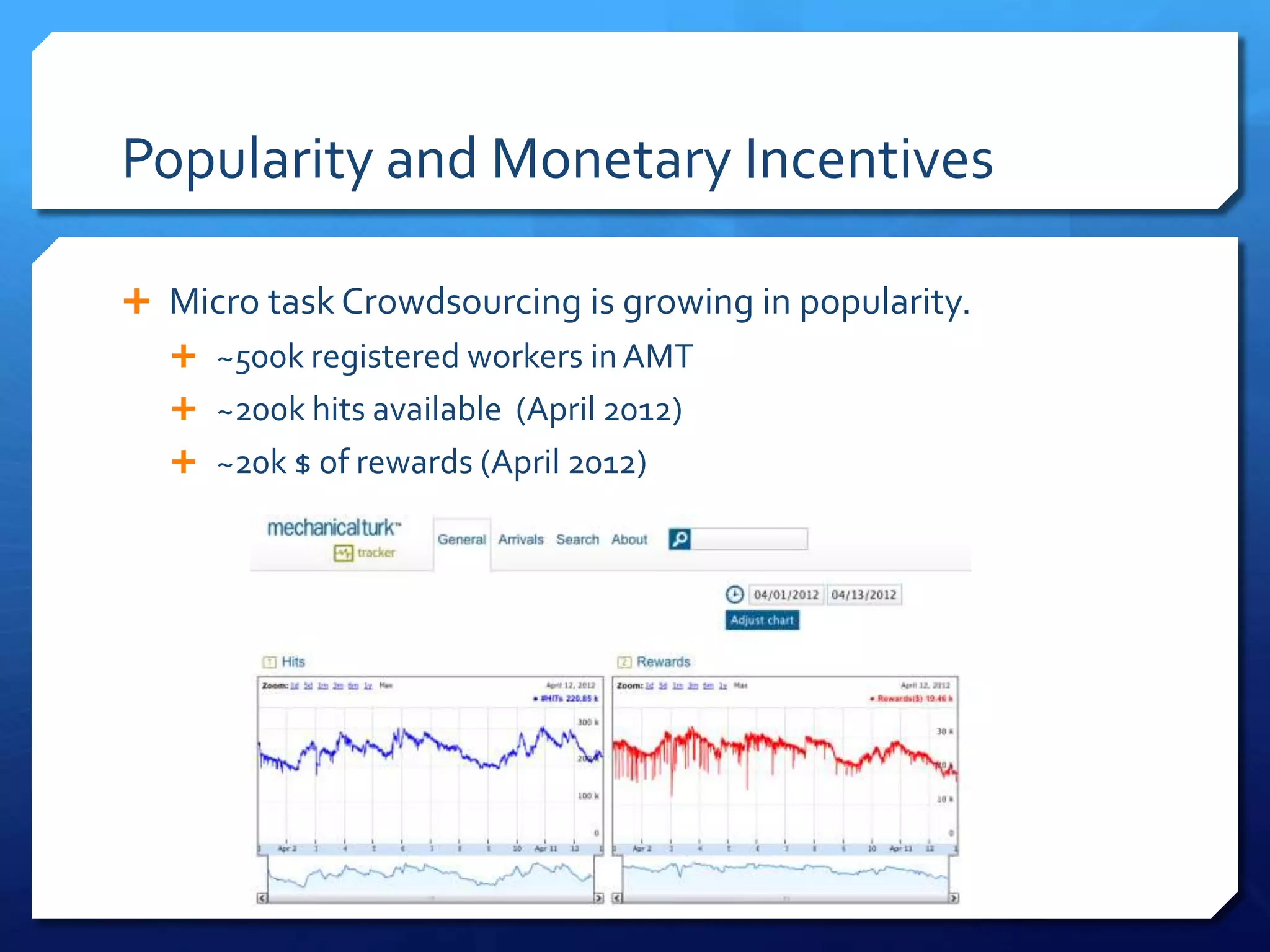
 Micro task Crowdsourcing is growing in popularity.
 ~500k registered workers in AMT
 ~200k hits available (April 2012)
 ~20k $ of rewards (April 2012)
Spam could be a threat for
Crowdsourcing
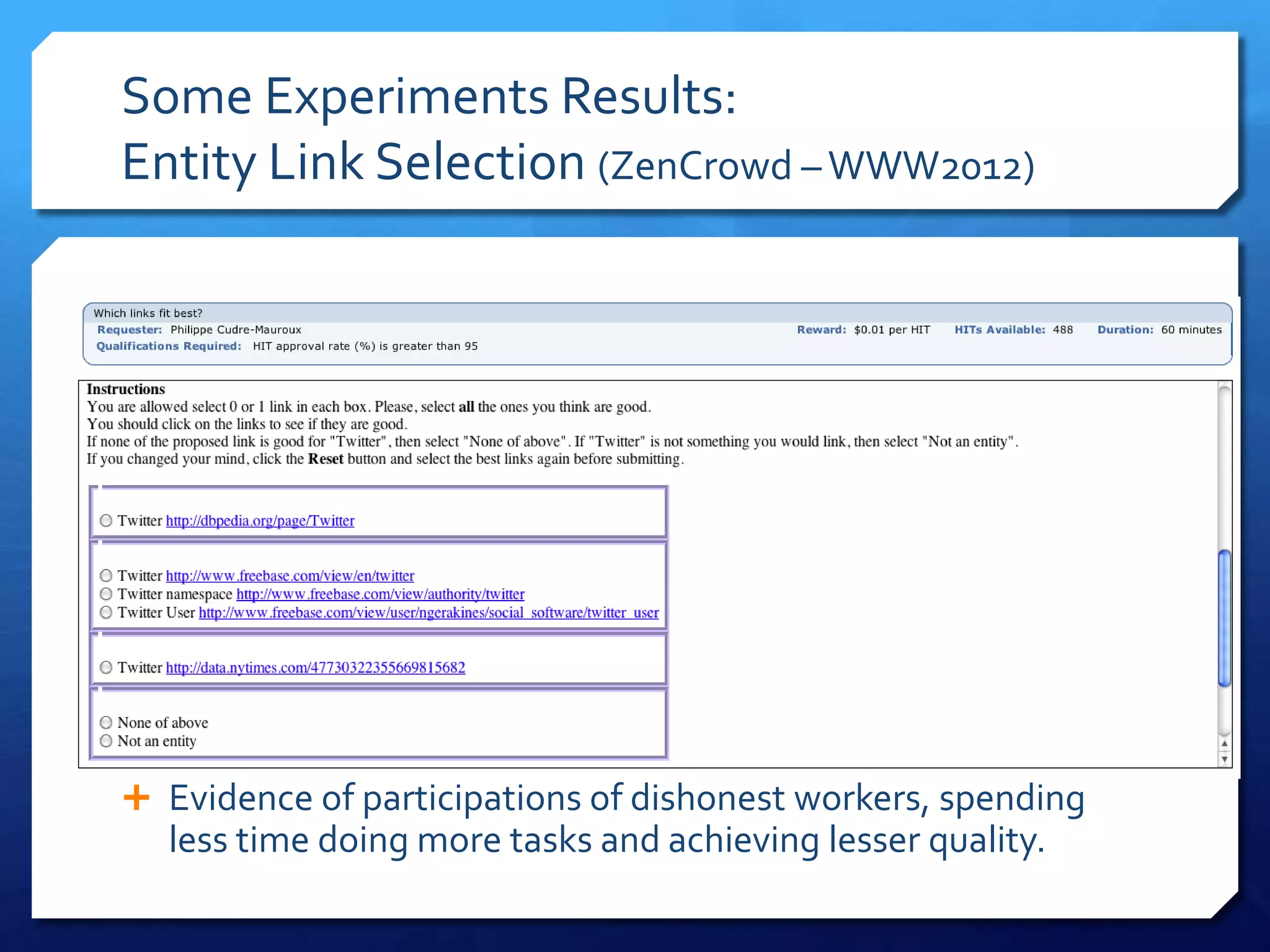
Some Experiments Results:
Entity Link Selection (ZenCrowd – WWW2012)

 Evidence of participations of dishonest workers, spending

less time doing more tasks and achieving lesser quality.
Dishonest Answers onCrowdsourcing
Platforms
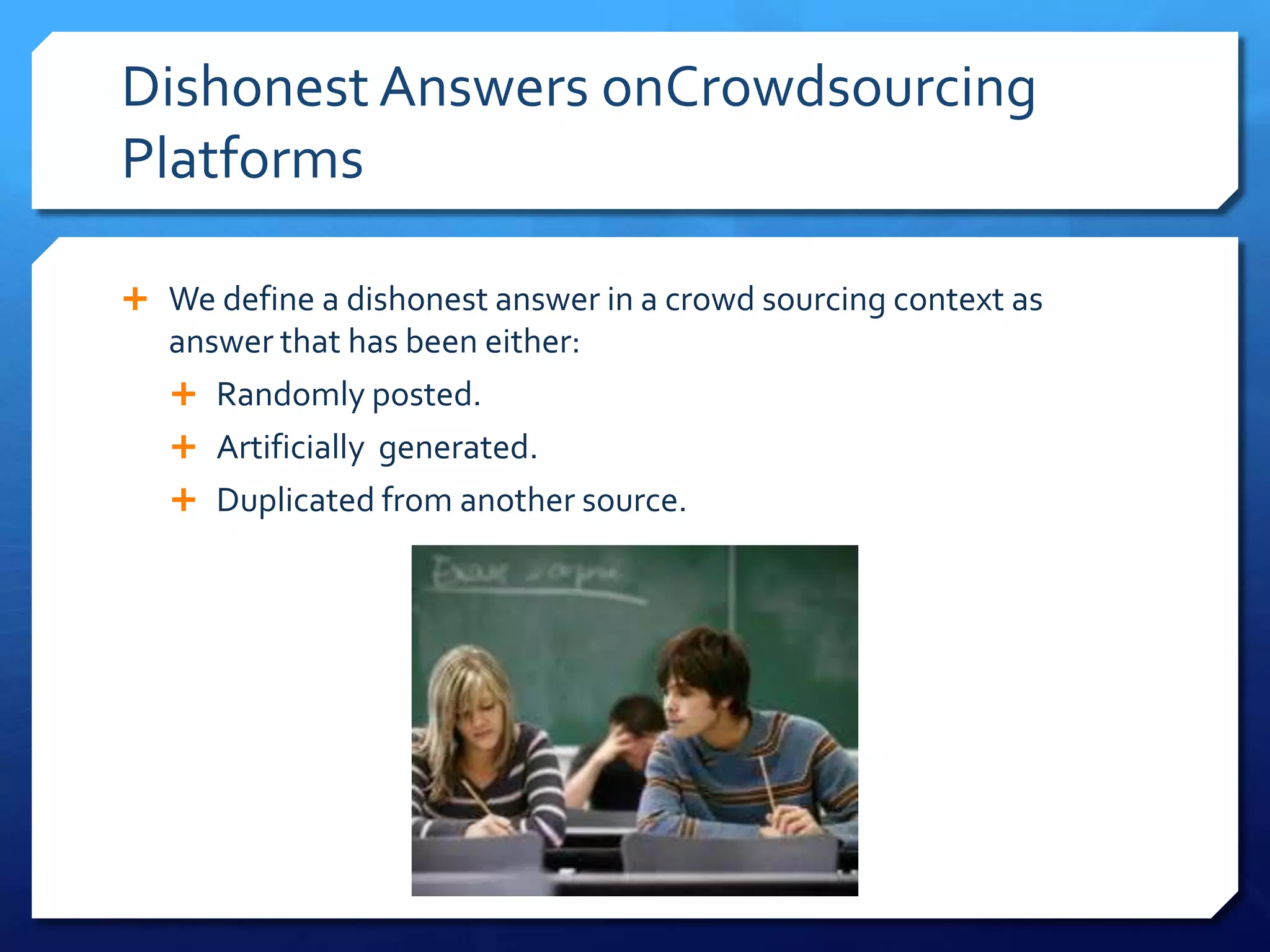
 We define a dishonest answer in a crowd sourcing context as

answer that has been either:
 Randomly posted.
 Artificially generated.
 Duplicated from another source.
How can requesters perform quality
control?
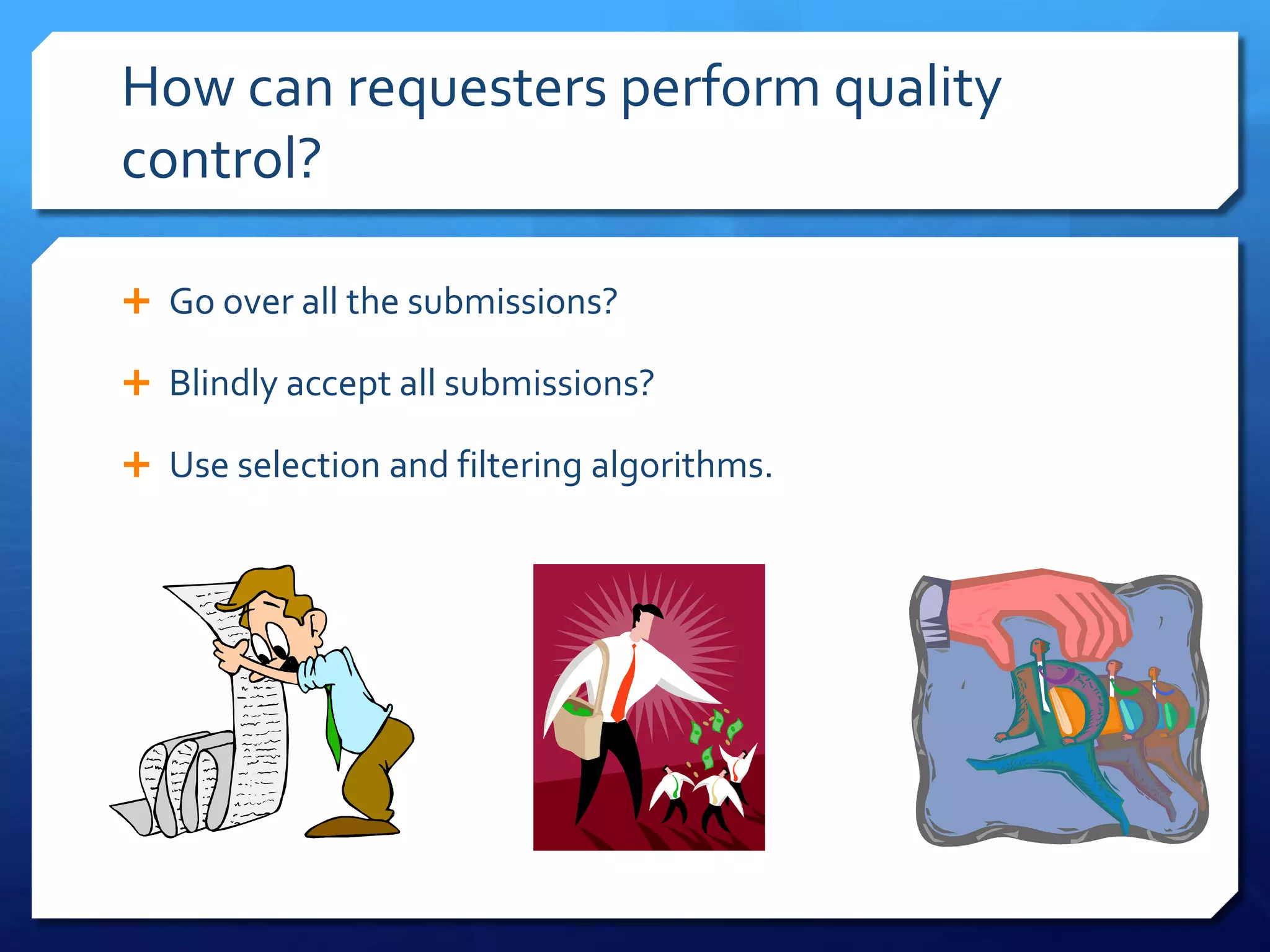
 Go over all the submissions?
 Blindly accept all submissions?
 Use selection and filtering algorithms.
Anti adversarial techniques
 Pre-selection and dissuasion
 Use built in control (ex: acceptance rate)
 Task design
 Qualification test

 Post processing
 Task repetition and aggregation
 Test questions
 Machine learning (ex: probabilistic netw0rk in ZenCrowd)
Countering adversarial techniques
Organization
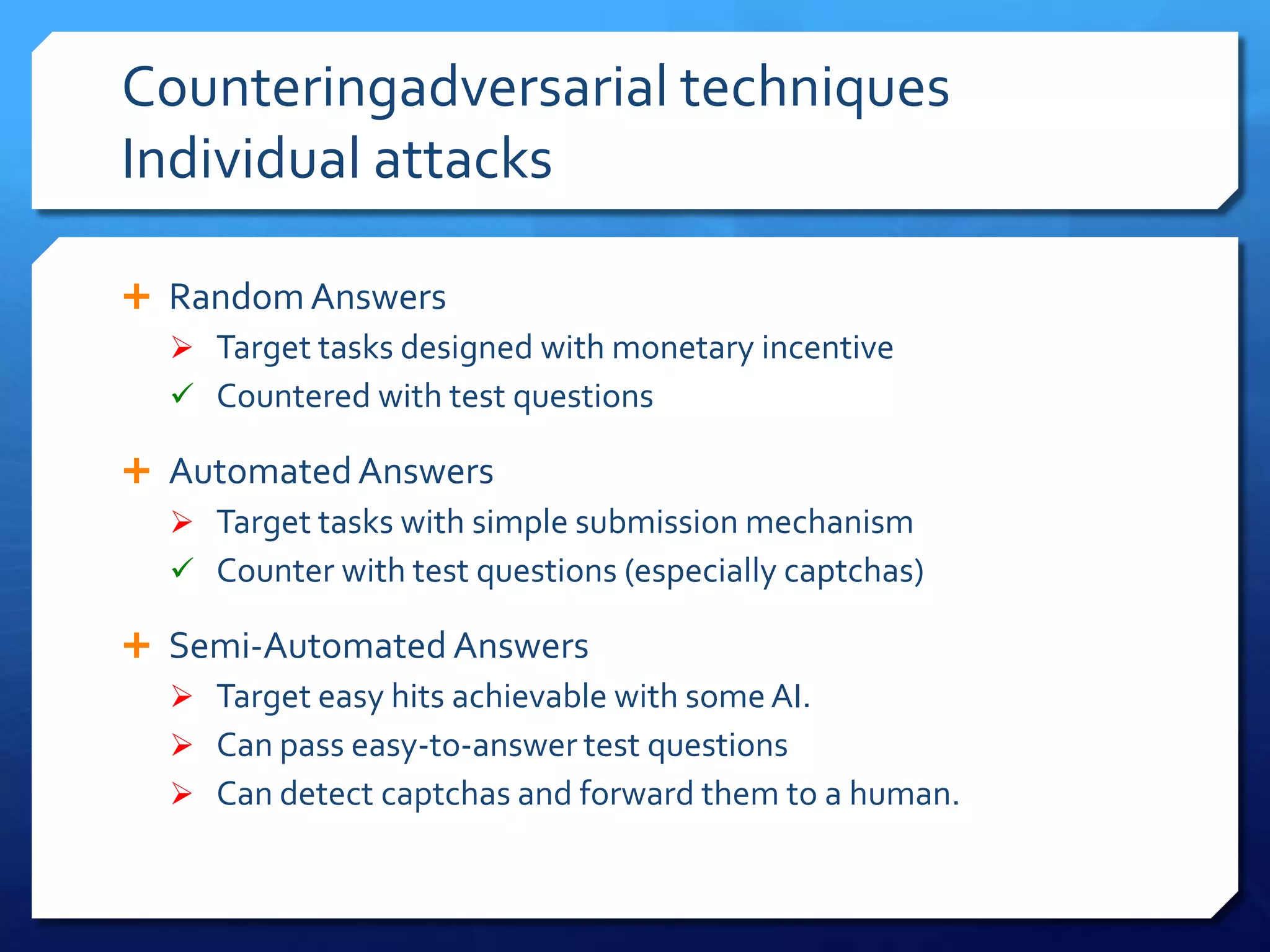
Counteringadversarial techniques
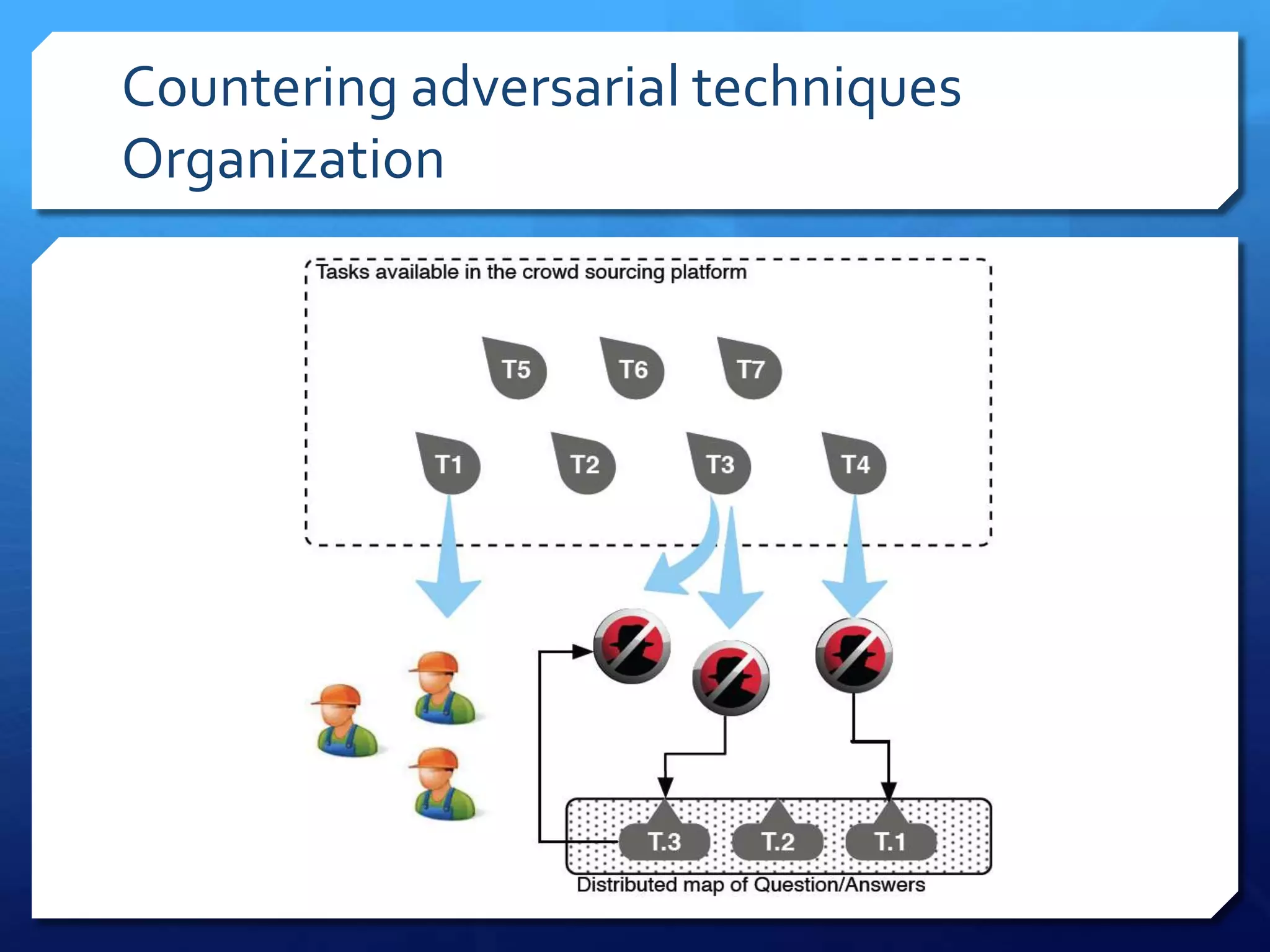
Individual attacks
 Random Answers
 Target tasks designed with monetary incentive
 Countered with test questions
 Automated Answers
 Target tasks with simple submission mechanism
 Counter with test questions (especially captchas)
 Semi-Automated Answers
 Target easy hits achievable with some AI.
 Can pass easy-to-answer test questions
 Can detect captchas and forward them to a human.
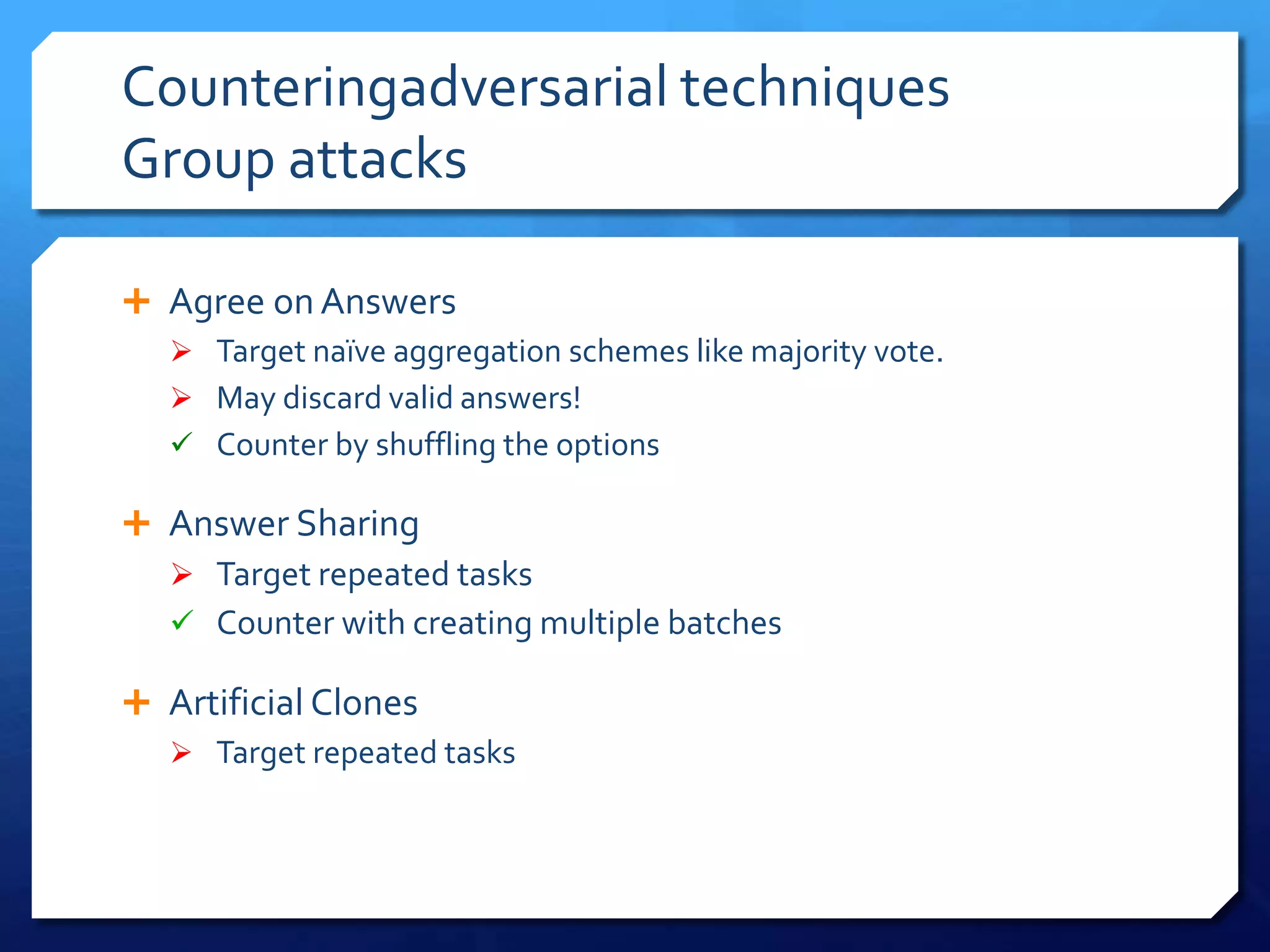
Counteringadversarial techniques
Group attacks
 Agree on Answers
 Target naïve aggregation schemes like majority vote.
 May discard valid answers!
 Counter by shuffling the options
 Answer Sharing
 Target repeated tasks
 Counter with creating multiple batches
 Artificial Clones
 Target repeated tasks
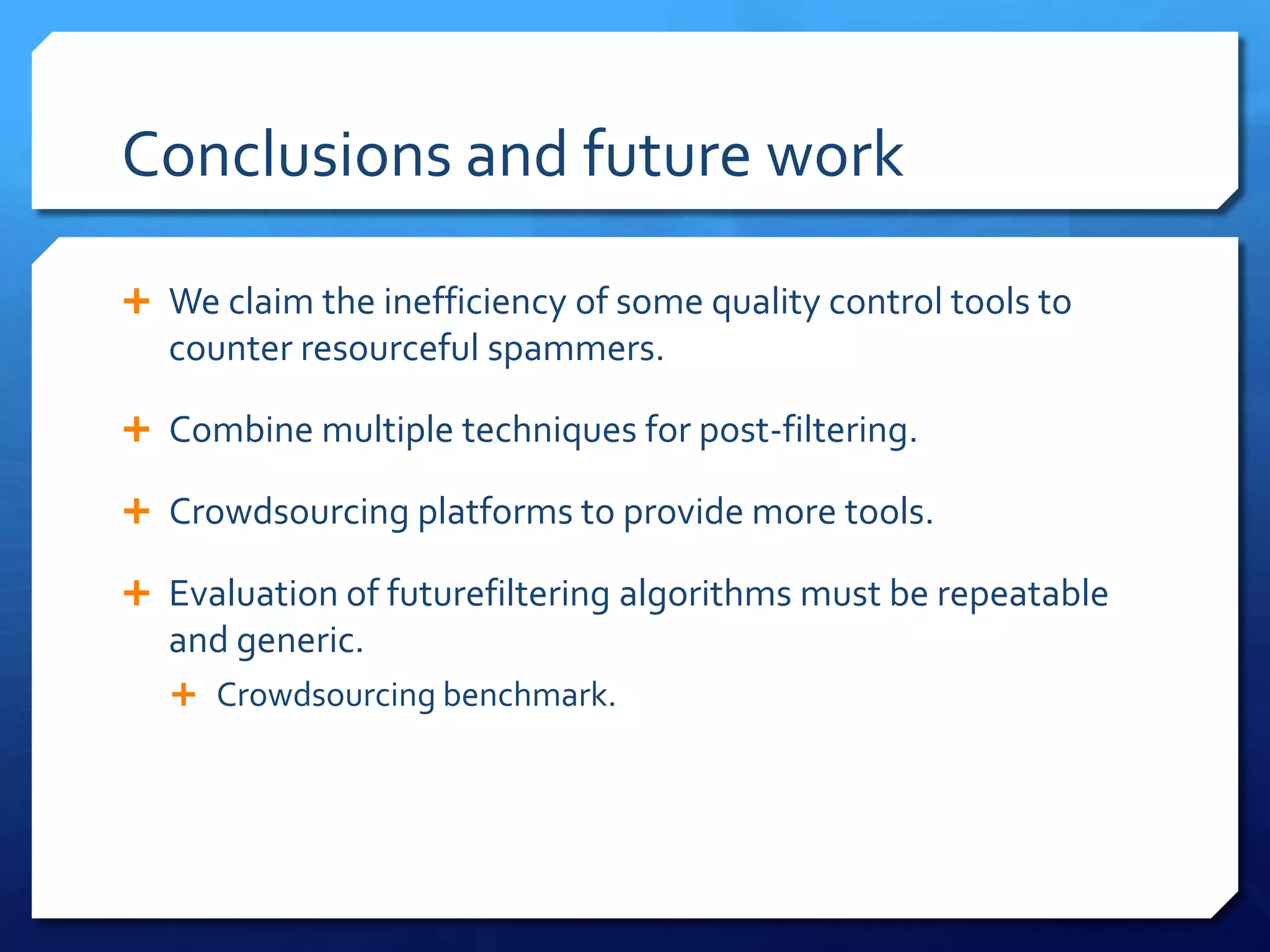
Conclusions and future work
 We claim the inefficiency of some quality control tools to

counter resourceful spammers.
 Combine multiple techniques for post-filtering.
 Crowdsourcing platforms to provide more tools.
 Evaluation of futurefiltering algorithms must be repeatable

and generic.
 Crowdsourcing benchmark.
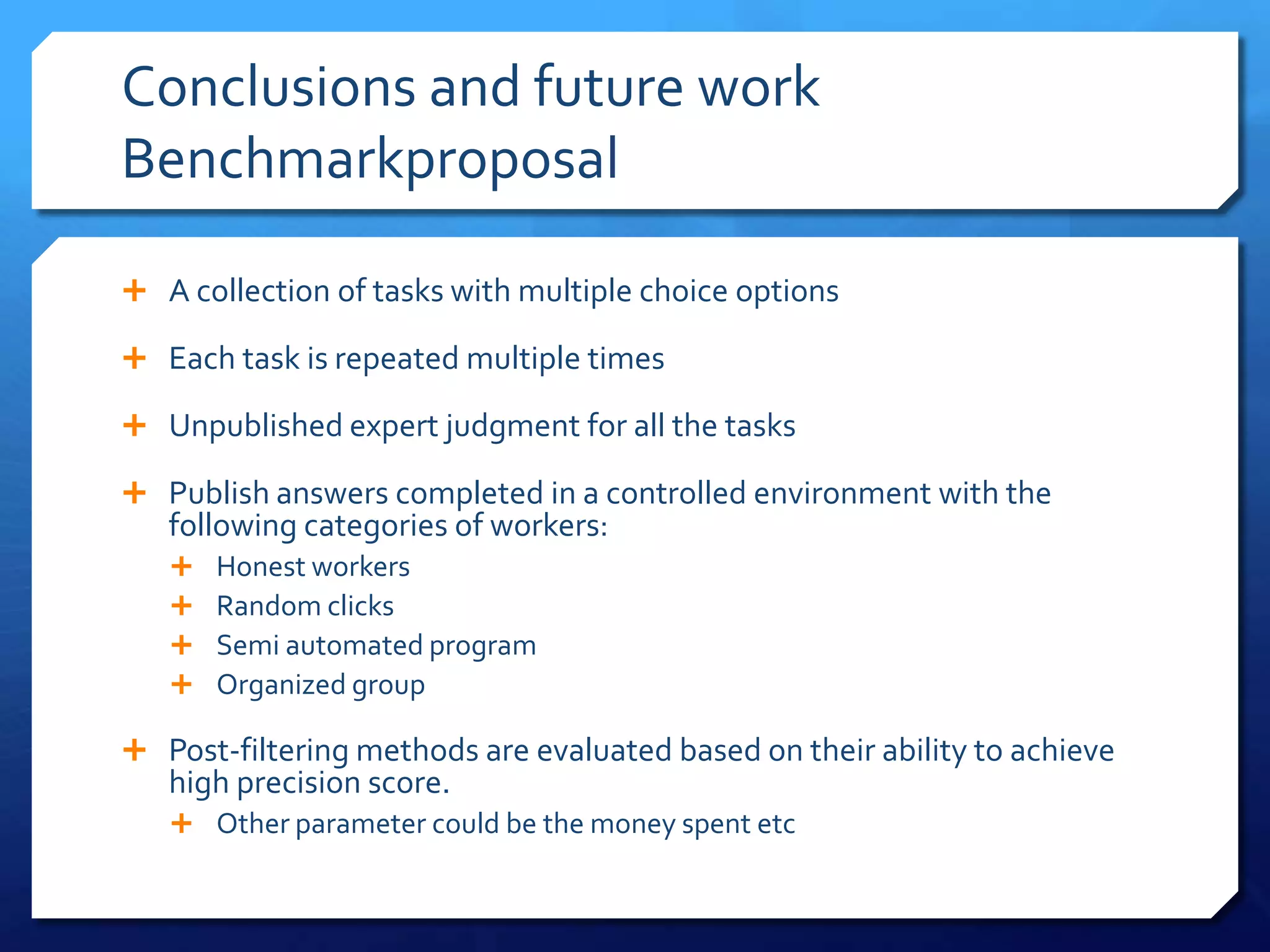
Conclusions and future work
Benchmarkproposal
 A collection of tasks with multiple choice options
 Each task is repeated multiple times
 Unpublished expert judgment for all the tasks
 Publish answers completed in a controlled environment with the

following categories of workers:





Honest workers
Random clicks
Semi automated program
Organized group

 Post-filtering methods are evaluated based on their ability to achieve

high precision score.

 Other parameter could be the money spent etc
Discussion
Q&A

Mechanical Cheat

  • 1.
    Mechanical cheat Spamming Schemesand Adversarial Techniques on Crowdsourcing Platforms Djellel Eddine Difallah, GianlucaDemartini, and Philippe Cudré-Mauroux University of Fribourg, Switzerland
  • 2.
    Popularity and MonetaryIncentives  Micro task Crowdsourcing is growing in popularity.  ~500k registered workers in AMT  ~200k hits available (April 2012)  ~20k $ of rewards (April 2012)
  • 3.
    Spam could bea threat for Crowdsourcing
  • 4.
    Some Experiments Results: EntityLink Selection (ZenCrowd – WWW2012)  Evidence of participations of dishonest workers, spending less time doing more tasks and achieving lesser quality.
  • 5.
    Dishonest Answers onCrowdsourcing Platforms We define a dishonest answer in a crowd sourcing context as answer that has been either:  Randomly posted.  Artificially generated.  Duplicated from another source.
  • 6.
    How can requestersperform quality control?  Go over all the submissions?  Blindly accept all submissions?  Use selection and filtering algorithms.
  • 7.
    Anti adversarial techniques Pre-selection and dissuasion  Use built in control (ex: acceptance rate)  Task design  Qualification test  Post processing  Task repetition and aggregation  Test questions  Machine learning (ex: probabilistic netw0rk in ZenCrowd)
  • 8.
  • 9.
    Counteringadversarial techniques Individual attacks Random Answers  Target tasks designed with monetary incentive  Countered with test questions  Automated Answers  Target tasks with simple submission mechanism  Counter with test questions (especially captchas)  Semi-Automated Answers  Target easy hits achievable with some AI.  Can pass easy-to-answer test questions  Can detect captchas and forward them to a human.
  • 10.
    Counteringadversarial techniques Group attacks Agree on Answers  Target naïve aggregation schemes like majority vote.  May discard valid answers!  Counter by shuffling the options  Answer Sharing  Target repeated tasks  Counter with creating multiple batches  Artificial Clones  Target repeated tasks
  • 11.
    Conclusions and futurework  We claim the inefficiency of some quality control tools to counter resourceful spammers.  Combine multiple techniques for post-filtering.  Crowdsourcing platforms to provide more tools.  Evaluation of futurefiltering algorithms must be repeatable and generic.  Crowdsourcing benchmark.
  • 12.
    Conclusions and futurework Benchmarkproposal  A collection of tasks with multiple choice options  Each task is repeated multiple times  Unpublished expert judgment for all the tasks  Publish answers completed in a controlled environment with the following categories of workers:     Honest workers Random clicks Semi automated program Organized group  Post-filtering methods are evaluated based on their ability to achieve high precision score.  Other parameter could be the money spent etc
  • 13.

Editor's Notes

  • #7  If you are a task requester, you’d prefer to “hire” honest workers, and not automated programs nor dishonest workers. MTurk, for instances do not offer any guarantee for that, Furthermore they encourage the requester to (pay well, fairly and quickly). Beside, if one has a large amount of tasks, one will likely never go through all the submissions. How to the task requesters unsure quality then? - Go over all the submissions? - Blindly accept all? - Filter algorithm
  • #8 Many researchers looked at this particular issue and proposed solution. We can mainly distinguish two approaches1- Cheater disuasion, and pre-selection2- postprocessing
  • #9 Note that there is no evidence of existence of such groups
  • #13  Conclusion and future work: So we tried to review some quality controls tool, and look at them with spammers eyes. By claiming insufficiency in available quality control tools we are mainly stressing that spammers are resourceful.So what does it take to build a bullet proof CS platform or filtering scheme? One solution do not fit all ..