01/03/2024
Measurements
and
Errors
01/03/2024
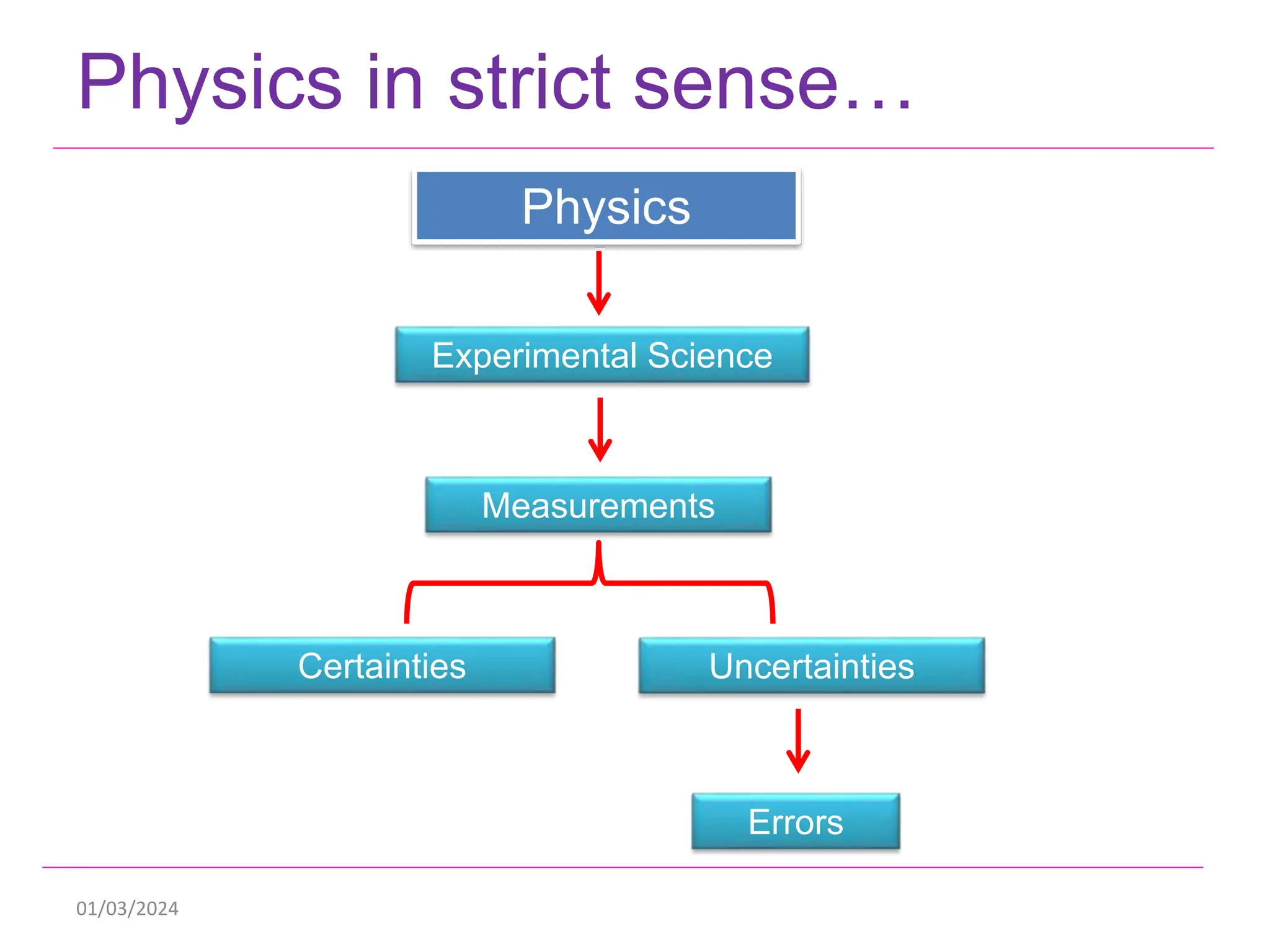
Physics
Experimental Science
Measurements
Certainties Uncertainties
Errors
Physics in strict sense…
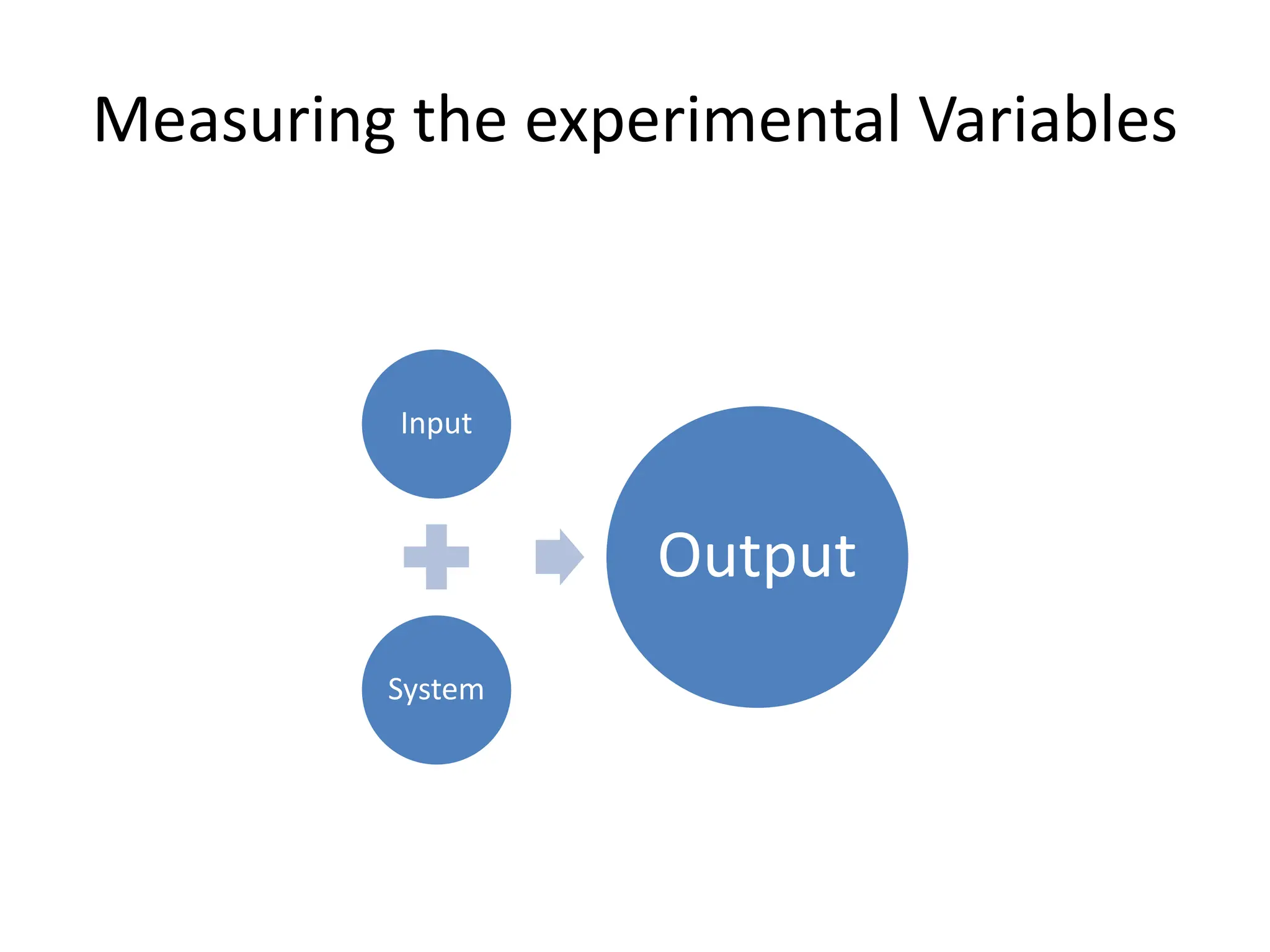
Measuring the experimental Variables
Input
System
Output
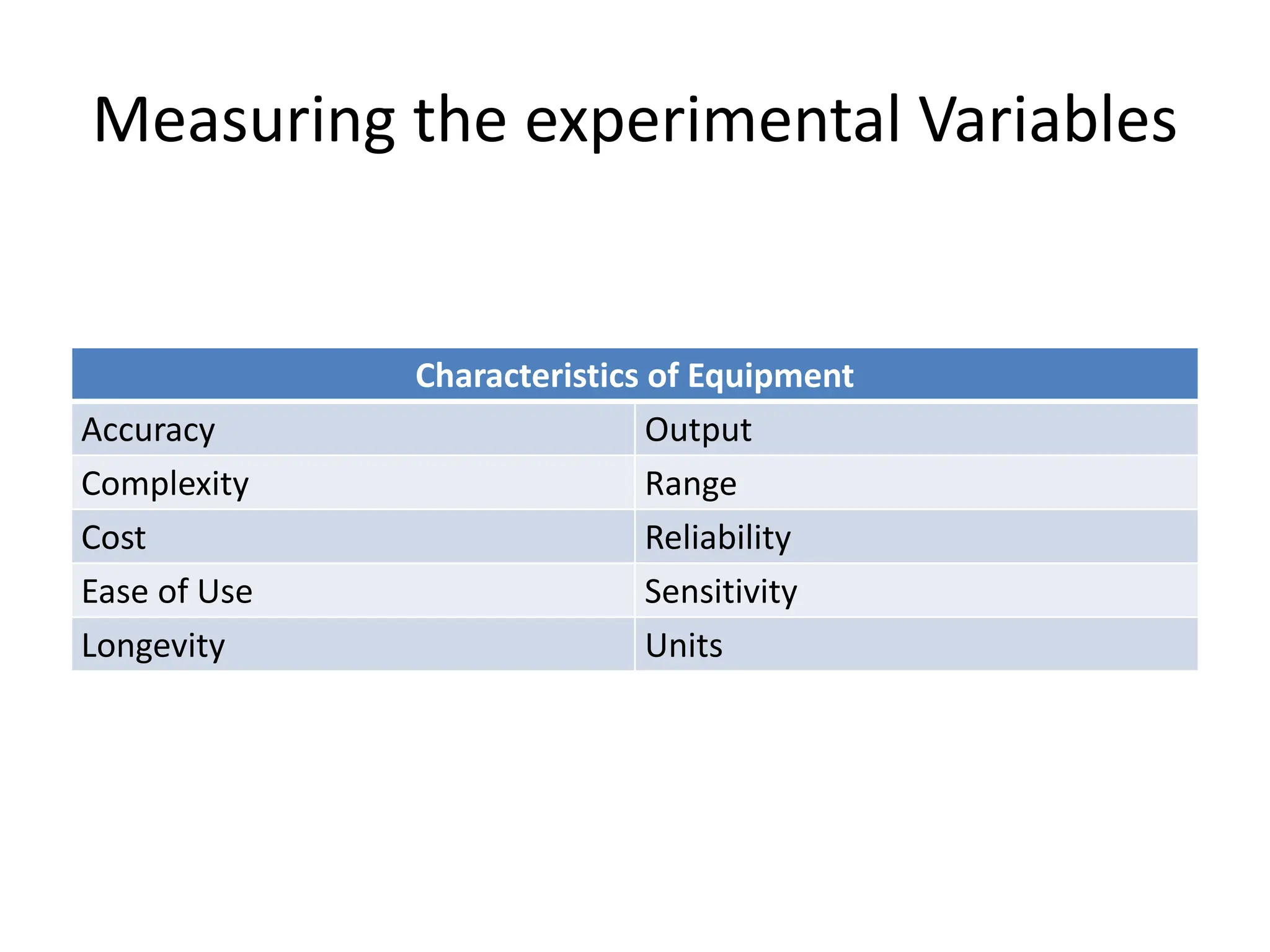
Measuring the experimental Variables
Characteristics of Equipment
Accuracy Output
Complexity Range
Cost Reliability
Ease of Use Sensitivity
Longevity Units
01/03/2024
Types of Errors
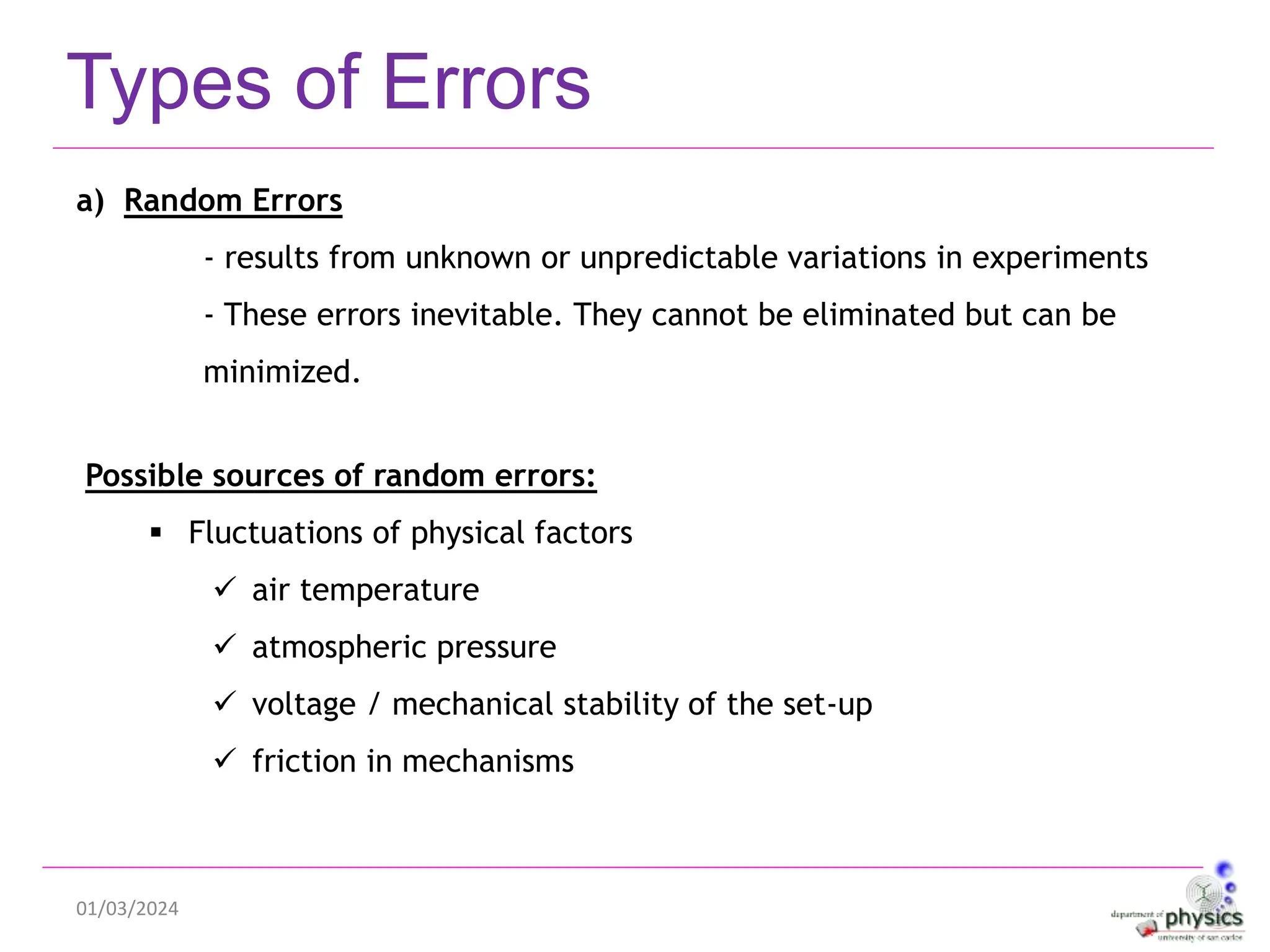
a) Random Errors
- results from unknown or unpredictable variations in experiments
- These errors inevitable. They cannot be eliminated but can be
minimized.
Possible sources of random errors:
 Fluctuations of physical factors
 air temperature
 atmospheric pressure
 voltage / mechanical stability of the set-up
 friction in mechanisms
Analysis of Data
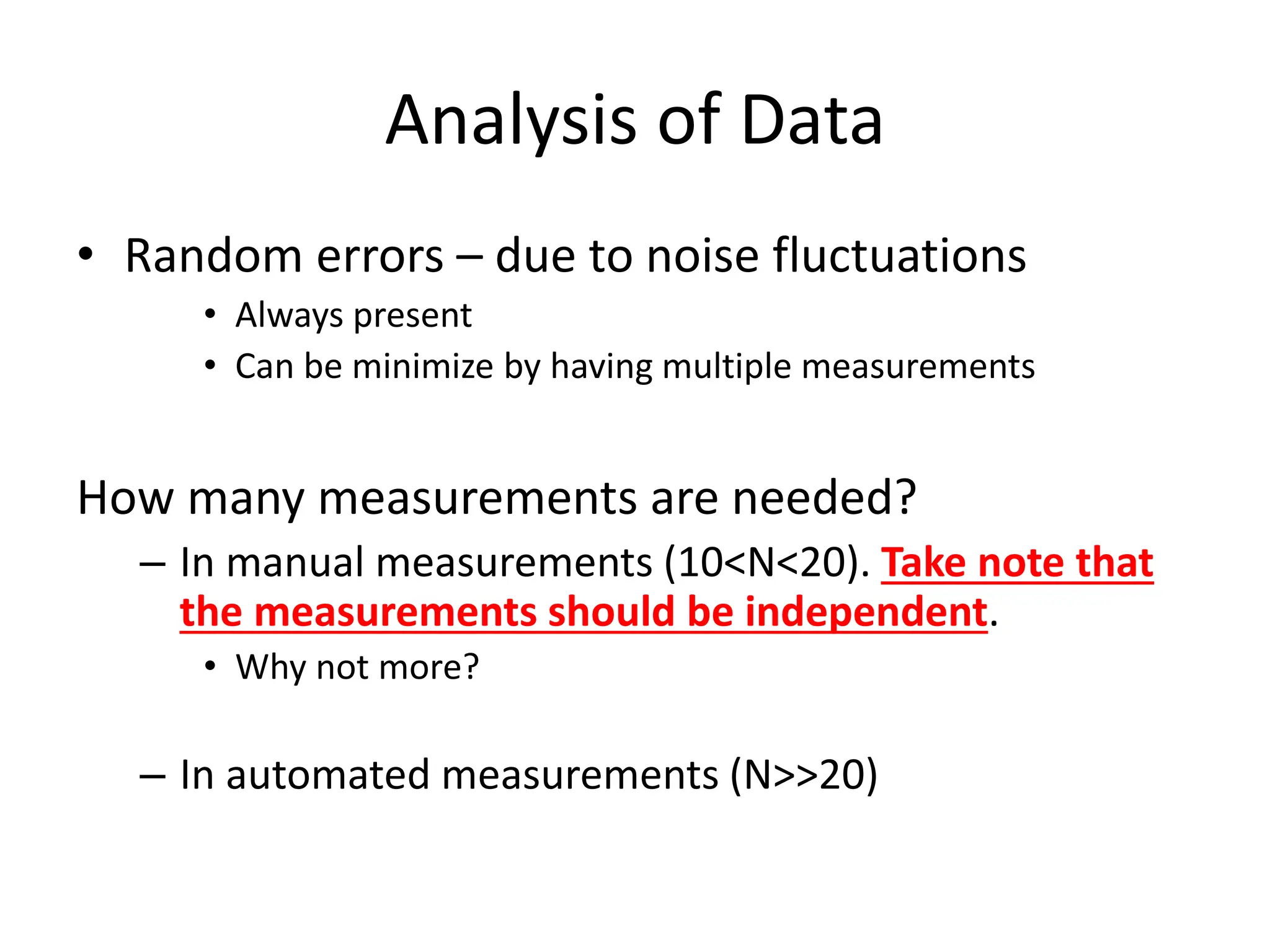
• Random errors – due to noise fluctuations
• Always present
• Can be minimize by having multiple measurements
How many measurements are needed?
– In manual measurements (10<N<20). Take note that
the measurements should be independent.
• Why not more?
– In automated measurements (N>>20)
01/03/2024
Types of Errors
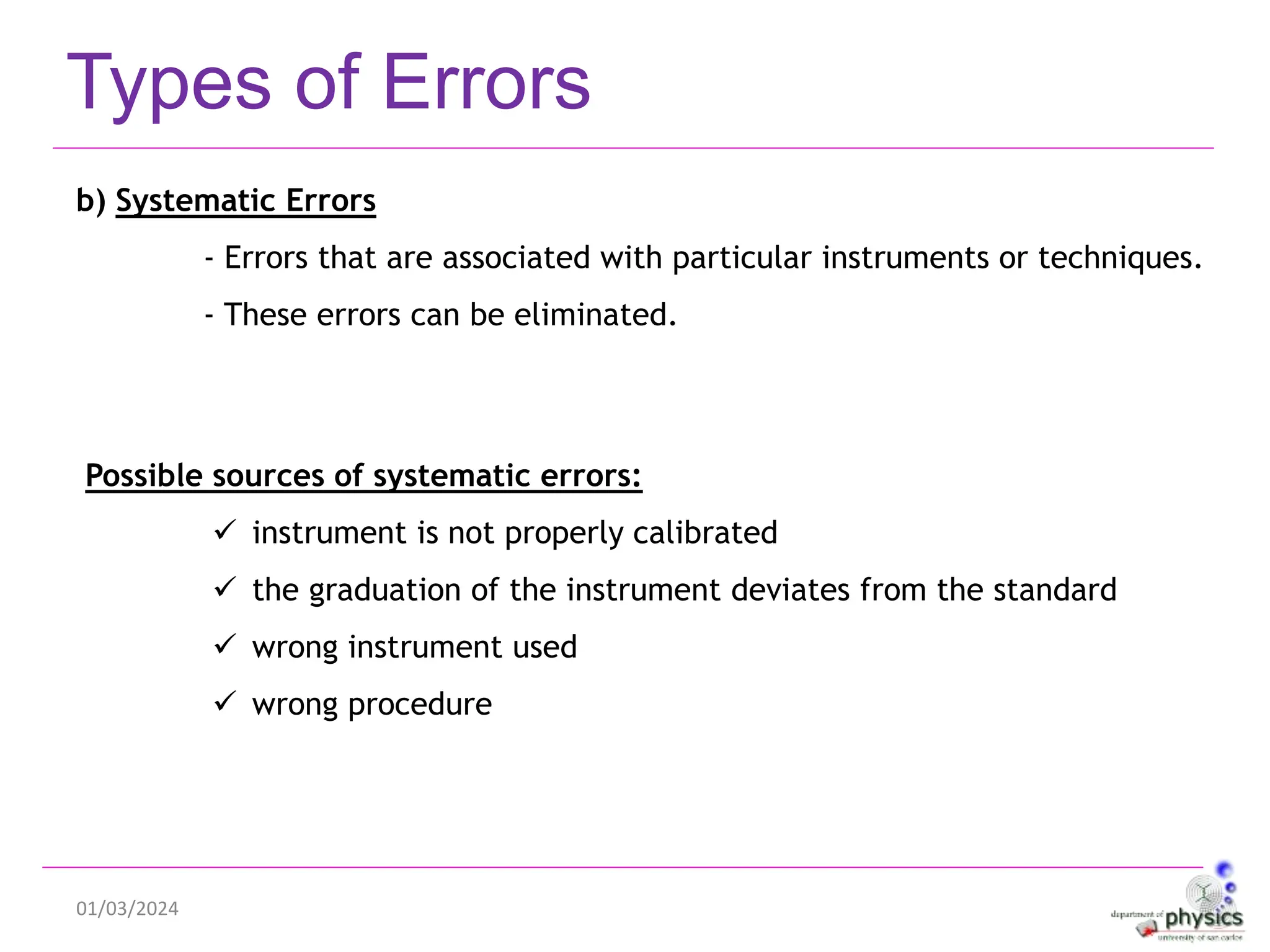
b) Systematic Errors
- Errors that are associated with particular instruments or techniques.
- These errors can be eliminated.
Possible sources of systematic errors:
 instrument is not properly calibrated
 the graduation of the instrument deviates from the standard
 wrong instrument used
 wrong procedure
Analysis of Data
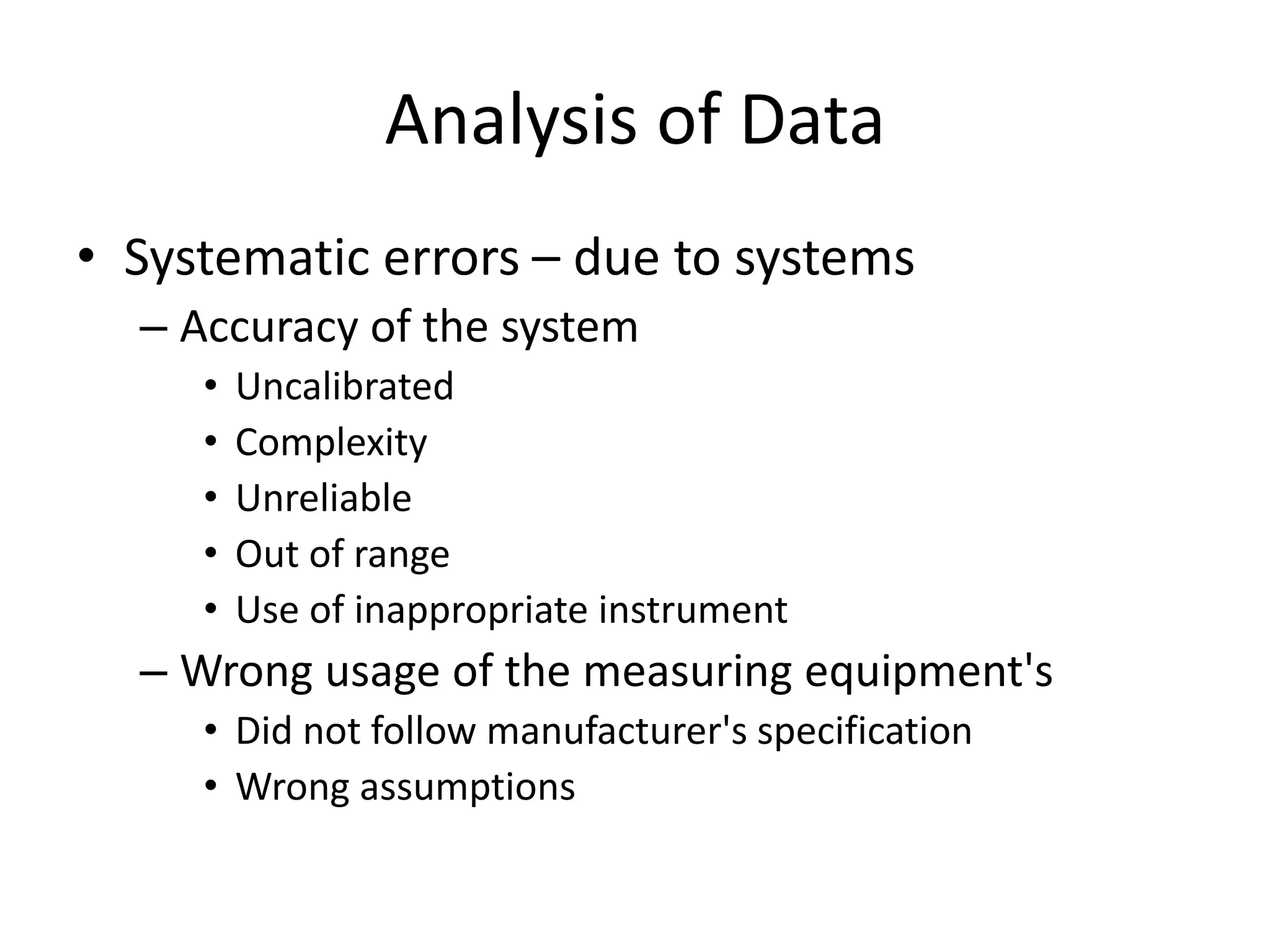
• Systematic errors – due to systems
– Accuracy of the system
• Uncalibrated
• Complexity
• Unreliable
• Out of range
• Use of inappropriate instrument
– Wrong usage of the measuring equipment's
• Did not follow manufacturer's specification
• Wrong assumptions
01/03/2024
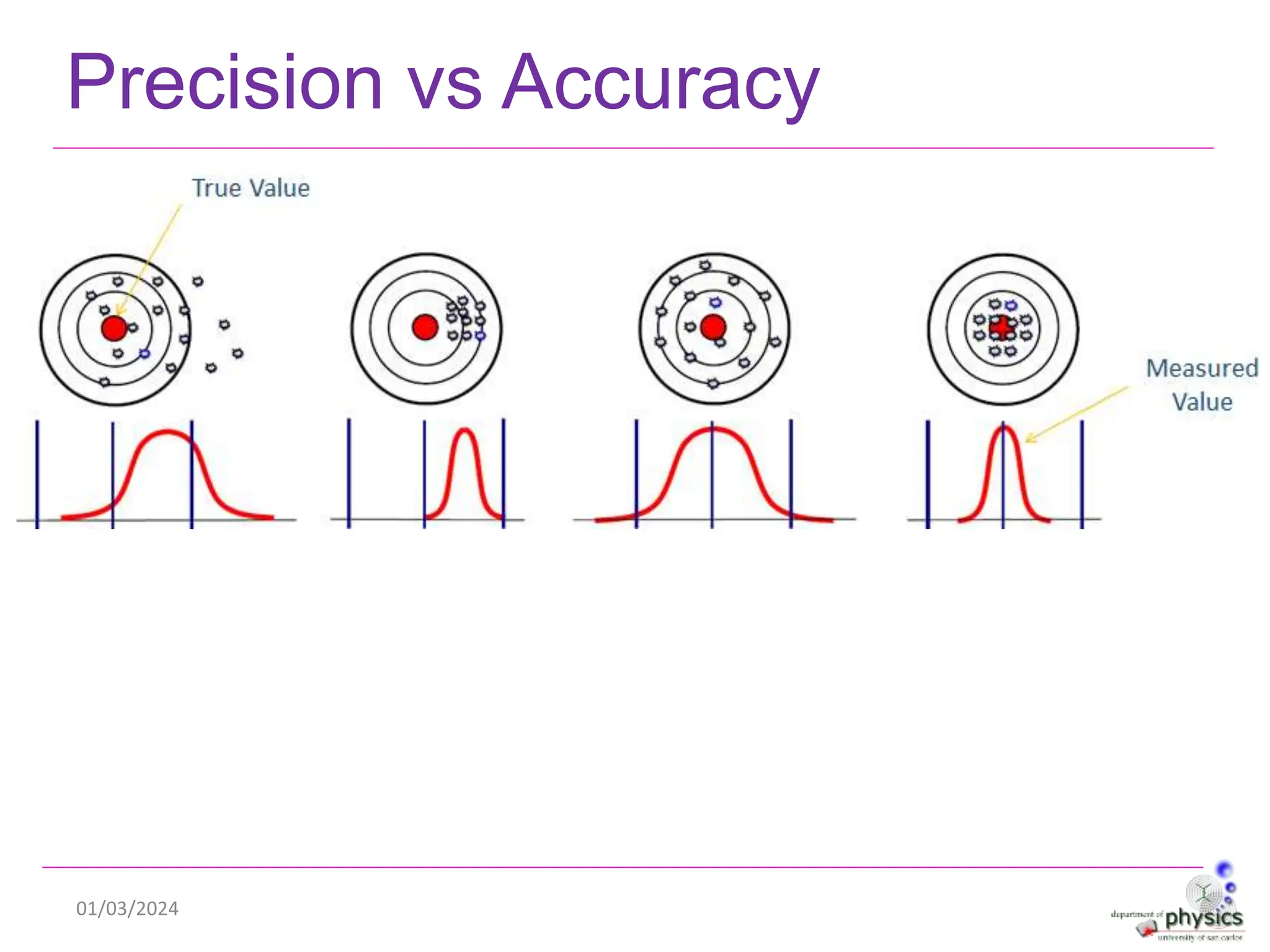
Precision vs Accuracy
01/03/2024
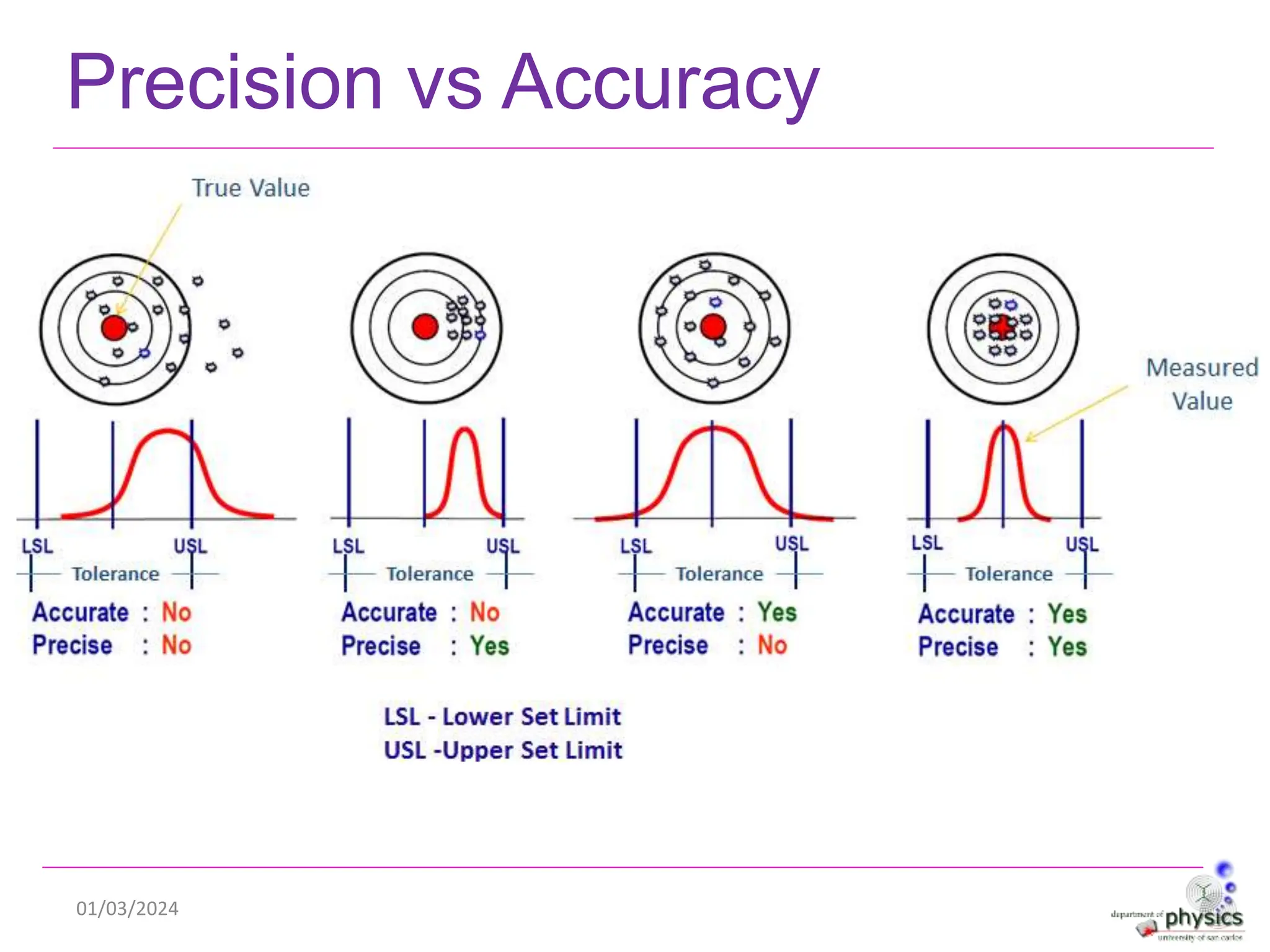
Precision vs Accuracy
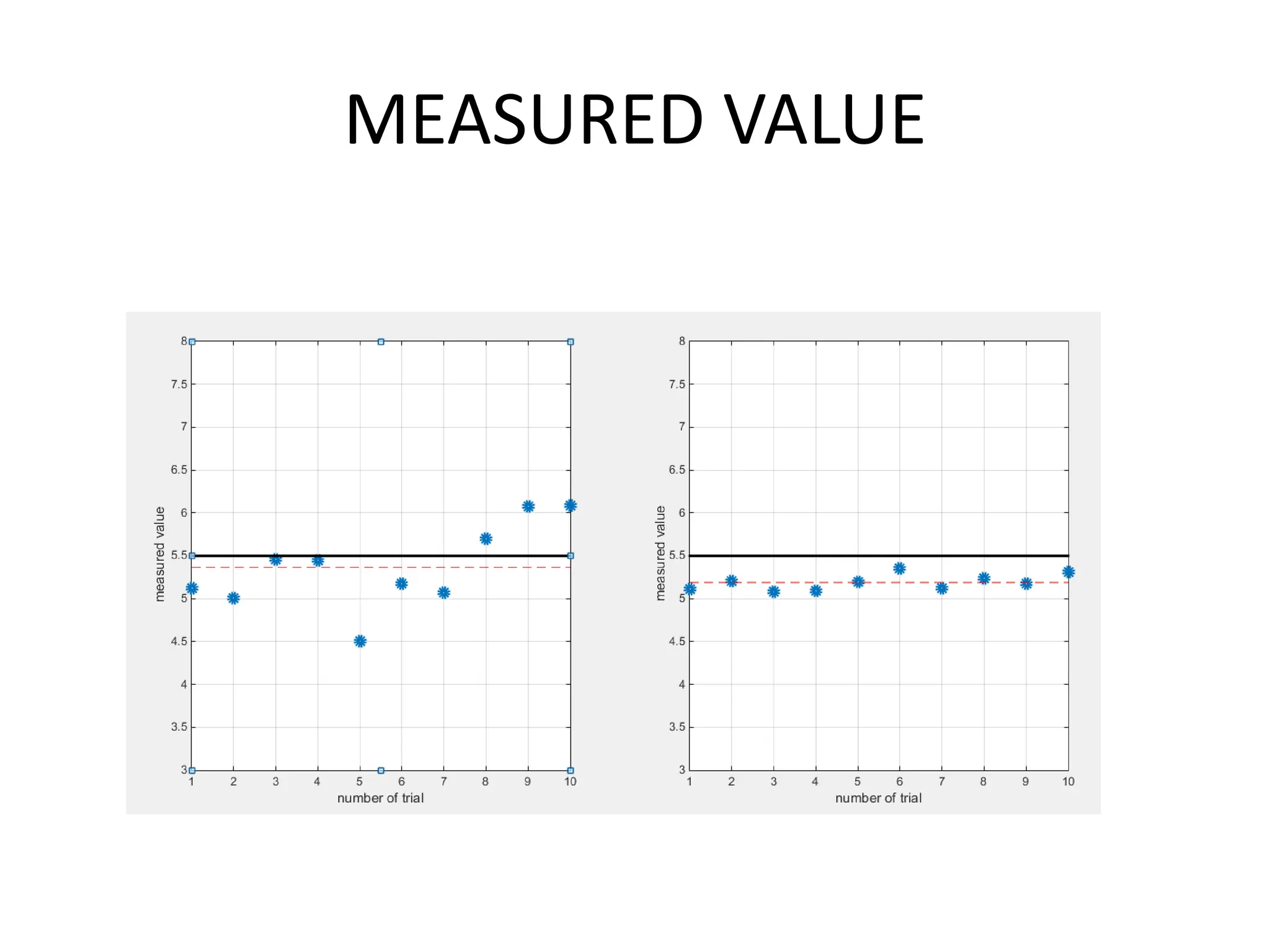
MEASURED VALUE
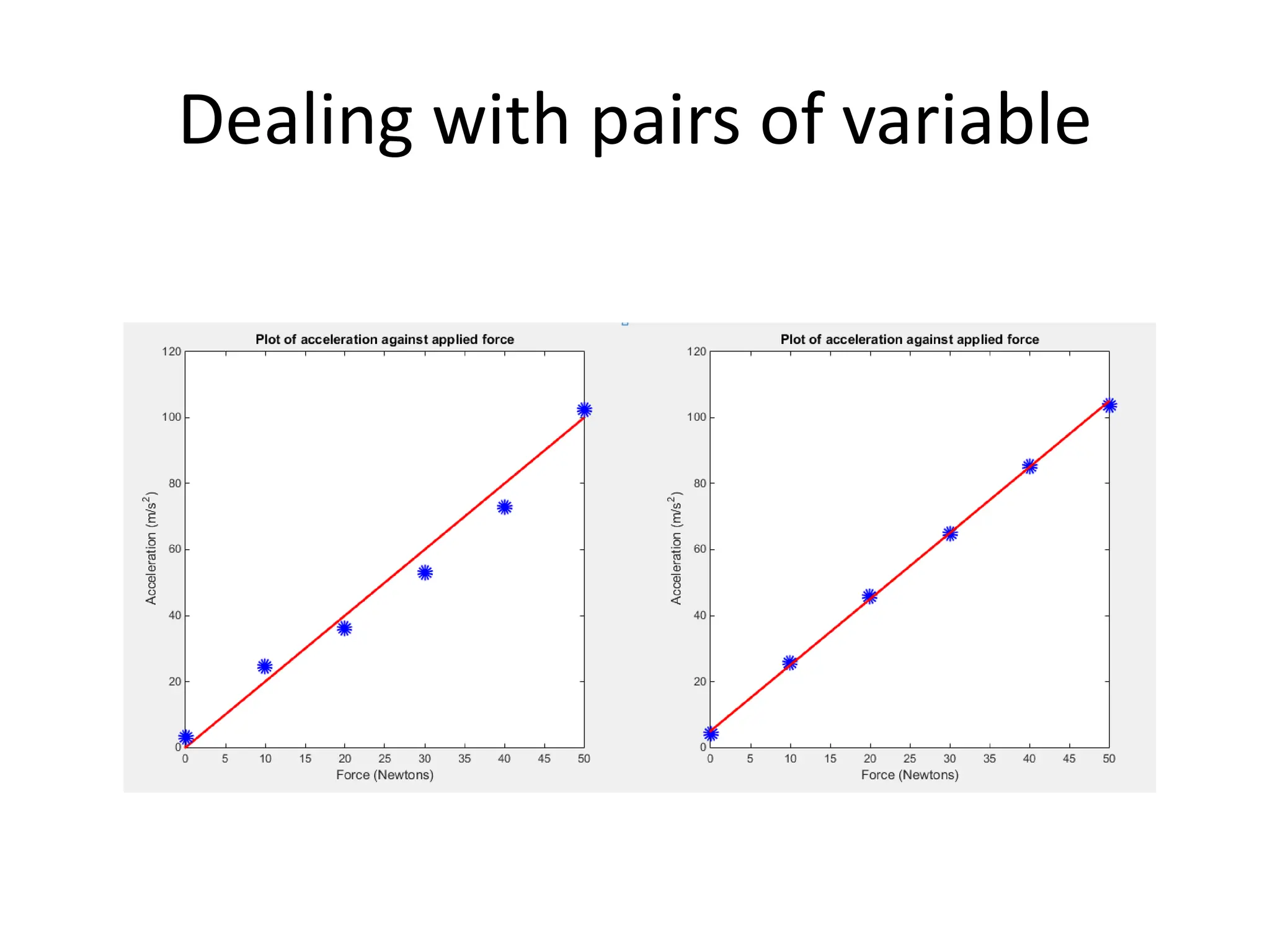
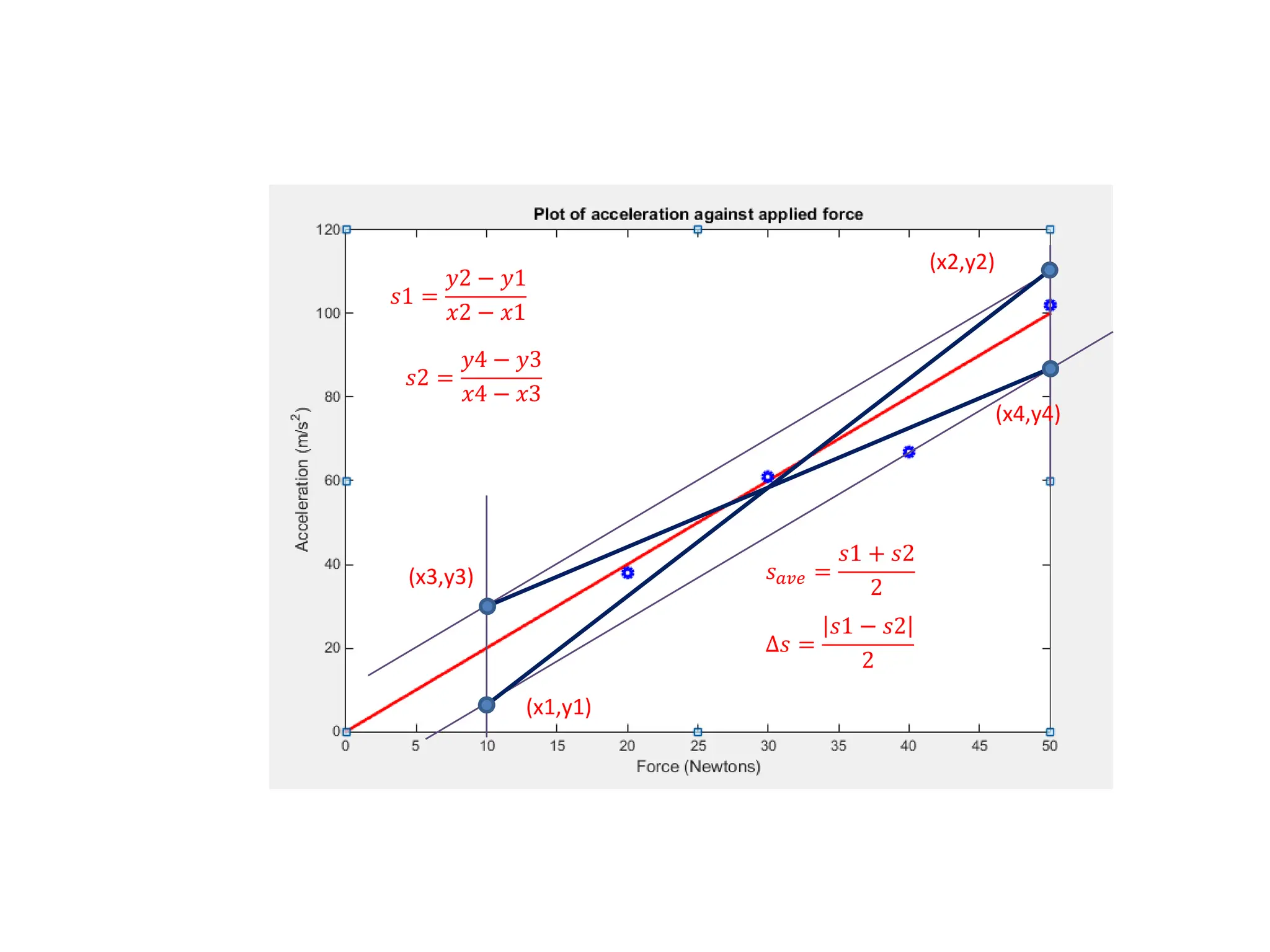
Dealing with pairs of variable
(x1,y1)
(x2,y2)
𝑠1 =
𝑦2 − 𝑦1
𝑥2 − 𝑥1
(x3,y3)
(x4,y4)
𝑠2 =
𝑦4 − 𝑦3
𝑥4 − 𝑥3
𝑠𝑎𝑣𝑒 =
𝑠1 + 𝑠2
2
∆𝑠 =
𝑠1 − 𝑠2
2

measurements, sample conversion problems and errors.pptx