Иммунотерапия раковых опухолей
с точки зрения
системной биологии
Максим Артёмов
25 мая 2015
T cell activation requires 2 signals
CTLA4 and PD-1 are checkpoint regulatory molecules
Immunotherapy addresses second checkpoint
Huge success both in clinics and in academia
2011 -
ipilimumab approved by FDA
for melanoma
2013 -
breakthrough of the year
Paradigm shift
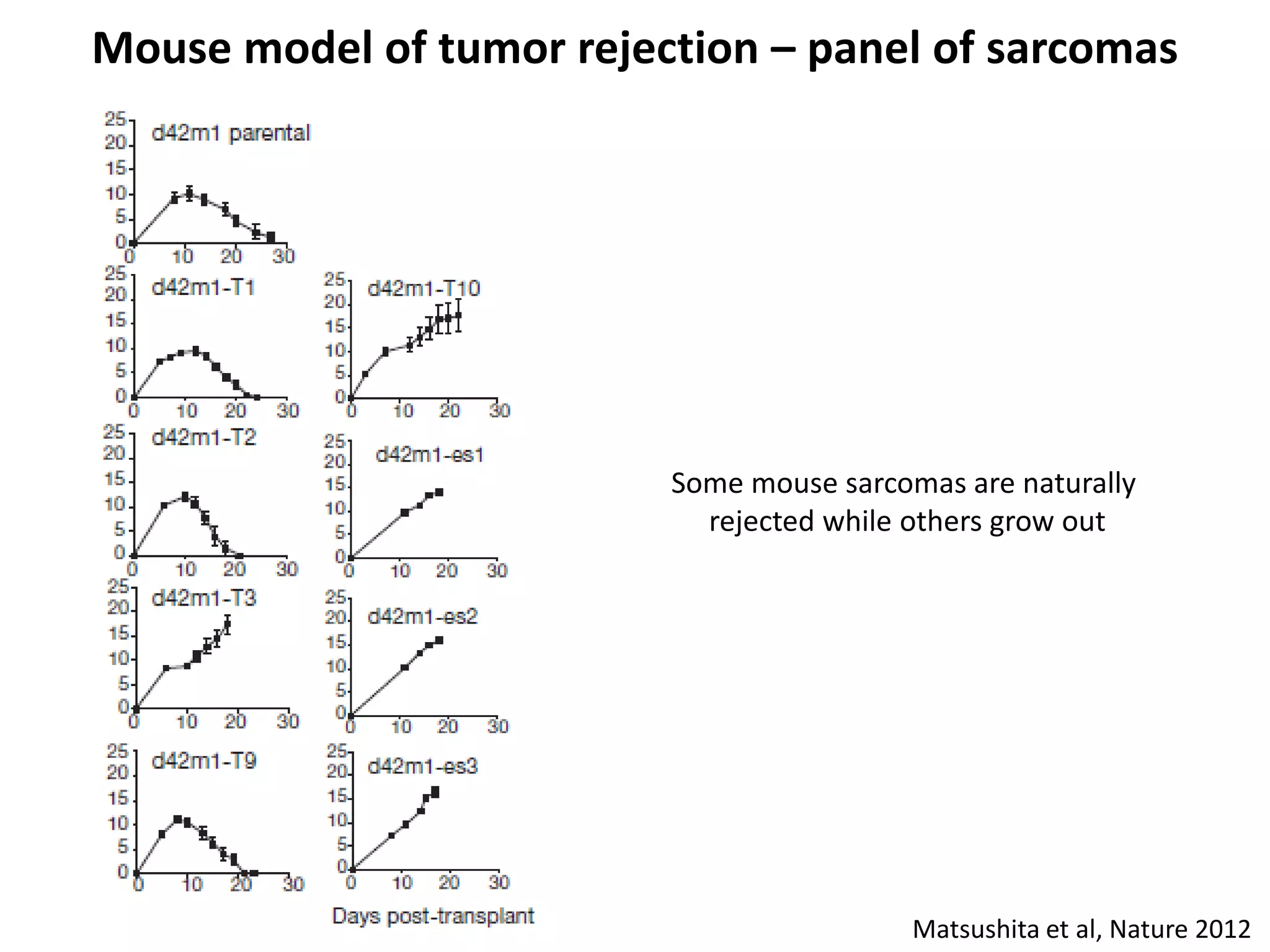
Mouse model of tumor rejection – panel of sarcomas
Some mouse sarcomas are naturally
rejected while others grow out
Matsushita et al, Nature 2012
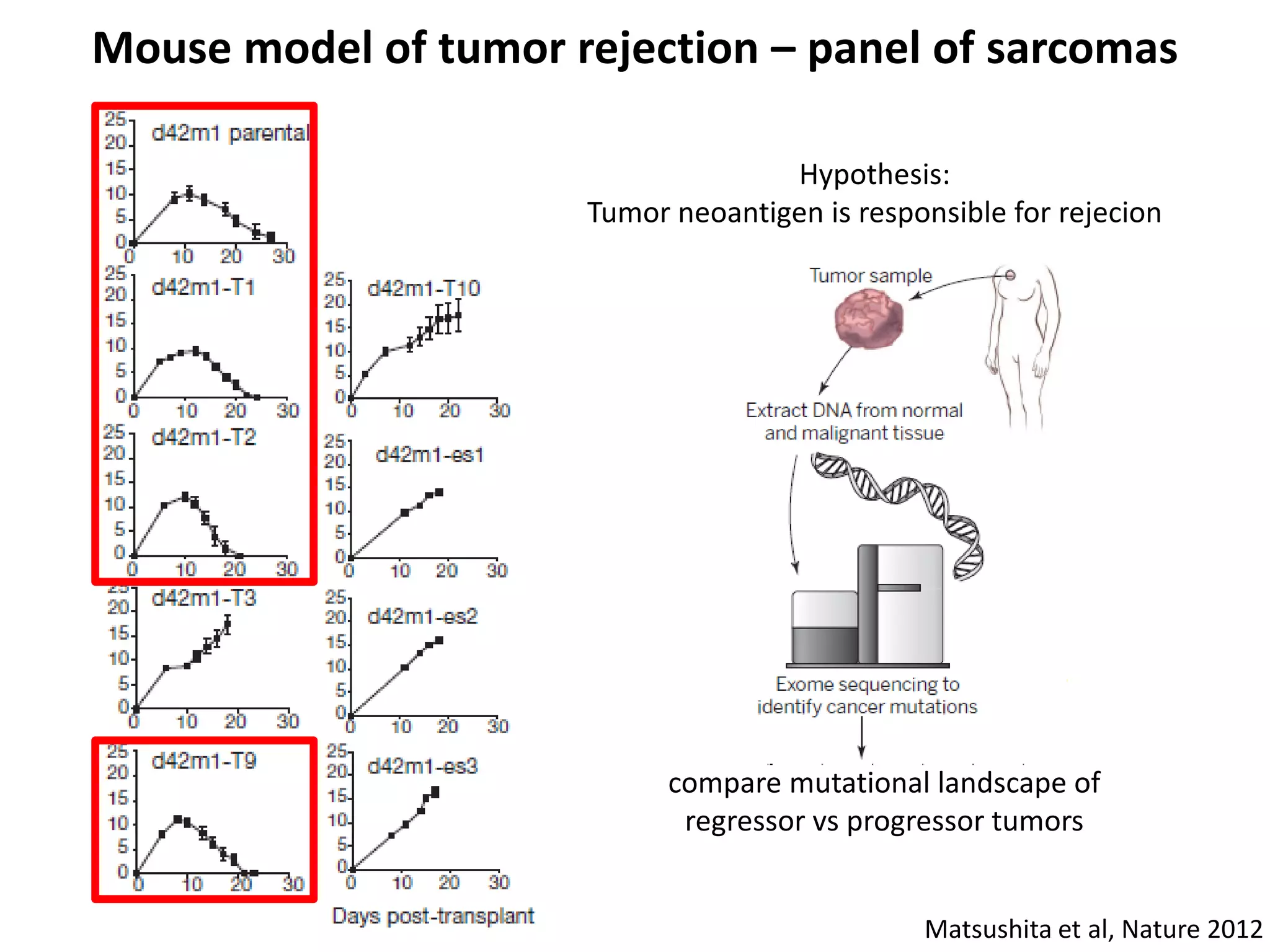
Mouse model of tumor rejection – panel of sarcomas
Hypothesis:
Tumor neoantigen is responsible for rejecion
Matsushita et al, Nature 2012
compare mutational landscape of
regressor vs progressor tumors
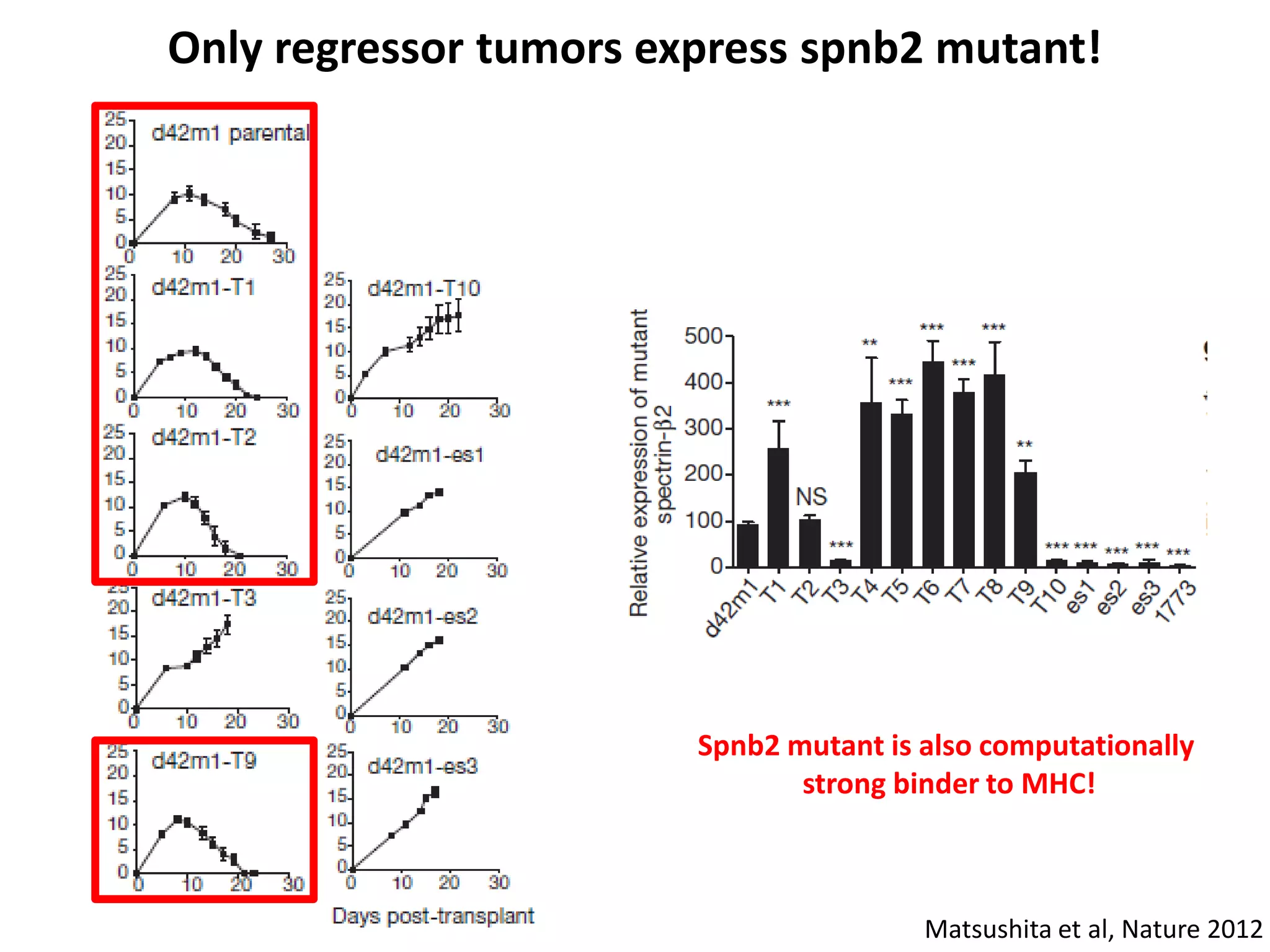
Only regressor tumors express spnb2 mutant!
Matsushita et al, Nature 2012
Only regressor tumors express spnb2 mutant!
Spnb2 mutant is also computationally
strong binder to MHC!
Matsushita et al, Nature 2012
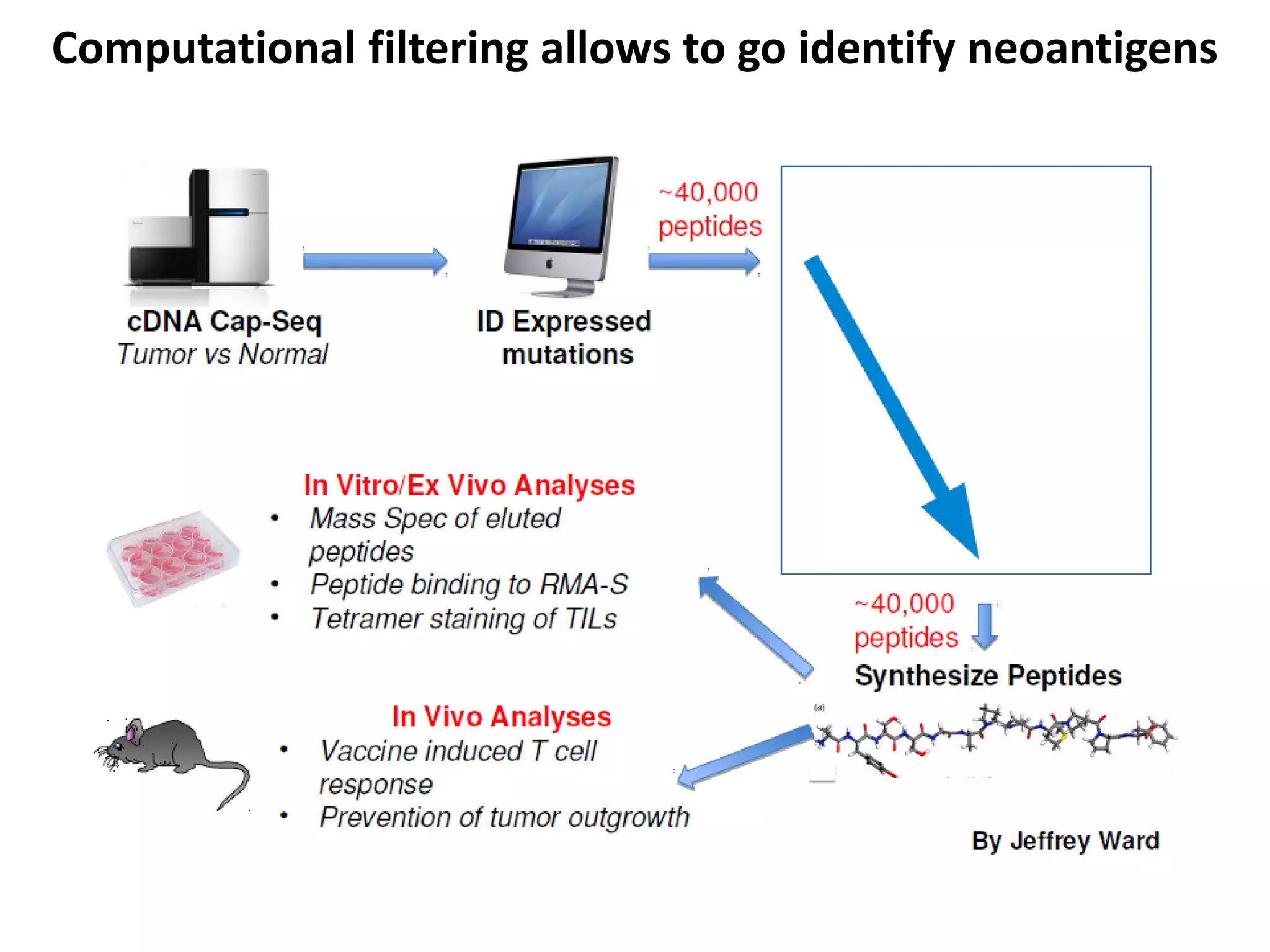
Computational filtering allows to go identify neoantigens
Checkpoint blockade works in progressor tumors
aCTLA4/aPD1 treatments “cure” the mice
Gubin et al, Nature 2014
Potential Antigens identified for T3 tumor
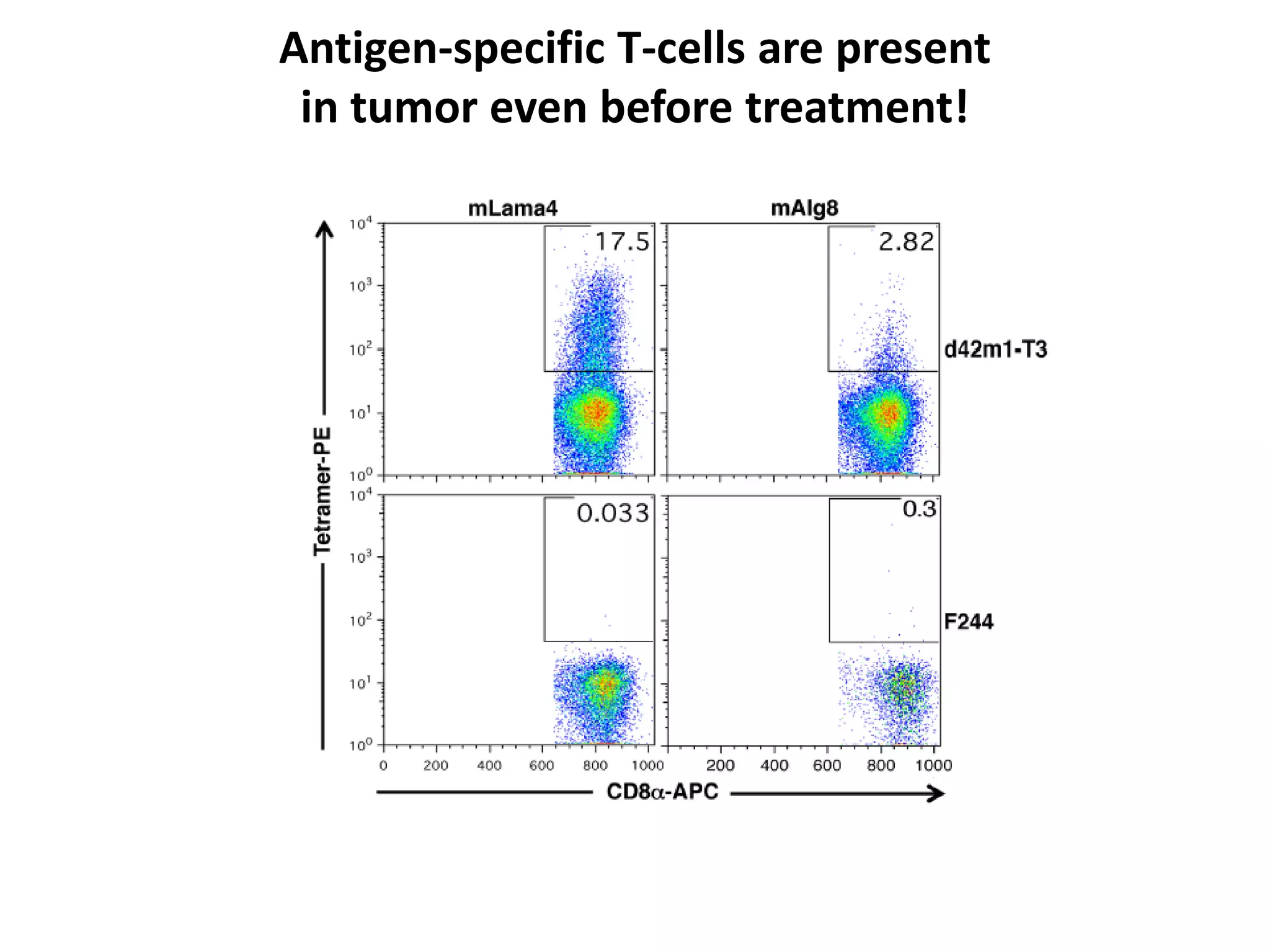
Antigen-specific T-cells are present
in tumor even before treatment!
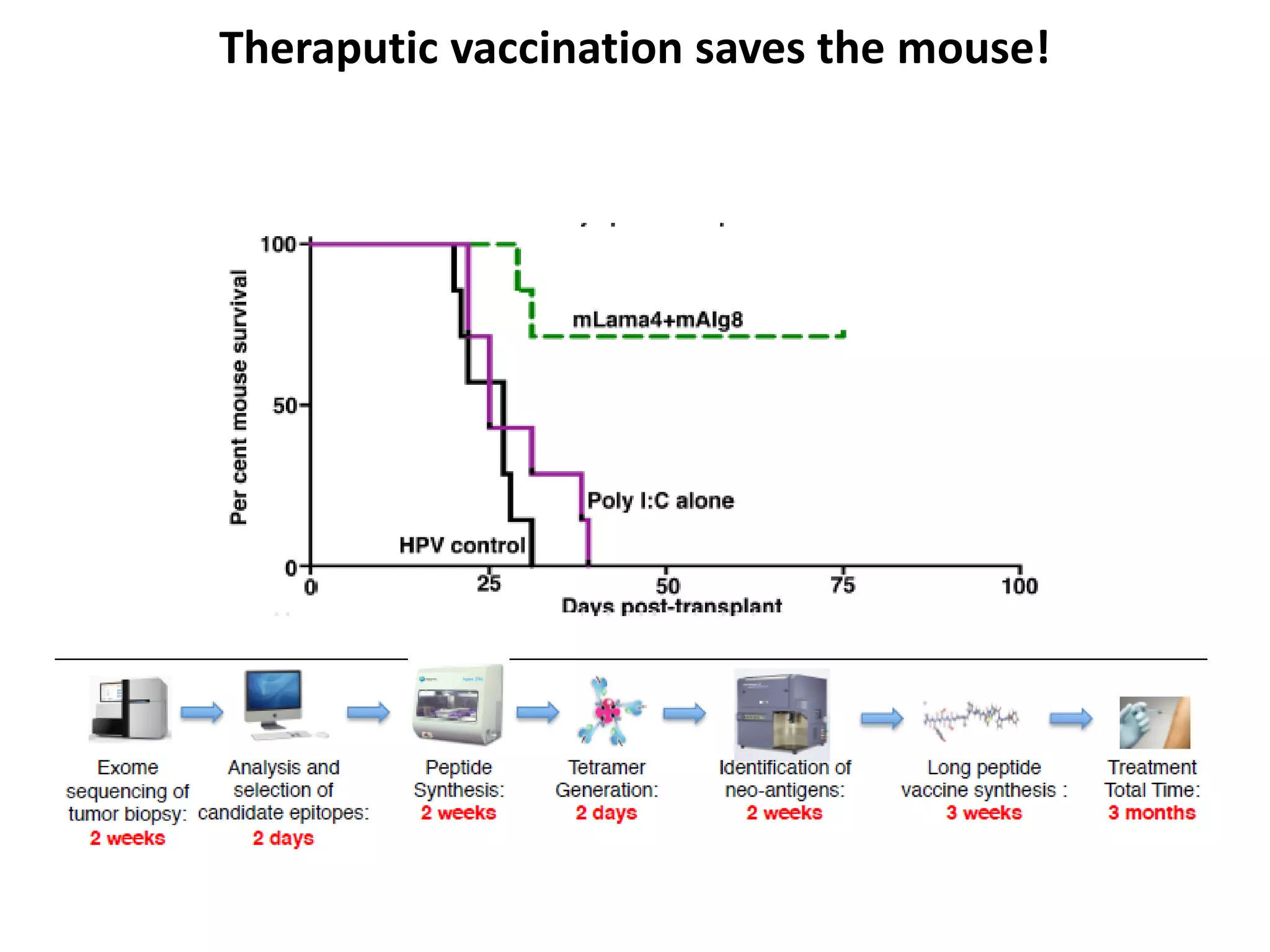
Theraputic vaccination saves the mouse!
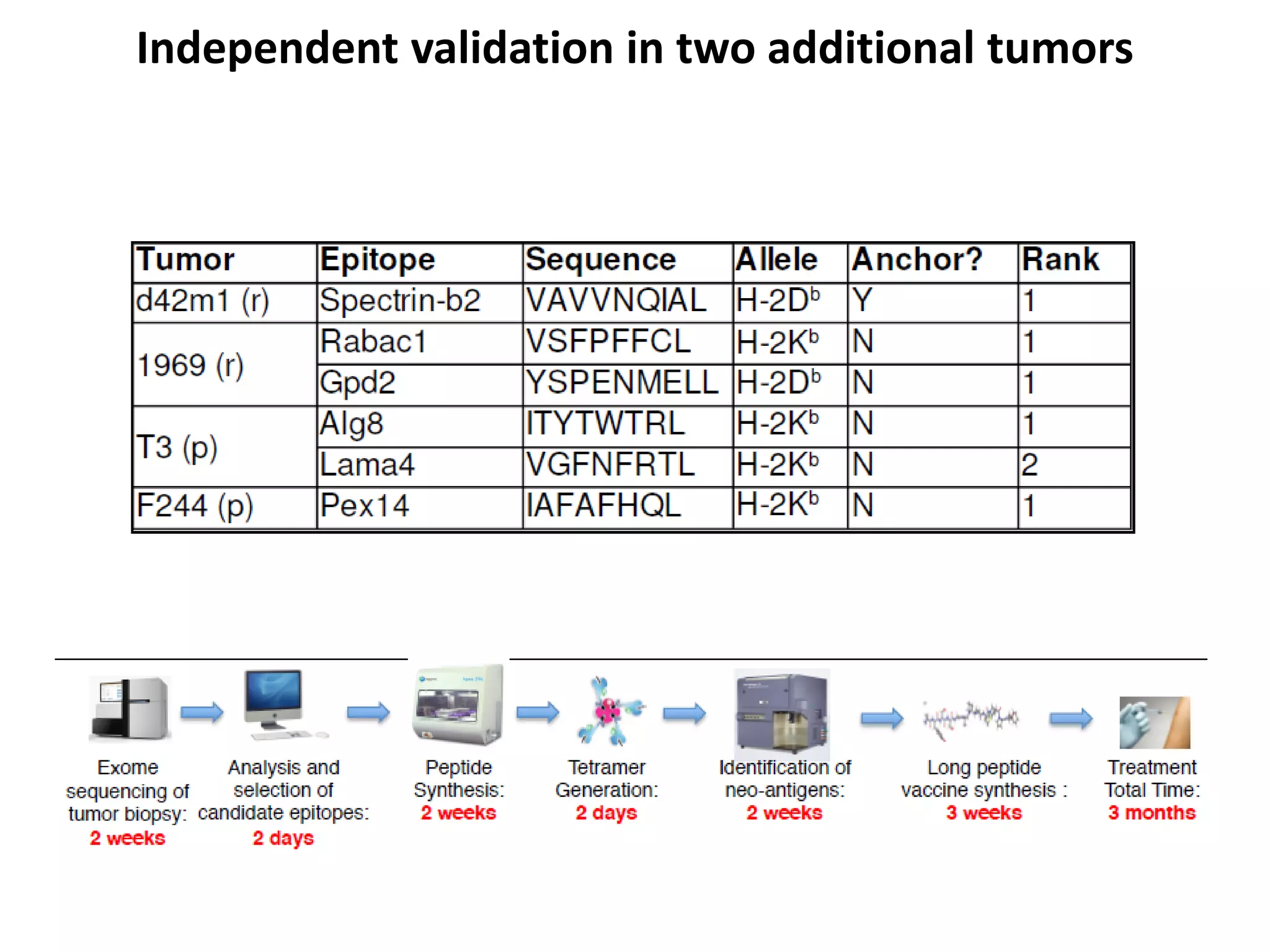
Independent validation in two additional tumors
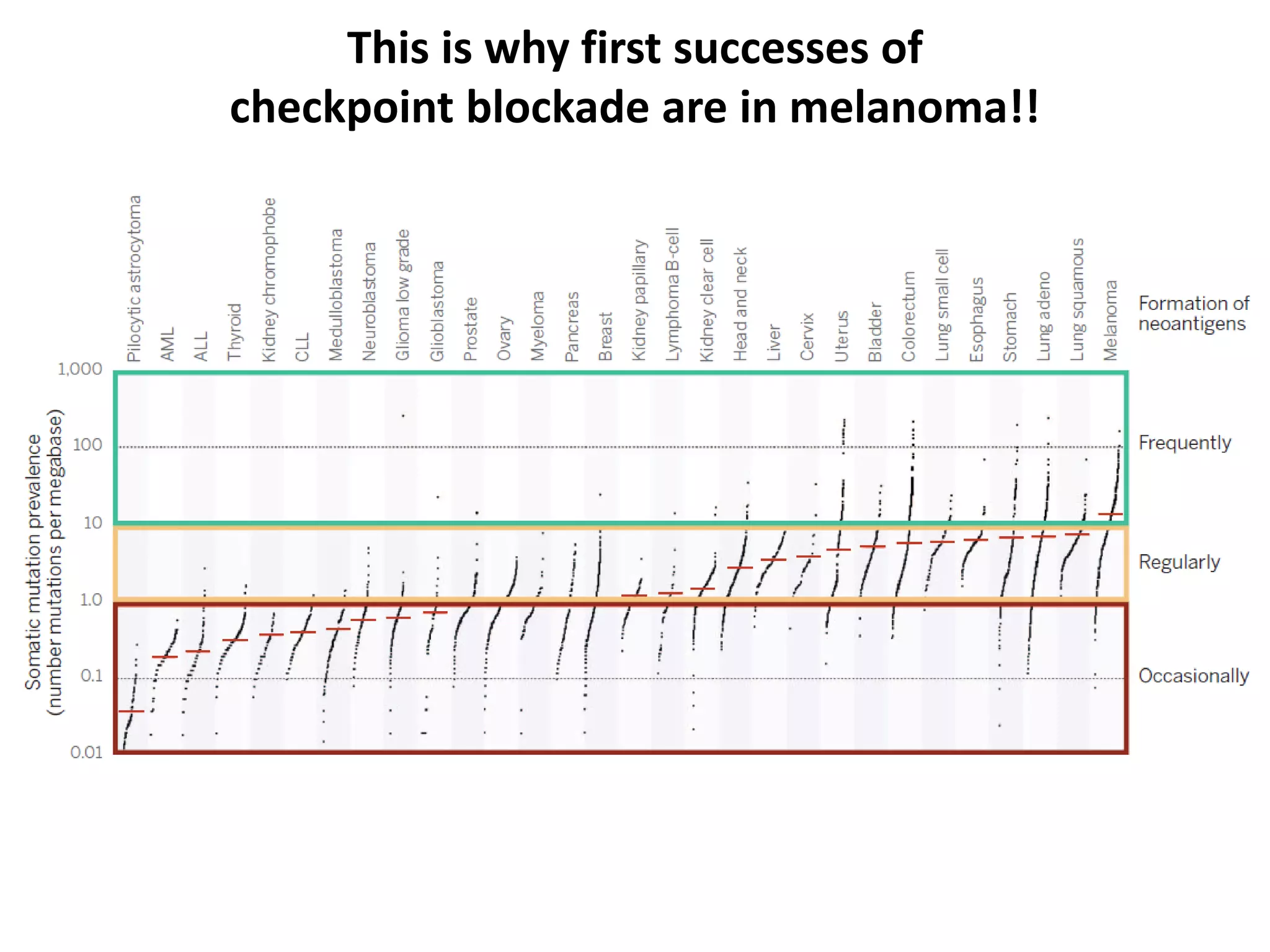
Mutational load is predictive of immunotherapy response
Rizvi et al, Science 2015
This is why first successes of
checkpoint blockade are in melanoma!!
It all started in 19th century
Worked in New York Cancer Hospital
(later became a part of Memorial Sloan Kettering Cancer Center)
• Noticed that infection with erysipelas
often leads to spontaneous regression of sarcomas
• Started therapeutically infection
patients with inoperable sarcomas
It all started in 19th century
Worked in New York Cancer Hospital
(later became a part of Memorial Sloan Kettering Cancer Center)
• Noticed that infection with erysipelas
often leads to spontaneous regression of sarcomas
• Started therapeutically infection
patients with inoperable sarcomas
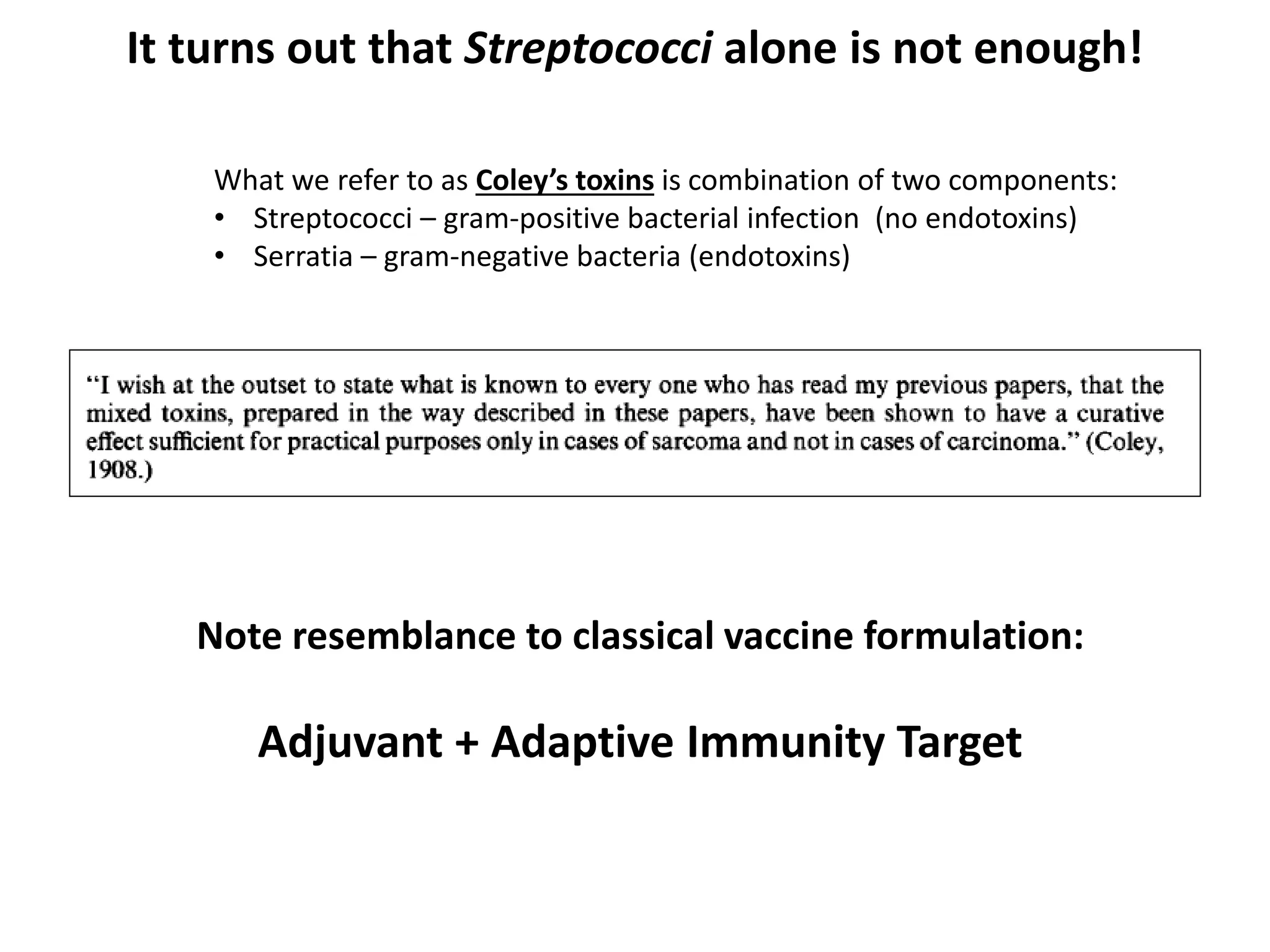
It turns out that Streptococci alone is not enough!
What we refer to as Coley’s toxins is combination of two components:
• Streptococci – gram-positive bacterial infection (no endotoxins)
• Serratia – gram-negative bacteria (endotoxins)
It turns out that Streptococci alone is not enough!
Note resemblance to classical vaccine formulation:
Adjuvant + Adaptive Immunity Target
What we refer to as Coley’s toxins is combination of two components:
• Streptococci – gram-positive bacterial infection (no endotoxins)
• Serratia – gram-negative bacteria (endotoxins)
Streptococci action is sarcoma specific!
Survival
Sarcomas have characteristic genomic landscape
Fusion neoantigens are similar
to Streptococci native protein epitopes!
Artyomov Lab members
(and associated members)
Alex Predeus
Katya Loginicheva
Alexey Sergushichev
Vicky Lampropoulou
Mike Orzel
Anton Alexandrov
Pavel Zakharov
Many thanks to lab members and collaborators
Bob Schreiber
Matt Gubin
Jeff Ward
(WashU)
Ben Zeskind
Fadi Towfic
(Immuneering)

Иммунотерапия раковых опухолей: взгляд со стороны системной биологии. Максим Артемов

  • 1.
    Иммунотерапия раковых опухолей сточки зрения системной биологии Максим Артёмов 25 мая 2015
  • 2.
    T cell activationrequires 2 signals
  • 3.
    CTLA4 and PD-1are checkpoint regulatory molecules
  • 4.
  • 5.
    Huge success bothin clinics and in academia 2011 - ipilimumab approved by FDA for melanoma 2013 - breakthrough of the year
  • 6.
  • 7.
    Mouse model oftumor rejection – panel of sarcomas Some mouse sarcomas are naturally rejected while others grow out Matsushita et al, Nature 2012
  • 8.
    Mouse model oftumor rejection – panel of sarcomas Hypothesis: Tumor neoantigen is responsible for rejecion Matsushita et al, Nature 2012 compare mutational landscape of regressor vs progressor tumors
  • 9.
    Only regressor tumorsexpress spnb2 mutant! Matsushita et al, Nature 2012
  • 10.
    Only regressor tumorsexpress spnb2 mutant! Spnb2 mutant is also computationally strong binder to MHC! Matsushita et al, Nature 2012
  • 11.
    Computational filtering allowsto go identify neoantigens
  • 12.
    Computational filtering allowsto go identify neoantigens
  • 13.
    Computational filtering allowsto go identify neoantigens
  • 14.
    Computational filtering allowsto go identify neoantigens
  • 15.
    Checkpoint blockade worksin progressor tumors aCTLA4/aPD1 treatments “cure” the mice Gubin et al, Nature 2014
  • 16.
  • 17.
    Antigen-specific T-cells arepresent in tumor even before treatment!
  • 18.
  • 19.
  • 20.
    Independent validation intwo additional tumors
  • 21.
    Mutational load ispredictive of immunotherapy response Rizvi et al, Science 2015
  • 22.
    This is whyfirst successes of checkpoint blockade are in melanoma!!
  • 23.
    It all startedin 19th century Worked in New York Cancer Hospital (later became a part of Memorial Sloan Kettering Cancer Center) • Noticed that infection with erysipelas often leads to spontaneous regression of sarcomas • Started therapeutically infection patients with inoperable sarcomas
  • 24.
    It all startedin 19th century Worked in New York Cancer Hospital (later became a part of Memorial Sloan Kettering Cancer Center) • Noticed that infection with erysipelas often leads to spontaneous regression of sarcomas • Started therapeutically infection patients with inoperable sarcomas
  • 25.
    It turns outthat Streptococci alone is not enough! What we refer to as Coley’s toxins is combination of two components: • Streptococci – gram-positive bacterial infection (no endotoxins) • Serratia – gram-negative bacteria (endotoxins)
  • 26.
    It turns outthat Streptococci alone is not enough! Note resemblance to classical vaccine formulation: Adjuvant + Adaptive Immunity Target What we refer to as Coley’s toxins is combination of two components: • Streptococci – gram-positive bacterial infection (no endotoxins) • Serratia – gram-negative bacteria (endotoxins)
  • 27.
    Streptococci action issarcoma specific! Survival
  • 28.
  • 29.
    Fusion neoantigens aresimilar to Streptococci native protein epitopes!
  • 30.
    Artyomov Lab members (andassociated members) Alex Predeus Katya Loginicheva Alexey Sergushichev Vicky Lampropoulou Mike Orzel Anton Alexandrov Pavel Zakharov Many thanks to lab members and collaborators Bob Schreiber Matt Gubin Jeff Ward (WashU) Ben Zeskind Fadi Towfic (Immuneering)