Maus Notes Part 2 + DOAYG Notes
Item 22 in your Table of Contents
Sources
Primary Secondary
Written by people
who were present at
events, either as
participants or as
observers. E.g.
Letters, Diaries,
Autobiographies,
Speeches,
Photographs,
Interviews
Records of events that were
created sometime after the
events occurred; the writers
were not directly involved or
were not present when the
events took place. E.g.
Encyclopedias, Textbooks,
Biographies, Magazine
Articles, Web Sites (secondary
sources get their information
from primary sources)
Literary Genre:
Nonfiction
Genre — a category in
which a work of literature
is classified.
Biography Diary Memoir
A true account of a person’s
life written by another
person.
Source Type: ____________
A daily record of a writer’s
thoughts, experiences, and
feelings.
Source Type: ____________
A form of autobiographical
writing in which a writer
shares his or her personal
experiences.
Source Type: ____________
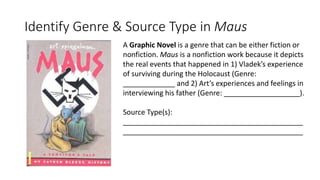
Identify Genre & Source Type in Maus
A Graphic Novel is a genre that can be either fiction or
nonfiction. Maus is a nonfiction work because it depicts
the real events that happened in 1) Vladek’s experience
of surviving during the Holocaust (Genre:
_____________ and 2) Art’s experiences and feelings in
interviewing his father (Genre: ___________________).
Source Type(s):
_____________________________________________
_____________________________________________
Anne Frank Biography
http://www.biography.com/people/anne-frank-9300892/videos/anne-
frank-mini-biography-2079116599
Anne Frank
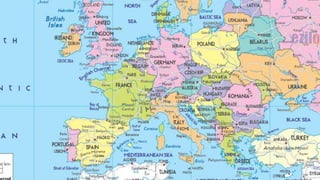
Born June 12, 1929 in Frankfurt, Germany. The Franks
left Germany in 1933 and moved to Amsterdam,
Netherlands to escape the persecution of the Jews by
the Nazi party. However, the Nazis invaded the
Netherlands in 1940 and soon after started rounding up
Jews. Otto Frank, Anne’s father, perceived the direction
of events and proceeded to make plans for his family’s
safety in the form of creating a hiding place in the top
and back of a building on the Prinsengracht Canal. The
family went into hiding on July 5, 1942 when Anne’s
sister Margot was summoned to report for deportation.
They hid in their “secret annexe” for two years until a
Dutch informer revealed the Franks’ hiding place to the
Gestapo. They were then sent to Auschwitz in one of the
last shipments of Jews to leave prior to the invasion of
Brussels by the allies. In October of 1944, Anne was sent
to Bergen-Belsen in Germany. She died sometime
around March of 1945 at the age of 15. The war ended
in May 1945.
Anne’s Diary
Anne received the diary for her 13th
birthday and immediately started
recording her experiences, thoughts, and
feelings. Her diary was discovered by
friends after the Gestapo took the family
from the annexe. At first, Anne’s father
circulated the diary to family members as
a memorial to Anne. It was later
published at the insistence of a professor
in 1950. Portions have been removed at
the insistence of Otto Frank, as Anne
wrote unflattering passages about her
relationship with her mother.
Source Type: ________________________
Things to know before reading…
• Anne addressed her diary entries to “Kitty”: “In order to enhance my
mind’s eye the picture of a friend for whom I have waited so long, I
don’t want to set down a series of bald facts in diary like most people
do, but I want this diary itself to be a friend, and I shall call that friend
Kitty.”
• Translated from the original Dutch version. There are multiple
translations to English, and they vary in content and wording.
The Diary of a Young Girl
Start reading the excerpt from The Diary of a Young Girl. Any reading
you do not finish in class is due for homework.
Feel free to make reading notes on your handout. The copy is yours to
keep. You will need to bring your copy to class next class.

Maus Notes 2

  • 1.
    Maus Notes Part2 + DOAYG Notes Item 22 in your Table of Contents
  • 2.
    Sources Primary Secondary Written bypeople who were present at events, either as participants or as observers. E.g. Letters, Diaries, Autobiographies, Speeches, Photographs, Interviews Records of events that were created sometime after the events occurred; the writers were not directly involved or were not present when the events took place. E.g. Encyclopedias, Textbooks, Biographies, Magazine Articles, Web Sites (secondary sources get their information from primary sources)
  • 3.
    Literary Genre: Nonfiction Genre —a category in which a work of literature is classified. Biography Diary Memoir A true account of a person’s life written by another person. Source Type: ____________ A daily record of a writer’s thoughts, experiences, and feelings. Source Type: ____________ A form of autobiographical writing in which a writer shares his or her personal experiences. Source Type: ____________
  • 4.
    Identify Genre &Source Type in Maus A Graphic Novel is a genre that can be either fiction or nonfiction. Maus is a nonfiction work because it depicts the real events that happened in 1) Vladek’s experience of surviving during the Holocaust (Genre: _____________ and 2) Art’s experiences and feelings in interviewing his father (Genre: ___________________). Source Type(s): _____________________________________________ _____________________________________________
  • 5.
  • 6.
    Anne Frank Born June12, 1929 in Frankfurt, Germany. The Franks left Germany in 1933 and moved to Amsterdam, Netherlands to escape the persecution of the Jews by the Nazi party. However, the Nazis invaded the Netherlands in 1940 and soon after started rounding up Jews. Otto Frank, Anne’s father, perceived the direction of events and proceeded to make plans for his family’s safety in the form of creating a hiding place in the top and back of a building on the Prinsengracht Canal. The family went into hiding on July 5, 1942 when Anne’s sister Margot was summoned to report for deportation. They hid in their “secret annexe” for two years until a Dutch informer revealed the Franks’ hiding place to the Gestapo. They were then sent to Auschwitz in one of the last shipments of Jews to leave prior to the invasion of Brussels by the allies. In October of 1944, Anne was sent to Bergen-Belsen in Germany. She died sometime around March of 1945 at the age of 15. The war ended in May 1945.
  • 8.
    Anne’s Diary Anne receivedthe diary for her 13th birthday and immediately started recording her experiences, thoughts, and feelings. Her diary was discovered by friends after the Gestapo took the family from the annexe. At first, Anne’s father circulated the diary to family members as a memorial to Anne. It was later published at the insistence of a professor in 1950. Portions have been removed at the insistence of Otto Frank, as Anne wrote unflattering passages about her relationship with her mother. Source Type: ________________________
  • 9.
    Things to knowbefore reading… • Anne addressed her diary entries to “Kitty”: “In order to enhance my mind’s eye the picture of a friend for whom I have waited so long, I don’t want to set down a series of bald facts in diary like most people do, but I want this diary itself to be a friend, and I shall call that friend Kitty.” • Translated from the original Dutch version. There are multiple translations to English, and they vary in content and wording.
  • 10.
    The Diary ofa Young Girl Start reading the excerpt from The Diary of a Young Girl. Any reading you do not finish in class is due for homework. Feel free to make reading notes on your handout. The copy is yours to keep. You will need to bring your copy to class next class.

Editor's Notes

  • #9 Stopped here in 1st period