

1
The journey to achieving operational excellence
Achieving Growth with Goals
Matthew Hart
@matthewj_hart
@betterworks
2
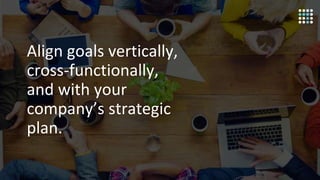
Align goals vertically,
cross-functionally,
and with your
company’s strategic
plan.
33
70% of today’s workforce is failing to reach their full
potential every day. Ideas are relatively easy, but
it’s execution that is everything. You need to get the
team aligned and ensure they’re working together
on the priorities that really matter to the larger
goals of the business.
John Doerr
General Partner at KPCB
4
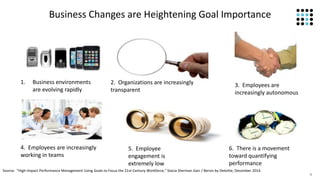
Business Changes are Heightening Goal Importance
1. Business environments
are evolving rapidly
2. Organizations are increasingly
transparent
3. Employees are
increasingly autonomous
4. Employees are increasingly
working in teams
5. Employee
engagement is
extremely low
6. There is a movement
toward quantifying
performance
Source: “High-Impact Performance Management Using Goals to Focus the 21st-Century Workforce,” Stacia Sherman Garr / Bersin by Deloitte, December 2014.
5
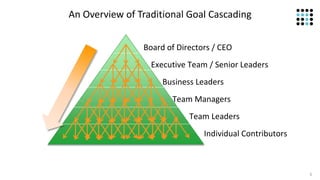
Board of Directors / CEO
Executive Team / Senior Leaders
Business Leaders
Team Managers
Team Leaders
Individual Contributors
An Overview of Traditional Goal Cascading
6
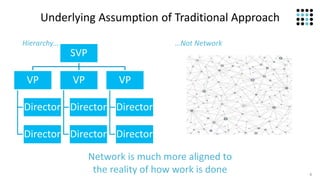
SVP
VP
Director
Director
VP
Director
Director
VP
Director
Director
Underlying Assumption of Traditional Approach
Network is much more aligned to
the reality of how work is done
Hierarchy… …Not Network
7
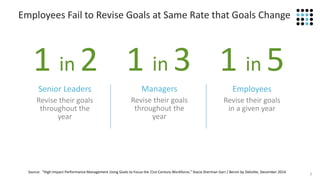
Senior Leaders
Revise their goals
throughout the
year
Managers
Revise their goals
throughout the
year
Employees
Revise their goals
in a given year
1 in 2 1 in 3 1 in 5
Employees Fail to Revise Goals at Same Rate that Goals Change
Source: “High-Impact Performance Management Using Goals to Focus the 21st-Century Workforce,” Stacia Sherman Garr / Bersin by Deloitte, December 2014.
8
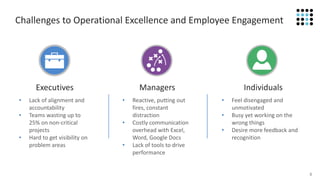
Challenges to Operational Excellence and Employee Engagement
Executives
• Lack of alignment and
accountability
• Teams wasting up to
25% on non-critical
projects
• Hard to get visibility on
problem areas
Individuals
• Feel disengaged and
unmotivated
• Busy yet working on the
wrong things
• Desire more feedback and
recognition
Managers
• Reactive, putting out
fires, constant
distraction
• Costly communication
overhead with Excel,
Word, Google Docs
• Lack of tools to drive
performance
9
Our goal is to drive companies to become
operationally excellent and provide powerful
insights about how work gets done.
®
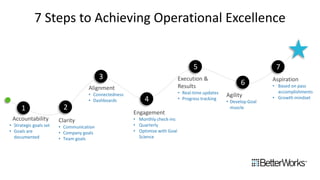
7 Steps to Achieving Operational Excellence
1 2
3
4
5
6
7
Accountability
• Strategic goals set
• Goals are
documented
Clarity
• Communication
• Company goals
• Team goals
Alignment
• Connectedness
• Dashboards
Engagement
• Monthly check-ins
• Quarterly
• Optimize with Goal
Science
Execution &
Results
• Real-time updates
• Progress tracking
Agility
• Develop Goal
muscle
Aspiration
• Based on pass
accomplishments
• Growth mindset
11
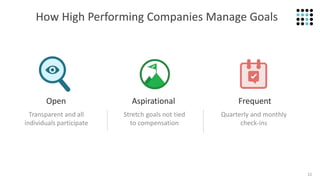
How High Performing Companies Manage Goals
Open
Transparent and all
individuals participate
Aspirational
Stretch goals not tied
to compensation
Frequent
Quarterly and monthly
check-ins
12
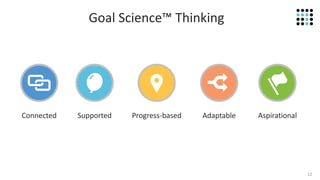
Goal Science™ Thinking
Connected Supported Progress-based Adaptable Aspirational
13
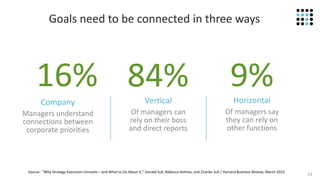
Company
Managers understand
connections between
corporate priorities
Vertical
Of managers can
rely on their boss
and direct reports
Horizontal
Of managers say
they can rely on
other functions
16% 84% 9%
Goals need to be connected in three ways
Source: “Why Strategy Execution Unravels – and What to Do About It,” Donald Sull, Rebecca Holmes, and Charles Sull / Harvard Business Review, March 2015.
14
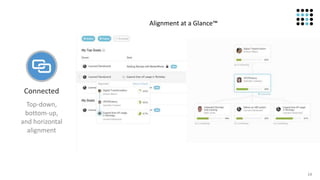
Alignment at a Glance™
Connected
Top-down,
bottom-up,
and horizontal
alignment
15
0
20
40
60
80
100
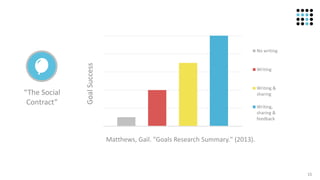
Goal success
Matthews, Gail. "Goals Research Summary." (2013).
No writing
Writing
Writing &
sharing
Writing,
sharing &
feedback
GoalSuccess“The Social
Contract”
16
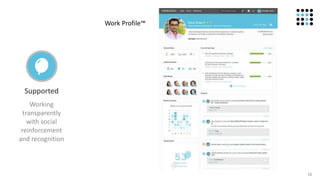
Supported
Working
transparently
with social
reinforcement
and recognition
Work Profile™
17
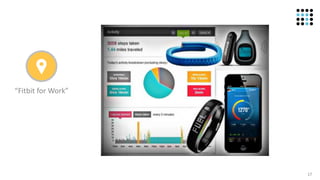
“Fitbit for Work”
18
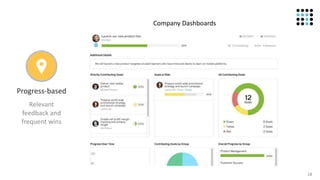
Company Dashboards
Relevant
feedback and
frequent wins
Progress-based
19
“Shoot the Moon”
20
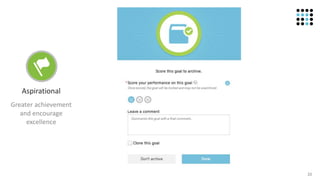
Aspirational
Greater achievement
and encourage
excellence
21
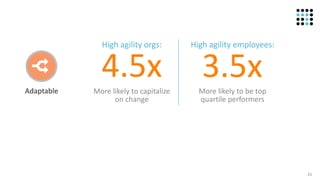
Adaptable
High agility orgs:
More likely to capitalize
on change
High agility employees:
More likely to be top
quartile performers
4.5x 3.5x
22
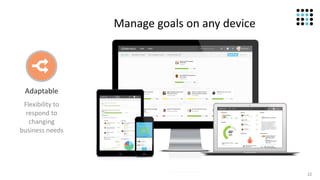
Flexibility to
respond to
changing
business needs
Adaptable
Manage goals on any device
2323

Achieving Growth with Goals

  • 1.
    1 The journey toachieving operational excellence Achieving Growth with Goals Matthew Hart @matthewj_hart @betterworks
  • 2.
    2 Align goals vertically, cross-functionally, andwith your company’s strategic plan.
  • 3.
    33 70% of today’sworkforce is failing to reach their full potential every day. Ideas are relatively easy, but it’s execution that is everything. You need to get the team aligned and ensure they’re working together on the priorities that really matter to the larger goals of the business. John Doerr General Partner at KPCB
  • 4.
    4 Business Changes areHeightening Goal Importance 1. Business environments are evolving rapidly 2. Organizations are increasingly transparent 3. Employees are increasingly autonomous 4. Employees are increasingly working in teams 5. Employee engagement is extremely low 6. There is a movement toward quantifying performance Source: “High-Impact Performance Management Using Goals to Focus the 21st-Century Workforce,” Stacia Sherman Garr / Bersin by Deloitte, December 2014.
  • 5.
    5 Board of Directors/ CEO Executive Team / Senior Leaders Business Leaders Team Managers Team Leaders Individual Contributors An Overview of Traditional Goal Cascading
  • 6.
    6 SVP VP Director Director VP Director Director VP Director Director Underlying Assumption ofTraditional Approach Network is much more aligned to the reality of how work is done Hierarchy… …Not Network
  • 7.
    7 Senior Leaders Revise theirgoals throughout the year Managers Revise their goals throughout the year Employees Revise their goals in a given year 1 in 2 1 in 3 1 in 5 Employees Fail to Revise Goals at Same Rate that Goals Change Source: “High-Impact Performance Management Using Goals to Focus the 21st-Century Workforce,” Stacia Sherman Garr / Bersin by Deloitte, December 2014.
  • 8.
    8 Challenges to OperationalExcellence and Employee Engagement Executives • Lack of alignment and accountability • Teams wasting up to 25% on non-critical projects • Hard to get visibility on problem areas Individuals • Feel disengaged and unmotivated • Busy yet working on the wrong things • Desire more feedback and recognition Managers • Reactive, putting out fires, constant distraction • Costly communication overhead with Excel, Word, Google Docs • Lack of tools to drive performance
  • 9.
    9 Our goal isto drive companies to become operationally excellent and provide powerful insights about how work gets done. ®
  • 10.
    7 Steps toAchieving Operational Excellence 1 2 3 4 5 6 7 Accountability • Strategic goals set • Goals are documented Clarity • Communication • Company goals • Team goals Alignment • Connectedness • Dashboards Engagement • Monthly check-ins • Quarterly • Optimize with Goal Science Execution & Results • Real-time updates • Progress tracking Agility • Develop Goal muscle Aspiration • Based on pass accomplishments • Growth mindset
  • 11.
    11 How High PerformingCompanies Manage Goals Open Transparent and all individuals participate Aspirational Stretch goals not tied to compensation Frequent Quarterly and monthly check-ins
  • 12.
    12 Goal Science™ Thinking ConnectedSupported Progress-based Adaptable Aspirational
  • 13.
    13 Company Managers understand connections between corporatepriorities Vertical Of managers can rely on their boss and direct reports Horizontal Of managers say they can rely on other functions 16% 84% 9% Goals need to be connected in three ways Source: “Why Strategy Execution Unravels – and What to Do About It,” Donald Sull, Rebecca Holmes, and Charles Sull / Harvard Business Review, March 2015.
  • 14.
    14 Alignment at aGlance™ Connected Top-down, bottom-up, and horizontal alignment
  • 15.
    15 0 20 40 60 80 100 Goal success Matthews, Gail."Goals Research Summary." (2013). No writing Writing Writing & sharing Writing, sharing & feedback GoalSuccess“The Social Contract”
  • 16.
  • 17.
  • 18.
  • 19.
  • 20.
  • 21.
    21 Adaptable High agility orgs: Morelikely to capitalize on change High agility employees: More likely to be top quartile performers 4.5x 3.5x
  • 22.
    22 Flexibility to respond to changing businessneeds Adaptable Manage goals on any device
  • 23.