How Science Addresses  Developing World Issues
Introduction Dr Matthew Cockerill - BioMed Central Knowledge as a weapon in the struggle against malaria in sub-Saharan Africa Dr Colin Sutherland - London School of Hygiene and Tropical Medicine The role of the media in tackling disease in the developing world Mr David Dickson - SciDev.Net Building a generation of future environmentalists in developing countries Mr Jib Hagan - CARE Computers for Developing Countries How open access research has been adopted in the developing world Ms Barbara Kirsop - Electronic Publishing Trust for Development Outline of session
Sharing knowledge
Knowledge is power
“ Many developing countries remain poor largely because they let the Industrial Revolution pass them by. They can ill afford to miss the information technology revolution.” M. S. Swaminathan, “Father of the Green Revolution”
Digital divide or digital bridge?
 
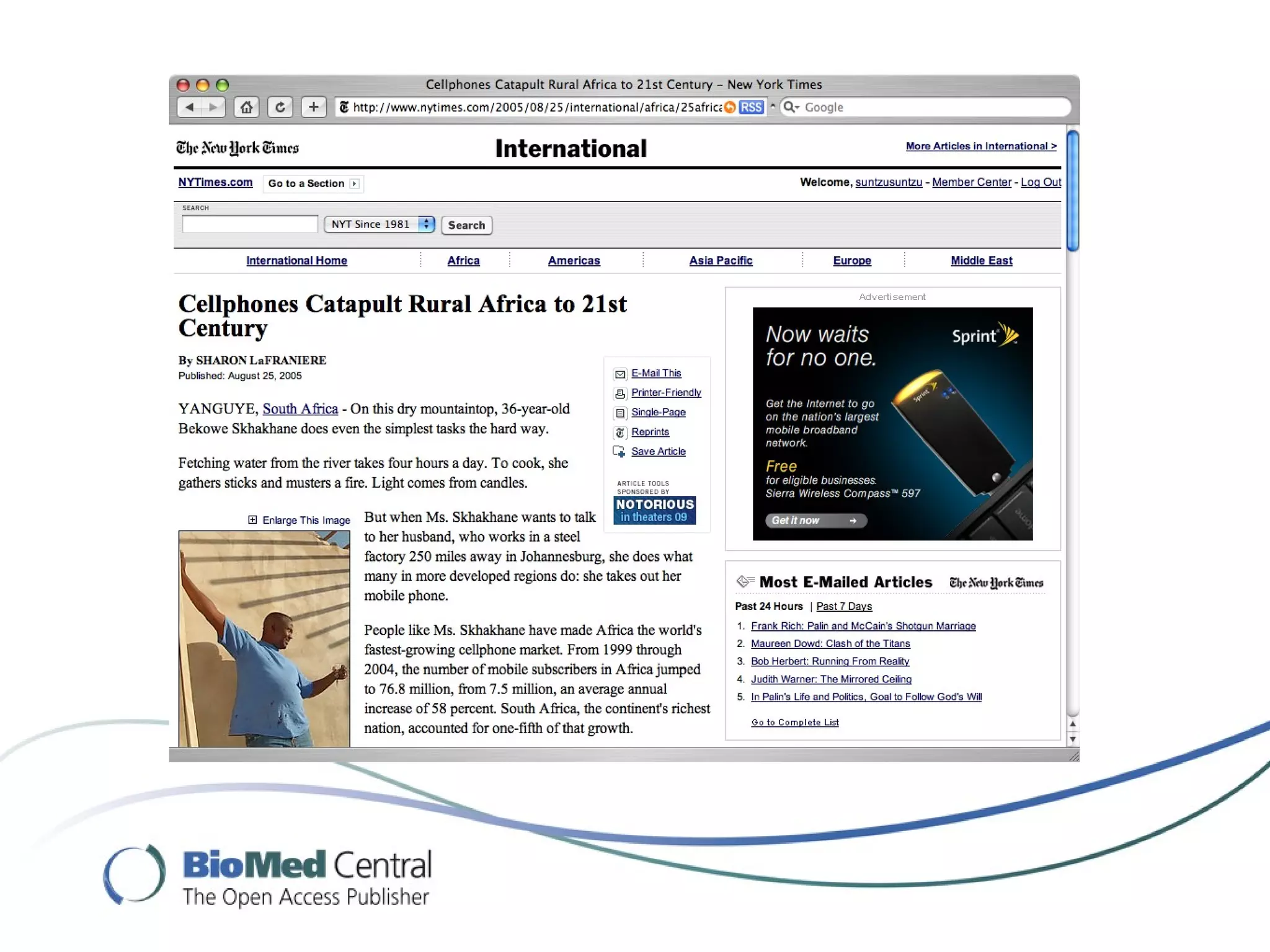
Mobile phones in Africa Source: African Mobile Factbook 2008
SMS messaging for trading
Increasing use of PDAs and mobile phone networks for data gathering
The founders of 03b Networks recently helped pioneer the first commercial 3G mobile and fibre-to-the-home networks in Rwanda The company said the system will enable the spread of locally generated content and e-learning, encouraging social and economic growth in the developing world. It aims to tap into booming mobile phone usage in the developing world
In what areas can increased access to knowledge help?
UN Millenium Development Goals Reduce child mortality,Improve maternal health Combat HIV/AIDS, malaria, and other diseases Ensure environmental sustainability Develop a global partnership for development
Who needs access to the results of research? Public Professionals Researchers
What is open access publishing? Traditional journals take ownership of the research provide access to subscribers only Open access journals have no subscription barriers take advantage of the economics of the internet to allow universal access research is openly licensed to allow reuse
Who pays? Open access journals do have costs Publication fee is a very small fraction of the cost of doing research Most open access publishers, including BioMed Central, give waivers to developing countries In other cases, open access journals have central support, so no charges for authors or readers
About BioMed Central Pioneer of open access model Launched first journals in 2000 Now publish >180 OA titles >40,000 peer-reviewed OA articles published  All research articles published under Creative Commons licence.  Reuse and redistribution is encouraged.
Research on global health issues is expanding Resources channeled into research on developing world health issues have increased significantly in recent years A direct and an indirect result of philanthropic initiatives
Why use is the research if the people it is most relevant to don’t have access?
US National Institutes of Health Howard Hughes Medical Institute Wellcome Trust  Medical Research Council European Research Council EC Seventh Framework Program Funders are now  requiring  open access
Open Access in practice
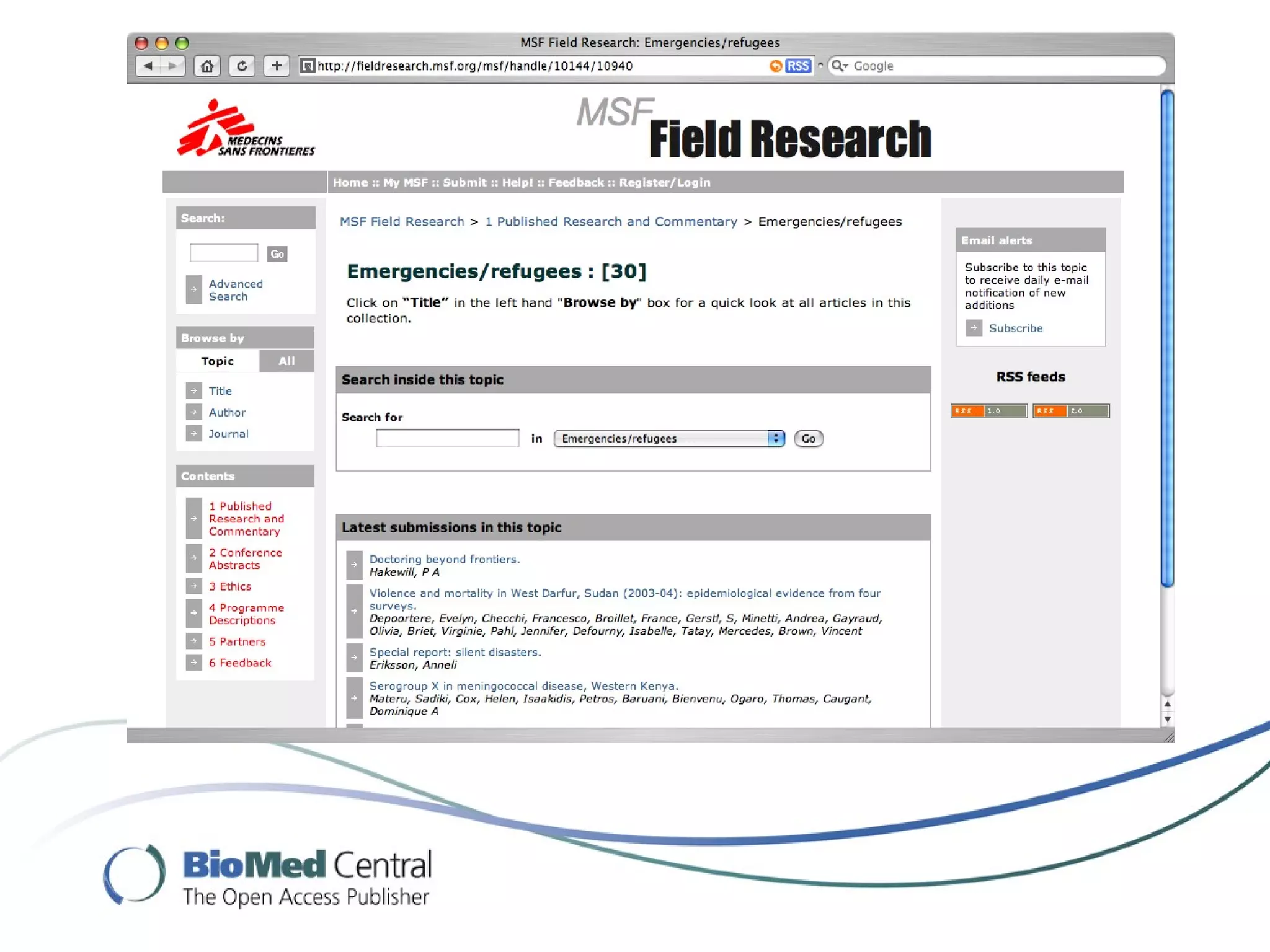
Repositories of open content
 
 
Open Access journals
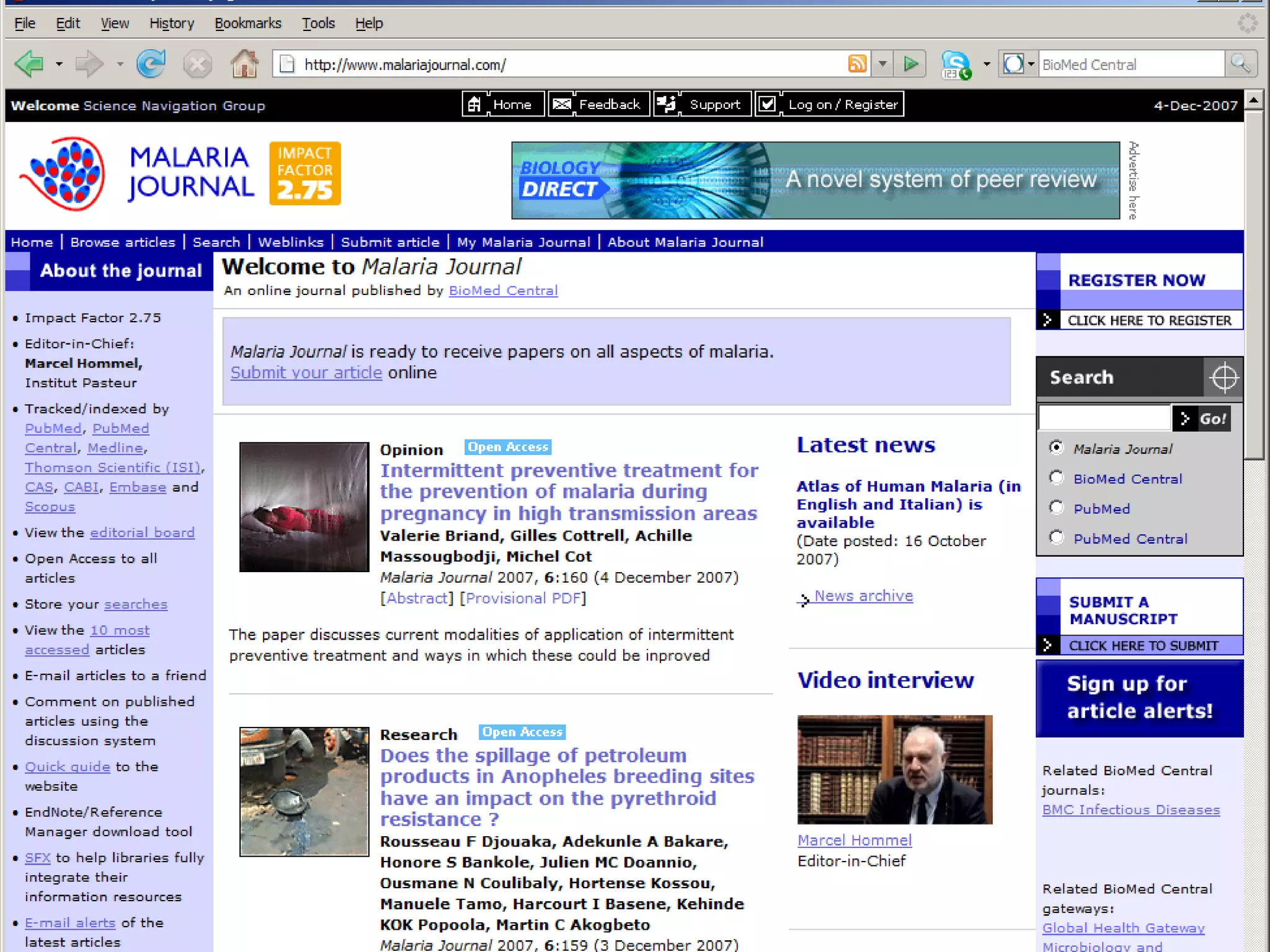
Malaria Journal home page
A highly accessed  Malaria Journal  article 10,000+ downloads 22 citations
Where are papers on malaria published ?
How accessible is malaria research as a whole? Looking at the biomedical literature, around 9% of articles are immediately “open access” 18 months ago it was 6% For malaria research it has been rapidly increasing and is now 27%!
Other tropical diseases….
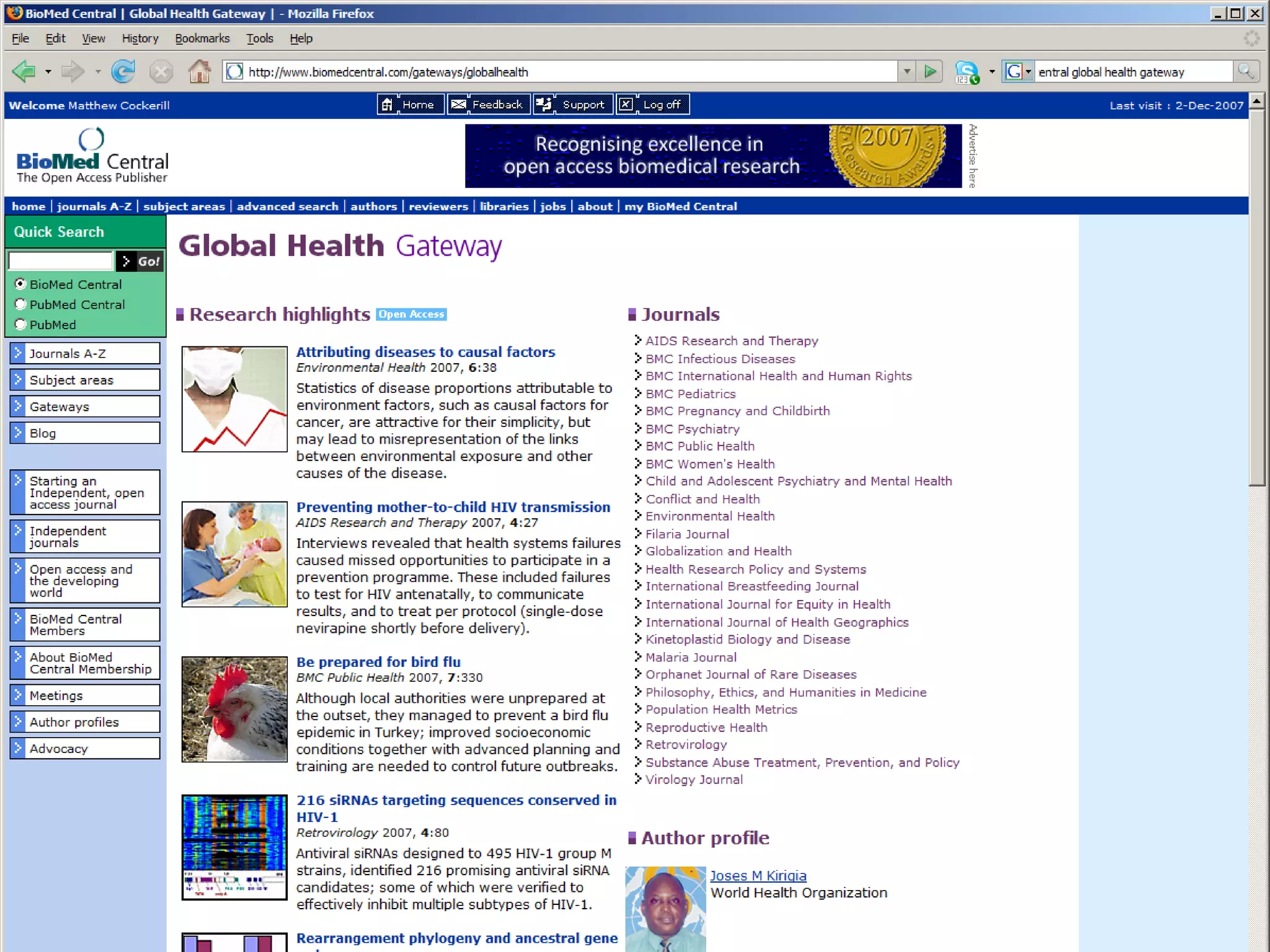
The latest open access research on global health issues
A knowledge commons
Malaria Journal’s  author-base is geographically diverse
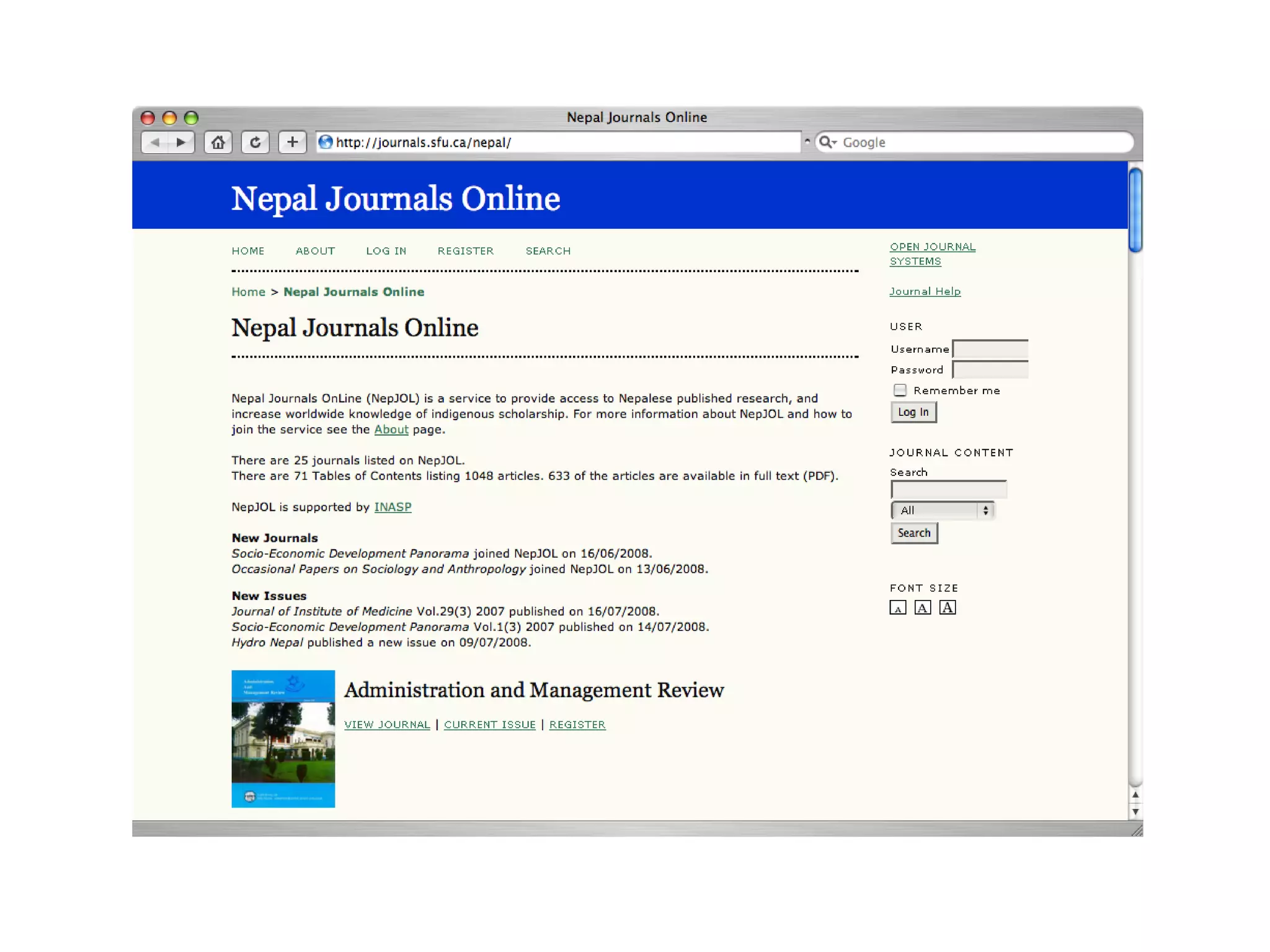
Local journals are going global via Open Access


Stories from the developing world
The benefits of open access for the developing world
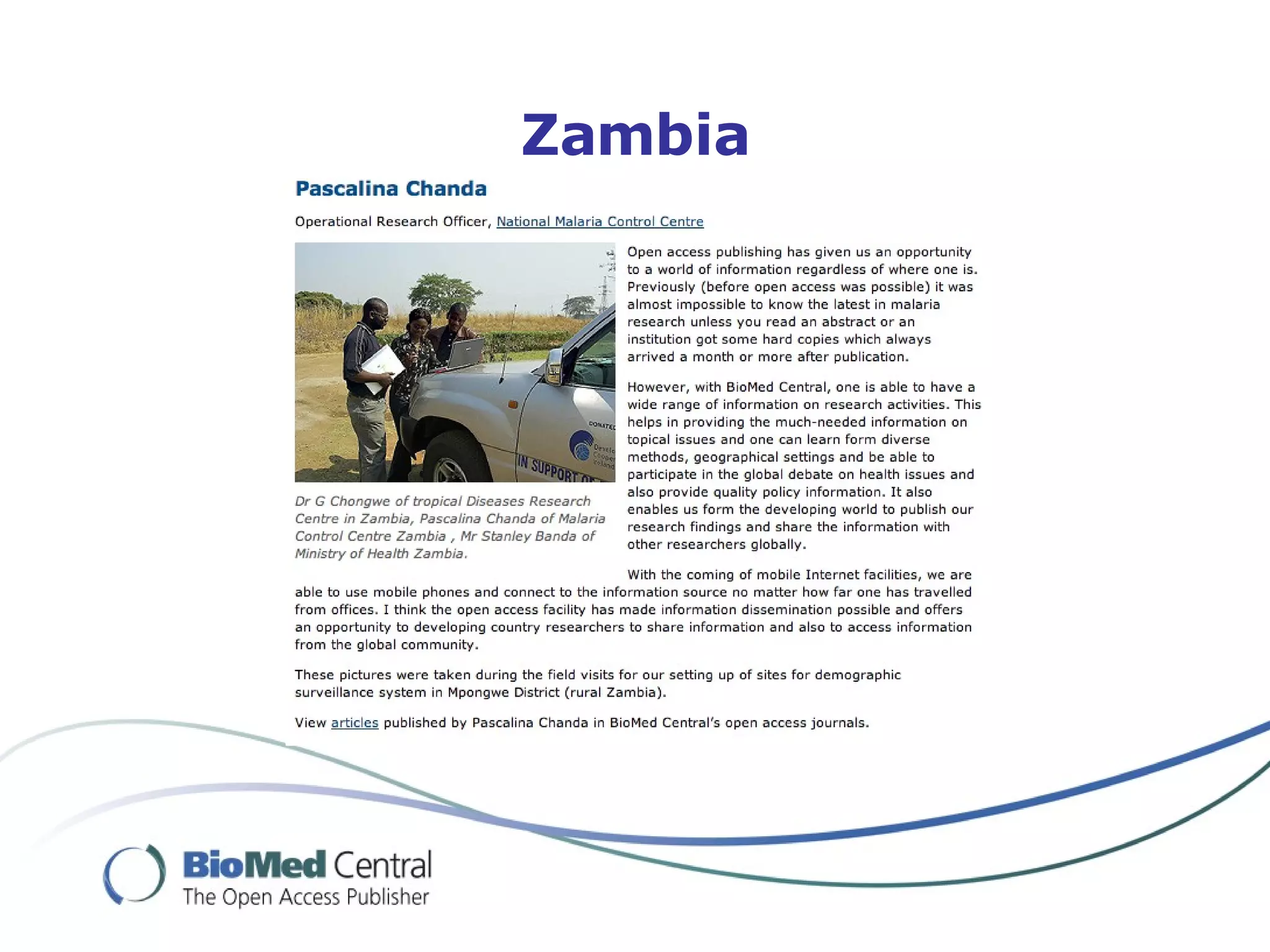
Zambia
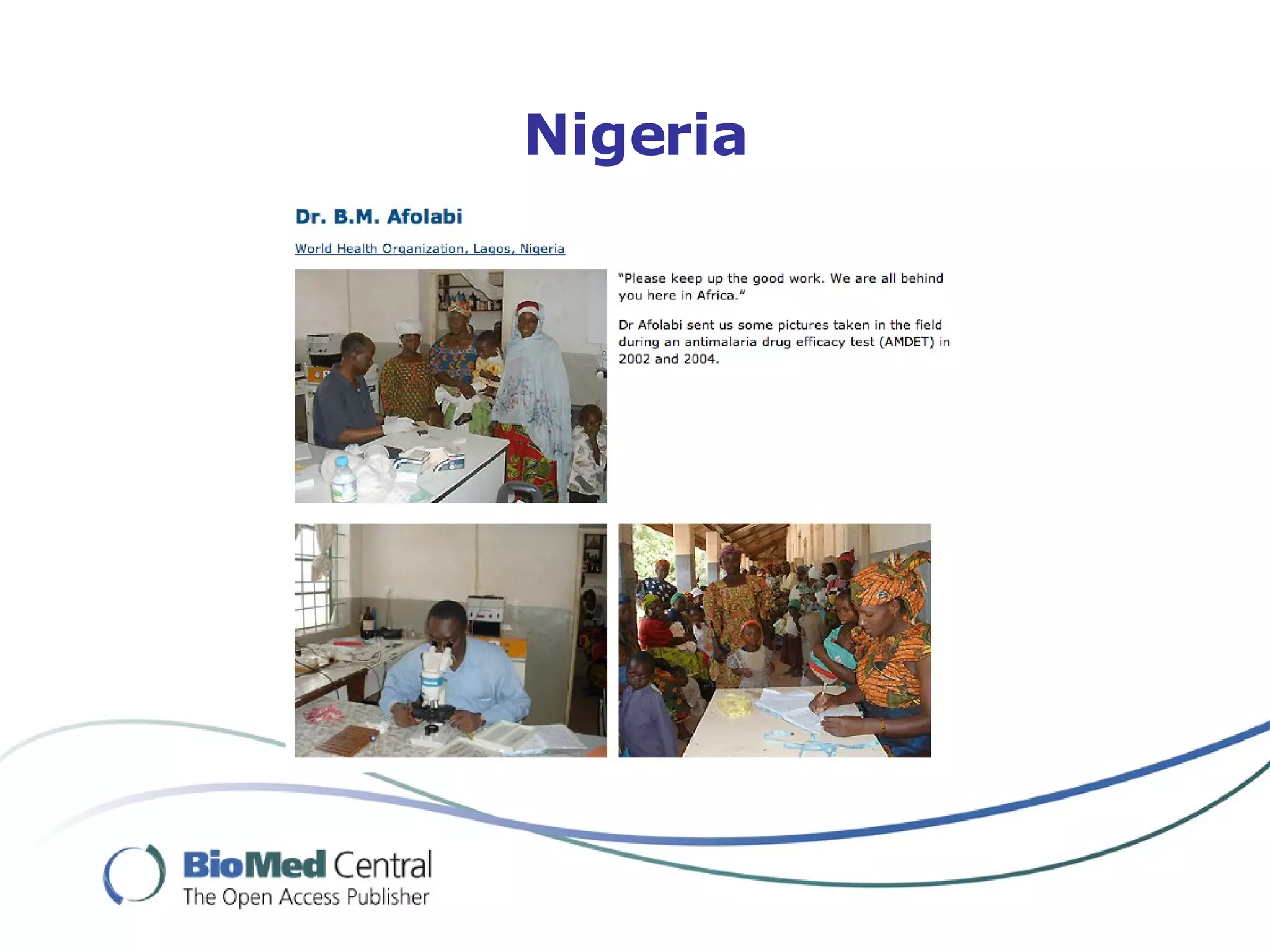
Nigeria
The Gambia

Matt Cockerill

  • 1.
    How Science Addresses Developing World Issues
  • 2.
    Introduction Dr Matthew Cockerill- BioMed Central Knowledge as a weapon in the struggle against malaria in sub-Saharan Africa Dr Colin Sutherland - London School of Hygiene and Tropical Medicine The role of the media in tackling disease in the developing world Mr David Dickson - SciDev.Net Building a generation of future environmentalists in developing countries Mr Jib Hagan - CARE Computers for Developing Countries How open access research has been adopted in the developing world Ms Barbara Kirsop - Electronic Publishing Trust for Development Outline of session
  • 3.
  • 4.
  • 5.
    “ Many developingcountries remain poor largely because they let the Industrial Revolution pass them by. They can ill afford to miss the information technology revolution.” M. S. Swaminathan, “Father of the Green Revolution”
  • 6.
    Digital divide ordigital bridge?
  • 7.
  • 8.
    Mobile phones inAfrica Source: African Mobile Factbook 2008
  • 9.
  • 10.
    Increasing use ofPDAs and mobile phone networks for data gathering
  • 11.
    The founders of03b Networks recently helped pioneer the first commercial 3G mobile and fibre-to-the-home networks in Rwanda The company said the system will enable the spread of locally generated content and e-learning, encouraging social and economic growth in the developing world. It aims to tap into booming mobile phone usage in the developing world
  • 12.
    In what areascan increased access to knowledge help?
  • 13.
    UN Millenium DevelopmentGoals Reduce child mortality,Improve maternal health Combat HIV/AIDS, malaria, and other diseases Ensure environmental sustainability Develop a global partnership for development
  • 14.
    Who needs accessto the results of research? Public Professionals Researchers
  • 15.
    What is openaccess publishing? Traditional journals take ownership of the research provide access to subscribers only Open access journals have no subscription barriers take advantage of the economics of the internet to allow universal access research is openly licensed to allow reuse
  • 16.
    Who pays? Openaccess journals do have costs Publication fee is a very small fraction of the cost of doing research Most open access publishers, including BioMed Central, give waivers to developing countries In other cases, open access journals have central support, so no charges for authors or readers
  • 17.
    About BioMed CentralPioneer of open access model Launched first journals in 2000 Now publish >180 OA titles >40,000 peer-reviewed OA articles published All research articles published under Creative Commons licence. Reuse and redistribution is encouraged.
  • 18.
    Research on globalhealth issues is expanding Resources channeled into research on developing world health issues have increased significantly in recent years A direct and an indirect result of philanthropic initiatives
  • 19.
    Why use isthe research if the people it is most relevant to don’t have access?
  • 20.
    US National Institutesof Health Howard Hughes Medical Institute Wellcome Trust Medical Research Council European Research Council EC Seventh Framework Program Funders are now requiring open access
  • 21.
  • 22.
  • 23.
  • 24.
  • 25.
  • 26.
  • 27.
    A highly accessed Malaria Journal article 10,000+ downloads 22 citations
  • 28.
    Where are paperson malaria published ?
  • 29.
    How accessible ismalaria research as a whole? Looking at the biomedical literature, around 9% of articles are immediately “open access” 18 months ago it was 6% For malaria research it has been rapidly increasing and is now 27%!
  • 30.
  • 31.
    The latest openaccess research on global health issues
  • 32.
  • 33.
    Malaria Journal’s author-base is geographically diverse
  • 34.
    Local journals aregoing global via Open Access
  • 35.
  • 36.
  • 37.
  • 38.
    Stories from thedeveloping world
  • 39.
    The benefits ofopen access for the developing world
  • 40.
  • 41.
  • 42.