Nordic Food Lab
A Gastronomic Perspective to Food
           Innovation

          Presentation
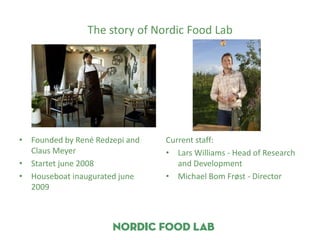
The story of Nordic Food Lab


• Founded by René Redzepi and   Current staff:
  Claus Meyer                   • Lars Williams - Head of Research
• Startet june 2008                and Development
• Houseboat inaugurated june    • Michael Bom Frøst - Director
  2009
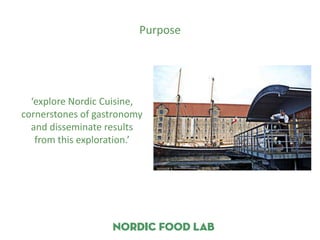
Purpose


  ‘explore Nordic Cuisine,
cornerstones of gastronomy
  and disseminate results
   from this exploration.’
Manifesto for the New Nordic Kitchen
As Nordic chefs we find that the time has now come for us to create a New Nordic Kitchen, which in virtue of its
good taste and special character compares favorable with the standard of the greatest kitchens of the world.

The aims of New Nordic Cuisine are:
1. To express the purity, freshness, simplicity and ethics we wish to associate with our region.
2. To reflect the changing of the seasons in the meals we make.
3. To base our cooking on ingredients and produce whose characteristics are particularly excellent in our
climates, landscapes and waters.
4. To combine the demand for good taste with modern knowledge of health and well-being.
5. To promote Nordic products and the variety of Nordic producers – and to spread the word about their
underlying cultures.
6. To promote animal welfare and a sound production process in our seas, on our farmland and in the wild.
7. To develop potentially new applications of traditional Nordic food products.
8. To combine the best in Nordic cookery and culinary traditions with impulses from abroad.
9. To combine local self-sufficiency with regional sharing of high-quality products.
10. To join forces with consumer representatives, other cooking craftsmen, agriculture, the fishing, food , retail
and wholesale industries, researchers, teachers, politicians and authorities on this project for the benefit and
advantage of everyone in the Nordic countries.

Full Danish Version
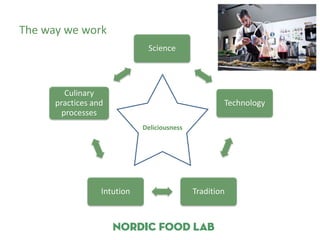
The way we work
                              Science


         Culinary
      practices and                                  Technology
        processes
                             Deliciousness


                  Intution                   Tradition
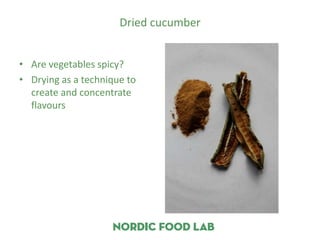
Dried cucumber


• Are vegetables spicy?
• Drying as a technique to
  create and concentrate
  flavours
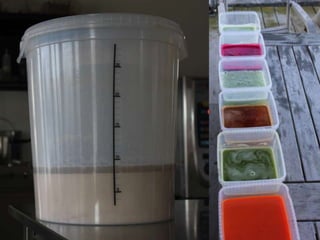
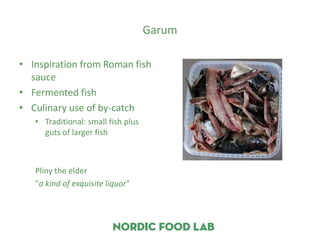
Garum

• Inspiration from Roman fish
  sauce
• Fermented fish
• Culinary use of by-catch
   • Traditional: small fish plus
     guts of larger fish


   Pliny the elder
   "a kind of exquisite liquor"
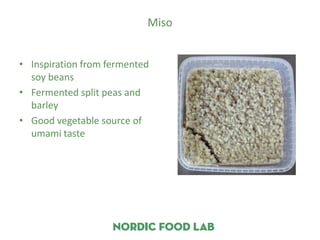
Miso


• Inspiration from fermented
  soy beans
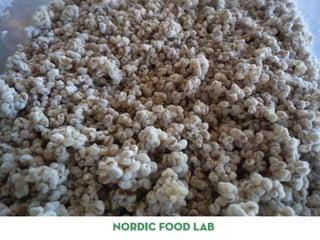
• Fermented split peas and
  barley
• Good vegetable source of
  umami taste
INITIATIVES BEYOND noma
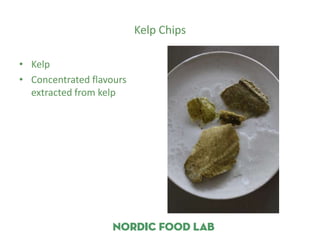
Kelp Chips

• Kelp
• Concentrated flavours
  extracted from kelp
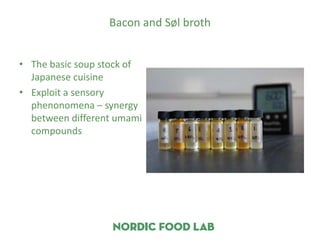
Bacon and Søl broth


• The basic soup stock of
  Japanese cuisine
• Exploit a sensory
  phenonomena – synergy
  between different umami
  compounds
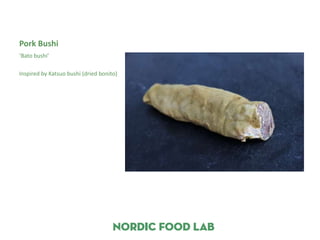
Pork Bushi
‘Bato bushi’

Inspired by Katsuo bushi (dried bonito)
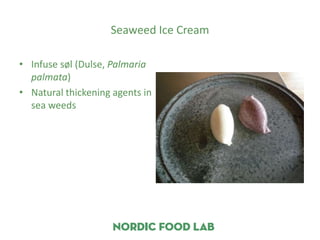
Seaweed Ice Cream

• Infuse søl (Dulse, Palmaria
  palmata)
• Natural thickening agents in
  sea weeds
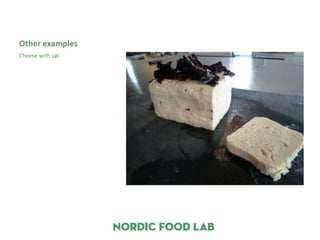
Other examples
Cheese with søl
Furthers Questions?


THANK YOU FOR YOUR ATTENTION

Lars Williams- Flavour Launch

  • 2.
    Nordic Food Lab AGastronomic Perspective to Food Innovation Presentation
  • 4.
    The story ofNordic Food Lab • Founded by René Redzepi and Current staff: Claus Meyer • Lars Williams - Head of Research • Startet june 2008 and Development • Houseboat inaugurated june • Michael Bom Frøst - Director 2009
  • 5.
    Purpose ‘exploreNordic Cuisine, cornerstones of gastronomy and disseminate results from this exploration.’
  • 6.
    Manifesto for theNew Nordic Kitchen As Nordic chefs we find that the time has now come for us to create a New Nordic Kitchen, which in virtue of its good taste and special character compares favorable with the standard of the greatest kitchens of the world. The aims of New Nordic Cuisine are: 1. To express the purity, freshness, simplicity and ethics we wish to associate with our region. 2. To reflect the changing of the seasons in the meals we make. 3. To base our cooking on ingredients and produce whose characteristics are particularly excellent in our climates, landscapes and waters. 4. To combine the demand for good taste with modern knowledge of health and well-being. 5. To promote Nordic products and the variety of Nordic producers – and to spread the word about their underlying cultures. 6. To promote animal welfare and a sound production process in our seas, on our farmland and in the wild. 7. To develop potentially new applications of traditional Nordic food products. 8. To combine the best in Nordic cookery and culinary traditions with impulses from abroad. 9. To combine local self-sufficiency with regional sharing of high-quality products. 10. To join forces with consumer representatives, other cooking craftsmen, agriculture, the fishing, food , retail and wholesale industries, researchers, teachers, politicians and authorities on this project for the benefit and advantage of everyone in the Nordic countries. Full Danish Version
  • 7.
    The way wework Science Culinary practices and Technology processes Deliciousness Intution Tradition
  • 15.
    Dried cucumber • Arevegetables spicy? • Drying as a technique to create and concentrate flavours
  • 16.
    Garum • Inspiration fromRoman fish sauce • Fermented fish • Culinary use of by-catch • Traditional: small fish plus guts of larger fish Pliny the elder "a kind of exquisite liquor"
  • 17.
    Miso • Inspiration fromfermented soy beans • Fermented split peas and barley • Good vegetable source of umami taste
  • 20.
  • 22.
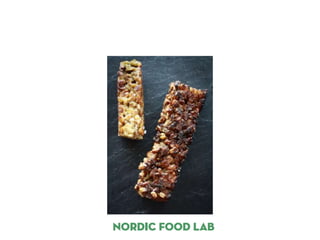
    Kelp Chips • Kelp •Concentrated flavours extracted from kelp
  • 23.
    Bacon and Sølbroth • The basic soup stock of Japanese cuisine • Exploit a sensory phenonomena – synergy between different umami compounds
  • 24.
    Pork Bushi ‘Bato bushi’ Inspiredby Katsuo bushi (dried bonito)
  • 25.
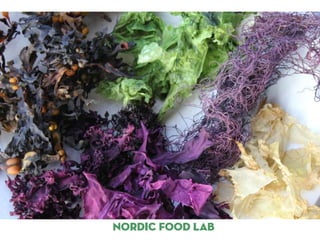
    Seaweed Ice Cream •Infuse søl (Dulse, Palmaria palmata) • Natural thickening agents in sea weeds
  • 26.
  • 28.