Education 
programs 
Business 
plan 
Master 
plan 
Technology 
plan 
Communications 
plan
September ‘14 
Describe short-term 
needs for 
December 2014 
November 
‘14 
February ‘15 March ‘15 April ‘15 
Describe 2015 
needs 
Master plan draft 
includes 
2015 – 2018 
requirements 
Exec approval Board approval
Participants 
• Identify relevant participants and stakeholders 
• Diversity – participants chosen from the executive, administration, 
teachers and students 
• Lead by experienced professionals with leadership and facilitation 
skills (Phil Ward) 
• Governance structure 
Board 
Steering committee 
Consultant team PCG 
Vision 
• Define the variables that impact the learning environment 
Mission statement 
• Core values and goals 
• Vision for 2018 
• What courses will be delivered 
• How will the physical environments best achieve this
Demographics 
• Enrolment futures 
• Future outlook 
Education programs 
• Physical environments must have capacity and flexibility to support 
and enhance the L&T process 
• Describe standards for L&T environments 
• Course architectures establish the link between curriculum and 
physical environment 
• This provides the basis for assessment, budget and phasing.
Business plan 
• Structure (including functions and staff numbers) 
• Services 
• Financial sustainability (projected finances-to derive budgets) 
• Capital expenditures 
Technology plan 
• What is the role of IT in teaching and learning, and administration 
• Refer e-learning strategy 
• Describe integration
Assessment 
• Aggregate and evaluate diverse information to understand current condition (suitability) of physical assets. 
Educational adequacy Safety/security Natural light 
Functionality Structure Telecoms 
Capacity Mech/elec/hydraulic Maintainability 
Utilisation Site analysis Acoustic 
Code compliance Maintainability Equal access
Project definition 
• Capital needs are described, scoped, prioritised and sequenced 
(short, medium, long term) 
• Project plans written 
• Concept plans produced 
• Alternative scenarios examined 
• Cost plans 
• Optimisation analysis
Validation 
• Stakeholder and external expert evaluation and validation 
• Board briefing 
Communication 
• Develop and implement communication strategy
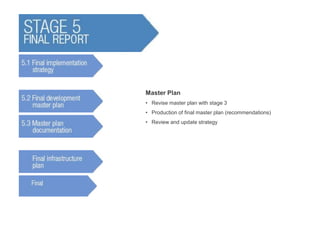
Master Plan 
• Revise master plan with stage 3 
• Production of final master plan (recommendations) 
• Review and update strategy
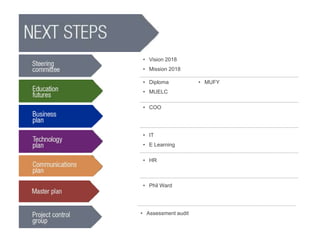
• Vision 2018 
• Mission 2018 
• Diploma 
• MUELC 
• MUFY 
• COO 
• IT 
• E Learning 
• HR 
• Phil Ward 
• Assessment audit

Masterplan pres-4

  • 3.
    Education programs Business plan Master plan Technology plan Communications plan
  • 4.
    September ‘14 Describeshort-term needs for December 2014 November ‘14 February ‘15 March ‘15 April ‘15 Describe 2015 needs Master plan draft includes 2015 – 2018 requirements Exec approval Board approval
  • 5.
    Participants • Identifyrelevant participants and stakeholders • Diversity – participants chosen from the executive, administration, teachers and students • Lead by experienced professionals with leadership and facilitation skills (Phil Ward) • Governance structure Board Steering committee Consultant team PCG Vision • Define the variables that impact the learning environment Mission statement • Core values and goals • Vision for 2018 • What courses will be delivered • How will the physical environments best achieve this
  • 6.
    Demographics • Enrolmentfutures • Future outlook Education programs • Physical environments must have capacity and flexibility to support and enhance the L&T process • Describe standards for L&T environments • Course architectures establish the link between curriculum and physical environment • This provides the basis for assessment, budget and phasing.
  • 7.
    Business plan •Structure (including functions and staff numbers) • Services • Financial sustainability (projected finances-to derive budgets) • Capital expenditures Technology plan • What is the role of IT in teaching and learning, and administration • Refer e-learning strategy • Describe integration
  • 8.
    Assessment • Aggregateand evaluate diverse information to understand current condition (suitability) of physical assets. Educational adequacy Safety/security Natural light Functionality Structure Telecoms Capacity Mech/elec/hydraulic Maintainability Utilisation Site analysis Acoustic Code compliance Maintainability Equal access
  • 9.
    Project definition •Capital needs are described, scoped, prioritised and sequenced (short, medium, long term) • Project plans written • Concept plans produced • Alternative scenarios examined • Cost plans • Optimisation analysis
  • 10.
    Validation • Stakeholderand external expert evaluation and validation • Board briefing Communication • Develop and implement communication strategy
  • 12.
    Master Plan •Revise master plan with stage 3 • Production of final master plan (recommendations) • Review and update strategy
  • 13.
    • Vision 2018 • Mission 2018 • Diploma • MUELC • MUFY • COO • IT • E Learning • HR • Phil Ward • Assessment audit