Evaluating the impact of 
Virtual Reality-based training 
on worker’s competences in the 
mining industry 
Shiva Pedram 
Pascal Perez 
Stephen Palmisano 
September 2014
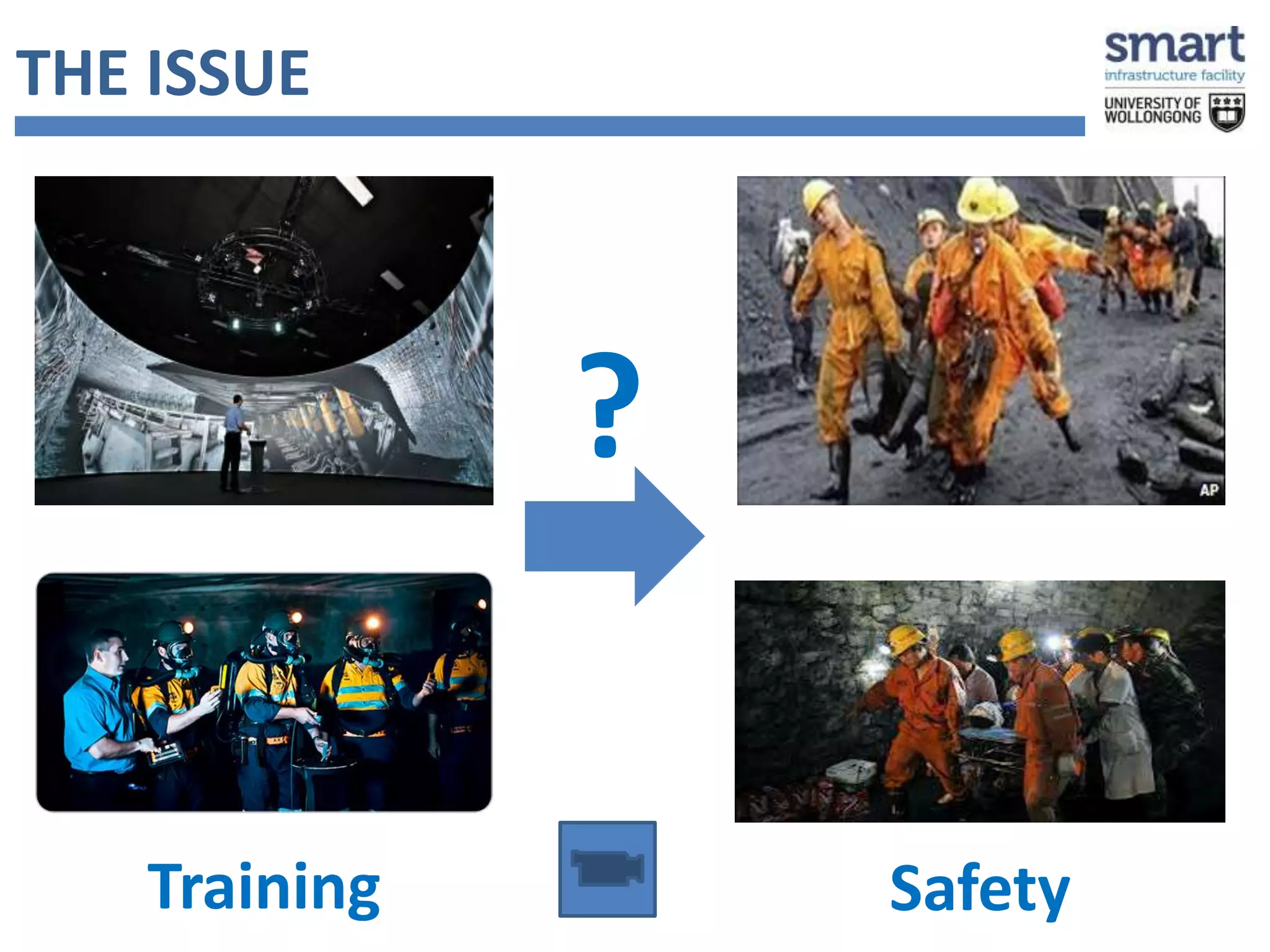
THE ISSUE 
? 
Training Safety
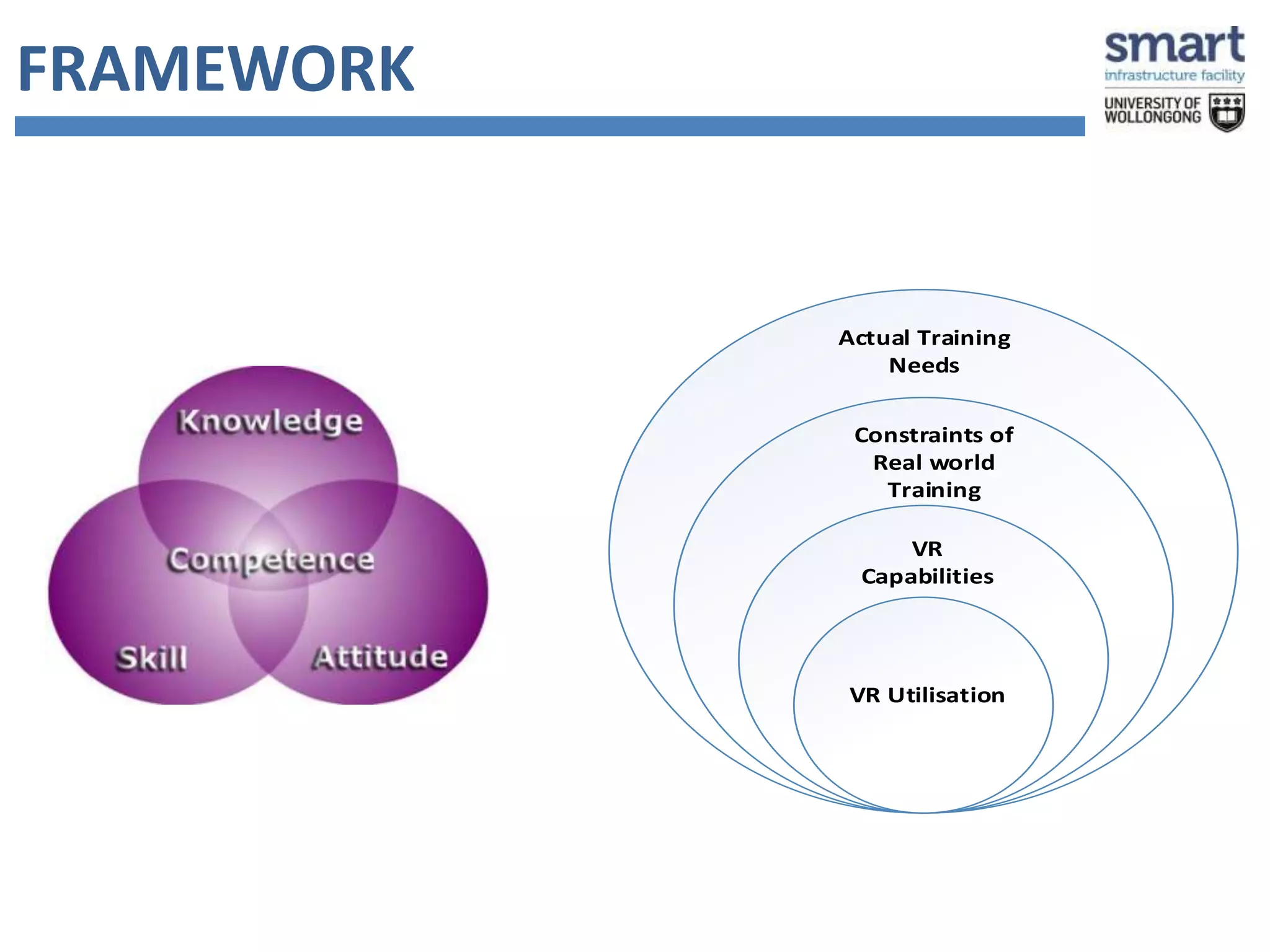
Actual Training 
Needs 
Constraints of 
Real world 
Training 
VR 
Capabilities 
VR Utilisation 
FRAMEWORK
METHODOLOGY 
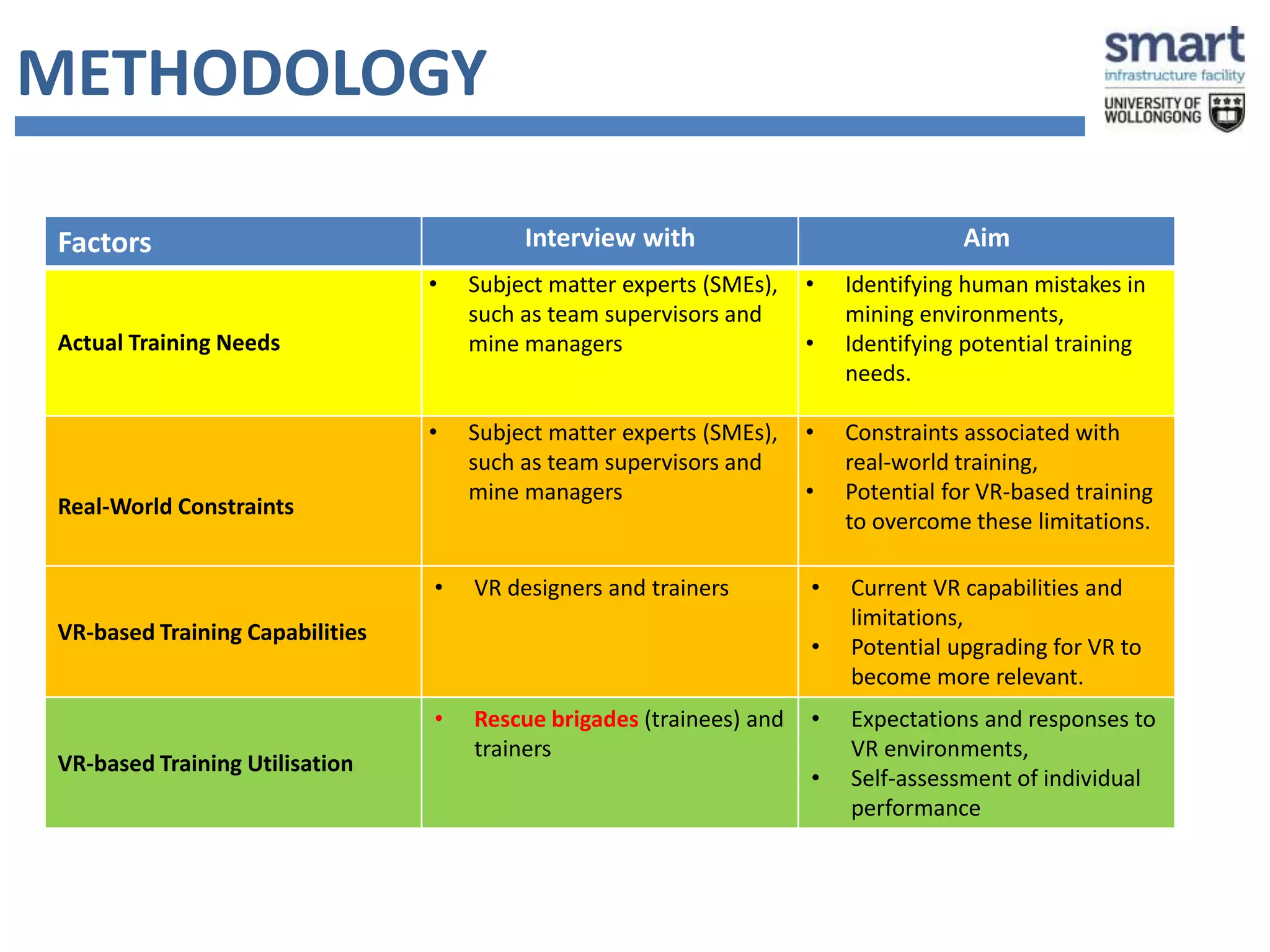
Factors Interview with Aim 
Actual Training Needs 
• Subject matter experts (SMEs), 
such as team supervisors and 
mine managers 
• Identifying human mistakes in 
mining environments, 
• Identifying potential training 
needs. 
Real-World Constraints 
• Subject matter experts (SMEs), 
such as team supervisors and 
mine managers 
• Constraints associated with 
real-world training, 
• Potential for VR-based training 
to overcome these limitations. 
VR-based Training Capabilities 
• VR designers and trainers • Current VR capabilities and 
limitations, 
• Potential upgrading for VR to 
become more relevant. 
VR-based Training Utilisation 
• Rescue brigades (trainees) and 
trainers 
• Expectations and responses to 
VR environments, 
• Self-assessment of individual 
performance
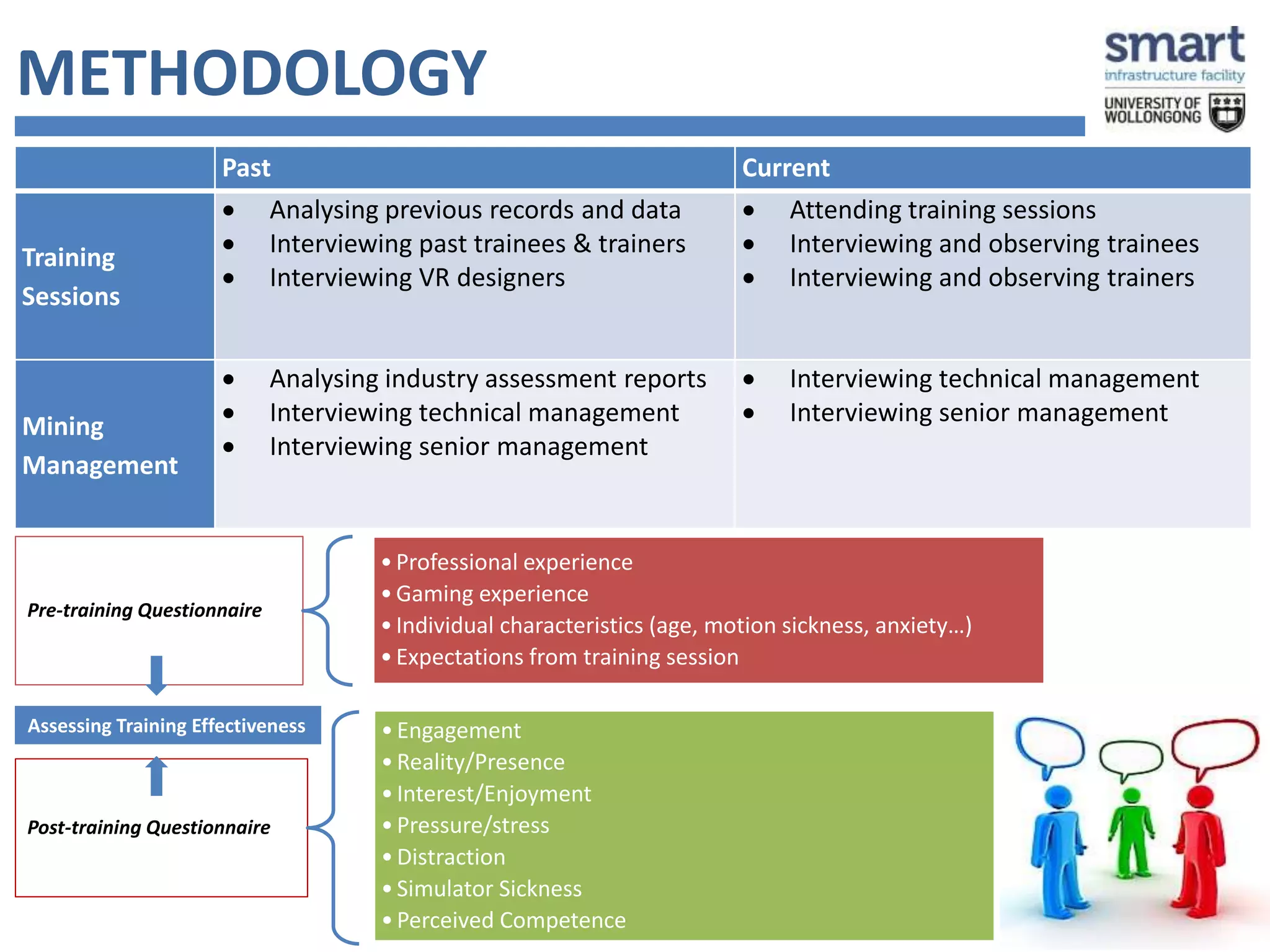
METHODOLOGY 
Past Current 
Training 
Sessions 
 Analysing previous records and data 
 Interviewing past trainees & trainers 
 Interviewing VR designers 
 Attending training sessions 
 Interviewing and observing trainees 
 Interviewing and observing trainers 
Mining 
Management 
 Analysing industry assessment reports 
 Interviewing technical management 
 Interviewing senior management 
 Interviewing technical management 
 Interviewing senior management 
Pre-training Questionnaire 
• Professional experience 
•Gaming experience 
• Individual characteristics (age, motion sickness, anxiety…) 
• Expectations from training session 
Post-training Questionnaire 
• Engagement 
• Reality/Presence 
• Interest/Enjoyment 
• Pressure/stress 
• Distraction 
• Simulator Sickness 
• Perceived Competence 
Assessing Training Effectiveness
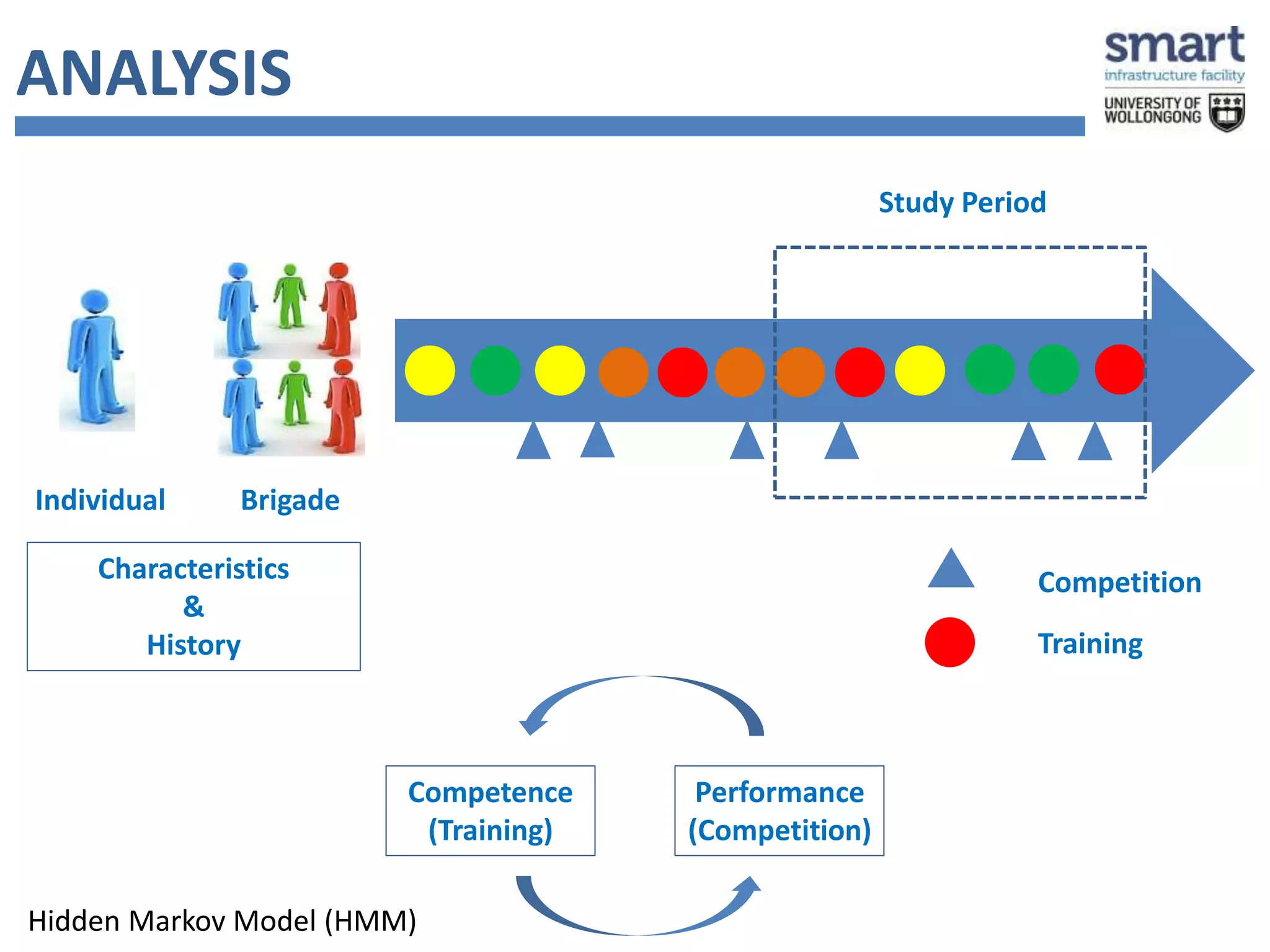
ANALYSIS 
Study Period 
Competition 
Training 
Individual Brigade 
Characteristics 
& 
History 
Performance 
(Competition) 
Competence 
(Training) 
Hidden Markov Model (HMM)
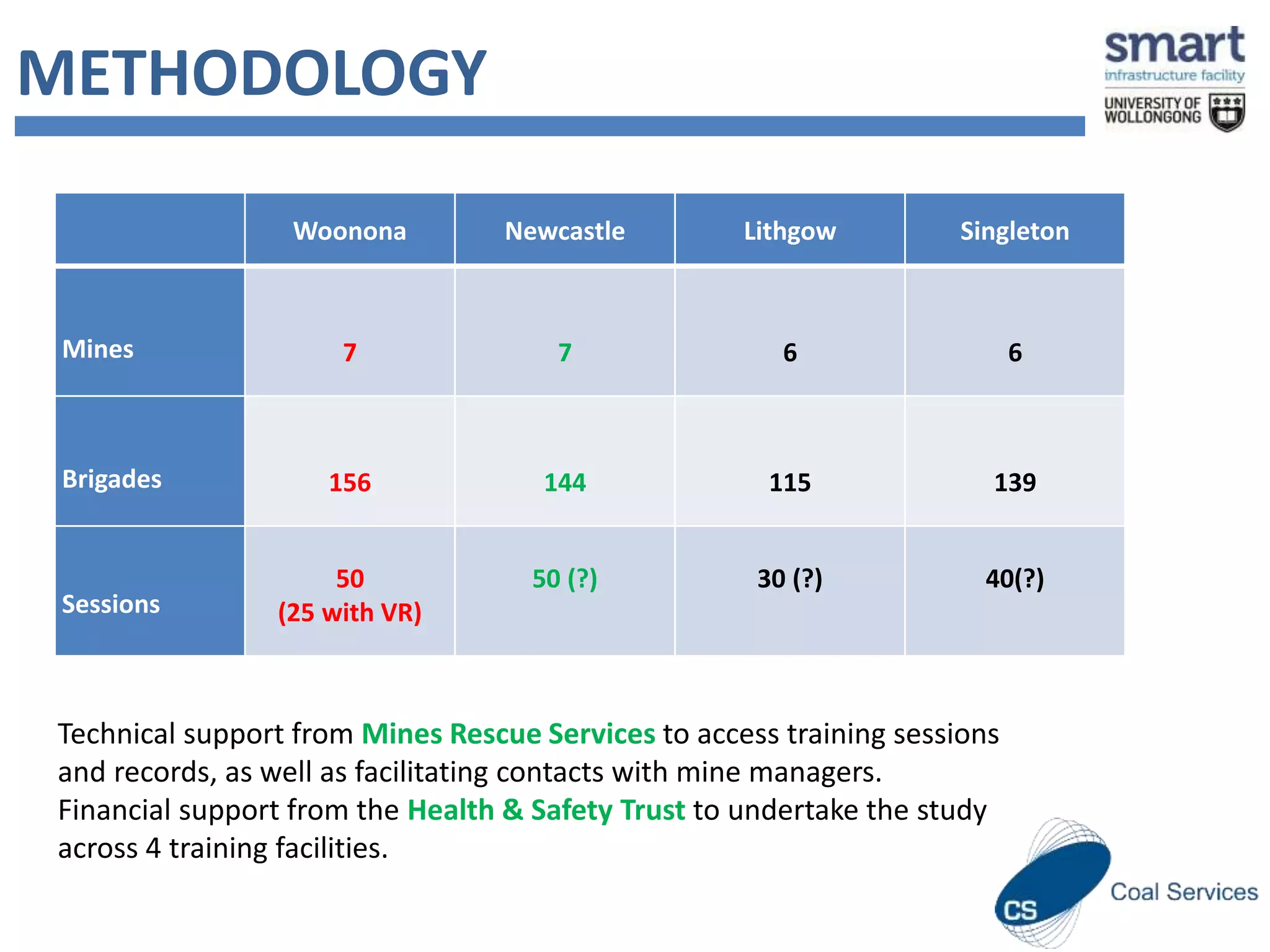
METHODOLOGY 
Woonona Newcastle Lithgow Singleton 
Mines 7 7 6 6 
Brigades 156 144 115 139 
Sessions 
50 
(25 with VR) 
50 (?) 30 (?) 40(?) 
Technical support from Mines Rescue Services to access training sessions 
and records, as well as facilitating contacts with mine managers. 
Financial support from the Health & Safety Trust to undertake the study 
across 4 training facilities.
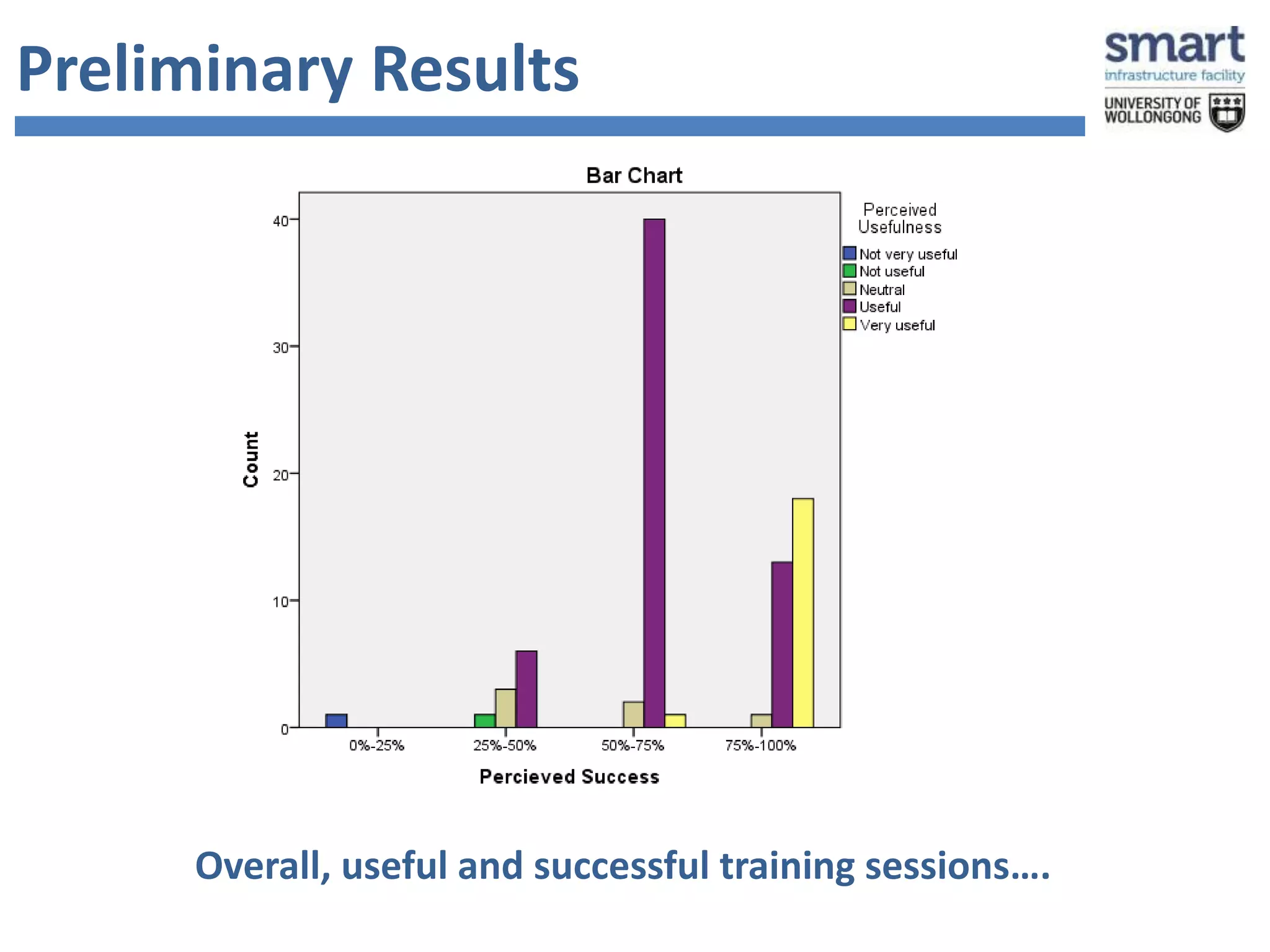
Preliminary Results 
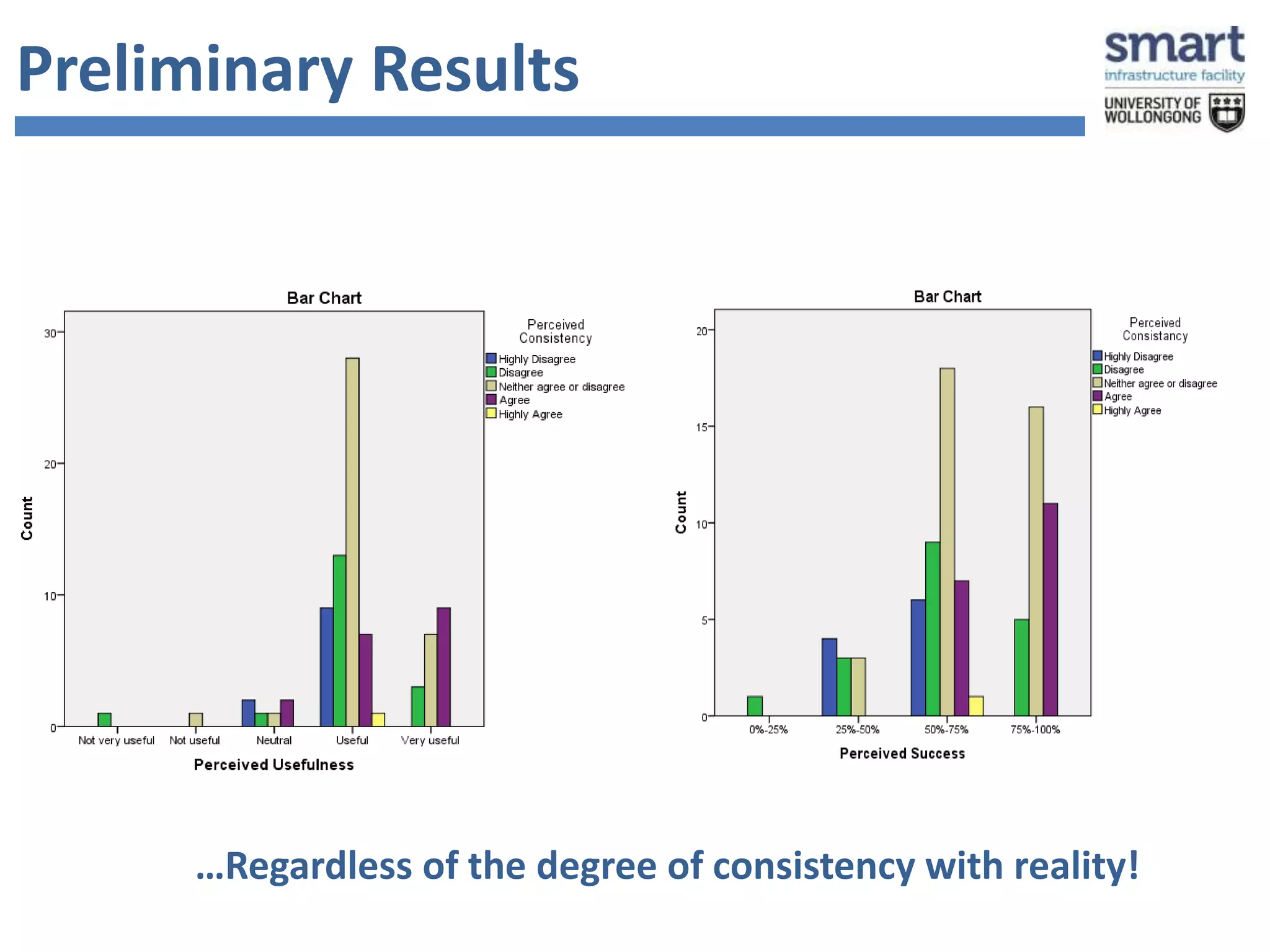
Overall, useful and successful training sessions….
Preliminary Results 
…Regardless of the degree of consistency with reality!
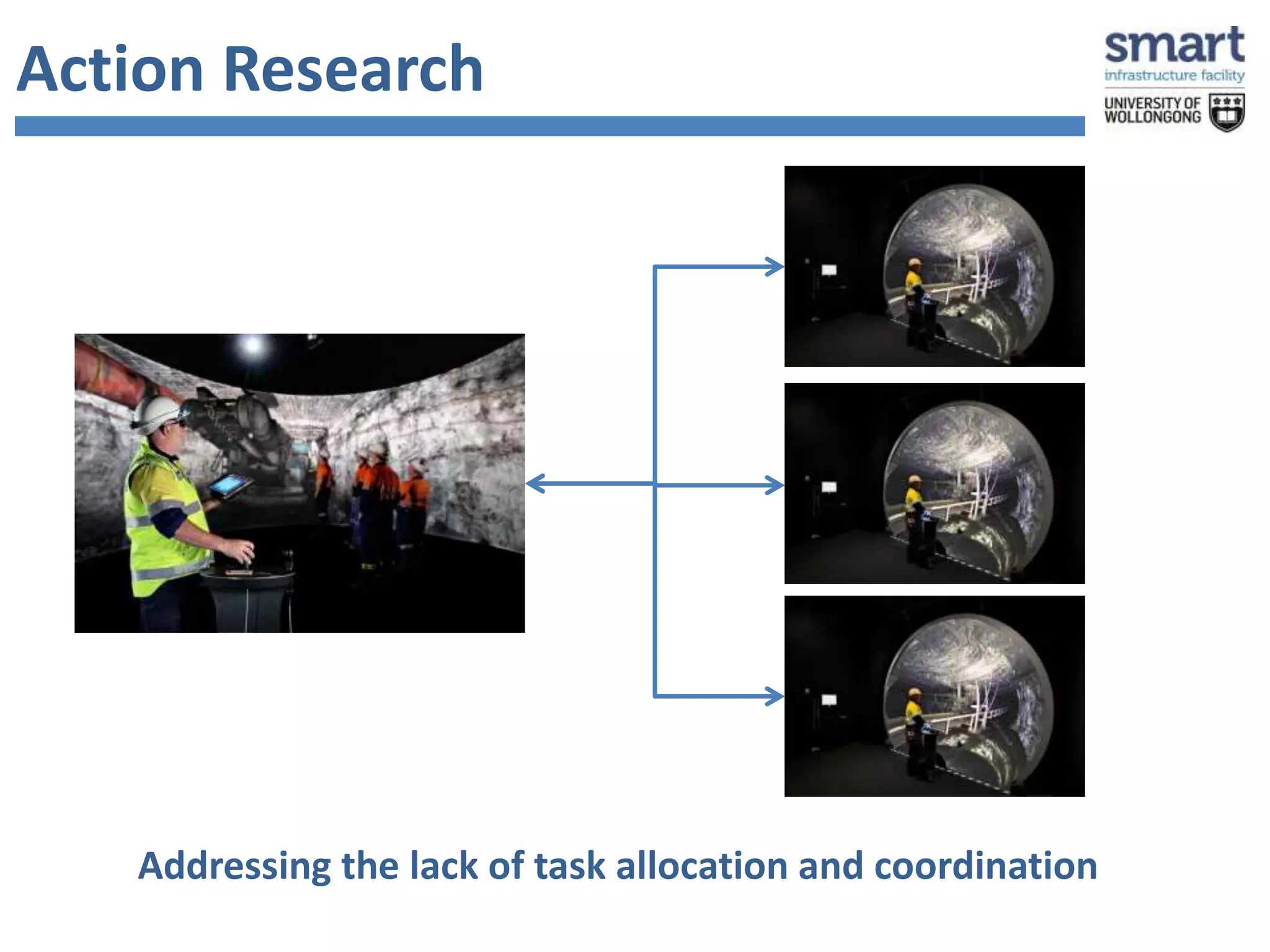
Action Research 
Addressing the lack of task allocation and coordination
RESEARCH OUTCOMES 
Outcome 1 – Better Training 
This study will estimate expected and actual training transfer capacity associated with 
IVR technology and identify the most efficient training sequences. This will help Mines 
Rescue to develop better tailored training programs for existing and future rescue 
brigades. 
Outcome 2 – Better Technology 
This study will provide a better understanding of the gaps between training challenges 
and simulation capabilities. This study will demonstrate Mines Rescue’s dedication to 
upmost quality control of its procedures and outcomes. The findings will also provide 
evidence for investment decisions on training and simulation capacity. 
Outcome 3 – Better People 
This study will provide quantitative evidence of the improved competences of rescue 
brigades over time. Finally, the study will provide ample material for Mines Rescue 
and the coal mining industry to celebrate all the brave individuals who volunteer to 
the Rescue Brigades and give their time to maintain and improve their competences.
Shiva Pedram spedram@uow.edu.au 
Pascal Perez pascal_perez@uow.edu.au 
Stephen Palmisano stephenp@uow.edu.au

Evaluating the impact of Virtual Reality-based training on workers' competences in the mining industry

  • 1.
    Evaluating the impactof Virtual Reality-based training on worker’s competences in the mining industry Shiva Pedram Pascal Perez Stephen Palmisano September 2014
  • 2.
    THE ISSUE ? Training Safety
  • 3.
    Actual Training Needs Constraints of Real world Training VR Capabilities VR Utilisation FRAMEWORK
  • 4.
    METHODOLOGY Factors Interviewwith Aim Actual Training Needs • Subject matter experts (SMEs), such as team supervisors and mine managers • Identifying human mistakes in mining environments, • Identifying potential training needs. Real-World Constraints • Subject matter experts (SMEs), such as team supervisors and mine managers • Constraints associated with real-world training, • Potential for VR-based training to overcome these limitations. VR-based Training Capabilities • VR designers and trainers • Current VR capabilities and limitations, • Potential upgrading for VR to become more relevant. VR-based Training Utilisation • Rescue brigades (trainees) and trainers • Expectations and responses to VR environments, • Self-assessment of individual performance
  • 5.
    METHODOLOGY Past Current Training Sessions  Analysing previous records and data  Interviewing past trainees & trainers  Interviewing VR designers  Attending training sessions  Interviewing and observing trainees  Interviewing and observing trainers Mining Management  Analysing industry assessment reports  Interviewing technical management  Interviewing senior management  Interviewing technical management  Interviewing senior management Pre-training Questionnaire • Professional experience •Gaming experience • Individual characteristics (age, motion sickness, anxiety…) • Expectations from training session Post-training Questionnaire • Engagement • Reality/Presence • Interest/Enjoyment • Pressure/stress • Distraction • Simulator Sickness • Perceived Competence Assessing Training Effectiveness
  • 6.
    ANALYSIS Study Period Competition Training Individual Brigade Characteristics & History Performance (Competition) Competence (Training) Hidden Markov Model (HMM)
  • 7.
    METHODOLOGY Woonona NewcastleLithgow Singleton Mines 7 7 6 6 Brigades 156 144 115 139 Sessions 50 (25 with VR) 50 (?) 30 (?) 40(?) Technical support from Mines Rescue Services to access training sessions and records, as well as facilitating contacts with mine managers. Financial support from the Health & Safety Trust to undertake the study across 4 training facilities.
  • 8.
    Preliminary Results Overall,useful and successful training sessions….
  • 9.
    Preliminary Results …Regardlessof the degree of consistency with reality!
  • 10.
    Action Research Addressingthe lack of task allocation and coordination
  • 11.
    RESEARCH OUTCOMES Outcome1 – Better Training This study will estimate expected and actual training transfer capacity associated with IVR technology and identify the most efficient training sequences. This will help Mines Rescue to develop better tailored training programs for existing and future rescue brigades. Outcome 2 – Better Technology This study will provide a better understanding of the gaps between training challenges and simulation capabilities. This study will demonstrate Mines Rescue’s dedication to upmost quality control of its procedures and outcomes. The findings will also provide evidence for investment decisions on training and simulation capacity. Outcome 3 – Better People This study will provide quantitative evidence of the improved competences of rescue brigades over time. Finally, the study will provide ample material for Mines Rescue and the coal mining industry to celebrate all the brave individuals who volunteer to the Rescue Brigades and give their time to maintain and improve their competences.
  • 12.
    Shiva Pedram spedram@uow.edu.au Pascal Perez pascal_perez@uow.edu.au Stephen Palmisano stephenp@uow.edu.au