MARKETING ANALYTICS: It includes
 Marketing management and introduction to business analytics
 Combines various concepts of marketing and business analytics and problem solving. ( small
problem in excel and big problem in R progamming)
 Sequences of quantitative approaches joined in the thread of analytics – company is facing some
problem so target will be come with small pieces of the problem, analytics solutions to solve
broader marketing problem.
Objectives:
 Identify the marketing problem with sequence of small questions
 Identify the appropriate tools and datasets required to solve each small research questions
 Properly apply the tool
 Solve a marketing analytics projects end to end

CONSUMERS WANT:
NEED  WANT  DEMAND
Marketers always looks for want to convert in demand. When desire converts to willingness to pay
of the consumer, that willingness to pay if that matches with the price or etc then that becomes a
demand.
HOW TO KNOW WHAT CONSUMERS WANT?
• Ask the consumer
o Take qualitative survey
o Review websites
o Complaints websites
o Online forums
 Track their behaviour
o Choice models- Binomial and multinomial
 Consumer experiment
o Conjoint analysis – create options for consumer for their opinion. Conjoint analysis is a statistical
analysis and marketing research technique to measure what consumers value most about your products and
services. For example, a TV manufacturer would want to know if customers value picture or sound quality more, or
if they value low price more than picture quality.
CONJOINT ANALYSIS:
 Major goal is to identify what consumers want
 Break options available into a combination of multiple attribute
 Find out how consumers values those attributes
 Find out the overall value of the whole option`
WHY CONJOINT ANALYSIS?
• Buyers want to maximize ( Value-Price)
• Sellers want to maximize profit:
D(p) X (Price – Cost ), have to find out a best solution which will give customers the
highest value at my lowest cost at right price.
 Therefore the key is to provide highest value at lowest cost and right price.
Examples - PHONE:
 Android
• Price
 Size
• Brand
• Camera
What if we ask direct questions?
• What brand do you prefer?
• How much processer speed do you want?
• What should be the monitor size?
• How much storage do you want?
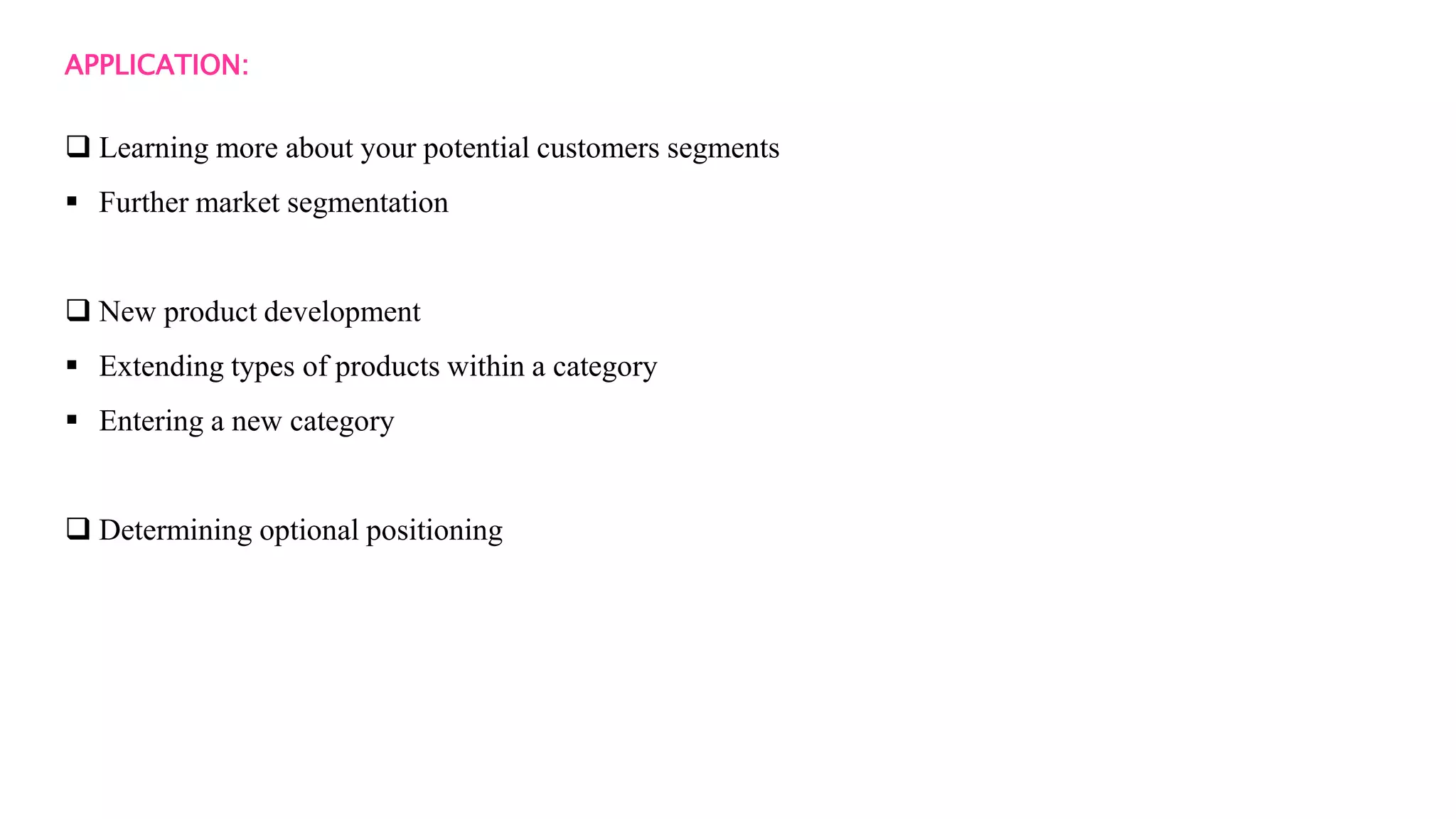
APPLICATION:
 Learning more about your potential customers segments
 Further market segmentation
 New product development
 Extending types of products within a category
 Entering a new category
 Determining optional positioning
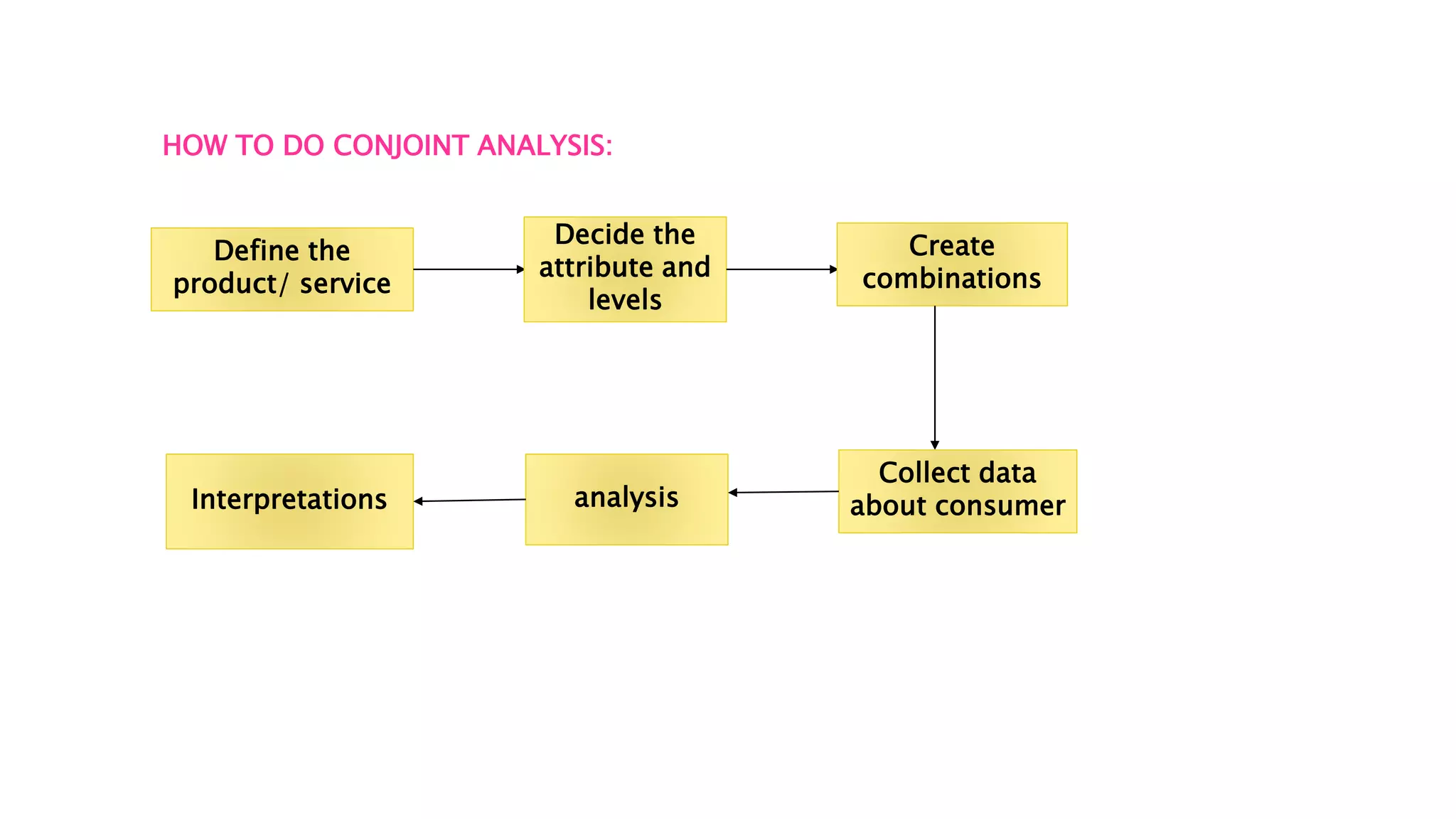
HOW TO DO CONJOINT ANALYSIS:
Define the
product/ service
Decide the
attribute and
levels
Create
combinations
Collect data
about consumer
analysis
Interpretations
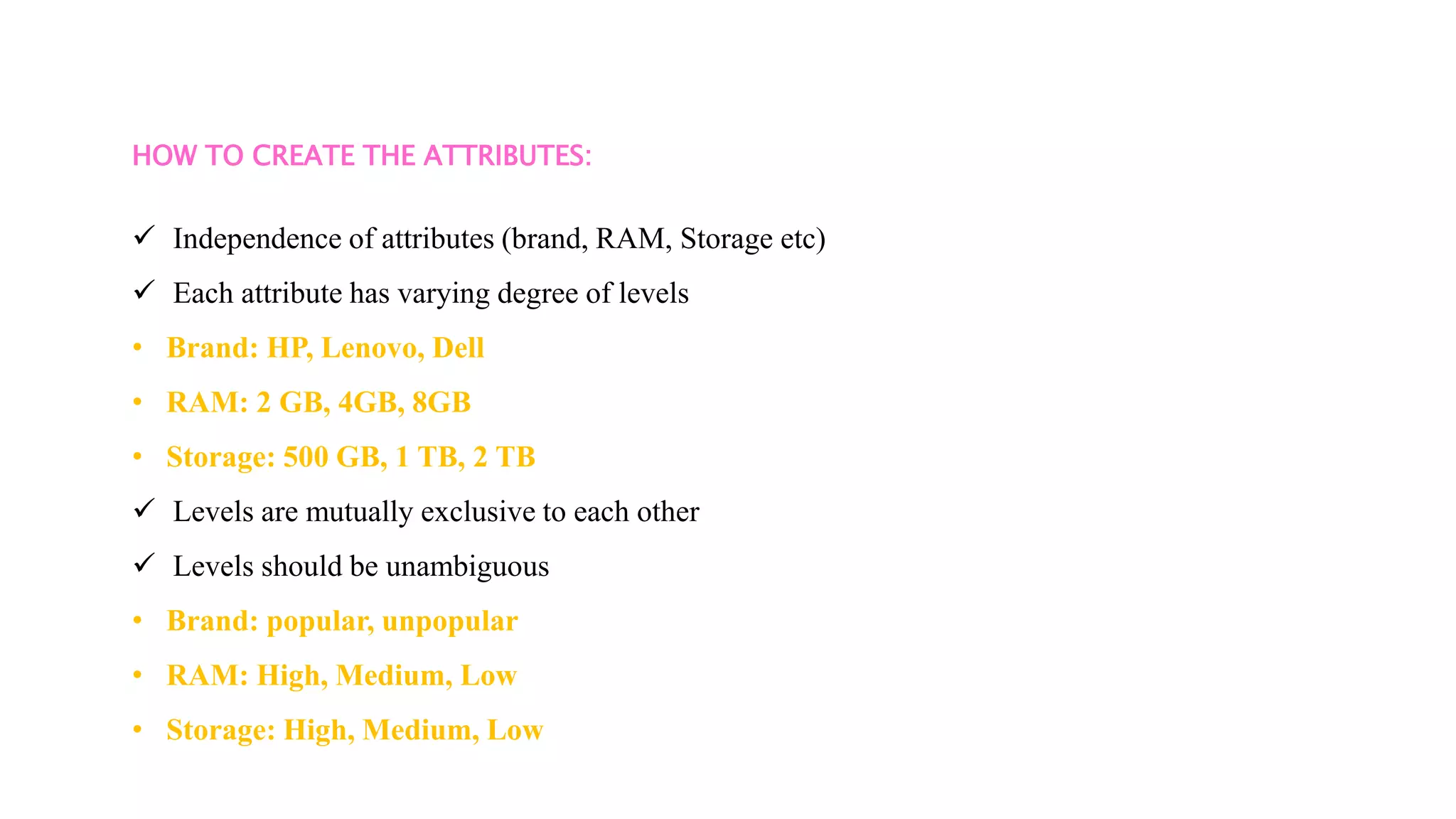
HOW TO CREATE THE ATTRIBUTES:
 Independence of attributes (brand, RAM, Storage etc)
 Each attribute has varying degree of levels
• Brand: HP, Lenovo, Dell
• RAM: 2 GB, 4GB, 8GB
• Storage: 500 GB, 1 TB, 2 TB
 Levels are mutually exclusive to each other
 Levels should be unambiguous
• Brand: popular, unpopular
• RAM: High, Medium, Low
• Storage: High, Medium, Low
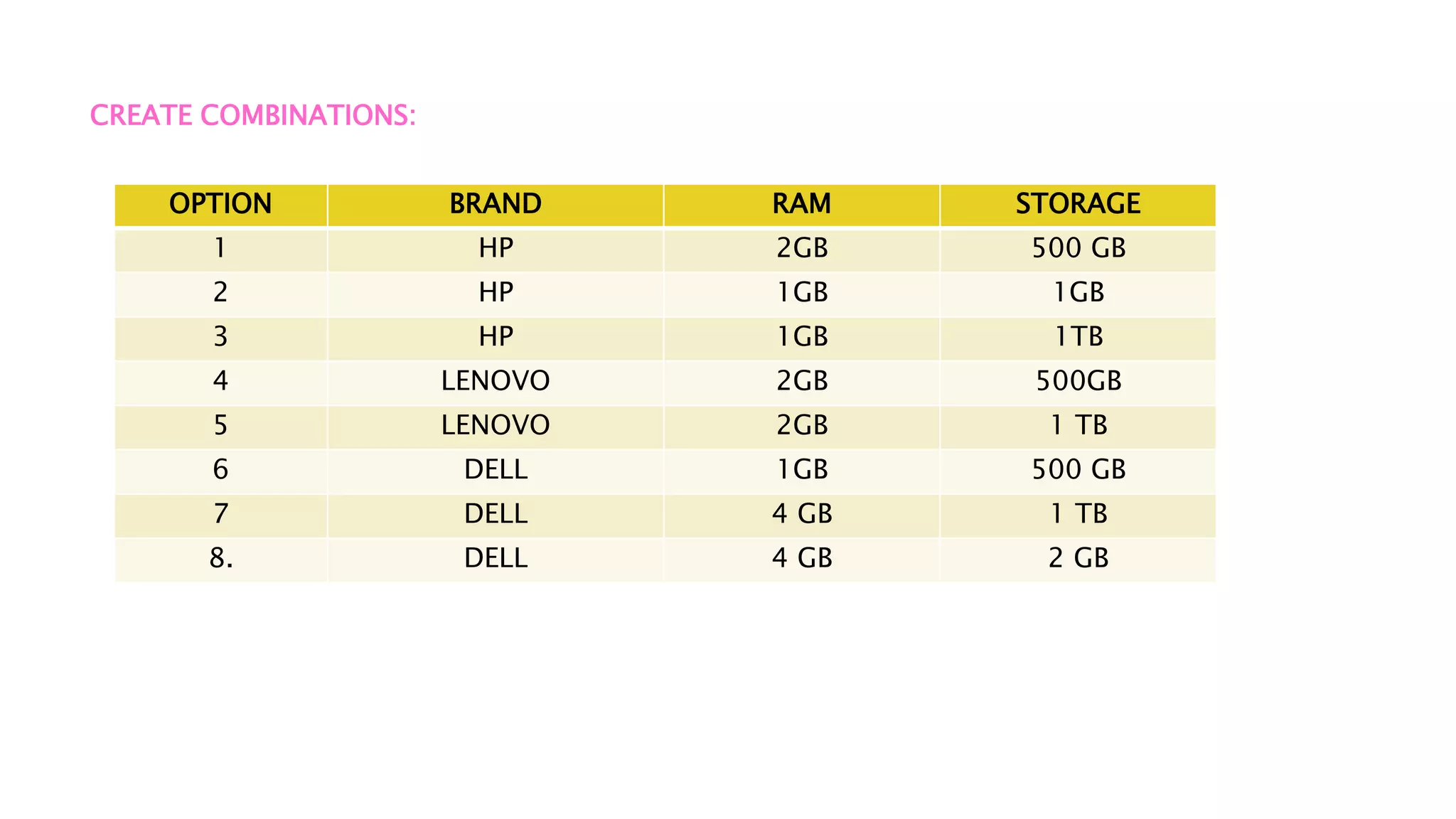
CREATE COMBINATIONS:
OPTION BRAND RAM STORAGE
1 HP 2GB 500 GB
2 HP 1GB 1GB
3 HP 1GB 1TB
4 LENOVO 2GB 500GB
5 LENOVO 2GB 1 TB
6 DELL 1GB 500 GB
7 DELL 4 GB 1 TB
8. DELL 4 GB 2 GB

Marketing Analytics.pptx

  • 1.
    MARKETING ANALYTICS: Itincludes  Marketing management and introduction to business analytics  Combines various concepts of marketing and business analytics and problem solving. ( small problem in excel and big problem in R progamming)  Sequences of quantitative approaches joined in the thread of analytics – company is facing some problem so target will be come with small pieces of the problem, analytics solutions to solve broader marketing problem. Objectives:  Identify the marketing problem with sequence of small questions  Identify the appropriate tools and datasets required to solve each small research questions  Properly apply the tool  Solve a marketing analytics projects end to end 
  • 2.
    CONSUMERS WANT: NEED WANT  DEMAND Marketers always looks for want to convert in demand. When desire converts to willingness to pay of the consumer, that willingness to pay if that matches with the price or etc then that becomes a demand. HOW TO KNOW WHAT CONSUMERS WANT? • Ask the consumer o Take qualitative survey o Review websites o Complaints websites o Online forums  Track their behaviour o Choice models- Binomial and multinomial  Consumer experiment o Conjoint analysis – create options for consumer for their opinion. Conjoint analysis is a statistical analysis and marketing research technique to measure what consumers value most about your products and services. For example, a TV manufacturer would want to know if customers value picture or sound quality more, or if they value low price more than picture quality.
  • 3.
    CONJOINT ANALYSIS:  Majorgoal is to identify what consumers want  Break options available into a combination of multiple attribute  Find out how consumers values those attributes  Find out the overall value of the whole option` WHY CONJOINT ANALYSIS? • Buyers want to maximize ( Value-Price) • Sellers want to maximize profit: D(p) X (Price – Cost ), have to find out a best solution which will give customers the highest value at my lowest cost at right price.  Therefore the key is to provide highest value at lowest cost and right price.
  • 4.
    Examples - PHONE: Android • Price  Size • Brand • Camera What if we ask direct questions? • What brand do you prefer? • How much processer speed do you want? • What should be the monitor size? • How much storage do you want?
  • 5.
    APPLICATION:  Learning moreabout your potential customers segments  Further market segmentation  New product development  Extending types of products within a category  Entering a new category  Determining optional positioning
  • 6.
    HOW TO DOCONJOINT ANALYSIS: Define the product/ service Decide the attribute and levels Create combinations Collect data about consumer analysis Interpretations
  • 7.
    HOW TO CREATETHE ATTRIBUTES:  Independence of attributes (brand, RAM, Storage etc)  Each attribute has varying degree of levels • Brand: HP, Lenovo, Dell • RAM: 2 GB, 4GB, 8GB • Storage: 500 GB, 1 TB, 2 TB  Levels are mutually exclusive to each other  Levels should be unambiguous • Brand: popular, unpopular • RAM: High, Medium, Low • Storage: High, Medium, Low
  • 8.
    CREATE COMBINATIONS: OPTION BRANDRAM STORAGE 1 HP 2GB 500 GB 2 HP 1GB 1GB 3 HP 1GB 1TB 4 LENOVO 2GB 500GB 5 LENOVO 2GB 1 TB 6 DELL 1GB 500 GB 7 DELL 4 GB 1 TB 8. DELL 4 GB 2 GB