Saeed hussain
03339095696
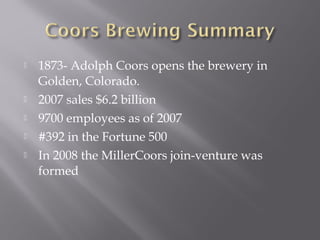
 1873- Adolph Coors opens the brewery in
Golden, Colorado.
 2007 sales $6.2 billion
 9700 employees as of 2007
 #392 in the Fortune 500
 In 2008 the MillerCoors join-venture was
formed
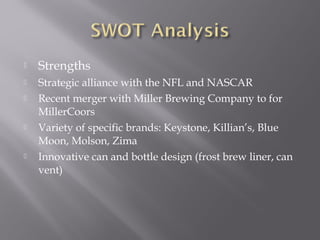
 Strengths
 Strategic alliance with the NFL and NASCAR
 Recent merger with Miller Brewing Company to for
MillerCoors
 Variety of specific brands: Keystone, Killian’s, Blue
Moon, Molson, Zima
 Innovative can and bottle design (frost brew liner, can
vent)
 Weaknesses
 Few brewing sites
 Union worker dispute
 EEO accusations
 Opportunities
 Growing number of sponsorships
 Merchandise
 Loyal customer base
 Threats
 Competition (Budweiser)
 Growing import market
 Changing market trends
 Product
 Placing a variety of products in domestic as well as
foreign markets
 Catering to different tastes and styles of consumers
 Distinguish its own products from that of the
competition
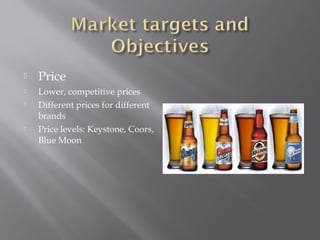
 Price
 Lower, competitive prices
 Different prices for different
brands
 Price levels: Keystone, Coors,
Blue Moon
 Distribution
 International placement
 Specific beers for specific areas
 6 packs, 40 oz bottles, 12 packs, 24 packs
 Blue moon’s seasonal brews
 (Pale moon, Full moon, Rising moon, Honey moon,
Harvest moon)
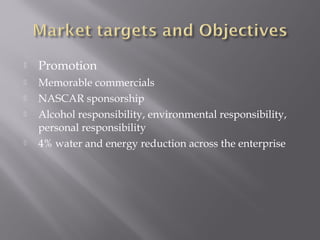
 Promotion
 Memorable commercials
 NASCAR sponsorship
 Alcohol responsibility, environmental responsibility,
personal responsibility
 4% water and energy reduction across the enterprise
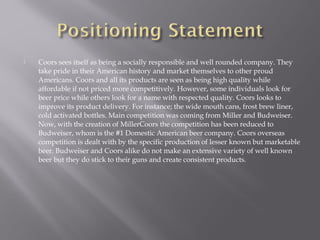
 Coors sees itself as being a socially responsible and well rounded company. They
take pride in their American history and market themselves to other proud
Americans. Coors and all its products are seen as being high quality while
affordable if not priced more competitively. However, some individuals look for
beer price while others look for a name with respected quality. Coors looks to
improve its product delivery. For instance; the wide mouth cans, frost brew liner,
cold activated bottles. Main competition was coming from Miller and Budweiser.
Now, with the creation of MillerCoors the competition has been reduced to
Budweiser, whom is the #1 Domestic American beer company. Coors overseas
competition is dealt with by the specific production of lesser known but marketable
beer. Budweiser and Coors alike do not make an extensive variety of well known
beer but they do stick to their guns and create consistent products.
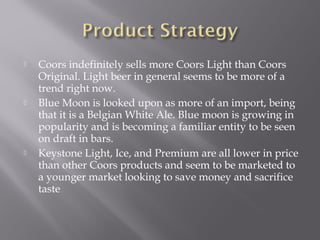
 Coors indefinitely sells more Coors Light than Coors
Original. Light beer in general seems to be more of a
trend right now.
 Blue Moon is looked upon as more of an import, being
that it is a Belgian White Ale. Blue moon is growing in
popularity and is becoming a familiar entity to be seen
on draft in bars.
 Keystone Light, Ice, and Premium are all lower in price
than other Coors products and seem to be marketed to
a younger market looking to save money and sacrifice
taste
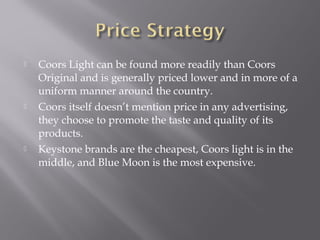
 Coors Light can be found more readily than Coors
Original and is generally priced lower and in more of a
uniform manner around the country.
 Coors itself doesn’t mention price in any advertising,
they choose to promote the taste and quality of its
products.
 Keystone brands are the cheapest, Coors light is in the
middle, and Blue Moon is the most expensive.
 Coors light is marketed widely and can be found in
nearly all restaurants, bars, and convenience stores.
 Coors products are delivered via independent
distributors (L.T. Verrastro)
 In terms of personal selling, the beer sells itself.
Customers remain loyal and don’t leave it to the
company to push itself upon them.
 Advertising is massive. Commercials, billboards, free
merchandise are all used heavily to get the brand name
out in public.
 Sales aren’t much of a factor though, prices remain the
same and rarely, if ever, will you see a sale for any beer
products.
 Coors looks to reduce water and energy consumption
by 4% in 2008 alone. They promote responsible use of
their products, and look to be more environmentally
friendly in its operating areas and abroad.
 Research would suggest that Light beer is very popular
and premium beer has taken a back seat. Imports are
also very popular. Coors should be able to gather
information to see where they can appeal to the import
beer drinkers. Another problem is the ease of purchase
for minors, Coors believes in the responsibility of
consumption and prohibition of sales to minors. But,
then again Coors does not sell directly to the public.
 Research and marketing departments are necessary to
find the demographic that is purchasing the Coors
products and how to cater to their wants and needs.
 Advertising has to keep pace with the other companies
and ensure that the brand does not lose its market
share or become confused with similar products.
 https://www.molsoncoorsinternational.com/
 http://molsoncoors.com/responsibility/data/objec
 http://www.marininstitute.org/alcohol_indus
try/ad_alerts/coors.htm

Marketig plan

  • 1.
  • 2.
     1873- AdolphCoors opens the brewery in Golden, Colorado.  2007 sales $6.2 billion  9700 employees as of 2007  #392 in the Fortune 500  In 2008 the MillerCoors join-venture was formed
  • 3.
     Strengths  Strategicalliance with the NFL and NASCAR  Recent merger with Miller Brewing Company to for MillerCoors  Variety of specific brands: Keystone, Killian’s, Blue Moon, Molson, Zima  Innovative can and bottle design (frost brew liner, can vent)
  • 4.
     Weaknesses  Fewbrewing sites  Union worker dispute  EEO accusations
  • 5.
     Opportunities  Growingnumber of sponsorships  Merchandise  Loyal customer base
  • 6.
     Threats  Competition(Budweiser)  Growing import market  Changing market trends
  • 7.
     Product  Placinga variety of products in domestic as well as foreign markets  Catering to different tastes and styles of consumers  Distinguish its own products from that of the competition
  • 8.
     Price  Lower,competitive prices  Different prices for different brands  Price levels: Keystone, Coors, Blue Moon
  • 9.
     Distribution  Internationalplacement  Specific beers for specific areas  6 packs, 40 oz bottles, 12 packs, 24 packs  Blue moon’s seasonal brews  (Pale moon, Full moon, Rising moon, Honey moon, Harvest moon)
  • 10.
     Promotion  Memorablecommercials  NASCAR sponsorship  Alcohol responsibility, environmental responsibility, personal responsibility  4% water and energy reduction across the enterprise
  • 11.
     Coors seesitself as being a socially responsible and well rounded company. They take pride in their American history and market themselves to other proud Americans. Coors and all its products are seen as being high quality while affordable if not priced more competitively. However, some individuals look for beer price while others look for a name with respected quality. Coors looks to improve its product delivery. For instance; the wide mouth cans, frost brew liner, cold activated bottles. Main competition was coming from Miller and Budweiser. Now, with the creation of MillerCoors the competition has been reduced to Budweiser, whom is the #1 Domestic American beer company. Coors overseas competition is dealt with by the specific production of lesser known but marketable beer. Budweiser and Coors alike do not make an extensive variety of well known beer but they do stick to their guns and create consistent products.
  • 12.
     Coors indefinitelysells more Coors Light than Coors Original. Light beer in general seems to be more of a trend right now.  Blue Moon is looked upon as more of an import, being that it is a Belgian White Ale. Blue moon is growing in popularity and is becoming a familiar entity to be seen on draft in bars.  Keystone Light, Ice, and Premium are all lower in price than other Coors products and seem to be marketed to a younger market looking to save money and sacrifice taste
  • 13.
     Coors Lightcan be found more readily than Coors Original and is generally priced lower and in more of a uniform manner around the country.  Coors itself doesn’t mention price in any advertising, they choose to promote the taste and quality of its products.  Keystone brands are the cheapest, Coors light is in the middle, and Blue Moon is the most expensive.
  • 14.
     Coors lightis marketed widely and can be found in nearly all restaurants, bars, and convenience stores.  Coors products are delivered via independent distributors (L.T. Verrastro)
  • 15.
     In termsof personal selling, the beer sells itself. Customers remain loyal and don’t leave it to the company to push itself upon them.  Advertising is massive. Commercials, billboards, free merchandise are all used heavily to get the brand name out in public.  Sales aren’t much of a factor though, prices remain the same and rarely, if ever, will you see a sale for any beer products.
  • 16.
     Coors looksto reduce water and energy consumption by 4% in 2008 alone. They promote responsible use of their products, and look to be more environmentally friendly in its operating areas and abroad.
  • 17.
     Research wouldsuggest that Light beer is very popular and premium beer has taken a back seat. Imports are also very popular. Coors should be able to gather information to see where they can appeal to the import beer drinkers. Another problem is the ease of purchase for minors, Coors believes in the responsibility of consumption and prohibition of sales to minors. But, then again Coors does not sell directly to the public.
  • 18.
     Research andmarketing departments are necessary to find the demographic that is purchasing the Coors products and how to cater to their wants and needs.  Advertising has to keep pace with the other companies and ensure that the brand does not lose its market share or become confused with similar products.
  • 19.
     https://www.molsoncoorsinternational.com/  http://molsoncoors.com/responsibility/data/objec http://www.marininstitute.org/alcohol_indus try/ad_alerts/coors.htm