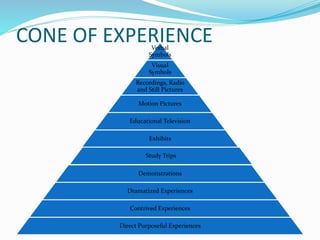
CONE OF EXPERIENCEVerbal
Symbols
Visual
Symbols
Recordings, Radio
and Still Pictures
Motion Pictures
Educational Television
Exhibits
Study Trips
Demonstrations
Dramatized Experiences
Contrived Experiences
Direct Purposeful Experiences
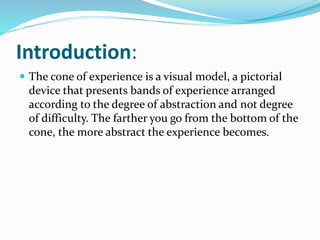
Introduction:
 The cone of experience is a visual model, a pictorial
device that presents bands of experience arranged
according to the degree of abstraction and not degree
of difficulty. The farther you go from the bottom of the
cone, the more abstract the experience becomes.
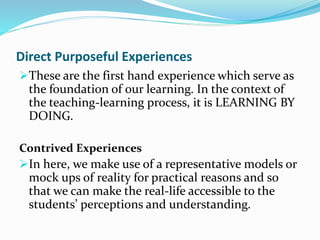
Direct Purposeful Experiences
These are the first hand experience which serve as
the foundation of our learning. In the context of
the teaching-learning process, it is LEARNING BY
DOING.
Contrived Experiences
In here, we make use of a representative models or
mock ups of reality for practical reasons and so
that we can make the real-life accessible to the
students’ perceptions and understanding.
Dramatized Experiences
By dramatization, we can participate in a
reconstructed experience, even though the original
event is far removed from us in time.
Demonstration
It is a visualized explanation of an important fact, idea
or process by use of photographs, drawing, films,
displays, and guided motion.
Study Trips
These are the excursion, educational trips, and visits
conducted to observe an event that is unavailable
within the classroom.
Exhibits
These are displays to be seen by the spectators. They
may consist of working models arranged meaningfully
or photographs with models, charts, and posters.
Television and Motion Pictures
Pictures can reconstruct the reality of the past so
effectively that we are made to feel we are there.
Still Pictures, Recordings, Radio
These are visual and auditory devices which may be
used by an individual or a group.
Visual Symbols
These are no longer realistic reproduction of physical
things for these are highly abstract representation. Ex.
charts, graphs, maps, and diagrams.
Verbal Symbols
They are not like the objects or ideas for which they
stand. They usually do not contain visual clues to their
meaning. Written words fall under this category.
Conclusion:
 Dale's "Cone of Experience," which he intended to
provide an intuitive model of the concreteness of
various kinds of audio-visual media, has been widely
misrepresented. Often referred to as the "Cone of
Learning," it purports to inform viewers of how much
people remember based on how they encounter
information.
Questions:
1. What are the learning aids found in the Cone of
Experience?
2. Which way is closest to the real world?
3. Which way is farthest from the real world, in this
sense most abstract?
4. What is the Cone of Experience?

Margie0007

  • 2.
    CONE OF EXPERIENCEVerbal Symbols Visual Symbols Recordings,Radio and Still Pictures Motion Pictures Educational Television Exhibits Study Trips Demonstrations Dramatized Experiences Contrived Experiences Direct Purposeful Experiences
  • 3.
    Introduction:  The coneof experience is a visual model, a pictorial device that presents bands of experience arranged according to the degree of abstraction and not degree of difficulty. The farther you go from the bottom of the cone, the more abstract the experience becomes.
  • 4.
    Direct Purposeful Experiences Theseare the first hand experience which serve as the foundation of our learning. In the context of the teaching-learning process, it is LEARNING BY DOING. Contrived Experiences In here, we make use of a representative models or mock ups of reality for practical reasons and so that we can make the real-life accessible to the students’ perceptions and understanding.
  • 5.
    Dramatized Experiences By dramatization,we can participate in a reconstructed experience, even though the original event is far removed from us in time. Demonstration It is a visualized explanation of an important fact, idea or process by use of photographs, drawing, films, displays, and guided motion.
  • 6.
    Study Trips These arethe excursion, educational trips, and visits conducted to observe an event that is unavailable within the classroom. Exhibits These are displays to be seen by the spectators. They may consist of working models arranged meaningfully or photographs with models, charts, and posters.
  • 7.
    Television and MotionPictures Pictures can reconstruct the reality of the past so effectively that we are made to feel we are there. Still Pictures, Recordings, Radio These are visual and auditory devices which may be used by an individual or a group.
  • 8.
    Visual Symbols These areno longer realistic reproduction of physical things for these are highly abstract representation. Ex. charts, graphs, maps, and diagrams. Verbal Symbols They are not like the objects or ideas for which they stand. They usually do not contain visual clues to their meaning. Written words fall under this category.
  • 9.
    Conclusion:  Dale's "Coneof Experience," which he intended to provide an intuitive model of the concreteness of various kinds of audio-visual media, has been widely misrepresented. Often referred to as the "Cone of Learning," it purports to inform viewers of how much people remember based on how they encounter information.
  • 10.
    Questions: 1. What arethe learning aids found in the Cone of Experience? 2. Which way is closest to the real world? 3. Which way is farthest from the real world, in this sense most abstract? 4. What is the Cone of Experience?