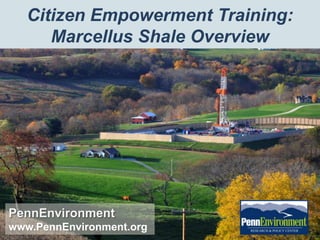
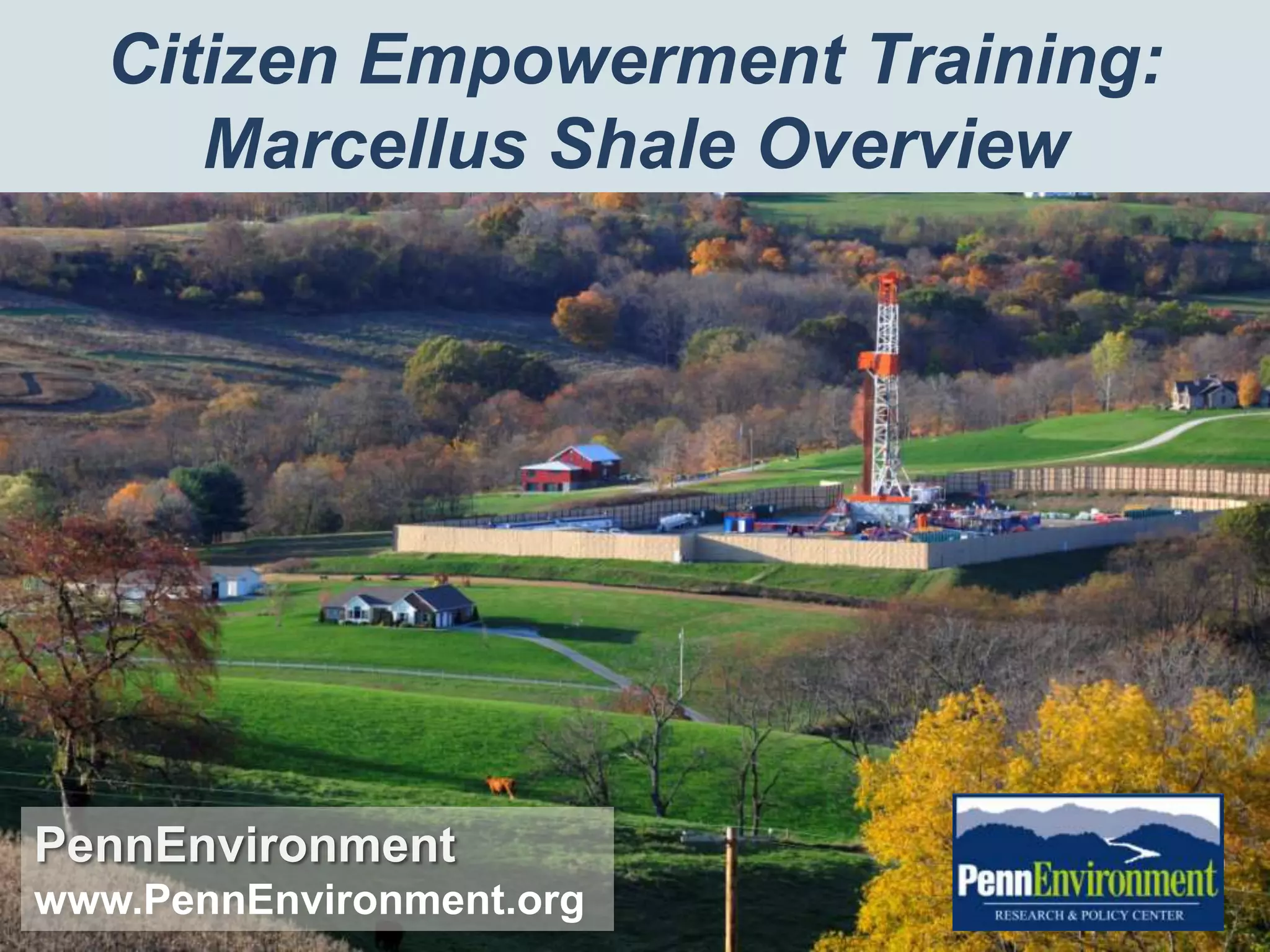
Citizen Empowerment Training:
      Marcellus Shale Overview


PennEnvironment
www.PennEnvironment.org
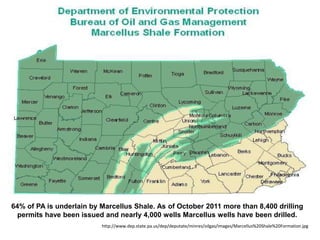
64% of PA is underlain by Marcellus Shale. As of October 2011 more than 8,400 drilling
  permits have been issued and nearly 4,000 wells Marcellus wells have been drilled.
                          http://www.dep.state.pa.us/dep/deputate/minres/oilgas/images/Marcellus%20Shale%20Formation.jpg
Environmental and Public Health
           Concerns

 Chemical & wastewater leaks and
  accidents
 Threatening drinking water
 Endangering public and private lands
 Harmful air pollution
 Water use
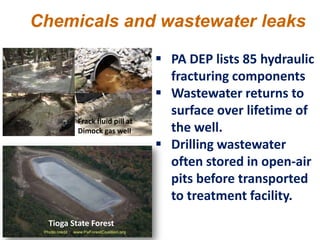
Chemicals and wastewater leaks

                                  PA DEP lists 85 hydraulic
                                   fracturing components
                                  Wastewater returns to
                                   surface over lifetime of
           Frack fluid pill at
           Dimock gas well         the well.
                                  Drilling wastewater
                                   often stored in open-air
                                   pits before transported
                                   to treatment facility.
  Tioga State Forest Turner
          Photo Credit: Jenne
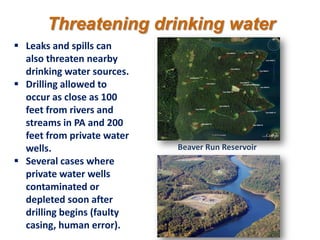
Threatening drinking water
 Leaks and spills can
  also threaten nearby
  drinking water sources.
 Drilling allowed to
  occur as close as 100
  feet from rivers and
  streams in PA and 200
  feet from private water
  wells.                    Beaver Run Reservoir
 Several cases where
  private water wells
  contaminated or
  depleted soon after
  drilling begins (faulty
  casing, human error).
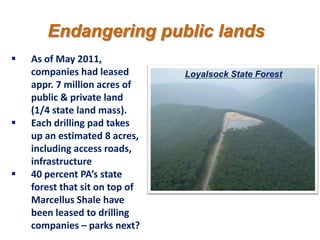
Endangering public lands
   As of May 2011,
    companies had leased        Loyalsock State Forest
    appr. 7 million acres of
    public & private land
    (1/4 state land mass).
   Each drilling pad takes
    up an estimated 8 acres,
    including access roads,
    infrastructure
   40 percent PA’s state
    forest that sit on top of
    Marcellus Shale have
    been leased to drilling
    companies – parks next?
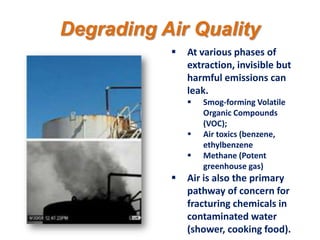
Degrading Air Quality
              At various phases of
               extraction, invisible but
               harmful emissions can
               leak.
                  Smog-forming Volatile
                   Organic Compounds
                   (VOC);
                  Air toxics (benzene,
                   ethylbenzene
                  Methane (Potent
                   greenhouse gas)
              Air is also the primary
               pathway of concern for
               fracturing chemicals in
               contaminated water
               (shower, cooking food).
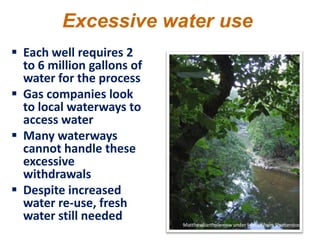
Excessive water use
 Each well requires 2
  to 6 million gallons of
  water for the process
 Gas companies look
  to local waterways to
  access water
 Many waterways
  cannot handle these
  excessive
  withdrawals
 Despite increased
  water re-use, fresh
  water still needed
                            Matthewbartholemew under license from Shutterstock.com
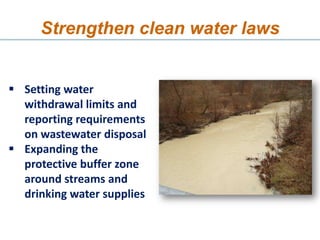
Strengthen clean water laws


 Setting water
  withdrawal limits and
  reporting requirements
  on wastewater disposal
 Expanding the
  protective buffer zone
  around streams and
  drinking water supplies
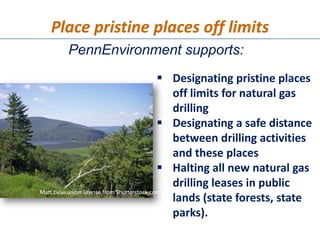
Place pristine places off limits
       PennEnvironment supports:
                                              Designating pristine places
                                               off limits for natural gas
                                               drilling
                                              Designating a safe distance
                                               between drilling activities
                                               and these places
                                              Halting all new natural gas
                                               drilling leases in public
Matt Dylan under license from Shutterstock.com
                                               lands (state forests, state
                                               parks).
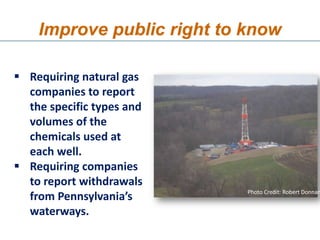
Improve public right to know

 Requiring natural gas
  companies to report
  the specific types and
  volumes of the
  chemicals used at
  each well.
 Requiring companies
  to report withdrawals
                            Photo Credit: Robert Donnan
  from Pennsylvania’s
  waterways.
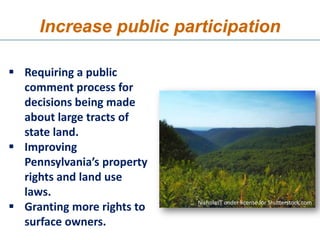
Increase public participation

 Requiring a public
  comment process for
  decisions being made
  about large tracts of
  state land.
 Improving
  Pennsylvania’s property
  rights and land use
  laws.
 Granting more rights to   NicholasT under license for Shutterstock.com


  surface owners.
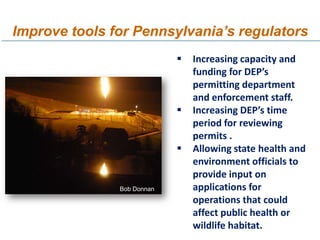
Improve tools for Pennsylvania’s regulators
                               Increasing capacity and
                                funding for DEP’s
                                permitting department
                                and enforcement staff.
                               Increasing DEP’s time
                                period for reviewing
                                permits .
                               Allowing state health and
                                environment officials to
                                provide input on
               Bob Donnan       applications for
                                operations that could
                                affect public health or
                                wildlife habitat.
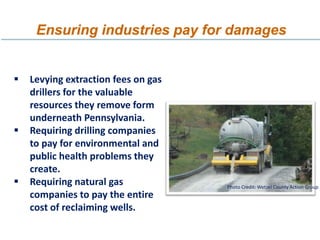
Ensuring industries pay for damages


   Levying extraction fees on gas
    drillers for the valuable
    resources they remove form
    underneath Pennsylvania.
   Requiring drilling companies
    to pay for environmental and
    public health problems they
    create.
   Requiring natural gas            Photo Credit: Wetzel County Action Group
    companies to pay the entire
    cost of reclaiming wells.
Opportunities for Action
 U.S. EPA: Air rules on oil and gas sector
  to reduce smog-forming pollutants, air
  toxics and methane
 Delaware River Basin Commission:
  Likely to allow drilling in river basin soon:
  October 21 decision.
 Susquehanna River Basin
  Commission: Fast-tracking of Marcellus
  Shale projects

Marcellus shaleempowermenttrainingmarcellu soverview

  • 1.
    Citizen Empowerment Training: Marcellus Shale Overview PennEnvironment www.PennEnvironment.org
  • 2.
    64% of PAis underlain by Marcellus Shale. As of October 2011 more than 8,400 drilling permits have been issued and nearly 4,000 wells Marcellus wells have been drilled. http://www.dep.state.pa.us/dep/deputate/minres/oilgas/images/Marcellus%20Shale%20Formation.jpg
  • 3.
    Environmental and PublicHealth Concerns  Chemical & wastewater leaks and accidents  Threatening drinking water  Endangering public and private lands  Harmful air pollution  Water use
  • 4.
    Chemicals and wastewaterleaks  PA DEP lists 85 hydraulic fracturing components  Wastewater returns to surface over lifetime of Frack fluid pill at Dimock gas well the well.  Drilling wastewater often stored in open-air pits before transported to treatment facility. Tioga State Forest Turner Photo Credit: Jenne
  • 5.
    Threatening drinking water Leaks and spills can also threaten nearby drinking water sources.  Drilling allowed to occur as close as 100 feet from rivers and streams in PA and 200 feet from private water wells. Beaver Run Reservoir  Several cases where private water wells contaminated or depleted soon after drilling begins (faulty casing, human error).
  • 6.
    Endangering public lands  As of May 2011, companies had leased Loyalsock State Forest appr. 7 million acres of public & private land (1/4 state land mass).  Each drilling pad takes up an estimated 8 acres, including access roads, infrastructure  40 percent PA’s state forest that sit on top of Marcellus Shale have been leased to drilling companies – parks next?
  • 7.
    Degrading Air Quality  At various phases of extraction, invisible but harmful emissions can leak.  Smog-forming Volatile Organic Compounds (VOC);  Air toxics (benzene, ethylbenzene  Methane (Potent greenhouse gas)  Air is also the primary pathway of concern for fracturing chemicals in contaminated water (shower, cooking food).
  • 8.
    Excessive water use Each well requires 2 to 6 million gallons of water for the process  Gas companies look to local waterways to access water  Many waterways cannot handle these excessive withdrawals  Despite increased water re-use, fresh water still needed Matthewbartholemew under license from Shutterstock.com
  • 10.
    Strengthen clean waterlaws  Setting water withdrawal limits and reporting requirements on wastewater disposal  Expanding the protective buffer zone around streams and drinking water supplies
  • 11.
    Place pristine placesoff limits PennEnvironment supports:  Designating pristine places off limits for natural gas drilling  Designating a safe distance between drilling activities and these places  Halting all new natural gas drilling leases in public Matt Dylan under license from Shutterstock.com lands (state forests, state parks).
  • 12.
    Improve public rightto know  Requiring natural gas companies to report the specific types and volumes of the chemicals used at each well.  Requiring companies to report withdrawals Photo Credit: Robert Donnan from Pennsylvania’s waterways.
  • 13.
    Increase public participation Requiring a public comment process for decisions being made about large tracts of state land.  Improving Pennsylvania’s property rights and land use laws.  Granting more rights to NicholasT under license for Shutterstock.com surface owners.
  • 14.
    Improve tools forPennsylvania’s regulators  Increasing capacity and funding for DEP’s permitting department and enforcement staff.  Increasing DEP’s time period for reviewing permits .  Allowing state health and environment officials to provide input on Bob Donnan applications for operations that could affect public health or wildlife habitat.
  • 15.
    Ensuring industries payfor damages  Levying extraction fees on gas drillers for the valuable resources they remove form underneath Pennsylvania.  Requiring drilling companies to pay for environmental and public health problems they create.  Requiring natural gas Photo Credit: Wetzel County Action Group companies to pay the entire cost of reclaiming wells.
  • 16.
    Opportunities for Action U.S. EPA: Air rules on oil and gas sector to reduce smog-forming pollutants, air toxics and methane  Delaware River Basin Commission: Likely to allow drilling in river basin soon: October 21 decision.  Susquehanna River Basin Commission: Fast-tracking of Marcellus Shale projects

Editor's Notes

  • #3 Largest part of the Marcellus Shale gas is found under Pennsylvania, across 64 percent of the state.
  • #5 As part of the hydraulic fracturing process, drilling companies combine a cocktail of chemicals with sand and millions of gallons of water, forcing the fluid underground at high pressures in order to help break up the shale and access the natural gas. In total, 85 chemicals have been posted on PA DEP’s website as chemicals that could be used for hydraulic fracturing in the Marcellus Shale. Many of these chemicals, including toluene, xylene, trimethylbenzene, and petroleum distillates which often contain benzene are known or suspected carcinogens, or have other negative health effects. Chemicals are used in many phases of extracting gas from shale: added to the “muds” used to drill the bore hole. Chemicals added to increase weight of fluids, reduce friction, shorten drilling time.
  • #6 Drilling can affect drinking water in a variety of waysA large volume of toxic wastewater is generated during the hydraulic fracturing processUnfortunately, most sewage treatment facilities in PA do not have the technology or capacity to deal with this type of industrial pollution, though many have been permitted to accept this water.In 2008, state environmental officials issued a drinking water advisory for 325,000 local residents after reporting that inadequately treated drilling wastewater was discharged into the Monongahela River, which serves as the drinking water sources for downstream communities.In Susquehanna County, Cabot Oil & Gas reported that private water sources has been contaminated with methane after Cabot’s natural gas drilling activities broke through nearby residents’ underground well water supply.In the photo above, you can see multiple Marcellus wells that have already been drilled near the Beaver Run Reservoir, which is owned by the Westmoreland Water Authority and is a source of drinking water for thousands of residents northeast of Pittsburgh.
  • #7 With the growing pressure to promote natural gas exploration across the Commonwealth, state officials last year opened up 74,000 additional acres of state forestlands to bids from natural gas companies in spite of broad and deep public opposition to the proposal. Sadly, state regulators have already signed off on allowing companies to drill for natural gas on 660,000 acres of Pennsylvania’s state forestlands—a full 40 percent of the Commonwealth’s entire state forest system that sits on top of the Marcellus Shale formation.There’s now a ban in place on any additional leasing of state forestland for gas drilling, but this could be overturned by the current administration.Also, there has been exploratory drilling that has occurred in Ohiopyle State Park, which could mean that our state parks could be next.
  • #8 When gas is being compressed, or when it is stored in a condensate tank, the harmful but invisible air emissions can leak into the atmosphere. This, combined with the diesel-powered drilling rigs, and roughly 1,500 diesel trucks necessary for every well hydraulically fractured, results in localized air pollution and oftentimes ground-level ozone. A recent study by Dr. Theo Colburn and the Endocrine Disruptor Exchange found that air is the primary pathway of concern for fracturing chemicals. 
  • #9 Each natural gas well requires roughly 2 to 6 million gallons of water for the hydraulic fracturing process. Natural gas companies often take this water from nearby rivers and streams, damaging local ecosystems. In some cases, especially in Western Pennsylvania, these withdraws have occurred without proper oversight or approval. Already, Pennsylvania’s Department of Environmental Protection (DEP) has fined companies for illegal water withdrawals. In the worst cases, so much water is removed that streams have completely dried up and disappeared. Sugarcamp Run in Washington County is one example of a waterway that ran dry in 2008 due to excessive water withdrawals from natural gas drilling companies. This type of stress is inevitably causes far-reaching damage to aquatic species in these streams. Especially of concern during summers like this past, where drought warnings were issued for 24 counties in PA