Mapping Vulnerability and Resilience for
Ecosystem Based Approaches to Adaptation
Keith Alverson
keith.alverson@unep.org
www.unep.org/climatechange/adaptation/

UN System Side Event.
UNFCCC COP 19
Warsaw, 16 November, 2013
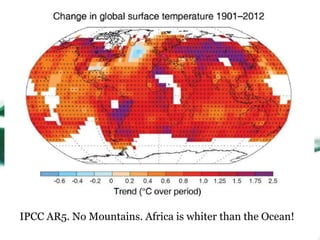
IPCC AR5. No Mountains. Africa is whiter than the Ocean!
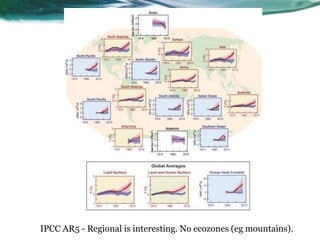
IPCC AR5 - Regional is interesting. No ecozones (eg mountains).
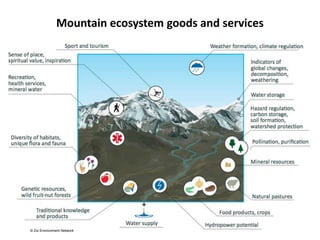
Mountain ecosystem goods and services

© Zoi Environment Network
•

Mountain regions have the highest regional natural variability in
weather in climate in the world

•

Mountain ecosystems (and communities) are thus inherently among the
most highly resilient to climatic stress.

•

At the same time, because global warming can literally push climatic
zones off the top of mountains, they can be among the most vulnerable
(locally, conditions become outside the envelope).

•

Despite this apparent contradiction. Mountains provide an excellent

testbed for ecosystem (and community) based adaptation approaches.
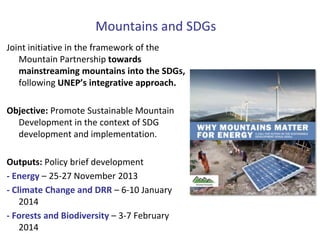
Mountains and SDGs
Joint initiative in the framework of the
Mountain Partnership towards
mainstreaming mountains into the SDGs,
following UNEP’s integrative approach.
Objective: Promote Sustainable Mountain
Development in the context of SDG
development and implementation.
Outputs: Policy brief development
- Energy – 25-27 November 2013
- Climate Change and DRR – 6-10 January
2014
- Forests and Biodiversity – 3-7 February
2014
UNEP in the Mountains
• Partnership of UNEP, IUCN & UNDP under
broader EBA flagship programme, current focus
on Mountains in Peru, Nepal & Uganda;
• Partnership with UNESCO on Mountain matters
globally;
• Leading the development of the first Africa
Mountains Atlas due 2014.
• Andes component of REGATTA project
“Climate change action in developing countries with fragile
mountainous ecosystems from a regional perspective”
2014-2017, Total: 1.75 Mio EUR financed by Austria
- Support to mountainous developing countries to integrate climate
change adaptation into development policies/plans/strategies
- Understand vulnerabilities and impacts
- trigger policy action
Main activities:
 Understand and map vulnerabilities and impacts
 Establish regional cooperation platforms
 Develop climate change outlooks (participatory assessments)
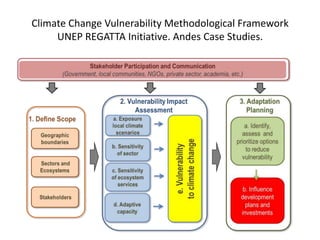
Climate Change Vulnerability Methodological Framework
UNEP REGATTA Initiative. Andes Case Studies.
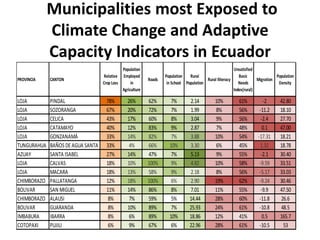
Municipalities most Exposed to
Climate Change and Adaptive
Capacity Indicators in Ecuador
PROVINCIA

CANTON

LOJA
LOJA
LOJA
LOJA
LOJA
TUNGURAHUA
AZUAY
LOJA
LOJA
CHIMBORAZO
BOLIVAR
CHIMBORAZO
BOLIVAR
IMBABURA
COTOPAXI

PINDAL
SOZORANGA
CELICA
CATAMAYO
GONZANAMÁ
BAÑOS DE AGUA SANTA
SANTA ISABEL
CALVAS
MACARA
PALLATANGA
SAN MIGUEL
ALAUSI
GUARANDA
IBARRA
PUJILI

Population
Relative Employed
Crop Loss
in
Agriculture

78%
67%
43%
40%
33%
33%
27%
18%
18%
12%
11%
8%
8%
8%
6%

26%
20%
17%
12%
14%
4%
14%
10%
13%
18%
14%
7%
10%
6%
9%

Roads

62%
72%
60%
83%
82%
66%
47%
100%
58%
100%
86%
59%
89%
89%
67%

Unsatisfied
Population
Rural
Basic
Population
Rural Iliteracy
Migration
in School Population
Needs
Density
Index(rural)

7%
7%
8%
9%
7%
10%
7%
9%
9%
6%
8%
5%
7%
10%
6%

2.14
1.99
3.04
2.87
3.88
3.30
5.13
4.82
2.18
2.90
7.01
14.44
25.93
18.86
22.96

10%
8%
9%
7%
10%
6%
9%
10%
8%
19%
11%
28%
24%
12%
28%

61%
56%
56%
48%
54%
45%
55%
58%
56%
62%
55%
60%
61%
41%
61%

-2
-11.2
-2.4
0.1
-17.31
1.32
-2.1
-9.59
-5.17
-9.24
-9.9
-11.8
-10.8
0.5
-10.5

42.80
18.10
27.70
47.00
18.21
18.78
30.40
33.51
33.03
30.46
47.50
26.6
48.5
165.7
53
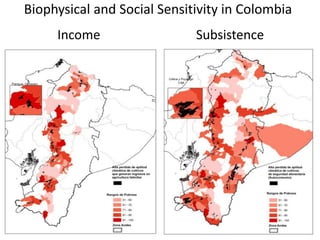
Biophysical and Social Sensitivity in Colombia
Income

Subsistence
EXAMPLE Nepal, Peru & Uganda
Ecosystem
Based
Adaptation in
Mountain
Ecosystems
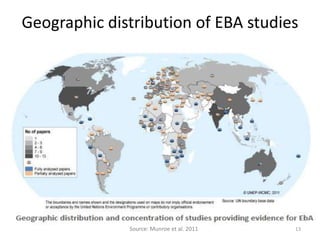
Geographic distribution of EBA studies

Source: Munroe et al. 2011

13
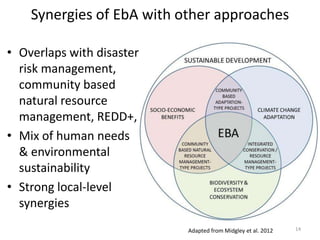
Synergies of EbA with other approaches
• Overlaps with disaster
risk management,
community based
natural resource
management, REDD+,
• Mix of human needs
& environmental
sustainability
• Strong local-level
synergies
Adapted from Midgley et al. 2012

14
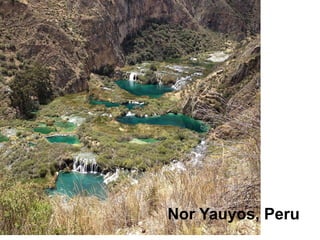
Nor Yauyos, Peru
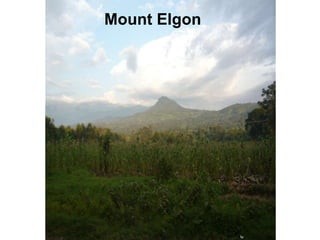
Mount Elgon
Ecosystem Based Adaptation in
Mountain Ecosystems Programme
• Partnership of UNEP, IUCN & UNDP under
broader EBA flagship programme
• BMU provided 10 million Euro for Mountain
Ecosystems Programme (+1.5 million 2014!)
• Steered by Global Steering Committee
• Dec 2010 – Dec 2015
• Pilot phase: Nepal, Peru & Uganda.
• Broader learning for other mountain areas and
countries to be added in next phase
Take Home Messages
• Ecosystem based approaches can be both
build resilience to climate change and deliver
multiple benefits.
• Don’t adapt to Global averages
Focus on local, regional and hydrological
impacts and Societal Variables.
• Climate adaptation is not separable from
sustainable mountain development.
Integrate and mainstream CCA policies.
Thank You….

Mapping Vulnerability and Resilience for Ecosystem Based Approaches to Adaptation

  • 1.
    Mapping Vulnerability andResilience for Ecosystem Based Approaches to Adaptation Keith Alverson keith.alverson@unep.org www.unep.org/climatechange/adaptation/ UN System Side Event. UNFCCC COP 19 Warsaw, 16 November, 2013
  • 2.
    IPCC AR5. NoMountains. Africa is whiter than the Ocean!
  • 3.
    IPCC AR5 -Regional is interesting. No ecozones (eg mountains).
  • 4.
    Mountain ecosystem goodsand services © Zoi Environment Network
  • 5.
    • Mountain regions havethe highest regional natural variability in weather in climate in the world • Mountain ecosystems (and communities) are thus inherently among the most highly resilient to climatic stress. • At the same time, because global warming can literally push climatic zones off the top of mountains, they can be among the most vulnerable (locally, conditions become outside the envelope). • Despite this apparent contradiction. Mountains provide an excellent testbed for ecosystem (and community) based adaptation approaches.
  • 6.
    Mountains and SDGs Jointinitiative in the framework of the Mountain Partnership towards mainstreaming mountains into the SDGs, following UNEP’s integrative approach. Objective: Promote Sustainable Mountain Development in the context of SDG development and implementation. Outputs: Policy brief development - Energy – 25-27 November 2013 - Climate Change and DRR – 6-10 January 2014 - Forests and Biodiversity – 3-7 February 2014
  • 7.
    UNEP in theMountains • Partnership of UNEP, IUCN & UNDP under broader EBA flagship programme, current focus on Mountains in Peru, Nepal & Uganda; • Partnership with UNESCO on Mountain matters globally; • Leading the development of the first Africa Mountains Atlas due 2014. • Andes component of REGATTA project
  • 8.
    “Climate change actionin developing countries with fragile mountainous ecosystems from a regional perspective” 2014-2017, Total: 1.75 Mio EUR financed by Austria - Support to mountainous developing countries to integrate climate change adaptation into development policies/plans/strategies - Understand vulnerabilities and impacts - trigger policy action Main activities:  Understand and map vulnerabilities and impacts  Establish regional cooperation platforms  Develop climate change outlooks (participatory assessments)
  • 9.
    Climate Change VulnerabilityMethodological Framework UNEP REGATTA Initiative. Andes Case Studies.
  • 10.
    Municipalities most Exposedto Climate Change and Adaptive Capacity Indicators in Ecuador PROVINCIA CANTON LOJA LOJA LOJA LOJA LOJA TUNGURAHUA AZUAY LOJA LOJA CHIMBORAZO BOLIVAR CHIMBORAZO BOLIVAR IMBABURA COTOPAXI PINDAL SOZORANGA CELICA CATAMAYO GONZANAMÁ BAÑOS DE AGUA SANTA SANTA ISABEL CALVAS MACARA PALLATANGA SAN MIGUEL ALAUSI GUARANDA IBARRA PUJILI Population Relative Employed Crop Loss in Agriculture 78% 67% 43% 40% 33% 33% 27% 18% 18% 12% 11% 8% 8% 8% 6% 26% 20% 17% 12% 14% 4% 14% 10% 13% 18% 14% 7% 10% 6% 9% Roads 62% 72% 60% 83% 82% 66% 47% 100% 58% 100% 86% 59% 89% 89% 67% Unsatisfied Population Rural Basic Population Rural Iliteracy Migration in School Population Needs Density Index(rural) 7% 7% 8% 9% 7% 10% 7% 9% 9% 6% 8% 5% 7% 10% 6% 2.14 1.99 3.04 2.87 3.88 3.30 5.13 4.82 2.18 2.90 7.01 14.44 25.93 18.86 22.96 10% 8% 9% 7% 10% 6% 9% 10% 8% 19% 11% 28% 24% 12% 28% 61% 56% 56% 48% 54% 45% 55% 58% 56% 62% 55% 60% 61% 41% 61% -2 -11.2 -2.4 0.1 -17.31 1.32 -2.1 -9.59 -5.17 -9.24 -9.9 -11.8 -10.8 0.5 -10.5 42.80 18.10 27.70 47.00 18.21 18.78 30.40 33.51 33.03 30.46 47.50 26.6 48.5 165.7 53
  • 11.
    Biophysical and SocialSensitivity in Colombia Income Subsistence
  • 12.
    EXAMPLE Nepal, Peru& Uganda Ecosystem Based Adaptation in Mountain Ecosystems
  • 13.
    Geographic distribution ofEBA studies Source: Munroe et al. 2011 13
  • 14.
    Synergies of EbAwith other approaches • Overlaps with disaster risk management, community based natural resource management, REDD+, • Mix of human needs & environmental sustainability • Strong local-level synergies Adapted from Midgley et al. 2012 14
  • 15.
  • 16.
  • 17.
    Ecosystem Based Adaptationin Mountain Ecosystems Programme • Partnership of UNEP, IUCN & UNDP under broader EBA flagship programme • BMU provided 10 million Euro for Mountain Ecosystems Programme (+1.5 million 2014!) • Steered by Global Steering Committee • Dec 2010 – Dec 2015 • Pilot phase: Nepal, Peru & Uganda. • Broader learning for other mountain areas and countries to be added in next phase
  • 18.
    Take Home Messages •Ecosystem based approaches can be both build resilience to climate change and deliver multiple benefits. • Don’t adapt to Global averages Focus on local, regional and hydrological impacts and Societal Variables. • Climate adaptation is not separable from sustainable mountain development. Integrate and mainstream CCA policies.
  • 19.

Editor's Notes

  • #5 Mountains are important sources of water, energy, minerals, forest and agricultural products and areas of recreation. 40% of global population lives in the watersheds of rivers originating in the planet’s different mountain ranges. Mountains have a profound influence on not only their local climate and immediate vicinity, but sometimes in areas a thousand or more miles away.
  • #14 Some of these are Mountain specific.