Good day!
Ma’am Inah Diego
MAPEH TEACHER
Music from Medieval,
Renaissance and Baroque
Period
Lesson for Week 1 and 2
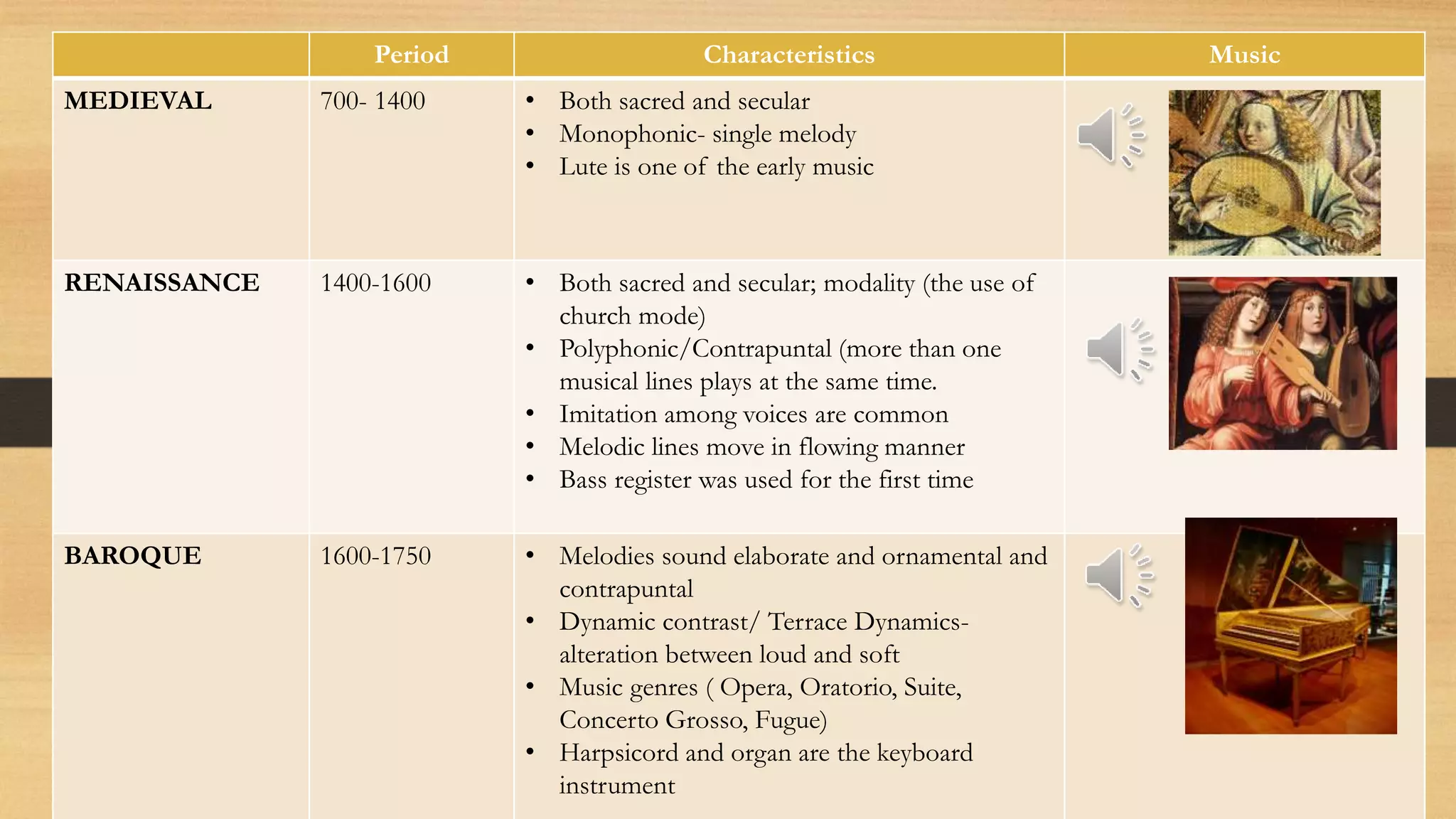
Period Characteristics Music
MEDIEVAL 700- 1400 • Both sacred and secular
• Monophonic- single melody
• Lute is one of the early music
RENAISSANCE 1400-1600 • Both sacred and secular; modality (the use of
church mode)
• Polyphonic/Contrapuntal (more than one
musical lines plays at the same time.
• Imitation among voices are common
• Melodic lines move in flowing manner
• Bass register was used for the first time
BAROQUE 1600-1750 • Melodies sound elaborate and ornamental and
contrapuntal
• Dynamic contrast/ Terrace Dynamics-
alteration between loud and soft
• Music genres ( Opera, Oratorio, Suite,
Concerto Grosso, Fugue)
• Harpsicord and organ are the keyboard
instrument
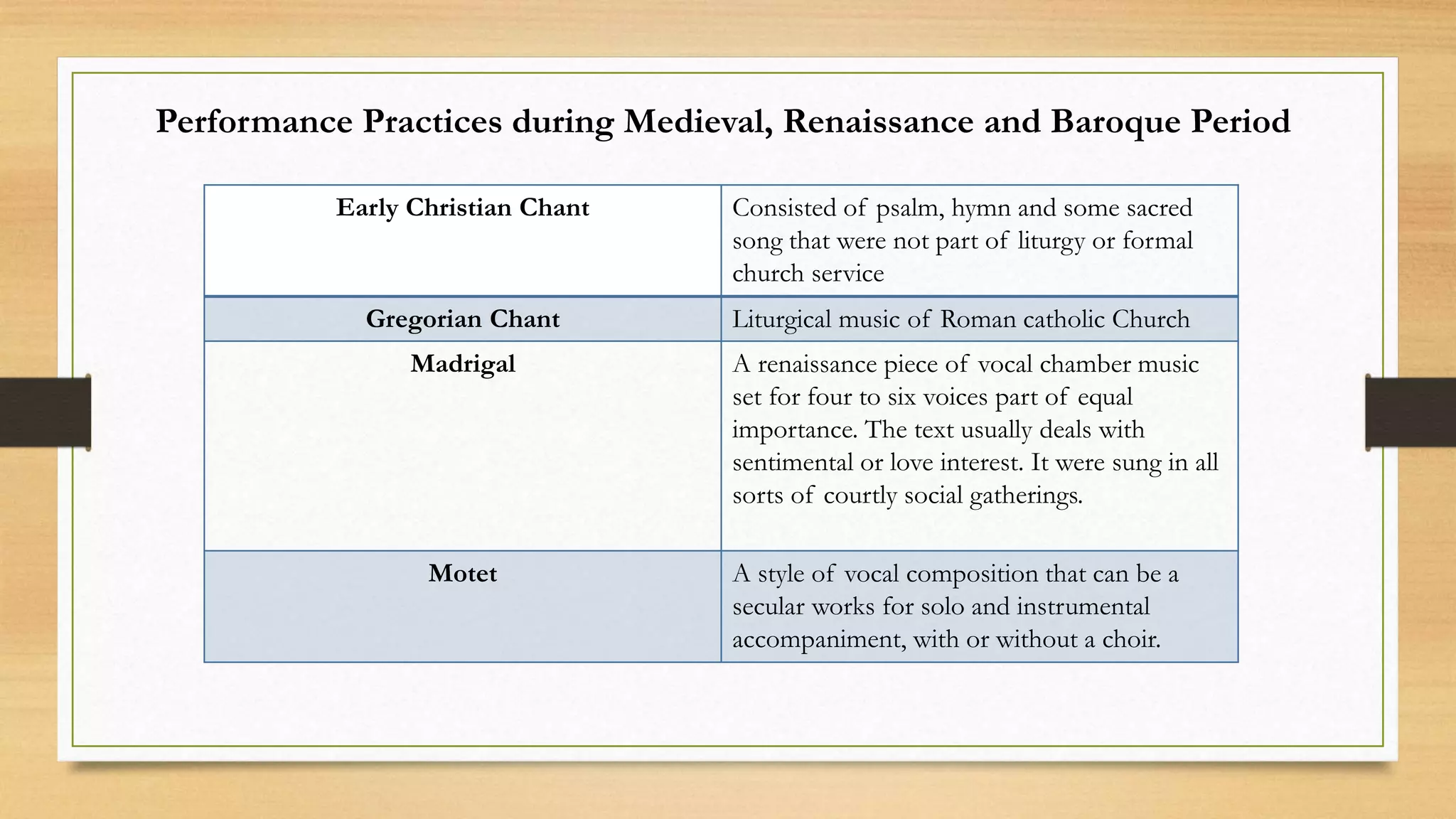
Performance Practices during Medieval, Renaissance and Baroque Period
Early Christian Chant Consisted of psalm, hymn and some sacred
song that were not part of liturgy or formal
church service
Gregorian Chant Liturgical music of Roman catholic Church
Madrigal A renaissance piece of vocal chamber music
set for four to six voices part of equal
importance. The text usually deals with
sentimental or love interest. It were sung in all
sorts of courtly social gatherings.
Motet A style of vocal composition that can be a
secular works for solo and instrumental
accompaniment, with or without a choir.
Dramatic Music of Baroque Period
1. Oratorio- a religious narrative scale work for orchestra and voices performed
without costume, scenery or action. Oratorio makes uses of a narrator, vocal
soloists, chorus and orchestra
2. Cantata- similar to oratorio except that it is short, lyrical form. It deals varied
subject matter, either religious or secular. It is also written for a small number of
performer, often limited to soloist with few accompanying instruments.
3. Suite- a set of instrumental compositions for dance style. Consist of series of
dances derived from social or court dances of the time.
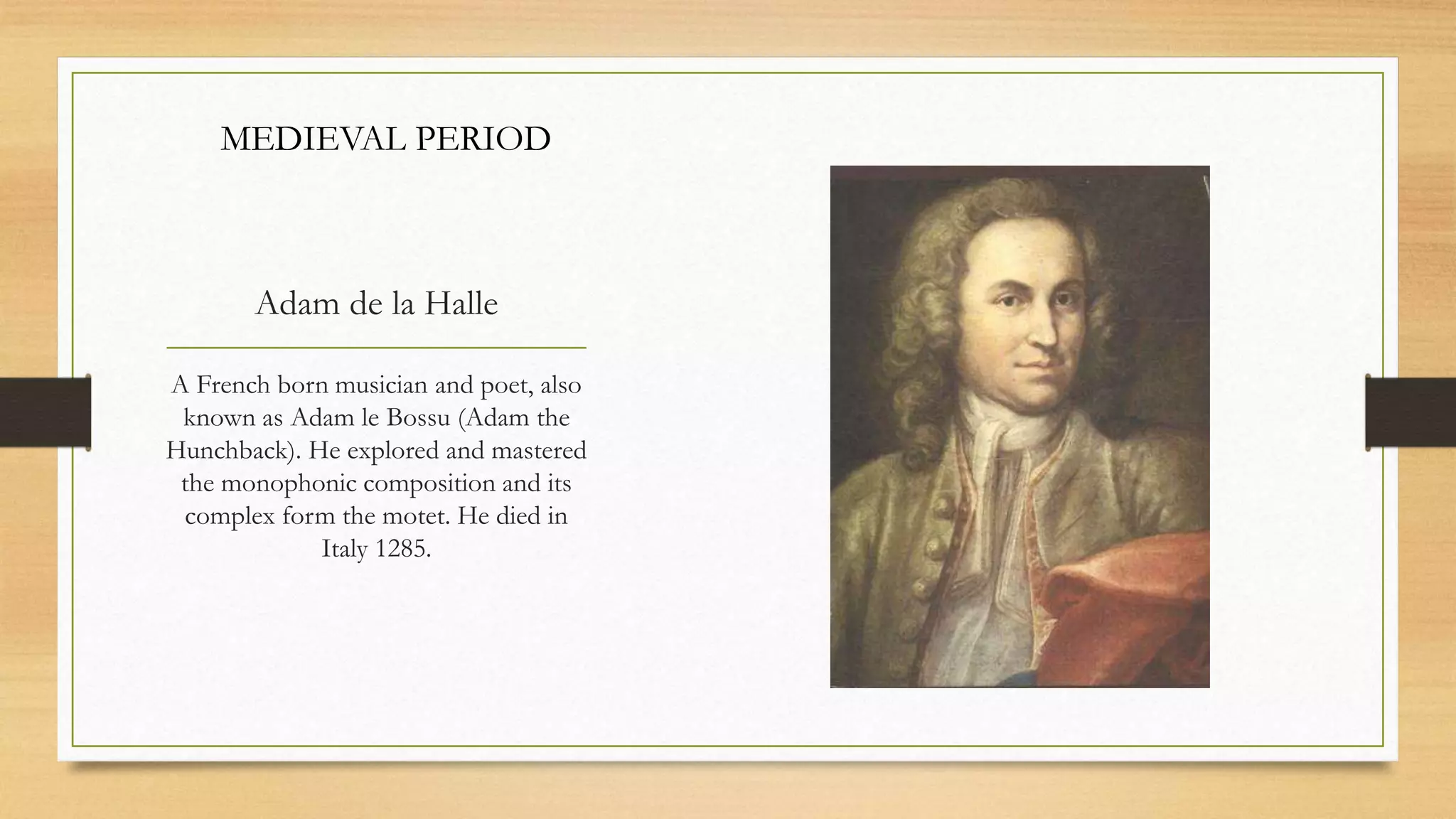
Adam de la Halle
A French born musician and poet, also
known as Adam le Bossu (Adam the
Hunchback). He explored and mastered
the monophonic composition and its
complex form the motet. He died in
Italy 1285.
MEDIEVAL PERIOD
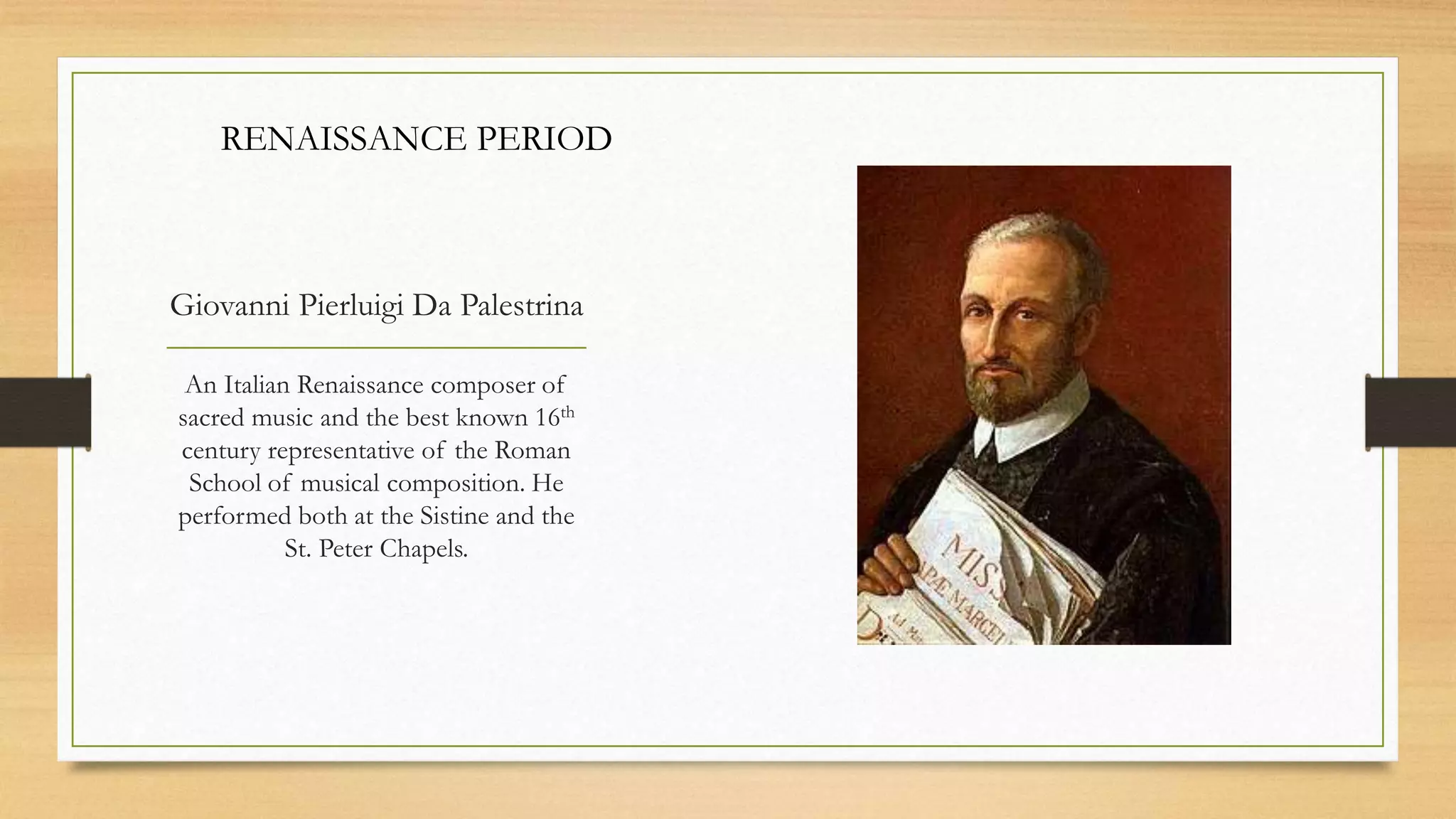
Giovanni Pierluigi Da Palestrina
An Italian Renaissance composer of
sacred music and the best known 16th
century representative of the Roman
School of musical composition. He
performed both at the Sistine and the
St. Peter Chapels.
RENAISSANCE PERIOD
Thomas Morley
Another famous composer of the
Renaissance Era. He was also an
organist at St. Paul Cathedral.
RENAISSANCE PERIOD
Baroque Period
(early part composers)
Antonio Vivaldi Claudio Monteverdi
Baroque Period
(late part composers)
Georg Friedrich Handel was the first great oratorios who composed the Messiah, an English language oratorio.
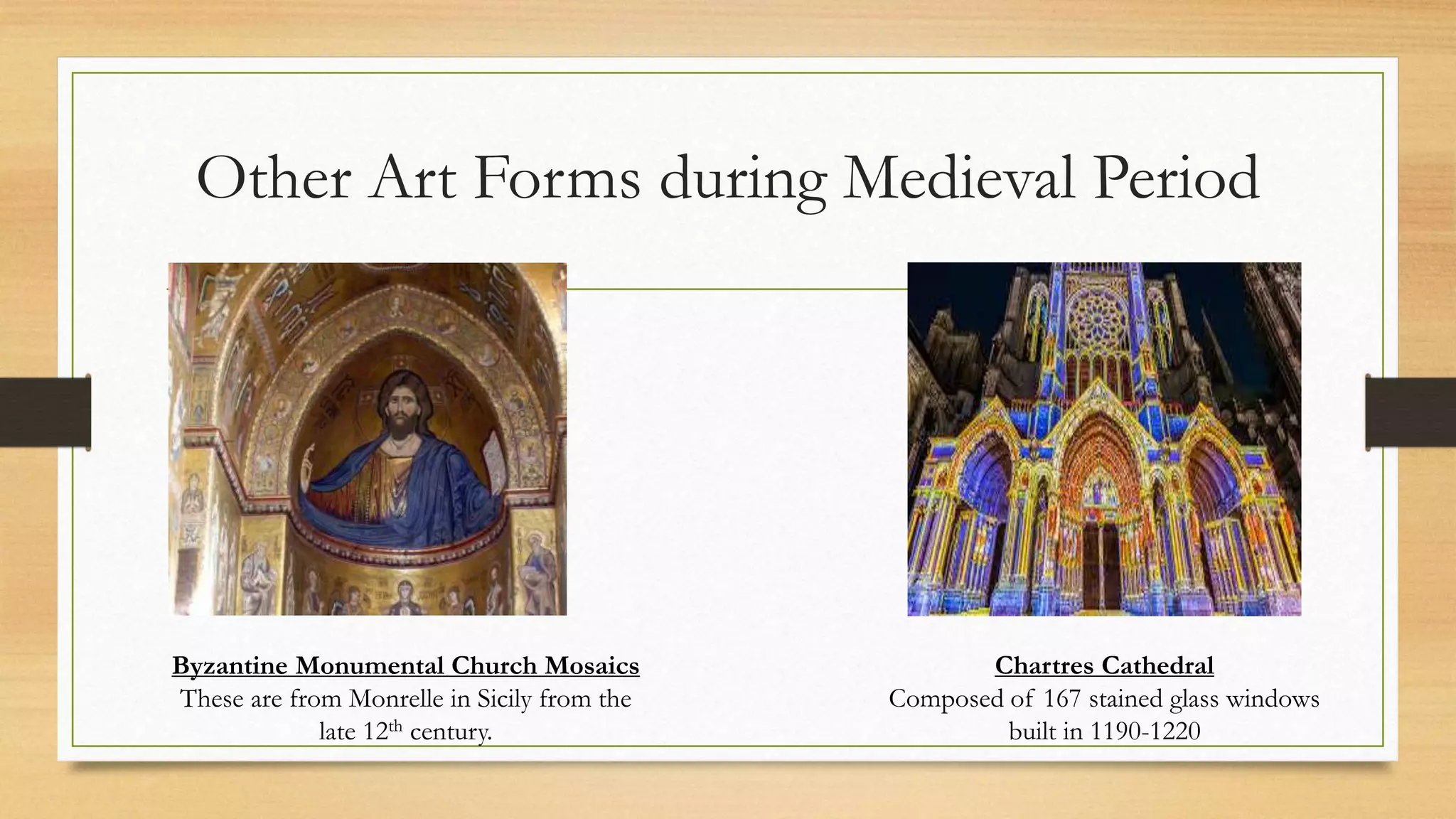
Other Art Forms during Medieval Period
Byzantine Monumental Church Mosaics
These are from Monrelle in Sicily from the
late 12th century.
Chartres Cathedral
Composed of 167 stained glass windows
built in 1190-1220
Other Art Forms during Renaissance Period
Monalisa
By Leonardo Da Vinci
St. George and the Dragon
By Raphael
Madona and Child
By Michelangelo
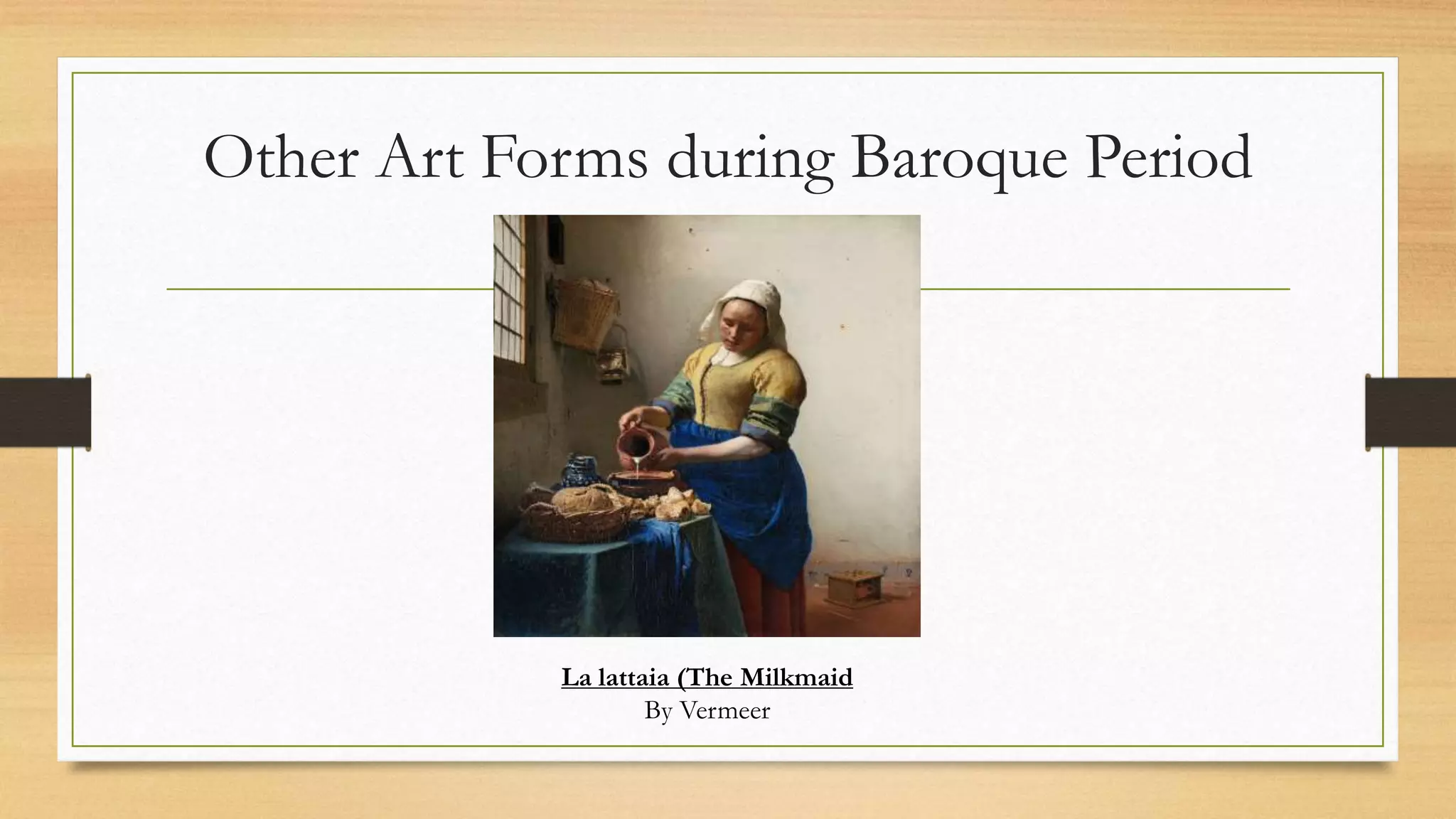
Other Art Forms during Baroque Period
La lattaia (The Milkmaid
By Vermeer
source: https://youtu.be/K_32hq6ze5s
YouTube Channel: Rappler
Thank you!
Prepared by: Ma’am Inah

Mapeh 9 week 1 and week 2 lesson

  • 1.
    Good day! Ma’am InahDiego MAPEH TEACHER
  • 2.
    Music from Medieval, Renaissanceand Baroque Period Lesson for Week 1 and 2
  • 3.
    Period Characteristics Music MEDIEVAL700- 1400 • Both sacred and secular • Monophonic- single melody • Lute is one of the early music RENAISSANCE 1400-1600 • Both sacred and secular; modality (the use of church mode) • Polyphonic/Contrapuntal (more than one musical lines plays at the same time. • Imitation among voices are common • Melodic lines move in flowing manner • Bass register was used for the first time BAROQUE 1600-1750 • Melodies sound elaborate and ornamental and contrapuntal • Dynamic contrast/ Terrace Dynamics- alteration between loud and soft • Music genres ( Opera, Oratorio, Suite, Concerto Grosso, Fugue) • Harpsicord and organ are the keyboard instrument
  • 4.
    Performance Practices duringMedieval, Renaissance and Baroque Period Early Christian Chant Consisted of psalm, hymn and some sacred song that were not part of liturgy or formal church service Gregorian Chant Liturgical music of Roman catholic Church Madrigal A renaissance piece of vocal chamber music set for four to six voices part of equal importance. The text usually deals with sentimental or love interest. It were sung in all sorts of courtly social gatherings. Motet A style of vocal composition that can be a secular works for solo and instrumental accompaniment, with or without a choir.
  • 5.
    Dramatic Music ofBaroque Period 1. Oratorio- a religious narrative scale work for orchestra and voices performed without costume, scenery or action. Oratorio makes uses of a narrator, vocal soloists, chorus and orchestra 2. Cantata- similar to oratorio except that it is short, lyrical form. It deals varied subject matter, either religious or secular. It is also written for a small number of performer, often limited to soloist with few accompanying instruments. 3. Suite- a set of instrumental compositions for dance style. Consist of series of dances derived from social or court dances of the time.
  • 6.
    Adam de laHalle A French born musician and poet, also known as Adam le Bossu (Adam the Hunchback). He explored and mastered the monophonic composition and its complex form the motet. He died in Italy 1285. MEDIEVAL PERIOD
  • 7.
    Giovanni Pierluigi DaPalestrina An Italian Renaissance composer of sacred music and the best known 16th century representative of the Roman School of musical composition. He performed both at the Sistine and the St. Peter Chapels. RENAISSANCE PERIOD
  • 8.
    Thomas Morley Another famouscomposer of the Renaissance Era. He was also an organist at St. Paul Cathedral. RENAISSANCE PERIOD
  • 9.
    Baroque Period (early partcomposers) Antonio Vivaldi Claudio Monteverdi
  • 10.
    Baroque Period (late partcomposers) Georg Friedrich Handel was the first great oratorios who composed the Messiah, an English language oratorio.
  • 11.
    Other Art Formsduring Medieval Period Byzantine Monumental Church Mosaics These are from Monrelle in Sicily from the late 12th century. Chartres Cathedral Composed of 167 stained glass windows built in 1190-1220
  • 12.
    Other Art Formsduring Renaissance Period Monalisa By Leonardo Da Vinci St. George and the Dragon By Raphael Madona and Child By Michelangelo
  • 13.
    Other Art Formsduring Baroque Period La lattaia (The Milkmaid By Vermeer
  • 15.
  • 16.