Manufacturing
Processes:
Optimizing
Production Efficiency
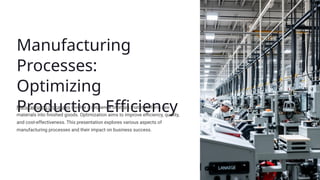
Manufacturing processes involve a sequence of steps that transform raw
materials into finished goods. Optimization aims to improve efficiency, quality,
and cost-effectiveness. This presentation explores various aspects of
manufacturing processes and their impact on business success.
Understanding Manufacturing Engineering Expertise
1 Technical Skills
Manufacturing engineers have deep knowledge of materials,
processes, and technologies.
2 Problem-Solving
They excel at identifying and resolving challenges throughout
the manufacturing process.
3 Process Optimization
Manufacturing engineers can improve efficiency, quality, and
cost-effectiveness.
4 Innovation
They are crucial in driving innovation and implementing new
manufacturing techniques.
Navigating the Manufacturing Environment
Production Systems
Understanding different production
systems, such as batch production,
mass production, and lean
manufacturing.
Quality Control
Implementing and adhering to quality
standards to ensure product
consistency.
Safety Regulations
Prioritizing workplace safety and
complying with relevant regulations.
Integrating Manufacturing Operations and Intelligence
1
Data Collection
Sensors collect real-time data
on production processes,
equipment performance, and
product quality.
2
Data Analysis
Advanced analytics
algorithms analyze data to
identify patterns, trends, and
anomalies.
3
Decision Making
Insights from data analysis
are used to optimize
production processes, reduce
waste, and improve quality.
4
Process Optimization
Real-time adjustments to
production processes are
made based on data insights.
Maximizing Manufacturing
Engineering Consultant
Services
Process Assessment
Identifying areas for improvement,
bottlenecks, and opportunities for
optimization.
Technology
Implementation
Introducing new technologies and
systems to enhance production
processes.
Training & Development
Providing training and development
programs for manufacturing
personnel.
Continuous Improvement
Implementing strategies for
ongoing improvement and
optimization.
Leveraging Manufacturing Integration
for Competitive Advantage
Data Sharing
Real-time data sharing between different departments, such as design, engineering, and
production.
Process Automation
Automating repetitive tasks and processes to improve efficiency and accuracy.
Improved Communication
Better communication and collaboration between teams, leading to faster decision-making.
Enhanced Flexibility
Increased flexibility in responding to changing market demands and customer needs.
Driving Innovation through
Manufacturing Processes
3D Printing Rapid prototyping and
customization.
Robotics & Automation Increased efficiency, precision,
and safety.
Advanced Materials Developing new materials with
enhanced properties.
Digital Twins Virtual representations of
physical assets for simulation
and optimization.
Conclusion: Embracing the Future of
Manufacturing
The future of manufacturing is driven by innovation, automation, and digital transformation. By embracing these advancements,
manufacturers can achieve greater efficiency, productivity, and sustainability. Continued investment in research and development,
talent development, and strategic partnerships will be crucial for driving progress and securing long-term success.

Manufacturing Processes: Optimizing Production Efficiency

  • 1.
    Manufacturing Processes: Optimizing Production Efficiency Manufacturing processesinvolve a sequence of steps that transform raw materials into finished goods. Optimization aims to improve efficiency, quality, and cost-effectiveness. This presentation explores various aspects of manufacturing processes and their impact on business success.
  • 2.
    Understanding Manufacturing EngineeringExpertise 1 Technical Skills Manufacturing engineers have deep knowledge of materials, processes, and technologies. 2 Problem-Solving They excel at identifying and resolving challenges throughout the manufacturing process. 3 Process Optimization Manufacturing engineers can improve efficiency, quality, and cost-effectiveness. 4 Innovation They are crucial in driving innovation and implementing new manufacturing techniques.
  • 3.
    Navigating the ManufacturingEnvironment Production Systems Understanding different production systems, such as batch production, mass production, and lean manufacturing. Quality Control Implementing and adhering to quality standards to ensure product consistency. Safety Regulations Prioritizing workplace safety and complying with relevant regulations.
  • 4.
    Integrating Manufacturing Operationsand Intelligence 1 Data Collection Sensors collect real-time data on production processes, equipment performance, and product quality. 2 Data Analysis Advanced analytics algorithms analyze data to identify patterns, trends, and anomalies. 3 Decision Making Insights from data analysis are used to optimize production processes, reduce waste, and improve quality. 4 Process Optimization Real-time adjustments to production processes are made based on data insights.
  • 5.
    Maximizing Manufacturing Engineering Consultant Services ProcessAssessment Identifying areas for improvement, bottlenecks, and opportunities for optimization. Technology Implementation Introducing new technologies and systems to enhance production processes. Training & Development Providing training and development programs for manufacturing personnel. Continuous Improvement Implementing strategies for ongoing improvement and optimization.
  • 6.
    Leveraging Manufacturing Integration forCompetitive Advantage Data Sharing Real-time data sharing between different departments, such as design, engineering, and production. Process Automation Automating repetitive tasks and processes to improve efficiency and accuracy. Improved Communication Better communication and collaboration between teams, leading to faster decision-making. Enhanced Flexibility Increased flexibility in responding to changing market demands and customer needs.
  • 7.
    Driving Innovation through ManufacturingProcesses 3D Printing Rapid prototyping and customization. Robotics & Automation Increased efficiency, precision, and safety. Advanced Materials Developing new materials with enhanced properties. Digital Twins Virtual representations of physical assets for simulation and optimization.
  • 8.
    Conclusion: Embracing theFuture of Manufacturing The future of manufacturing is driven by innovation, automation, and digital transformation. By embracing these advancements, manufacturers can achieve greater efficiency, productivity, and sustainability. Continued investment in research and development, talent development, and strategic partnerships will be crucial for driving progress and securing long-term success.