Product Integration:
An Overview
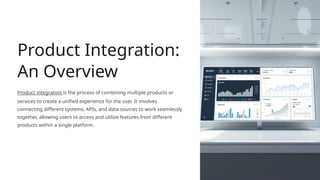
Product integration is the process of combining multiple products or
services to create a unified experience for the user. It involves
connecting different systems, APIs, and data sources to work seamlessly
together, allowing users to access and utilize features from different
products within a single platform.
Benefits of Integrated
Products
1 Enhanced User
Experience
Seamlessly transitions users
between products, reducing
friction and maximizing
productivity.
2 Increased Efficiency
Automate tasks by sharing
data and processes,
streamlining workflows and
reducing manual effort.
3 Expanded
Functionality
Combines features from
multiple products, offering
a more comprehensive
solution to user needs.
4 Improved Data
Analysis
Connects data from various
sources, enabling deeper
insights and better
decision-making.
Challenges in Product Integration
Technical Complexity
Involves coordinating different
technologies, APIs, and data
structures, requiring expertise and
careful planning.
Data Security and Privacy
Ensuring data is protected and
handled securely, especially when
combining data from different
sources.
User Adoption and Training
Teaching users how to navigate the
integrated platform, requiring clear
documentation and user-friendly
interfaces.
Strategies for Successful Integration
1 Define Scope and Goals
Clearly define the purpose, target users, and functionalities of the integrated
product.
2 Choose the Right Technologies
Select technologies and platforms compatible with existing systems and meet
performance requirements.
3 Prioritize User Experience
Design an intuitive interface, seamless transitions, and helpful support
resources for users.
4 Iterate and Test
Develop and test the integrated product in stages, gathering user feedback
and making adjustments as needed.
Technical Considerations
API Integration Connecting different applications
through APIs, ensuring data
exchange and communication.
Data Synchronization Maintaining consistency and
accuracy between different data
sources, updating data in real time.
Security Protocols Protecting sensitive data from
unauthorized access, ensuring
compliance with industry
standards.
Scalability and Performance Designing the integrated system to
handle increasing data volumes
and user traffic, maintaining
optimal performance.
User Experience Implications
User Onboarding
Provide clear guidance and
tutorials to help users
understand the integrated
platform.
Intuitive Navigation
Design a seamless and
intuitive user interface,
minimizing confusion and
maximizing ease of use.
Personalized
Experience
Leverage user data to create
personalized experiences,
tailoring features and
recommendations.
Feedback and Support
Provide channels for user
feedback and support,
addressing issues and
improving the user
experience.
Roadmap and Next Steps
Pilot Launch
Implement a pilot program
with a limited group of users
to test the integrated product
in a real-world setting.
Continuous
Improvement
Gather user feedback and
data, iteratively improve the
integrated product, and
address any issues.
Expand Integration
Explore opportunities to
integrate additional products
or services, expanding the
functionality and value of the
platform.
Marketing and
Communication
Communicate the benefits of
the integrated product to
users and stakeholders,
promoting adoption and
engagement.

Product Integration PPT - September.pptx

  • 1.
    Product Integration: An Overview Productintegration is the process of combining multiple products or services to create a unified experience for the user. It involves connecting different systems, APIs, and data sources to work seamlessly together, allowing users to access and utilize features from different products within a single platform.
  • 2.
    Benefits of Integrated Products 1Enhanced User Experience Seamlessly transitions users between products, reducing friction and maximizing productivity. 2 Increased Efficiency Automate tasks by sharing data and processes, streamlining workflows and reducing manual effort. 3 Expanded Functionality Combines features from multiple products, offering a more comprehensive solution to user needs. 4 Improved Data Analysis Connects data from various sources, enabling deeper insights and better decision-making.
  • 3.
    Challenges in ProductIntegration Technical Complexity Involves coordinating different technologies, APIs, and data structures, requiring expertise and careful planning. Data Security and Privacy Ensuring data is protected and handled securely, especially when combining data from different sources. User Adoption and Training Teaching users how to navigate the integrated platform, requiring clear documentation and user-friendly interfaces.
  • 4.
    Strategies for SuccessfulIntegration 1 Define Scope and Goals Clearly define the purpose, target users, and functionalities of the integrated product. 2 Choose the Right Technologies Select technologies and platforms compatible with existing systems and meet performance requirements. 3 Prioritize User Experience Design an intuitive interface, seamless transitions, and helpful support resources for users. 4 Iterate and Test Develop and test the integrated product in stages, gathering user feedback and making adjustments as needed.
  • 5.
    Technical Considerations API IntegrationConnecting different applications through APIs, ensuring data exchange and communication. Data Synchronization Maintaining consistency and accuracy between different data sources, updating data in real time. Security Protocols Protecting sensitive data from unauthorized access, ensuring compliance with industry standards. Scalability and Performance Designing the integrated system to handle increasing data volumes and user traffic, maintaining optimal performance.
  • 6.
    User Experience Implications UserOnboarding Provide clear guidance and tutorials to help users understand the integrated platform. Intuitive Navigation Design a seamless and intuitive user interface, minimizing confusion and maximizing ease of use. Personalized Experience Leverage user data to create personalized experiences, tailoring features and recommendations. Feedback and Support Provide channels for user feedback and support, addressing issues and improving the user experience.
  • 7.
    Roadmap and NextSteps Pilot Launch Implement a pilot program with a limited group of users to test the integrated product in a real-world setting. Continuous Improvement Gather user feedback and data, iteratively improve the integrated product, and address any issues. Expand Integration Explore opportunities to integrate additional products or services, expanding the functionality and value of the platform. Marketing and Communication Communicate the benefits of the integrated product to users and stakeholders, promoting adoption and engagement.