Product Engineering
Services: Unlocking
Innovation and Agility
Unlocking the power of product engineering: Strategies for innovation
and agility.
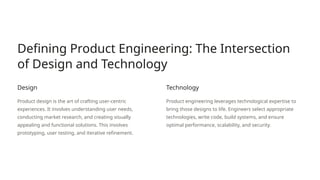
Defining Product Engineering: The Intersection
of Design and Technology
Design
Product design is the art of crafting user-centric
experiences. It involves understanding user needs,
conducting market research, and creating visually
appealing and functional solutions. This involves
prototyping, user testing, and iterative refinement.
Technology
Product engineering leverages technological expertise to
bring those designs to life. Engineers select appropriate
technologies, write code, build systems, and ensure
optimal performance, scalability, and security.
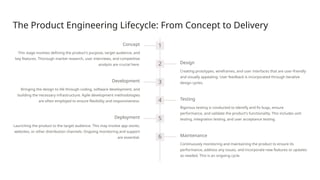
The Product Engineering Lifecycle: From Concept to Delivery
1
Concept
This stage involves defining the product's purpose, target audience, and
key features. Thorough market research, user interviews, and competitive
analysis are crucial here. 2 Design
Creating prototypes, wireframes, and user interfaces that are user-friendly
and visually appealing. User feedback is incorporated through iterative
design cycles.
3
Development
Bringing the design to life through coding, software development, and
building the necessary infrastructure. Agile development methodologies
are often employed to ensure flexibility and responsiveness. 4 Testing
Rigorous testing is conducted to identify and fix bugs, ensure
performance, and validate the product's functionality. This includes unit
testing, integration testing, and user acceptance testing.
5
Deployment
Launching the product to the target audience. This may involve app stores,
websites, or other distribution channels. Ongoing monitoring and support
are essential. 6 Maintenance
Continuously monitoring and maintaining the product to ensure its
performance, address any issues, and incorporate new features or updates
as needed. This is an ongoing cycle.
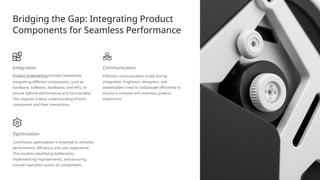
Bridging the Gap: Integrating Product
Components for Seamless Performance
Integration
Product engineering involves seamlessly
integrating different components, such as
hardware, software, databases, and APIs, to
ensure optimal performance and functionality.
This requires a deep understanding of each
component and their interactions.
Communication
Effective communication is key during
integration. Engineers, designers, and
stakeholders need to collaborate effectively to
ensure a cohesive and seamless product
experience.
Optimization
Continuous optimization is essential to enhance
performance, efficiency, and user experience.
This involves identifying bottlenecks,
implementing improvements, and ensuring
smooth operation across all components.
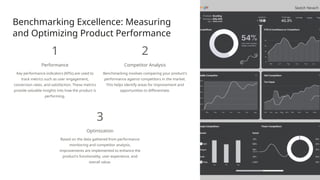
Benchmarking Excellence: Measuring
and Optimizing Product Performance
1
Performance
Key performance indicators (KPIs) are used to
track metrics such as user engagement,
conversion rates, and satisfaction. These metrics
provide valuable insights into how the product is
performing.
2
Competitor Analysis
Benchmarking involves comparing your product's
performance against competitors in the market.
This helps identify areas for improvement and
opportunities to differentiate.
3
Optimization
Based on the data gathered from performance
monitoring and competitor analysis,
improvements are implemented to enhance the
product's functionality, user experience, and
overall value.
Embracing Agility: Adaptive Product Engineering for
Evolving Needs
1
Agile Methodologies
Agile principles, such as iterative development, continuous feedback, and customer-centricity, are crucial in
today's rapidly changing market.
2
Rapid Prototyping
Agile product engineering enables rapid prototyping, allowing teams to test and
refine ideas quickly, based on user feedback and market trends.
3
Continuous Improvement
Agile teams embrace continuous improvement, constantly
seeking ways to enhance the product's performance, user
experience, and overall value.
Collaborative Ideation: Bringing Together Cross-
Functional Expertise
Design Thinking
Design thinking methodologies
encourage brainstorming,
prototyping, and user-centered
approaches to generate innovative
product ideas.
Cross-Functional Teams
Effective collaboration between
engineers, designers, marketing,
and other stakeholders ensures that
the product meets user needs and
market expectations.
Open Communication
Transparent and open
communication is essential for
fostering creativity and ensuring
everyone is aligned on the product
vision and goals.
Elevating the User Experience: Design-Driven Product Engineering
User Research
Understanding user needs, pain points, and preferences through surveys, interviews, and user testing is essential to create a user-centric product.
Usability Testing
Evaluating the product's ease of use, intuitiveness, and overall user experience through testing with real users.
Iterative Design
Continuously refining the product's design based on user feedback and testing to optimize the user experience.
Accessibility
Ensuring that the product is accessible to users with disabilities, adhering to accessibility guidelines and standards.
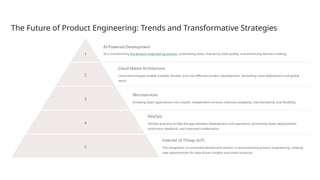
The Future of Product Engineering: Trends and Transformative Strategies
1
AI-Powered Development
AI is transforming the product engineering process, automating tasks, improving code quality, and enhancing decision-making.
2
Cloud-Native Architecture
Cloud technologies enable scalable, flexible, and cost-effective product development, facilitating rapid deployment and global
reach.
3
Microservices
Breaking down applications into smaller, independent services improves scalability, maintainability, and flexibility.
4
DevOps
DevOps practices bridge the gap between development and operations, promoting faster deployments,
continuous feedback, and improved collaboration.
5
Internet of Things (IoT)
The integration of connected devices and sensors is revolutionizing product engineering, creating
new opportunities for data-driven insights and smart products.
Conclusion: Empowering Innovation and Success
Product engineering services are essential for businesses seeking to innovate, stay ahead of the curve, and achieve success
in today's competitive market.

Product Engineering Services: Unlocking Innovation and Agility

  • 1.
    Product Engineering Services: Unlocking Innovationand Agility Unlocking the power of product engineering: Strategies for innovation and agility.
  • 2.
    Defining Product Engineering:The Intersection of Design and Technology Design Product design is the art of crafting user-centric experiences. It involves understanding user needs, conducting market research, and creating visually appealing and functional solutions. This involves prototyping, user testing, and iterative refinement. Technology Product engineering leverages technological expertise to bring those designs to life. Engineers select appropriate technologies, write code, build systems, and ensure optimal performance, scalability, and security.
  • 3.
    The Product EngineeringLifecycle: From Concept to Delivery 1 Concept This stage involves defining the product's purpose, target audience, and key features. Thorough market research, user interviews, and competitive analysis are crucial here. 2 Design Creating prototypes, wireframes, and user interfaces that are user-friendly and visually appealing. User feedback is incorporated through iterative design cycles. 3 Development Bringing the design to life through coding, software development, and building the necessary infrastructure. Agile development methodologies are often employed to ensure flexibility and responsiveness. 4 Testing Rigorous testing is conducted to identify and fix bugs, ensure performance, and validate the product's functionality. This includes unit testing, integration testing, and user acceptance testing. 5 Deployment Launching the product to the target audience. This may involve app stores, websites, or other distribution channels. Ongoing monitoring and support are essential. 6 Maintenance Continuously monitoring and maintaining the product to ensure its performance, address any issues, and incorporate new features or updates as needed. This is an ongoing cycle.
  • 4.
    Bridging the Gap:Integrating Product Components for Seamless Performance Integration Product engineering involves seamlessly integrating different components, such as hardware, software, databases, and APIs, to ensure optimal performance and functionality. This requires a deep understanding of each component and their interactions. Communication Effective communication is key during integration. Engineers, designers, and stakeholders need to collaborate effectively to ensure a cohesive and seamless product experience. Optimization Continuous optimization is essential to enhance performance, efficiency, and user experience. This involves identifying bottlenecks, implementing improvements, and ensuring smooth operation across all components.
  • 5.
    Benchmarking Excellence: Measuring andOptimizing Product Performance 1 Performance Key performance indicators (KPIs) are used to track metrics such as user engagement, conversion rates, and satisfaction. These metrics provide valuable insights into how the product is performing. 2 Competitor Analysis Benchmarking involves comparing your product's performance against competitors in the market. This helps identify areas for improvement and opportunities to differentiate. 3 Optimization Based on the data gathered from performance monitoring and competitor analysis, improvements are implemented to enhance the product's functionality, user experience, and overall value.
  • 6.
    Embracing Agility: AdaptiveProduct Engineering for Evolving Needs 1 Agile Methodologies Agile principles, such as iterative development, continuous feedback, and customer-centricity, are crucial in today's rapidly changing market. 2 Rapid Prototyping Agile product engineering enables rapid prototyping, allowing teams to test and refine ideas quickly, based on user feedback and market trends. 3 Continuous Improvement Agile teams embrace continuous improvement, constantly seeking ways to enhance the product's performance, user experience, and overall value.
  • 7.
    Collaborative Ideation: BringingTogether Cross- Functional Expertise Design Thinking Design thinking methodologies encourage brainstorming, prototyping, and user-centered approaches to generate innovative product ideas. Cross-Functional Teams Effective collaboration between engineers, designers, marketing, and other stakeholders ensures that the product meets user needs and market expectations. Open Communication Transparent and open communication is essential for fostering creativity and ensuring everyone is aligned on the product vision and goals.
  • 8.
    Elevating the UserExperience: Design-Driven Product Engineering User Research Understanding user needs, pain points, and preferences through surveys, interviews, and user testing is essential to create a user-centric product. Usability Testing Evaluating the product's ease of use, intuitiveness, and overall user experience through testing with real users. Iterative Design Continuously refining the product's design based on user feedback and testing to optimize the user experience. Accessibility Ensuring that the product is accessible to users with disabilities, adhering to accessibility guidelines and standards.
  • 9.
    The Future ofProduct Engineering: Trends and Transformative Strategies 1 AI-Powered Development AI is transforming the product engineering process, automating tasks, improving code quality, and enhancing decision-making. 2 Cloud-Native Architecture Cloud technologies enable scalable, flexible, and cost-effective product development, facilitating rapid deployment and global reach. 3 Microservices Breaking down applications into smaller, independent services improves scalability, maintainability, and flexibility. 4 DevOps DevOps practices bridge the gap between development and operations, promoting faster deployments, continuous feedback, and improved collaboration. 5 Internet of Things (IoT) The integration of connected devices and sensors is revolutionizing product engineering, creating new opportunities for data-driven insights and smart products.
  • 10.
    Conclusion: Empowering Innovationand Success Product engineering services are essential for businesses seeking to innovate, stay ahead of the curve, and achieve success in today's competitive market.