MANDIBULAR ANATOMICAL
LANDMARKS
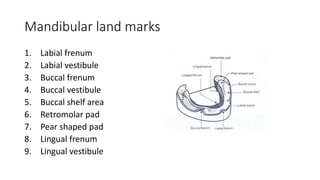
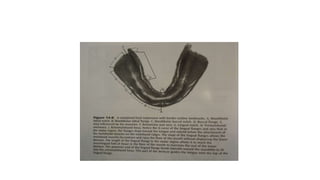
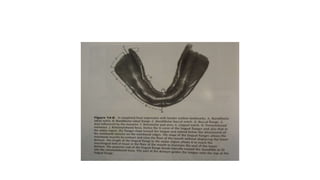
Mandibular land marks
1. Labial frenum
2. Labial vestibule
3. Buccal frenum
4. Buccal vestibule
5. Buccal shelf area
6. Retromolar pad
7. Pear shaped pad
8. Lingual frenum
9. Lingual vestibule
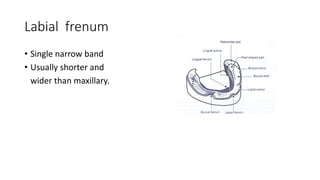
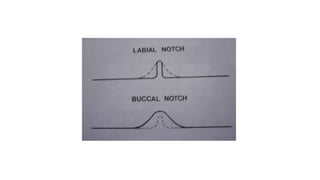
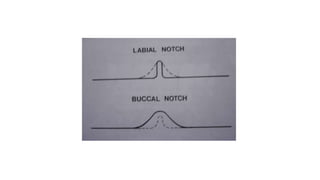
Labial frenum
• Single narrow band
• Usually shorter and
wider than maxillary.
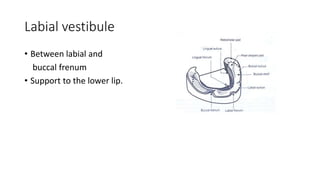
Labial vestibule
• Between labial and
buccal frenum
• Support to the lower lip.
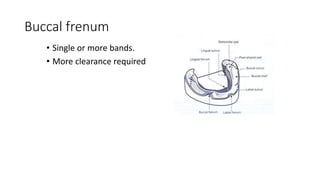
Buccal frenum
• Single or more bands.
• More clearance required
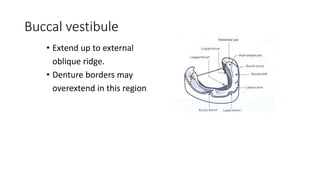
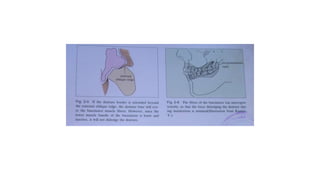
Buccal vestibule
• Extend up to external
oblique ridge.
• Denture borders may
overextend in this region
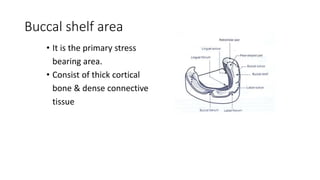
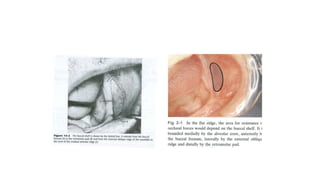
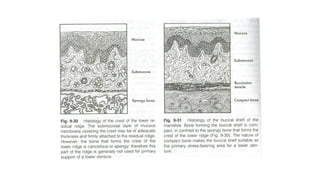
Buccal shelf area
• It is the primary stress
bearing area.
• Consist of thick cortical
bone & dense connective
tissue
Retromolar pad area
• Forms the distal end of
the denture.
• Consist of loose
connective tissue
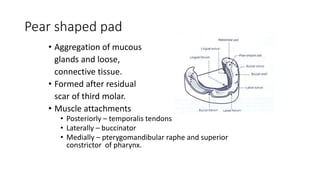
Pear shaped pad
• Aggregation of mucous
glands and loose,
connective tissue.
• Formed after residual
scar of third molar.
• Muscle attachments
• Posteriorly – temporalis tendons
• Laterally – buccinator
• Medially – pterygomandibular raphe and superior
constrictor of pharynx.
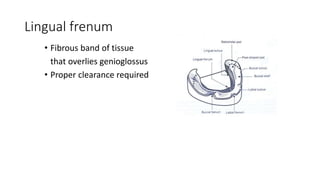
Lingual frenum
• Fibrous band of tissue
that overlies genioglossus
• Proper clearance required
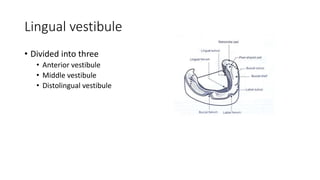
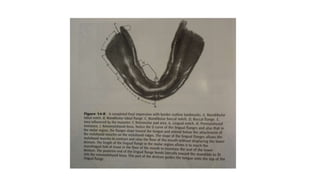
Lingual vestibule
• Divided into three
• Anterior vestibule
• Middle vestibule
• Distolingual vestibule
Anterior
• Also called sublingual crescent area
• Structures present
• Genioglossus muscles
• Lingual frenum
• Anterior portion of sublingual gland
Middle
• Also called mylohyoid vestibule
• Is the largest portion of lingual vestibule
• Structures seen
• Mylohyoid muscle
• Sublingual gland
Posterior
• Also called lateral throat form or
retromylohyoid fossa
• Boundaries
• Anteriorly – mylohyoid muscle
• Laterally – pear shaped pad
• Posteriorly – retromylohyoid curtain
• Medially - tongue
References
• BERNARD LEWIN
• SHELDON WINKLER
• SHARRY
• Characteristics of anatomical landmarks in the mandibular
interforaminal region: A cone-beam computed tomography
study. Med oral patol cir buccal. 2012 ; 17(3): 420–5.
• An In-vivo Comparison of Vertical and Horizontal Distance
between Incisive Papilla and Incisal Edge of Maxillary Central
Incisors in Dentates with Different Arch Forms. JCDR. 2017; 11(4)
• Radiographic evaluation of anatomical variables in maxilla and
mandible in relation to dental implant placement. IJDR.2016; 27(4):
344-7
• THE SIGNIFICANCE OF ANATOMIC LANDMARKS IN COMPLETE
DENTURE SERVICE. J. Pros. Den. May-June, 1964; 14(3); 456-9
• Estimation of effectiveness of different anatomical landmarks in re-
establishing lost occlusal plane in edentates: An all-inclusive review of
literature.
International Journal of Medical and Health Research. 2018; 4(8); 52-
6
THANK YOU

MANDIBULAR ANATOMICAL LANDMARKS

  • 1.
  • 2.
    Mandibular land marks 1.Labial frenum 2. Labial vestibule 3. Buccal frenum 4. Buccal vestibule 5. Buccal shelf area 6. Retromolar pad 7. Pear shaped pad 8. Lingual frenum 9. Lingual vestibule
  • 4.
    Labial frenum • Singlenarrow band • Usually shorter and wider than maxillary.
  • 6.
    Labial vestibule • Betweenlabial and buccal frenum • Support to the lower lip.
  • 7.
    Buccal frenum • Singleor more bands. • More clearance required
  • 9.
    Buccal vestibule • Extendup to external oblique ridge. • Denture borders may overextend in this region
  • 11.
    Buccal shelf area •It is the primary stress bearing area. • Consist of thick cortical bone & dense connective tissue
  • 14.
    Retromolar pad area •Forms the distal end of the denture. • Consist of loose connective tissue
  • 15.
    Pear shaped pad •Aggregation of mucous glands and loose, connective tissue. • Formed after residual scar of third molar. • Muscle attachments • Posteriorly – temporalis tendons • Laterally – buccinator • Medially – pterygomandibular raphe and superior constrictor of pharynx.
  • 16.
    Lingual frenum • Fibrousband of tissue that overlies genioglossus • Proper clearance required
  • 17.
    Lingual vestibule • Dividedinto three • Anterior vestibule • Middle vestibule • Distolingual vestibule
  • 18.
    Anterior • Also calledsublingual crescent area • Structures present • Genioglossus muscles • Lingual frenum • Anterior portion of sublingual gland
  • 20.
    Middle • Also calledmylohyoid vestibule • Is the largest portion of lingual vestibule • Structures seen • Mylohyoid muscle • Sublingual gland
  • 22.
    Posterior • Also calledlateral throat form or retromylohyoid fossa • Boundaries • Anteriorly – mylohyoid muscle • Laterally – pear shaped pad • Posteriorly – retromylohyoid curtain • Medially - tongue
  • 24.
    References • BERNARD LEWIN •SHELDON WINKLER • SHARRY • Characteristics of anatomical landmarks in the mandibular interforaminal region: A cone-beam computed tomography study. Med oral patol cir buccal. 2012 ; 17(3): 420–5.
  • 25.
    • An In-vivoComparison of Vertical and Horizontal Distance between Incisive Papilla and Incisal Edge of Maxillary Central Incisors in Dentates with Different Arch Forms. JCDR. 2017; 11(4) • Radiographic evaluation of anatomical variables in maxilla and mandible in relation to dental implant placement. IJDR.2016; 27(4): 344-7
  • 26.
    • THE SIGNIFICANCEOF ANATOMIC LANDMARKS IN COMPLETE DENTURE SERVICE. J. Pros. Den. May-June, 1964; 14(3); 456-9 • Estimation of effectiveness of different anatomical landmarks in re- establishing lost occlusal plane in edentates: An all-inclusive review of literature. International Journal of Medical and Health Research. 2018; 4(8); 52- 6
  • 27.