UNIT 1
MANAGEMENT CONCEPTS
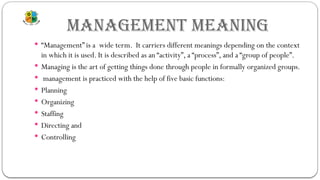
MANAGEMENT MEANING
 “Management” is a wide term. It carriers different meanings depending on the context
in which it is used. It is described as an “activity”, a “process”, and a “group of people”.
 Managing is the art of getting things done through people in formally organized groups.
 management is practiced with the help of five basic functions:
 Planning
 Organizing
 Staffing
 Directing and
 Controlling
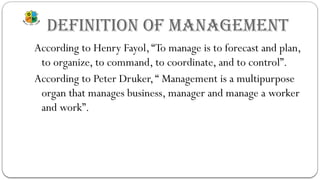
DEFINITION OF MANAGEMENT
According to Henry Fayol,“To manage is to forecast and plan,
to organize, to command, to coordinate, and to control”.
According to Peter Druker,“ Management is a multipurpose
organ that manages business, manager and manage a worker
and work”.
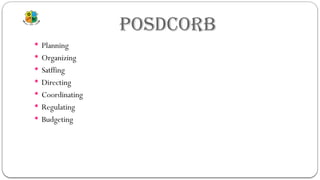
POSDCORB
 Planning
 Organizing
 Satffing
 Directing
 Coordinating
 Regulating
 Budgeting
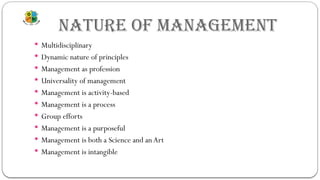
NATURE OF MANAGEMENT
 Multidisciplinary
 Dynamic nature of principles
 Management as profession
 Universality of management
 Management is activity-based
 Management is a process
 Group efforts
 Management is a purposeful
 Management is both a Science and anArt
 Management is intangible
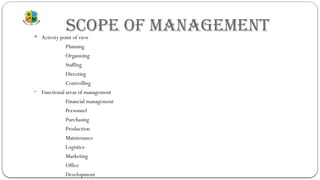
SCOPE OF MANAGEMENT
 Activity point of view
Planning
Organizing
Staffing
Directing
Controlling
• Functional areas of management
Financial management
Personnel
Purchasing
Production
Maintenance
Logistics
Marketing
Office
Development
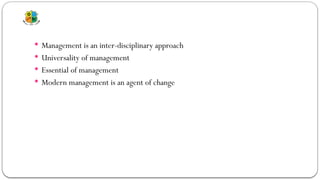
 Management is an inter-disciplinary approach
 Universality of management
 Essential of management
 Modern management is an agent of change
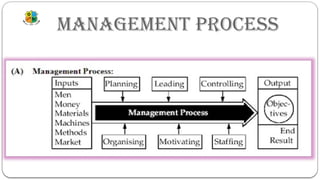
MANAGEMENT PROCESS
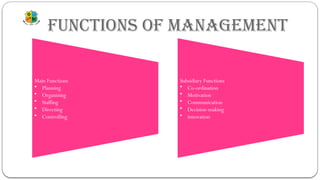
FUNCTIONS OF MANAGEMENT
Main Functions
• Planning
• Organizing
• Staffing
• Directing
• Controlling
Subsidiary Functions
• Co-ordination
• Motivation
• Communication
• Decision-making
• innovation
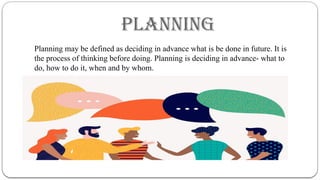
PLANNING
Planning may be defined as deciding in advance what is be done in future. It is
the process of thinking before doing. Planning is deciding in advance- what to
do, how to do it, when and by whom.
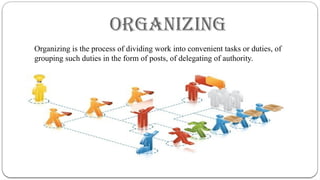
ORGANIZING
Organizing is the process of dividing work into convenient tasks or duties, of
grouping such duties in the form of posts, of delegating of authority.
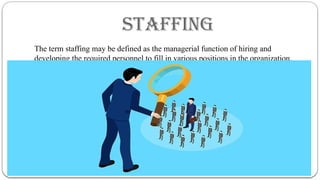
STAFFING
The term staffing may be defined as the managerial function of hiring and
developing the required personnel to fill in various positions in the organization.
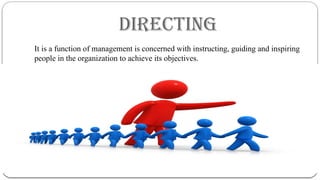
DIRECTING
It is a function of management is concerned with instructing, guiding and inspiring
people in the organization to achieve its objectives.
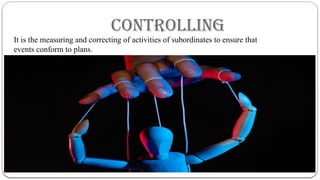
controlling
It is the measuring and correcting of activities of subordinates to ensure that
events conform to plans.
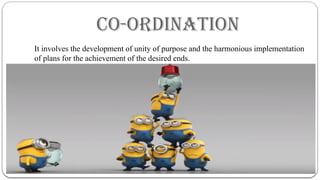
CO-ORDINATION
It involves the development of unity of purpose and the harmonious implementation
of plans for the achievement of the desired ends.
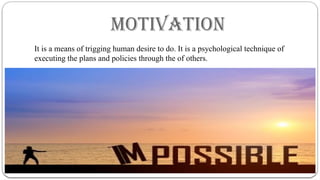
MOTIVATION
It is a means of trigging human desire to do. It is a psychological technique of
executing the plans and policies through the of others.
COMMUNICATION
The exchanges of facts, ideas, opinions or emotions by two or more persons known
as communication.
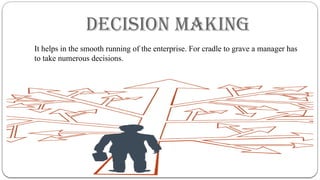
DECISION MAKING
It helps in the smooth running of the enterprise. For cradle to grave a manager has
to take numerous decisions.
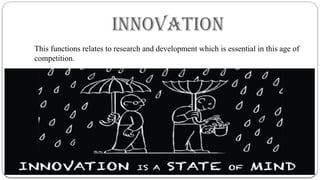
INNOVATION
This functions relates to research and development which is essential in this age of
competition.
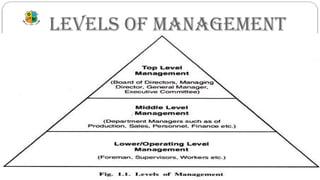
LEVELS OF MANAGEMENT
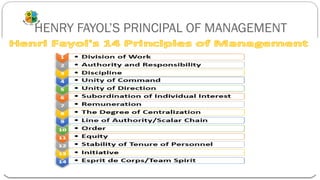
HENRY FAYOL’S PRINCIPAL OF MANAGEMENT

Management Concepts Process Nature & Scope

  • 2.
  • 3.
    MANAGEMENT MEANING  “Management”is a wide term. It carriers different meanings depending on the context in which it is used. It is described as an “activity”, a “process”, and a “group of people”.  Managing is the art of getting things done through people in formally organized groups.  management is practiced with the help of five basic functions:  Planning  Organizing  Staffing  Directing and  Controlling
  • 4.
    DEFINITION OF MANAGEMENT Accordingto Henry Fayol,“To manage is to forecast and plan, to organize, to command, to coordinate, and to control”. According to Peter Druker,“ Management is a multipurpose organ that manages business, manager and manage a worker and work”.
  • 5.
    POSDCORB  Planning  Organizing Satffing  Directing  Coordinating  Regulating  Budgeting
  • 6.
    NATURE OF MANAGEMENT Multidisciplinary  Dynamic nature of principles  Management as profession  Universality of management  Management is activity-based  Management is a process  Group efforts  Management is a purposeful  Management is both a Science and anArt  Management is intangible
  • 7.
    SCOPE OF MANAGEMENT Activity point of view Planning Organizing Staffing Directing Controlling • Functional areas of management Financial management Personnel Purchasing Production Maintenance Logistics Marketing Office Development
  • 8.
     Management isan inter-disciplinary approach  Universality of management  Essential of management  Modern management is an agent of change
  • 9.
  • 10.
    FUNCTIONS OF MANAGEMENT MainFunctions • Planning • Organizing • Staffing • Directing • Controlling Subsidiary Functions • Co-ordination • Motivation • Communication • Decision-making • innovation
  • 11.
    PLANNING Planning may bedefined as deciding in advance what is be done in future. It is the process of thinking before doing. Planning is deciding in advance- what to do, how to do it, when and by whom.
  • 12.
    ORGANIZING Organizing is theprocess of dividing work into convenient tasks or duties, of grouping such duties in the form of posts, of delegating of authority.
  • 13.
    STAFFING The term staffingmay be defined as the managerial function of hiring and developing the required personnel to fill in various positions in the organization.
  • 14.
    DIRECTING It is afunction of management is concerned with instructing, guiding and inspiring people in the organization to achieve its objectives.
  • 15.
    controlling It is themeasuring and correcting of activities of subordinates to ensure that events conform to plans.
  • 16.
    CO-ORDINATION It involves thedevelopment of unity of purpose and the harmonious implementation of plans for the achievement of the desired ends.
  • 17.
    MOTIVATION It is ameans of trigging human desire to do. It is a psychological technique of executing the plans and policies through the of others.
  • 18.
    COMMUNICATION The exchanges offacts, ideas, opinions or emotions by two or more persons known as communication.
  • 19.
    DECISION MAKING It helpsin the smooth running of the enterprise. For cradle to grave a manager has to take numerous decisions.
  • 20.
    INNOVATION This functions relatesto research and development which is essential in this age of competition.
  • 21.
  • 22.