Making Your Strategy Work
Leadership Strategies
with Hilary Potts
3 out of 5 employees
rate their company
weak at strategy execution.
Booz Research Study
Challenges Leaders
Face
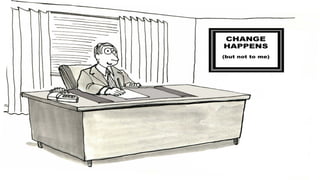
Leaders Don’t Want to Talk About “Change”
Leaders Want Results...
To grow the business, launch a new product, improve processes, or
enhance the bottom-line, means people need to do something different.
…but many leaders are uncomfortable addressing the changes necessary
for growth.
For a strategy to work, people and leaders need to make changes.
It’s Hard to Get Everyone “On Board”
Getting People on Board
While the strategy and initiatives may fit neatly on one page,
people can get overwhelmed by all the work that’s required to
deliver the results.
Getting everyone bought-in, onboard, and executing the strategy
can be a challenge that can be overcome by leaders setting
direction and working alongside their people.
People Nod “Yes” BUT, Really Mean “No”
Great Leaders Invite Opinion
Sometimes it’s easier to say nothing or nod your head ‘yes’ than to
articulate the challenges you see that lie ahead.
When people feel they can’t raise issues, you are sure to see
problems later on.
It’s better to step into these crucial conversations to create frank
and honest discussions.
Through awareness, understanding
and creating a safe place for people
to process and assess the situation…
people will be in a much stronger
position to make informed decisions
about how to participate.
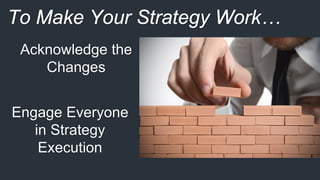
To Make Your Strategy Work…
Acknowledge the
Changes
Engage Everyone
in Strategy
Execution
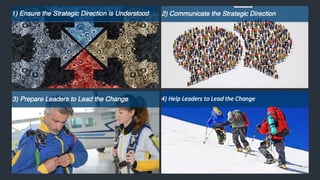
4 Actions to Build a Bridge from Strategy to Results
1. Ensure the Strategic Direction is Understood
Strategy Requires Collaboration
Determine how the strategy impacts the business, customers,
and employees.
Build awareness and understanding of the changes.
Facilitate discussions to surface perspectives and develop
agreement and alignment about what will happen, why it’s
important, and how you will collectively implement the solution.
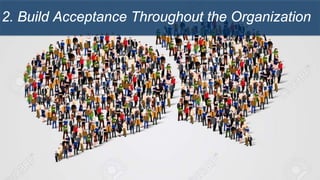
2. Build Acceptance Throughout the Organization
Help Others Overcome
Resistance
Communicate and translate messages to address concerns to handle the
natural resistance to change.
Facilitate discussions and get people talking.
Be transparent and set expectations to help people understand the
benefits to people and the business.
Get people started with small actionable tasks they can handle.
Don’t take the resistance personally. Instead, give people a forum to
understand the changes and the opportunities ahead.
3. Prepare Leaders to Lead the Change
Prepare Leaders to Communicate
& Support the Strategy
Don’t assume a head nod means leaders are bought in and
prepared to communicate.
Prepare all leaders to cascade messages and overcome objections.
It’s not enough to communicate the changes from the top and
expect leaders will figure out how to lead the change.
4.Give Leaders the Tools to Lead the Change
Critical Questions
Are people clear on what to do?
Are people ready and capable to execute the plan?
Do people have a clear path to execute the work?
What will motivate and keep people moving ahead?
Use these four questions to check the organizational change
readiness to perform in the new way.
Choose to Lead Change
Don’t go it alone. Make sure everyone understands the direction.
Get people engaged to build acceptance and accountable.
Give people the information and tools.
Provide ample positive feedback as people try new approaches.
Looking for more ideas….
www.HilaryPotts.com/Resources.html
Download the
Leader Change Toolkit
Now…
Inside the Toolkit You’ll Find…
www.HilaryPotts.com/Resources.html
• Ways to Get Prepared to Lead Change
• Create a Roadmap to Navigate Business Changes
• Use the Five Change Leader Behaviors to Lead Your
Next Strategic Initiative
For more information contact:
Hilary Potts
The HAP Group
www.hilarypotts.com
info@hapgrp.com
© The HAP Group, All Rights Reserved

Making Your Strategy Work

  • 1.
    Making Your StrategyWork Leadership Strategies with Hilary Potts
  • 2.
    3 out of5 employees rate their company weak at strategy execution. Booz Research Study
  • 3.
  • 5.
    Leaders Don’t Wantto Talk About “Change”
  • 6.
    Leaders Want Results... Togrow the business, launch a new product, improve processes, or enhance the bottom-line, means people need to do something different. …but many leaders are uncomfortable addressing the changes necessary for growth. For a strategy to work, people and leaders need to make changes.
  • 7.
    It’s Hard toGet Everyone “On Board”
  • 8.
    Getting People onBoard While the strategy and initiatives may fit neatly on one page, people can get overwhelmed by all the work that’s required to deliver the results. Getting everyone bought-in, onboard, and executing the strategy can be a challenge that can be overcome by leaders setting direction and working alongside their people.
  • 9.
    People Nod “Yes”BUT, Really Mean “No”
  • 10.
    Great Leaders InviteOpinion Sometimes it’s easier to say nothing or nod your head ‘yes’ than to articulate the challenges you see that lie ahead. When people feel they can’t raise issues, you are sure to see problems later on. It’s better to step into these crucial conversations to create frank and honest discussions.
  • 11.
    Through awareness, understanding andcreating a safe place for people to process and assess the situation…
  • 12.
    people will bein a much stronger position to make informed decisions about how to participate.
  • 13.
    To Make YourStrategy Work… Acknowledge the Changes Engage Everyone in Strategy Execution
  • 14.
    4 Actions toBuild a Bridge from Strategy to Results
  • 15.
    1. Ensure theStrategic Direction is Understood
  • 16.
    Strategy Requires Collaboration Determinehow the strategy impacts the business, customers, and employees. Build awareness and understanding of the changes. Facilitate discussions to surface perspectives and develop agreement and alignment about what will happen, why it’s important, and how you will collectively implement the solution.
  • 17.
    2. Build AcceptanceThroughout the Organization
  • 18.
    Help Others Overcome Resistance Communicateand translate messages to address concerns to handle the natural resistance to change. Facilitate discussions and get people talking. Be transparent and set expectations to help people understand the benefits to people and the business. Get people started with small actionable tasks they can handle. Don’t take the resistance personally. Instead, give people a forum to understand the changes and the opportunities ahead.
  • 19.
    3. Prepare Leadersto Lead the Change
  • 20.
    Prepare Leaders toCommunicate & Support the Strategy Don’t assume a head nod means leaders are bought in and prepared to communicate. Prepare all leaders to cascade messages and overcome objections. It’s not enough to communicate the changes from the top and expect leaders will figure out how to lead the change.
  • 21.
    4.Give Leaders theTools to Lead the Change
  • 22.
    Critical Questions Are peopleclear on what to do? Are people ready and capable to execute the plan? Do people have a clear path to execute the work? What will motivate and keep people moving ahead? Use these four questions to check the organizational change readiness to perform in the new way.
  • 24.
    Choose to LeadChange Don’t go it alone. Make sure everyone understands the direction. Get people engaged to build acceptance and accountable. Give people the information and tools. Provide ample positive feedback as people try new approaches.
  • 25.
    Looking for moreideas…. www.HilaryPotts.com/Resources.html Download the Leader Change Toolkit Now…
  • 26.
    Inside the ToolkitYou’ll Find… www.HilaryPotts.com/Resources.html • Ways to Get Prepared to Lead Change • Create a Roadmap to Navigate Business Changes • Use the Five Change Leader Behaviors to Lead Your Next Strategic Initiative
  • 27.
    For more informationcontact: Hilary Potts The HAP Group www.hilarypotts.com info@hapgrp.com © The HAP Group, All Rights Reserved