Making things open
Workshop
WeMake, 18.10.2014
open mirror-digital habits
Programโ€จ
Morning session: 10.00-13.30
1. Introduction
2. Case studies presentation
3. Design tools
4. Activity A: understanding users!
Afternoon session: 14.20-18.00
5. Wrap-up Activity A
6. Activity B: derivative design concept presentation
7. Wrap-up Activity B
8. Activity C: low-fi prototyping
9. Wrap-up Activity C
10. Acticity D: letโ€™s share!
What we learn
1. limits and opportunities of the current open source ecosystem
(technologies, interfaces, communities, etc.)
2. levels of configurazione of an interactive products featuring open
source software and hardware
3. Differences among open licenses (Creative Commons Licenses)
4. Skills and Knowledge transfer from the designer to the users
5. Concept design of products that fits the current use and productions
scenarios
DIY
Open
Hardware
Open
Design
Digital
fabrication
?
Licenses
OSS
Licenses
OSH
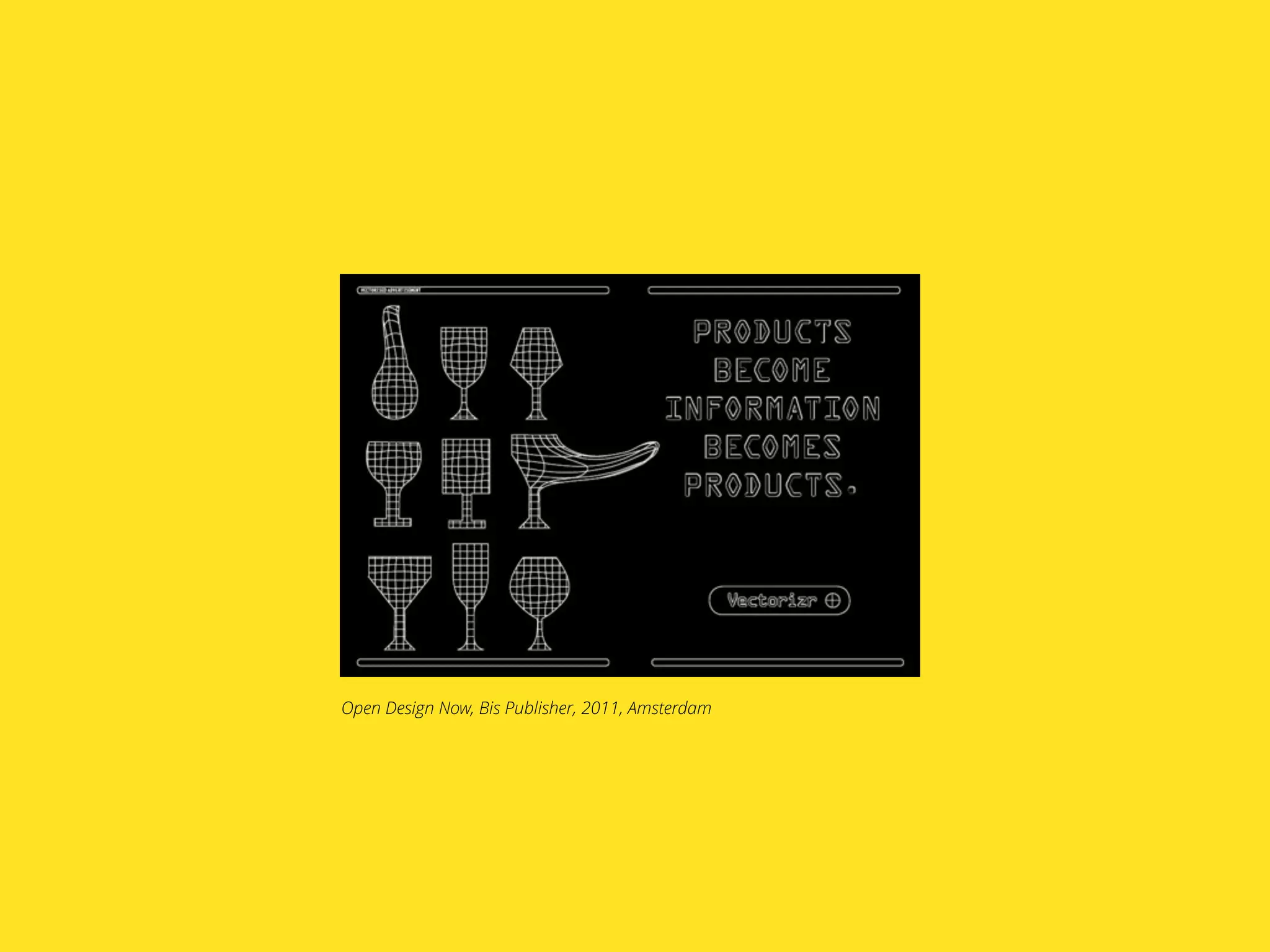
Open Design Now, Bis Publisher, 2011, Amsterdam
The designer should not give up his role as a designerย (or
restrict himself to his traditional role asย designer of material
or immaterial objects). Instead, he should become a
metadesigner who designs a multidimensional design space
that provides a user-friendly interface, enabling the user
to become a co-designer, even when this user has no
designer experience or no time to gain such experience
through trial and error. The task of the metadesigner is to
create a pathway through design space, to combine the
building blocks into a meaningful design
JOS DE MUL, REDESIGNING DESIGN in Bas van Abel, Lucas Evers, Roel Klaassen, Peter Troxler,
Open Design Now, Bis Publisher, 2011, Amsterdam
1. What are the levels of con๏ฌguration of
open source interactive artifacts and the
design opportunities activated by the
open source ecosystem: hardware,
software, platforms and communities?
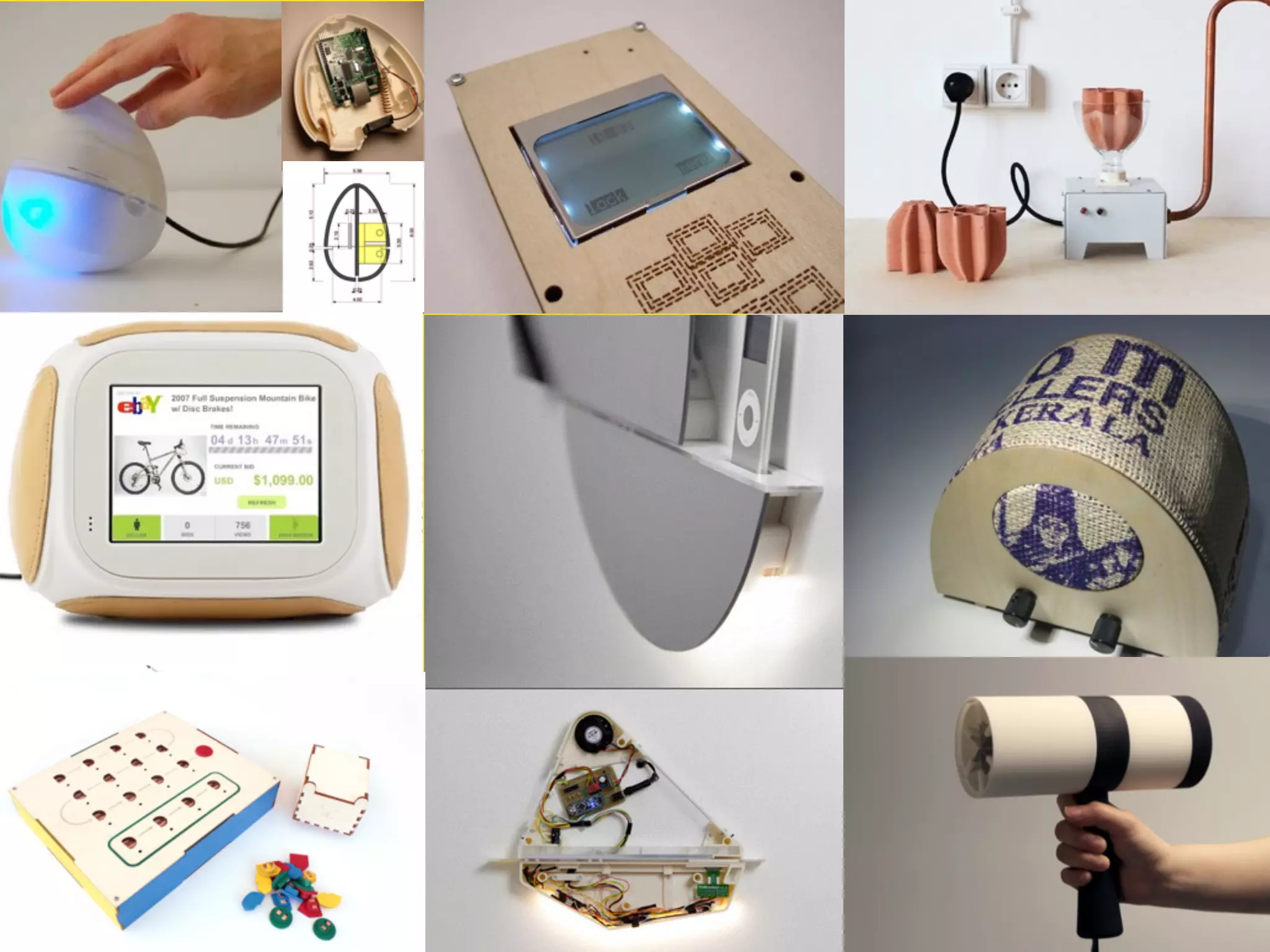
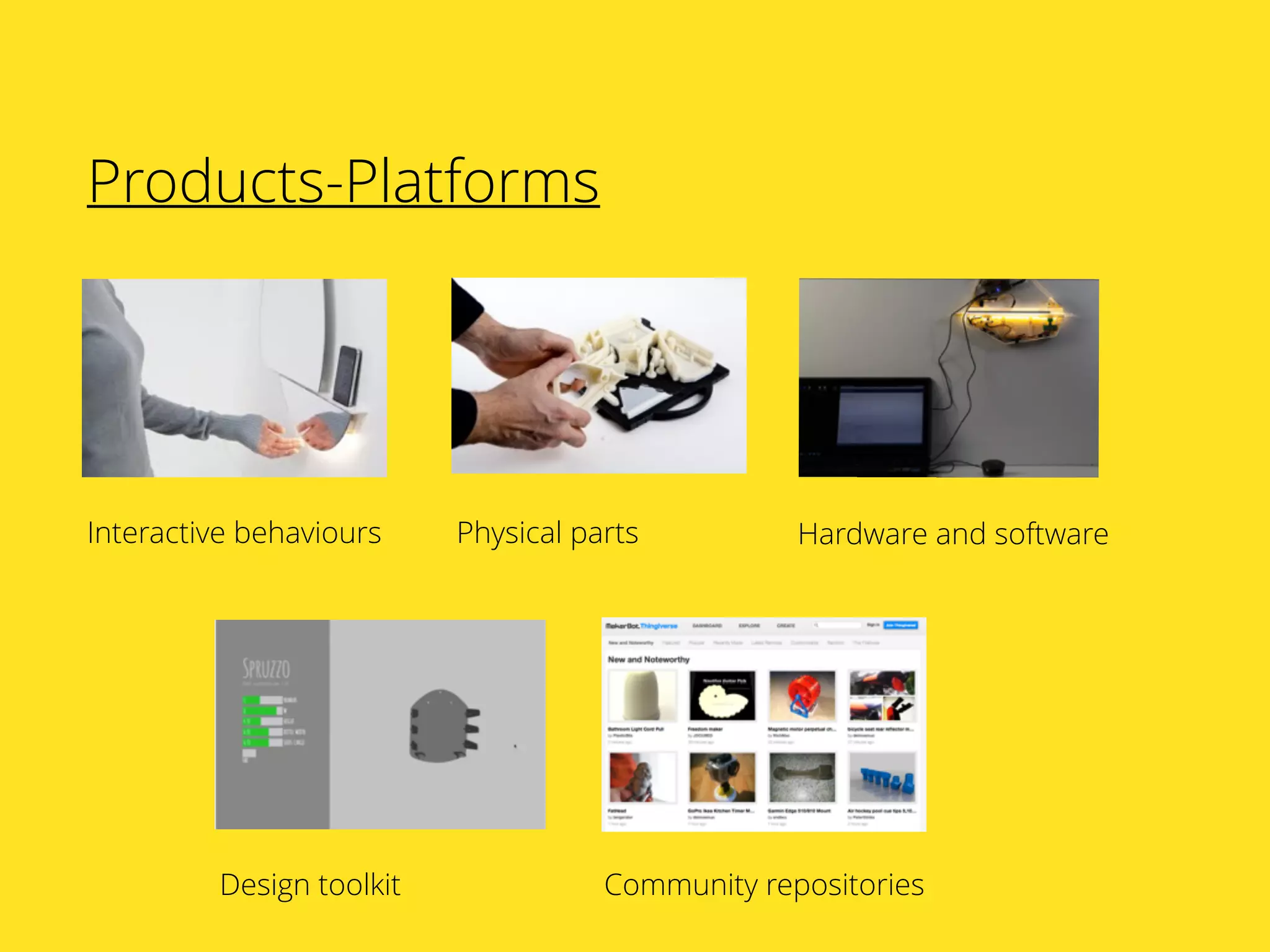
Open products are platforms, namely
devices that allow users to access
information and tools to produce, use,
modify them and to make novel
products built upon them.
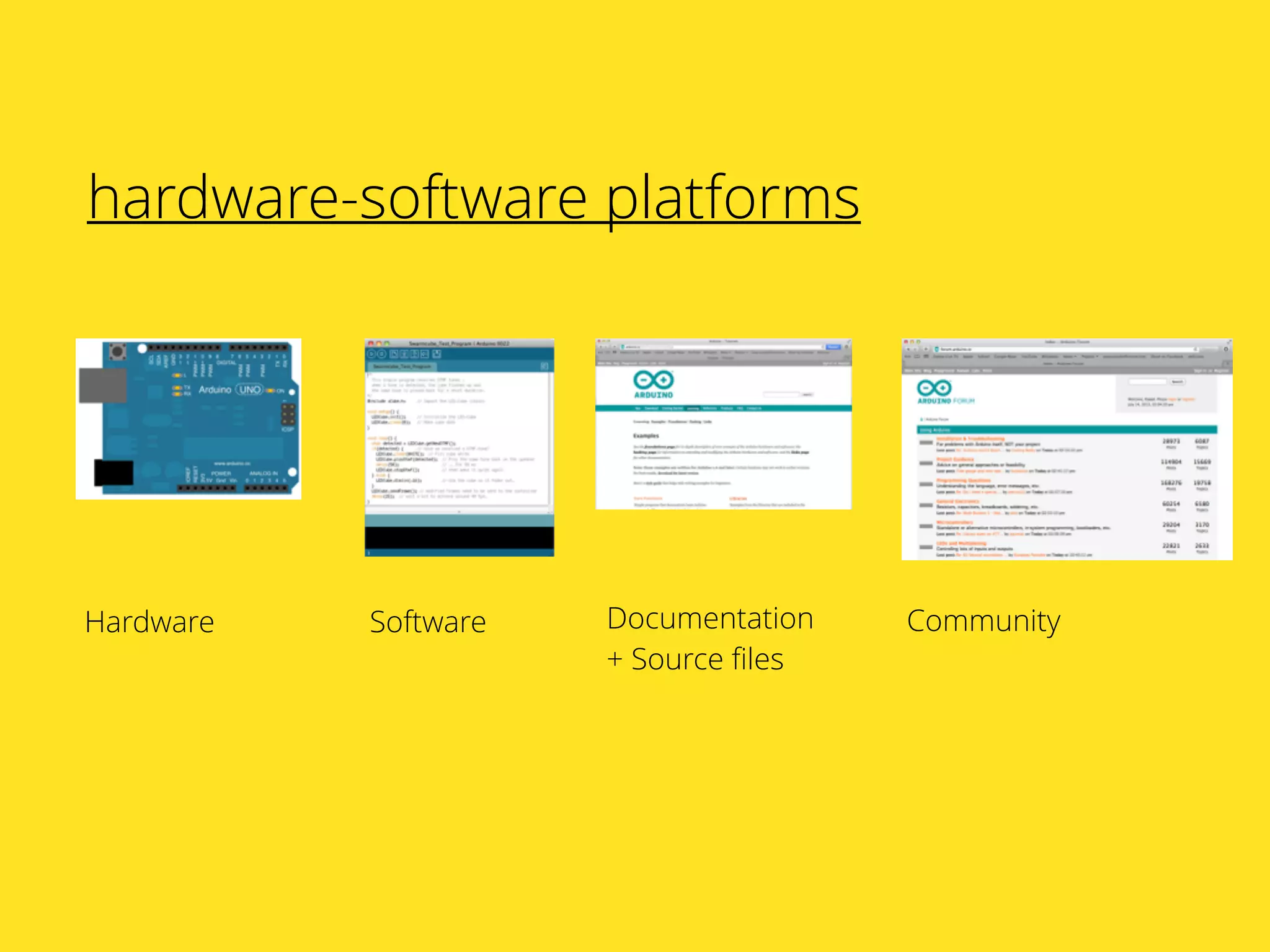
hardware-software platforms
Hardware Software Documentation
+ Source ๏ฌles
Community
Physical partsInteractive behaviours Hardware and software
Products-Platforms
Design toolkit Community repositories
2. What information and skills should
be transferred to users of products-
platforms?
Providing people with interfaces and
design toolkit for โ€œaccessing the
opennessโ€.
Spruzzo.cc, open source sprouter. Users can select the
dimension, the kind of seeds to plant and even the ๏ฌnal taste
they will have (sweet or bitter, soft or crispy, etc.).
Designing community interactions
Providing people with on-line
spaces of interactions.
Thiniverse.com is the platform supported by MakerBot
industries (3D printer manufacturing company) that o๏ฌ€ers
๏ฌles and instructions shared by the users.
Keeping the control Losing the control
Files
Documentation
Collaborative Platforms
Modular and Parametric โ€จ
systems
Re-production โ€จ
machines
Open Ecosystem
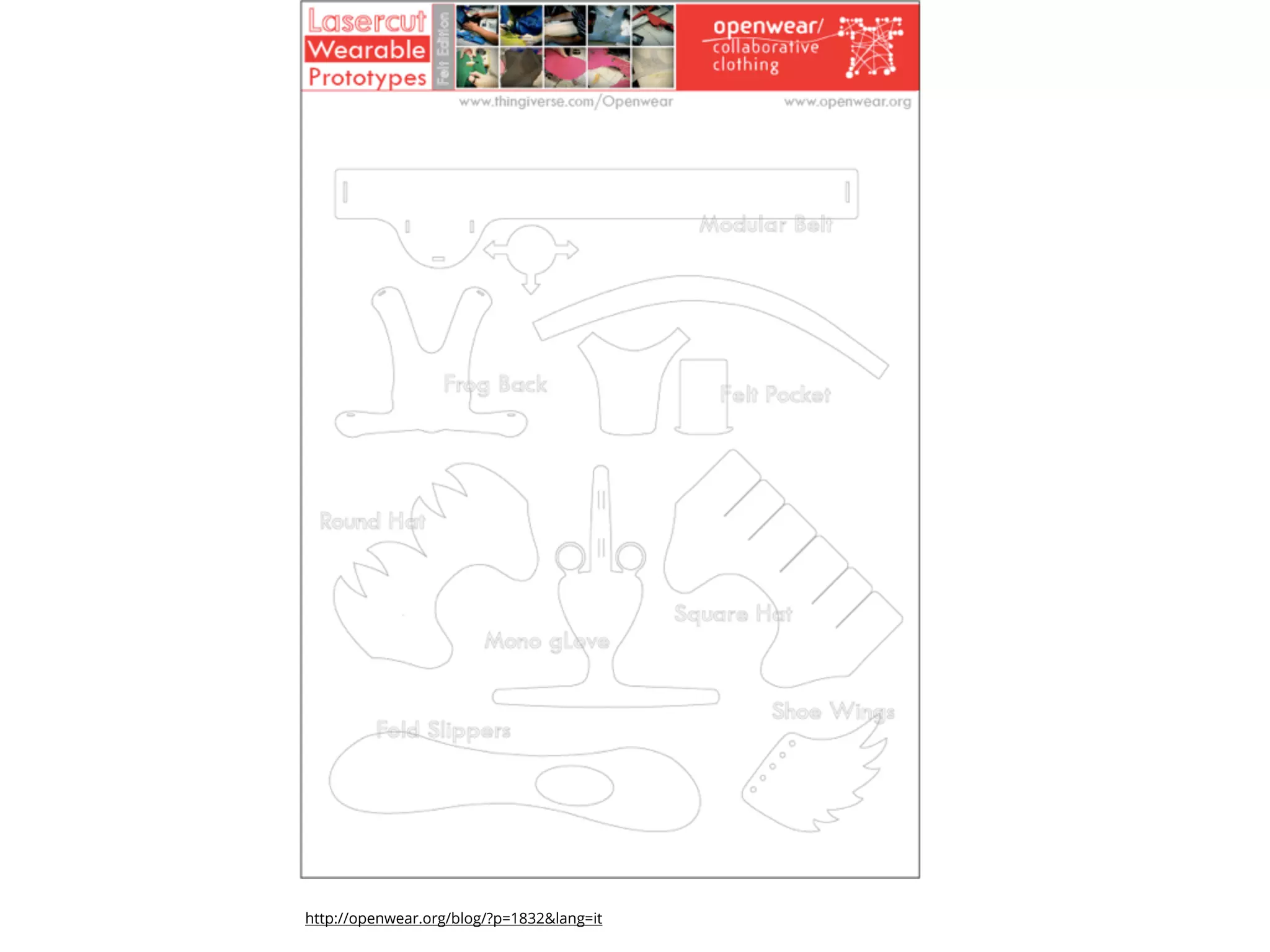
http://openwear.org/blog/?p=1832&lang=it
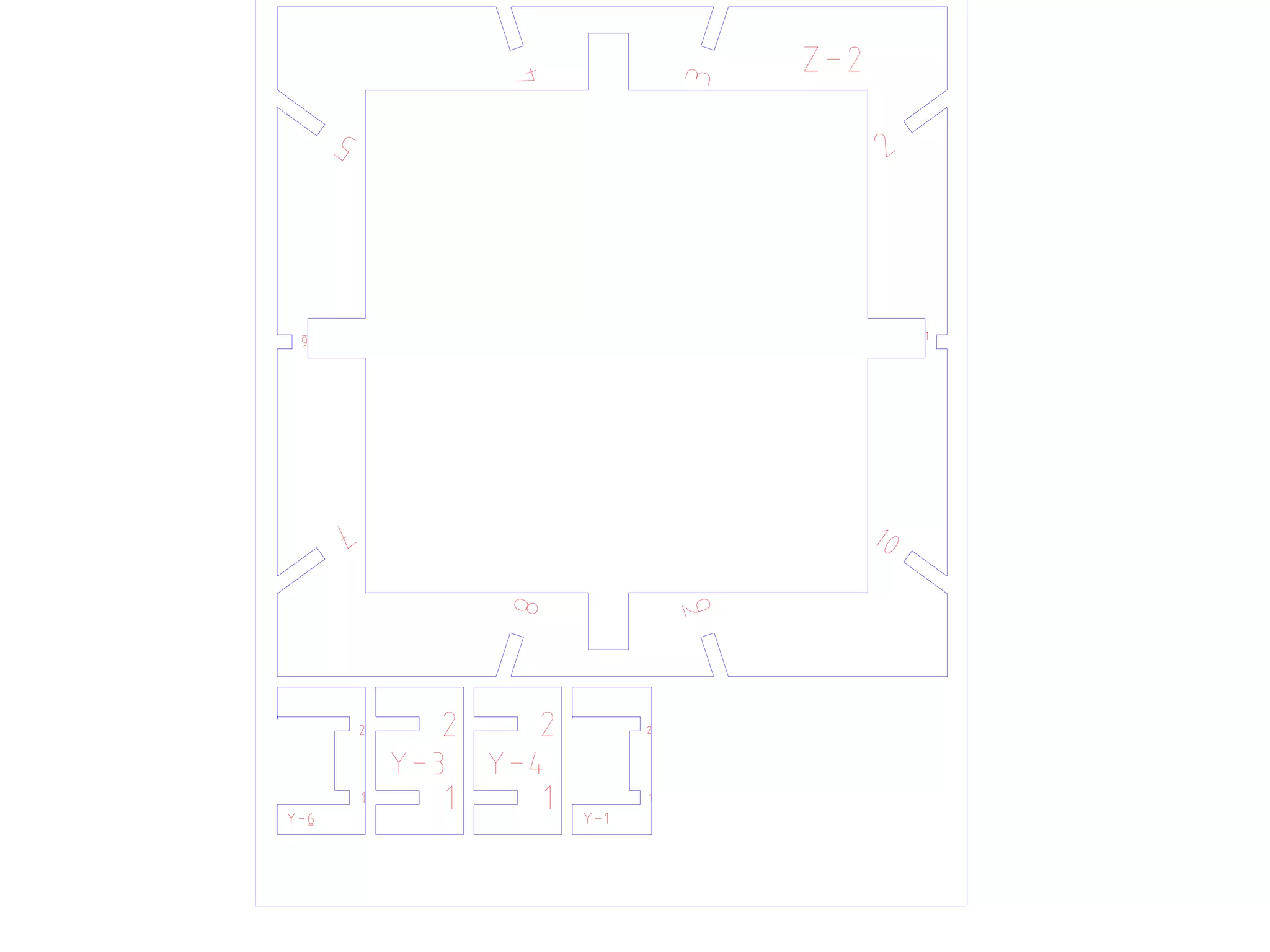
http://fablab.supsi.ch/wp-content/uploads/2013/04/rolling-radio.pdf
http://openwear.org/blog/?p=1832&lang=it
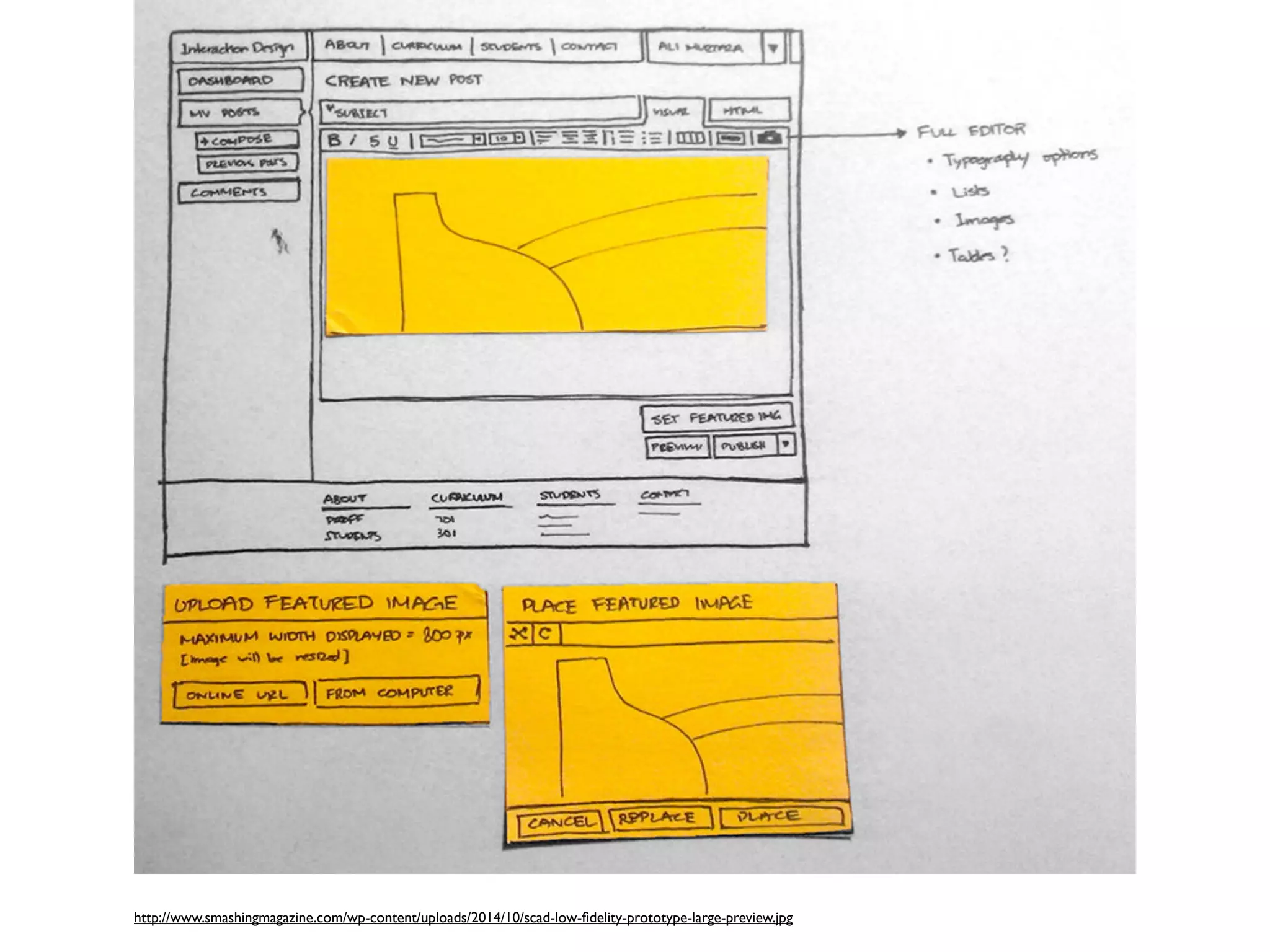
Sketching 2D
Paper prototyping 3D
Interactive wireframes
Wizard of OZ
http://www.smashingmagazine.com/wp-content/uploads/2014/10/scad-low-๏ฌdelity-prototype-large-preview.jpg
http://harmantom.com/projects/๏ฌguros/prototype-form-02.jpg
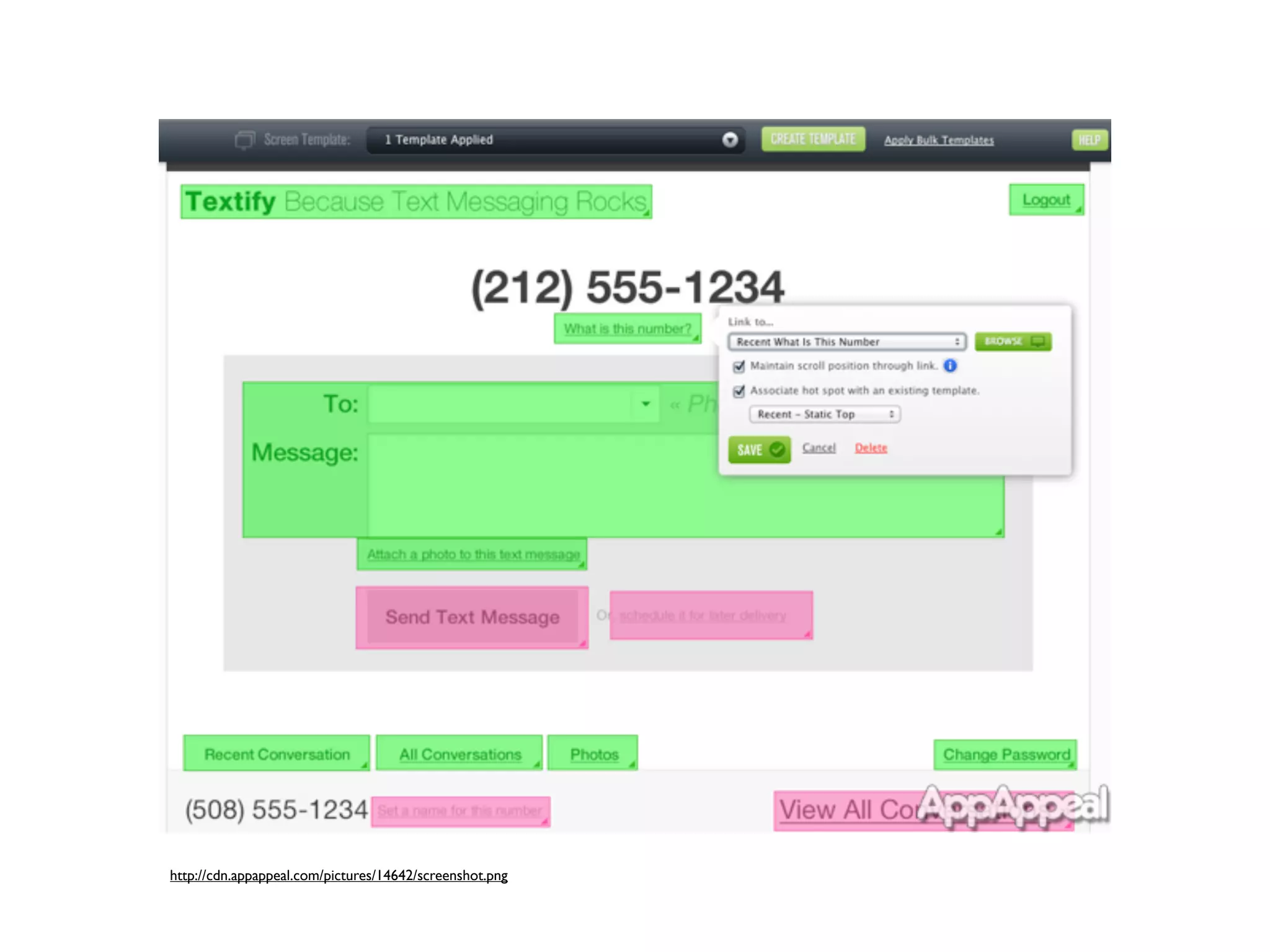
http://cdn.appappeal.com/pictures/14642/screenshot.png

Making Things Open