Friday, April 12, 13
MAKING INFORMED DECISIONS


Friday, April 12, 13
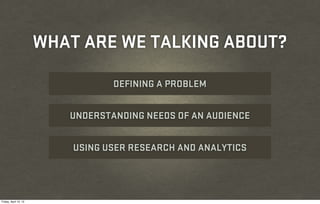
WHAT ARE WE TALKING ABOUT?

                                  DEFINING A PROBLEM


                          UNDERSTANDING NEEDS OF AN AUDIENCE


                           USING USER RESEARCH AND ANALYTICS


Friday, April 12, 13
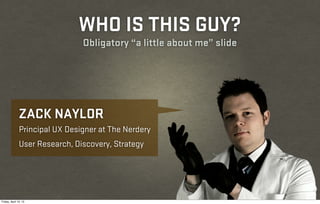
WHO IS THIS GUY?
                                Obligatory “a little about me” slide


               ZACK NAYLOR
               Principal UX Designer at The Nerdery
               User Research, Discovery, Strategy


Friday, April 12, 13
DISSECTING A PROBLEM


Friday, April 12, 13
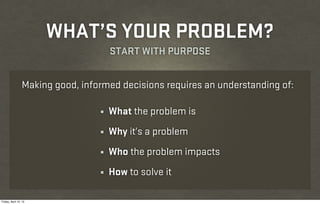
WHAT’S YOUR PROBLEM?
                                      START WITH PURPOSE


                 Making good, informed decisions requires an understanding of:

                                  ¼   What the problem is
                                  ¼   Why it’s a problem
                                  ¼   Who the problem impacts
                                  ¼   How to solve it

Friday, April 12, 13
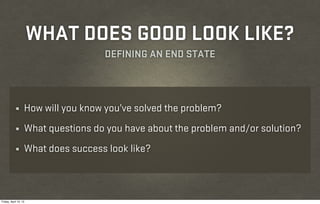
WHAT DOES GOOD LOOK LIKE?
                                    DEFINING AN END STATE


            ¼      How will you know you’ve solved the problem?
            ¼      What questions do you have about the problem and/or solution?
            ¼      What does success look like?


Friday, April 12, 13
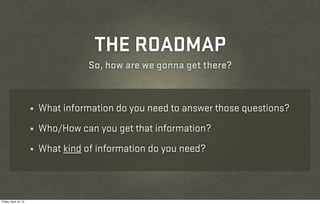
THE ROADMAP
                                      So, how are we gonna get there?


                       ¼   What information do you need to answer those questions?
                       ¼   Who/How can you get that information?
                       ¼   What kind of information do you need?


Friday, April 12, 13
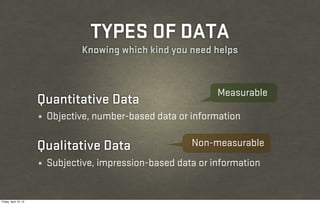
TYPES OF DATA
                                  Knowing which kind you need helps


                                                                 Measurable
                       Quantitative Data
                       ¼   Objective, number-based data or information

                       Qualitative Data                    Non-measurable
                       ¼   Subjective, impression-based data or information


Friday, April 12, 13
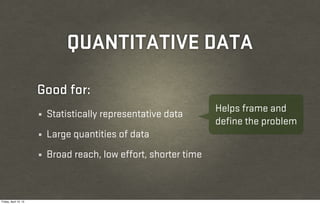
QUANTITATIVE DATA

                       Good for:
                                                                   Helps frame and
                       ¼   Statistically representative data
                                                                   define the problem
                       ¼   Large quantities of data
                       ¼   Broad reach, low effort, shorter time


Friday, April 12, 13
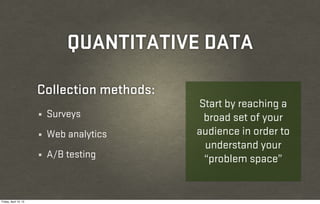
QUANTITATIVE DATA

                       Collection methods:
                                             Start by reaching a
                       ¼   Surveys            broad set of your
                       ¼   Web analytics     audience in order to
                                              understand your
                       ¼   A/B testing        “problem space”


Friday, April 12, 13
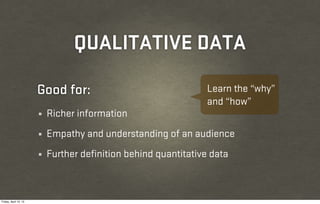
QUALITATIVE DATA

                       Good for:                                Learn the “why”
                                                                and “how”
                       ¼   Richer information
                       ¼   Empathy and understanding of an audience
                       ¼   Further definition behind quantitative data


Friday, April 12, 13
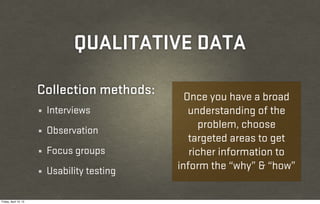
QUALITATIVE DATA

                       Collection methods:       Once you have a broad
                       ¼   Interviews             understanding of the
                                                    problem, choose
                       ¼   Observation
                                                  targeted areas to get
                       ¼   Focus groups           richer information to
                       ¼   Usability testing   inform the “why” & “how”

Friday, April 12, 13
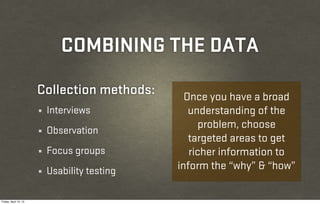
COMBINING THE DATA
                       Collection methods:       Once you have a broad
                       ¼   Interviews             understanding of the
                                                    problem, choose
                       ¼   Observation
                                                  targeted areas to get
                       ¼   Focus groups           richer information to
                       ¼   Usability testing   inform the “why” & “how”

Friday, April 12, 13
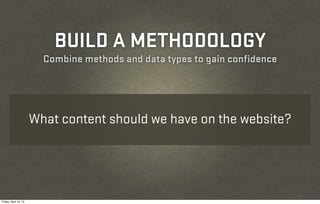
BUILD A METHODOLOGY
                         Combine methods and data types to gain confidence


                       What content should we have on the website?


Friday, April 12, 13
BUILD A METHODOLOGY
                                         Let’s use our outlined approach


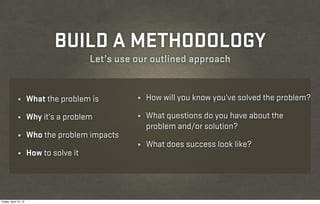
              ¼        What the problem is         ¼   How will you know you’ve solved the problem?

              ¼        Why it’s a problem          ¼   What questions do you have about the
                                                       problem and/or solution?
              ¼        Who the problem impacts
                                                   ¼   What does success look like?
              ¼        How to solve it


Friday, April 12, 13
BUILD A METHODOLOGY
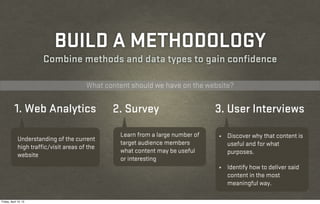
                        Combine methods and data types to gain confidence

                                         What content should we have on the website?


           1. Web Analytics                     2. Survey                        3. User Interviews
                                                  Learn from a large number of   ¼   Discover why that content is
              Understanding of the current
                                                  target audience members            useful and for what
              high traffic/visit areas of the
                                                  what content may be useful         purposes.
              website
                                                  or interesting
                                                                                 ¼   Identify how to deliver said
                                                                                     content in the most
                                                                                     meaningful way.

Friday, April 12, 13
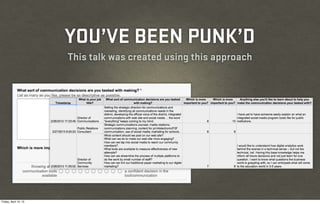
YOU’VE BEEN PUNK’D
                       This talk was created using this approach


Friday, April 12, 13
YOU’VE BEEN PUNK’D
                            This talk was created using this approach


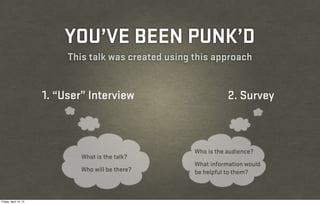
                       1. “User” Interview                         2. Survey


                                                        Who is the audience?
                               What is the talk?
                                                        What information would
                               Who will be there?       be helpful to them?


Friday, April 12, 13
YOU’VE BEEN PUNK’D
                       This talk was created using this approach


Friday, April 12, 13
THANKS

                       QUESTIONS?

                       @ZACKNAYLOR
Friday, April 12, 13

Making Informed Design Decisions - MinnSPRA 2013

  • 1.
  • 2.
  • 3.
    WHAT ARE WETALKING ABOUT? DEFINING A PROBLEM UNDERSTANDING NEEDS OF AN AUDIENCE USING USER RESEARCH AND ANALYTICS Friday, April 12, 13
  • 4.
    WHO IS THISGUY? Obligatory “a little about me” slide ZACK NAYLOR Principal UX Designer at The Nerdery User Research, Discovery, Strategy Friday, April 12, 13
  • 5.
  • 6.
    WHAT’S YOUR PROBLEM? START WITH PURPOSE Making good, informed decisions requires an understanding of: ¼ What the problem is ¼ Why it’s a problem ¼ Who the problem impacts ¼ How to solve it Friday, April 12, 13
  • 7.
    WHAT DOES GOODLOOK LIKE? DEFINING AN END STATE ¼ How will you know you’ve solved the problem? ¼ What questions do you have about the problem and/or solution? ¼ What does success look like? Friday, April 12, 13
  • 8.
    THE ROADMAP So, how are we gonna get there? ¼ What information do you need to answer those questions? ¼ Who/How can you get that information? ¼ What kind of information do you need? Friday, April 12, 13
  • 9.
    TYPES OF DATA Knowing which kind you need helps Measurable Quantitative Data ¼ Objective, number-based data or information Qualitative Data Non-measurable ¼ Subjective, impression-based data or information Friday, April 12, 13
  • 10.
    QUANTITATIVE DATA Good for: Helps frame and ¼ Statistically representative data define the problem ¼ Large quantities of data ¼ Broad reach, low effort, shorter time Friday, April 12, 13
  • 11.
    QUANTITATIVE DATA Collection methods: Start by reaching a ¼ Surveys broad set of your ¼ Web analytics audience in order to understand your ¼ A/B testing “problem space” Friday, April 12, 13
  • 12.
    QUALITATIVE DATA Good for: Learn the “why” and “how” ¼ Richer information ¼ Empathy and understanding of an audience ¼ Further definition behind quantitative data Friday, April 12, 13
  • 13.
    QUALITATIVE DATA Collection methods: Once you have a broad ¼ Interviews understanding of the problem, choose ¼ Observation targeted areas to get ¼ Focus groups richer information to ¼ Usability testing inform the “why” & “how” Friday, April 12, 13
  • 14.
    COMBINING THE DATA Collection methods: Once you have a broad ¼ Interviews understanding of the problem, choose ¼ Observation targeted areas to get ¼ Focus groups richer information to ¼ Usability testing inform the “why” & “how” Friday, April 12, 13
  • 15.
    BUILD A METHODOLOGY Combine methods and data types to gain confidence What content should we have on the website? Friday, April 12, 13
  • 16.
    BUILD A METHODOLOGY Let’s use our outlined approach ¼ What the problem is ¼ How will you know you’ve solved the problem? ¼ Why it’s a problem ¼ What questions do you have about the problem and/or solution? ¼ Who the problem impacts ¼ What does success look like? ¼ How to solve it Friday, April 12, 13
  • 17.
    BUILD A METHODOLOGY Combine methods and data types to gain confidence What content should we have on the website? 1. Web Analytics 2. Survey 3. User Interviews Learn from a large number of ¼ Discover why that content is Understanding of the current target audience members useful and for what high traffic/visit areas of the what content may be useful purposes. website or interesting ¼ Identify how to deliver said content in the most meaningful way. Friday, April 12, 13
  • 18.
    YOU’VE BEEN PUNK’D This talk was created using this approach Friday, April 12, 13
  • 19.
    YOU’VE BEEN PUNK’D This talk was created using this approach 1. “User” Interview 2. Survey Who is the audience? What is the talk? What information would Who will be there? be helpful to them? Friday, April 12, 13
  • 20.
    YOU’VE BEEN PUNK’D This talk was created using this approach Friday, April 12, 13
  • 21.
    THANKS QUESTIONS? @ZACKNAYLOR Friday, April 12, 13
  • 22.