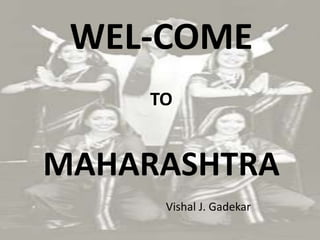
WEL-COMETOMAHARASHTRAVishal J. Gadekar
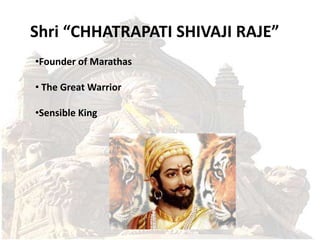
Shri “CHHATRAPATI SHIVAJI RAJE”Founder of Marathas
 The Great Warrior
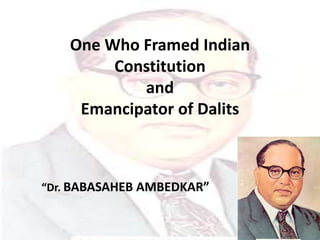
Sensible KingOne Who Framed Indian ConstitutionandEmancipator of Dalits“Dr. BABASAHEB AMBEDKAR”
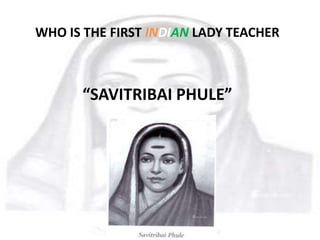
WHO IS THE FIRST INDIAN LADY TEACHER“SAVITRIBAI PHULE”
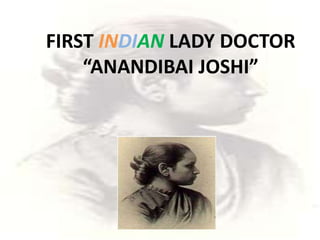
FIRST INDIAN LADY DOCTOR“ANANDIBAI JOSHI”
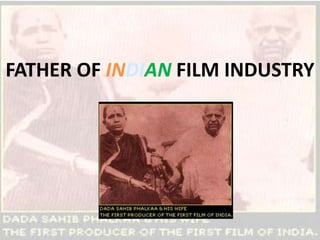
FATHER OF INDIAN FILM INDUSTRY
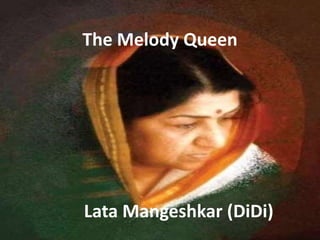
The Melody QueenLata Mangeshkar (DiDi)
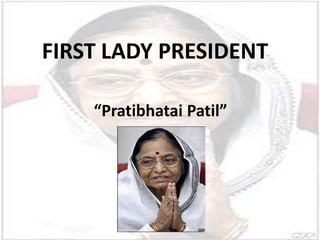
       FIRST LADY PRESIDENT“Pratibhatai Patil”
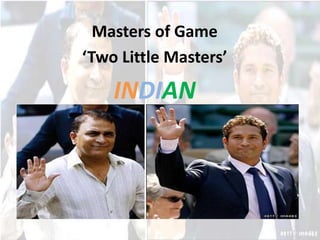
Masters of Game‘Two Little Masters’ INDIAN
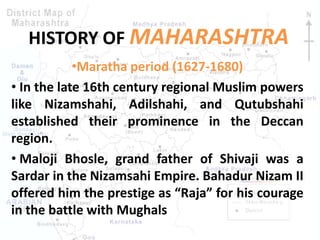
HISTORY OF MAHARASHTRAMaratha period (1627-1680)
 In the late 16th century regional Muslim powers like Nizamshahi, Adilshahi, and Qutubshahi established their prominence in the Deccan region.
 Maloji Bhosle, grand father of Shivaji was a Sardar in the Nizamsahi Empire. Bahadur Nizam II offered him the prestige as “Raja” for his courage in the battle with MughalsHe was offered the estates of Pune and the fort of Chakan. This was the initial point of Maratha’s history. In 1629, Shivaji’s father Shahaji disengaged himself from the service of the Nizamshahi. This was the start of his lifelong struggle against Mughals and other Muslim powers. Shivaji had captured two forts and had the complete charge of Pune. In 1674, Shivaji was crowned as Chhatrapati, the traditional title of a Hindu Monarch at his capital Raigad.
Chhatrapati died in 1680, at the age of 53 but           left the Maratha state which continued to play an important role in the Indian history for next 100 years. Peshwa Dynasty (1712-1818)
Bajirao Peshwa was the first ruler of the Peshwa dynasty.
His desire was to extend the Maratha Empire to North India.
During this period Raigad had regained its status as capital of Maratha Kingdom
The Peshwa dynasty ended to some extent in 1803 when British established their supremacy in the region. Pre-Independence (British Raj)In the early 20th century the whole nation was against the British Raj and Pune witnessed violence when the Chaphekar brothers killed a British police officer by the name of Mr. Rand. Mahatma Gandhi had started his Non-Violence movement against the British Force and people of the state participated in this movement to dismiss the British power from the Indian soil. Finally India got her freedom in 1947. 
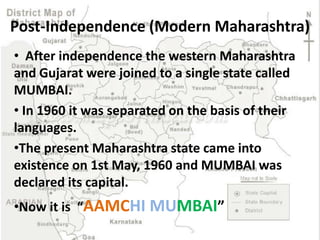
Post-Independence (Modern Maharashtra)  After independence the western Maharashtra and Gujarat were joined to a single state called MUMBAI.
 In 1960 it was separated on the basis of their languages.
The present Maharashtra state came into existence on 1st May, 1960 and MUMBAI was declared its capital.
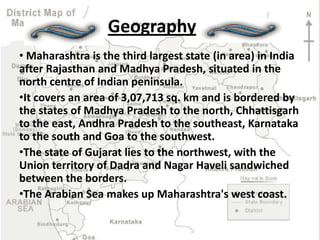
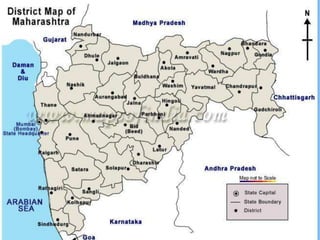
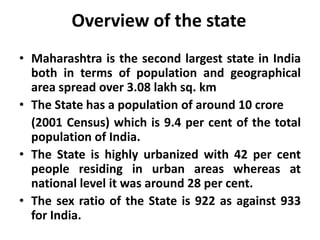
Now it is  “AAMCHI MUMBAI”Geography Maharashtra is the third largest state (in area) in India after Rajasthan and Madhya Pradesh, situated in the north centre of Indian peninsula.
It covers an area of 3,07,713 sq. km and is bordered by the states of Madhya Pradesh to the north, Chhattisgarh to the east, Andhra Pradesh to the southeast, Karnataka to the south and Goa to the southwest.
The state of Gujarat lies to the northwest, with the Union territory of Dadra and Nagar Haveli sandwiched between the borders.
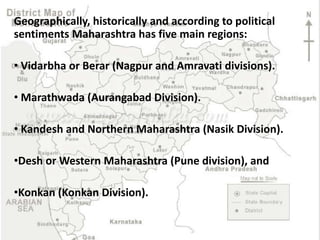
The Arabian Sea makes up Maharashtra's west coast.Geographically, historically and according to political sentiments Maharashtra has five main regions: Vidarbha or Berar (Nagpur and Amravati divisions).
 Marathwada (Aurangabad Division).
 Kandesh and Northern Maharashtra (Nasik Division).
Desh or Western Maharashtra (Pune division), and
Konkan (Konkan Division).
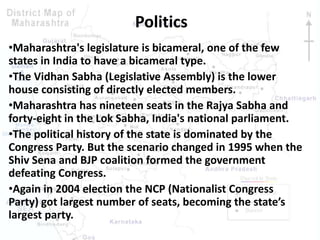
PoliticsMaharashtra's legislature is bicameral, one of the few states in India to have a bicameral type.
The Vidhan Sabha (Legislative Assembly) is the lower house consisting of directly elected members.
Maharashtra has nineteen seats in the Rajya Sabha and forty-eight in the Lok Sabha, India's national parliament.
The political history of the state is dominated by the Congress Party. But the scenario changed in 1995 when the Shiv Sena and BJP coalition formed the government defeating Congress.
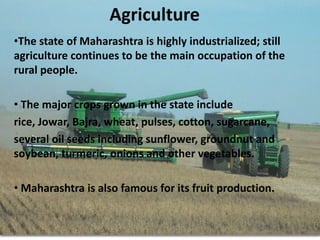
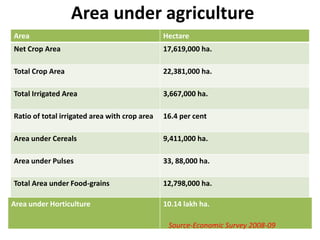
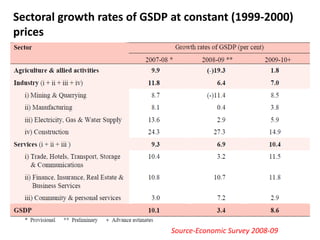
Again in 2004 election the NCP (Nationalist Congress Party) got largest number of seats, becoming the state’s largest party. AgricultureThe state of Maharashtra is highly industrialized; still agriculture continues to be the main occupation of the rural people.
 The major crops grown in the state include rice, Jowar, Bajra, wheat, pulses, cotton, sugarcane, several oil seeds including sunflower, groundnut and soybean, turmeric, onions and other vegetables. Maharashtra is also famous for its fruit production.Agricultural CropsKharif Crops:- Jowar (Sorghum), Bajra (Millet), Rice, Cotton, Groundnuts Rabi Crops: - Wheat, Gram, JowarCereals: - Jowar, Rice, Wheat, Bajra, Maize,NachniOil seeds: - Groundnut, Sesame, Jawas, Karadi, Mustard.Pulses: – Dal, Tur (Red gram) Cash Crops: - Sugarcane, Cotton, Chillies, Tobacco, Banana. 
Area under agricultureSource-Economic Survey 2008-09
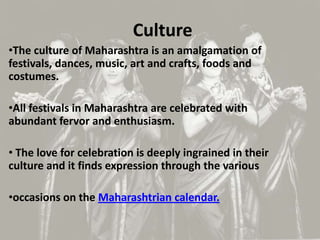
Culture The culture of Maharashtra is an amalgamation of festivals, dances, music, art and crafts, foods and costumes.
All festivals in Maharashtra are celebrated with abundant fervor and enthusiasm.
 The love for celebration is deeply ingrained in their culture and it finds expression through the various
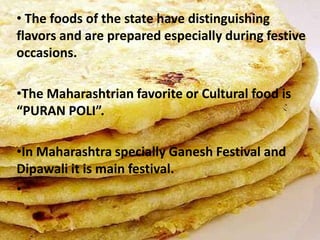
occasions on the Maharashtrian calendar. The foods of the state have distinguishing flavors and are prepared especially during festive occasions.
The Maharashtrian favorite or Cultural food is “PURAN POLI”.
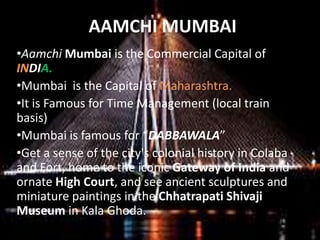
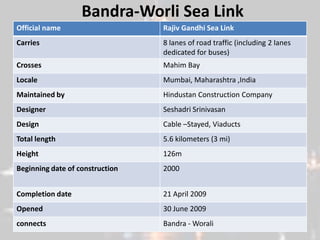
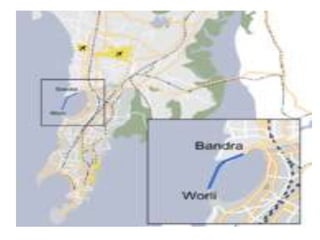
In Maharashtra specially Ganesh Festival and Dipawali it is main festival.AAMCHI MUMBAIAamchiMumbai is the Commercial Capital of INDIA.
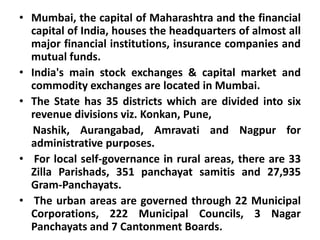
Mumbai  is the Capital of Maharashtra.

Maharashtra

  • 1.
  • 2.
    Shri “CHHATRAPATI SHIVAJIRAJE”Founder of Marathas
  • 3.
    The GreatWarrior
  • 4.
    Sensible KingOne WhoFramed Indian ConstitutionandEmancipator of Dalits“Dr. BABASAHEB AMBEDKAR”
  • 5.
    WHO IS THEFIRST INDIAN LADY TEACHER“SAVITRIBAI PHULE”
  • 6.
    FIRST INDIAN LADYDOCTOR“ANANDIBAI JOSHI”
  • 7.
    FATHER OF INDIANFILM INDUSTRY
  • 8.
    The Melody QueenLataMangeshkar (DiDi)
  • 9.
    FIRST LADY PRESIDENT“Pratibhatai Patil”
  • 10.
    Masters of Game‘TwoLittle Masters’ INDIAN
  • 11.
  • 12.
    In thelate 16th century regional Muslim powers like Nizamshahi, Adilshahi, and Qutubshahi established their prominence in the Deccan region.
  • 13.
    Maloji Bhosle,grand father of Shivaji was a Sardar in the Nizamsahi Empire. Bahadur Nizam II offered him the prestige as “Raja” for his courage in the battle with MughalsHe was offered the estates of Pune and the fort of Chakan. This was the initial point of Maratha’s history. In 1629, Shivaji’s father Shahaji disengaged himself from the service of the Nizamshahi. This was the start of his lifelong struggle against Mughals and other Muslim powers. Shivaji had captured two forts and had the complete charge of Pune. In 1674, Shivaji was crowned as Chhatrapati, the traditional title of a Hindu Monarch at his capital Raigad.
  • 14.
    Chhatrapati died in1680, at the age of 53 but left the Maratha state which continued to play an important role in the Indian history for next 100 years. Peshwa Dynasty (1712-1818)
  • 15.
    Bajirao Peshwa wasthe first ruler of the Peshwa dynasty.
  • 16.
    His desire wasto extend the Maratha Empire to North India.
  • 17.
    During this periodRaigad had regained its status as capital of Maratha Kingdom
  • 18.
    The Peshwa dynastyended to some extent in 1803 when British established their supremacy in the region. Pre-Independence (British Raj)In the early 20th century the whole nation was against the British Raj and Pune witnessed violence when the Chaphekar brothers killed a British police officer by the name of Mr. Rand. Mahatma Gandhi had started his Non-Violence movement against the British Force and people of the state participated in this movement to dismiss the British power from the Indian soil. Finally India got her freedom in 1947. 
  • 19.
    Post-Independence (Modern Maharashtra) After independence the western Maharashtra and Gujarat were joined to a single state called MUMBAI.
  • 20.
    In 1960it was separated on the basis of their languages.
  • 21.
    The present Maharashtrastate came into existence on 1st May, 1960 and MUMBAI was declared its capital.
  • 22.
    Now it is “AAMCHI MUMBAI”Geography Maharashtra is the third largest state (in area) in India after Rajasthan and Madhya Pradesh, situated in the north centre of Indian peninsula.
  • 23.
    It covers anarea of 3,07,713 sq. km and is bordered by the states of Madhya Pradesh to the north, Chhattisgarh to the east, Andhra Pradesh to the southeast, Karnataka to the south and Goa to the southwest.
  • 24.
    The state ofGujarat lies to the northwest, with the Union territory of Dadra and Nagar Haveli sandwiched between the borders.
  • 25.
    The Arabian Seamakes up Maharashtra's west coast.Geographically, historically and according to political sentiments Maharashtra has five main regions: Vidarbha or Berar (Nagpur and Amravati divisions).
  • 26.
  • 27.
    Kandesh andNorthern Maharashtra (Nasik Division).
  • 28.
    Desh or WesternMaharashtra (Pune division), and
  • 29.
  • 30.
    PoliticsMaharashtra's legislature isbicameral, one of the few states in India to have a bicameral type.
  • 31.
    The Vidhan Sabha(Legislative Assembly) is the lower house consisting of directly elected members.
  • 32.
    Maharashtra has nineteenseats in the Rajya Sabha and forty-eight in the Lok Sabha, India's national parliament.
  • 33.
    The political historyof the state is dominated by the Congress Party. But the scenario changed in 1995 when the Shiv Sena and BJP coalition formed the government defeating Congress.
  • 34.
    Again in 2004election the NCP (Nationalist Congress Party) got largest number of seats, becoming the state’s largest party. AgricultureThe state of Maharashtra is highly industrialized; still agriculture continues to be the main occupation of the rural people.
  • 35.
    The majorcrops grown in the state include rice, Jowar, Bajra, wheat, pulses, cotton, sugarcane, several oil seeds including sunflower, groundnut and soybean, turmeric, onions and other vegetables. Maharashtra is also famous for its fruit production.Agricultural CropsKharif Crops:- Jowar (Sorghum), Bajra (Millet), Rice, Cotton, Groundnuts Rabi Crops: - Wheat, Gram, JowarCereals: - Jowar, Rice, Wheat, Bajra, Maize,NachniOil seeds: - Groundnut, Sesame, Jawas, Karadi, Mustard.Pulses: – Dal, Tur (Red gram) Cash Crops: - Sugarcane, Cotton, Chillies, Tobacco, Banana. 
  • 36.
  • 37.
    Culture The cultureof Maharashtra is an amalgamation of festivals, dances, music, art and crafts, foods and costumes.
  • 38.
    All festivals inMaharashtra are celebrated with abundant fervor and enthusiasm.
  • 39.
    The lovefor celebration is deeply ingrained in their culture and it finds expression through the various
  • 40.
    occasions on theMaharashtrian calendar. The foods of the state have distinguishing flavors and are prepared especially during festive occasions.
  • 41.
    The Maharashtrian favoriteor Cultural food is “PURAN POLI”.
  • 42.
    In Maharashtra speciallyGanesh Festival and Dipawali it is main festival.AAMCHI MUMBAIAamchiMumbai is the Commercial Capital of INDIA.
  • 43.
    Mumbai isthe Capital of Maharashtra.