Magazine Analysis-
       Case Study
            Leanne Oxley
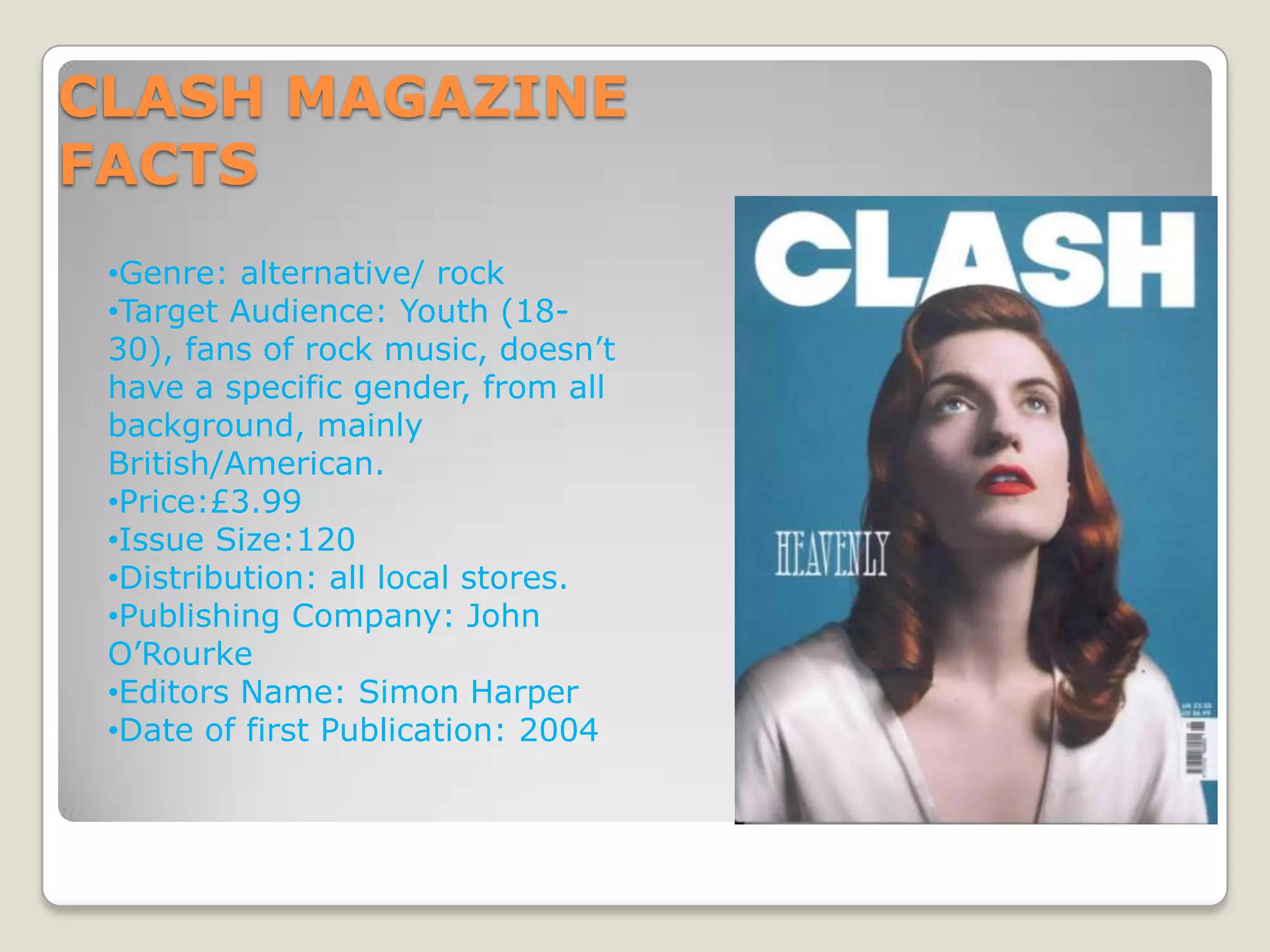
CLASH MAGAZINE
FACTS
 •Genre: alternative/ rock
 •Target Audience: Youth (18-
 30), fans of rock music, doesn’t
 have a specific gender, from all
 background, mainly
 British/American.
 •Price:£3.99
 •Issue Size:120
 •Distribution: all local stores.
 •Publishing Company: John
 O’Rourke
 •Editors Name: Simon Harper
 •Date of first Publication: 2004
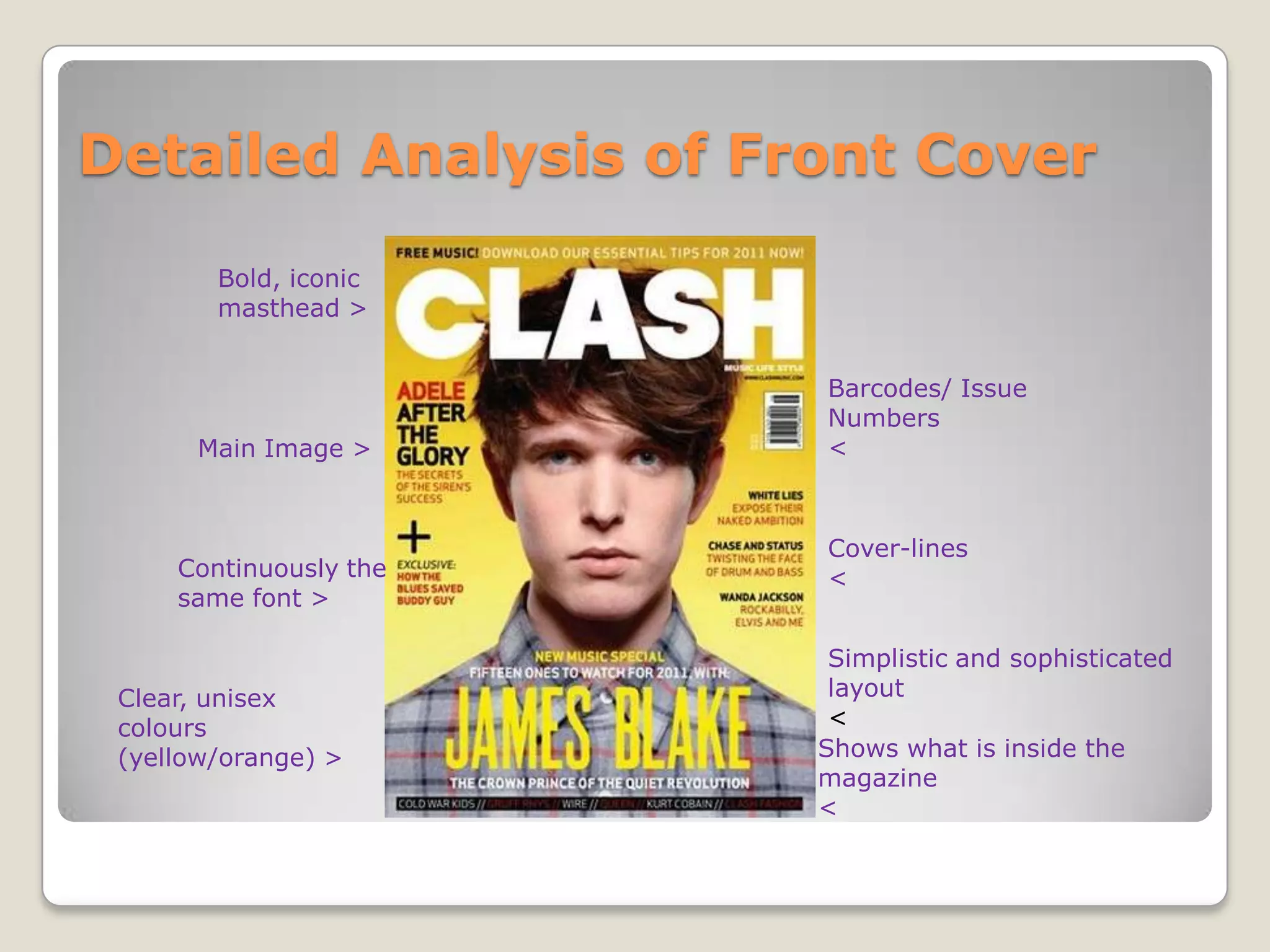
Detailed Analysis of Front Cover
        Bold, iconic
        masthead >


                        Barcodes/ Issue
                        Numbers
       Main Image >     <


                        Cover-lines
     Continuously the   <
     same font >

                         Simplistic and sophisticated
 Clear, unisex           layout
 colours                 <
 (yellow/orange) >      Shows what is inside the
                        magazine
                        <
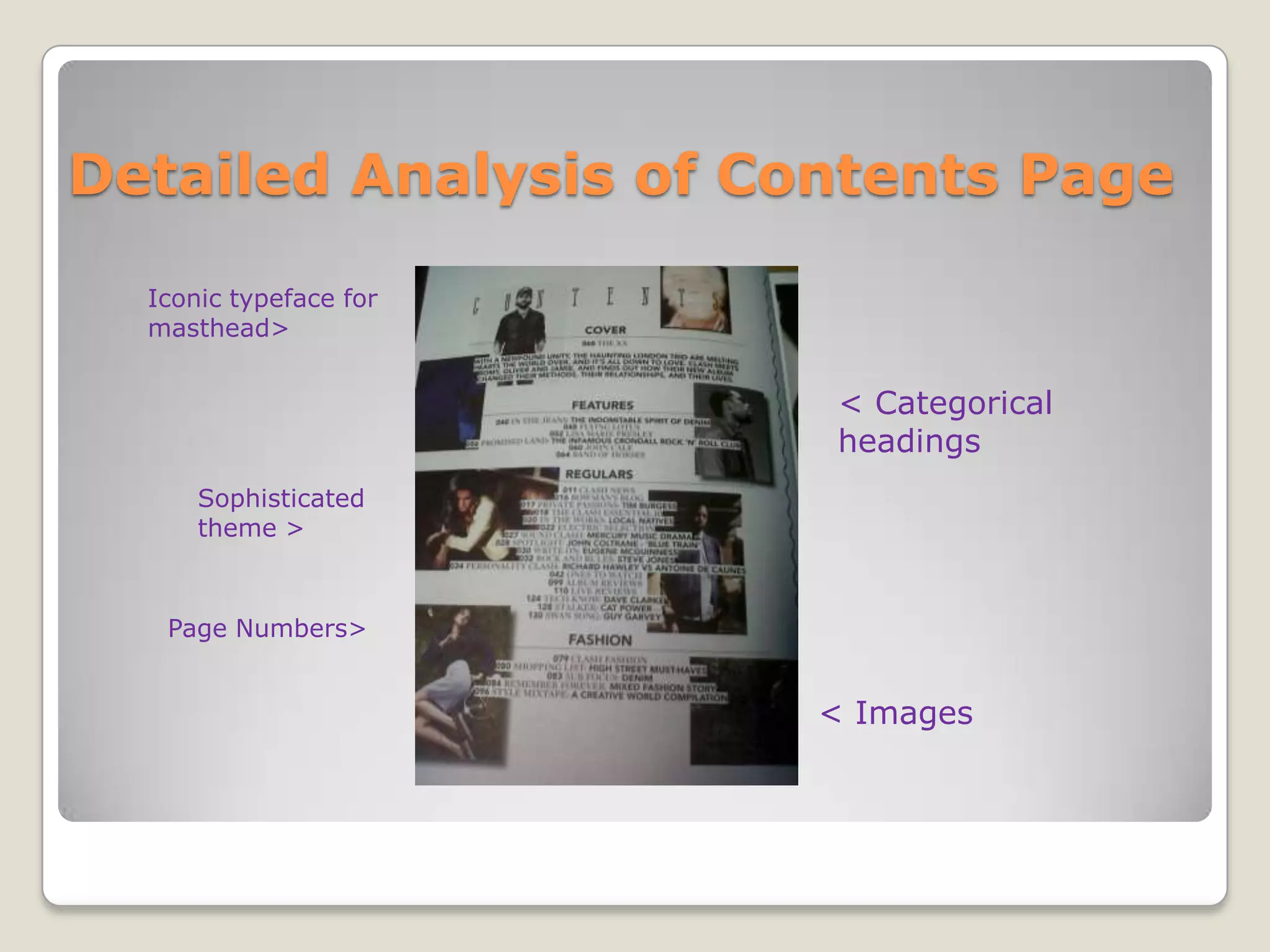
Detailed Analysis of Contents Page
  Iconic typeface for
  masthead>


                         < Categorical
                         headings
      Sophisticated
      theme >


   Page Numbers>


                        < Images
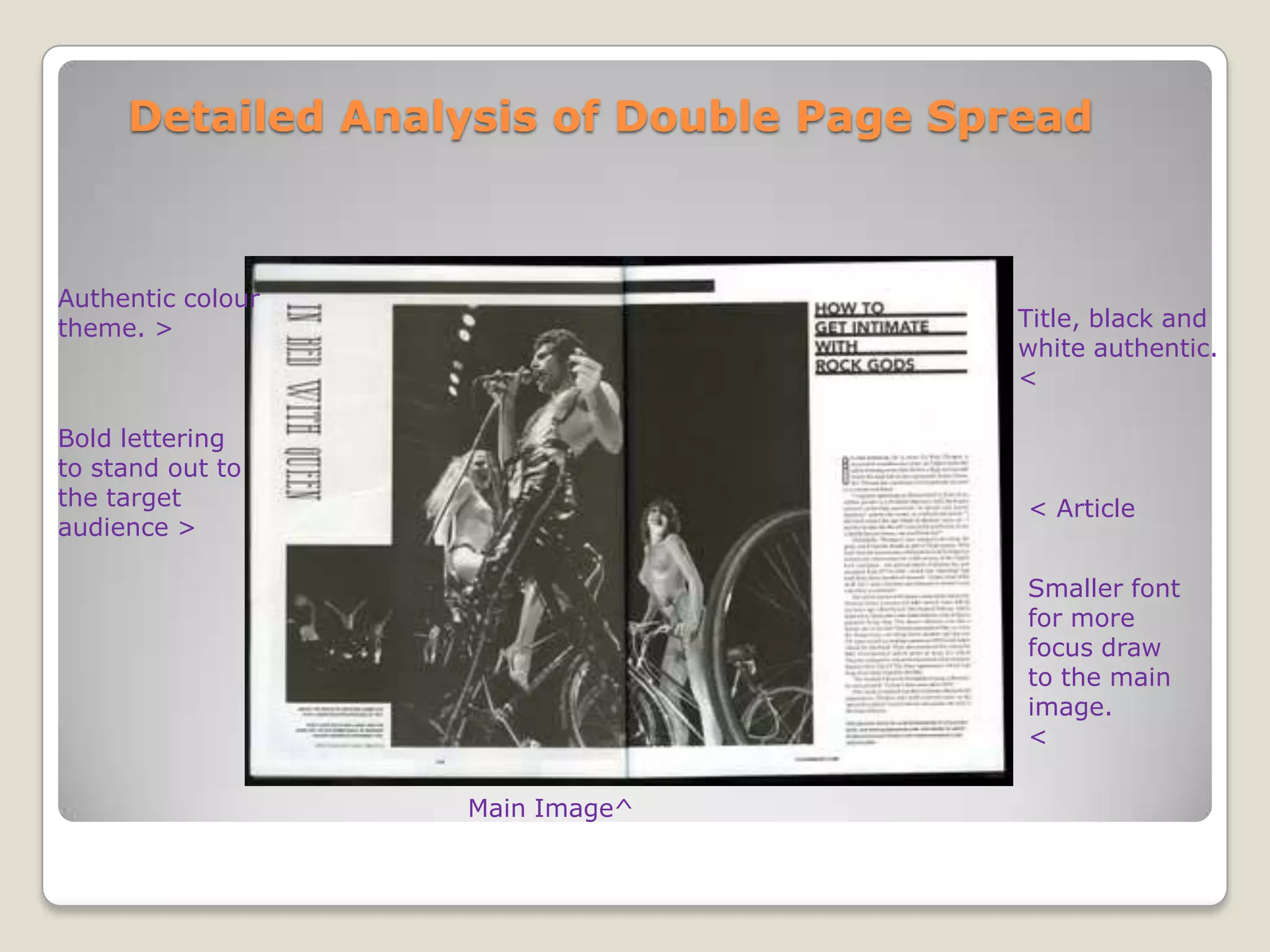
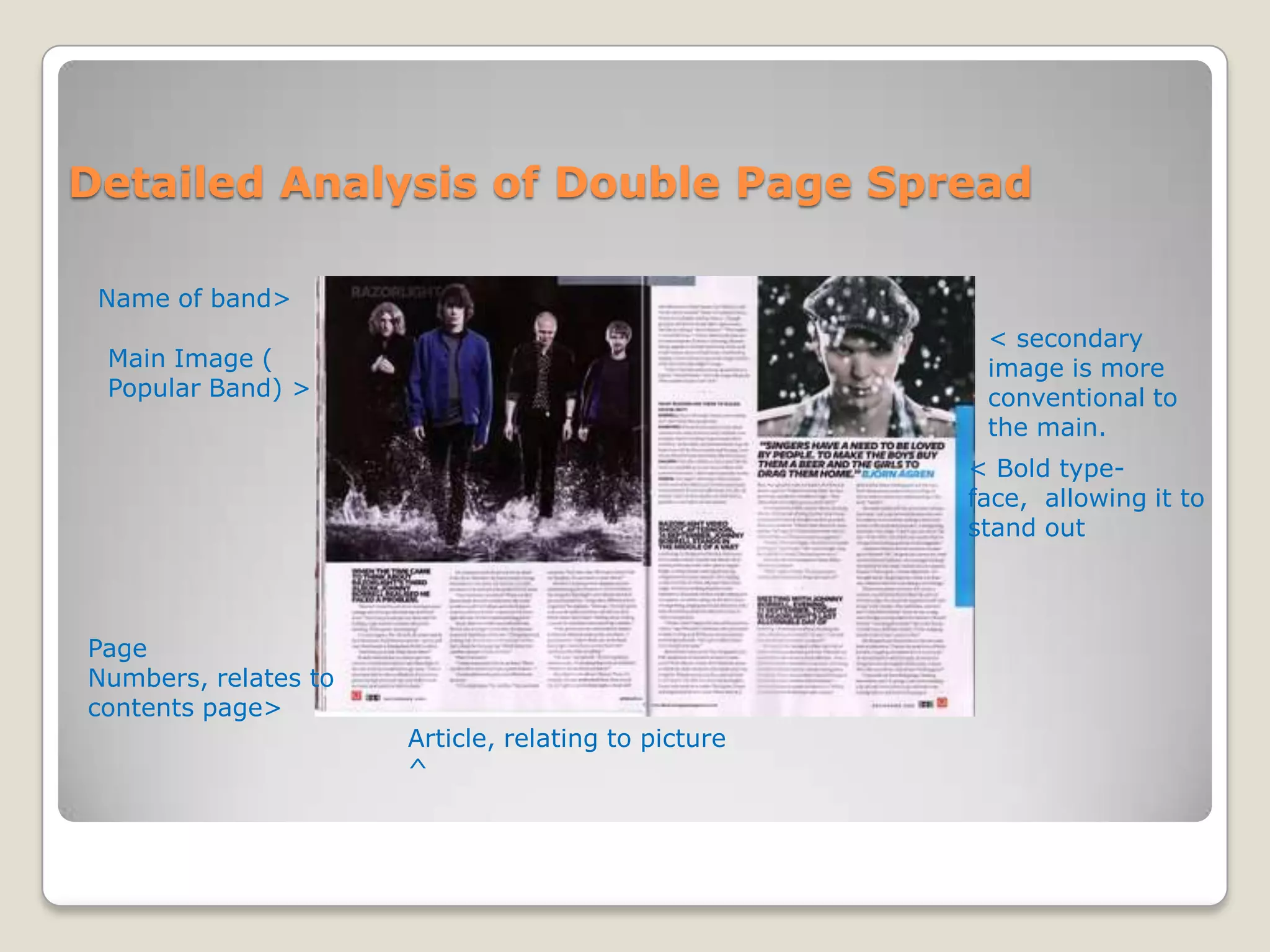
Detailed Analysis of Double Page Spread


Authentic colour
theme. >                                Title, black and
                                        white authentic.
                                        <

Bold lettering
to stand out to
the target                               < Article
audience >

                                         Smaller font
                                         for more
                                         focus draw
                                         to the main
                                         image.
                                         <

                   Main Image^
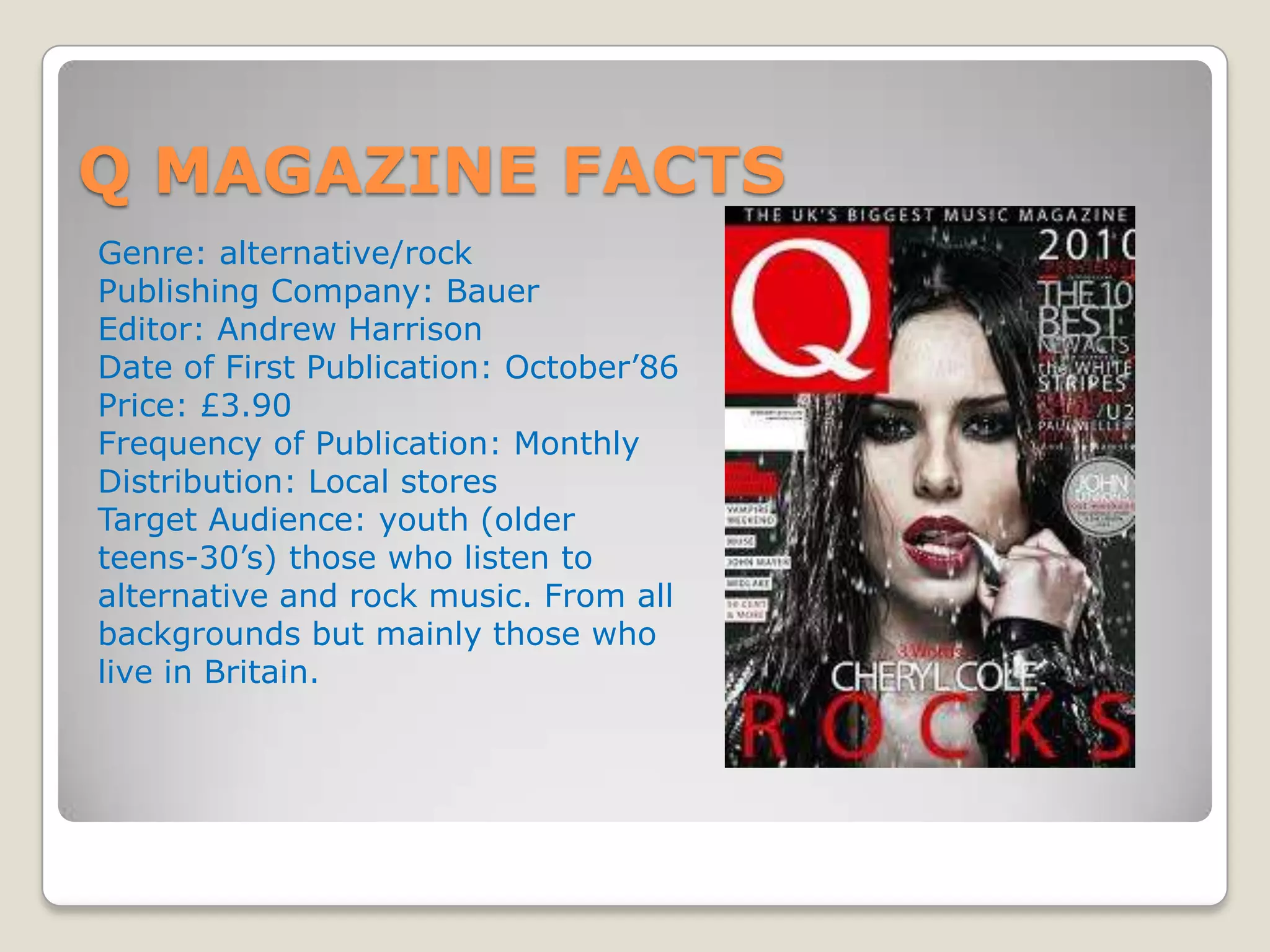
Q MAGAZINE FACTS
Genre: alternative/rock
Publishing Company: Bauer
Editor: Andrew Harrison
Date of First Publication: October’86
Price: £3.90
Frequency of Publication: Monthly
Distribution: Local stores
Target Audience: youth (older
teens-30’s) those who listen to
alternative and rock music. From all
backgrounds but mainly those who
live in Britain.
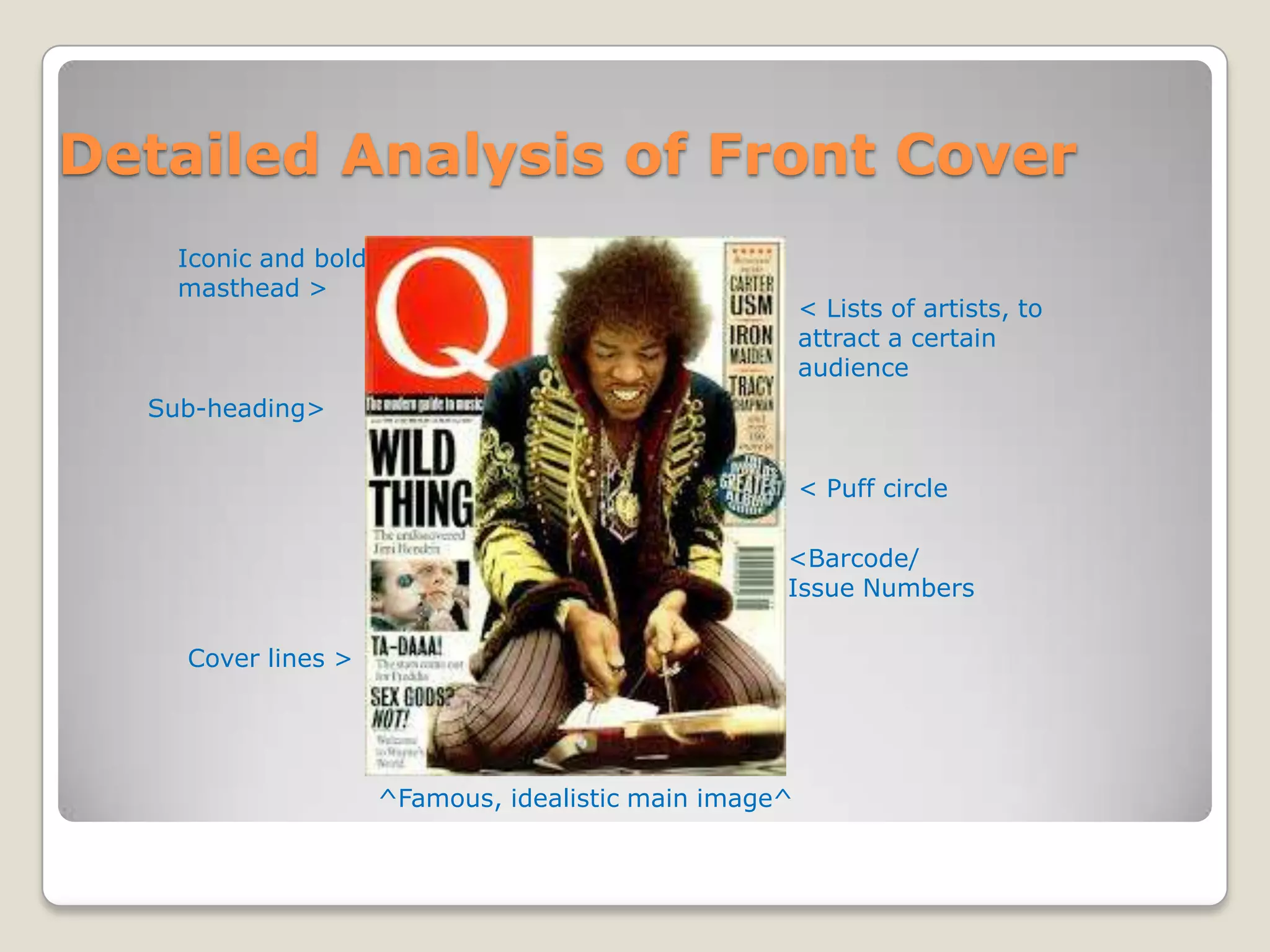
Detailed Analysis of Front Cover
    Iconic and bold
    masthead >
                                                        < Lists of artists, to
                                                        attract a certain
                                                        audience
  Sub-heading>


                                                        < Puff circle

                                                    <Barcode/
                                                    Issue Numbers

    Cover lines >


                      ^Famous, idealistic main image^
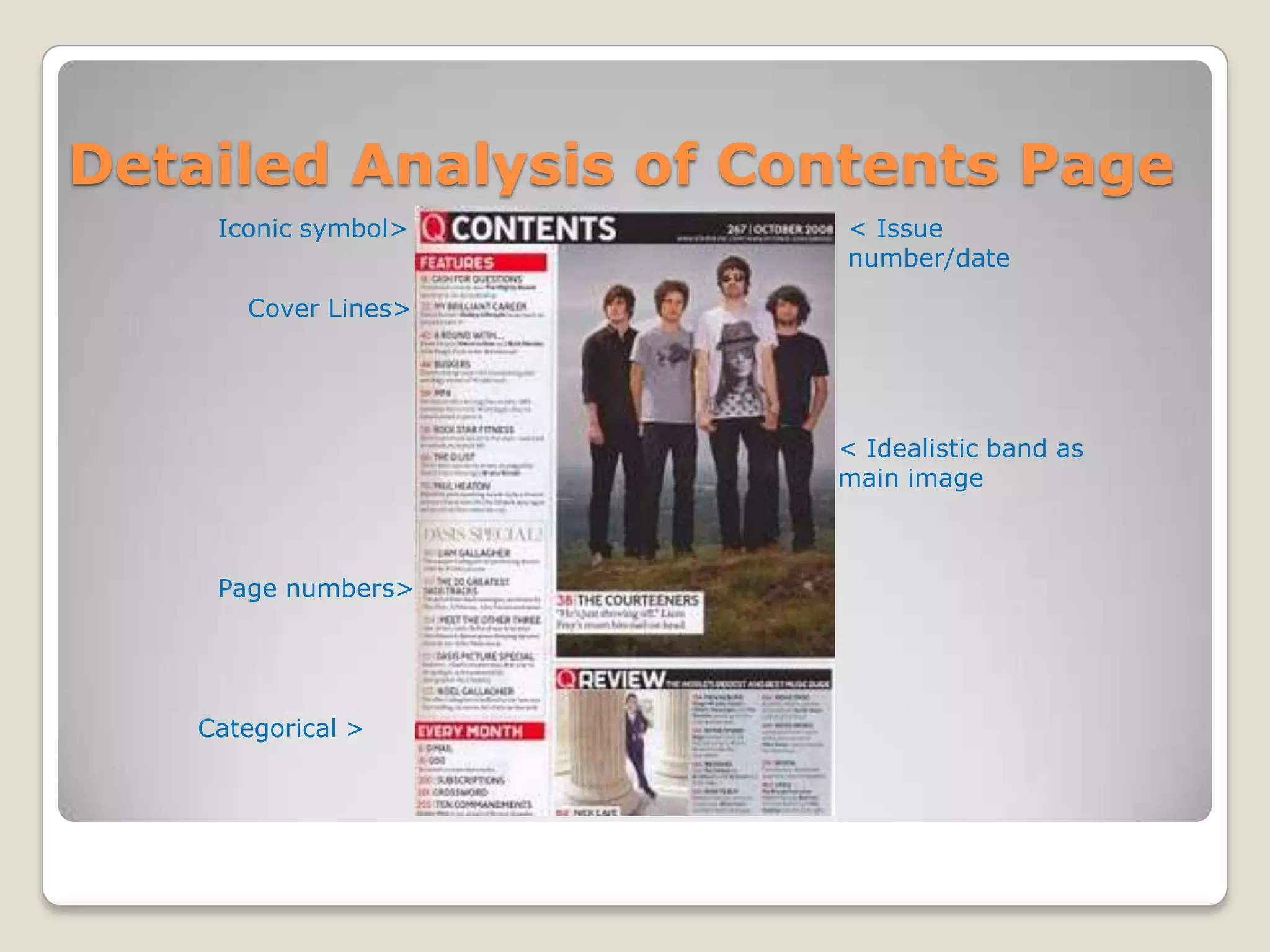
Detailed Analysis of Contents Page
    Iconic symbol>     < Issue
                       number/date

      Cover Lines>


                       < Idealistic band as
                       main image


    Page numbers>


   Categorical >
Detailed Analysis of Double Page Spread

 Name of band>
                                                      < secondary
 Main Image (                                         image is more
 Popular Band) >                                      conventional to
                                                      the main.
                                                     < Bold type-
                                                     face, allowing it to
                                                     stand out


Page
Numbers, relates to
contents page>
                      Article, relating to picture
                      ^
INFLUENCE ON MY MAGAZINE


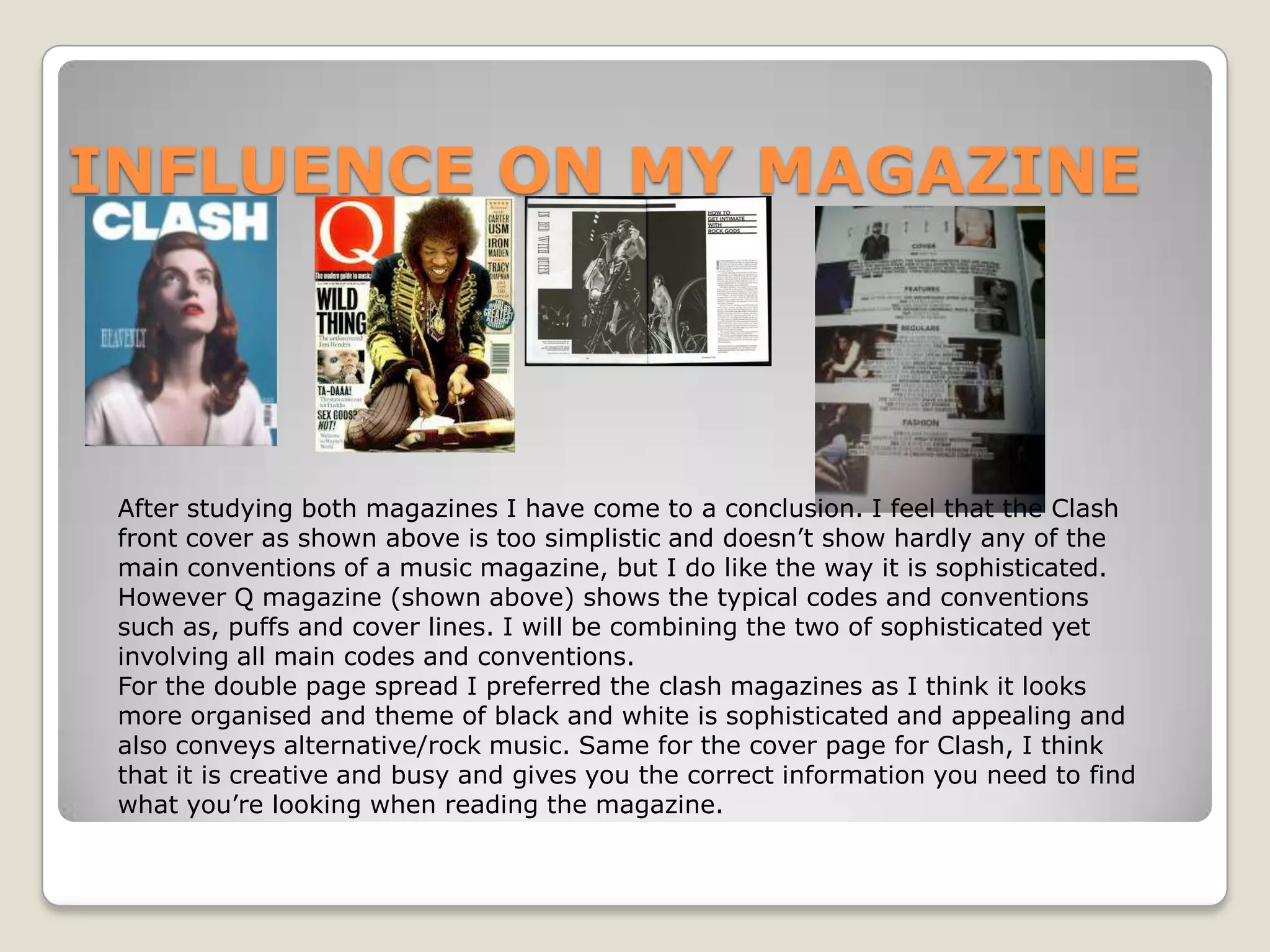
 After studying both magazines I have come to a conclusion. I feel that the Clash
 front cover as shown above is too simplistic and doesn’t show hardly any of the
 main conventions of a music magazine, but I do like the way it is sophisticated.
 However Q magazine (shown above) shows the typical codes and conventions
 such as, puffs and cover lines. I will be combining the two of sophisticated yet
 involving all main codes and conventions.
 For the double page spread I preferred the clash magazines as I think it looks
 more organised and theme of black and white is sophisticated and appealing and
 also conveys alternative/rock music. Same for the cover page for Clash, I think
 that it is creative and busy and gives you the correct information you need to find
 what you’re looking when reading the magazine.

Magazine analysis case study

  • 1.
    Magazine Analysis- Case Study Leanne Oxley
  • 2.
    CLASH MAGAZINE FACTS •Genre:alternative/ rock •Target Audience: Youth (18- 30), fans of rock music, doesn’t have a specific gender, from all background, mainly British/American. •Price:£3.99 •Issue Size:120 •Distribution: all local stores. •Publishing Company: John O’Rourke •Editors Name: Simon Harper •Date of first Publication: 2004
  • 3.
    Detailed Analysis ofFront Cover Bold, iconic masthead > Barcodes/ Issue Numbers Main Image > < Cover-lines Continuously the < same font > Simplistic and sophisticated Clear, unisex layout colours < (yellow/orange) > Shows what is inside the magazine <
  • 4.
    Detailed Analysis ofContents Page Iconic typeface for masthead> < Categorical headings Sophisticated theme > Page Numbers> < Images
  • 5.
    Detailed Analysis ofDouble Page Spread Authentic colour theme. > Title, black and white authentic. < Bold lettering to stand out to the target < Article audience > Smaller font for more focus draw to the main image. < Main Image^
  • 6.
    Q MAGAZINE FACTS Genre:alternative/rock Publishing Company: Bauer Editor: Andrew Harrison Date of First Publication: October’86 Price: £3.90 Frequency of Publication: Monthly Distribution: Local stores Target Audience: youth (older teens-30’s) those who listen to alternative and rock music. From all backgrounds but mainly those who live in Britain.
  • 7.
    Detailed Analysis ofFront Cover Iconic and bold masthead > < Lists of artists, to attract a certain audience Sub-heading> < Puff circle <Barcode/ Issue Numbers Cover lines > ^Famous, idealistic main image^
  • 8.
    Detailed Analysis ofContents Page Iconic symbol> < Issue number/date Cover Lines> < Idealistic band as main image Page numbers> Categorical >
  • 9.
    Detailed Analysis ofDouble Page Spread Name of band> < secondary Main Image ( image is more Popular Band) > conventional to the main. < Bold type- face, allowing it to stand out Page Numbers, relates to contents page> Article, relating to picture ^
  • 10.
    INFLUENCE ON MYMAGAZINE After studying both magazines I have come to a conclusion. I feel that the Clash front cover as shown above is too simplistic and doesn’t show hardly any of the main conventions of a music magazine, but I do like the way it is sophisticated. However Q magazine (shown above) shows the typical codes and conventions such as, puffs and cover lines. I will be combining the two of sophisticated yet involving all main codes and conventions. For the double page spread I preferred the clash magazines as I think it looks more organised and theme of black and white is sophisticated and appealing and also conveys alternative/rock music. Same for the cover page for Clash, I think that it is creative and busy and gives you the correct information you need to find what you’re looking when reading the magazine.