Machine Learning
Real life Business Application
Introduction
Dhruv Chaudhari
Entrepreneur & Software Architect(NLP, IR, ML, DL & Cloud)
All problems in computer science
can be solved by another level of
indirection.
- David Wheeler
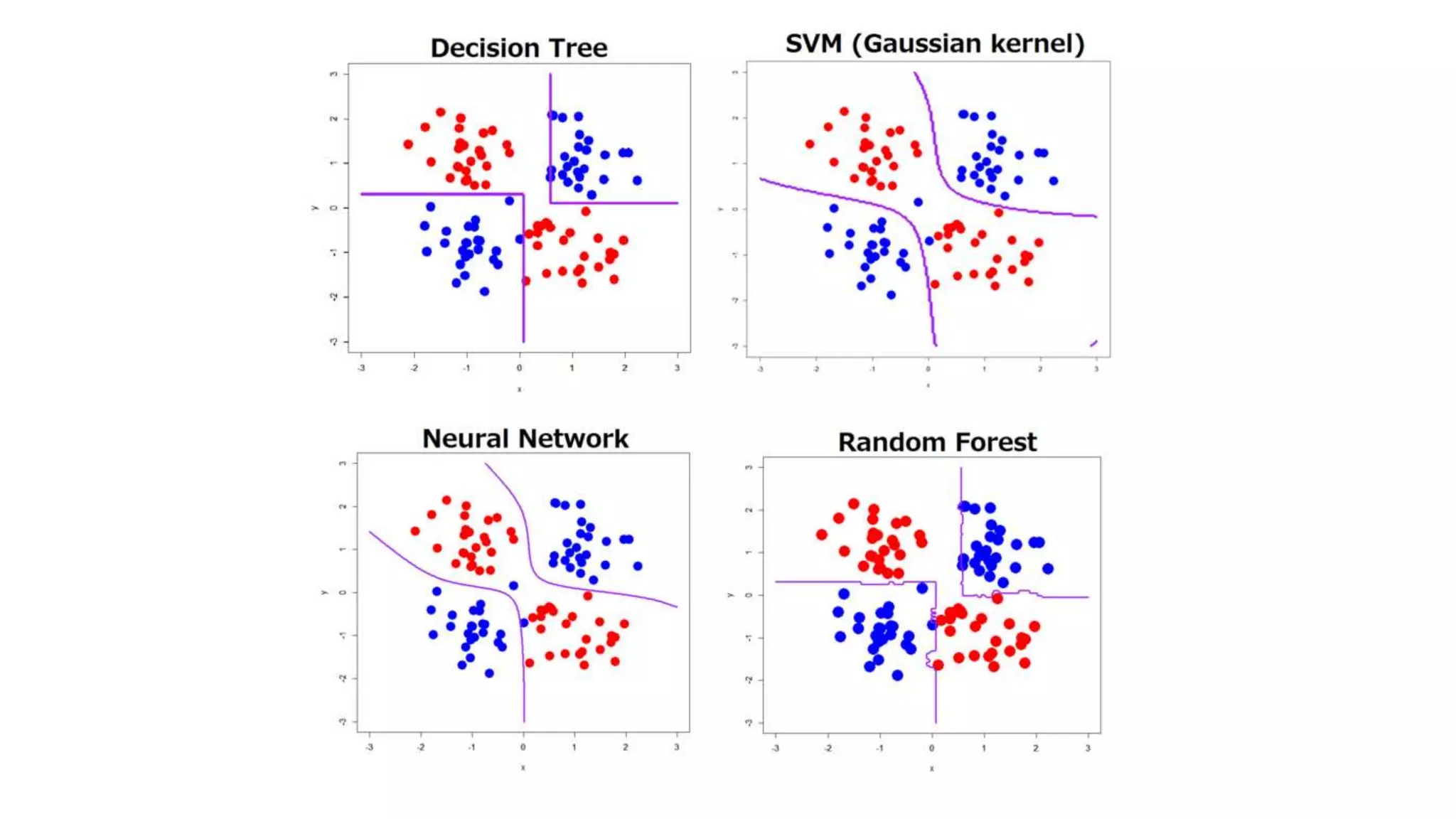
Classification
Supervised
Defined as a problem of looking for
a mapping from objects to a finite
set of classes. Usually each object
has just one class (but there are
generalizations to multiple ones).
Real life examples:
● Face recognition (we are given
a face and answer who is it)
● Drug discovery (we are given a
compound and we answer if it
is a drug or not)
Regression
Supervised
We are looking for a mapping to a
infinite number values, with valid
ordering, for example real numbers.
Real life examples:
● Predicting for much money a
user will spend in our shop
based on his characteristic.
● Predicting power consumption
in the next month.
● Predicting stock prices
Clustering
Un-Supervised
Usually defined as finding a
structure in data, without access to
any sample of such structure (later
on with many modifications such as
constrained clustering, weakly
supervised clustering)
Real life examples:
● Given set of images of stars,
do they form some
distinguishable types of stars?
● Given users activity on our
website - are there
distinguishable usage
scenarios that we can find?
Anomaly
detection
Un-Supervised
Given a set of "normal"
observations build a model to
answer "is new observation normal,
or is it an anomaly?"
Real life examples:
● We have record of a valid
engine parameters and need a
method to alarm as that it
starts to behave "weird" (even
though we do not know from
the past what kind of "weird"
we are looking for).
Anomaly
detection
Un-Supervised
Given a set of "normal"
observations build a model to
answer "is new observation normal,
or is it an anomaly?"
Real life examples:
● We have recordings from
camera of usual people
behaviour, we want method to
alarm as that "something
unusual is happening" (without
specifing what)
Dimension
Reduction
Un-Supervised
This is just a preprocessing step.
Given high dimensional data we
seek for a lower-dimensional
representation which is usable in
other tasks.
● We have set of high-
dimensional data (like patients
records) and want to visualize
it (draw on a plane)
● We have a problem of
classification and our methods
fail - we need to reduce
dimensionality to increase
scores
Reinforcment
Un-Supervised
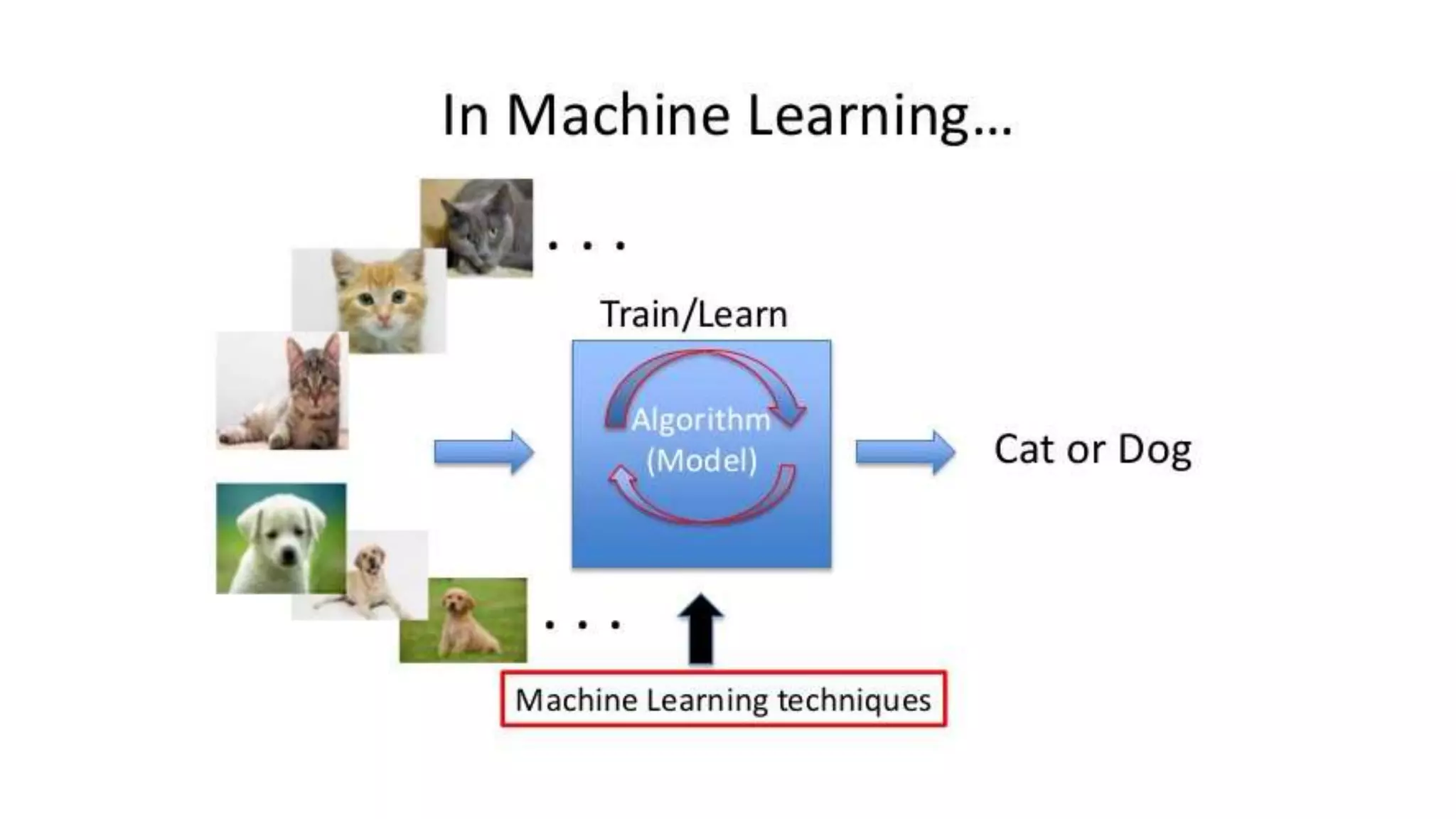
● None of the above is reinforcment
learning. Reinforcment learning
can be applied to any of the above,
if we simply have some
'environment' saying that our
method is doing 'good' or 'bad' (so
instead of saying 'I want this image
to be classified as cat' it only says
'I see that you classified this image
as a plane, well.. it is not!').
In other words - we do any task, but
we do have humans who judge is
our method good or bad, but they
do not give as correct answers.
Computer Vision
Deep Learning
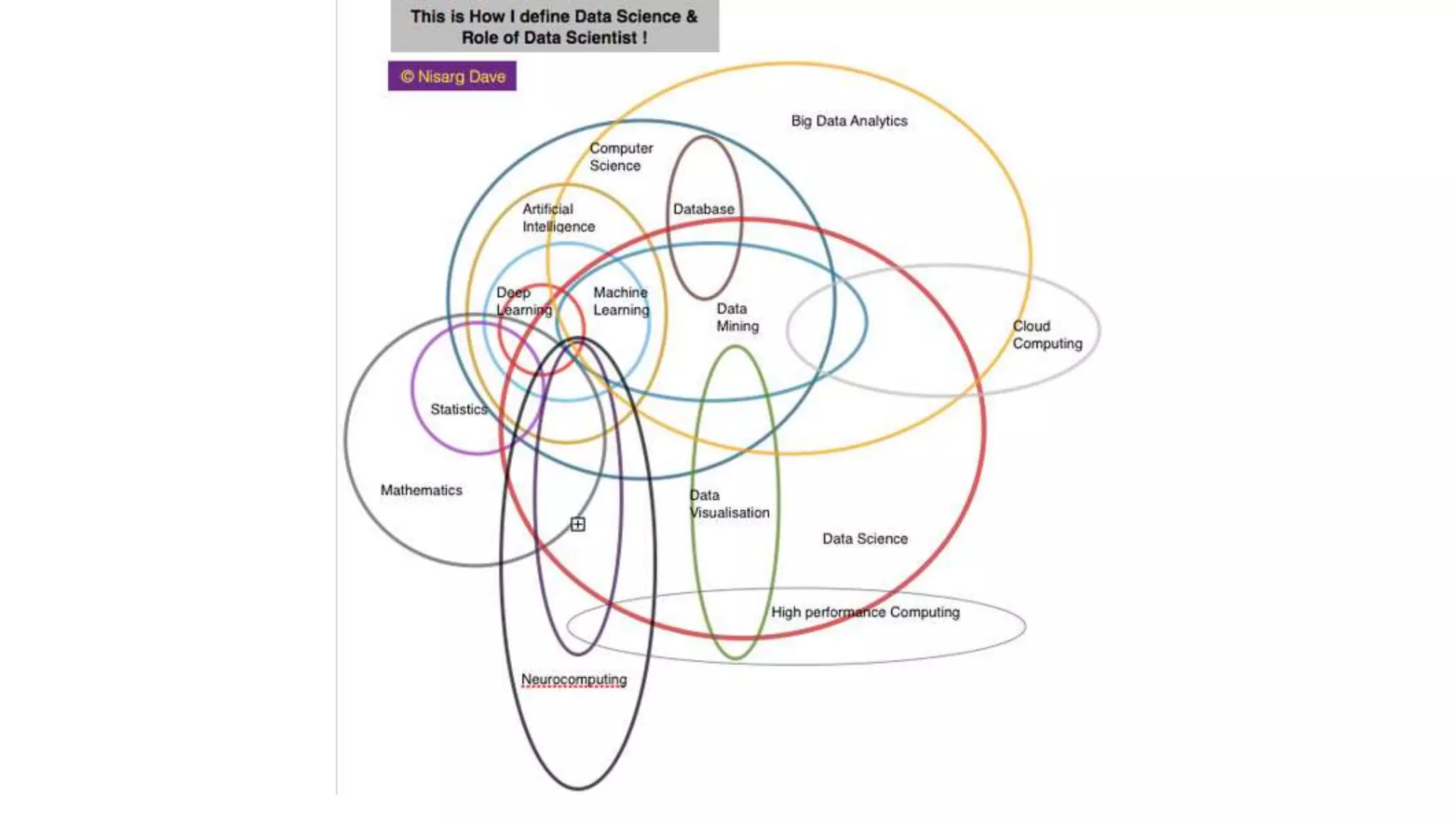
Data Science
Define and Opportunities
QA Session
GS LAB
max growthThanks
Pune Developer’s Community
Facebook: fb/punedevscommunity/
Linkedin: https://www.linkedin.com/groups/10325743

Machine Learning: Real life business application

  • 1.
    Machine Learning Real lifeBusiness Application
  • 2.
    Introduction Dhruv Chaudhari Entrepreneur &Software Architect(NLP, IR, ML, DL & Cloud)
  • 3.
    All problems incomputer science can be solved by another level of indirection. - David Wheeler
  • 5.
    Classification Supervised Defined as aproblem of looking for a mapping from objects to a finite set of classes. Usually each object has just one class (but there are generalizations to multiple ones). Real life examples: ● Face recognition (we are given a face and answer who is it) ● Drug discovery (we are given a compound and we answer if it is a drug or not)
  • 6.
    Regression Supervised We are lookingfor a mapping to a infinite number values, with valid ordering, for example real numbers. Real life examples: ● Predicting for much money a user will spend in our shop based on his characteristic. ● Predicting power consumption in the next month. ● Predicting stock prices
  • 7.
    Clustering Un-Supervised Usually defined asfinding a structure in data, without access to any sample of such structure (later on with many modifications such as constrained clustering, weakly supervised clustering) Real life examples: ● Given set of images of stars, do they form some distinguishable types of stars? ● Given users activity on our website - are there distinguishable usage scenarios that we can find?
  • 8.
    Anomaly detection Un-Supervised Given a setof "normal" observations build a model to answer "is new observation normal, or is it an anomaly?" Real life examples: ● We have record of a valid engine parameters and need a method to alarm as that it starts to behave "weird" (even though we do not know from the past what kind of "weird" we are looking for).
  • 9.
    Anomaly detection Un-Supervised Given a setof "normal" observations build a model to answer "is new observation normal, or is it an anomaly?" Real life examples: ● We have recordings from camera of usual people behaviour, we want method to alarm as that "something unusual is happening" (without specifing what)
  • 10.
    Dimension Reduction Un-Supervised This is justa preprocessing step. Given high dimensional data we seek for a lower-dimensional representation which is usable in other tasks. ● We have set of high- dimensional data (like patients records) and want to visualize it (draw on a plane) ● We have a problem of classification and our methods fail - we need to reduce dimensionality to increase scores
  • 11.
    Reinforcment Un-Supervised ● None ofthe above is reinforcment learning. Reinforcment learning can be applied to any of the above, if we simply have some 'environment' saying that our method is doing 'good' or 'bad' (so instead of saying 'I want this image to be classified as cat' it only says 'I see that you classified this image as a plane, well.. it is not!'). In other words - we do any task, but we do have humans who judge is our method good or bad, but they do not give as correct answers.
  • 12.
  • 18.
  • 22.
  • 24.
  • 25.
  • 26.
    Pune Developer’s Community Facebook:fb/punedevscommunity/ Linkedin: https://www.linkedin.com/groups/10325743