Metamodel Global view
Some sources Object Modeling with UML: Advanced Modeling, Karin Palmkvist, Bran Selic, and Jos Warmer, March 2000
 
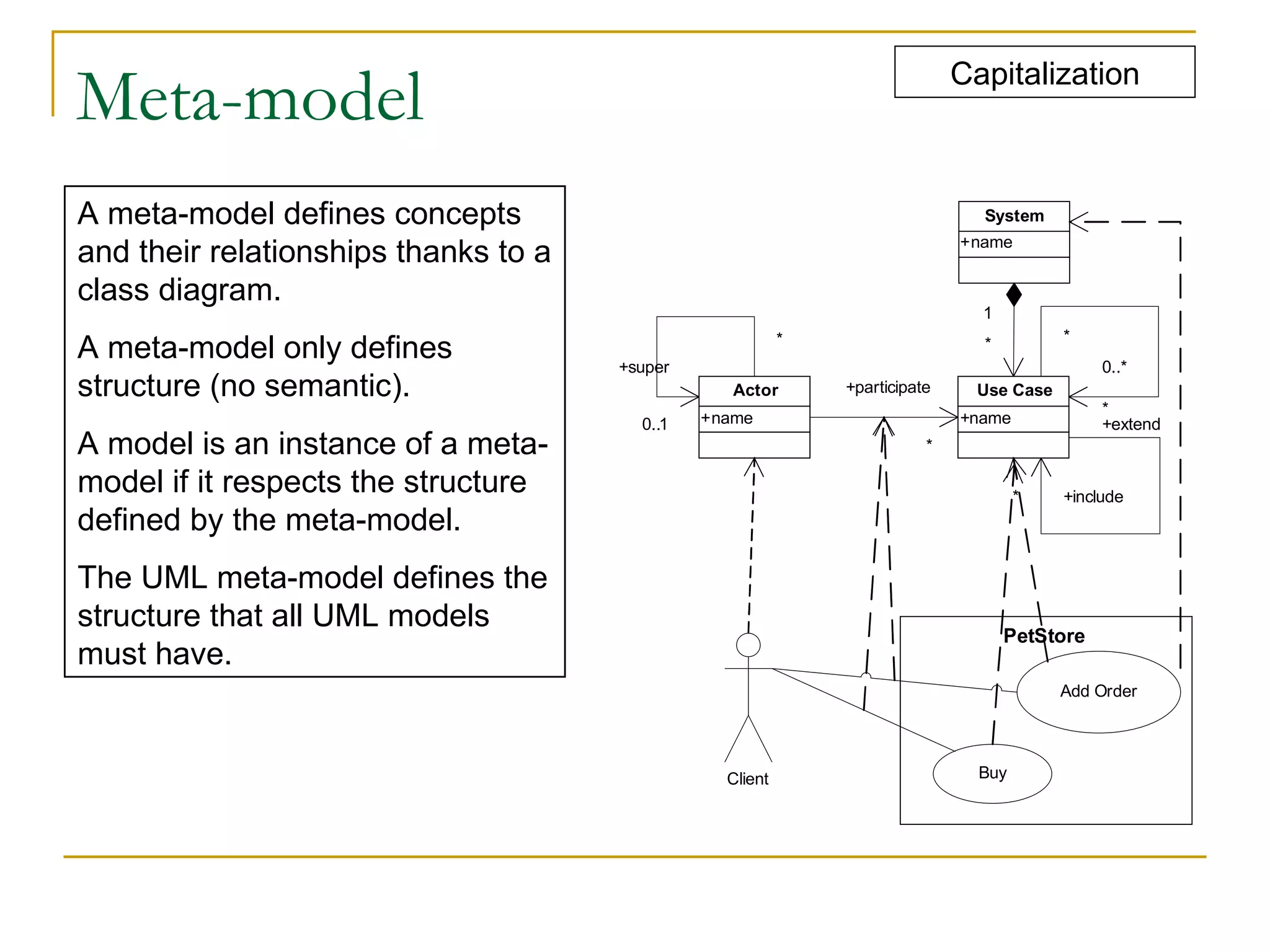
Meta-model Capitalization A meta-model defines concepts and their relationships thanks to a class diagram.  A meta-model only defines structure (no semantic). A model is an instance of a meta-model if it respects the structure defined by the meta-model. The UML meta-model defines the structure that all UML models must have.
An Example: UML metamodel in the 4 Layer
Another Example: UML metamodel in the 4 Layer
Points to Ponder Can we create a new version of UML, in consideration of the following? MetaClass, MetaAttribute, MetaOperation Class, Attribute, Operation, Component StockShare, owner, askPrice hacsSoftwareCoShare99, smartie, 11.18
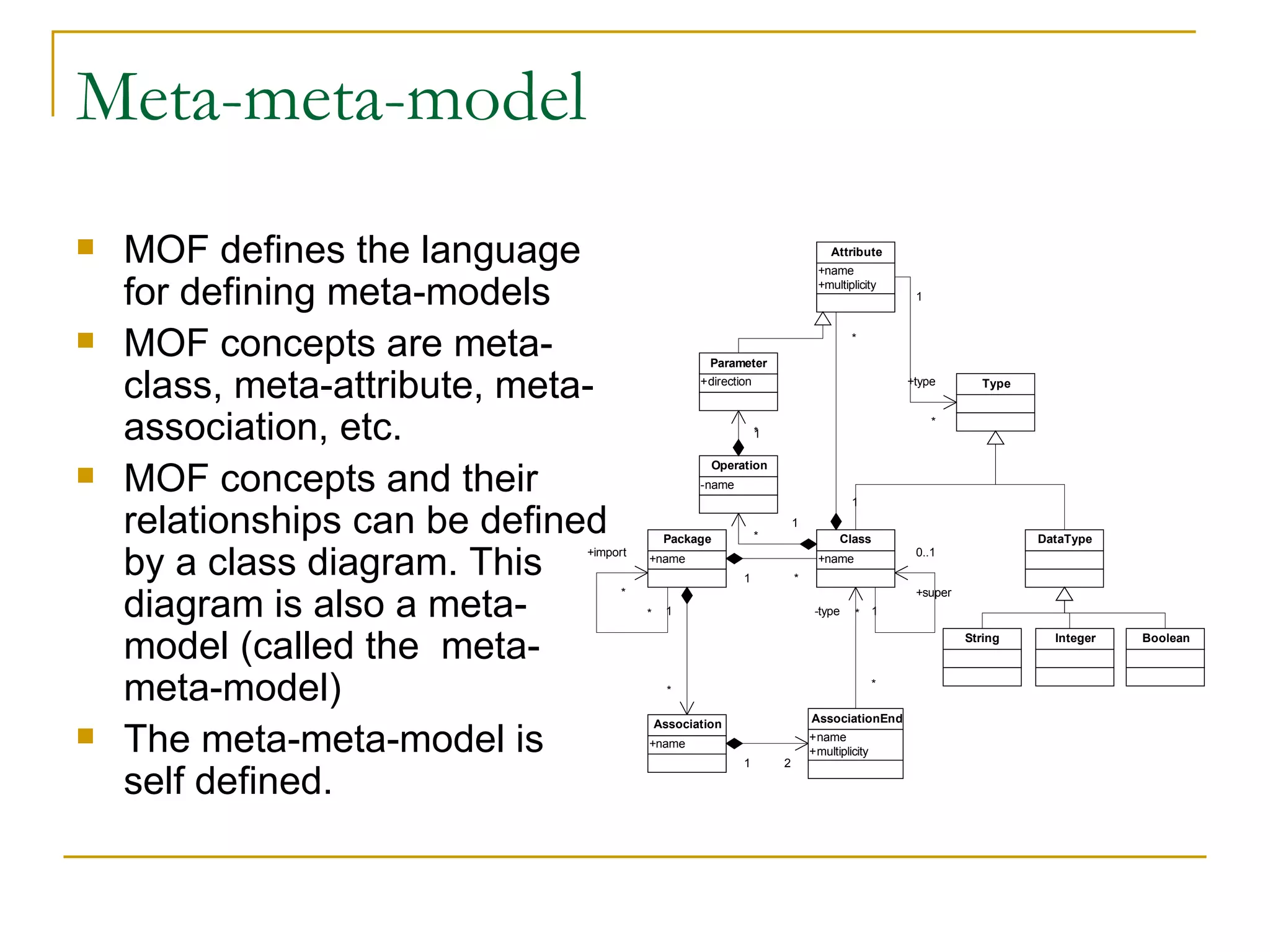
Meta-meta-model MOF defines the language for defining meta-models MOF concepts are meta-class, meta-attribute, meta-association, etc. MOF concepts and their relationships can be defined by a class diagram. This diagram is also a meta-model (called the  meta-meta-model) The meta-meta-model is self defined.
Meta-layers Mn+1 defines the structure of Mn Mn+1 is not an abstraction of Mn Meta-layer relationships are similar to grammar-layer relationships (BNF, or XML Schema) Capitalization Meta-meta-model Meta-model Model MOF UML Modèle Modèle Modèle UML UML
Infrastructure: Consolidation of Concepts Namespace PackagableElement RedefinableElement Classifier Feature
Infrastructure: Behavior Harmonization Common semantic base for all behaviors Choice of behavioral formalism driven by application needs Classifier . . . Class UseCase Component Behavior 0..1 0..* Action Activity Statemachine Interaction
Classifier & Class
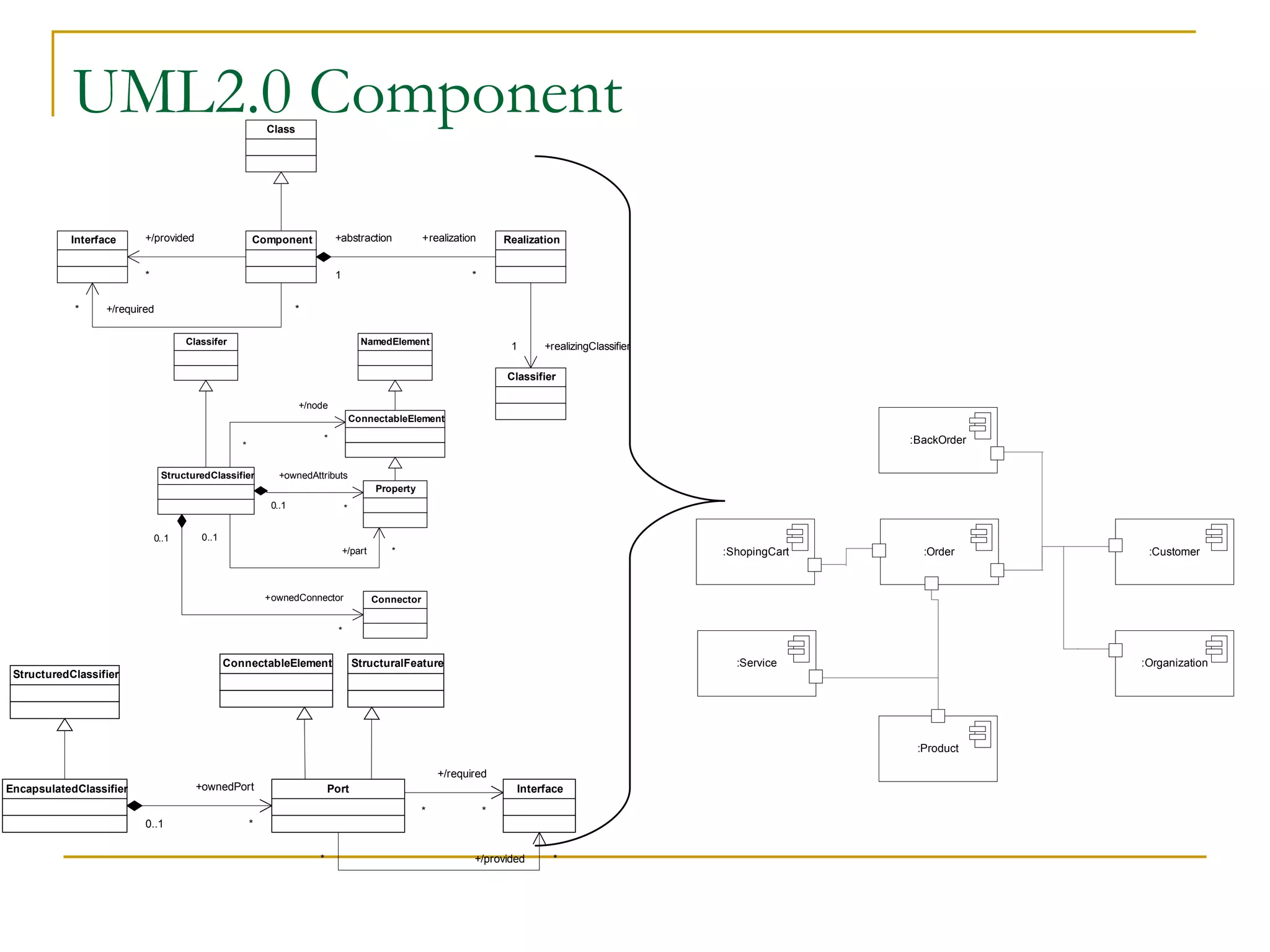
Common component paradigm Composing Assembling Encapsulation Repetition of structural elements
UML2.0 Component
Object Constraint Language OCL defines the structure of models expressing constraints Invariant, Pre-post conditions OCL is a meta-model instance of the MOF OCL is highly coupled with UML The OCL semantic is defined with models (operation without side effect ) OCL defined a concrete syntax Capitalization PropertyCallExp > Literal -1000 ModelPropertyCall amount
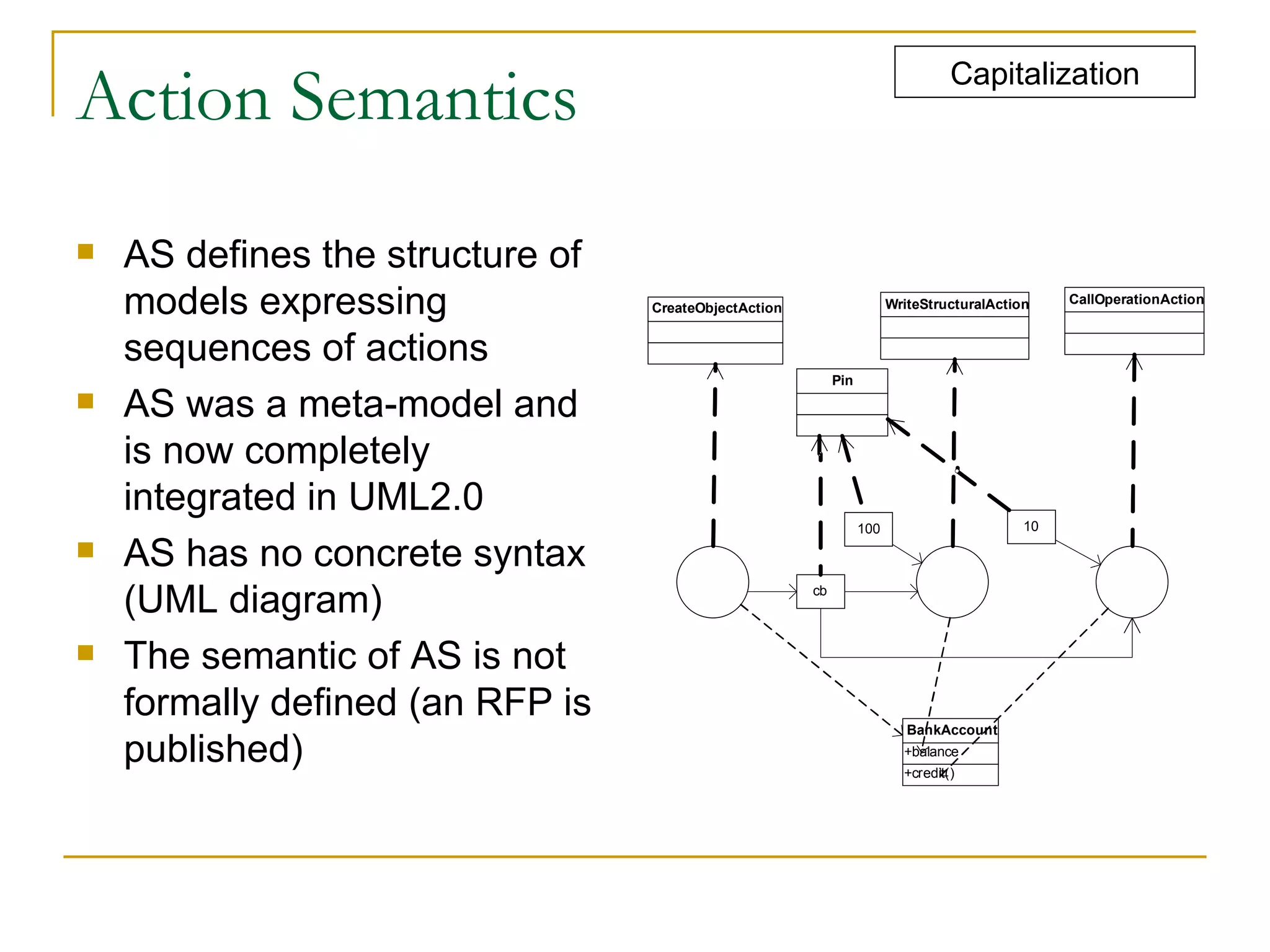
Action Semantics AS defines the structure of models expressing sequences of actions AS was a meta-model and is now completely integrated in UML2.0 AS has no concrete syntax (UML diagram) The semantic of AS is not formally defined (an RFP is published) Capitalization
Template Model transformation is a template written in a dedicated language Productivity Template Interpretor UML2EJBTemplate  PetStore PetStore EJB UML EJB
 
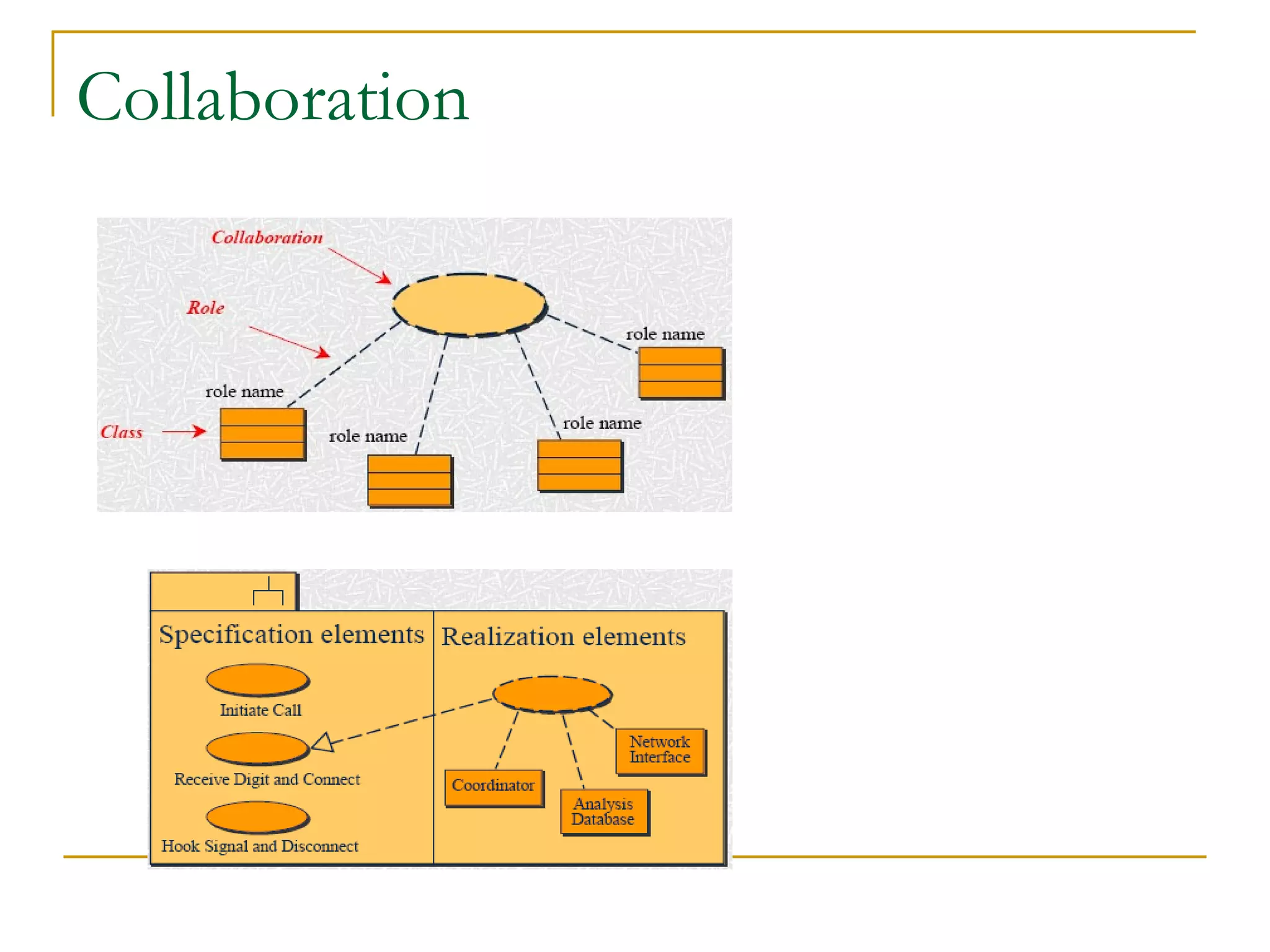
Collaboration
Models & Traceability A model is an abstraction of a system, specifying the system from a certain viewpoint and at a certain level of abstraction
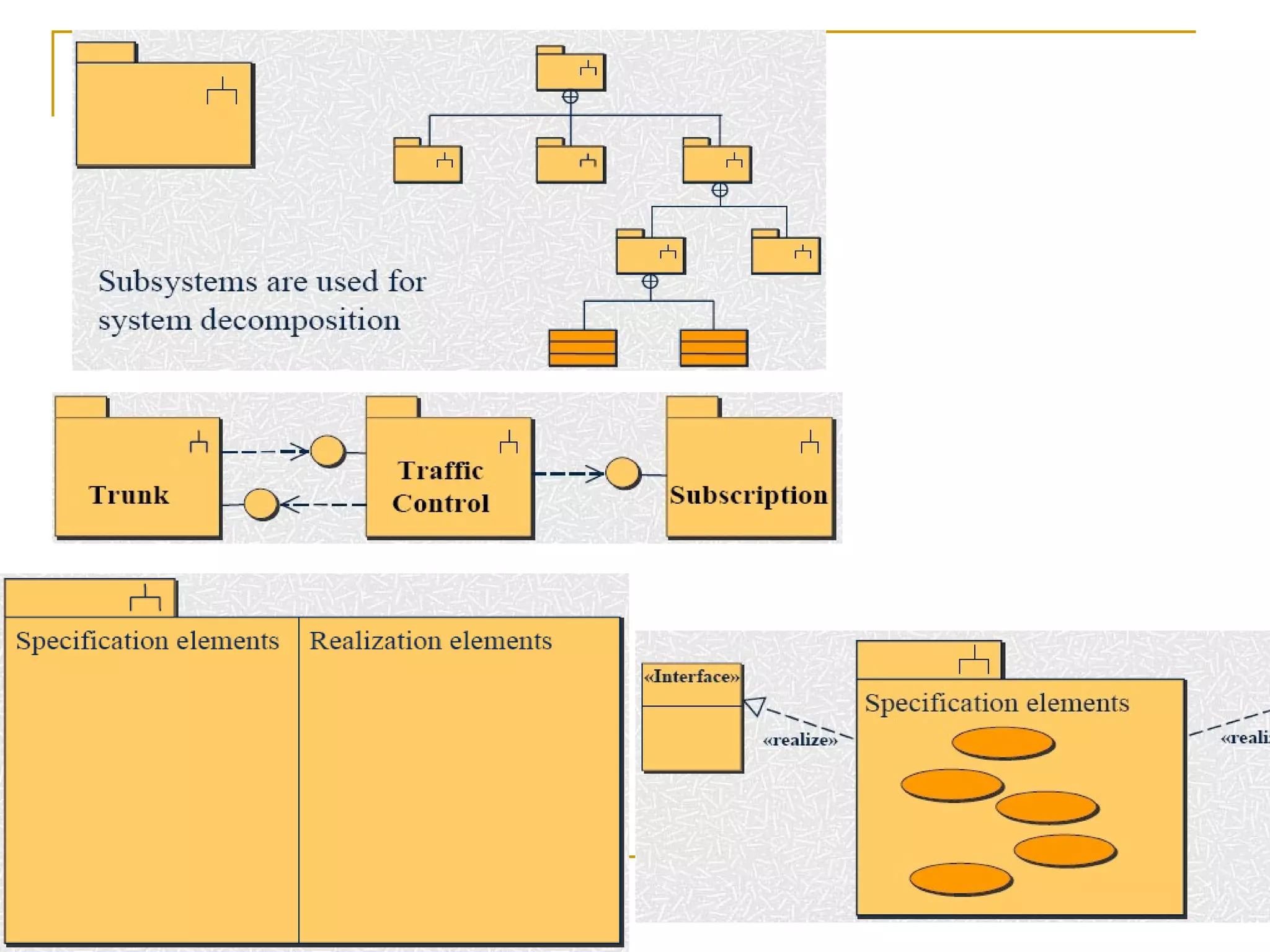
Model & System Hierarchy Models and subsystems can be combined in a hierarchy:
Stereotype Notation

M05 Metamodel

  • 1.
  • 2.
    Some sources ObjectModeling with UML: Advanced Modeling, Karin Palmkvist, Bran Selic, and Jos Warmer, March 2000
  • 3.
  • 4.
    Meta-model Capitalization Ameta-model defines concepts and their relationships thanks to a class diagram. A meta-model only defines structure (no semantic). A model is an instance of a meta-model if it respects the structure defined by the meta-model. The UML meta-model defines the structure that all UML models must have.
  • 5.
    An Example: UMLmetamodel in the 4 Layer
  • 6.
    Another Example: UMLmetamodel in the 4 Layer
  • 7.
    Points to PonderCan we create a new version of UML, in consideration of the following? MetaClass, MetaAttribute, MetaOperation Class, Attribute, Operation, Component StockShare, owner, askPrice hacsSoftwareCoShare99, smartie, 11.18
  • 8.
    Meta-meta-model MOF definesthe language for defining meta-models MOF concepts are meta-class, meta-attribute, meta-association, etc. MOF concepts and their relationships can be defined by a class diagram. This diagram is also a meta-model (called the meta-meta-model) The meta-meta-model is self defined.
  • 9.
    Meta-layers Mn+1 definesthe structure of Mn Mn+1 is not an abstraction of Mn Meta-layer relationships are similar to grammar-layer relationships (BNF, or XML Schema) Capitalization Meta-meta-model Meta-model Model MOF UML Modèle Modèle Modèle UML UML
  • 10.
    Infrastructure: Consolidation ofConcepts Namespace PackagableElement RedefinableElement Classifier Feature
  • 11.
    Infrastructure: Behavior HarmonizationCommon semantic base for all behaviors Choice of behavioral formalism driven by application needs Classifier . . . Class UseCase Component Behavior 0..1 0..* Action Activity Statemachine Interaction
  • 12.
  • 13.
    Common component paradigmComposing Assembling Encapsulation Repetition of structural elements
  • 14.
  • 15.
    Object Constraint LanguageOCL defines the structure of models expressing constraints Invariant, Pre-post conditions OCL is a meta-model instance of the MOF OCL is highly coupled with UML The OCL semantic is defined with models (operation without side effect ) OCL defined a concrete syntax Capitalization PropertyCallExp > Literal -1000 ModelPropertyCall amount
  • 16.
    Action Semantics ASdefines the structure of models expressing sequences of actions AS was a meta-model and is now completely integrated in UML2.0 AS has no concrete syntax (UML diagram) The semantic of AS is not formally defined (an RFP is published) Capitalization
  • 17.
    Template Model transformationis a template written in a dedicated language Productivity Template Interpretor UML2EJBTemplate PetStore PetStore EJB UML EJB
  • 18.
  • 19.
  • 20.
    Models & TraceabilityA model is an abstraction of a system, specifying the system from a certain viewpoint and at a certain level of abstraction
  • 21.
    Model & SystemHierarchy Models and subsystems can be combined in a hierarchy:
  • 22.