Lysistrata
Extending the Director’s Concept
Unit 4 Paper
Section B Director’s Concepts
Key areas to extend our ideas:
• Staging
• Set
• Costume
• Lighting
• Sound
• Mask
• Representation of the comic Phallus
Objectives of the lesson
• In each case we will discuss ideas relating to
our concepts and help each other to know
exactly how the production element supports
the concept through design.
• MUST consider a range of elements fully
• SHOULD be able to give reasons for their
choices suitable to the play
• COULD assist others in improving their
concepts
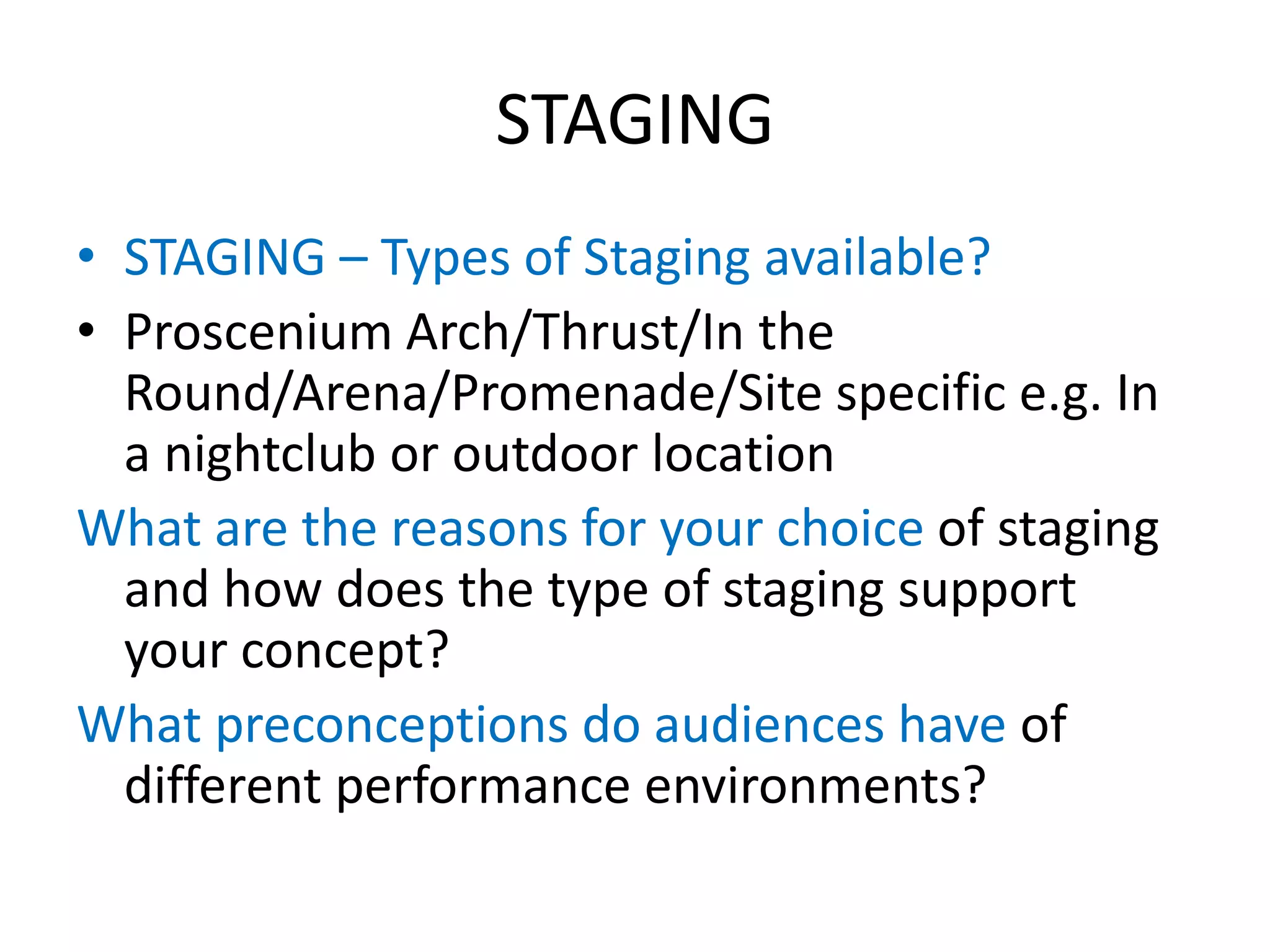
STAGING
• STAGING – Types of Staging available?
• Proscenium Arch/Thrust/In the
Round/Arena/Promenade/Site specific e.g. In
a nightclub or outdoor location
What are the reasons for your choice of staging
and how does the type of staging support
your concept?
What preconceptions do audiences have of
different performance environments?
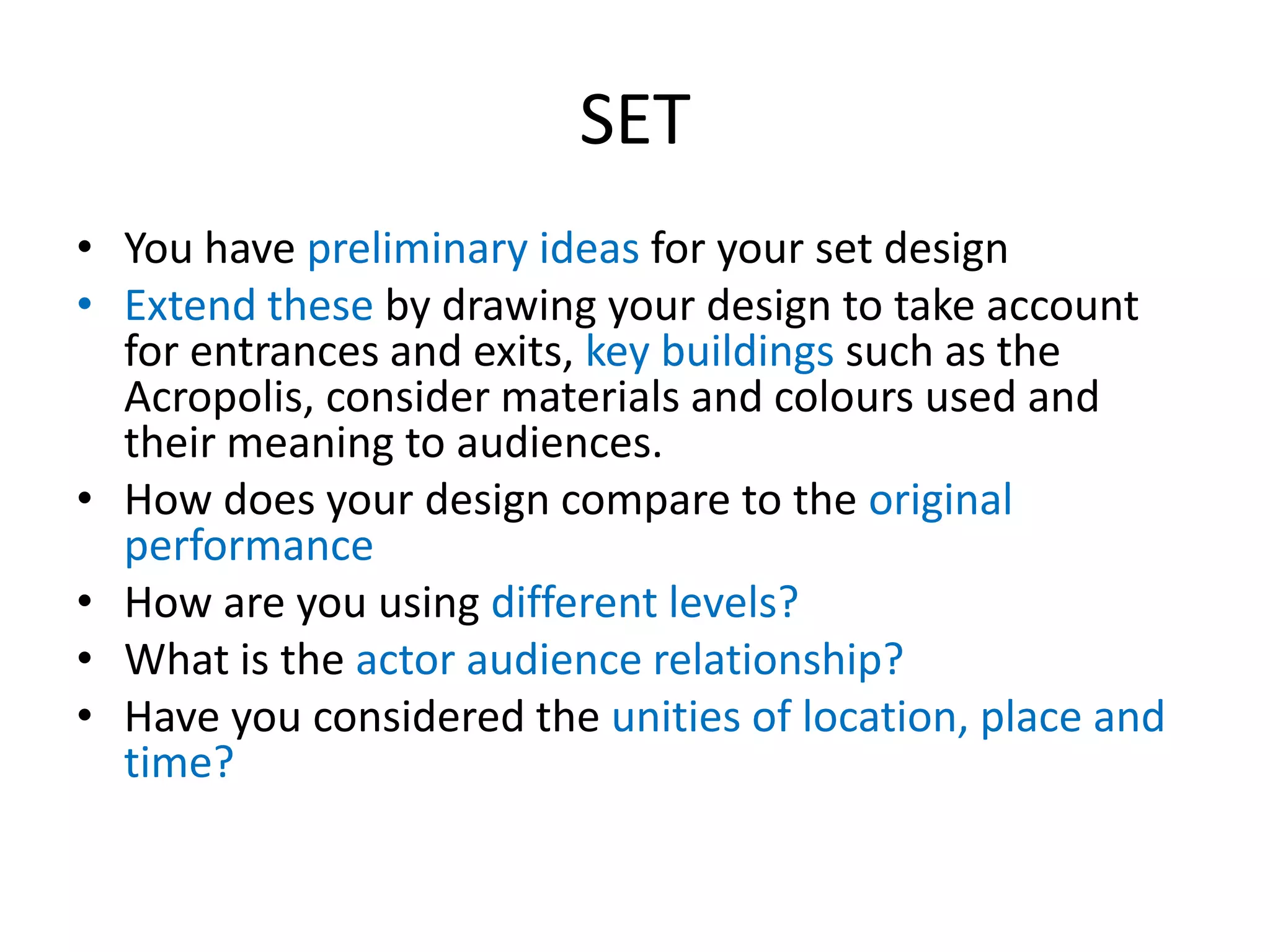
SET
• You have preliminary ideas for your set design
• Extend these by drawing your design to take account
for entrances and exits, key buildings such as the
Acropolis, consider materials and colours used and
their meaning to audiences.
• How does your design compare to the original
performance
• How are you using different levels?
• What is the actor audience relationship?
• Have you considered the unities of location, place and
time?
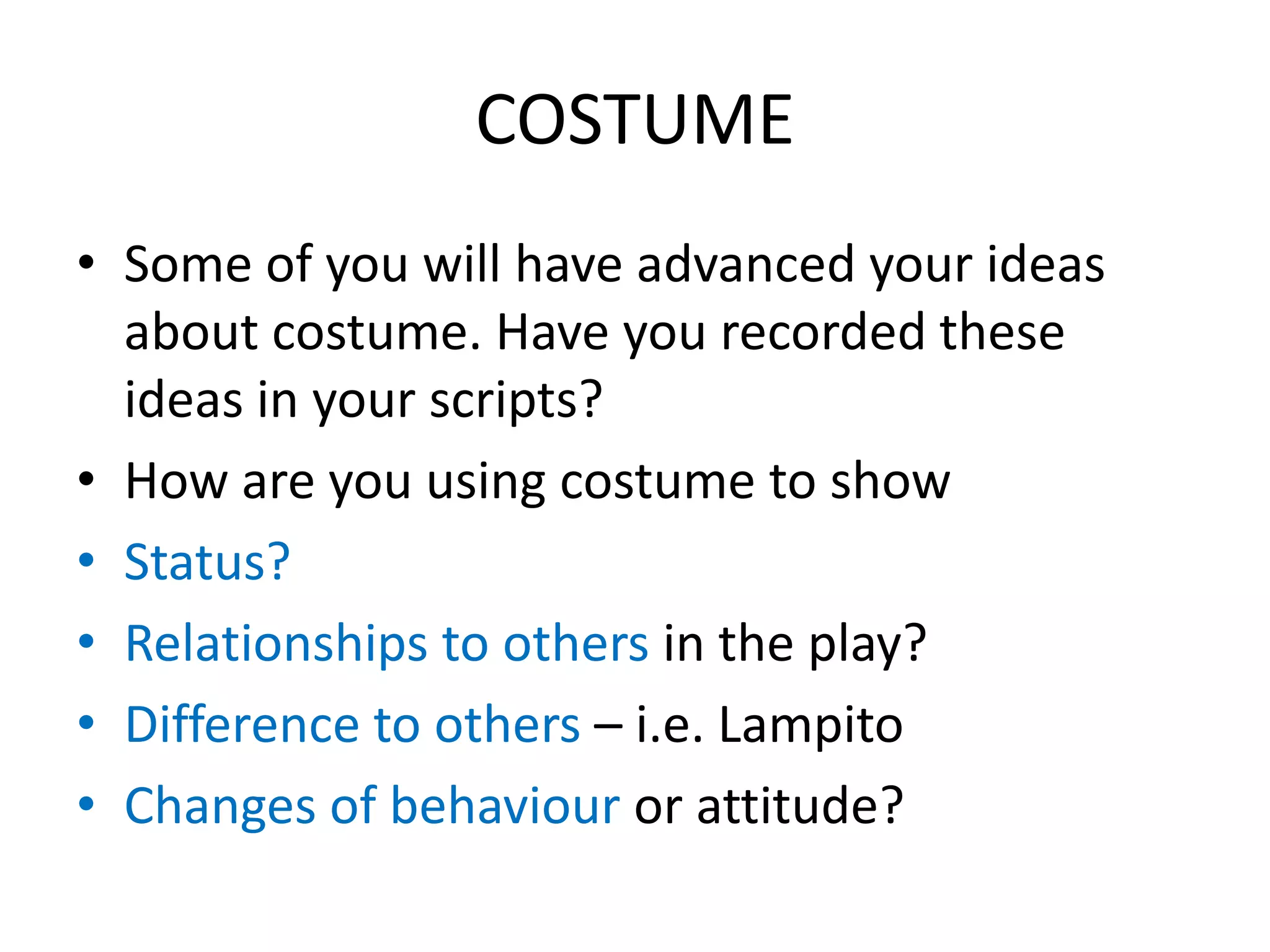
COSTUME
• Some of you will have advanced your ideas
about costume. Have you recorded these
ideas in your scripts?
• How are you using costume to show
• Status?
• Relationships to others in the play?
• Difference to others – i.e. Lampito
• Changes of behaviour or attitude?
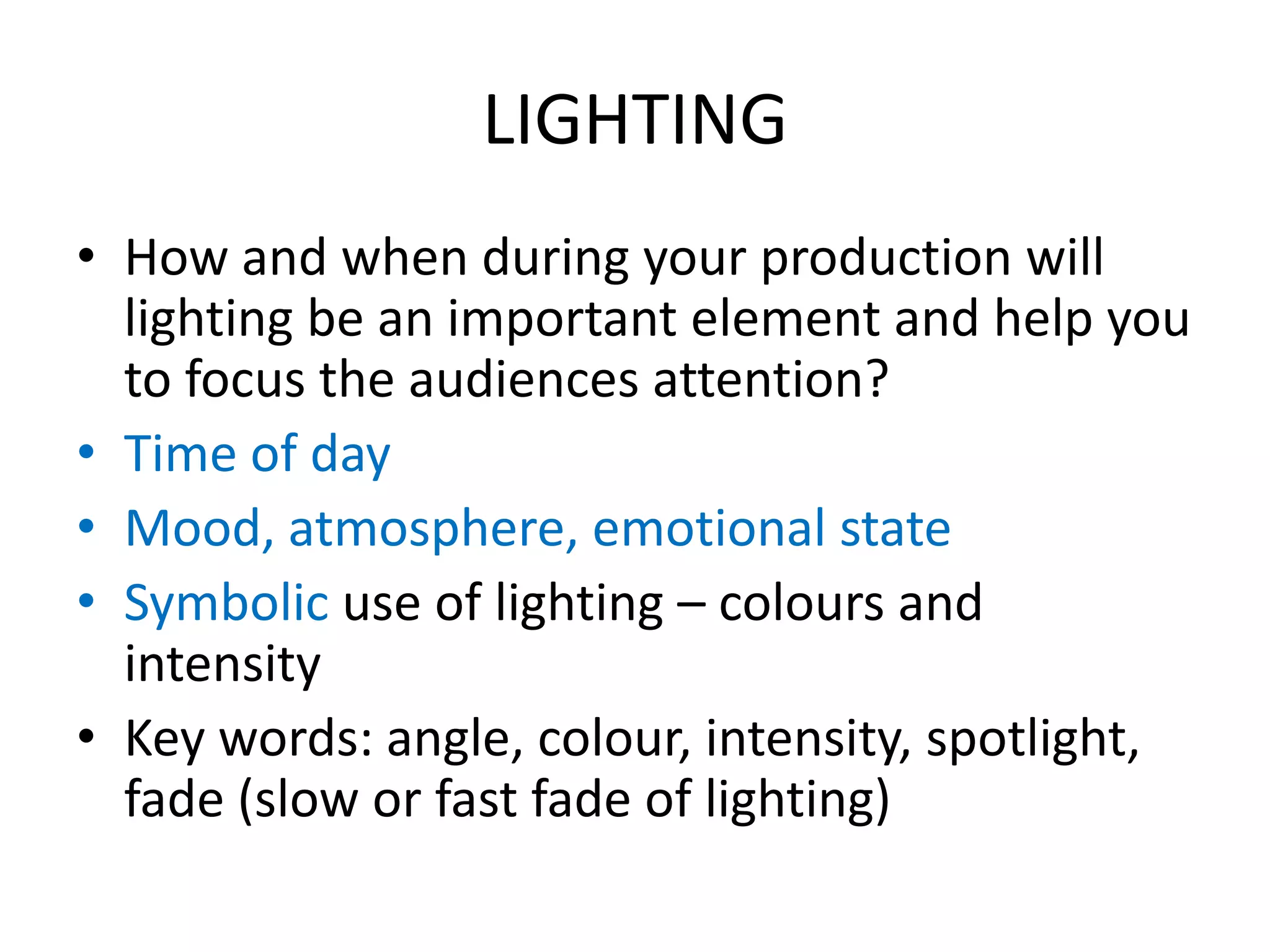
LIGHTING
• How and when during your production will
lighting be an important element and help you
to focus the audiences attention?
• Time of day
• Mood, atmosphere, emotional state
• Symbolic use of lighting – colours and
intensity
• Key words: angle, colour, intensity, spotlight,
fade (slow or fast fade of lighting)
SOUND
• Creating a soundscape – remember the
construction site in the DVD version I showed you
in the early weeks.
• Interpreting the songs sung in the play
• The oath taking
• All are key elements where sound is vital in
communicating to the audience your ideas.
• Live or recorded – give reasons for your choices.
Will the Chorus play instruments like Propeller
do?
USE OF MASK
• The mask was an integral part of the Greek
Drama, worn by both the principal three
actors playing the main parts and also the
Chorus. Will your concept make any gestures
towards this history? Footballers sometimes
wear protective masks; Factory workers might
have welding masks; Gangsters wear
sunglasses and similar hats?
REPRESENTING THE PHALLUS
• Will your concept, like the original play, make
direct visual reference to the enlarged phallus
worn by the male characters on stage?
• How will you manage this? Will it work with
the design ideas you have for costume?
(Remember how Bottom’s string bobbin
changed when he was transformed)

Lysistrata concepts extended

  • 1.
    Lysistrata Extending the Director’sConcept Unit 4 Paper Section B Director’s Concepts
  • 3.
    Key areas toextend our ideas: • Staging • Set • Costume • Lighting • Sound • Mask • Representation of the comic Phallus
  • 4.
    Objectives of thelesson • In each case we will discuss ideas relating to our concepts and help each other to know exactly how the production element supports the concept through design. • MUST consider a range of elements fully • SHOULD be able to give reasons for their choices suitable to the play • COULD assist others in improving their concepts
  • 5.
    STAGING • STAGING –Types of Staging available? • Proscenium Arch/Thrust/In the Round/Arena/Promenade/Site specific e.g. In a nightclub or outdoor location What are the reasons for your choice of staging and how does the type of staging support your concept? What preconceptions do audiences have of different performance environments?
  • 6.
    SET • You havepreliminary ideas for your set design • Extend these by drawing your design to take account for entrances and exits, key buildings such as the Acropolis, consider materials and colours used and their meaning to audiences. • How does your design compare to the original performance • How are you using different levels? • What is the actor audience relationship? • Have you considered the unities of location, place and time?
  • 7.
    COSTUME • Some ofyou will have advanced your ideas about costume. Have you recorded these ideas in your scripts? • How are you using costume to show • Status? • Relationships to others in the play? • Difference to others – i.e. Lampito • Changes of behaviour or attitude?
  • 8.
    LIGHTING • How andwhen during your production will lighting be an important element and help you to focus the audiences attention? • Time of day • Mood, atmosphere, emotional state • Symbolic use of lighting – colours and intensity • Key words: angle, colour, intensity, spotlight, fade (slow or fast fade of lighting)
  • 9.
    SOUND • Creating asoundscape – remember the construction site in the DVD version I showed you in the early weeks. • Interpreting the songs sung in the play • The oath taking • All are key elements where sound is vital in communicating to the audience your ideas. • Live or recorded – give reasons for your choices. Will the Chorus play instruments like Propeller do?
  • 10.
    USE OF MASK •The mask was an integral part of the Greek Drama, worn by both the principal three actors playing the main parts and also the Chorus. Will your concept make any gestures towards this history? Footballers sometimes wear protective masks; Factory workers might have welding masks; Gangsters wear sunglasses and similar hats?
  • 11.
    REPRESENTING THE PHALLUS •Will your concept, like the original play, make direct visual reference to the enlarged phallus worn by the male characters on stage? • How will you manage this? Will it work with the design ideas you have for costume? (Remember how Bottom’s string bobbin changed when he was transformed)