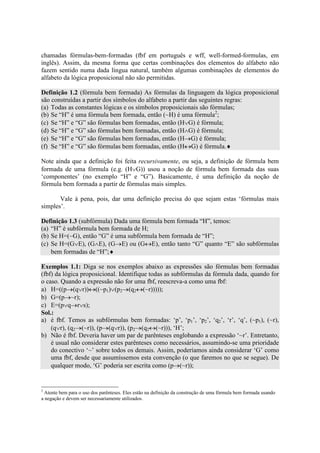
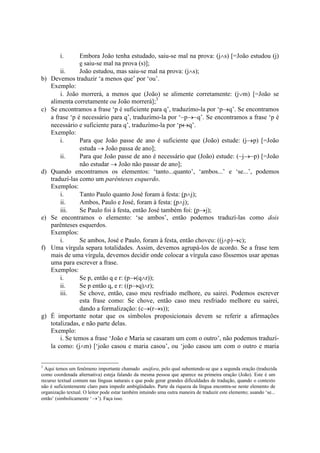
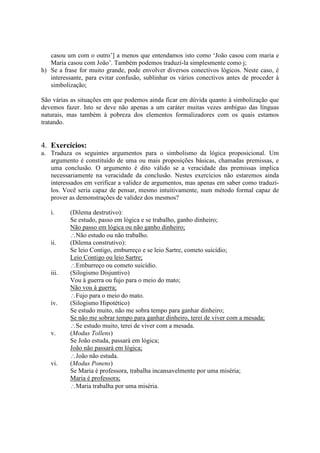
This document introduces the formal language of propositional logic. It defines the basic alphabet which includes propositional symbols, logical constants, and connectives. Propositional symbols represent propositions that can be true or false. Connectives like "and", "or", and "not" represent ways to combine propositions. Well-formed formulas are defined as combinations of elements from the alphabet that follow certain syntactic rules, just as natural languages have rules for valid combinations of words. The document notes some limitations of propositional logic in capturing all aspects of meaning in natural language propositions.

![XPD FDSDFLGDGH GH VLPEROL]DomR 2
HOHPHQWREiVLFRTXHQRVIRUQHFHXPDWDOSRVVLELOLGDGHpRDOIDEHWR
$VVLPSUHFLVDPRVFRPHoDUQRVVRHVWXGRDSDUWLUGDGHILQLomREiVLFDGHXPDOIDEHWR
SDUDDOyJLFDSURSRVLFLRQDODOpPGDGHILQLomRGHXPDVLQWD[HRXVHMDGHXPFRQMXQWRGH
UHJUDV TXH GLIHUHQFLH FRQVWUXo}HV EHP IRUPDGDV IHLWDV D SDUWLU GR DOIDEHWR H GH FHUWDV
UHJUDVJUDPDWLFDLVGDVPDOIRUPDGDV
'HILQLomR DOIDEHWR GD OyJLFD SURSRVLFLRQDO](https://image.slidesharecdn.com/logicacapitulo1-110118062128-phpapp01/85/Logica-capitulo1-3-320.jpg)