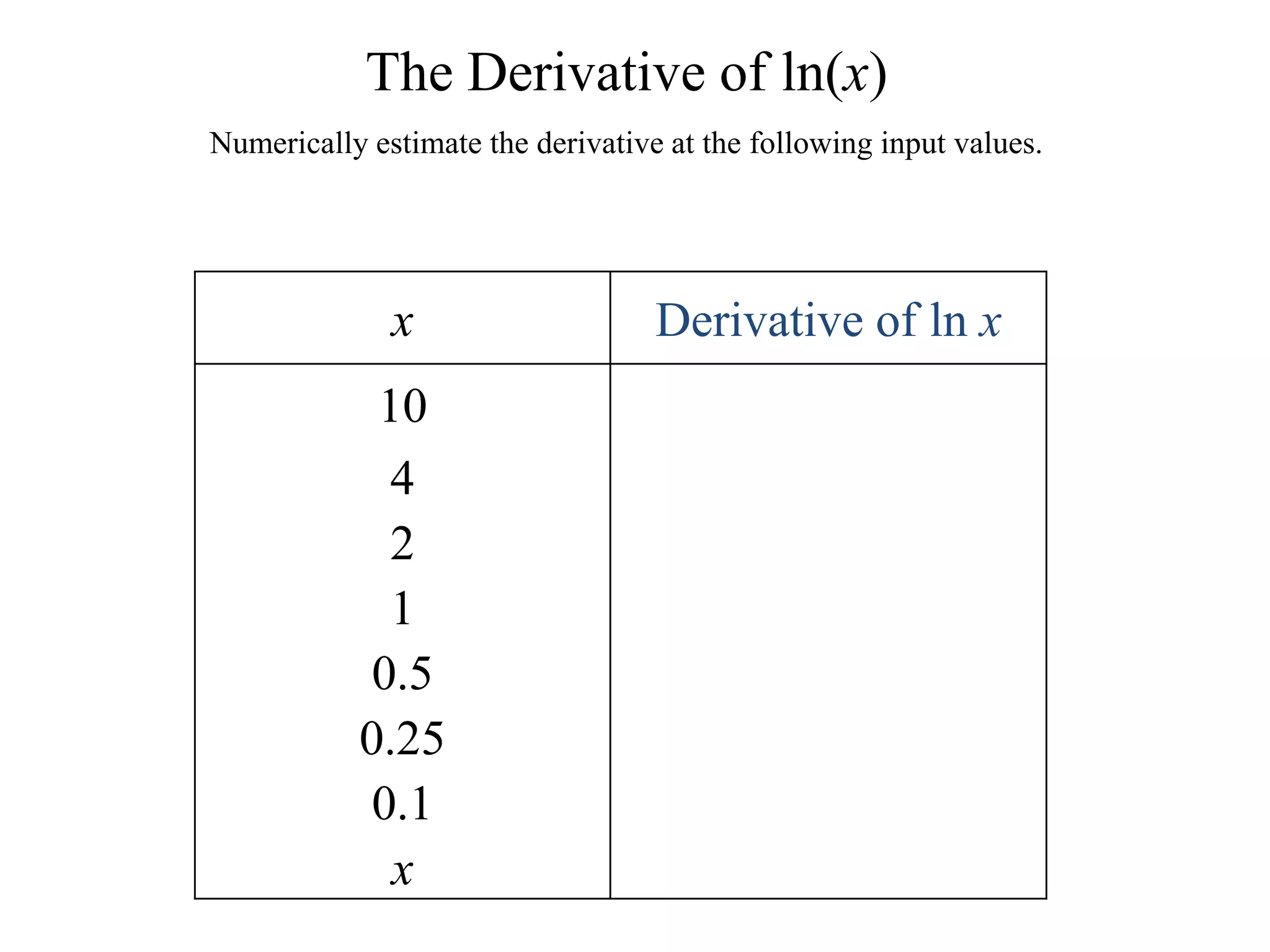
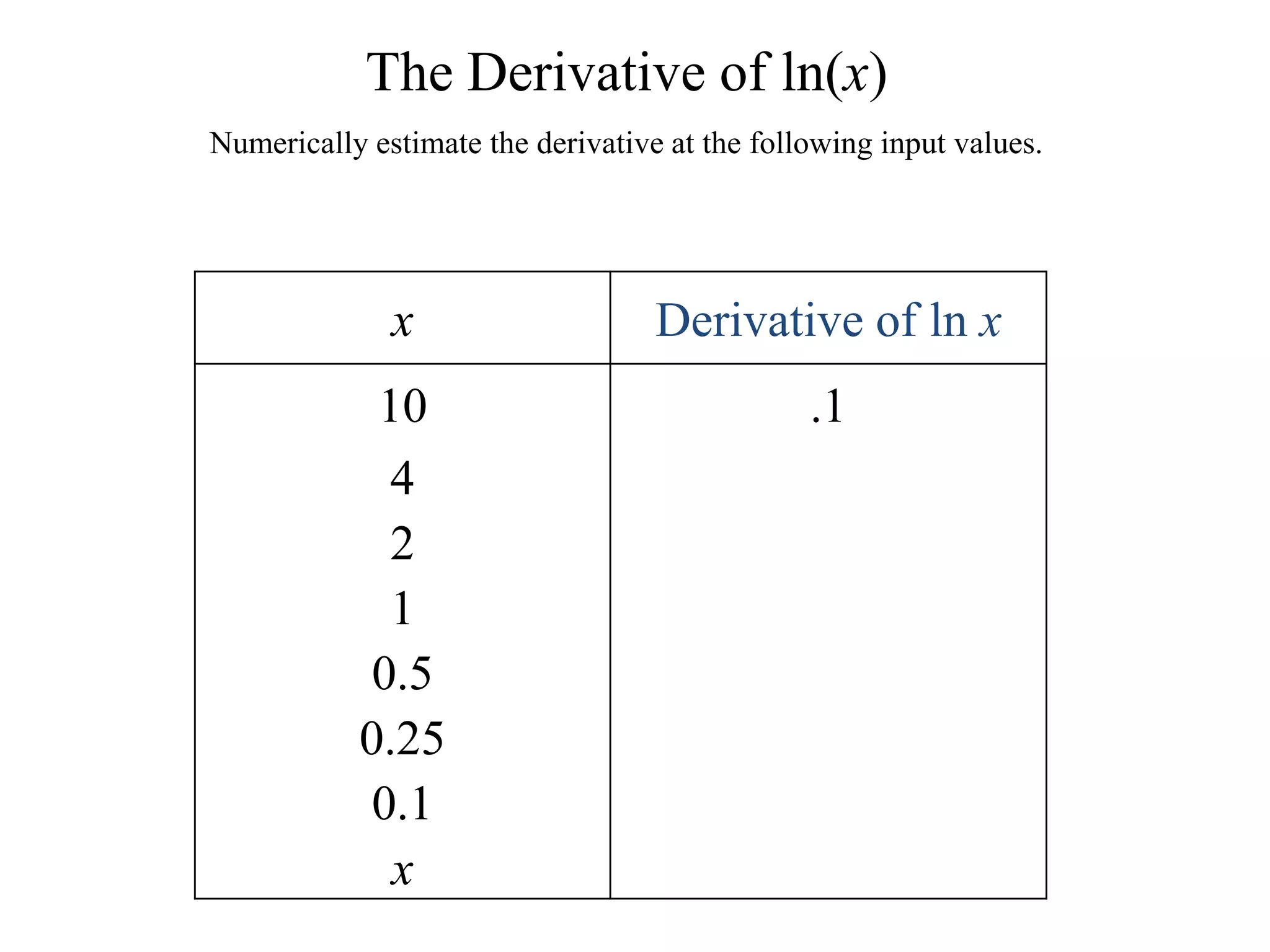
The Derivative of ln(x)Numerically estimate the derivative at the following input values.
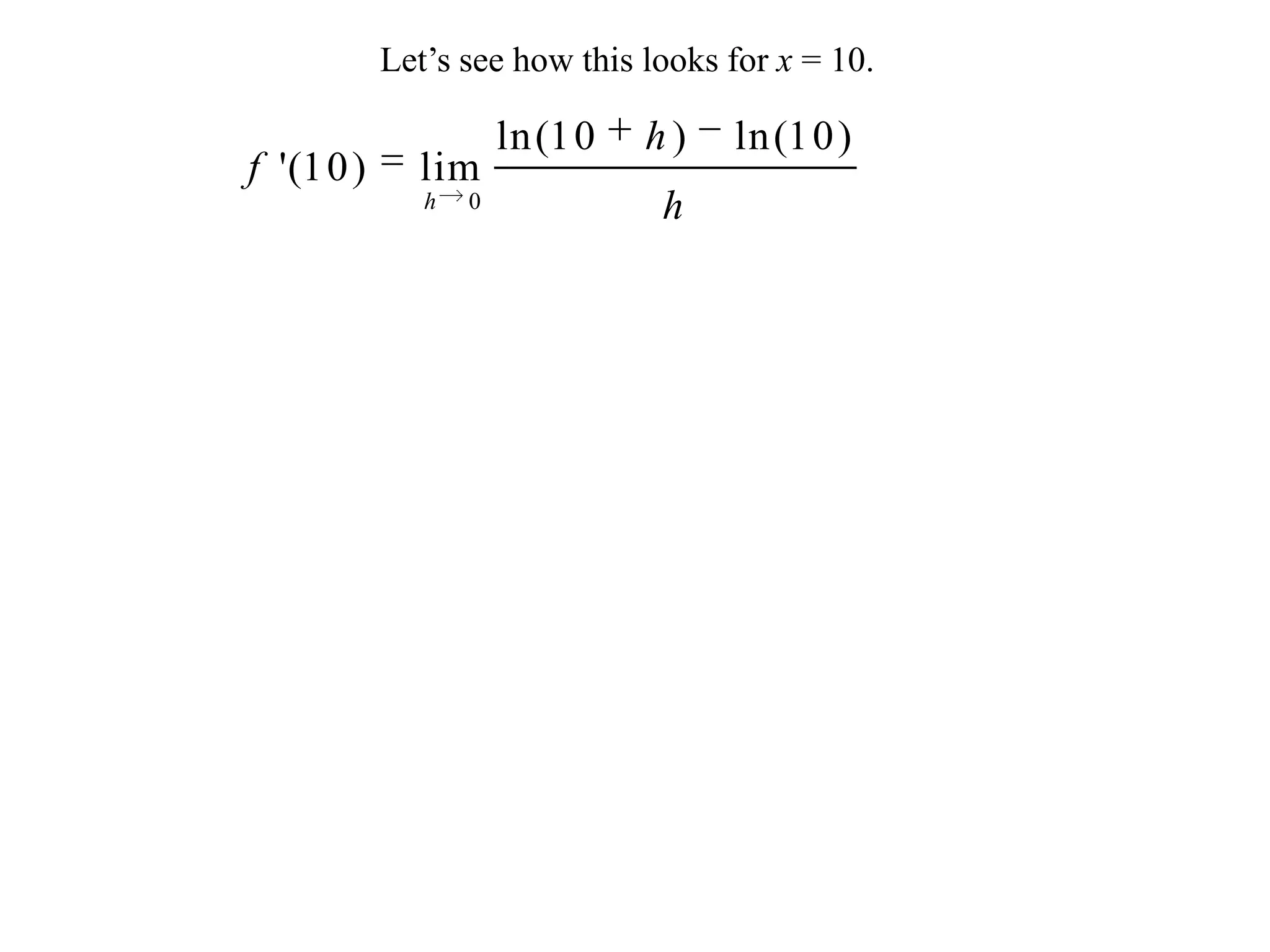
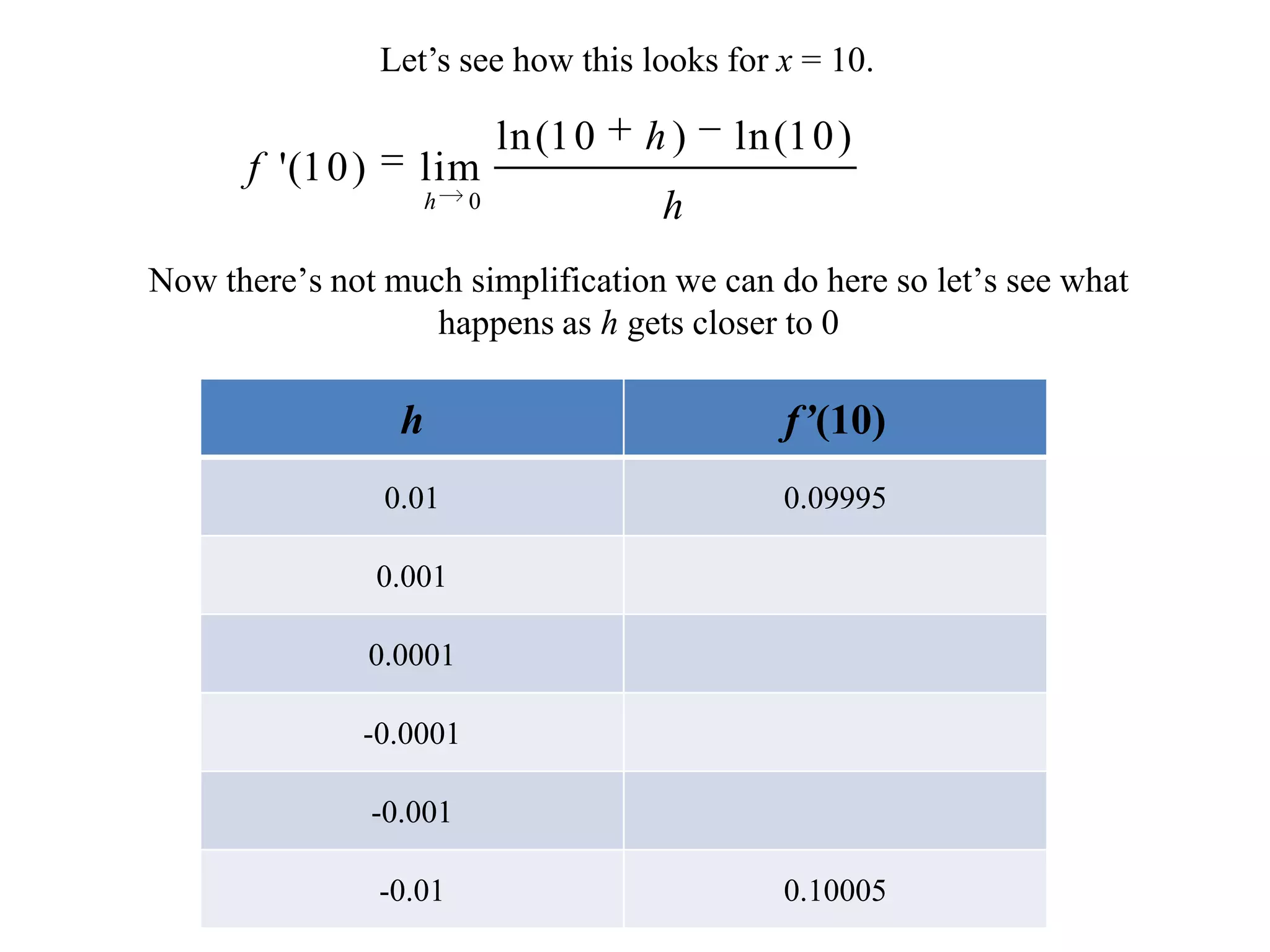
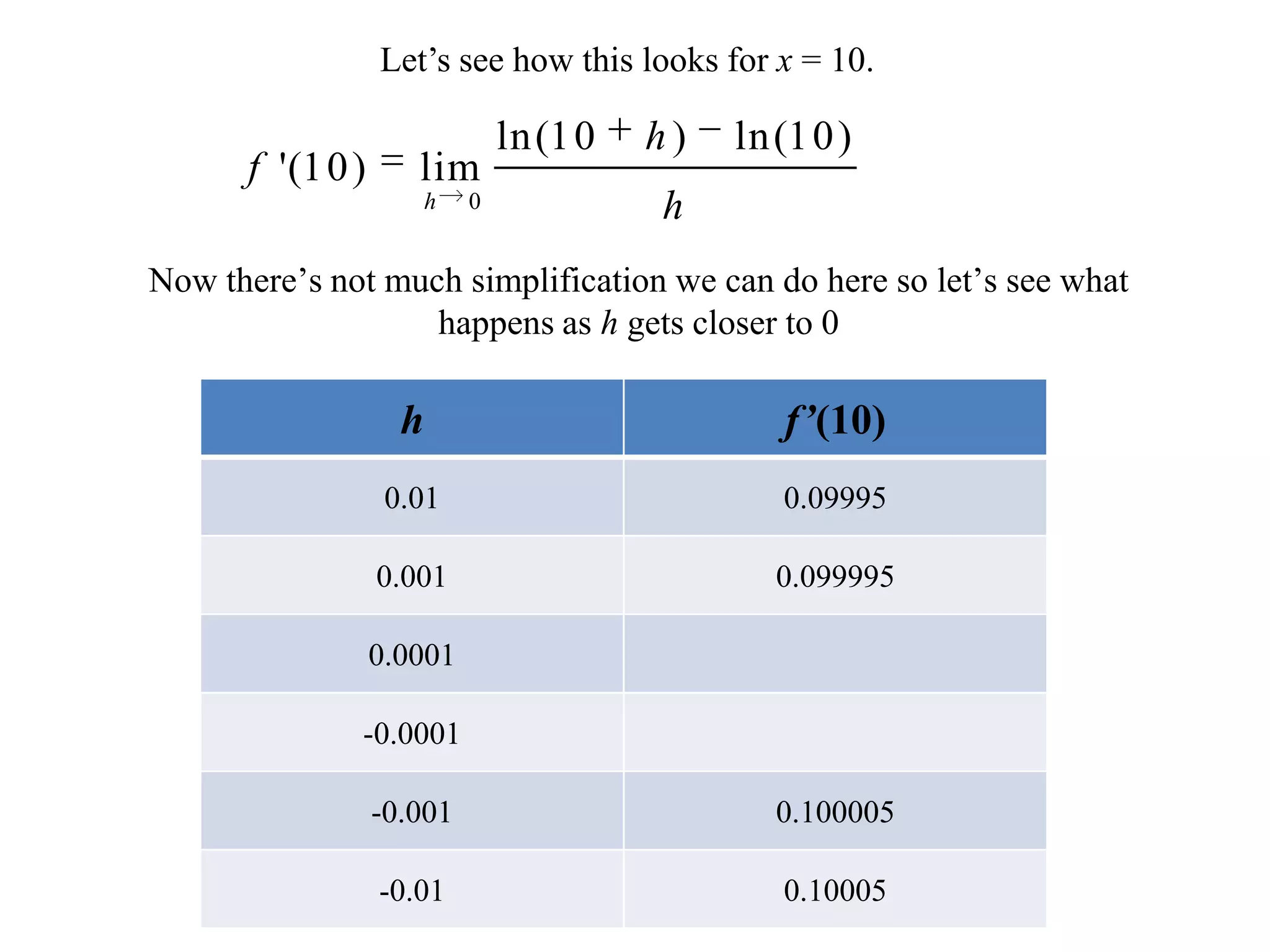
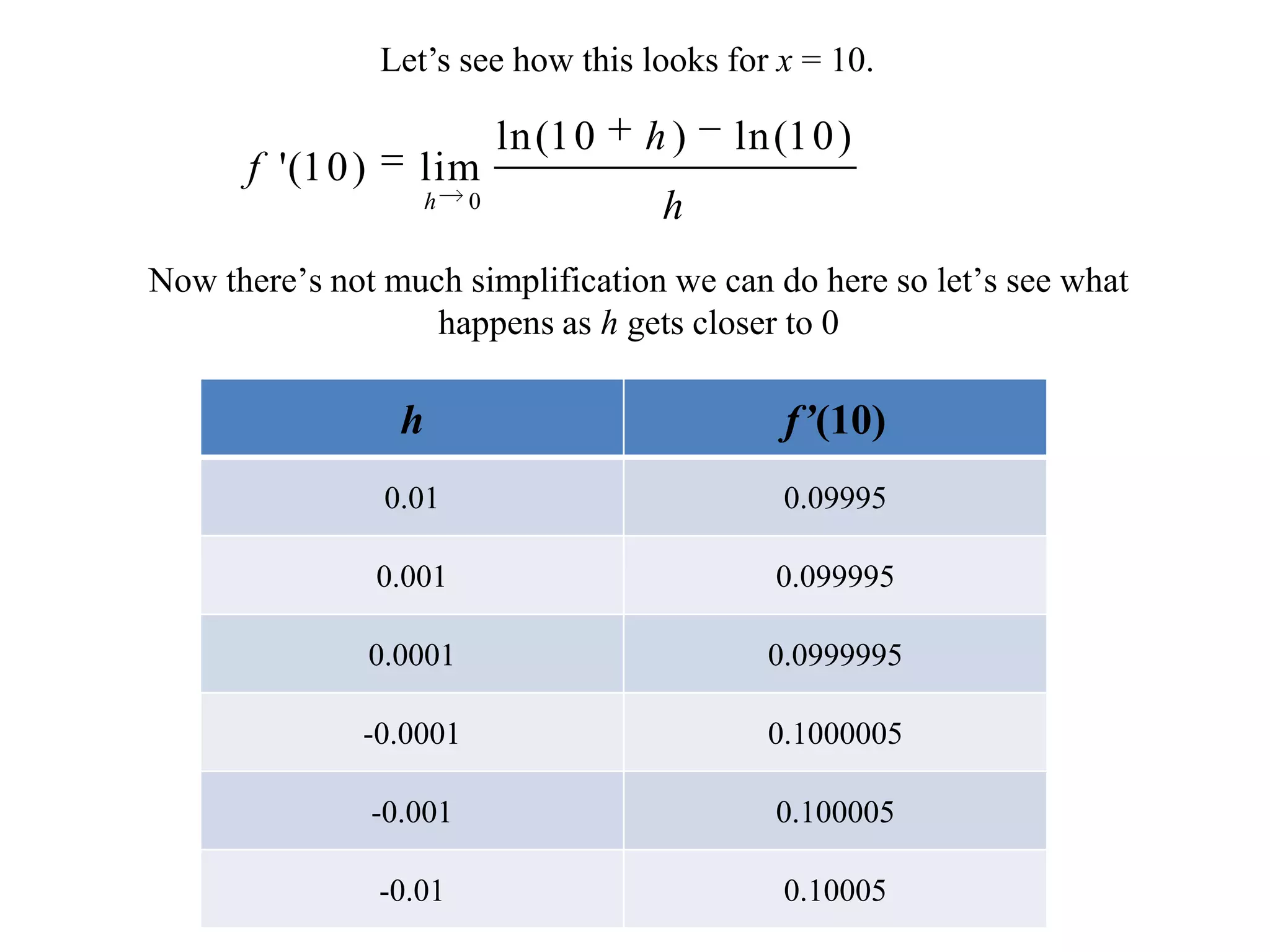
Let’s see how this looks for x = 10.
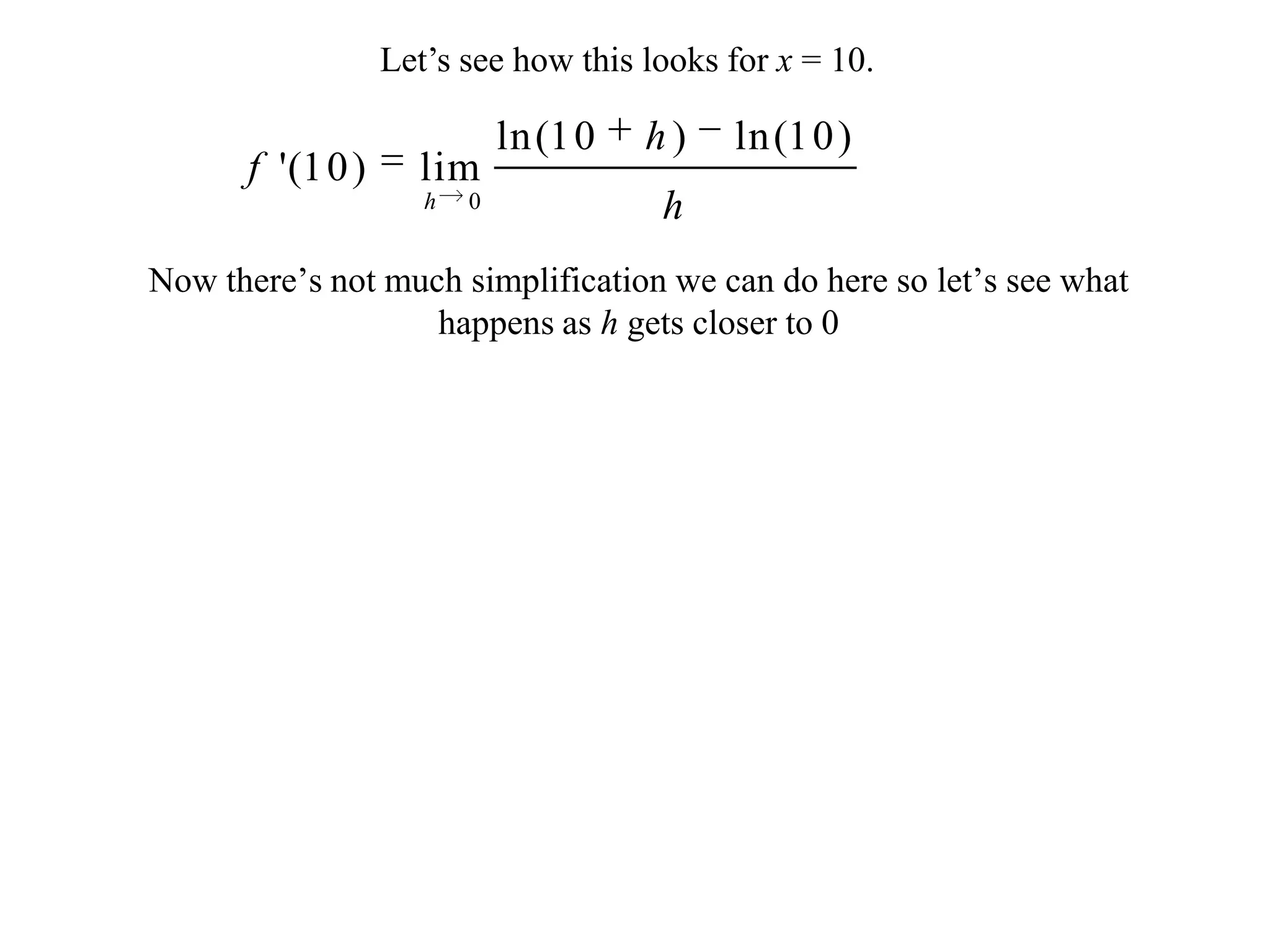
Let’s see how this looks for x = 10.Now there’s not much simplification we can do here so let’s see what happens as h gets closer to 0
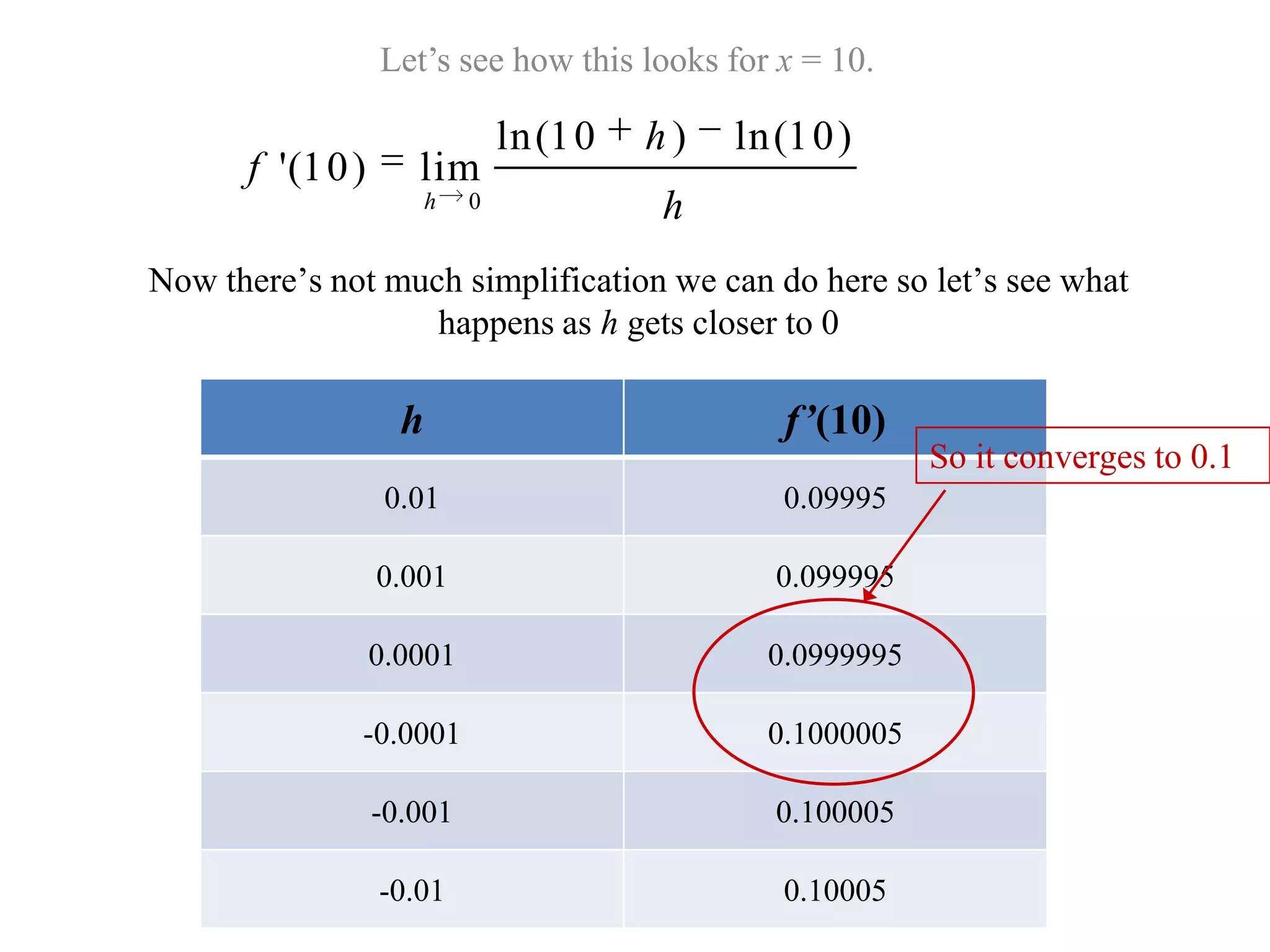
Let’s see how this looks for x = 10.Now there’s not much simplification we can do here so let’s see what happens as h gets closer to 0So it converges to 0.1
The Derivative of ln(x)Numerically estimate the derivative at the following input values.
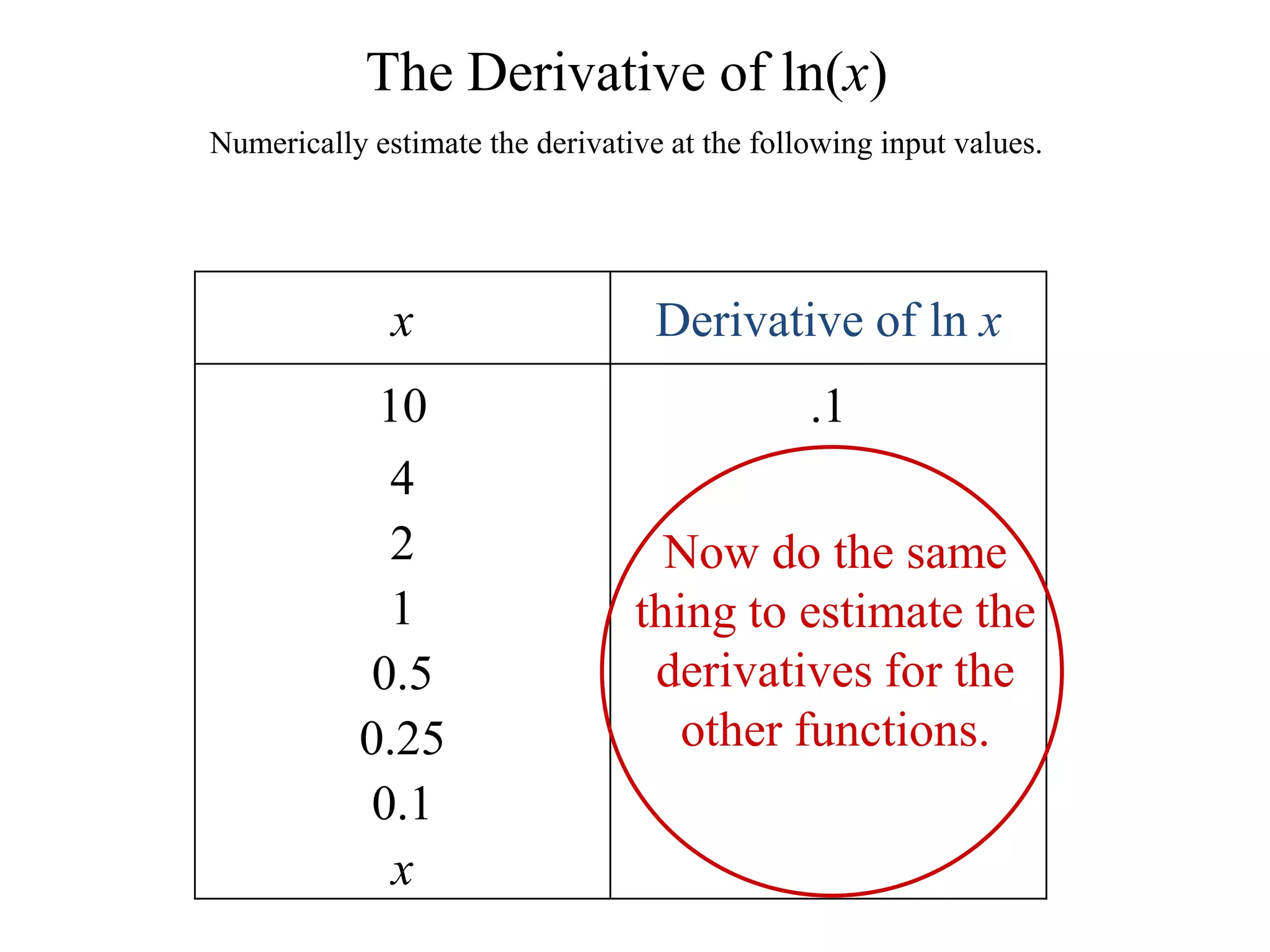
Now do the same thing to estimate the derivatives for the other functions.The Derivative of ln(x)Numerically estimate the derivative at the following input values.
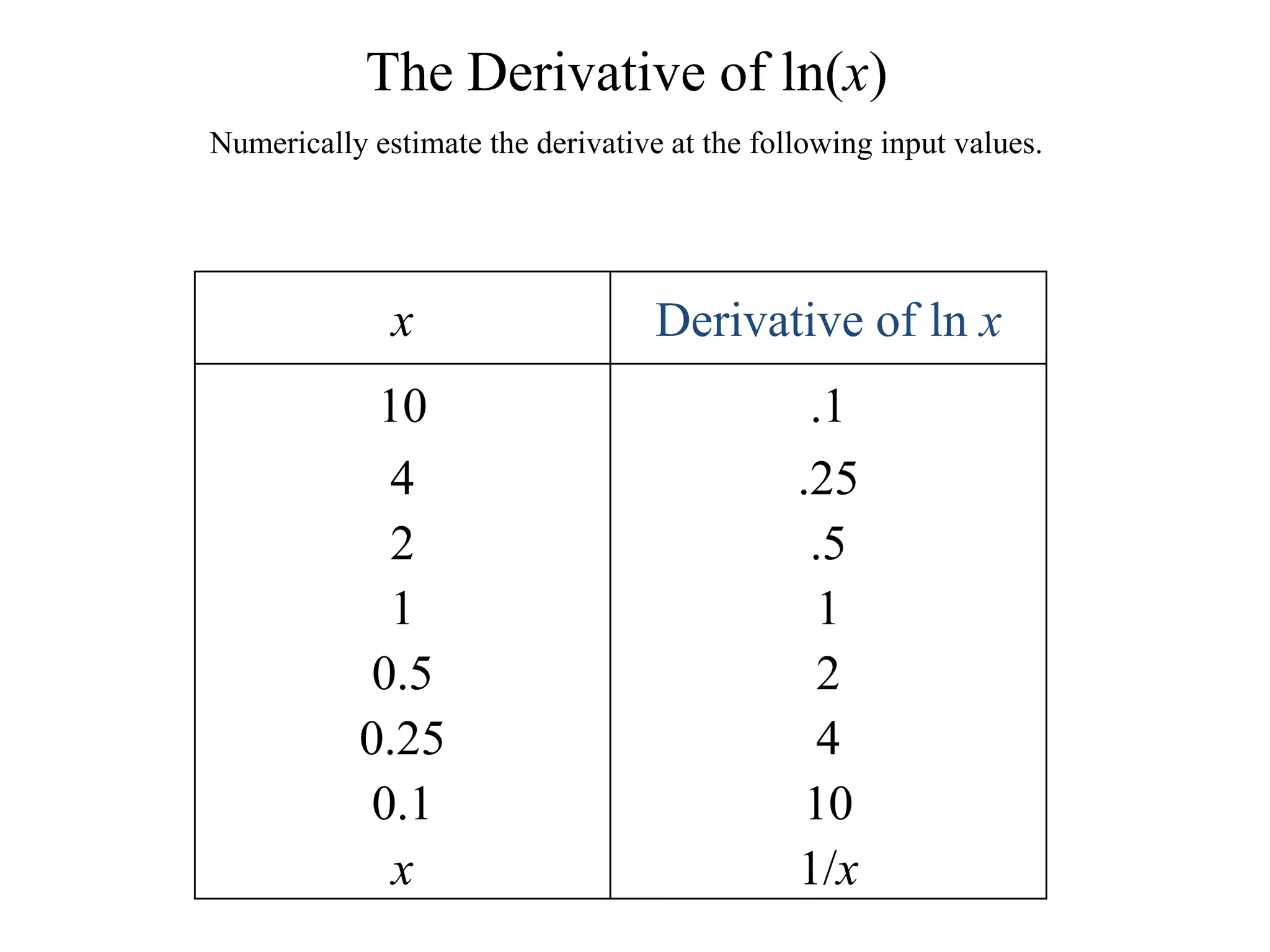
The Derivative of ln(x)Numerically estimate the derivative at the following input values.
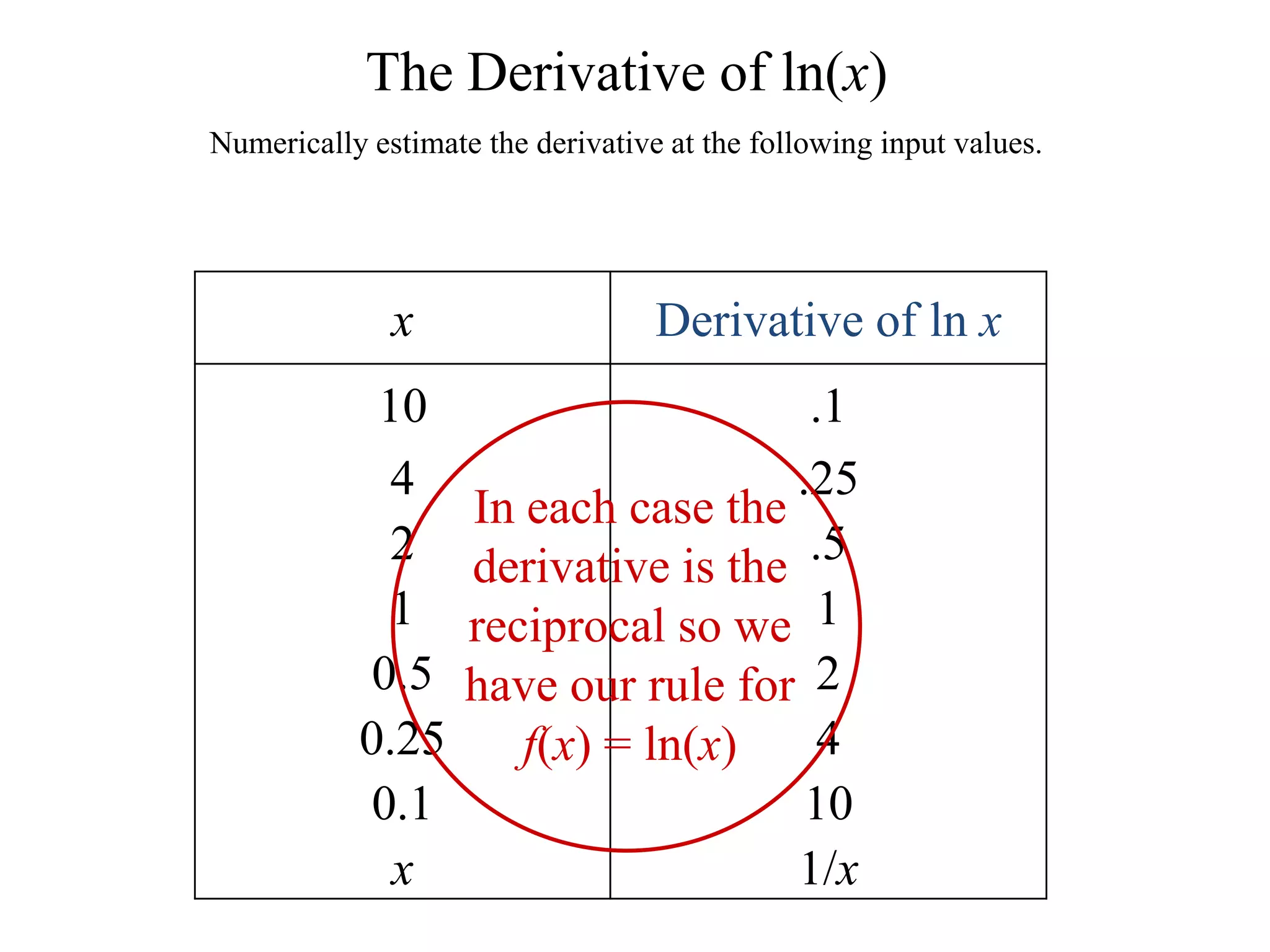
In each case the derivative is the reciprocal so we have our rule for   f(x) = ln(x)The Derivative of ln(x)Numerically estimate the derivative at the following input values.
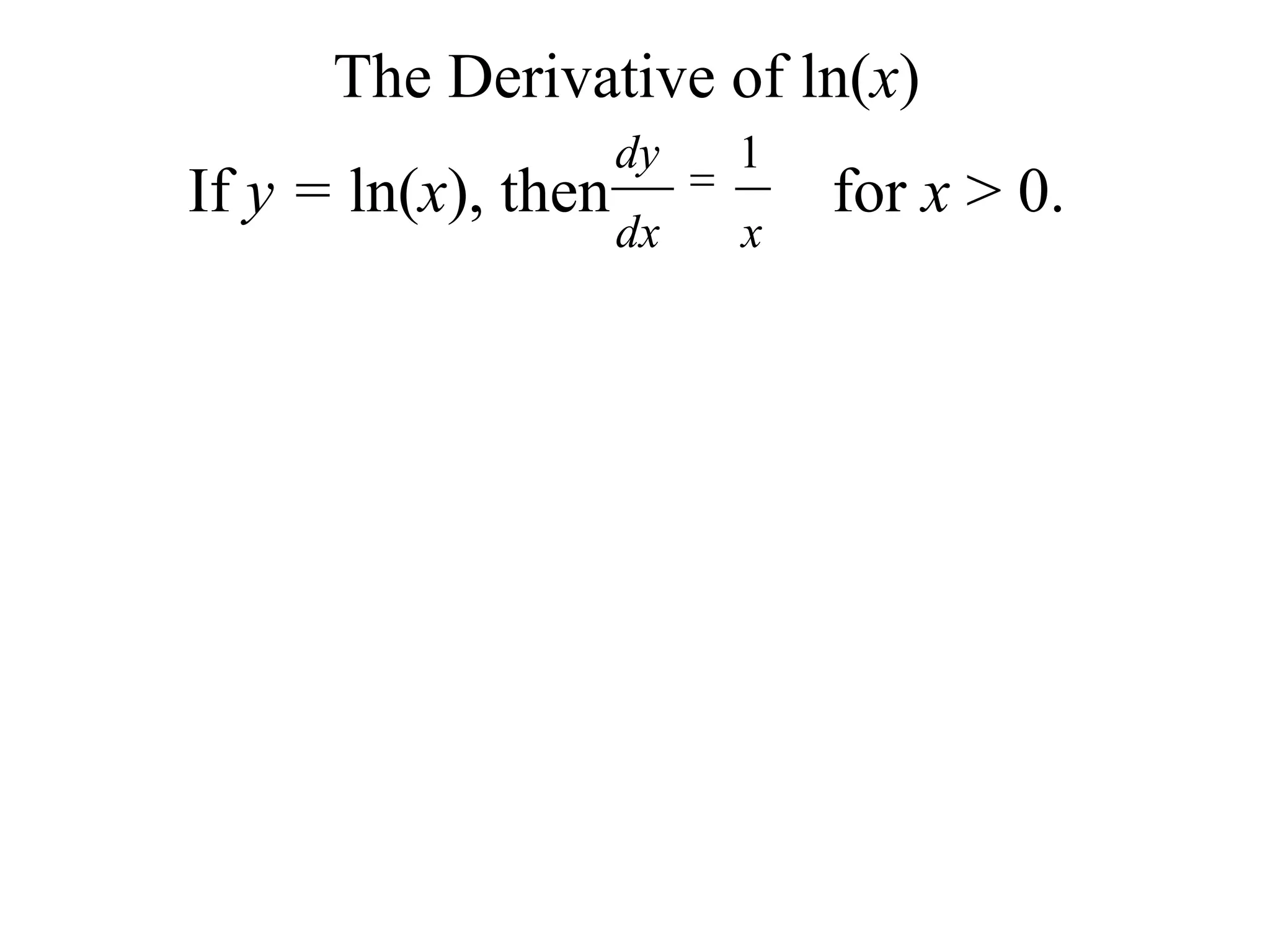
The Derivative of ln(x)If y = ln(x), then              for x > 0.

Log Rule for Derivatives

  • 1.
    The Derivative ofln(x)Numerically estimate the derivative at the following input values.
  • 2.
    Let’s see howthis looks for x = 10.
  • 3.
    Let’s see howthis looks for x = 10.
  • 4.
    Let’s see howthis looks for x = 10.Now there’s not much simplification we can do here so let’s see what happens as h gets closer to 0
  • 5.
    Let’s see howthis looks for x = 10.Now there’s not much simplification we can do here so let’s see what happens as h gets closer to 0
  • 6.
    Let’s see howthis looks for x = 10.Now there’s not much simplification we can do here so let’s see what happens as h gets closer to 0
  • 7.
    Let’s see howthis looks for x = 10.Now there’s not much simplification we can do here so let’s see what happens as h gets closer to 0
  • 8.
    Let’s see howthis looks for x = 10.Now there’s not much simplification we can do here so let’s see what happens as h gets closer to 0So it converges to 0.1
  • 9.
    The Derivative ofln(x)Numerically estimate the derivative at the following input values.
  • 10.
    Now do thesame thing to estimate the derivatives for the other functions.The Derivative of ln(x)Numerically estimate the derivative at the following input values.
  • 11.
    The Derivative ofln(x)Numerically estimate the derivative at the following input values.
  • 12.
    In each casethe derivative is the reciprocal so we have our rule for f(x) = ln(x)The Derivative of ln(x)Numerically estimate the derivative at the following input values.
  • 13.
    The Derivative ofln(x)If y = ln(x), then for x > 0.