Log Maintenance
Mohsin -082
LOG-Introduction
• A log is a record of the events occurring within an
organization’s systems and networks. Logs are
composed of log entries; each entry contains
information related to a specific event that has
occurred within a system or network. Many logs
within an organization contain records related to
computer security. These computer security logs are
generated by many sources, including security
software, such as antivirus software, firewalls, and
intrusion detection and prevention systems;
operating systems on servers, workstations, and
networking equipment; and applications.
LOG Management-Benfits
• Log management is essential to ensuring that
computer security records are stored in enough
detail for an appropriate period of time. Routine
log analysis is beneficial for identifying security
incidents, policy violations, fraudulent activity,
and operational problems. Logs are also useful
when performing auditing and forensic analysis,
supporting internal investigations, establishing
baselines, and identifying operational trends and
long-term problem
The Basics of Computer Security Logs
• Logs can contain a wide variety of information
on the events occurring within systems and
networks.
• Security software logs primarily contain
computer security-related information
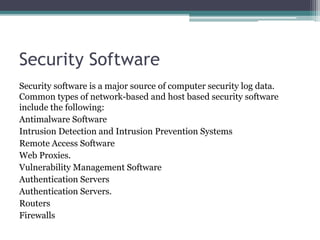
Security Software
Security software is a major source of computer security log data.
Common types of network-based and host based security software
include the following:
Antimalware Software
Intrusion Detection and Intrusion Prevention Systems
Remote Access Software
Web Proxies.
Vulnerability Management Software
Authentication Servers
Authentication Servers.
Routers
Firewalls
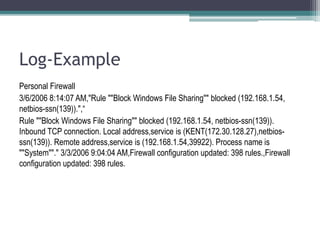
Log-Example
Personal Firewall
3/6/2006 8:14:07 AM,"Rule ""Block Windows File Sharing"" blocked (192.168.1.54,
netbios-ssn(139)).",“
Rule ""Block Windows File Sharing"" blocked (192.168.1.54, netbios-ssn(139)).
Inbound TCP connection. Local address,service is (KENT(172.30.128.27),netbios-
ssn(139)). Remote address,service is (192.168.1.54,39922). Process name is
""System""." 3/3/2006 9:04:04 AM,Firewall configuration updated: 398 rules.,Firewall
configuration updated: 398 rules.
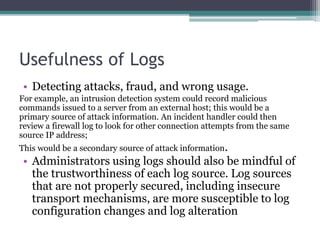
Usefulness of Logs
• Detecting attacks, fraud, and wrong usage.
For example, an intrusion detection system could record malicious
commands issued to a server from an external host; this would be a
primary source of attack information. An incident handler could then
review a firewall log to look for other connection attempts from the same
source IP address;
This would be a secondary source of attack information.
• Administrators using logs should also be mindful of
the trustworthiness of each log source. Log sources
that are not properly secured, including insecure
transport mechanisms, are more susceptible to log
configuration changes and log alteration
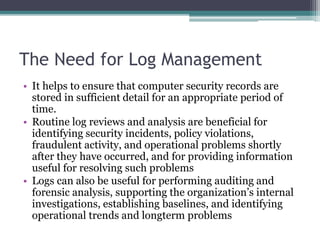
The Need for Log Management
• It helps to ensure that computer security records are
stored in sufficient detail for an appropriate period of
time.
• Routine log reviews and analysis are beneficial for
identifying security incidents, policy violations,
fraudulent activity, and operational problems shortly
after they have occurred, and for providing information
useful for resolving such problems
• Logs can also be useful for performing auditing and
forensic analysis, supporting the organization’s internal
investigations, establishing baselines, and identifying
operational trends and longterm problems
The Challenges in Log Management
• Effectively balancing a limited amount of log
management resources with an ever-increasing supply of
log data
• There are several potential problems with the initial
generation of logs because of their variety and
prevalence.
• The confidentiality, integrity, and availability of
generated logs could be breached inadvertently or
intentionally
• The people responsible for performing log analysis are
often inadequately prepared and supported
Log Generation and Storage
• Many Log Sources
• Inconsistent Log Content
• Inconsistent Timestamps
• Inconsistent Log Formats.
Log Protection
• Because logs contain records of system and network security, they
need to be protected from breaches of their confidentiality and
integrity. For example, logs might intentionally or inadvertently
capture sensitive information such as users’ passwords and the
content of e-mails. This raises security and privacy concerns
involving both the individuals that review the logs and others that
might be able to access the logs through authorized or unauthorized
means. Logs that are secured improperly in storage or in transit
might also be susceptible to intentional and unintentional alteration
and destruction. This could cause a variety of impacts, including
allowing malicious activities to go unnoticed and manipulating
evidence to conceal the identity of a malicious party. For example,
many rootkits are specifically designed to alter logs to remove any
evidence of the rootkits’ installation or execution
Log Analysis
• Within most organizations, network and system
administrators have traditionally been
responsible for performing log analysis
• It has often been treated as a low-priority task by
administrators and management because other
duties of administrators
• Administrators who are responsible for
performing log analysis often receive no training
on doing it efficiently and effectively,
particularly on prioritization
Meeting the Challenges
• Prioritize log management appropriately
throughout the organization.
• Establish policies and procedures for log
management.
• Create and maintain a secure log management
infrastructure.
• Provide adequate support for all staff with log
management responsibilities
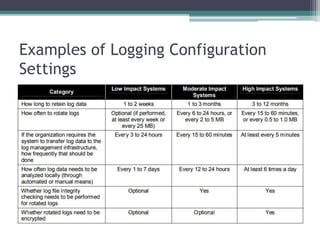
Examples of Logging Configuration
Settings

Log maintenance network securiy

  • 1.
  • 2.
    LOG-Introduction • A logis a record of the events occurring within an organization’s systems and networks. Logs are composed of log entries; each entry contains information related to a specific event that has occurred within a system or network. Many logs within an organization contain records related to computer security. These computer security logs are generated by many sources, including security software, such as antivirus software, firewalls, and intrusion detection and prevention systems; operating systems on servers, workstations, and networking equipment; and applications.
  • 3.
    LOG Management-Benfits • Logmanagement is essential to ensuring that computer security records are stored in enough detail for an appropriate period of time. Routine log analysis is beneficial for identifying security incidents, policy violations, fraudulent activity, and operational problems. Logs are also useful when performing auditing and forensic analysis, supporting internal investigations, establishing baselines, and identifying operational trends and long-term problem
  • 4.
    The Basics ofComputer Security Logs • Logs can contain a wide variety of information on the events occurring within systems and networks. • Security software logs primarily contain computer security-related information
  • 5.
    Security Software Security softwareis a major source of computer security log data. Common types of network-based and host based security software include the following: Antimalware Software Intrusion Detection and Intrusion Prevention Systems Remote Access Software Web Proxies. Vulnerability Management Software Authentication Servers Authentication Servers. Routers Firewalls
  • 6.
    Log-Example Personal Firewall 3/6/2006 8:14:07AM,"Rule ""Block Windows File Sharing"" blocked (192.168.1.54, netbios-ssn(139)).",“ Rule ""Block Windows File Sharing"" blocked (192.168.1.54, netbios-ssn(139)). Inbound TCP connection. Local address,service is (KENT(172.30.128.27),netbios- ssn(139)). Remote address,service is (192.168.1.54,39922). Process name is ""System""." 3/3/2006 9:04:04 AM,Firewall configuration updated: 398 rules.,Firewall configuration updated: 398 rules.
  • 7.
    Usefulness of Logs •Detecting attacks, fraud, and wrong usage. For example, an intrusion detection system could record malicious commands issued to a server from an external host; this would be a primary source of attack information. An incident handler could then review a firewall log to look for other connection attempts from the same source IP address; This would be a secondary source of attack information. • Administrators using logs should also be mindful of the trustworthiness of each log source. Log sources that are not properly secured, including insecure transport mechanisms, are more susceptible to log configuration changes and log alteration
  • 8.
    The Need forLog Management • It helps to ensure that computer security records are stored in sufficient detail for an appropriate period of time. • Routine log reviews and analysis are beneficial for identifying security incidents, policy violations, fraudulent activity, and operational problems shortly after they have occurred, and for providing information useful for resolving such problems • Logs can also be useful for performing auditing and forensic analysis, supporting the organization’s internal investigations, establishing baselines, and identifying operational trends and longterm problems
  • 9.
    The Challenges inLog Management • Effectively balancing a limited amount of log management resources with an ever-increasing supply of log data • There are several potential problems with the initial generation of logs because of their variety and prevalence. • The confidentiality, integrity, and availability of generated logs could be breached inadvertently or intentionally • The people responsible for performing log analysis are often inadequately prepared and supported
  • 10.
    Log Generation andStorage • Many Log Sources • Inconsistent Log Content • Inconsistent Timestamps • Inconsistent Log Formats.
  • 11.
    Log Protection • Becauselogs contain records of system and network security, they need to be protected from breaches of their confidentiality and integrity. For example, logs might intentionally or inadvertently capture sensitive information such as users’ passwords and the content of e-mails. This raises security and privacy concerns involving both the individuals that review the logs and others that might be able to access the logs through authorized or unauthorized means. Logs that are secured improperly in storage or in transit might also be susceptible to intentional and unintentional alteration and destruction. This could cause a variety of impacts, including allowing malicious activities to go unnoticed and manipulating evidence to conceal the identity of a malicious party. For example, many rootkits are specifically designed to alter logs to remove any evidence of the rootkits’ installation or execution
  • 12.
    Log Analysis • Withinmost organizations, network and system administrators have traditionally been responsible for performing log analysis • It has often been treated as a low-priority task by administrators and management because other duties of administrators • Administrators who are responsible for performing log analysis often receive no training on doing it efficiently and effectively, particularly on prioritization
  • 13.
    Meeting the Challenges •Prioritize log management appropriately throughout the organization. • Establish policies and procedures for log management. • Create and maintain a secure log management infrastructure. • Provide adequate support for all staff with log management responsibilities
  • 14.
    Examples of LoggingConfiguration Settings