Localism: Why is it important? We need to cut down our environmental footprint more globalised but we also crave authenticity and place identity We live in a global economy but positive and negatives are felt locally Effective governance operates at different scales, including very local, city/county, sub-regional, regional, pan regional, national etc,, We increasingly want power spatially closer to us We are a grossly centralised country Societal opinion is moving in a localist direction?
Localism: What is policy saying? More freedoms to local government and functional economies now and in the future LSP’s, LAA’s and MAA’s and now LEP’s White paper announced on region’s and economic development Local government in the driving seat more Flexible spatial geometry Power to communities The Holy grail is an increase in harnessing local wealth/taxes All political parties are localist.  Difference in emphasis/speed only?
General  opportunities Demand for regeneration etc is going up.  Just when resources are decreasing! There will be less cash for projects, but more power for local authorities in administering it? Green economy/Green jobs?  More for less and can less be more? Maybe new wave on regeneration initiatives as decline hits hard? Will big society mean more or less opportunity for the VCS?
Resilience
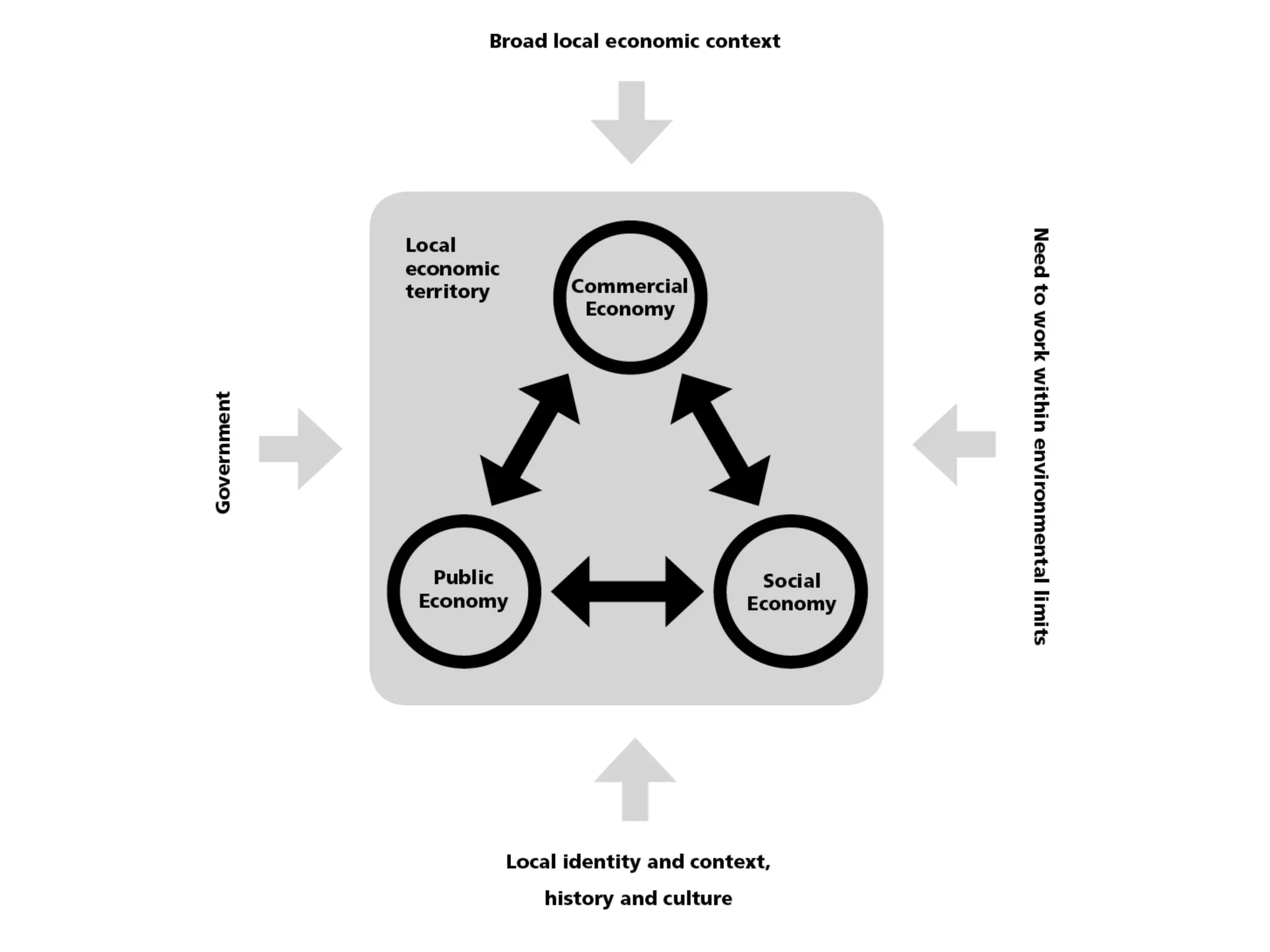
Conceptual framework Public economy This refers to the value of public expenditure in an area and the way in which public expenditure impacts directly on the economy, e.g. procurement decisions on housing and health. Most direct way in which local authorities and partners impact on local economic development! Social economy This refers to the contribution that wider community activities make to the local economy through social enterprise, community infrastructure support and local community assets, e.g. community centres, halls etc. Commercial economy  This refers to the contribution that “private” industry makes to the economy including traditional economic information about investment, local business support, business start up activity and it also considers the labour market, including causes of worklessness.
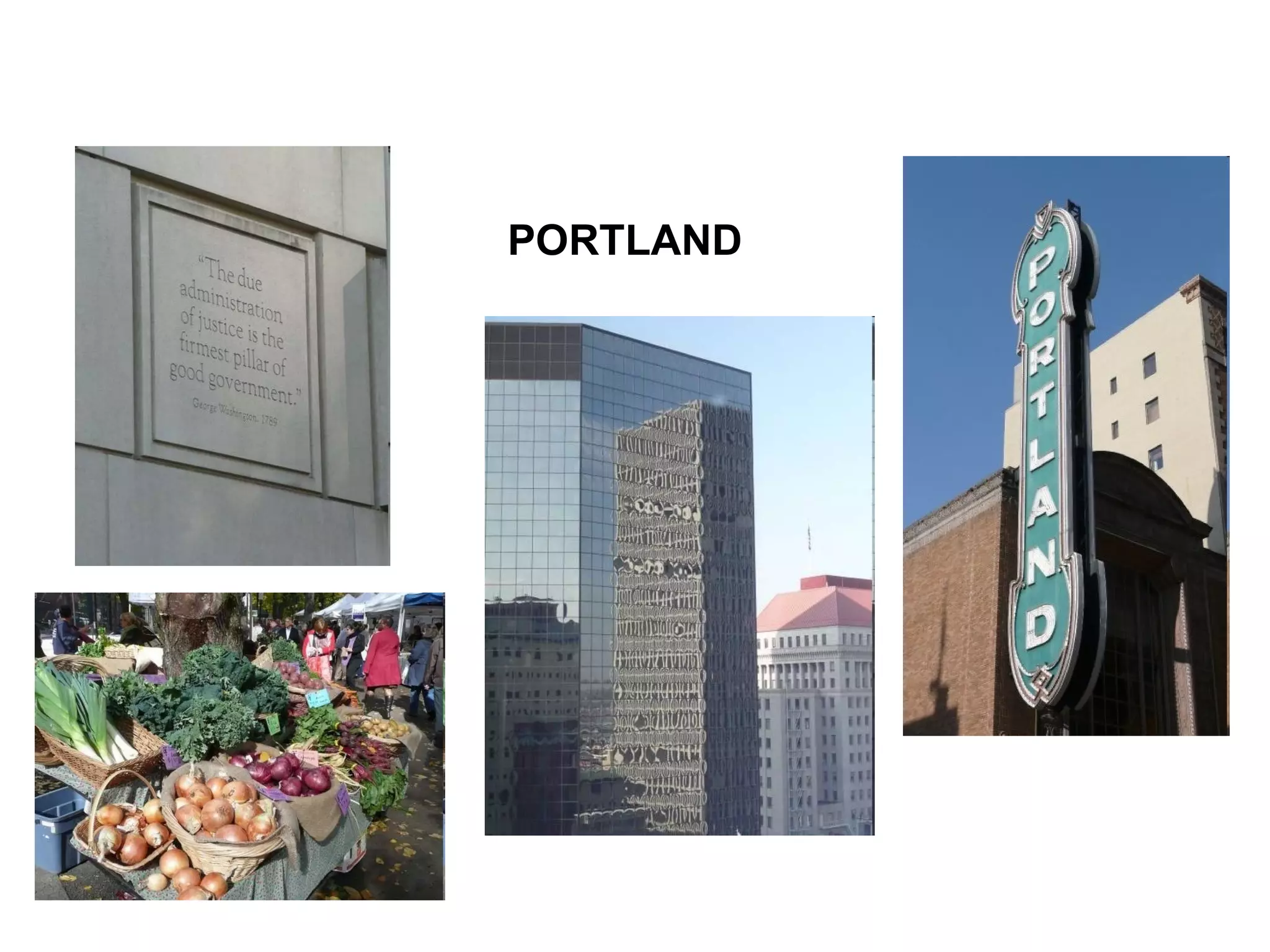
PORTLAND
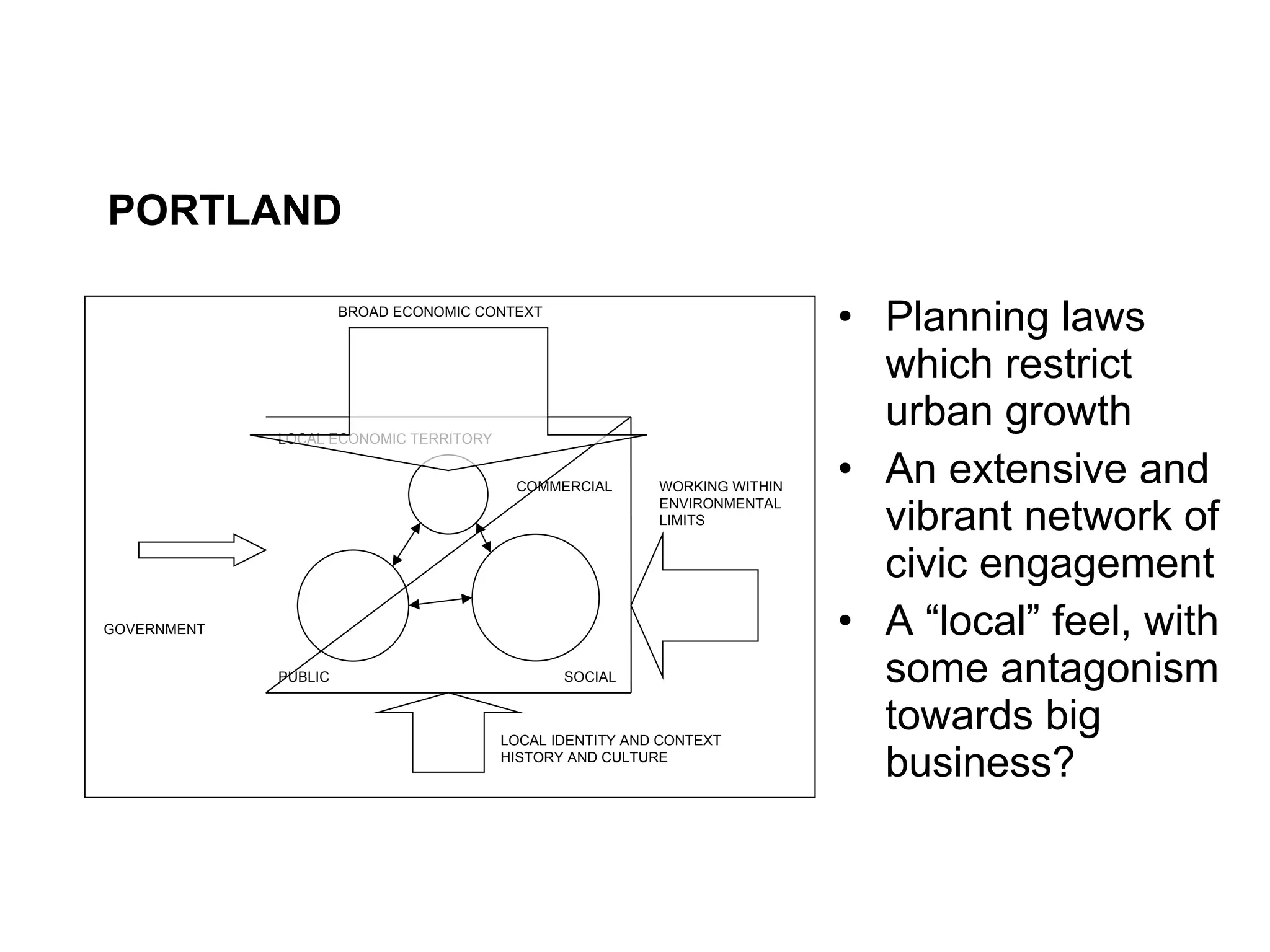
Planning laws which restrict urban growth An extensive and vibrant network of civic engagement A “local” feel, with some antagonism towards big business? PORTLAND PUBLIC COMMERCIAL SOCIAL BROAD ECONOMIC CONTEXT GOVERNMENT WORKING WITHIN ENVIRONMENTAL LIMITS LOCAL ECONOMIC TERRITORY LOCAL IDENTITY AND CONTEXT HISTORY AND CULTURE
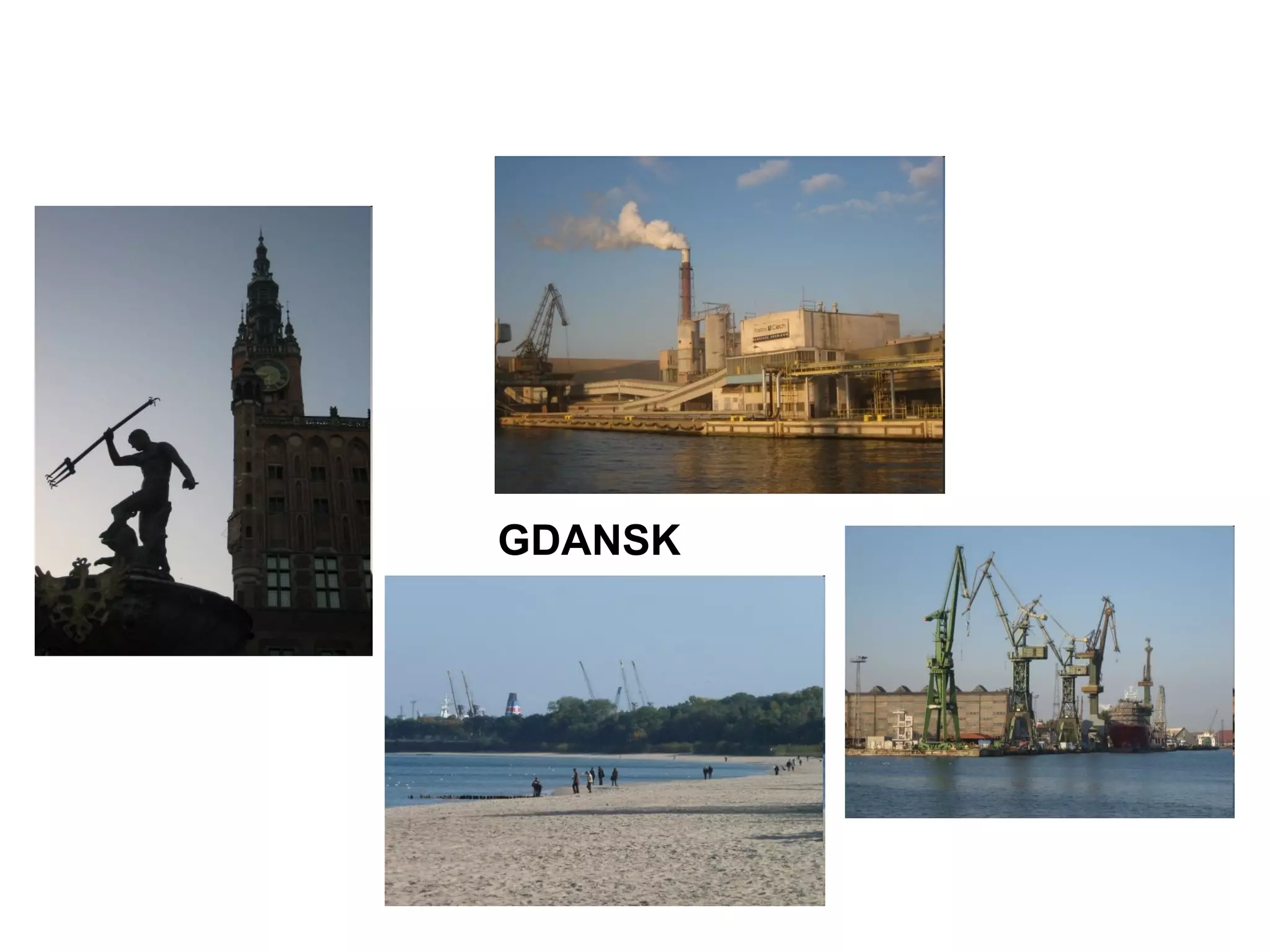
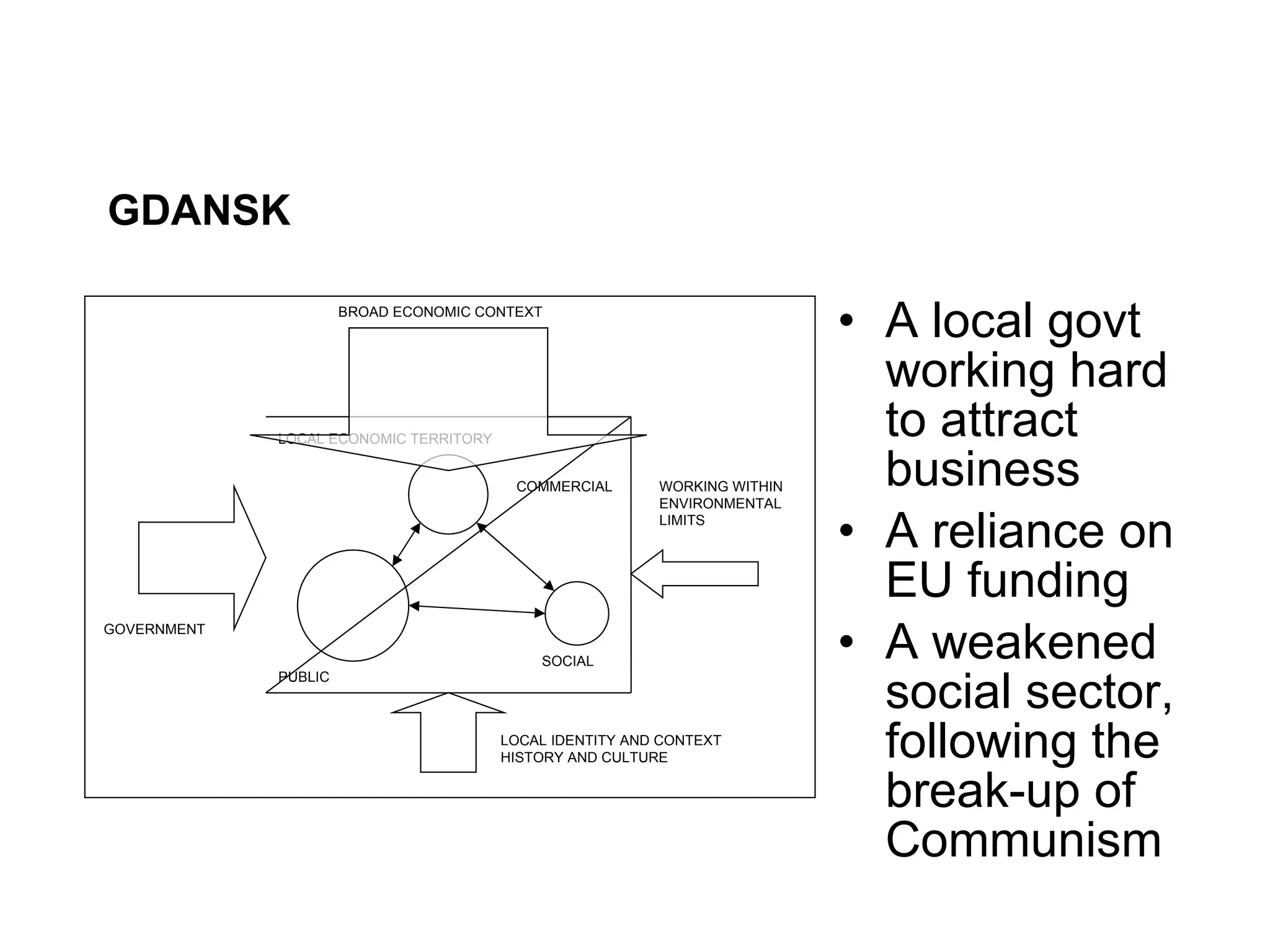
GDANSK
A local govt working hard to attract business A reliance on EU funding A weakened social sector, following the break-up of Communism GDANSK PUBLIC COMMERCIAL SOCIAL BROAD ECONOMIC CONTEXT GOVERNMENT WORKING WITHIN ENVIRONMENTAL LIMITS LOCAL ECONOMIC TERRITORY LOCAL IDENTITY AND CONTEXT HISTORY AND CULTURE
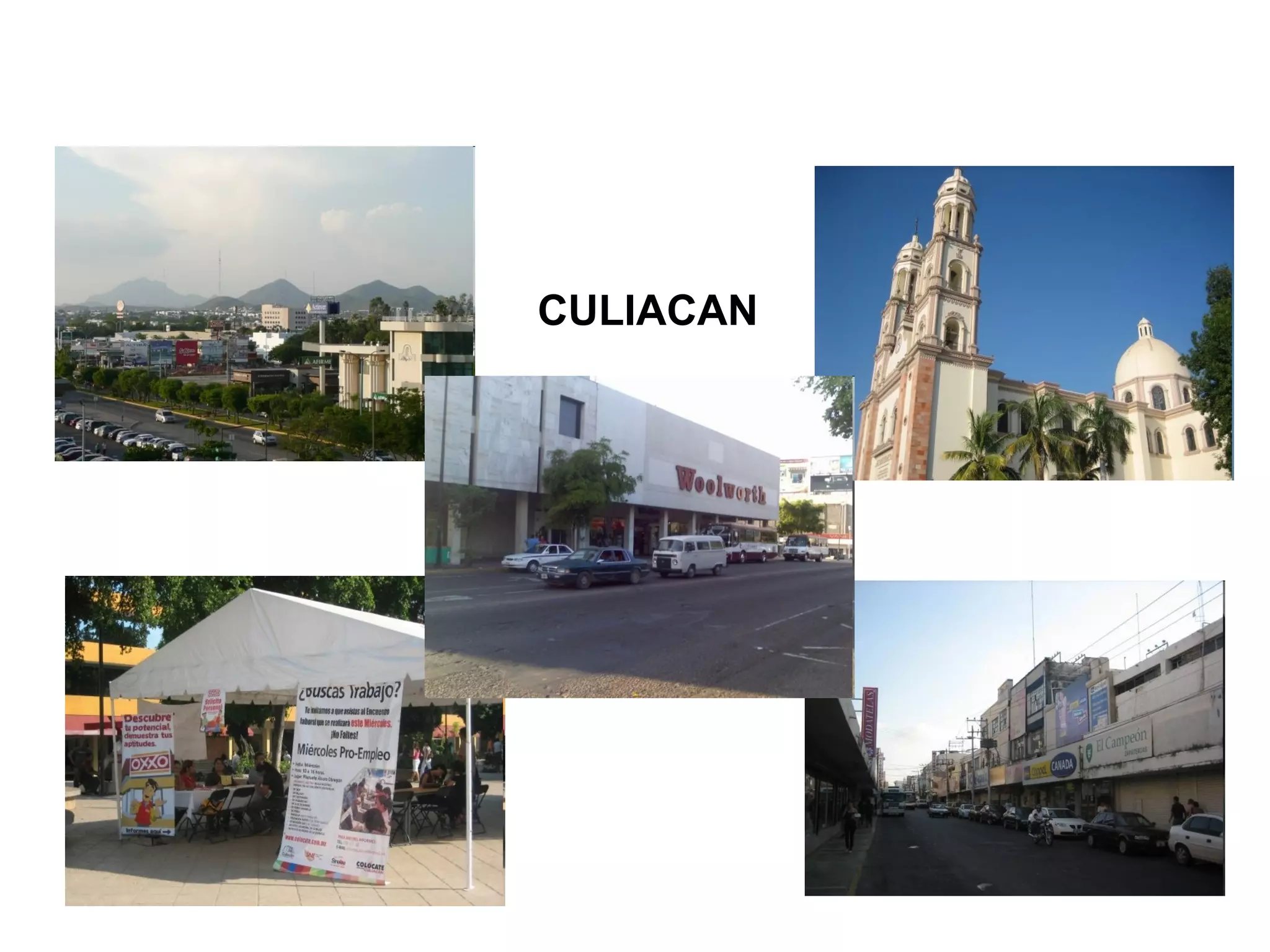
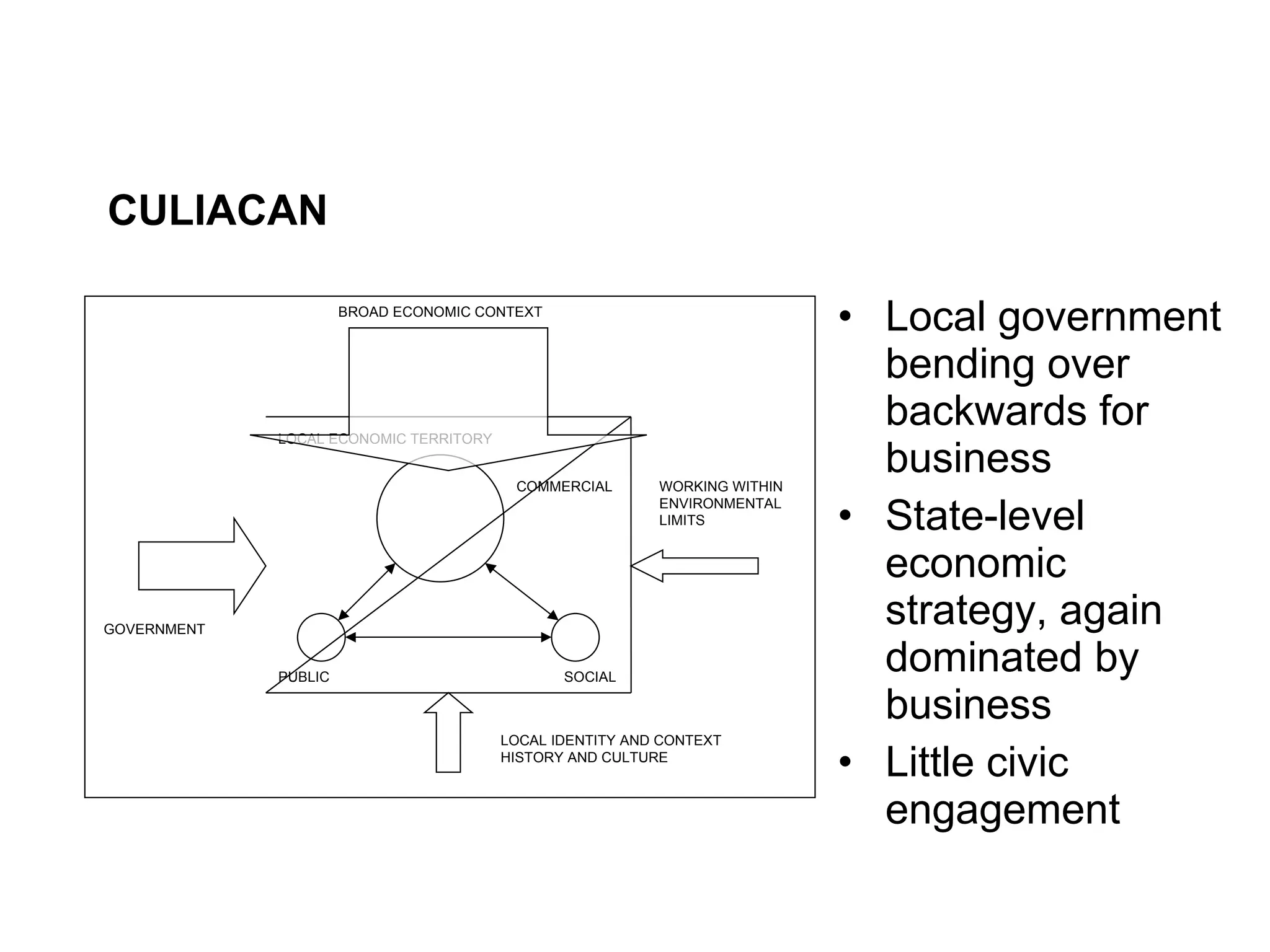
CULIACAN
Local government bending over backwards for business State-level economic strategy, again dominated by business Little civic engagement CULIACAN PUBLIC COMMERCIAL SOCIAL BROAD ECONOMIC CONTEXT GOVERNMENT WORKING WITHIN ENVIRONMENTAL LIMITS LOCAL ECONOMIC TERRITORY LOCAL IDENTITY AND CONTEXT HISTORY AND CULTURE
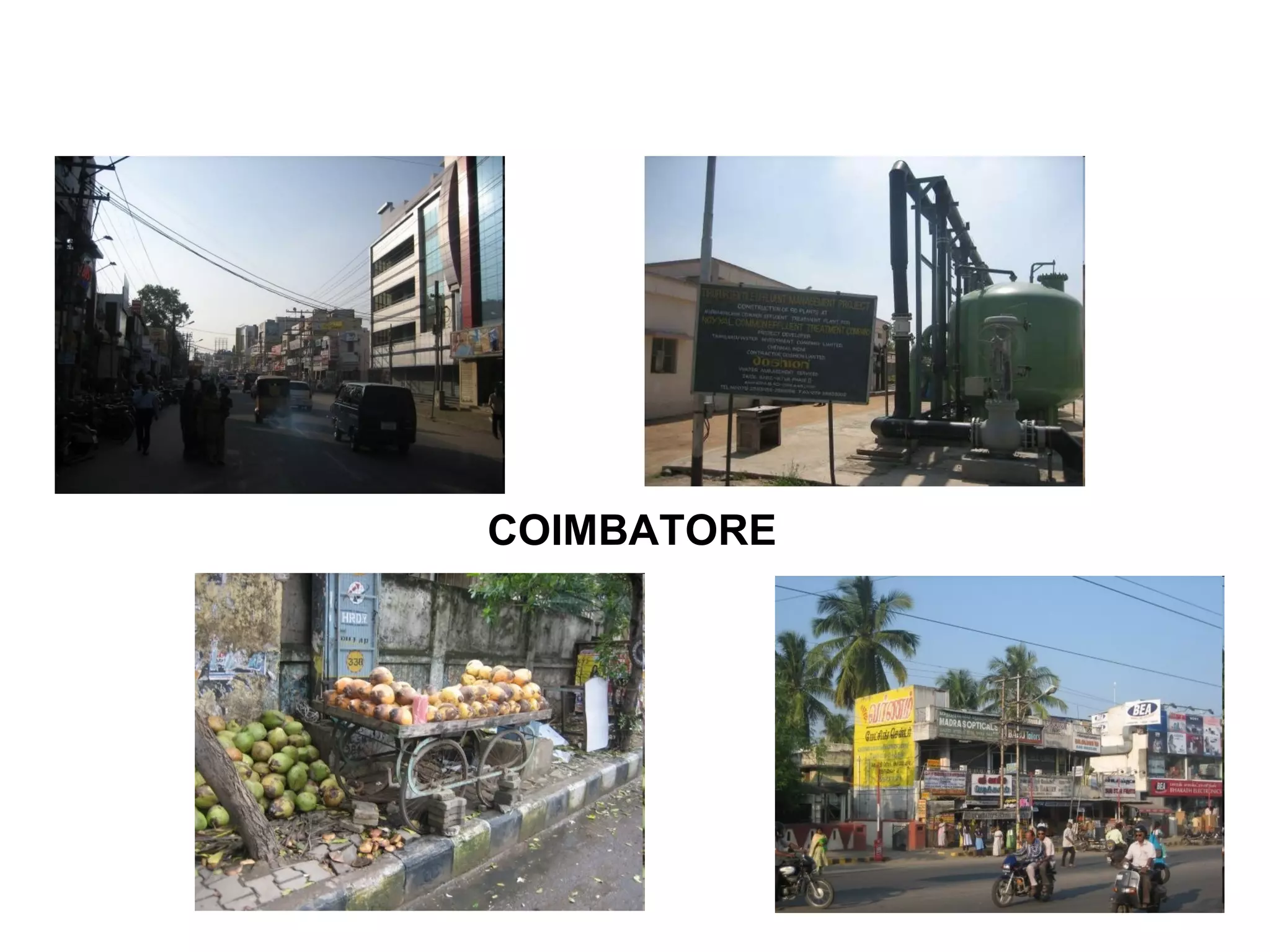
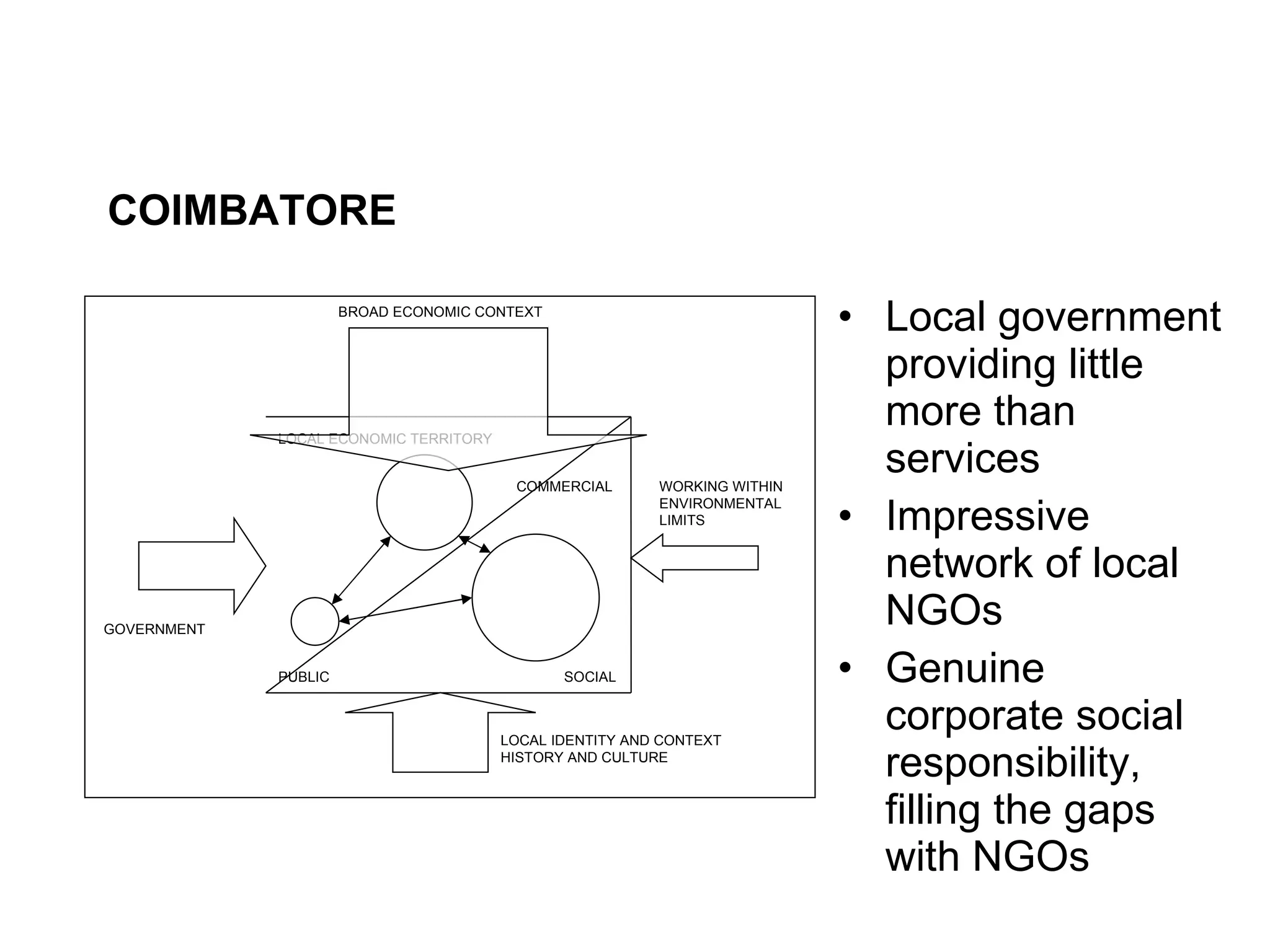
COIMBATORE
Local government providing little more than services Impressive network of local NGOs Genuine corporate social responsibility, filling the gaps with NGOs COIMBATORE PUBLIC COMMERCIAL SOCIAL BROAD ECONOMIC CONTEXT GOVERNMENT WORKING WITHIN ENVIRONMENTAL LIMITS LOCAL ECONOMIC TERRITORY LOCAL IDENTITY AND CONTEXT HISTORY AND CULTURE
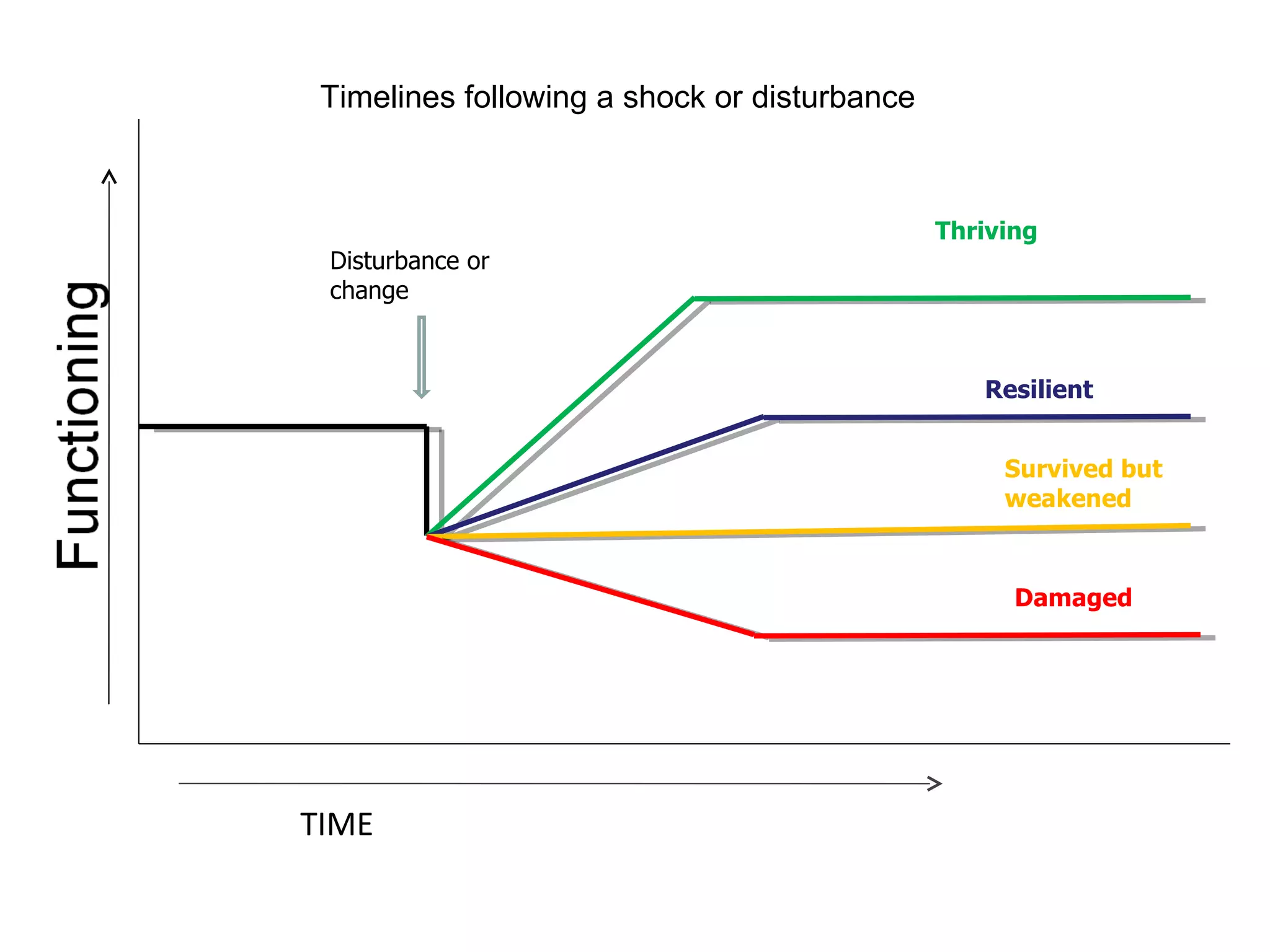
TIME Disturbance or change Thriving Resilient Survived but weakened Damaged Timelines following a shock or disturbance
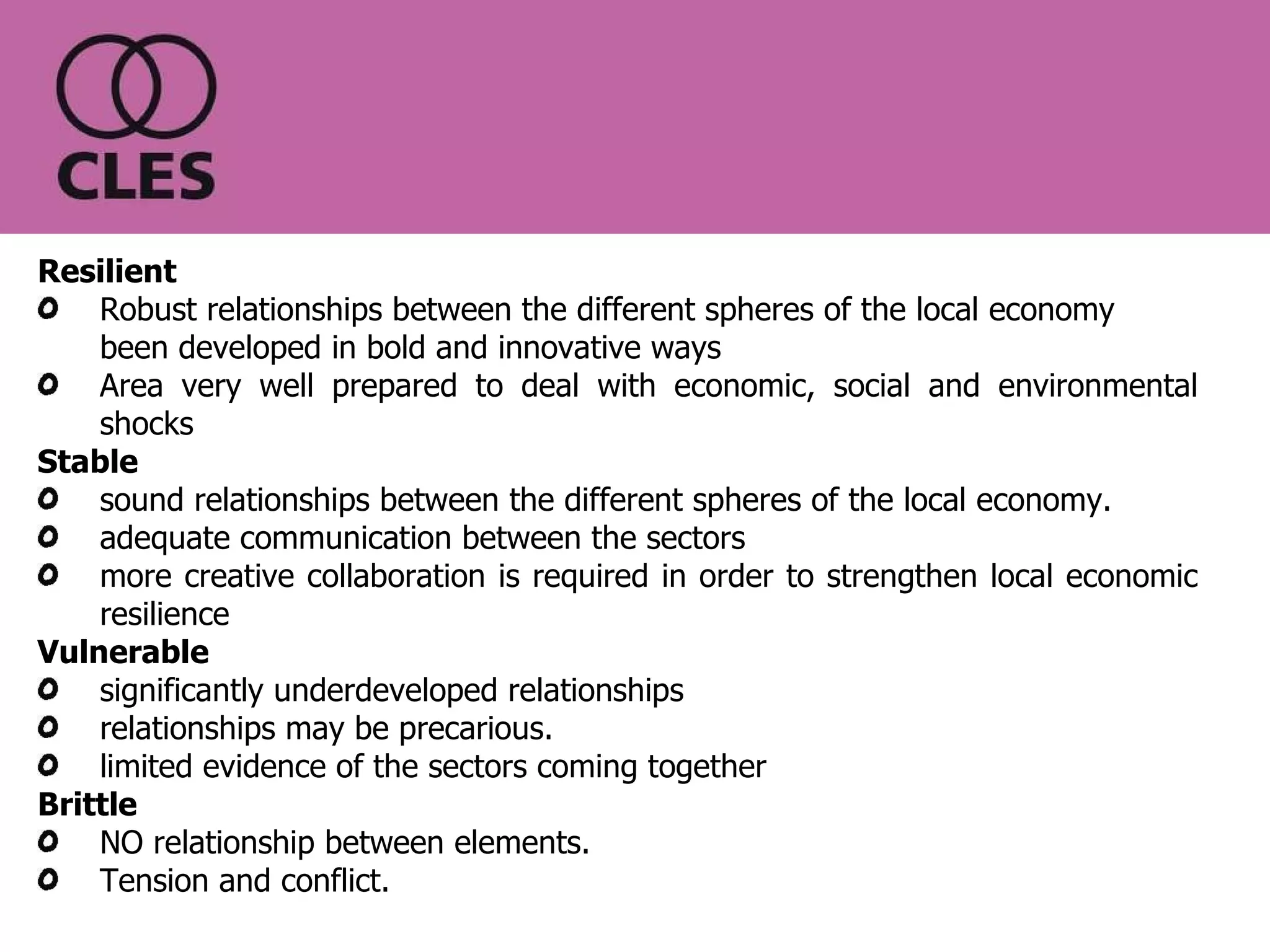
Resilient  Robust relationships between the different spheres of the local economy been developed in bold and innovative ways Area very well prepared to deal with economic, social and environmental shocks Stable   sound relationships between the different spheres of the local economy.  adequate communication between the sectors more creative collaboration is required in order to strengthen local economic resilience Vulnerable   significantly underdeveloped relationships relationships may be precarious.  limited evidence of the sectors coming together Brittle   NO relationship between elements. Tension and conflict. Scale of resilience
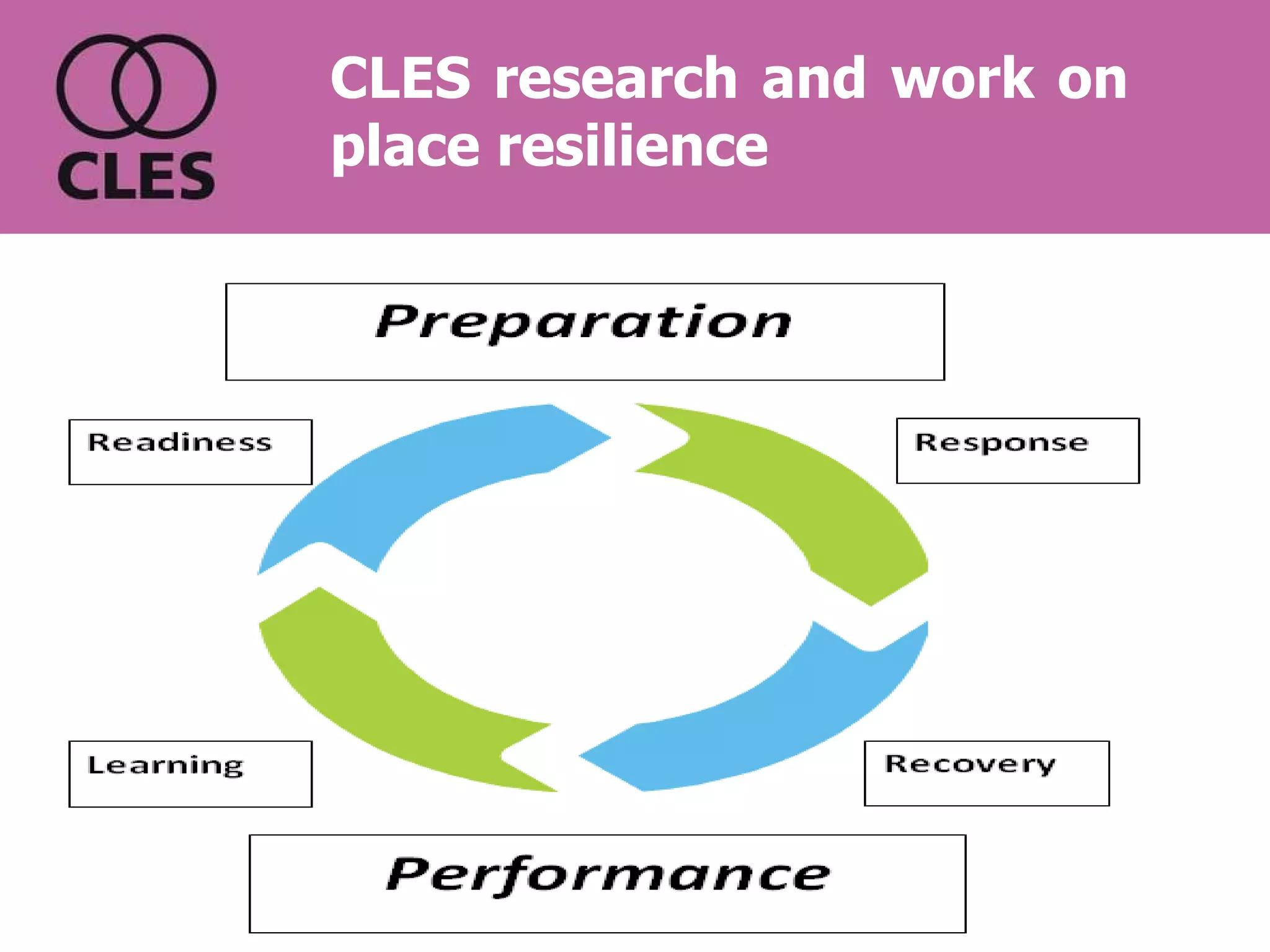
CLES research and work on place resilience
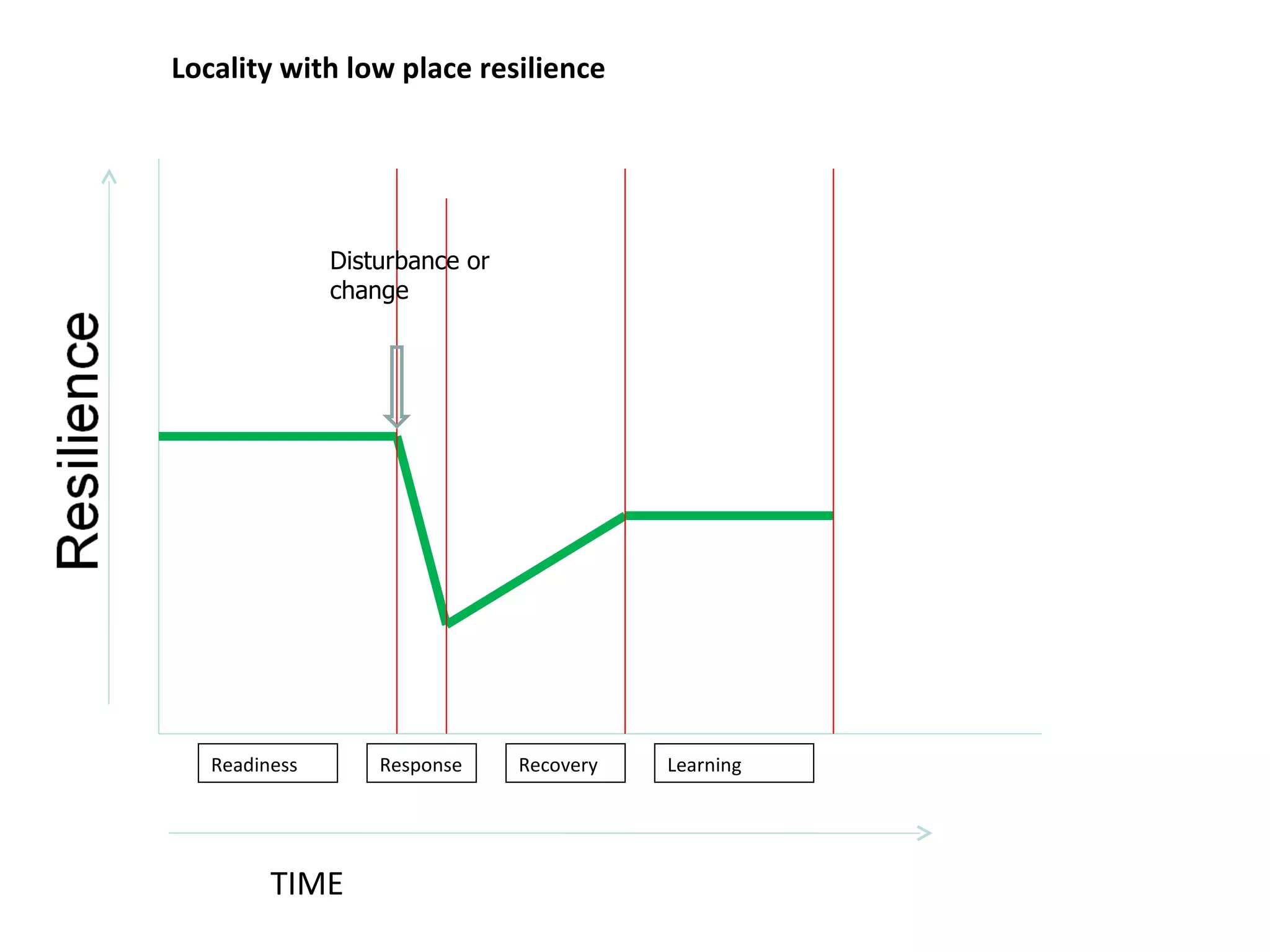
TIME Response  Recovery Learning Locality with low place resilience Readiness Disturbance or change
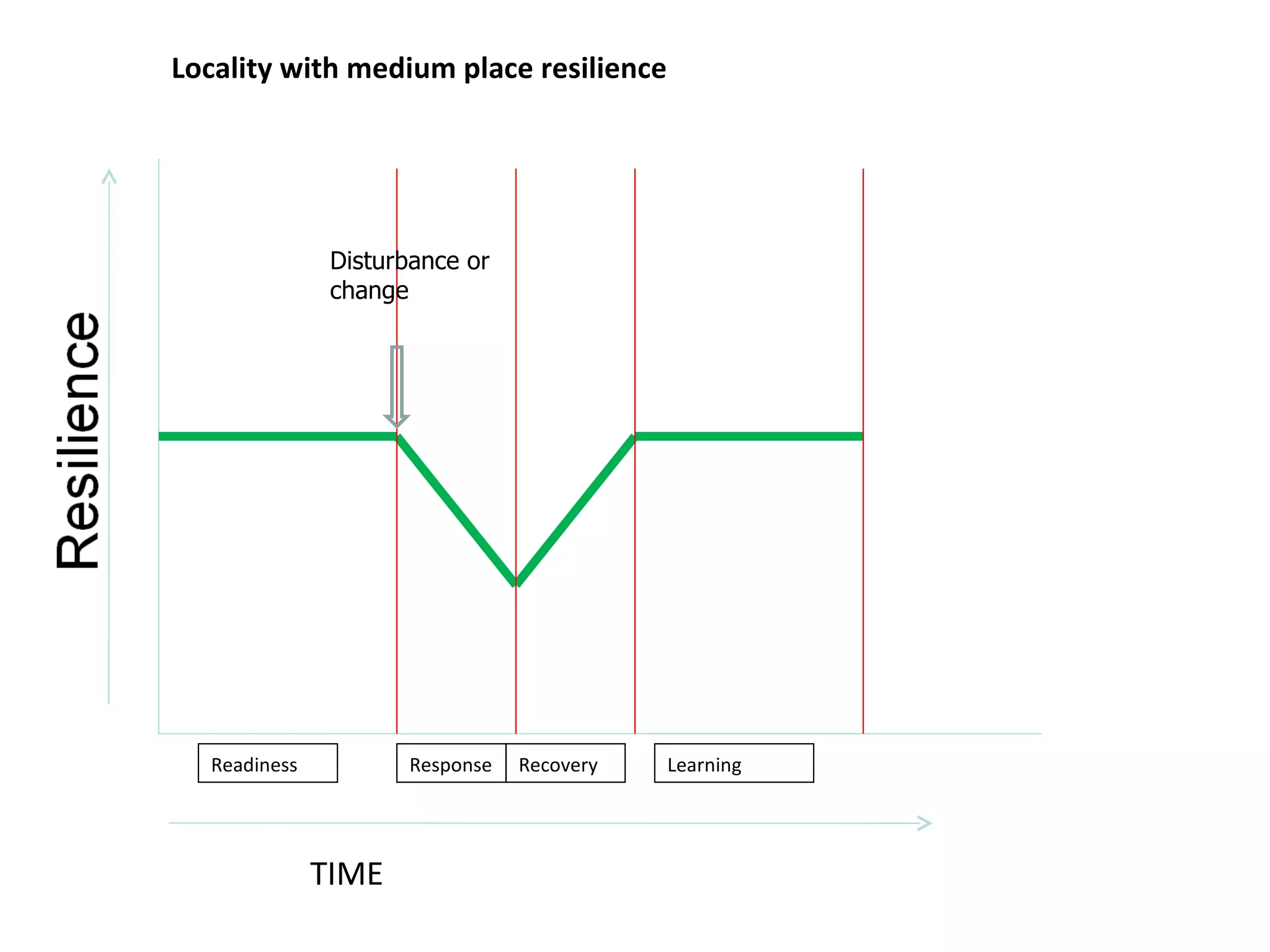
TIME Locality with medium place resilience Disturbance or change Readiness Response  Recovery Learning
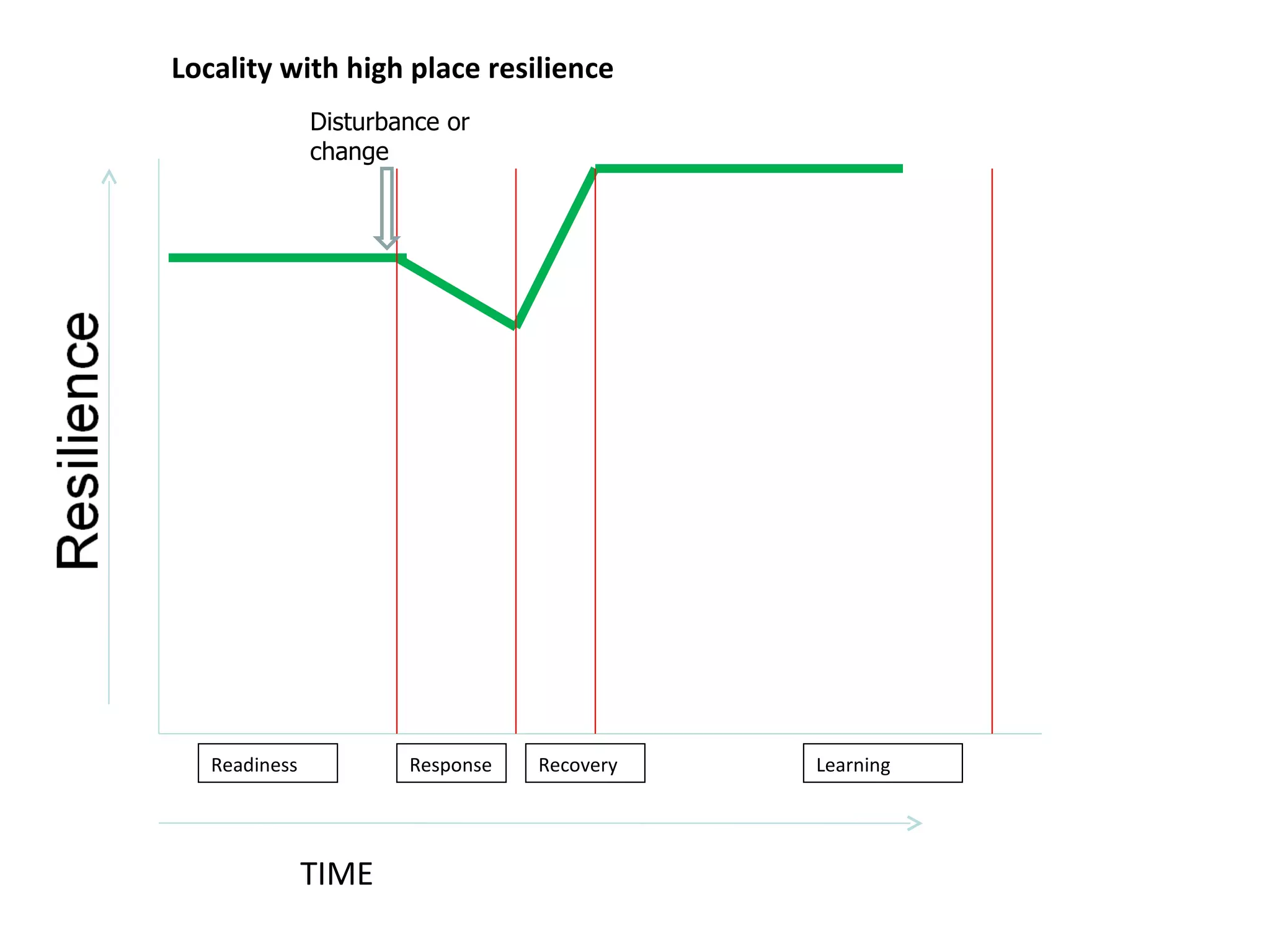
TIME Locality with high place resilience Readiness Response  Recovery Learning Disturbance or change
TASK Sketch out the economic story of your place in terms of the commercial, public and social economy.  Draw the size of the three economies in your area How resilient is your economy? What are its strengths/weaknesses? What are the barriers for the social economy?
TASK From the same place you discussed, think of an environmental shock (flood, drought)  What are the brittle, stable, vulnerable and resilient elements of your place? plot this in a line diagram?

Localism: Why is it important

  • 1.
    Localism: Why isit important? We need to cut down our environmental footprint more globalised but we also crave authenticity and place identity We live in a global economy but positive and negatives are felt locally Effective governance operates at different scales, including very local, city/county, sub-regional, regional, pan regional, national etc,, We increasingly want power spatially closer to us We are a grossly centralised country Societal opinion is moving in a localist direction?
  • 2.
    Localism: What ispolicy saying? More freedoms to local government and functional economies now and in the future LSP’s, LAA’s and MAA’s and now LEP’s White paper announced on region’s and economic development Local government in the driving seat more Flexible spatial geometry Power to communities The Holy grail is an increase in harnessing local wealth/taxes All political parties are localist. Difference in emphasis/speed only?
  • 3.
    General opportunitiesDemand for regeneration etc is going up. Just when resources are decreasing! There will be less cash for projects, but more power for local authorities in administering it? Green economy/Green jobs? More for less and can less be more? Maybe new wave on regeneration initiatives as decline hits hard? Will big society mean more or less opportunity for the VCS?
  • 4.
  • 5.
    Conceptual framework Publiceconomy This refers to the value of public expenditure in an area and the way in which public expenditure impacts directly on the economy, e.g. procurement decisions on housing and health. Most direct way in which local authorities and partners impact on local economic development! Social economy This refers to the contribution that wider community activities make to the local economy through social enterprise, community infrastructure support and local community assets, e.g. community centres, halls etc. Commercial economy This refers to the contribution that “private” industry makes to the economy including traditional economic information about investment, local business support, business start up activity and it also considers the labour market, including causes of worklessness.
  • 6.
  • 7.
    Planning laws whichrestrict urban growth An extensive and vibrant network of civic engagement A “local” feel, with some antagonism towards big business? PORTLAND PUBLIC COMMERCIAL SOCIAL BROAD ECONOMIC CONTEXT GOVERNMENT WORKING WITHIN ENVIRONMENTAL LIMITS LOCAL ECONOMIC TERRITORY LOCAL IDENTITY AND CONTEXT HISTORY AND CULTURE
  • 8.
  • 9.
    A local govtworking hard to attract business A reliance on EU funding A weakened social sector, following the break-up of Communism GDANSK PUBLIC COMMERCIAL SOCIAL BROAD ECONOMIC CONTEXT GOVERNMENT WORKING WITHIN ENVIRONMENTAL LIMITS LOCAL ECONOMIC TERRITORY LOCAL IDENTITY AND CONTEXT HISTORY AND CULTURE
  • 10.
  • 11.
    Local government bendingover backwards for business State-level economic strategy, again dominated by business Little civic engagement CULIACAN PUBLIC COMMERCIAL SOCIAL BROAD ECONOMIC CONTEXT GOVERNMENT WORKING WITHIN ENVIRONMENTAL LIMITS LOCAL ECONOMIC TERRITORY LOCAL IDENTITY AND CONTEXT HISTORY AND CULTURE
  • 12.
  • 13.
    Local government providinglittle more than services Impressive network of local NGOs Genuine corporate social responsibility, filling the gaps with NGOs COIMBATORE PUBLIC COMMERCIAL SOCIAL BROAD ECONOMIC CONTEXT GOVERNMENT WORKING WITHIN ENVIRONMENTAL LIMITS LOCAL ECONOMIC TERRITORY LOCAL IDENTITY AND CONTEXT HISTORY AND CULTURE
  • 14.
    TIME Disturbance orchange Thriving Resilient Survived but weakened Damaged Timelines following a shock or disturbance
  • 15.
    Resilient Robustrelationships between the different spheres of the local economy been developed in bold and innovative ways Area very well prepared to deal with economic, social and environmental shocks Stable sound relationships between the different spheres of the local economy. adequate communication between the sectors more creative collaboration is required in order to strengthen local economic resilience Vulnerable significantly underdeveloped relationships relationships may be precarious. limited evidence of the sectors coming together Brittle NO relationship between elements. Tension and conflict. Scale of resilience
  • 16.
    CLES research andwork on place resilience
  • 17.
    TIME Response Recovery Learning Locality with low place resilience Readiness Disturbance or change
  • 18.
    TIME Locality withmedium place resilience Disturbance or change Readiness Response Recovery Learning
  • 19.
    TIME Locality withhigh place resilience Readiness Response Recovery Learning Disturbance or change
  • 20.
    TASK Sketch outthe economic story of your place in terms of the commercial, public and social economy. Draw the size of the three economies in your area How resilient is your economy? What are its strengths/weaknesses? What are the barriers for the social economy?
  • 21.
    TASK From thesame place you discussed, think of an environmental shock (flood, drought) What are the brittle, stable, vulnerable and resilient elements of your place? plot this in a line diagram?

Editor's Notes

  • #6 Views from the participants on this approach?
  • #21 Ask group about pros and cons of this approach? Do they think social and public economies are important? Why are they important, why are they not important? Ask group to consider how the public, social and commercial economies operate within their area?
  • #22 Ask group about pros and cons of this approach? Do they think social and public economies are important? Why are they important, why are they not important? Ask group to consider how the public, social and commercial economies operate within their area?