WHY THEY’RE EVEN BETTER THAN  GOOGLE AND WIKIPEDIA – REALLY! Library Databases
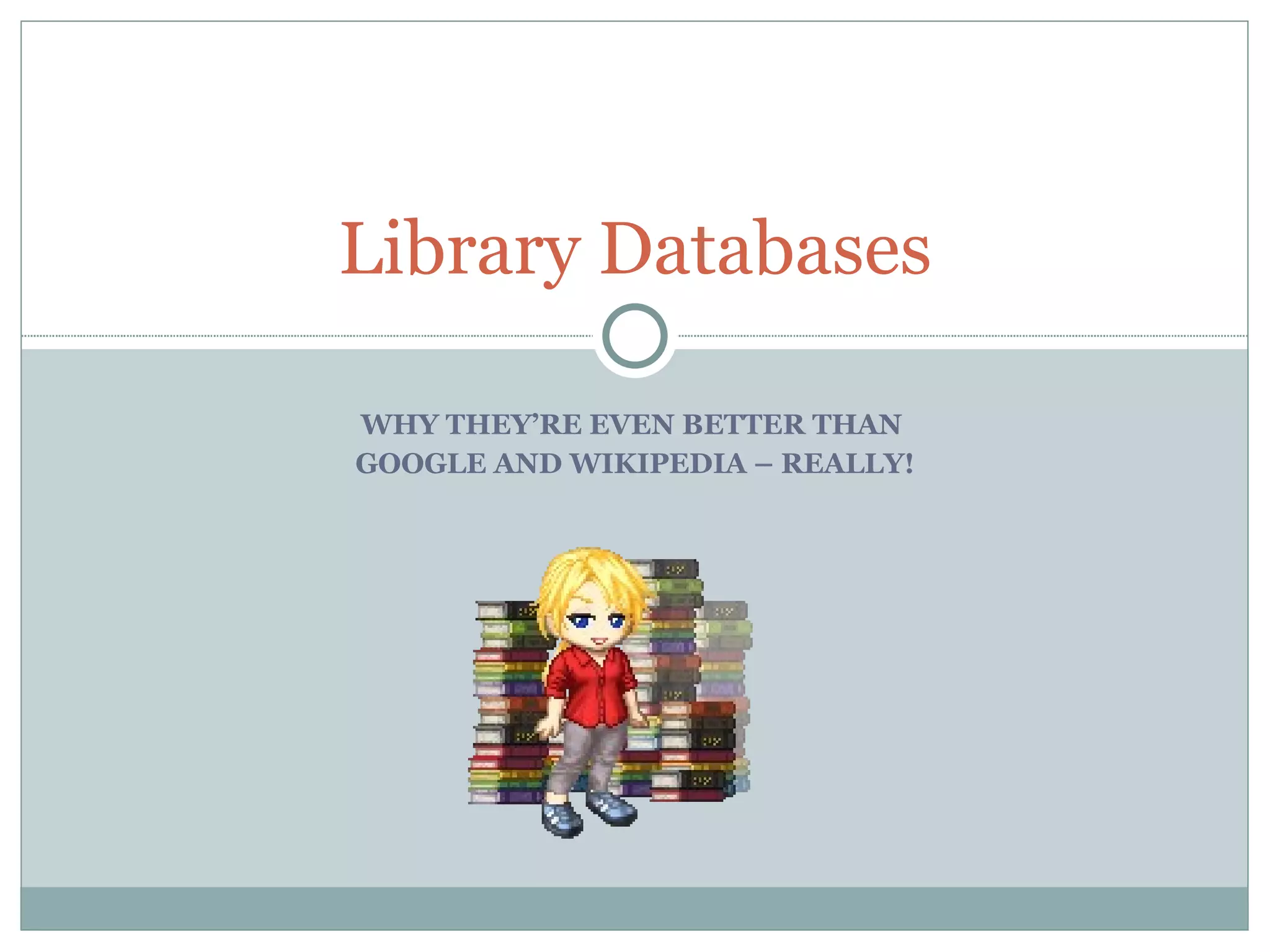
Do You Believe Everything You Read?
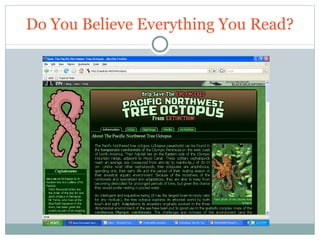
Image Attibution: http://www.flickr.com/photos/will-lion/2595497078/sizes/z/in/photostream/ Evaluate (think about) information  -- don’t just believe everything you read Always compare  multiple (many) sources Always  cite your sources  (Citation Maker, Easybib.com, etc.) (Notes are in  RED )
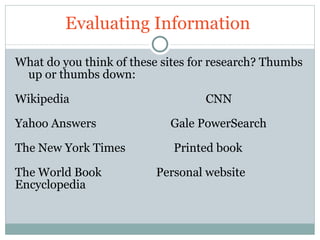
Evaluating Information  What do you think of these sites for research? Thumbs up or thumbs down: Wikipedia CNN Yahoo Answers   Gale PowerSearch The New York Times Printed book The World Book    Personal website Encyclopedia
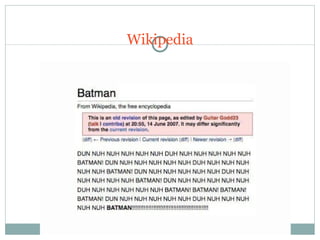
Wikipedia
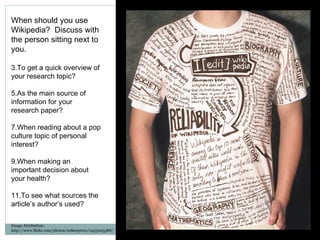
Image Attribution: http://www.flickr.com/photos/mikeeperez/2453225588/ When should you use Wikipedia?  Discuss with the person sitting next to you. To get a quick overview of your research topic? As the main source of information for your research paper? When reading about a pop culture topic of personal interest? When making an important decision about your health? To see what sources the article’s author’s used?
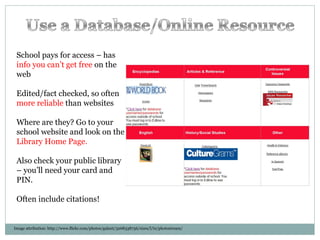
Image attribution: http://www.flickr.com/photos/galant/3268338756/sizes/l/in/photostream/ School pays for access – has  info you can’t get free  on the web Edited/fact checked, so often  more reliable  than websites Where are they? Go to your school website and look on the  Library Home Page. Also check your public library – you’ll need your card and PIN. Often include citations!
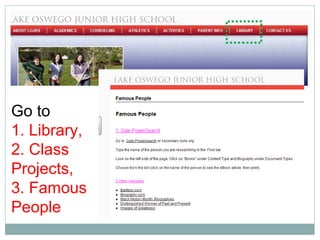
Go to  1. Library,  2. Class Projects,  3. Famous People
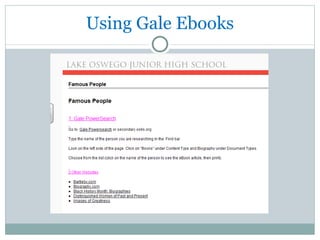
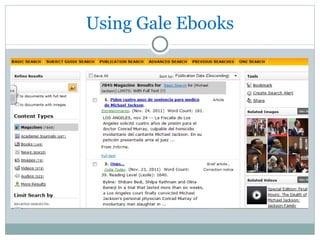
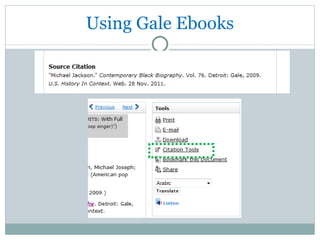
Using Gale Ebooks
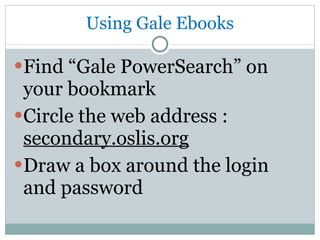
Using Gale Ebooks Find “Gale PowerSearch” on your bookmark Circle the web address :  secondary.oslis.org Draw a box around the login and password
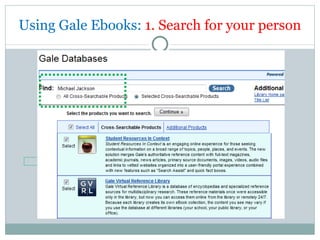
Using Gale Ebooks:  1. Search for your person
Using Gale Ebooks
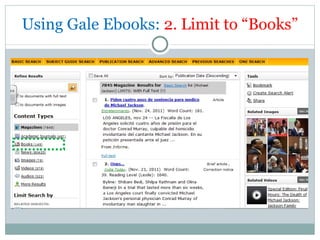
Using Gale Ebooks:  2. Limit to “Books”
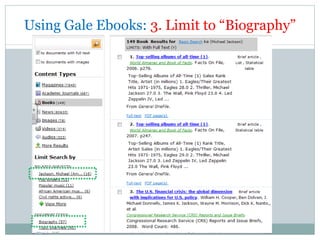
Using Gale Ebooks:  3. Limit to “Biography”
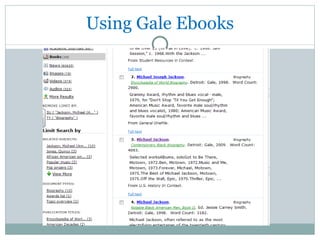
Using Gale Ebooks
Using Gale Ebooks
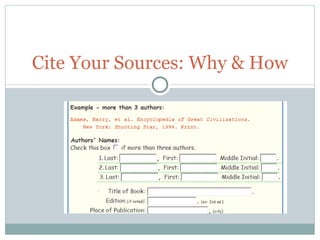
Cite Your Sources: Why & How
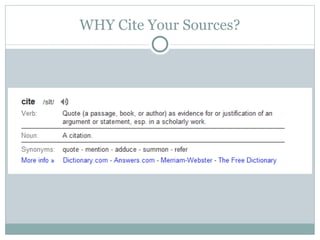
WHY Cite Your Sources?
WHY Cite Your Sources? Talk to the person next to you for about one minute about  why you think it’s important to cite your sources. Write at least one reason in your notes. What reasons did you write down?
WHY Cite Your Sources? Helps you  avoid plagiarism (copying) Always give the author proper credit! Image attribution: http://farm4.static.flickr.com/3191/3020966268_4f854c0617.jpg
WHY Cite Your Sources? 2. Shows you used  many good sources . You didn’t just make it up! Image attribution: http://farm4.static.flickr.com/3213/2979328686_5e34ec6677.jpg
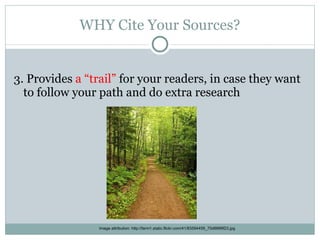
WHY Cite Your Sources? 3. Provides  a “trail”  for your readers, in case they want to follow your path and do extra research Image attribution: http://farm1.static.flickr.com/41/83594459_70d9688f23.jpg
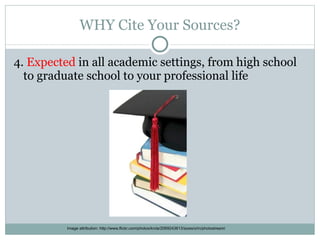
WHY Cite Your Sources? 4.  Expected  in all academic settings, from high school to graduate school to your professional life Image attribution: http://www.flickr.com/photos/krcla/2069243613/sizes/o/in/photostream/
WHEN Should You Cite Your Sources? 1. When you  quote  from a source If you use the author’s  exact words , put them  in   “quotation marks”  and then cite your source. 2. When you  paraphrase  a source If you use the author’s idea, even if you  put it in your own words , you must still cite your source.
WHEN Should You Cite Your Sources? My source says:  Frogs live on every continent except Antarctica, but tropical regions have the greatest number of species. Frogs are classified as  amphibians.
WHEN Should You Cite Your Sources? My source says:  Frogs live on every continent except Antarctica, but tropical regions have the greatest number of species. Frogs are classified as  amphibians.   My paper says: Frogs live on every continent except Antartica. Do I need to cite my source? Thumbs up for yes, down for no. What else am I missing here?
WHEN Should You Cite Your Sources? My source says:  Frogs live on every continent except Antarctica, but tropical regions have the greatest number of species. Frogs are classified as  amphibians.   My paper says: Frogs are amphibians. Do I need to cite my source? Thumbs up for yes, down for no.
WHEN Should You Cite Your Sources? My source says:  Frogs live on every continent except Antarctica, but tropical regions have the greatest number of species. Frogs are classified as  amphibians.   My paper says: In the third grade, I had a pet frog called Hoppy. Do I need to cite my source? Thumbs up for yes, down for no.
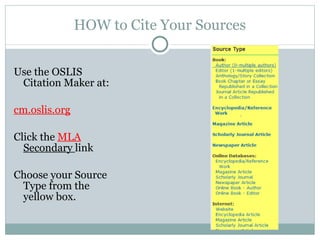
HOW to Cite Your Sources Use the OSLIS Citation Maker at: cm.oslis.org Click the  MLA  Secondary  link Choose your Source Type from the yellow box.
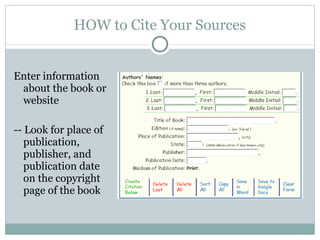
HOW to Cite Your Sources Enter information about the book or website  -- Look for place of publication, publisher, and publication date on the copyright page of the book
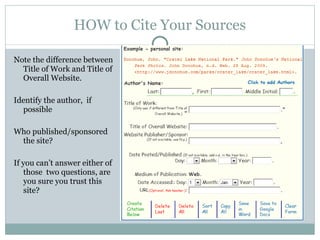
HOW to Cite Your Sources Note the difference between Title of Work and Title of Overall Website. Identify the author,  if possible Who published/sponsored the site? If you can’t answer either of those  two questions, are you sure you trust this site?
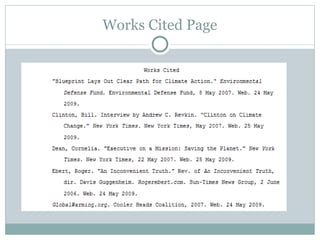
Works Cited Page
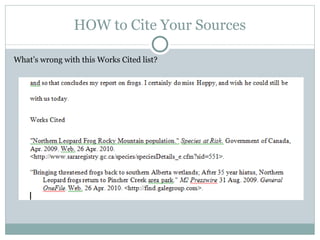
HOW to Cite Your Sources What’s wrong with this Works Cited list?
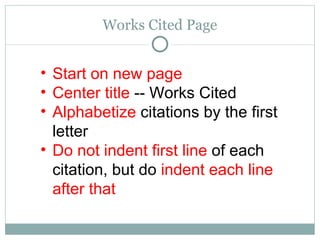
Works Cited Page Start on new page Center   title  -- Works Cited Alphabetize  citations by the first letter Do not indent first line  of each citation, but do  indent each line after that
HOW to Cite Your Sources Questions?

Lo jfamouspeople

  • 1.
    WHY THEY’RE EVENBETTER THAN GOOGLE AND WIKIPEDIA – REALLY! Library Databases
  • 2.
    Do You BelieveEverything You Read?
  • 3.
    Image Attibution: http://www.flickr.com/photos/will-lion/2595497078/sizes/z/in/photostream/Evaluate (think about) information -- don’t just believe everything you read Always compare multiple (many) sources Always cite your sources (Citation Maker, Easybib.com, etc.) (Notes are in RED )
  • 4.
    Evaluating Information What do you think of these sites for research? Thumbs up or thumbs down: Wikipedia CNN Yahoo Answers Gale PowerSearch The New York Times Printed book The World Book Personal website Encyclopedia
  • 5.
  • 6.
    Image Attribution: http://www.flickr.com/photos/mikeeperez/2453225588/When should you use Wikipedia? Discuss with the person sitting next to you. To get a quick overview of your research topic? As the main source of information for your research paper? When reading about a pop culture topic of personal interest? When making an important decision about your health? To see what sources the article’s author’s used?
  • 7.
    Image attribution: http://www.flickr.com/photos/galant/3268338756/sizes/l/in/photostream/School pays for access – has info you can’t get free on the web Edited/fact checked, so often more reliable than websites Where are they? Go to your school website and look on the Library Home Page. Also check your public library – you’ll need your card and PIN. Often include citations!
  • 8.
    Go to 1. Library, 2. Class Projects, 3. Famous People
  • 9.
  • 10.
    Using Gale EbooksFind “Gale PowerSearch” on your bookmark Circle the web address : secondary.oslis.org Draw a box around the login and password
  • 11.
    Using Gale Ebooks: 1. Search for your person
  • 12.
  • 13.
    Using Gale Ebooks: 2. Limit to “Books”
  • 14.
    Using Gale Ebooks: 3. Limit to “Biography”
  • 15.
  • 16.
  • 17.
  • 18.
    WHY Cite YourSources?
  • 19.
    WHY Cite YourSources? Talk to the person next to you for about one minute about why you think it’s important to cite your sources. Write at least one reason in your notes. What reasons did you write down?
  • 20.
    WHY Cite YourSources? Helps you avoid plagiarism (copying) Always give the author proper credit! Image attribution: http://farm4.static.flickr.com/3191/3020966268_4f854c0617.jpg
  • 21.
    WHY Cite YourSources? 2. Shows you used many good sources . You didn’t just make it up! Image attribution: http://farm4.static.flickr.com/3213/2979328686_5e34ec6677.jpg
  • 22.
    WHY Cite YourSources? 3. Provides a “trail” for your readers, in case they want to follow your path and do extra research Image attribution: http://farm1.static.flickr.com/41/83594459_70d9688f23.jpg
  • 23.
    WHY Cite YourSources? 4. Expected in all academic settings, from high school to graduate school to your professional life Image attribution: http://www.flickr.com/photos/krcla/2069243613/sizes/o/in/photostream/
  • 24.
    WHEN Should YouCite Your Sources? 1. When you quote from a source If you use the author’s exact words , put them in “quotation marks” and then cite your source. 2. When you paraphrase a source If you use the author’s idea, even if you put it in your own words , you must still cite your source.
  • 25.
    WHEN Should YouCite Your Sources? My source says: Frogs live on every continent except Antarctica, but tropical regions have the greatest number of species. Frogs are classified as amphibians.
  • 26.
    WHEN Should YouCite Your Sources? My source says: Frogs live on every continent except Antarctica, but tropical regions have the greatest number of species. Frogs are classified as amphibians. My paper says: Frogs live on every continent except Antartica. Do I need to cite my source? Thumbs up for yes, down for no. What else am I missing here?
  • 27.
    WHEN Should YouCite Your Sources? My source says: Frogs live on every continent except Antarctica, but tropical regions have the greatest number of species. Frogs are classified as amphibians. My paper says: Frogs are amphibians. Do I need to cite my source? Thumbs up for yes, down for no.
  • 28.
    WHEN Should YouCite Your Sources? My source says: Frogs live on every continent except Antarctica, but tropical regions have the greatest number of species. Frogs are classified as amphibians. My paper says: In the third grade, I had a pet frog called Hoppy. Do I need to cite my source? Thumbs up for yes, down for no.
  • 29.
    HOW to CiteYour Sources Use the OSLIS Citation Maker at: cm.oslis.org Click the MLA Secondary link Choose your Source Type from the yellow box.
  • 30.
    HOW to CiteYour Sources Enter information about the book or website -- Look for place of publication, publisher, and publication date on the copyright page of the book
  • 31.
    HOW to CiteYour Sources Note the difference between Title of Work and Title of Overall Website. Identify the author, if possible Who published/sponsored the site? If you can’t answer either of those two questions, are you sure you trust this site?
  • 32.
  • 33.
    HOW to CiteYour Sources What’s wrong with this Works Cited list?
  • 34.
    Works Cited PageStart on new page Center title -- Works Cited Alphabetize citations by the first letter Do not indent first line of each citation, but do indent each line after that
  • 35.
    HOW to CiteYour Sources Questions?