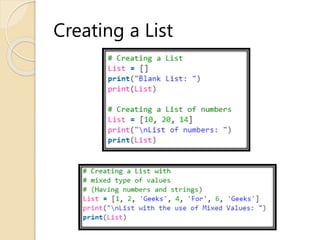
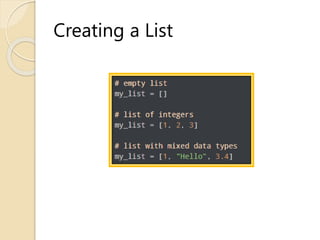
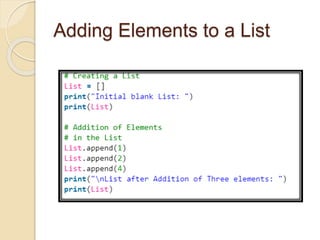
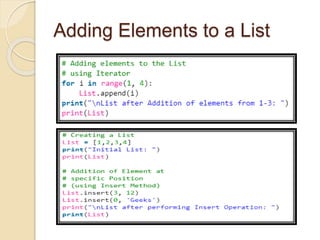
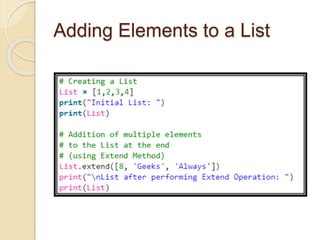
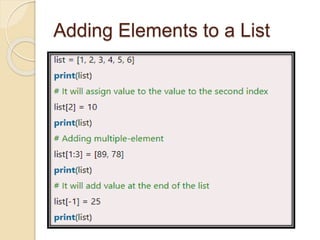
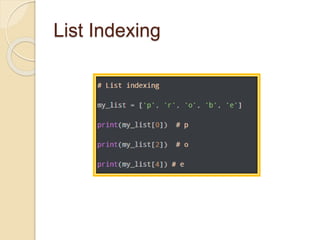
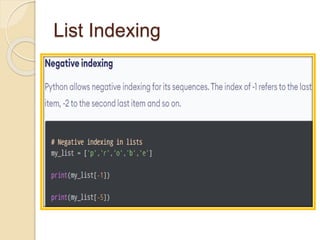
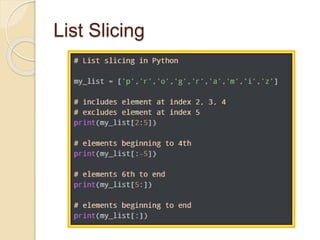
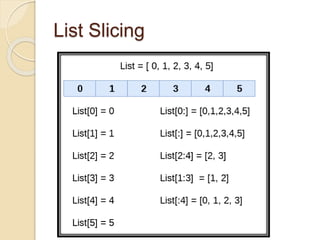
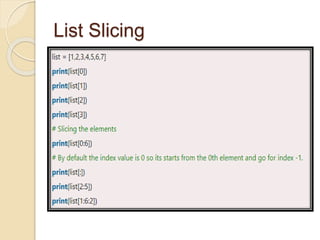
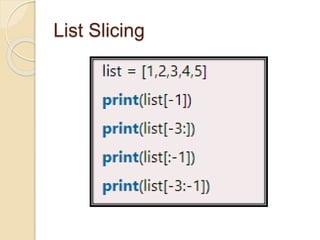
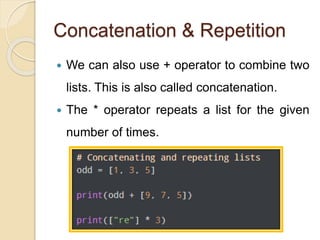
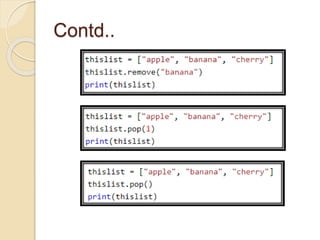
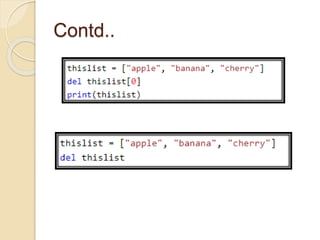
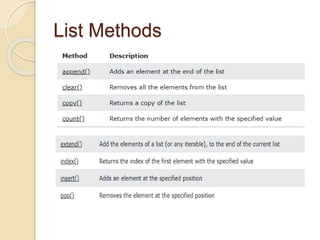
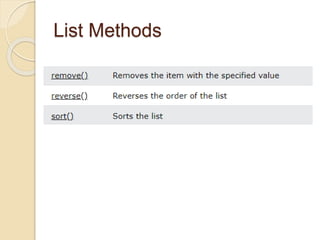
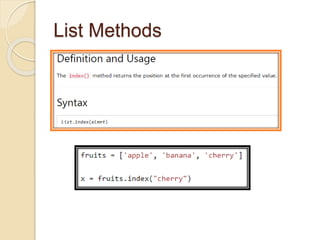
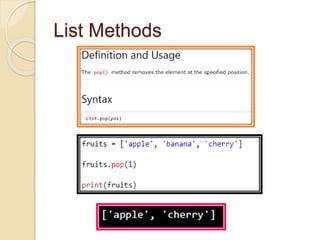
This document discusses lists in Python. It defines a list as a sequence of values that can be of any type, unlike strings which are character values. Lists are written with comma-separated items between square brackets. Lists allow storing multiple items in a single variable and can contain elements of different data types. The document covers creating and adding elements to lists, list indexing and slicing, concatenating and repeating lists, deleting elements from lists, and various list methods.
![List
A list is a sequence of values. In a string, the
values are characters; in a list, they can be any
type.
The values in a list are called elements or
sometimes items.
It can be written as a list of comma-separated
items (values) between square brackets[ ].
Items in the lists can be of different data types.
Lists are used to store multiple items in a single
variable.](https://image.slidesharecdn.com/lm28-listoperationsslicemethods-240220143751-a24c2a15/85/LM-28-List-Operations-Slice-Methods-pptx-2-320.jpg)