Literary Reading through a
Sociocultural Context
Why would a particular event or an outside situation
affect a literary piece?
Recall the timeline of Philippine history. Reflect on some events
that may have transpired during those periods of time by creating
a visual image that represents each of them. Share the images
drawn and the ideas behind it with a partner.
What are some important events that took place in the following
years? What would a third-person observer living in those times
have written about his or her situation?
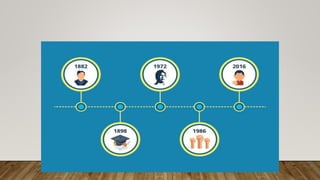
● 1882 – Rizal, a well-known hero of today, leaves for Spain to
pursue his studies.
● 1898 – Americans introduced formal education in the Philippines.
● 1972 – Ferdinand Marcos declared Martial law in the Philippines.
● 1986 – People Power Revolution took place among the Filipino
people.
● 2016 – Rodrigo “Digong” Duterte was elected the 16th president of
the Philippine Republic.
literary theory (noun) - refers to different
schools of thought and bodies of ideas that
can be used as a tool in understanding
literary context
We can use feminist literary theory to
examine how a literary piece empowers or
degrades women.
sociocultural (adjective) - of, relating to,
or involving a combination of social and
cultural factors
Before evaluating a classic’s relevance
today, we must first consider the
sociocultural context of the time the text
was written.
1
2
3
Vocabulary Words
social order (noun) - the set or system
of social structures, institutions, norms,
customs that conserve, maintain, or
enforce patterns of relations and
behavior
The prevailing social order before the
American Civil War was oppressive and
discriminatory against former slaves and
their descendants.
4 5
4
Vocabulary Words
chalice (noun) - a cup used to hold
wine
At church, I often see priests lift up a
chalice during mass.
ideology (noun) - a systematic body of
concepts or beliefs about life or culture
We can still have civil and respectful
conversations with people who have a
different ideology from ours.
“Art is not created in a vacuum; it is the work not simply of a
person, but of an author fixed in time and space, answering
a community of which he is an important, articulate part.”
Wilbur Scott
Reasons to read literature through the sociocultural context
(Gioia and Kennedy 2007):
● Reading using the sociocultural context helps you
understand the social, economic, political, and cultural forces
affecting the work that you are reading.
● Analyzing the sociocultural context of the text makes you
examine the role of the audience (readers) in shaping
literature.
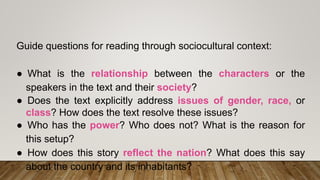
Guide questions for reading through sociocultural context:
● What is the relationship between the characters or the
speakers in the text and their society?
● Does the text explicitly address issues of gender, race, or
class? How does the text resolve these issues?
● Who has the power? Who does not? What is the reason for
this setup?
● How does this story reflect the nation? What does this say
about the country and its inhabitants?
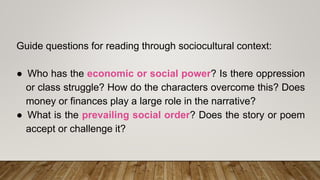
Guide questions for reading through sociocultural context:
● Who has the economic or social power? Is there oppression
or class struggle? How do the characters overcome this? Does
money or finances play a large role in the narrative?
● What is the prevailing social order? Does the story or poem
accept or challenge it?
Literary Theories
Perspective Explanation
Marxism Literature shows class struggle and materialism. Thus, it
looks into the social classes portrayed in the work.
Feminism The feminist perspective examines the role of the
women in the literature.
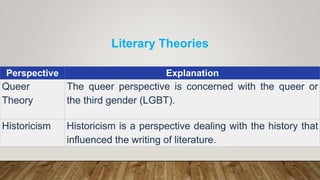
Perspective Explanation
Queer
Theory
The queer perspective is concerned with the queer or
the third gender (LGBT).
Historicism Historicism is a perspective dealing with the history that
influenced the writing of literature.
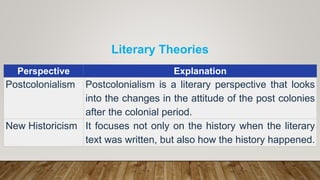
Literary Theories
Perspective Explanation
Postcolonialism Postcolonialism is a literary perspective that looks
into the changes in the attitude of the post colonies
after the colonial period.
New Historicism It focuses not only on the history when the literary
text was written, but also how the history happened.
Literary Theories
When reading a text or writing a critique through the
sociocultural context:
● set aside your personal political ideologies; and
● do your best to be unbiased in reading.
Sympathy
Paul Laurence Dunbar
Guide Questions
1. What is the central image of the poem? How is this used
throughout the poem?
2. What does the central image symbolize?
3. What other images or figures of speech help develop this
central theme?
4. How are these related to the times the author lived and wrote
in?
5. What aspects of the author’s sociocultural context can be
seen in his written work?
Read and analyze the short story below. Research on the
biography of the author, then answer the questions that
follow comprehensively. Responses must be at least one
paragraph long.
The Story of an Hour
Kate Chopin
Short Response Questions
1. What literary theory would be appropriate to use in studying
this text? Why?
2. Who is the central character of the story? What is this person
like?
3. What is the central conflict of the short story? How is the
conflict resolved?
4. What is meant by the very last line of the story?
5. Refer to your research. What was significant about the time
the story was written? How can its influences be seen in the
text?
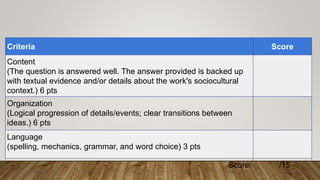
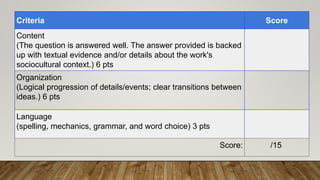
Criteria Score
Content
(The question is answered well. The answer provided is backed up
with textual evidence and/or details about the work's sociocultural
context.) 6 pts
Organization
(Logical progression of details/events; clear transitions between
ideas.) 6 pts
Language
(spelling, mechanics, grammar, and word choice) 3 pts
Score: /15
Values Integration
We have learned how the state of society and culture
influences writers of that time. How can we preserve
or carry over the ideas or insights from that time that
may be helpful to us in modern society?
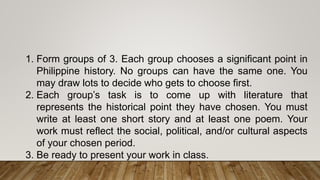
1. Form groups of 3. Each group chooses a significant point in
Philippine history. No groups can have the same one. You
may draw lots to decide who gets to choose first.
2. Each group’s task is to come up with literature that
represents the historical point they have chosen. You must
write at least one short story and at least one poem. Your
work must reflect the social, political, and/or cultural aspects
of your chosen period.
3. Be ready to present your work in class.
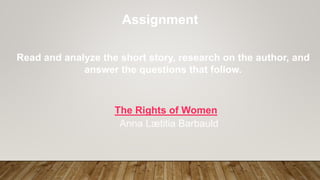
Assignment
Read and analyze the short story, research on the author, and
answer the questions that follow.
The Rights of Women
Anna Lætitia Barbauld
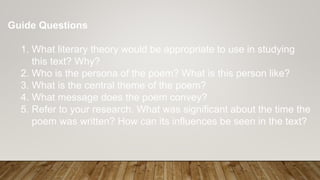
Guide Questions
1. What literary theory would be appropriate to use in studying
this text? Why?
2. Who is the persona of the poem? What is this person like?
3. What is the central theme of the poem?
4. What message does the poem convey?
5. Refer to your research. What was significant about the time the
poem was written? How can its influences be seen in the text?
Criteria Score
Content
(The question is answered well. The answer provided is backed
up with textual evidence and/or details about the work's
sociocultural context.) 6 pts
Organization
(Logical progression of details/events; clear transitions between
ideas.) 6 pts
Language
(spelling, mechanics, grammar, and word choice) 3 pts
Score: /15

Literary REading through Sociocultural Context.pptx

  • 1.
    Literary Reading througha Sociocultural Context
  • 2.
    Why would aparticular event or an outside situation affect a literary piece?
  • 3.
    Recall the timelineof Philippine history. Reflect on some events that may have transpired during those periods of time by creating a visual image that represents each of them. Share the images drawn and the ideas behind it with a partner. What are some important events that took place in the following years? What would a third-person observer living in those times have written about his or her situation?
  • 5.
    ● 1882 –Rizal, a well-known hero of today, leaves for Spain to pursue his studies. ● 1898 – Americans introduced formal education in the Philippines. ● 1972 – Ferdinand Marcos declared Martial law in the Philippines. ● 1986 – People Power Revolution took place among the Filipino people. ● 2016 – Rodrigo “Digong” Duterte was elected the 16th president of the Philippine Republic.
  • 6.
    literary theory (noun)- refers to different schools of thought and bodies of ideas that can be used as a tool in understanding literary context We can use feminist literary theory to examine how a literary piece empowers or degrades women. sociocultural (adjective) - of, relating to, or involving a combination of social and cultural factors Before evaluating a classic’s relevance today, we must first consider the sociocultural context of the time the text was written. 1 2 3 Vocabulary Words social order (noun) - the set or system of social structures, institutions, norms, customs that conserve, maintain, or enforce patterns of relations and behavior The prevailing social order before the American Civil War was oppressive and discriminatory against former slaves and their descendants.
  • 7.
    4 5 4 Vocabulary Words chalice(noun) - a cup used to hold wine At church, I often see priests lift up a chalice during mass. ideology (noun) - a systematic body of concepts or beliefs about life or culture We can still have civil and respectful conversations with people who have a different ideology from ours.
  • 8.
    “Art is notcreated in a vacuum; it is the work not simply of a person, but of an author fixed in time and space, answering a community of which he is an important, articulate part.” Wilbur Scott
  • 9.
    Reasons to readliterature through the sociocultural context (Gioia and Kennedy 2007): ● Reading using the sociocultural context helps you understand the social, economic, political, and cultural forces affecting the work that you are reading. ● Analyzing the sociocultural context of the text makes you examine the role of the audience (readers) in shaping literature.
  • 10.
    Guide questions forreading through sociocultural context: ● What is the relationship between the characters or the speakers in the text and their society? ● Does the text explicitly address issues of gender, race, or class? How does the text resolve these issues? ● Who has the power? Who does not? What is the reason for this setup? ● How does this story reflect the nation? What does this say about the country and its inhabitants?
  • 11.
    Guide questions forreading through sociocultural context: ● Who has the economic or social power? Is there oppression or class struggle? How do the characters overcome this? Does money or finances play a large role in the narrative? ● What is the prevailing social order? Does the story or poem accept or challenge it?
  • 12.
    Literary Theories Perspective Explanation MarxismLiterature shows class struggle and materialism. Thus, it looks into the social classes portrayed in the work. Feminism The feminist perspective examines the role of the women in the literature.
  • 13.
    Perspective Explanation Queer Theory The queerperspective is concerned with the queer or the third gender (LGBT). Historicism Historicism is a perspective dealing with the history that influenced the writing of literature. Literary Theories
  • 14.
    Perspective Explanation Postcolonialism Postcolonialismis a literary perspective that looks into the changes in the attitude of the post colonies after the colonial period. New Historicism It focuses not only on the history when the literary text was written, but also how the history happened. Literary Theories
  • 15.
    When reading atext or writing a critique through the sociocultural context: ● set aside your personal political ideologies; and ● do your best to be unbiased in reading.
  • 16.
  • 17.
    Guide Questions 1. Whatis the central image of the poem? How is this used throughout the poem? 2. What does the central image symbolize? 3. What other images or figures of speech help develop this central theme? 4. How are these related to the times the author lived and wrote in? 5. What aspects of the author’s sociocultural context can be seen in his written work?
  • 18.
    Read and analyzethe short story below. Research on the biography of the author, then answer the questions that follow comprehensively. Responses must be at least one paragraph long. The Story of an Hour Kate Chopin
  • 19.
    Short Response Questions 1.What literary theory would be appropriate to use in studying this text? Why? 2. Who is the central character of the story? What is this person like? 3. What is the central conflict of the short story? How is the conflict resolved? 4. What is meant by the very last line of the story? 5. Refer to your research. What was significant about the time the story was written? How can its influences be seen in the text?
  • 20.
    Criteria Score Content (The questionis answered well. The answer provided is backed up with textual evidence and/or details about the work's sociocultural context.) 6 pts Organization (Logical progression of details/events; clear transitions between ideas.) 6 pts Language (spelling, mechanics, grammar, and word choice) 3 pts Score: /15
  • 21.
    Values Integration We havelearned how the state of society and culture influences writers of that time. How can we preserve or carry over the ideas or insights from that time that may be helpful to us in modern society?
  • 22.
    1. Form groupsof 3. Each group chooses a significant point in Philippine history. No groups can have the same one. You may draw lots to decide who gets to choose first. 2. Each group’s task is to come up with literature that represents the historical point they have chosen. You must write at least one short story and at least one poem. Your work must reflect the social, political, and/or cultural aspects of your chosen period. 3. Be ready to present your work in class.
  • 23.
    Assignment Read and analyzethe short story, research on the author, and answer the questions that follow. The Rights of Women Anna Lætitia Barbauld
  • 24.
    Guide Questions 1. Whatliterary theory would be appropriate to use in studying this text? Why? 2. Who is the persona of the poem? What is this person like? 3. What is the central theme of the poem? 4. What message does the poem convey? 5. Refer to your research. What was significant about the time the poem was written? How can its influences be seen in the text?
  • 25.
    Criteria Score Content (The questionis answered well. The answer provided is backed up with textual evidence and/or details about the work's sociocultural context.) 6 pts Organization (Logical progression of details/events; clear transitions between ideas.) 6 pts Language (spelling, mechanics, grammar, and word choice) 3 pts Score: /15