

LISTENING & TAKING NOTES 
Nanang Zubaidi 
International Program, Universitas Islam Indonesia 
Yogyakarta 
2013
Why do you take notes?
• to help to concentrate on the speaker’s saying 
• to provide you with a summary in note form 
• Lecturer’s notes are not sufficient 
• To promote a deeper understanding of the 
content of the lecture.
How do you take notes?
• Shortening 
– Abbreviation 
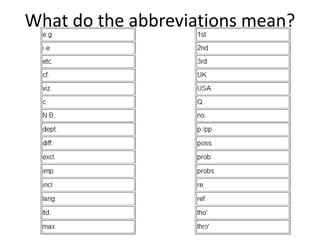
– Symbols 
• Summarizing
How do you know what is 
important and what is not?
• title of the listening 
• listen for direct or indirect signals 
– Stress 
– Intonation 
– Repetition 
– Detailed information 
• determine the speaker's style or organization of 
speaking 
• Concentrate on the important words  content words 
• Omit unimportant words
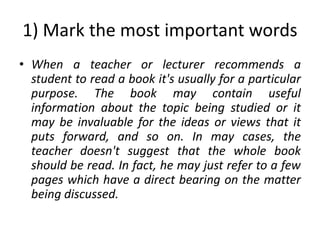
1) Mark the most important words 
• When a teacher or lecturer recommends a 
student to read a book it's usually for a particular 
purpose. The book may contain useful 
information about the topic being studied or it 
may be invaluable for the ideas or views that it 
puts forward, and so on. In may cases, the 
teacher doesn't suggest that the whole book 
should be read. In fact, he may just refer to a few 
pages which have a direct bearing on the matter 
being discussed.
2) Take note! 
• Unfortunately, when many students pick up a 
book to read they tend to have no particular 
purpose in mind other than simply to 'read the 
book'. Often they open the book and start 
reading, page by page, line by line, word by 
word; in other words, slowly and in great 
detail. The result is that students frequently 
don't have an overall view of what they're 
reading; also, they tend to forget fairly soon 
what they've been reading.
3) Match the symbols
What do the abbreviations mean?
Reference 
• English Language Centre, HKPU. (Sept., 1998). 
Listening to Lectures - Note-taking. Retrieved 
Nov. 4, 2013 from 
http://elc.polyu.edu.hk/elsc/material/Listenin 
g/note-taking.html#Task 1.

Listening & taking notes

  • 1.
    LISTENING & TAKINGNOTES Nanang Zubaidi International Program, Universitas Islam Indonesia Yogyakarta 2013
  • 2.
    Why do youtake notes?
  • 4.
    • to helpto concentrate on the speaker’s saying • to provide you with a summary in note form • Lecturer’s notes are not sufficient • To promote a deeper understanding of the content of the lecture.
  • 5.
    How do youtake notes?
  • 7.
    • Shortening –Abbreviation – Symbols • Summarizing
  • 8.
    How do youknow what is important and what is not?
  • 10.
    • title ofthe listening • listen for direct or indirect signals – Stress – Intonation – Repetition – Detailed information • determine the speaker's style or organization of speaking • Concentrate on the important words  content words • Omit unimportant words
  • 11.
    1) Mark themost important words • When a teacher or lecturer recommends a student to read a book it's usually for a particular purpose. The book may contain useful information about the topic being studied or it may be invaluable for the ideas or views that it puts forward, and so on. In may cases, the teacher doesn't suggest that the whole book should be read. In fact, he may just refer to a few pages which have a direct bearing on the matter being discussed.
  • 12.
    2) Take note! • Unfortunately, when many students pick up a book to read they tend to have no particular purpose in mind other than simply to 'read the book'. Often they open the book and start reading, page by page, line by line, word by word; in other words, slowly and in great detail. The result is that students frequently don't have an overall view of what they're reading; also, they tend to forget fairly soon what they've been reading.
  • 13.
    3) Match thesymbols
  • 14.
    What do theabbreviations mean?
  • 15.
    Reference • EnglishLanguage Centre, HKPU. (Sept., 1998). Listening to Lectures - Note-taking. Retrieved Nov. 4, 2013 from http://elc.polyu.edu.hk/elsc/material/Listenin g/note-taking.html#Task 1.