Linguistics vs
extralingual contexts
subjects:×××
CONTENTS
Linguistics context
Extralingual contexts
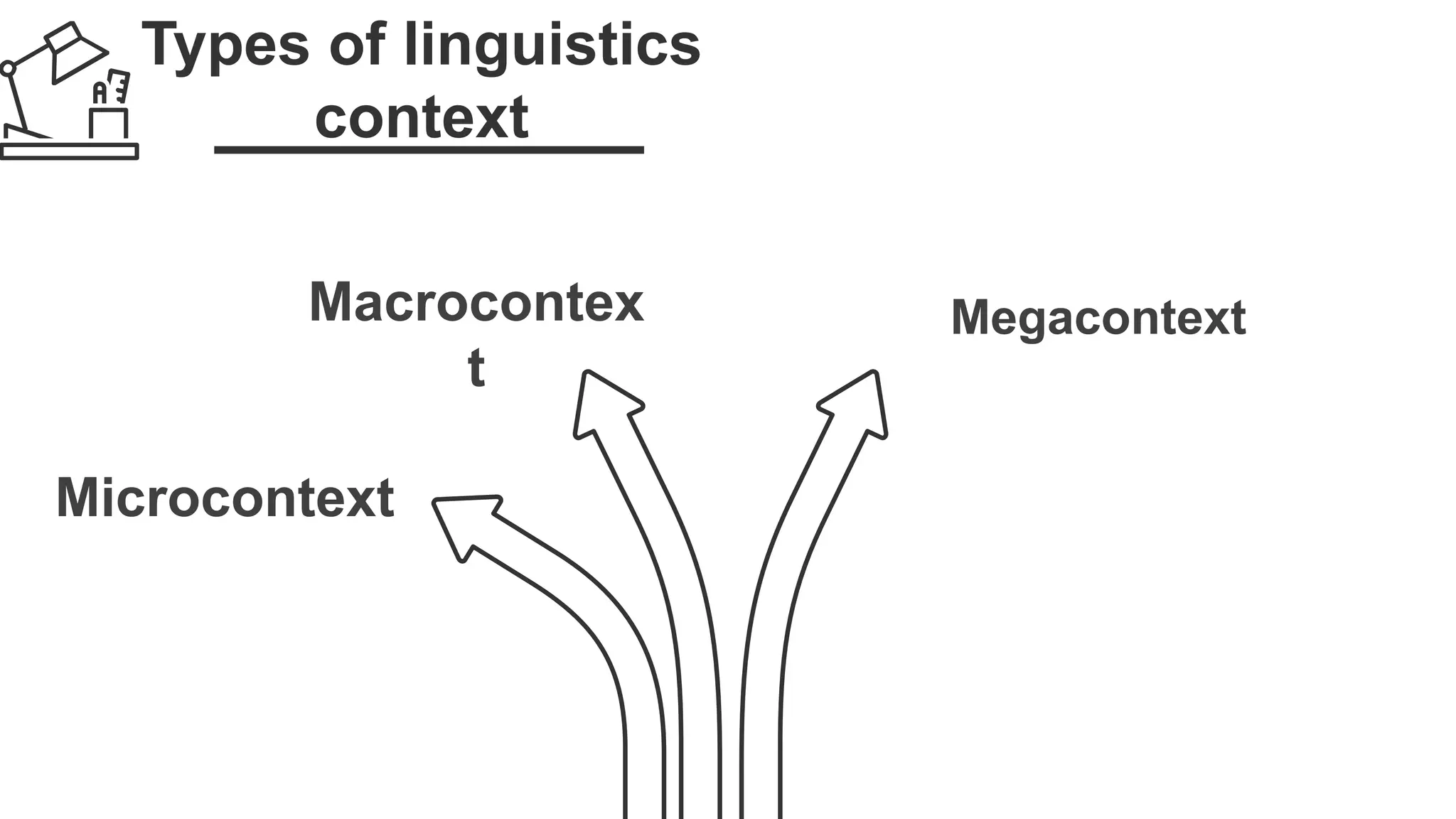
Microcontext
Macrocontext
Megacontext
Language is an essential tool
for communication, but it is
not the only factor that
affects how people
understand each other.
Context plays a signiticant
role in communication, and it
can be classified into two
types: Linguistic and
Linguistics context
Linguistic
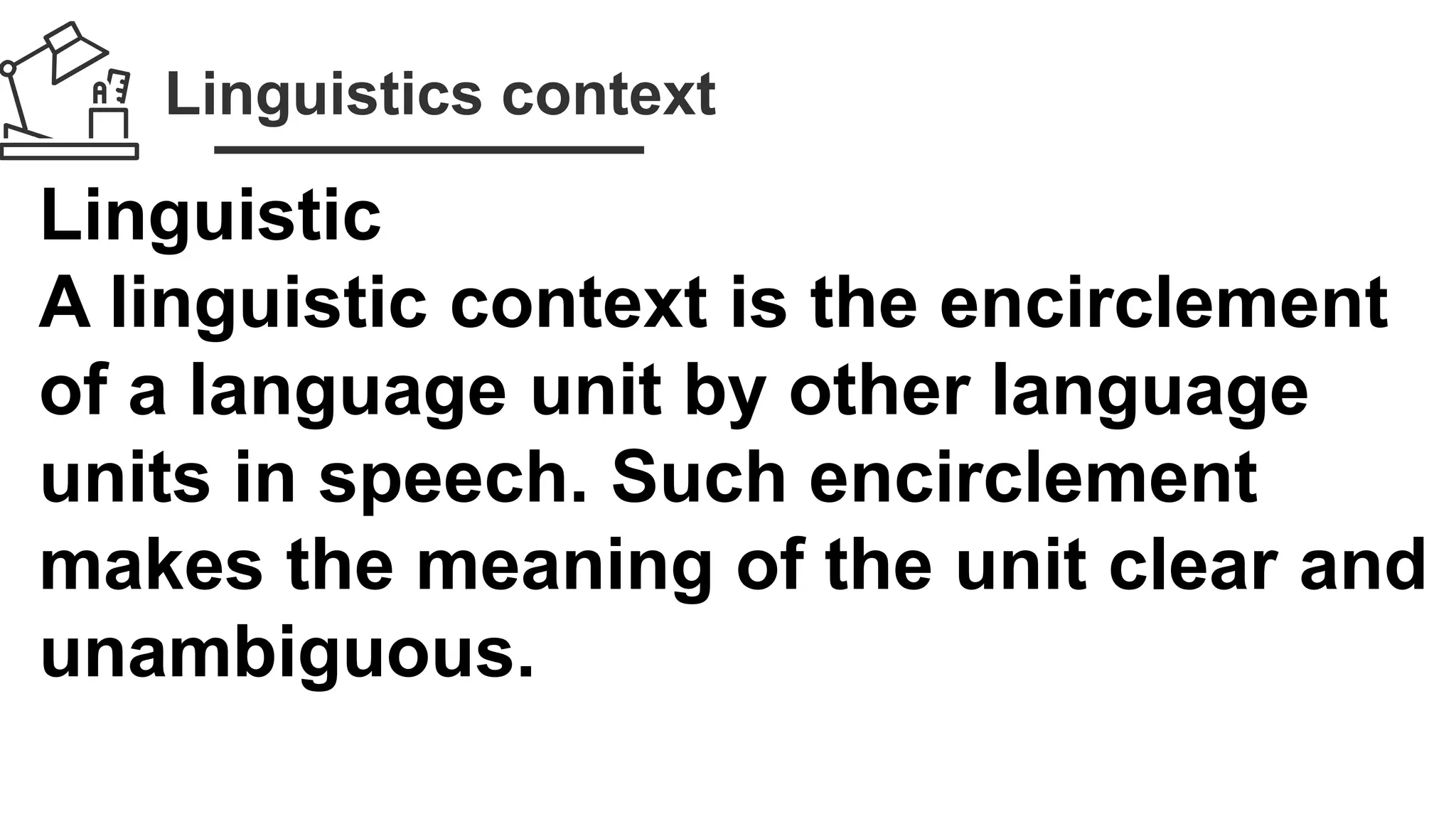
A linguistic context is the encirclement
of a language unit by other language
units in speech. Such encirclement
makes the meaning of the unit clear and
unambiguous.
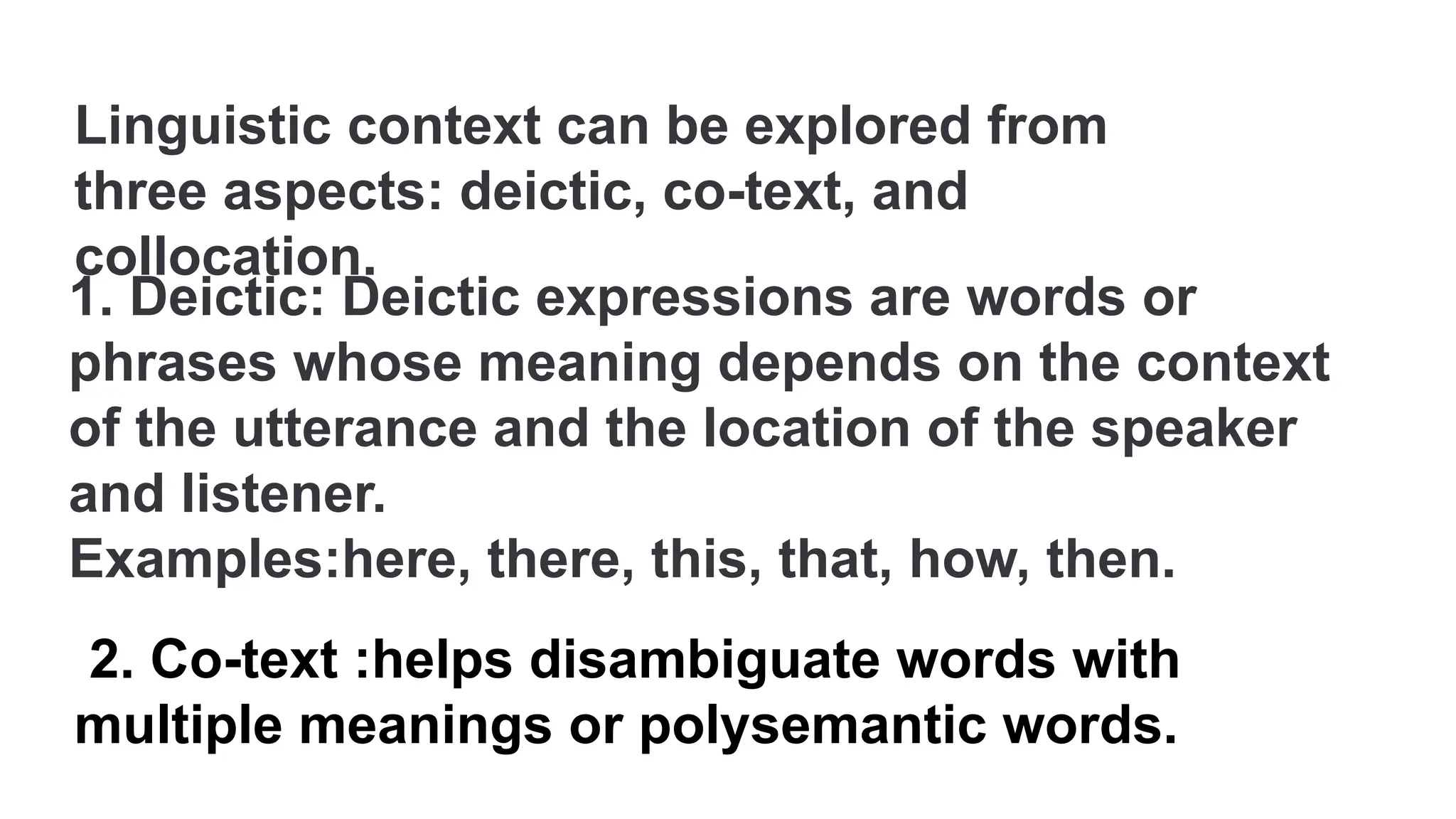
Linguistic context can be explored from
three aspects: deictic, co-text, and
collocation.
1. Deictic: Deictic expressions are words or
phrases whose meaning depends on the context
of the utterance and the location of the speaker
and listener.
Examples:here, there, this, that, how, then.
2. Co-text :helps disambiguate words with
multiple meanings or polysemantic words.
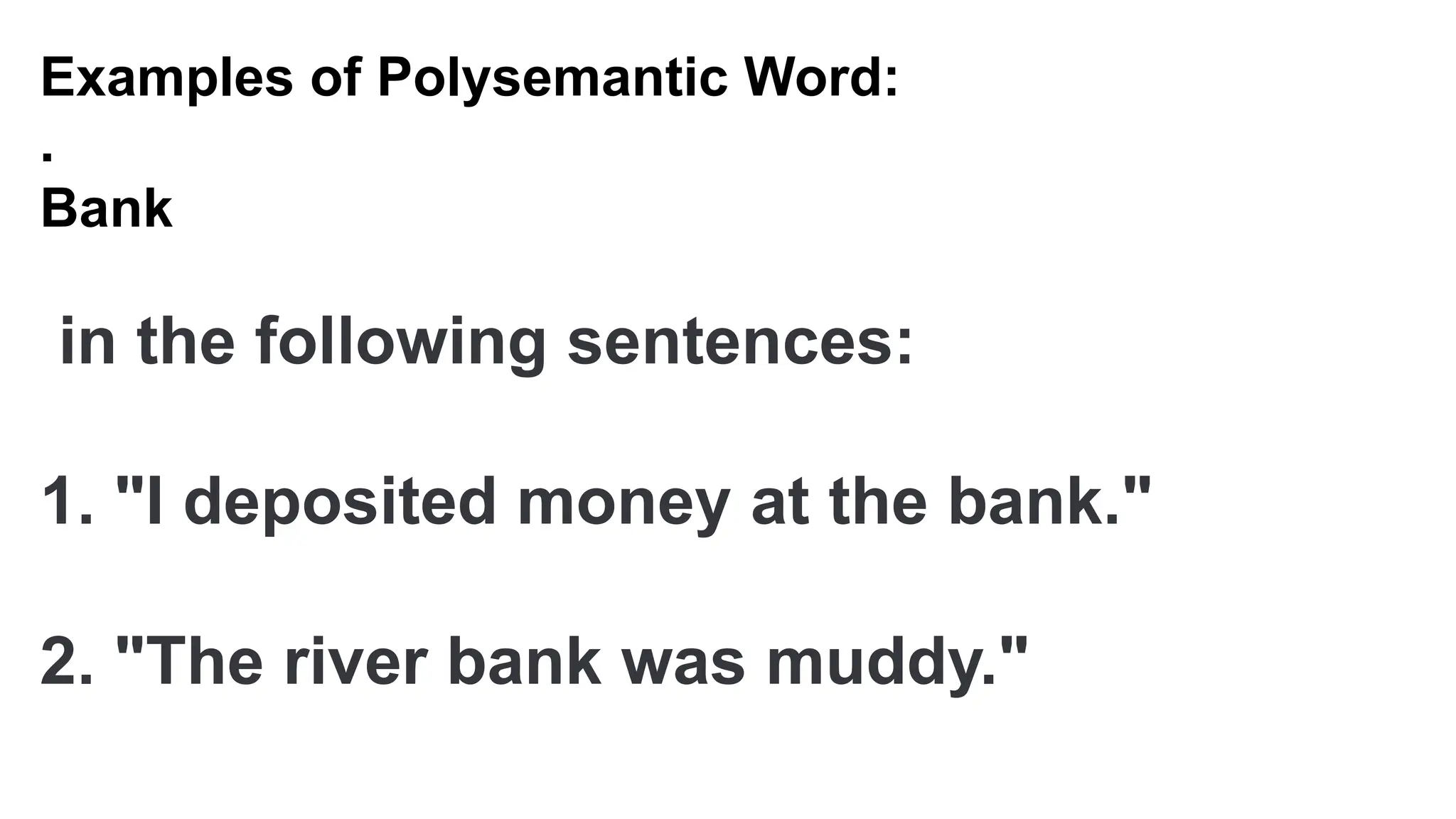
Examples of Polysemantic Word:
.
Bank
in the following sentences:
1. "I deposited money at the bank."
2. "The river bank was muddy."
3. Collocation refers to the habitual or
conventional pairing of words that
tend to occur together in a language.
' for example:
we can say heavy rain but not strong rain
Extralingual Context
An extralingual (situational) context is
formed by extralingual conditions
in which communication takes place. It
refers to the non-linguistic factors that
influence the meaning and
interpretation of messages.
Types of linguistics
context
1. Microcontext- is the context of a single
utterance (sentence).
Example:
Sentence: "I need to change the battery in my
watch."
The microcontext of the word "battery" in this
sentence is that it refers to a small, portable
power source used to power electronic devices,
such as watches.
2. Macrocontext- is the context of a
paragraph in a text.
Example:
"Despite being a common affliction, anxiety can be incredibly
debilitating for those who experience it. It can lead to a range of
symptoms, including sweating, heart palpitations, and difficulty
concentrating. Furthermore, anxiety can have a significant impact
on a
person's quality of life, affecting their ability to work, maintain
relationships, and engage in everyday activities. Fortunately, there
are
many effective treatments available for anxiety, such as cognitive
behavioral therapy and medication."
In this example, the macrocontext would be
the larger context of the entire text that the
paragraph is a part of, such as a book,
article, or report. The paragraph is
discussing the topic of anxiety, its
symptoms, and its impact on a person's life,
and is likely part of a larger discussion
about mental health. The macrocontext is
important for understanding the overall
purpose and message of the text as a whole.
Megacontext
3. Megacontext- is the context of a book
chapter, a story or the whole book.
Megacontext
Linguistic and extralingual context are both important
aspects of communication.Linguistic context refers to
the words and language used to convey a message,
while extralingual context refers to the non-linguistic
factors that influence communication,such as the
physical or abstract conditions in which
communication takes place. In order to effectively
communicate, it is important to consider both
linguistic and extralingual context. This means paying
attention not only to the words being used, but also to
the environment in which communication takes place

Linguistics-vs-extralingual-contexts-WPS-Office.pptx

  • 1.
  • 2.
  • 3.
    Language is anessential tool for communication, but it is not the only factor that affects how people understand each other. Context plays a signiticant role in communication, and it can be classified into two types: Linguistic and
  • 4.
    Linguistics context Linguistic A linguisticcontext is the encirclement of a language unit by other language units in speech. Such encirclement makes the meaning of the unit clear and unambiguous.
  • 5.
    Linguistic context canbe explored from three aspects: deictic, co-text, and collocation. 1. Deictic: Deictic expressions are words or phrases whose meaning depends on the context of the utterance and the location of the speaker and listener. Examples:here, there, this, that, how, then. 2. Co-text :helps disambiguate words with multiple meanings or polysemantic words.
  • 6.
    Examples of PolysemanticWord: . Bank in the following sentences: 1. "I deposited money at the bank." 2. "The river bank was muddy."
  • 7.
    3. Collocation refersto the habitual or conventional pairing of words that tend to occur together in a language. ' for example: we can say heavy rain but not strong rain
  • 8.
    Extralingual Context An extralingual(situational) context is formed by extralingual conditions in which communication takes place. It refers to the non-linguistic factors that influence the meaning and interpretation of messages.
  • 9.
  • 10.
    1. Microcontext- isthe context of a single utterance (sentence). Example: Sentence: "I need to change the battery in my watch." The microcontext of the word "battery" in this sentence is that it refers to a small, portable power source used to power electronic devices, such as watches.
  • 11.
    2. Macrocontext- isthe context of a paragraph in a text. Example: "Despite being a common affliction, anxiety can be incredibly debilitating for those who experience it. It can lead to a range of symptoms, including sweating, heart palpitations, and difficulty concentrating. Furthermore, anxiety can have a significant impact on a person's quality of life, affecting their ability to work, maintain relationships, and engage in everyday activities. Fortunately, there are many effective treatments available for anxiety, such as cognitive behavioral therapy and medication."
  • 12.
    In this example,the macrocontext would be the larger context of the entire text that the paragraph is a part of, such as a book, article, or report. The paragraph is discussing the topic of anxiety, its symptoms, and its impact on a person's life, and is likely part of a larger discussion about mental health. The macrocontext is important for understanding the overall purpose and message of the text as a whole.
  • 13.
    Megacontext 3. Megacontext- isthe context of a book chapter, a story or the whole book.
  • 14.
  • 15.
    Linguistic and extralingualcontext are both important aspects of communication.Linguistic context refers to the words and language used to convey a message, while extralingual context refers to the non-linguistic factors that influence communication,such as the physical or abstract conditions in which communication takes place. In order to effectively communicate, it is important to consider both linguistic and extralingual context. This means paying attention not only to the words being used, but also to the environment in which communication takes place