
 in an art gallery space, daylight and artificial
light are important.
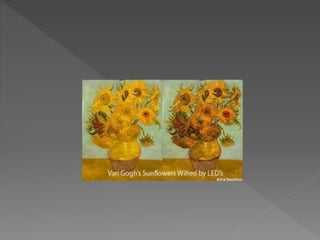
 light fundamentally affects materials through
photo-chemical action and radiant heating
effects from uv & ir rays.
 exposure of sensitive materials to light,
especially daylight, detriments the longevity and
preservation of those artworks or artefacts.
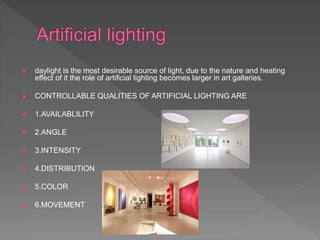
 daylight is the most desirable source of light, due to the nature and heating
effect of it the role of artificial lighting becomes larger in art galleries.
 CONTROLLABLE QUALITIES OF ARTIFICIAL LIGHTING ARE
 1.AVAILABLILITY
 2.ANGLE
 3.INTENSITY
 4.DISTRIBUTION
 5.COLOR
 6.MOVEMENT
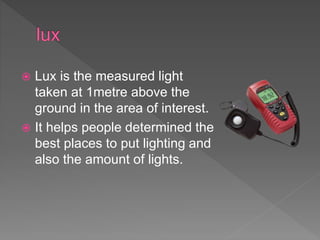
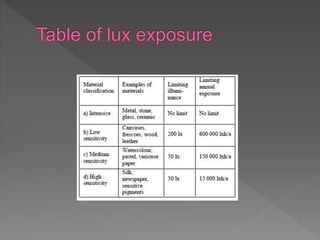
 Lux is the measured light
taken at 1metre above the
ground in the area of interest.
 It helps people determined the
best places to put lighting and
also the amount of lights.
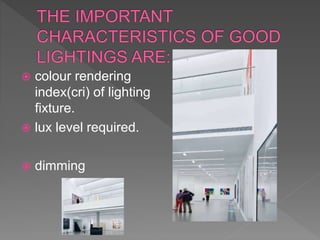
 colour rendering
index(cri) of lighting
fixture.
 lux level required.
 dimming
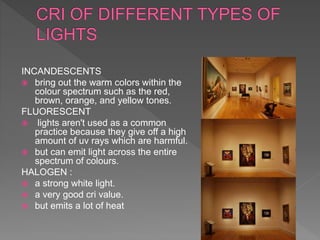
INCANDESCENTS
 bring out the warm colors within the
colour spectrum such as the red,
brown, orange, and yellow tones.
FLUORESCENT
 lights aren't used as a common
practice because they give off a high
amount of uv rays which are harmful.
 but can emit light across the entire
spectrum of colours.
HALOGEN :
 a strong white light.
 a very good cri value.
 but emits a lot of heat
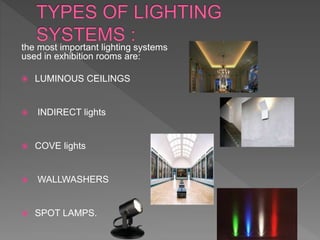
the most important lighting systems
used in exhibition rooms are:
 LUMINOUS CEILINGS
 INDIRECT lights
 COVE lights
 WALLWASHERS
 SPOT LAMPS.
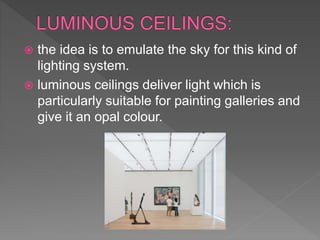
 the idea is to emulate the sky for this kind of
lighting system.
 luminous ceilings deliver light which is
particularly suitable for painting galleries and
give it an opal colour.
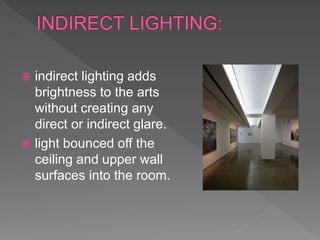
 indirect lighting adds
brightness to the arts
without creating any
direct or indirect glare.
 light bounced off the
ceiling and upper wall
surfaces into the room.
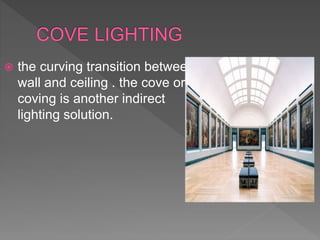
 the curving transition between
wall and ceiling . the cove or
coving is another indirect
lighting solution.
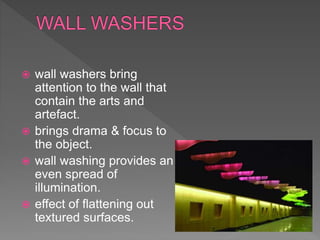
 wall washers bring
attention to the wall that
contain the arts and
artefact.
 brings drama & focus to
the object.
 wall washing provides an
even spread of
illumination.
 effect of flattening out
textured surfaces.
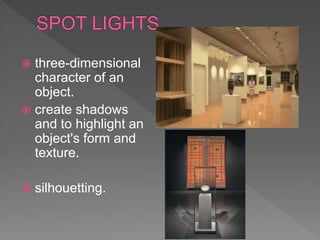
 three-dimensional
character of an
object.
 create shadows
and to highlight an
object's form and
texture.
 silhouetting.
Lighting in a gallery

Lighting in a gallery

  • 2.
     in anart gallery space, daylight and artificial light are important.  light fundamentally affects materials through photo-chemical action and radiant heating effects from uv & ir rays.  exposure of sensitive materials to light, especially daylight, detriments the longevity and preservation of those artworks or artefacts.
  • 4.
     daylight isthe most desirable source of light, due to the nature and heating effect of it the role of artificial lighting becomes larger in art galleries.  CONTROLLABLE QUALITIES OF ARTIFICIAL LIGHTING ARE  1.AVAILABLILITY  2.ANGLE  3.INTENSITY  4.DISTRIBUTION  5.COLOR  6.MOVEMENT
  • 5.
     Lux isthe measured light taken at 1metre above the ground in the area of interest.  It helps people determined the best places to put lighting and also the amount of lights.
  • 7.
     colour rendering index(cri)of lighting fixture.  lux level required.  dimming
  • 8.
    INCANDESCENTS  bring outthe warm colors within the colour spectrum such as the red, brown, orange, and yellow tones. FLUORESCENT  lights aren't used as a common practice because they give off a high amount of uv rays which are harmful.  but can emit light across the entire spectrum of colours. HALOGEN :  a strong white light.  a very good cri value.  but emits a lot of heat
  • 9.
    the most importantlighting systems used in exhibition rooms are:  LUMINOUS CEILINGS  INDIRECT lights  COVE lights  WALLWASHERS  SPOT LAMPS.
  • 10.
     the ideais to emulate the sky for this kind of lighting system.  luminous ceilings deliver light which is particularly suitable for painting galleries and give it an opal colour.
  • 11.
     indirect lightingadds brightness to the arts without creating any direct or indirect glare.  light bounced off the ceiling and upper wall surfaces into the room.
  • 12.
     the curvingtransition between wall and ceiling . the cove or coving is another indirect lighting solution.
  • 13.
     wall washersbring attention to the wall that contain the arts and artefact.  brings drama & focus to the object.  wall washing provides an even spread of illumination.  effect of flattening out textured surfaces.
  • 14.
     three-dimensional character ofan object.  create shadows and to highlight an object's form and texture.  silhouetting.