KEITH MUREITHI ABS211-0005/2019
KELVIN GITONGA ABS211-0002/2019
KEMUNTO NYABOKE ABS211-0013/2019
KEN MWANGI NDUGO ABS211-0278/2019
KEVIN EDWIN MWAMGI ABS211-0021/2018
KIGOTHO FRANCIS MURUGA ABS211-0006/2019
KIOKO SAMUEL MUMO ABS211-0018/2019
KIPROTICH CARLOS ABS211-0043/2019
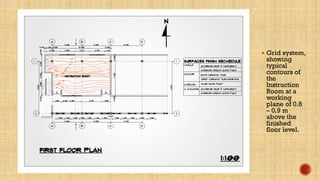
 Grid system,
showing
typical
contours of
the
Instruction
Room at a
working
plane of 0.8
– 0.9 m
above the
finished
floor level.
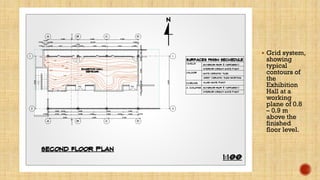
 Grid system,
showing
typical
contours of
the
Exhibition
Hall at a
working
plane of 0.8
– 0.9 m
above the
finished
floor level.
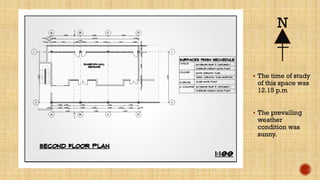
N
 The time of study
of this space was
12.15 p.m
 The prevailing
weather
condition was
sunny.
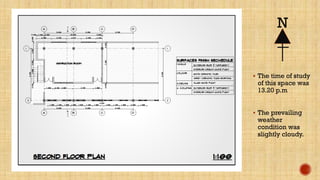
N
 The time of study
of this space was
13.20 p.m
 The prevailing
weather
condition was
slightly cloudy.
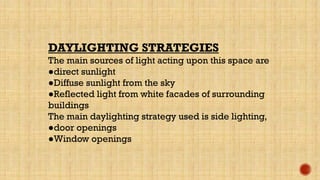
DAYLIGHTING STRATEGIES
The main sources of light acting upon this space are
●direct sunlight
●Diffuse sunlight from the sky
●Reflected light from white facades of surrounding
buildings
The main daylighting strategy used is side lighting,
●door openings
●Window openings
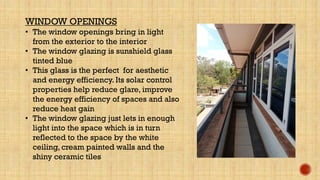
WINDOW OPENINGS
• The window openings bring in light
from the exterior to the interior
• The window glazing is sunshield glass
tinted blue
• This glass is the perfect for aesthetic
and energy efficiency. Its solar control
properties help reduce glare, improve
the energy efficiency of spaces and also
reduce heat gain
• The window glazing just lets in enough
light into the space which is in turn
reflected to the space by the white
ceiling, cream painted walls and the
shiny ceramic tiles
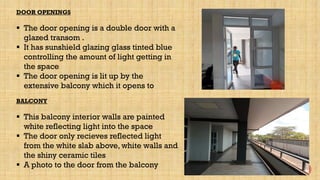
DOOR OPENINGS
 The door opening is a double door with a
glazed transom .
 It has sunshield glazing glass tinted blue
controlling the amount of light getting in
the space
 The door opening is lit up by the
extensive balcony which it opens to
BALCONY
 This balcony interior walls are painted
white reflecting light into the space
 The door only recieves reflected light
from the white slab above, white walls and
the shiny ceramic tiles
 A photo to the door from the balcony
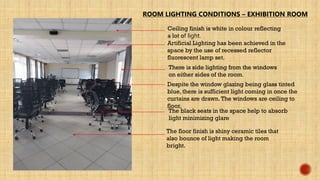
ROOM LIGHTING CONDITIONS – EXHIBITION ROOM
Ceiling finish is white in colour reflecting
a lot of light.
Artificial Lighting has been achieved in the
space by the use of recessed reflector
fluorescent lamp set.
Despite the window glazing being glass tinted
blue, there is sufficient light coming in once the
curtains are drawn.The windows are ceiling to
floor.
There is side lighting from the windows
on either sides of the room.
The floor finish is shiny ceramic tiles that
also bounce of light making the room
bright.
The black seats in the space help to absorb
light minimizing glare
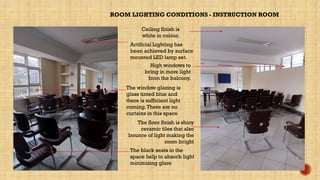
ROOM LIGHTING CONDITIONS - INSTRUCTION ROOM
The floor finish is shiny
ceramic tiles that also
bounce of light making the
room bright
Ceiling finish is
white in colour.
The window glazing is
glass tinted blue and
there is sufficient light
coming.There are no
curtains in this space
Artificial Lighting has
been achieved by surface
mounted LED lamp set.
High windows to
bring in more light
from the balcony.
The black seats in the
space help to absorb light
minimizing glare
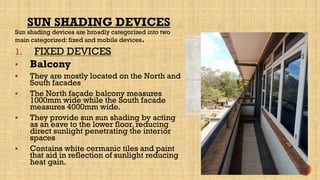
Sun shading devices are broadly categorized into two
main categorized: fixed and mobile devices.
1. FIXED DEVICES
• Balcony
 They are mostly located on the North and
South facades
 The North façade balcony measures
1000mm wide while the South facade
measures 4000mm wide.
 They provide sun sun shading by acting
as an eave to the lower floor, reducing
direct sunlight penetrating the interior
spaces
 Contains white cermanic tiles and paint
that aid in reflection of sunlight reducing
heat gain.
SUN SHADING DEVICES
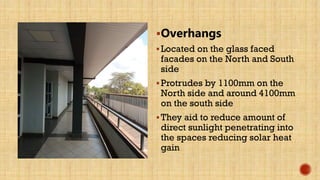
Overhangs
Located on the glass faced
facades on the North and South
side
Protrudes by 1100mm on the
North side and around 4100mm
on the south side
They aid to reduce amount of
direct sunlight penetrating into
the spaces reducing solar heat
gain
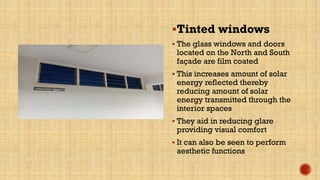
Tinted windows
 The glass windows and doors
located on the North and South
façade are film coated
 This increases amount of solar
energy reflected thereby
reducing amount of solar
energy transmitted through the
interior spaces
 They aid in reducing glare
providing visual comfort
 It can also be seen to perform
aesthetic functions
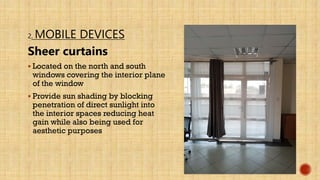
2. MOBILE DEVICES
Sheer curtains
 Located on the north and south
windows covering the interior plane
of the window
 Provide sun shading by blocking
penetration of direct sunlight into
the interior spaces reducing heat
gain while also being used for
aesthetic purposes
 The spaces discussed above do
receive adequate amount of
sunlight.
 However the following strategies
can be implemented to improve
the daylight quality.
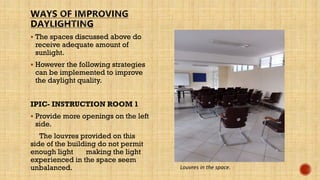
IPIC- INSTRUCTION ROOM 1
 Provide more openings on the left
side.
The louvres provided on this
side of the building do not permit
enough light making the light
experienced in the space seem
unbalanced. Louvres in the space.
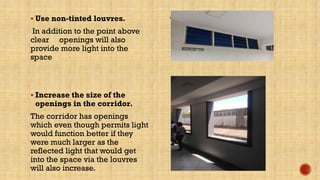
 Use non-tinted louvres.
In addition to the point above
clear openings will also
provide more light into the
space
 Increase the size of the
openings in the corridor.
The corridor has openings
which even though permits light
would function better if they
were much larger as the
reflected light that would get
into the space via the louvres
will also increase.
 Louvres in the spac
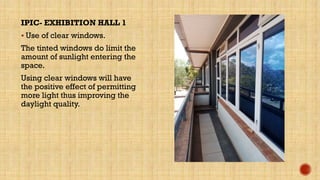
IPIC- EXHIBITION HALL 1
 Use of clear windows.
The tinted windows do limit the
amount of sunlight entering the
space.
Using clear windows will have
the positive effect of permitting
more light thus improving the
daylight quality.
THE END.

GROUP 5 LIGHTING.pdf

  • 1.
    KEITH MUREITHI ABS211-0005/2019 KELVINGITONGA ABS211-0002/2019 KEMUNTO NYABOKE ABS211-0013/2019 KEN MWANGI NDUGO ABS211-0278/2019 KEVIN EDWIN MWAMGI ABS211-0021/2018 KIGOTHO FRANCIS MURUGA ABS211-0006/2019 KIOKO SAMUEL MUMO ABS211-0018/2019 KIPROTICH CARLOS ABS211-0043/2019
  • 2.
     Grid system, showing typical contoursof the Instruction Room at a working plane of 0.8 – 0.9 m above the finished floor level.
  • 3.
     Grid system, showing typical contoursof the Exhibition Hall at a working plane of 0.8 – 0.9 m above the finished floor level.
  • 5.
    N  The timeof study of this space was 12.15 p.m  The prevailing weather condition was sunny.
  • 6.
    N  The timeof study of this space was 13.20 p.m  The prevailing weather condition was slightly cloudy.
  • 7.
    DAYLIGHTING STRATEGIES The mainsources of light acting upon this space are ●direct sunlight ●Diffuse sunlight from the sky ●Reflected light from white facades of surrounding buildings The main daylighting strategy used is side lighting, ●door openings ●Window openings
  • 8.
    WINDOW OPENINGS • Thewindow openings bring in light from the exterior to the interior • The window glazing is sunshield glass tinted blue • This glass is the perfect for aesthetic and energy efficiency. Its solar control properties help reduce glare, improve the energy efficiency of spaces and also reduce heat gain • The window glazing just lets in enough light into the space which is in turn reflected to the space by the white ceiling, cream painted walls and the shiny ceramic tiles
  • 9.
    DOOR OPENINGS  Thedoor opening is a double door with a glazed transom .  It has sunshield glazing glass tinted blue controlling the amount of light getting in the space  The door opening is lit up by the extensive balcony which it opens to BALCONY  This balcony interior walls are painted white reflecting light into the space  The door only recieves reflected light from the white slab above, white walls and the shiny ceramic tiles  A photo to the door from the balcony
  • 10.
    ROOM LIGHTING CONDITIONS– EXHIBITION ROOM Ceiling finish is white in colour reflecting a lot of light. Artificial Lighting has been achieved in the space by the use of recessed reflector fluorescent lamp set. Despite the window glazing being glass tinted blue, there is sufficient light coming in once the curtains are drawn.The windows are ceiling to floor. There is side lighting from the windows on either sides of the room. The floor finish is shiny ceramic tiles that also bounce of light making the room bright. The black seats in the space help to absorb light minimizing glare
  • 11.
    ROOM LIGHTING CONDITIONS- INSTRUCTION ROOM The floor finish is shiny ceramic tiles that also bounce of light making the room bright Ceiling finish is white in colour. The window glazing is glass tinted blue and there is sufficient light coming.There are no curtains in this space Artificial Lighting has been achieved by surface mounted LED lamp set. High windows to bring in more light from the balcony. The black seats in the space help to absorb light minimizing glare
  • 12.
    Sun shading devicesare broadly categorized into two main categorized: fixed and mobile devices. 1. FIXED DEVICES • Balcony  They are mostly located on the North and South facades  The North façade balcony measures 1000mm wide while the South facade measures 4000mm wide.  They provide sun sun shading by acting as an eave to the lower floor, reducing direct sunlight penetrating the interior spaces  Contains white cermanic tiles and paint that aid in reflection of sunlight reducing heat gain. SUN SHADING DEVICES
  • 13.
    Overhangs Located on theglass faced facades on the North and South side Protrudes by 1100mm on the North side and around 4100mm on the south side They aid to reduce amount of direct sunlight penetrating into the spaces reducing solar heat gain
  • 14.
    Tinted windows  Theglass windows and doors located on the North and South façade are film coated  This increases amount of solar energy reflected thereby reducing amount of solar energy transmitted through the interior spaces  They aid in reducing glare providing visual comfort  It can also be seen to perform aesthetic functions
  • 15.
    2. MOBILE DEVICES Sheercurtains  Located on the north and south windows covering the interior plane of the window  Provide sun shading by blocking penetration of direct sunlight into the interior spaces reducing heat gain while also being used for aesthetic purposes
  • 16.
     The spacesdiscussed above do receive adequate amount of sunlight.  However the following strategies can be implemented to improve the daylight quality. IPIC- INSTRUCTION ROOM 1  Provide more openings on the left side. The louvres provided on this side of the building do not permit enough light making the light experienced in the space seem unbalanced. Louvres in the space.
  • 17.
     Use non-tintedlouvres. In addition to the point above clear openings will also provide more light into the space  Increase the size of the openings in the corridor. The corridor has openings which even though permits light would function better if they were much larger as the reflected light that would get into the space via the louvres will also increase.  Louvres in the spac
  • 18.
    IPIC- EXHIBITION HALL1  Use of clear windows. The tinted windows do limit the amount of sunlight entering the space. Using clear windows will have the positive effect of permitting more light thus improving the daylight quality.
  • 19.