*LİFEGUARD*
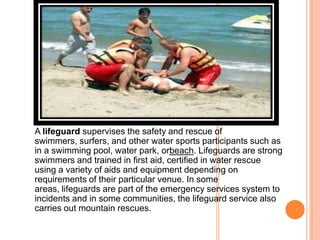
A lifeguard supervises the safety and rescue of
swimmers, surfers, and other water sports participants such as
in a swimming pool, water park, orbeach. Lifeguards are strong
swimmers and trained in first aid, certified in water rescue
using a variety of aids and equipment depending on
requirements of their particular venue. In some
areas, lifeguards are part of the emergency services system to
incidents and in some communities, the lifeguard service also
carries out mountain rescues.
RESPONSIBILITIES
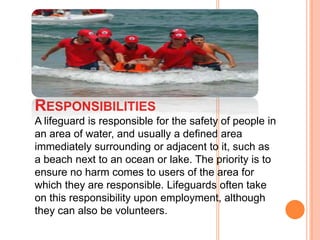
A lifeguard is responsible for the safety of people in
an area of water, and usually a defined area
immediately surrounding or adjacent to it, such as
a beach next to an ocean or lake. The priority is to
ensure no harm comes to users of the area for
which they are responsible. Lifeguards often take
on this responsibility upon employment, although
they can also be volunteers.
THE DROWNING CHAIN PROVIDES A CLEAR
BASIS FOR PREVENTING DROWNING WHICH
INCLUDES








education and information
provision of warnings
denial of access
supervision
training in survival skills
Lifeguards must be trained, capable, and ready to perform
emergency rescues should they become necessary, as it is
impossible to prevent all accidents occurring without going to
unacceptable expense. These rescues are the key focus of
popular culture reference such as Baywatch, which was at
one time the most viewed show in the world.
DUTIES
A lifeguard's key duties on a beach are to:
*Enforce rules in order to anticipate problems/injuries
*Maintain concentrated observation of the duty area and its users in order
to anticipate problems and to identify an emergency quickly.
*Supervise the use of other equipment when allocated to that duty
*Carry out rescues and initiate other emergency action as necessary
*Give immediate first aid in the event of injury to a bather or other incident
*Communicate with bathers and other users to help fulfill the above tasks
-Lifeguards may have other secondary duties such as cleaning, filing
paperwork, checking a swimming pool's chlorine and pH levels, or acting
as a general information point. It is important that lifeguards never allow
their secondary responsibilities to interfere with their primary
responsibilities.
-Lifeguards may also be required to attend occasional in-service meetings
to strengthen their lifeguarding skills.
IDENTIFYING TYPES OF
SWIMMER
While performing patron surveillance lifeguards watch for and recognize struggling
or drowning swimmers, and swimmers with sudden medical conditions such as a
stroke, heart attack, asthma, diabetes, or seizures. Lifeguards look for swimmers in
various categories and conditions:
**Passive drowning victims are inactive in the water, submerged or otherwise.
When a lifeguard sees this kind of swimmer he performs an emergency rescue.
**Active drowning victims are taking in water while attempting to stay at the
surface. Lifeguards look for swimmers in this condition by looking for arms moving
or flapping laterally not necessarily flailing, with the body vertical and no
supporting kick. This behavior is known as theinstinctive drowning
response Lifeguards perform an emergency rescue to assist this kind of swimmer
as their behavior results from being incapable of more active efforts to survive.
They may be less than 20 – 60 seconds from sinking underwater.
**Distressed swimmers are having trouble swimming, perhaps from fatigue, and
may or may not be calling out for help. Lifeguards usually swim out and help these
swimmers to the side. They may or may not require additional assistance.
**Normal swimmers are those who do not need any support and can swim on their
own doing intermediate strokes
LOCATIONS
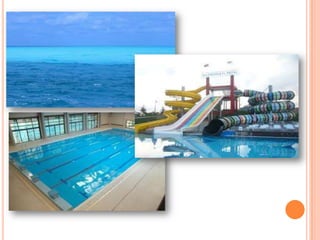
Lifeguards can be found patrolling many different types of water, and each
type has its own unique features, duties and challenges. Locations where
lifeguards can be found include:
**Ocean beach - Lifeguards are commonly associated with beaches on the
seashore, and this is often considered the most challenging environment to
lifeguard due to the influence of external factors such as
weather, currents, tides and waves. Life Guards have to be in peak physical
condition in order to accommodate these conditions properly.
**Inland body of water - Lifeguards can also look after open water areas such
as lakes, or even rivers, where swimmers may congregate
**Swimming pool - Pools, either indoor or outdoor, are often patrolled by
lifeguards, although many are not covered by qualified personnel, if at all
**Water park - Whilst water parks are a type of swimming pool, they can be
considered a unique type of facility as they may involve additional features
such as water slides or wave generators
**Ocean lagoon or tidal pool- These enclosed areas use seawater, but like a
pool have a limited and contained area, but have the potential for additional
hazards above and beyond an artificial pool
**Open ocean - In some cases, people may swim in the open ocean from a
boat and lifeguards may be employed for safety in this instance
COMMUNICATIONS
Effective communications are vital for lifeguards and they may
choose to use whistles, two-way radios, megaphones or even signal
flares.
A more traditional method of communication with the public is
through the use of colored flags, which can be raised over permanent
or temporary flag poles to inform members of the public of different
information.
More often than not a whistle is used in the pool leisure facility the
following signals are used by some lifeguards with a whistle

*1 short blast - used to gain the attention of a swimmer.
*2 short blasts - used to gain the attention of a fellow lifeguard
or, occasionally, a manager/head guard.
*3 short blasts - used to signal to a fellow lifeguard that an emergency
is taking place, action must be taken.
*1 long blow - used to signal to swimmers that they must clear the
pool, this could be because the pool is closed or an emergency is
taking place significant enough for the lifeguards to clear the pool.
POSİTİONİNG
Lifeguards have a primary duty to supervise the area which they are
responsible for, and to achieve this the lifeguard needs to obtain an
optimum position for observing the public. This is often best achieved
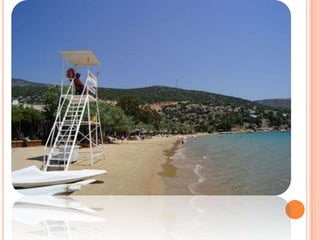
from an elevated position, which can be a chair, platform or even the
roof of a vehicle. This allows them maximum visibility over their
supervised area and may facilitate communication between them and
their team.
Some lifeguard teams use portable platforms or chairs which can be
moved to the most appropriate position. This can help take account of
changes such as a specific activity taking place, prevailing wind
direction or simply enable lifeguards to move closer to the water if the
tide goes out on a beach.
The chair or tower can also act as storage for the lifeguard, holding their
important rescue or communication equipment close to hand. It can also
act as a recognizable point for members of the public to find lifeguard
assistance. For this reason, it is often marked with a flag or flags to
enable location by the public, and these flags may also give information
to the bathers about the conditions for swimming.
EQUİPMENT
.Rescue tubes
•Spineboards
•Ring Buoys
•Waterproof Bags
•Life Jackets
•Lifeguard Lanyards
•Binoculars

* Rescue Masks
Rescue Cans
First Aid Kits
Megaphones
Lifeguard Whistles
two-way radios
the oxygen tube
HAZIRLAYAN:
IŞIL SU EGE
SINIFI: 11/A
NO: 214

Lifeguard

  • 1.
  • 2.
    A lifeguard supervisesthe safety and rescue of swimmers, surfers, and other water sports participants such as in a swimming pool, water park, orbeach. Lifeguards are strong swimmers and trained in first aid, certified in water rescue using a variety of aids and equipment depending on requirements of their particular venue. In some areas, lifeguards are part of the emergency services system to incidents and in some communities, the lifeguard service also carries out mountain rescues.
  • 3.
    RESPONSIBILITIES A lifeguard isresponsible for the safety of people in an area of water, and usually a defined area immediately surrounding or adjacent to it, such as a beach next to an ocean or lake. The priority is to ensure no harm comes to users of the area for which they are responsible. Lifeguards often take on this responsibility upon employment, although they can also be volunteers.
  • 4.
    THE DROWNING CHAINPROVIDES A CLEAR BASIS FOR PREVENTING DROWNING WHICH INCLUDES       education and information provision of warnings denial of access supervision training in survival skills Lifeguards must be trained, capable, and ready to perform emergency rescues should they become necessary, as it is impossible to prevent all accidents occurring without going to unacceptable expense. These rescues are the key focus of popular culture reference such as Baywatch, which was at one time the most viewed show in the world.
  • 5.
    DUTIES A lifeguard's keyduties on a beach are to: *Enforce rules in order to anticipate problems/injuries *Maintain concentrated observation of the duty area and its users in order to anticipate problems and to identify an emergency quickly. *Supervise the use of other equipment when allocated to that duty *Carry out rescues and initiate other emergency action as necessary *Give immediate first aid in the event of injury to a bather or other incident *Communicate with bathers and other users to help fulfill the above tasks -Lifeguards may have other secondary duties such as cleaning, filing paperwork, checking a swimming pool's chlorine and pH levels, or acting as a general information point. It is important that lifeguards never allow their secondary responsibilities to interfere with their primary responsibilities. -Lifeguards may also be required to attend occasional in-service meetings to strengthen their lifeguarding skills.
  • 6.
    IDENTIFYING TYPES OF SWIMMER Whileperforming patron surveillance lifeguards watch for and recognize struggling or drowning swimmers, and swimmers with sudden medical conditions such as a stroke, heart attack, asthma, diabetes, or seizures. Lifeguards look for swimmers in various categories and conditions: **Passive drowning victims are inactive in the water, submerged or otherwise. When a lifeguard sees this kind of swimmer he performs an emergency rescue. **Active drowning victims are taking in water while attempting to stay at the surface. Lifeguards look for swimmers in this condition by looking for arms moving or flapping laterally not necessarily flailing, with the body vertical and no supporting kick. This behavior is known as theinstinctive drowning response Lifeguards perform an emergency rescue to assist this kind of swimmer as their behavior results from being incapable of more active efforts to survive. They may be less than 20 – 60 seconds from sinking underwater. **Distressed swimmers are having trouble swimming, perhaps from fatigue, and may or may not be calling out for help. Lifeguards usually swim out and help these swimmers to the side. They may or may not require additional assistance. **Normal swimmers are those who do not need any support and can swim on their own doing intermediate strokes
  • 7.
    LOCATIONS Lifeguards can befound patrolling many different types of water, and each type has its own unique features, duties and challenges. Locations where lifeguards can be found include: **Ocean beach - Lifeguards are commonly associated with beaches on the seashore, and this is often considered the most challenging environment to lifeguard due to the influence of external factors such as weather, currents, tides and waves. Life Guards have to be in peak physical condition in order to accommodate these conditions properly. **Inland body of water - Lifeguards can also look after open water areas such as lakes, or even rivers, where swimmers may congregate **Swimming pool - Pools, either indoor or outdoor, are often patrolled by lifeguards, although many are not covered by qualified personnel, if at all **Water park - Whilst water parks are a type of swimming pool, they can be considered a unique type of facility as they may involve additional features such as water slides or wave generators **Ocean lagoon or tidal pool- These enclosed areas use seawater, but like a pool have a limited and contained area, but have the potential for additional hazards above and beyond an artificial pool **Open ocean - In some cases, people may swim in the open ocean from a boat and lifeguards may be employed for safety in this instance
  • 9.
    COMMUNICATIONS Effective communications arevital for lifeguards and they may choose to use whistles, two-way radios, megaphones or even signal flares. A more traditional method of communication with the public is through the use of colored flags, which can be raised over permanent or temporary flag poles to inform members of the public of different information. More often than not a whistle is used in the pool leisure facility the following signals are used by some lifeguards with a whistle *1 short blast - used to gain the attention of a swimmer. *2 short blasts - used to gain the attention of a fellow lifeguard or, occasionally, a manager/head guard. *3 short blasts - used to signal to a fellow lifeguard that an emergency is taking place, action must be taken. *1 long blow - used to signal to swimmers that they must clear the pool, this could be because the pool is closed or an emergency is taking place significant enough for the lifeguards to clear the pool.
  • 10.
    POSİTİONİNG Lifeguards have aprimary duty to supervise the area which they are responsible for, and to achieve this the lifeguard needs to obtain an optimum position for observing the public. This is often best achieved from an elevated position, which can be a chair, platform or even the roof of a vehicle. This allows them maximum visibility over their supervised area and may facilitate communication between them and their team. Some lifeguard teams use portable platforms or chairs which can be moved to the most appropriate position. This can help take account of changes such as a specific activity taking place, prevailing wind direction or simply enable lifeguards to move closer to the water if the tide goes out on a beach. The chair or tower can also act as storage for the lifeguard, holding their important rescue or communication equipment close to hand. It can also act as a recognizable point for members of the public to find lifeguard assistance. For this reason, it is often marked with a flag or flags to enable location by the public, and these flags may also give information to the bathers about the conditions for swimming.
  • 12.
    EQUİPMENT .Rescue tubes •Spineboards •Ring Buoys •WaterproofBags •Life Jackets •Lifeguard Lanyards •Binoculars * Rescue Masks Rescue Cans First Aid Kits Megaphones Lifeguard Whistles two-way radios the oxygen tube
  • 13.