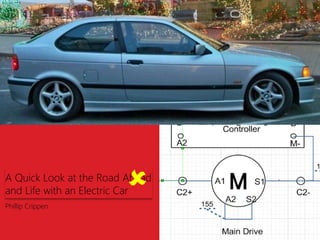
A Quick Look at the Road Ahead
and Life with an Electric Car
Phillip Crippen

Agenda
Introduction
Choices
Range Anxiety
Upgrade Options
The Outlook
2
3
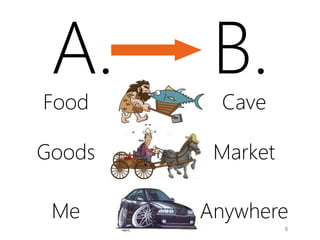
A. B.Food Cave
Goods Market
Me Anywhere
4
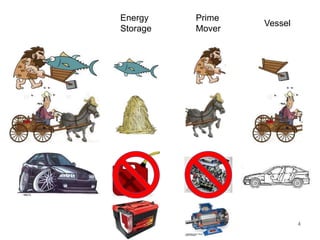
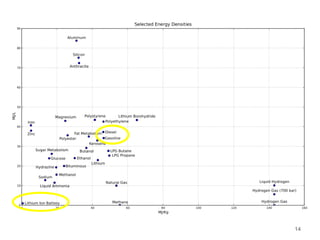
Energy
Storage
Prime
Mover
Vessel
Build: e318ti
Donor: 1997 BMW 318ti, 207k miles, purchased Oct 2008
Factory Converted
Engine 4cyl 1.9l 9inch DC
Max HP 103 HP @
6000RPM
100HP @
5000RPM
Max Torque 133 ft-lb @
4300RPM
115 @ 500A ,
0-5000RPM
Max RPM 6500 5000
Top Speed 140mph 80mph [108?]
Curb Weight 2950 lbs 3100 lbs
5
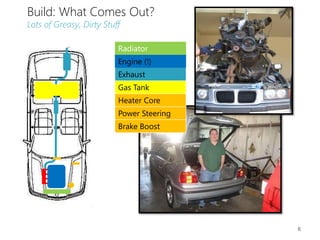
Build: What Comes Out?
Lots of Greasy, Dirty Stuff
Radiator
Engine (!)
Exhaust
Gas Tank
Heater Core
Power Steering
Brake Boost
6
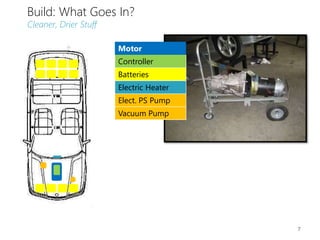
Build: What Goes In?
Cleaner, Drier Stuff
Motor
Controller
Batteries
Electric Heater
Elect. PS Pump
Vacuum Pump
7
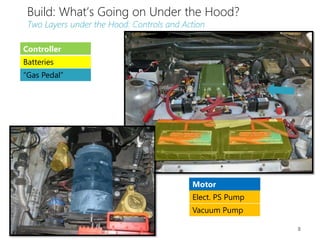
Build: What’s Going on Under the Hood?
Two Layers under the Hood: Controls and Action
Controller
Batteries
ā€œGas Pedalā€
Motor
Elect. PS Pump
Vacuum Pump
8
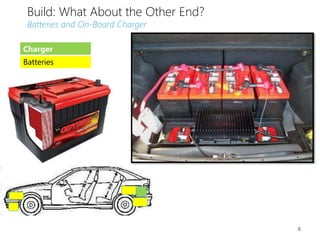
Build: What About the Other End?
Batteries and On-Board Charger
Charger
Batteries
9
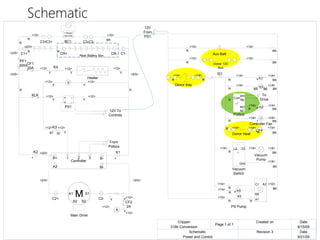
Controller
B+ B-
M-A2
1 2 3
A
318ti Conversion
Crippen
Page 1 of 1
Power and Control
Schematic
Created on
Revision 3
8/15/09
Date
9/21/09
Date
CR+ CR-C1+ C1-
V
BC1
PF1
300A
From
Potbox
Main Drive
C2-C2+
K3
87 30
K2
+
A1
A2
S1
S2
12V
From
PS1
Aux Batt
Donor Key
Donor 12V
Bus
K1+
K3
85 86
K2+
Potbox
Com
Wh
Bk
NO
NC
To
Drive
+
Controller Fan
Vacuum
Pump
Vacuum
Switch
Gnd
L2 T2
115VAC
144 VDC
Rear Battery Box
CF2
2A
IS1
Donor Heat
K4+
PS Pump
C1 A2
K5+
K5
<10> <10>
<10> <10>
<10> <10>
<10>
<10>
<2/0>
<2/0> <2/0>
<2/0><2/0>
<2/0>
<2/0>
<12> <12>
<12> <12>
<12>
<12>
<12>
<14> <14> <14> <14>
<14> <14>
<14><14>
<14> <14>
<14> <14> <14>
<14> <14> <14>
<14>
<14>
<14>
R BK
R R
R
R
Y Y
Y
R
Y Y
Y
R BK
R
R R R
R
R
R
R
R
R
R
R
RR
R
BK
BK
BK
BK
BK
BK
BK
BK
BK
Heater
K4
CF1
20A <12> <12> <12>
Y Y Y
PS1
+
-+
-
12V To
Controls
KLK
Y Y
K1
+
<12> <12>
C3-C3-C3+C3+
B5
A1
Schematic
Agenda
Introduction
Choices
Range Anxiety
Upgrade Options
The Outlook
1
11
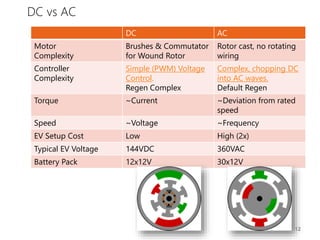
DC vs AC
DC AC
Motor
Complexity
Brushes & Commutator
for Wound Rotor
Rotor cast, no rotating
wiring
Controller
Complexity
Simple (PWM) Voltage
Control.
Regen Complex
Complex, chopping DC
into AC waves.
Default Regen
Torque ~Current ~Deviation from rated
speed
Speed ~Voltage ~Frequency
EV Setup Cost Low High (2x)
Typical EV Voltage 144VDC 360VAC
Battery Pack 12x12V 30x12V
12
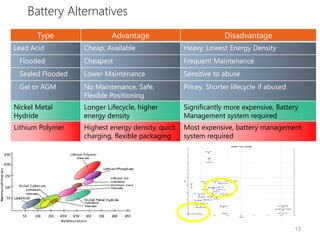
Battery Alternatives
Type Advantage Disadvantage
Lead Acid Cheap, Available Heavy, Lowest Energy Density
Flooded Cheapest Frequent Maintenance
Sealed Flooded Lower Maintenance Sensitive to abuse
Gel or AGM No Maintenance, Safe,
Flexible Positioning
Pricey, Shorter lifecycle if abused
Nickel Metal
Hydride
Longer Lifecycle, higher
energy density
Significantly more expensive, Battery
Management system required
Lithium Polymer Highest energy density, quick
charging, flexible packaging
Most expensive, battery management
system required
13
14
Agenda
Introduction
Choices
Range Anxiety
Upgrade Options
The Outlook
15
16
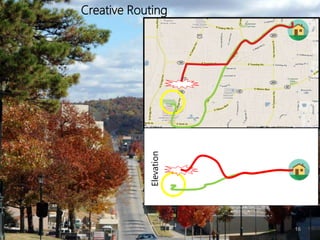
Creative Routing
Elevation
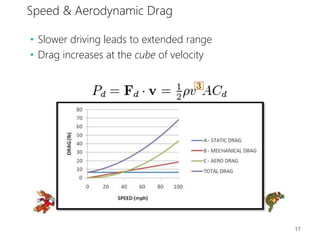
Speed & Aerodynamic Drag
• Slower driving leads to extended range
• Drag increases at the cube of velocity
17
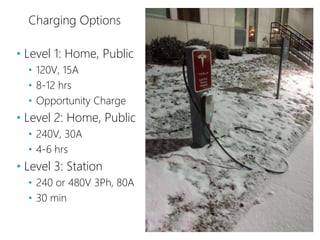
Charging Options
• Level 1: Home, Public
• 120V, 15A
• 8-12 hrs
• Opportunity Charge
• Level 2: Home, Public
• 240V, 30A
• 4-6 hrs
• Level 3: Station
• 240 or 480V 3Ph, 80A
• 30 min
18
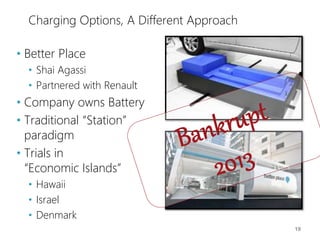
Charging Options, A Different Approach
• Better Place
• Shai Agassi
• Partnered with Renault
• Company owns Battery
• Traditional ā€œStationā€
paradigm
• Trials in
ā€œEconomic Islandsā€
• Hawaii
• Israel
• Denmark
19
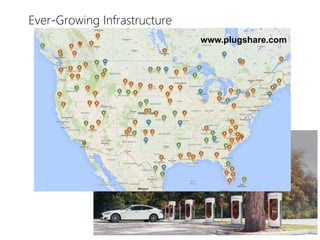
Ever-Growing Infrastructure
20
www.plugshare.com
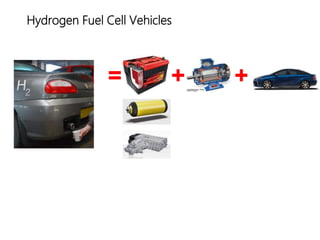
Hydrogen Fuel Cell Vehicles
++=
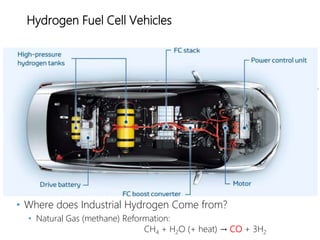
Hydrogen Fuel Cell Vehicles
• Where does Industrial Hydrogen Come from?
• Natural Gas (methane) Reformation:
CH4 + H2O (+ heat) → CO + 3H2
++=
Agenda
Introduction
Choices
Range Anxiety
Upgrade Options
The Outlook
23
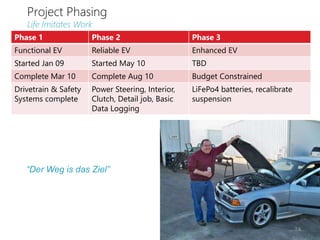
Project Phasing
Life Imitates Work
Phase 1 Phase 2 Phase 3
Functional EV Reliable EV Enhanced EV
Started Jan 09 Started May 10 TBD
Complete Mar 10 Complete Aug 10 Budget Constrained
Drivetrain & Safety
Systems complete
Power Steering, Interior,
Clutch, Detail job, Basic
Data Logging
LiFePo4 batteries, recalibrate
suspension
ā€œDer Weg is das Zielā€
24
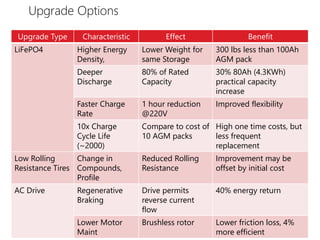
Upgrade Options
25
Upgrade Type Characteristic Effect Benefit
LiFePO4 Higher Energy
Density,
Lower Weight for
same Storage
300 lbs less than 100Ah
AGM pack
Deeper
Discharge
80% of Rated
Capacity
30% 80Ah (4.3KWh)
practical capacity
increase
Faster Charge
Rate
1 hour reduction
@220V
Improved flexibility
10x Charge
Cycle Life
(~2000)
Compare to cost of
10 AGM packs
High one time costs, but
less frequent
replacement
Low Rolling
Resistance Tires
Change in
Compounds,
Profile
Reduced Rolling
Resistance
Improvement may be
offset by initial cost
AC Drive Regenerative
Braking
Drive permits
reverse current
flow
40% energy return
Lower Motor
Maint
Brushless rotor Lower friction loss, 4%
more efficient
Agenda
Introduction
Choices
Range Anxiety
Upgrade Options
The Outlook
26
Concerns and Roadblocks
• How ā€œGreenā€ are Electric Vehicles
• Manufacturing Industry Inertia
• Battery Pack Performance & Cost
27
Common EV Myths
• It’s easier to put scrubbers on power plant smoke stacks
than to control millions of tailpipes (Only 52% of US
electricity is generated using coal-2010)
• EVs are inherently more efficient at converting stored
energy to motion. Electric motors have efficiencies of
up to 98% while an average Internal Combustion
Engine (ICE) is only 18-20% efficient
ā€œEVs create more pollution by using electricity from
coal-fired generation plantsā€
28
Update: as of 2015, Coal fired electricity
down to 33% with Natural Gas also at 33%
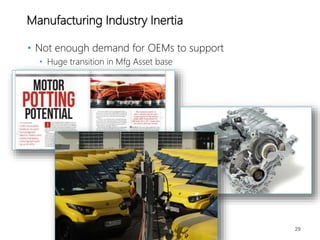
Manufacturing Industry Inertia
• Not enough demand for OEMs to support
• Huge transition in Mfg Asset base
29
Common EV Myths
• Advanced Battery Management Systems minimize
damage from extreme use events
• Improvements in Li-Ion production techniques and
chemistry increase production yield and reliability
• Today’s Lead-Acid battery ecosystem recycles 97% of
material in the automotive fleet’s batteries. Similar
reprocessing techniques are in development for
advanced chemistries
• EVs place extreme performance demands on batteries.
A secondary market is developing for ā€œretiredā€ battery
packs with less severe requirements (UPS, Grid
Stabilization)
ā€œBattery packs don’t last long enough and are
expensive to replaceā€
30
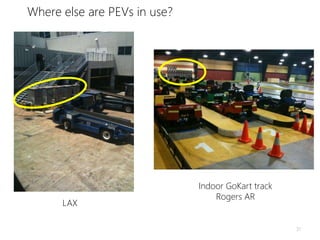
Where else are PEVs in use?
LAX
Indoor GoKart track
Rogers AR
31
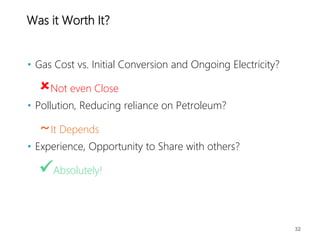
Was it Worth It?
• Gas Cost vs. Initial Conversion and Ongoing Electricity?
Not even Close
• Pollution, Reducing reliance on Petroleum?
~It Depends
• Experience, Opportunity to Share with others?
Absolutely!
32
33
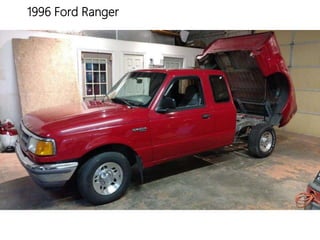
Epilogue
May 21, 2015
Sold to a Good Home in
Baton Rouge Louisiana
1996 Ford Ranger
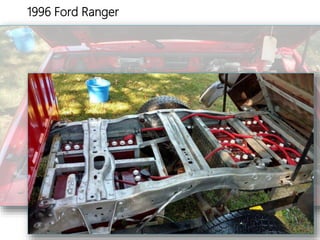
1996 Ford Ranger
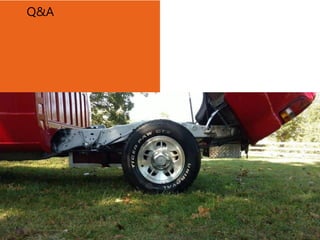
Q&A
1
36

Life with a homebrew Electic Vechicle

  • 1.
    A Quick Lookat the Road Ahead and Life with an Electric Car Phillip Crippen 
  • 2.
  • 3.
    3 A. B.Food Cave GoodsMarket Me Anywhere
  • 4.
  • 5.
    Build: e318ti Donor: 1997BMW 318ti, 207k miles, purchased Oct 2008 Factory Converted Engine 4cyl 1.9l 9inch DC Max HP 103 HP @ 6000RPM 100HP @ 5000RPM Max Torque 133 ft-lb @ 4300RPM 115 @ 500A , 0-5000RPM Max RPM 6500 5000 Top Speed 140mph 80mph [108?] Curb Weight 2950 lbs 3100 lbs 5
  • 6.
    Build: What ComesOut? Lots of Greasy, Dirty Stuff Radiator Engine (!) Exhaust Gas Tank Heater Core Power Steering Brake Boost 6
  • 7.
    Build: What GoesIn? Cleaner, Drier Stuff Motor Controller Batteries Electric Heater Elect. PS Pump Vacuum Pump 7
  • 8.
    Build: What’s Goingon Under the Hood? Two Layers under the Hood: Controls and Action Controller Batteries ā€œGas Pedalā€ Motor Elect. PS Pump Vacuum Pump 8
  • 9.
    Build: What Aboutthe Other End? Batteries and On-Board Charger Charger Batteries 9
  • 10.
    Controller B+ B- M-A2 1 23 A 318ti Conversion Crippen Page 1 of 1 Power and Control Schematic Created on Revision 3 8/15/09 Date 9/21/09 Date CR+ CR-C1+ C1- V BC1 PF1 300A From Potbox Main Drive C2-C2+ K3 87 30 K2 + A1 A2 S1 S2 12V From PS1 Aux Batt Donor Key Donor 12V Bus K1+ K3 85 86 K2+ Potbox Com Wh Bk NO NC To Drive + Controller Fan Vacuum Pump Vacuum Switch Gnd L2 T2 115VAC 144 VDC Rear Battery Box CF2 2A IS1 Donor Heat K4+ PS Pump C1 A2 K5+ K5 <10> <10> <10> <10> <10> <10> <10> <10> <2/0> <2/0> <2/0> <2/0><2/0> <2/0> <2/0> <12> <12> <12> <12> <12> <12> <12> <14> <14> <14> <14> <14> <14> <14><14> <14> <14> <14> <14> <14> <14> <14> <14> <14> <14> <14> R BK R R R R Y Y Y R Y Y Y R BK R R R R R R R R R R R R RR R BK BK BK BK BK BK BK BK BK Heater K4 CF1 20A <12> <12> <12> Y Y Y PS1 + -+ - 12V To Controls KLK Y Y K1 + <12> <12> C3-C3-C3+C3+ B5 A1 Schematic
  • 11.
  • 12.
    DC vs AC DCAC Motor Complexity Brushes & Commutator for Wound Rotor Rotor cast, no rotating wiring Controller Complexity Simple (PWM) Voltage Control. Regen Complex Complex, chopping DC into AC waves. Default Regen Torque ~Current ~Deviation from rated speed Speed ~Voltage ~Frequency EV Setup Cost Low High (2x) Typical EV Voltage 144VDC 360VAC Battery Pack 12x12V 30x12V 12
  • 13.
    Battery Alternatives Type AdvantageDisadvantage Lead Acid Cheap, Available Heavy, Lowest Energy Density Flooded Cheapest Frequent Maintenance Sealed Flooded Lower Maintenance Sensitive to abuse Gel or AGM No Maintenance, Safe, Flexible Positioning Pricey, Shorter lifecycle if abused Nickel Metal Hydride Longer Lifecycle, higher energy density Significantly more expensive, Battery Management system required Lithium Polymer Highest energy density, quick charging, flexible packaging Most expensive, battery management system required 13
  • 14.
  • 15.
  • 16.
  • 17.
    Speed & AerodynamicDrag • Slower driving leads to extended range • Drag increases at the cube of velocity 17
  • 18.
    Charging Options • Level1: Home, Public • 120V, 15A • 8-12 hrs • Opportunity Charge • Level 2: Home, Public • 240V, 30A • 4-6 hrs • Level 3: Station • 240 or 480V 3Ph, 80A • 30 min 18
  • 19.
    Charging Options, ADifferent Approach • Better Place • Shai Agassi • Partnered with Renault • Company owns Battery • Traditional ā€œStationā€ paradigm • Trials in ā€œEconomic Islandsā€ • Hawaii • Israel • Denmark 19
  • 20.
  • 21.
    Hydrogen Fuel CellVehicles ++=
  • 22.
    Hydrogen Fuel CellVehicles • Where does Industrial Hydrogen Come from? • Natural Gas (methane) Reformation: CH4 + H2O (+ heat) → CO + 3H2 ++=
  • 23.
  • 24.
    Project Phasing Life ImitatesWork Phase 1 Phase 2 Phase 3 Functional EV Reliable EV Enhanced EV Started Jan 09 Started May 10 TBD Complete Mar 10 Complete Aug 10 Budget Constrained Drivetrain & Safety Systems complete Power Steering, Interior, Clutch, Detail job, Basic Data Logging LiFePo4 batteries, recalibrate suspension ā€œDer Weg is das Zielā€ 24
  • 25.
    Upgrade Options 25 Upgrade TypeCharacteristic Effect Benefit LiFePO4 Higher Energy Density, Lower Weight for same Storage 300 lbs less than 100Ah AGM pack Deeper Discharge 80% of Rated Capacity 30% 80Ah (4.3KWh) practical capacity increase Faster Charge Rate 1 hour reduction @220V Improved flexibility 10x Charge Cycle Life (~2000) Compare to cost of 10 AGM packs High one time costs, but less frequent replacement Low Rolling Resistance Tires Change in Compounds, Profile Reduced Rolling Resistance Improvement may be offset by initial cost AC Drive Regenerative Braking Drive permits reverse current flow 40% energy return Lower Motor Maint Brushless rotor Lower friction loss, 4% more efficient
  • 26.
  • 27.
    Concerns and Roadblocks •How ā€œGreenā€ are Electric Vehicles • Manufacturing Industry Inertia • Battery Pack Performance & Cost 27
  • 28.
    Common EV Myths •It’s easier to put scrubbers on power plant smoke stacks than to control millions of tailpipes (Only 52% of US electricity is generated using coal-2010) • EVs are inherently more efficient at converting stored energy to motion. Electric motors have efficiencies of up to 98% while an average Internal Combustion Engine (ICE) is only 18-20% efficient ā€œEVs create more pollution by using electricity from coal-fired generation plantsā€ 28 Update: as of 2015, Coal fired electricity down to 33% with Natural Gas also at 33%
  • 29.
    Manufacturing Industry Inertia •Not enough demand for OEMs to support • Huge transition in Mfg Asset base 29
  • 30.
    Common EV Myths •Advanced Battery Management Systems minimize damage from extreme use events • Improvements in Li-Ion production techniques and chemistry increase production yield and reliability • Today’s Lead-Acid battery ecosystem recycles 97% of material in the automotive fleet’s batteries. Similar reprocessing techniques are in development for advanced chemistries • EVs place extreme performance demands on batteries. A secondary market is developing for ā€œretiredā€ battery packs with less severe requirements (UPS, Grid Stabilization) ā€œBattery packs don’t last long enough and are expensive to replaceā€ 30
  • 31.
    Where else arePEVs in use? LAX Indoor GoKart track Rogers AR 31
  • 32.
    Was it WorthIt? • Gas Cost vs. Initial Conversion and Ongoing Electricity? Not even Close • Pollution, Reducing reliance on Petroleum? ~It Depends • Experience, Opportunity to Share with others? Absolutely! 32
  • 33.
    33 Epilogue May 21, 2015 Soldto a Good Home in Baton Rouge Louisiana
  • 34.
  • 35.
  • 36.